YouTube and Cryptocurrency: Like, Subscribe, Invest
YouTube shapes how millions first see crypto — from hype and NFT mania to educators, algorithms, and tools that lower barriers on chains like TRON.
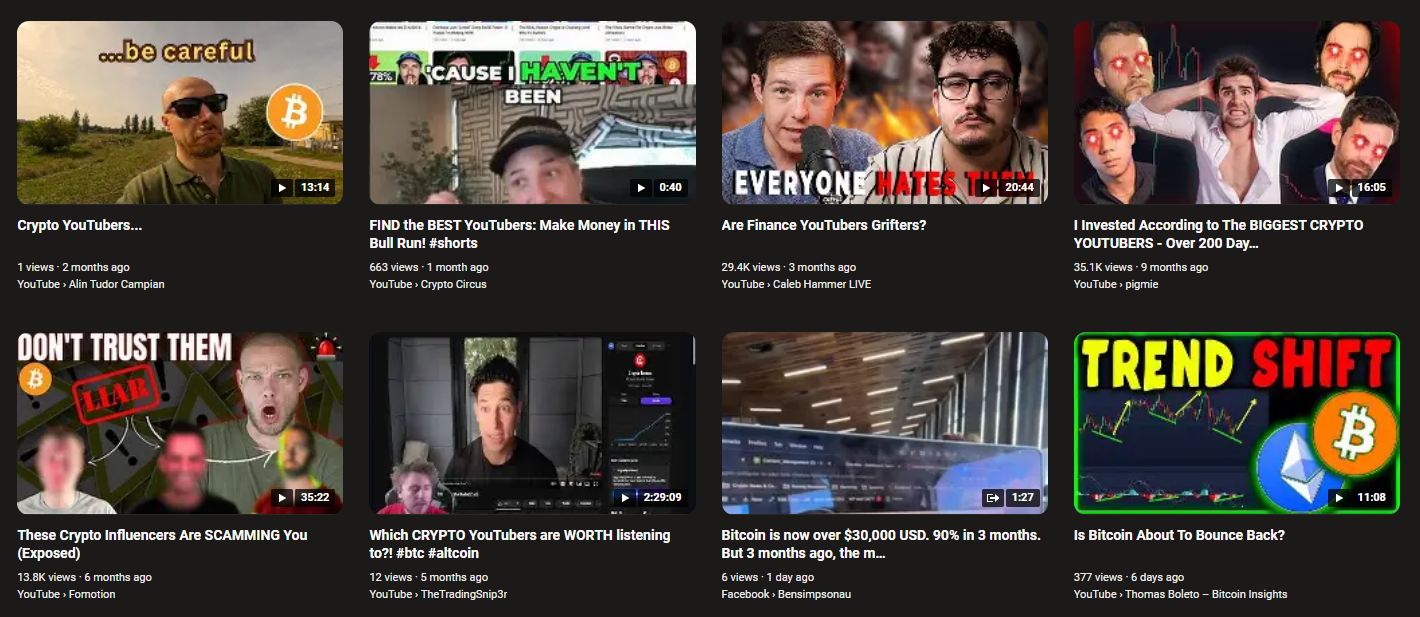
It looks like a scene two million people know well around the world. The camera leans in, and a charismatic face — illuminated by an artfully lit home office with twinkling cryptocurrency logos on the wall behind him — takes on an air of urgent intimacy. The YouTube thumbnail, a digital marketing masterclass in how to scream in bold color: “THE 100X ALTCOIN THAT WILL CHANGE YOUR LIFE.” Over the next 15 minutes, the host talks his rapt listeners through a stack of charts that he, perhaps selectively, sees as perpetually arcing parabolically upward. And he also tells you to trust ONLY him — nobody else!
He has this heady mix of supreme confidence cut with a casual, people-next-door chit-chat down pat and is able to distill complex whitepapers and tokenomics into soundbites you’d want to share as memes. He’s not just a content creator; he’s a friend, a guide, an Oracle of Delphi for the digital age who has unlocked the secret Wall Street code that has been hidden away from the masses since before there was ever even really any kind of Wall Street.
By the end of the footage, an attitude pervades his viewership. The comment section, a speed-of-light scroll of digital applause, hums with thanks and unchecked rapture. “Thanks, King!” “Only aped in, moon bound baby!” one user writes. “You’re the only one I trust in this wacky space,” goes another. This isn’t some fringe phenomenon. It’s the engine room of the modern cryptocurrency market itself. Internet platforms such as YouTube are now the dominant force in shaping the perceptions, decisions, and financial fates of an entire generation of retail investors.
These "mad lads" are basically modern day grifters, they have the trust of the people that dwarfs what is put in certified financial consultants who most think are part of a disjointed and broken system. This strong parasocial relationship — in which a viewer feels a real, one-sided connection with a personality they’ve never met — is formidable. Now, when a million-subscriber YouTuber talks up some new and obscure project, it might trigger a tidal wave of buying pressure, which pushes the prices of their tokens into the clouds and lends credence to the creator’s presumed brilliance. They are the new market makers, and their words — for better or worse — are adored as gospel by a global audience eager for life-altering returns. YouTube wasn’t just a place to stump for crypto; it still represents the primary social glue binding the retail community together.
From Digital Gold Rush to Digital Ghost Towns
The ultimate volatile convergence between YouTube’s influence-based culture and the speculative crypto was realized in a bang as Non-Fungible Tokens (NFTs) exploded. Abruptly, the story moved away from the inscrutable realm of decentralized finance protocols and into more approachable – literally more colorful — digital art worlds and exclusive social circles, where status symbols enjoy celebrity endorsements. It was a veritable perfect storm of content generation.
Mainstream YouTubers, realizing the potential audience engagement and therefore revenue to be had from this new and exciting delivery format, jumped in with both feet. The participation of large creators with tens of millions of followers drew an unprecedented — and, often, ignorant — level of public interest to the sector. They let their prized possessions, their Bored Apes and CryptoPunks — along with a bunch of pixelated animals they’d made themselves — serve as the can’t-miss ticket to the new digital renaissance for loyal followers.

For a short, intoxicating time it felt like a cultural revolution. But when it came to the hangover itself, they were not pulling any punches. The bulk of these creator-driven projects were nothing more than pump & dump schemes, built on a pyramid of synthetic hype and not anything you could use in the real world. The saga of Logan Paul’s ‘CryptoZoo’ project serves as a harrowing case study — the well-documented narrative of broken promises, scams and financial ruin for followers who invested their faith (and money) in his vision.
When the dopamine high of the bull market waned and the economics of many projects so clearly just didn’t add up, floor prices fell through with dazzling velocity. The aftermath was disastrous for people who had seen their investments turn to smoke, part of what was much greater collapse in the market, but certainly for the reputation of the crypto community as a whole. The episode laid bare the deep and systemic dangers of marrying celebrity power to hyper-speculative, unregulated financial assets. It caused a deep, searing and long-lasting wound of cynicism and distrust, the very community-bound platform that had united us now having proven to also be something that could be wielded as a tool for fleecing it. The harm was vast, casting a once-lively digital gold rush as dark withered desert of digital ghost towns that lay waste to the shambles of trust and worthless assets.
The Great Divide: Educators versus Entertainers
Following the NFT collapse and some hard market realities, there has become a distinctive separating line in crypto YouTube. On one side are the entertainers and the hype merchants who put sensationalism, affiliate links and engagement metrics above all else. Their output is a whirling, high-octane go-round of outlandish price predictions, shocking “emergency bulletins” and undisclosed sponsored videos posing as analysis.
They live for market volatility, deftly pursuing the next narrative that provides the most clicks and views at any given moment — even if that takeover target isn’t a long-term play or even if their claims are outright false. They are the kings of the fast money, taking advantage of their followers’ trust and FOMO in order to fatten their own wallets while playing reckless with others’, frequently without batting an eye at the financial fallout experienced by those who look up to them.
On the other side of this divide are the educators and the builders. Those are the channels that have worked hard at developing and creating a community from scratch, by giving truthful, thoroughly researched & mostly fair content. They’re the ones who plunge into dense white papers, patiently explain complex technical concepts like zero-knowledge proofs and offer nuanced, data-driven takes on market trends. These creators know that with great influence, comes great power and responsibility. They’re more concerned with educating their viewers instead of leading them to target investments.
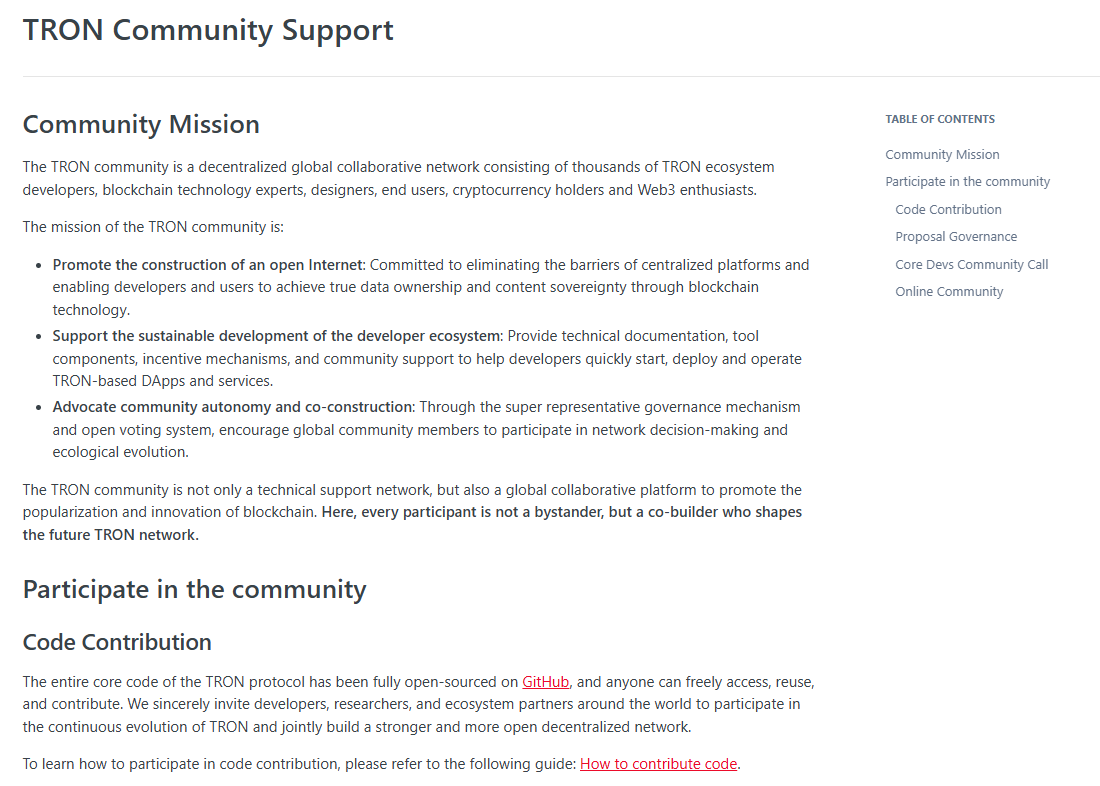
Communities focused on learning and understanding mature and nascent blockchain infrastructures, such as multi-application platforms like TRON, have been vital in accomplishing this. They look not only at the investment potential of a platform’s native token, but also its practical utility – does it have a useful dApp ecosystem; how are governance models maintained and enforced; do users face real-world problems that can be solved with blockchain solutions. These debates also touch upon topics that tend to be overlooked such as the complicated nature of transaction fees and ongoing effort put into making sure there is always enough Energy for USDT-TRON transfers. It’s these creators that have the ethics and true desire to see a technology success and make change for the better. They know that durable, long-term growth is constructed on a base of shared awareness — not from a storm of hype that will be gone tomorrow.
Algorithm's Invisible Hand
And for crypto, the cold hard truth is that for the overwhelming majority of people on this earth, their entire exposure to a world-altering complex technology will have come from a couple YouTube videos. The internet now is the world’s university, and YouTube its most crowded, chaotic and influential lecture hall. When a curious newcomer enters “what is cryptocurrency” into that ubiquitous search bar, the platform’s mighty algorithm serves as their de facto professor and curriculum designer.

The first three or four videos they are shown will probably be the unimpeachable bedrock of their impression — an impression that may be nearly impossible to overcome later. If they are algorithmically nudged towards a raft of slickly produced videos promising guaranteed riches and overnight success, they might not only be exposed to the same possibilities as teenage me was (40–50% returns on stocks), but their whole experience with cryptocurrencies will have been heavily clouded by unrealistic expectations and an acute potential for irrational risk taking. If, on the other hand, they happen upon measured, really educational content that values fact over fantasy their approach will be one of healthy skepticism and an actual thirst for knowledge.
This algorithmic curation is a monumental – if not under-appreciated – responsibility that the platform itself bears. The war for the soul (and more importantly, the public perception) of the crypto community is taking place in the invisible trenches of YouTube’s recommendation engine. This is no small thing. YouTube is the window to the world at large, with billions of active users.
Each and every video that successfully clarifies the technology, each and every creator who advocates for transparency and intellectual honesty, and each and every comment section conversation that promotes critical thinking helps to keep the overall health of this ecosystem in check. The future adoption and success of cryptocurrency might well not hinge on the gracefulness of its source code or speed of transactions, but in fact on the quality and integrity of conversation taking place on the world’s biggest video platform. For millions, that first impression is their only impression — which makes YouTube the most important, and perhaps most dangerous marketing tool crypto has ever seen.
For people interacting with certain ecosystems (such as TRON) barriers can be short-term and real, which is a problem for newcomers. A perfect example of friction that can ward off newcomers is the fact that you have to keep some TRX, the network's native token, just to pay transaction fees when converting USDT itself in a stablecoin operation. New companies are popping up to address this pain in ways more akin to booking a hotel room.
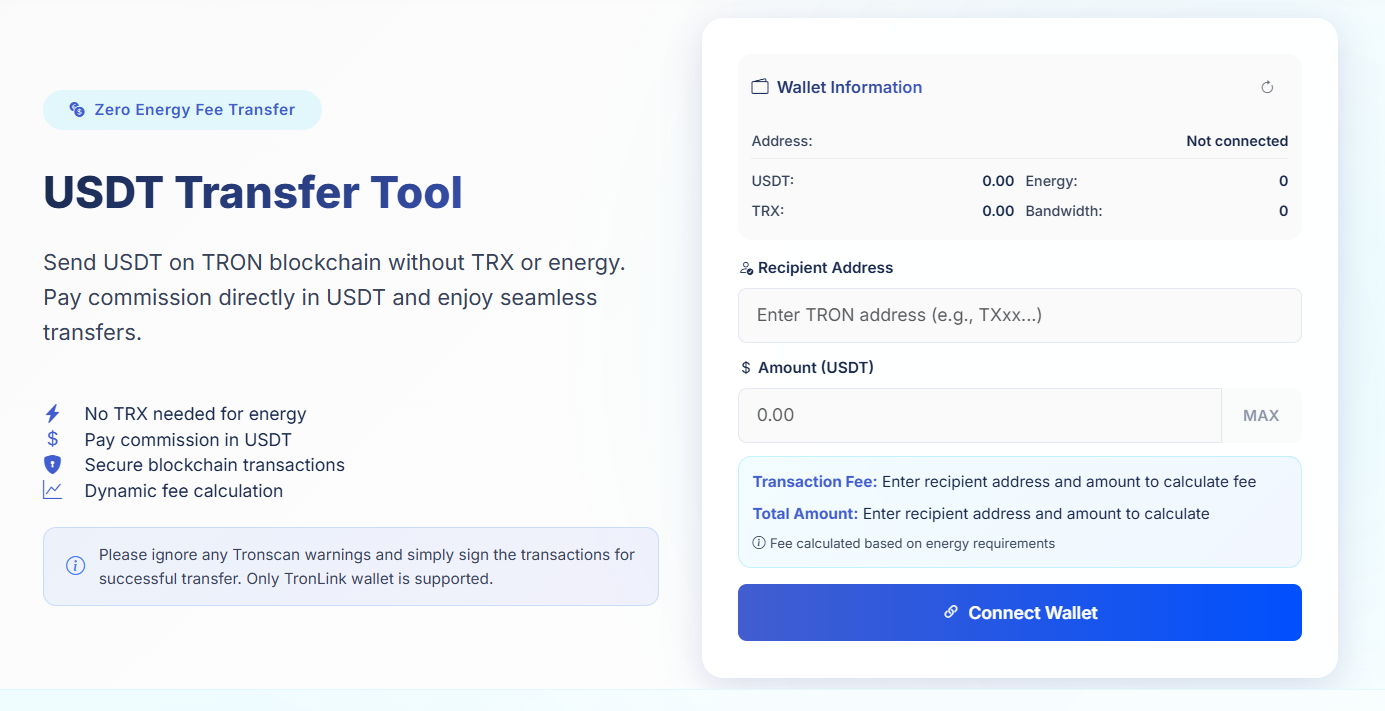
For example, solutions like Netts USDT Transfer now enable the users of the network to send their USDT without having TRX in their wallet since the network commission is paid directly from their balance. This type of innovation eliminates a large hurdle while also greatly simplifying what used to be a multi-step, complicated venture for regular users who desire to rent Energy to send USDT and as such rendering this network more available to the global end user.