Live Streams and Crypto: Real-Time Mess
Live crypto streams can pump tokens or teach fundamentals — a split between manipulators and educators, and why real-time transparency still matters
The multi-screen arrangement reflects a neon glow onto the face, which is grinning with an almost religious zeal. "This is it, chat! Moonshot Monday is a go!" - a popular streamer screams, his voice artfully tuned to transmit hype and a bizarre sense of closeness through his high-end mic. Tens of thousands of viewers are watching, and their messages are an unreadable torrent of rocket emojis, dollar signs and exclamations to “go to the moon!”.
The item of their devotion is a semishady new token, ‘RocketRaptor’, whose white linechart announces the price on the main screen was soaring smoothly skywards in a gorgeous near-vertical green line against black. Over the last hour, CryptoJerk (let's say that's his Twitch nickname) has been spinning an epic tale about its purportedly revolutionary technology — something to do with decentralized AI-driven pet care — and is promising stop-out-of-the-gate profits. He purportedly has “insider” information, teases of giant partnerships, and presents the investment as a once-in-a-lifetime deal to get in on the ground floor.
People are listening. More importantly, people are buying! They trust him. He’s their cicerone in this confusing new world, and his self-assuredness is contagious. The price goes parabolic on everyone’s FOMO.
And suddenly, in the twinkle of an eye, the dream is over. There, on chart after chart, a single, giant red candle looms up as the digital guillotine severing off the rally’s head. It eats all the gains of the last hour, then keeps falling, until it finds floor. The line goes flat, to represent a value that no longer exists.
In the live chat, the waterfall of emojis stutters. The question marks replace the rockets and diamonds. Then the anger, the accusations and, ultimately, the quiet heartbroken messages from people who have lost money they could ill afford to lose.
CryptoJerk’s smile, which is broad and not so much of a rictus as it looks the first few times you see it, wavers — but only for a moment. He's a professional. “Oh my goodness, it looks like a huge whale just rolled over and took profits. That's a shame, guys. Very unlucky. Well, that's crypto for you! High risk, high reward! And as always don’t forget to smack that like button and subscribe, I’ll catch you for the next 10-thousand-percent gem tomorrow!” The stream ends with a click, and he leaves a digital ghost town of financial ruin.
The investment of thousands of his viewers has just been “publicly executed” — and they have lost upwards of 60% within months. This is not an isolated instance; it’s a common scene to play out in the unregulated world of crypto live streaming. The consequences are not just the immediate financial losses. This kind of thing breeds a deep and corrosive cynicism that infects the entire environment. They poison the well for legitimate projects and chip away at the basic trust that is necessary for any financial market to work.
Newbs are spooked and shooed away, their first experience with crypto a bad one, and the space as a whole takes a black eye of turning into exactly what the non-crypto mainstream sees it as: Wild Westland for scammers and gamblers. The streamers themselves typically suffer no consequence; they can take refuge in the volatility of markets and the pseudo-anonymity of being online, only to rebrand themselves and start the cycle again next week with a new token, another set of promises.
Beacon in the Chaos
But to depict the entire crypto streaming world through its worst actors would be an egregious disservice. For every CryptoJerk orchestrating a public rugpull, there is a ‘CryptoSage’, someone who embodies the other, more optimistic, side of this digital coin. Their streams are another universe altogether. There are no hysterical screams or unbelievable promises of instant riches. The sense is one of quiet, studylike respect. In place of bombast, there is sober, detailed analysis. The screen is full of complicated charts, blockchain explorers, and pages from technical white papers — but everything is punctuated with the patience and clarity of a veteran instructor.
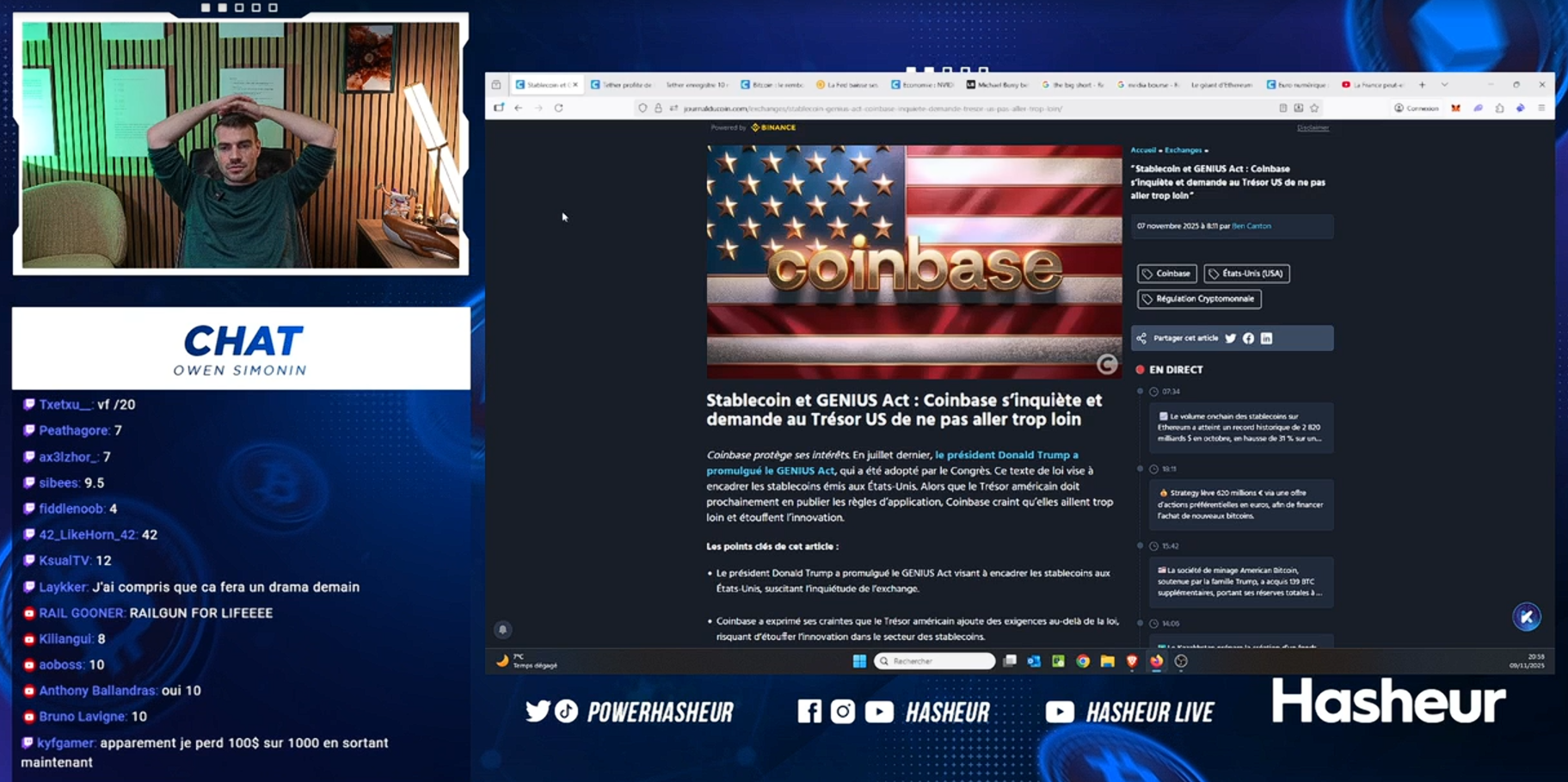
The main focus isn’t short-term price movements, it’s the long-term fundamentals; understanding a technology, viewing market cycles objectively and having an intuitive feel for healthy risk management. These streamers put a lot of work and time into properly educating their viewers. They hold deep-dive sessions into the tokenomics of existing projects, do live interviews with software developers and hold tutorials on advanced topics like decentralized finance (DeFi) protocols or how to properly use hardware wallets to secure assets. They encourage a frame of mind: be diligent, skeptical and analytical — don’t trust the word of anyone; check it out yourself.
For example, a CryptoSage could dedicate an entire 2-hour stream to the details of a particular blockchain’s utility, like TRON Energy. They’d tell you what Energy is, why it’s a thing that people need and how best to go about getting it, or renting in the case of those who already have access to power sources — maybe even walking through how one rents Energy prices for a transaction. They grow slowly and naturally, not based on meteoric hype, but after gaining a well-earned standing as a credible, transparent and honest voice in an information landscape full of noise. Their endgame is not a pump-and-dump operation, but rather to arm their viewers with the information needed to traverse the dangerous (crypto) waters safely, intelligently and independently. They are the teachers, the makers and perhaps the real evangelists for what technology can do for the world.
Duality of Influence
The divide between these 2 streamer archetypes — the con artist and the educator — comes down to one thing — a fundamental difference in mindset, motivation, and morality. The CryptoJerk is nothing more than a crass opportunist, the equivalent of a digital grifter for our time. Their motivations are primarily self-serving in the form of undisclosed sponsored work by questionable projects, exit liquidity from coins previously airdropped or given to them for free, or compounding manipulation that suits their trading interests. They don't see their audience as a community to be nurtured, but as cows to be milked and hogs to be slaughtered, an ocean of exit liquidity. Their knowledge of the tech is typically only skin deep, a few buzzwords used as lipstick to give a superficial gloss of legitimacy. Their currency of success is the dirtiest there is — how much money they can make (hoping) utilizing their fans and bankrupting them emotionally and economically in the process.
The CryptoSage on the other hand sounds truly passionate. Many of them are true believers in the disruptive potential of blockchain, decentralization and financial sovereignty. Their aim is to spread that passion and enable others to join what they believe is a technological revolution in a way that’s safe and sustainable.
They recognize themselves in their audience as a group of students and companions on the journey rather than passive consumers. They don't judge their success by the money they earn, but instead whether they make their community grow and smarter, which can be measured in the quality/depth of discussion in a chat and how much power/responsibility non-millionaires have to think for themselves. This basic existential orientations colors everything they do, most significantly the type of communities that are drawn to and formed around them.
You Reap What You Sow
It’s an old bromide, but it has a particular application in the digital towns built around the gravitational force of a live streamer’s personality. The general vibe in the live chat of a streamer is, in many cases, an unadulterated and often merciless reflection of the values they exhibit. In the chat of CryptoJerk’s stream, the mood is a frothing cauldron of greed, impatience and desperation. It’s packed with missives such as “wen Lambo?”, ceaseless and well-meaning inquiries for price predictions (is it going to reach a dollar tonight?), and poisoned reproach when a previously pumped coin fails to live up to its impossible claims. The environment is tribal, and toxic: a digital dog-eat-dog world in which everyone makes a play to be ahead, often on the backs of others.
This climate is a rich breeding ground for yet more frauds. As viewers see the streamer getting away with shady behavior, so, too, does the viewer think: “Why not me?” They start shilling their entirely untrustworthy projects in the chat, targeting the least experienced and most desperate members of the audience. An entire community becomes a sort of bent hall of mirrors to the leader’s worst, most selfish impulses, which it reflects and magnifies.
In a sharp, gorgeous contrast, the live chat of a CryptoSage is one of mutual learning and respect. It’s also intelligent and perspicacious questioning of the kind asked in order to get, not simply profit. Viewers present their own independent research, engage in civil debate over the merits of various technologies, and actively caution each other about potential scams they’ve come across. The environment is one of encouragement and support. A new question from a newbie will be answered in detail by the streamer and also others who grasp your knowledge.
This becomes a potent, virtuous cycle: The streamer’s investment in education begets a community committed to knowing things, and that community builds the stream with its shared intelligence and vigilance. Here, platforms like Twitch and YouTube are not just the means to broadcast content — they become social laboratories that expose a streamer’s ethics to their greatest potential stress test, providing in real time clear indication of what kind of community they’ve built.
A Necessary Evil?
With the chaos, the high-profile scams and the very real wreckage it’s left in its wake, it can be tempting to take one look at the world of crypto streaming and call it a net negative for the entire space. It is, by all means, a sprawling and untamed mess. Its real-time sense of interactivity makes it an ideal weapon for skilled manipulators who prey on the emotions surrounding money, as well as to exploit people’s fear of missing out. It enables the instantaneous propagation of lies and the natural development of self-defeating hype cycles that culminate in ruinous implosions. And when actual regulation or consistent enforcement does not exist, the lack of rules will be gamed by bad actors; they’ll take advantage to an extent that is simply unimaginable in traditional financial markets.
But to reject the whole medium would ignore its utterly essential role in crypto space. At the very heart of it, crypto is a movement driven by community. It thrives in ongoing conversation and fiery debate around a shared vision of the future. Live streams are the digital campfires where so much of this global community congregates. They are the places where the news breaks, where complicated ideas are unspooled and debated in real time, and also where a powerful feeling of shared experience and purpose is forged among strangers from literally every corner of this great earth.
For a lot of people, these streams are the easiest and most entertaining inroad to a world that can seem impenetrably complex and jargon-saturated. Without them, the crypto scene would be a much grayer place: Less colorful, less diverse — and frankly just less interesting to a mainstream audience that it so desperately needs to court if it is going to survive in the long haul.
It’s a double edged sword, but ignorance in and of itself is an entity that is benign or malicious based on its application. It can be to create a community that is very knowledgeable and empathetic, or it can be used like a nuke with the aim to rugpull. The big challenge for the community, its developers and the platforms that host them is to figure out how best to blunt the blade of the scammers while keeping their tool sharp — and effective — for all those educators and builders who continue pushing the space forward.
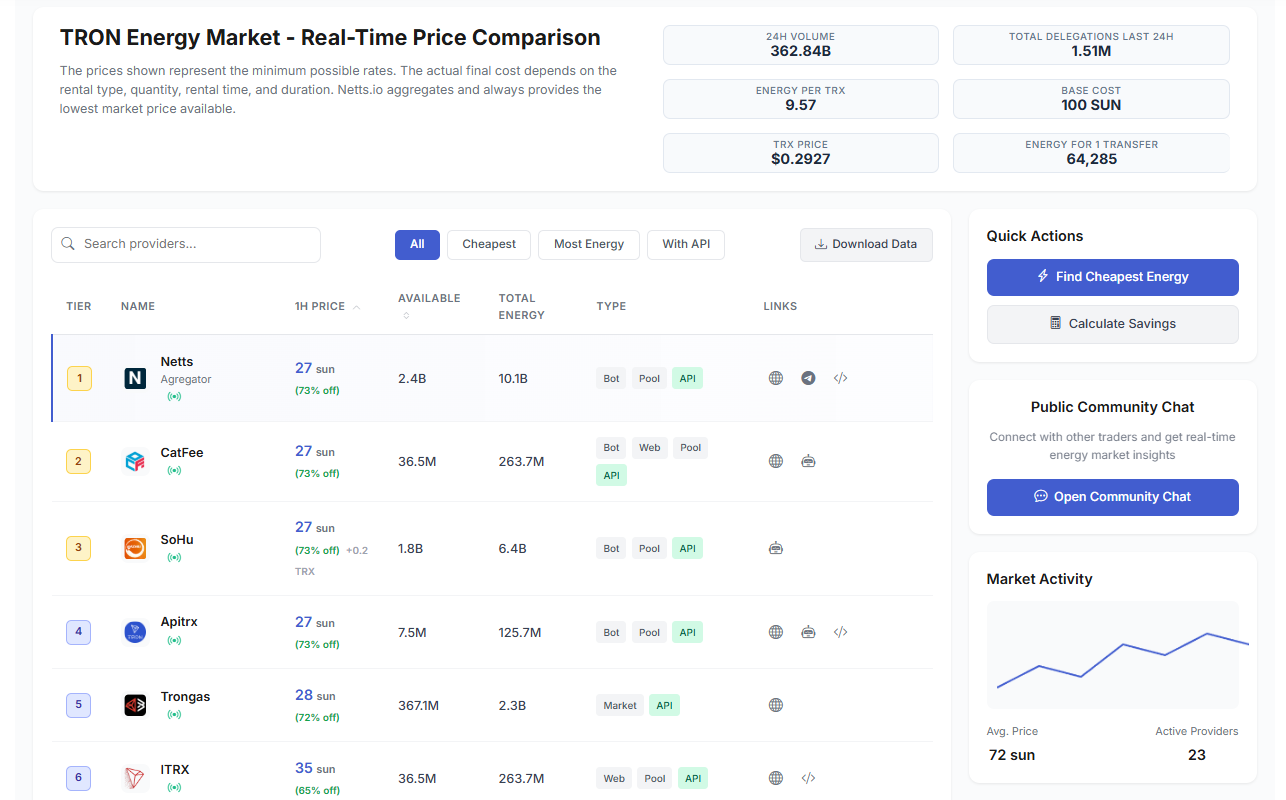
On the subject of keeping things live and transparent, however, the noise of life in a streaming world contrasts sharply with services built on clarity. In the world of digital assets, real-time data is critical. This is where a service like Netts Energy Market begins to show its value. It is a place for the users to look at the live market of TRON Energy, and hire services from different service providers in just one click. Rather than take the word of one possibly biased source, users can view the entire picture for themselves and be sure that they’re scoring the best rates available. This real-time tracking of Energy prices and opportunity to take action by leveraging clear data is a kind of utilitarianism which handholds the user and provides some much-needed transparency in a relatively opaque ecosystem.