Cryptofuturism: Dangerous Dreams?
Crypto futurism echoed flying-car hype — Bitcoin and Ethereum changed finance, but reality is slower, messier, and demands skeptical, practical progress.

So here's the deal: consider for a minute, just what 2015 actually looks like - at least according to "Back to the Future 2", made in 1989. It is a world where cars fly along aerial highways, kids glide about on hoverboards in self-lacing shoes. It was a future that was life-enhancing, electrifying and hilariously wrong, the way futures often are.
For decades, popular culture and futurists have predicted versions of tomorrow that look, in hindsight, quaintly sweet. We were supposed to be riding around in nuclear-powered cars, our dachshund loyalists wedged into gyrocopters at the behest of polite robots as a universal basic income reveals its jazzy self on the automated interstate freeway. From the mid-century perspective, however, magazines boldly proclaimed that housewives would soon be commanding armies of robotic servants and preparing full dinners out of nutrient pellets.
Those predictions weren’t empty musings; they expressed a deep and widely shared optimism about the trajectory of human development. They were a mirror of the idea that technology would solve our problems and push us into some kind of quasi-utopian development, always a few short years down the line.
But the future came anyway, and it turned out to be rather less dramatic. We also did get those smartphones and that internet — transformative technologies, by any measure — but the aesthetic and societal revolution that was so confidently promised never really came to pass. Now this disjuncture between expectation and reality provides an important lesson: while humans generally make great dreamers, we're not-so-great soothsayers. Our enthusiasm for what’s next frequently leads us to overstate the velocity of change and underestimate just how fiendishly complicated it is to make science fiction reality.
Digital Gold: The Crypto Dream
Now this most human of instincts — to speculate, dream big and predict the future by extrapolating from a single current event — has a hot new market on which to play. And if you were paying attention to the space in those early days, the rhetoric was nothing short of revolutionary. Bitcoin wasn’t merely a new asset; it was heralded as the successor to the entire global financial system. All through the heyday of bitcoin early adopters and evangelists would hold forth with messianic zeal about a future in which some form of decentralized digital currency would liberate humankind from the sins of central banks and their pockets full of inflated money. It was to be the great equalizer, an open and uncorruptible “peer-to-peer electronic cash system” that would allow even those without access to a bank account enter a more equitable global economy. People really thought they would be using Bitcoin to buy groceries and pay rent by now.
Then there was Ethereum, which took the dream one step further, to exponential scaling and beyond. It wasn’t just about money; it was a chance to remake the very internet itself. Ethereum, with its smart contract features, was breathlessly advertised as a “world computer. The one machine would run it all — from social networks not controlled by giant corporations and without the scourge of data harvesting, to fully automated legal systems and even new forms of digital governance. The promise was for a new digital renaissance, a more open, fair and user-centered Web3 that would be distinguishable from the internet we knew. Intoxicating were the predictions, with stacks of a future that was, once again, right around the corner.

Fast forward to the present, and perhaps it is analogous to not having flying cars in our garages in that, well, the reality is far more complicated and way more subtle. Bitcoin has not supplanted the dollar or the euro. Rather, it has become a volatile investment vehicle, functioning less as a currency and medium of exchange than as what some proponents have called “digital gold” — an apparently speculative asset to be held by investors interested in hedging other exposure, not one often used in the everyday routine of buying stuff.
Its constraints of transaction time and cost are in themselves serious obstacles to its widespread evolution as a global currency. Ethereum, for its part, has been a creative powerhouse, spawning the whole of DeFi and NFTs. But it has also been roiled by issues of network congestion and transaction fees that are prohibitively high, leaving its dreams of becoming a “world computer” as a work in progress, not an accomplishment. The revolution is not cancelled, but it certainly has been postponed and we can no longer predict with any kind of certainty what form it will finally take, so hotly do we debate that too.
The ICO Bubble and the LUNA Crash: Disaster Revisited
The story behind crypto isn’t just about individual companies failing; it’s about whole chapters of collective madness. The bubble of Initial Coin Offerings (ICOs) in 2017 is one that springs to mind. For about 18 months, it seemed like there was a new digital token launched every hour, each with a glossy website and a whitepaper promising to revolutionize some corner of the world — from dentistry to banana distribution. They were financed, on a speculative basis and with little other than a sketchy idea to go by along with a prayer, by billions of dollars of investor cash chased down rabbit holes as hype erupted and FOMO spread among investors. The result was a spectacular bubble, which was followed by an equally spectacular crash. The overwhelming majority of these ICOs were valueless, if not outright scams. It was a harsh lesson in the perils of speculative fever, and how the allure of innovation served as cover for an enormous unregulated gold rush.
Perhaps more relevant to the current discussion, a recent and perhaps more educational failure came in 2022 with the implosion of Terra and its “algorithmic stablecoin,” UST. This was a disaster of another sort. But more than a garden-variety con or an incompetent business, Terra had been a sophisticated complex system based on what many saw as a brilliant, auto-correcting economic model. Its stablecoin, however, was not backed by real dollars sitting in a bank somewhere but the product of a complex arbitrage engine with another token, LUNA.
For a while, it did — and the ecosystem eventually ballooned to a value of more than $40 billion. It wasn’t merely armchair speculators who bought into it, but some of the smartest people in cryptoland. They thought they had created a new, decentralized form of money. But like many algorithms, a fatal flaw emerged when market conditions changed. The system plunged into a “death spiral” and, in just a few days, the entire $40 billion ecosystem had been annihilated, along with the life savings of many who had placed their trust not in a charismatic C.E.O., but in the elegant mathematics of an ostensibly foolproof algorithm.
When Optimism Turns Toxic
Optimism is not a bad thing at all. It is the heart of invention and the source of progress. But left to run unchecked, optimism in finance can be a dangerously toxic force. It’s one thing to believe in a fairy tale; it’s another to gamble your life savings on it. The history of the crypto market is rife with cautionary stories about people and businesses undone by their own hype. That can be further amplified by powerful psychological forces, like FOMO, the “Fear Of Missing Out,” that can propel rational beings to do irrational things in a roaring market — as well as cognitive biases like the “planning fallacy” which lead people to underestimate risks and overestimate potential rewards.

The downfall of the Celsius Network is instructive. Its founder, Alexander Mashinsky, portrayed a level of confidence and security so absolute that it made his platform seem safer than brick-and-mortar banks. He peddled a dream of high yields with low risk — such a siren song for investors in the world of ultra-low interest rates. Millions believed him. In fact, he was making wildly speculative bets with customer money — which led to a catastrophic implosion that incinerated billions of dollars in the savings of ordinary people. Similarly, the spectacular collapse of the industry titan FTX exchange showed a shocking level of malfeasance at corporate level masquerading behind innovation and charismatic founder. In each, the story was more attractive than what happened in reality, and investors paid an awful price.
These are not isolated incidents. For every headline-making failure, how many untold stories are there of people who were enticed into dreams of getting rich quick? Folks who got caught up in the speculative frenzy of a bull market and put in more than they could afford to lose. They watched the price charts going vertical, heard the euphoric predictions from online influencers promising 100x returns and let their hope override their judgment. What was once a dream of total decentralization is itself a nightmare for many, who have lost their savings and perhaps any chance at ever recovering them.
Touring the Hype: A Plea for Cautious Futurism
So, how can we steer clear of these pitfalls? It’s not in discarding optimism, however, but rather in tempering it with realistic expectations — and due diligence. It means taking attention away from speculation on get-rich-quick schemes and bringing it toward projects and the ecosystem that are creating real, sustainable value. It needs a rationality that puts utility and stability ahead of hype and bullshit. A compelling case study in this cautious, utilitarian approach is the TRON network.
And where other chains have been characterized as volatile and speculative bubble investments, TRON has opted for a different approach focussing on practical use cases and efficiency, resulting in an incredible resilience that remains rock hard when supersonic market panic rains down upon us. In the blockchain world, one of the main problems is that of transaction costs. As a network scales up, operations can also be expensive to maintain at a level that does not exclude regular users. Not any more: TRON has tackled this head on, and now offers a world where access speed as well as the cost of interaction are key. This dedication to fundamentals is what makes a network not only survive, but succeed long term, by acquiring real users and businesses.
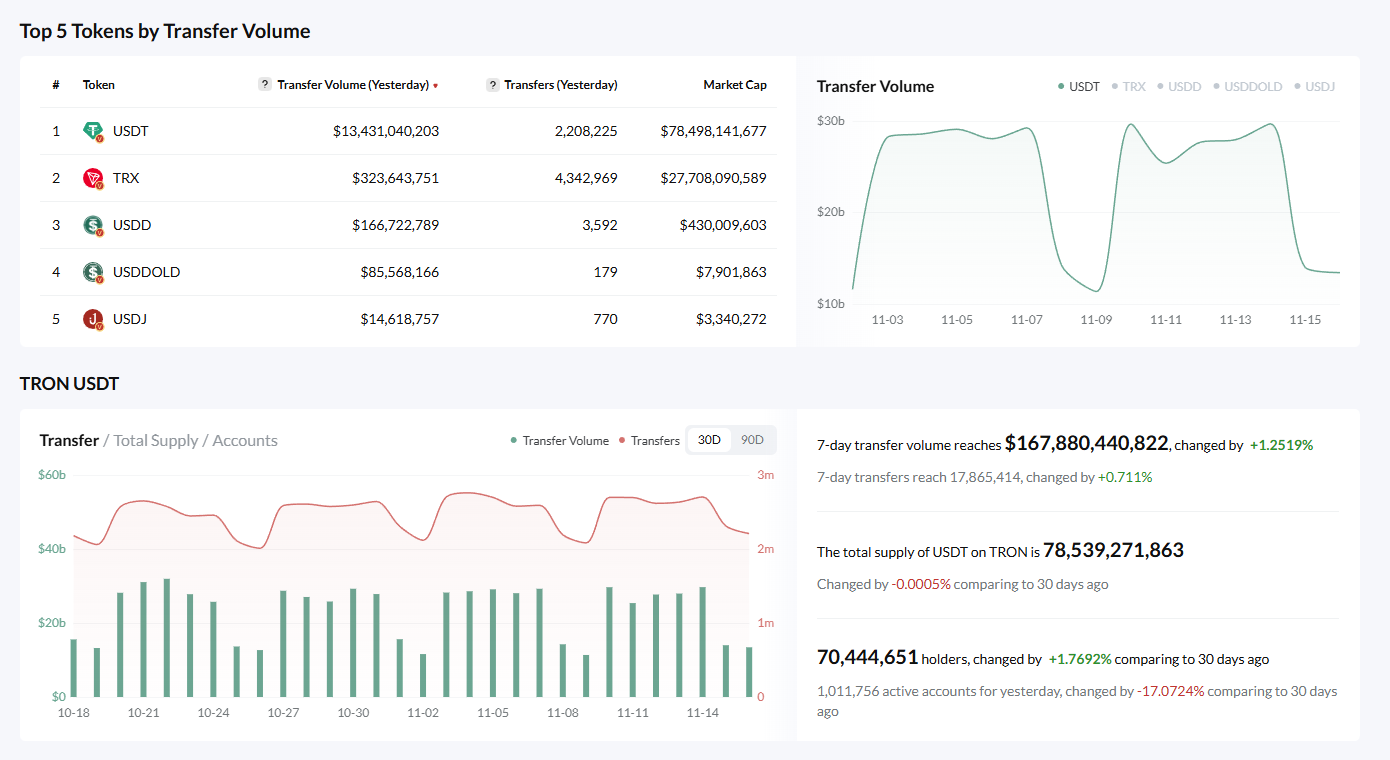
This pragmatic approach has spawned healthy service providers to aid consumers with such cost management. For example, the idea of rentable network resources such as Energy has become an attractive practice for power-aware users. When you’re sending payments with stablecoins like USDT back and forth all day, knowing about TRON Energy renting cheap is not just a neat little trick but an essential skill to using the network on any sort of large scale in retrospect. The creation of companies like Renting Energy underscores the maturity of a market that is transitioning from mere speculation towards addition of real value. The best place to rent TRON Energy, and knowing how to rent TRON Energy, is key in making sure that you’re using a network that is ready for business versus one that is being used purely by speculators. This quiet emphasis on practical utility is a hallmark of a project that’s in it for the long haul.
Ground Control to Major Tom
We started with the delightful futurism of “Back to the Future.” It’s easy to shake your head at those predictions now, but they have their uses. They remind us that our image of tomorrow is ever the child of both the longings and the fears of today. And so the dreams of crypto-futurism go. The idea of a true decentralized world is amazing, it’s powerful, and we should aim for it. But we cannot allow ourselves to be so blinded by the destination that we forget the treacherous terrain of the journey.
It is not that the last decade of cryptocurrency has been a failure, but rather revolutions are messy, complicated things that very rarely ever go in anything like a straight line. Change is slower and more incremental than we would like. Discoveries are succeeded by defeats, and ebullience is typically replaced by searing downturns. Just as 2015 began with no flying cars, the finance and internet future are likely to be a hybrid of old and new, centralized and decentralized for many years.
Before you mortgage your future to pursue a dream, always do reality checks. Ask the hard questions. And in the realm of investing, a side order of skepticism — served with our side dish of cynicism at no extra charge — is not only acceptable but also wise. The future is coming, all right — except it might not be the one you were promised, and preparing for that eventuality may well be the most sane response now.
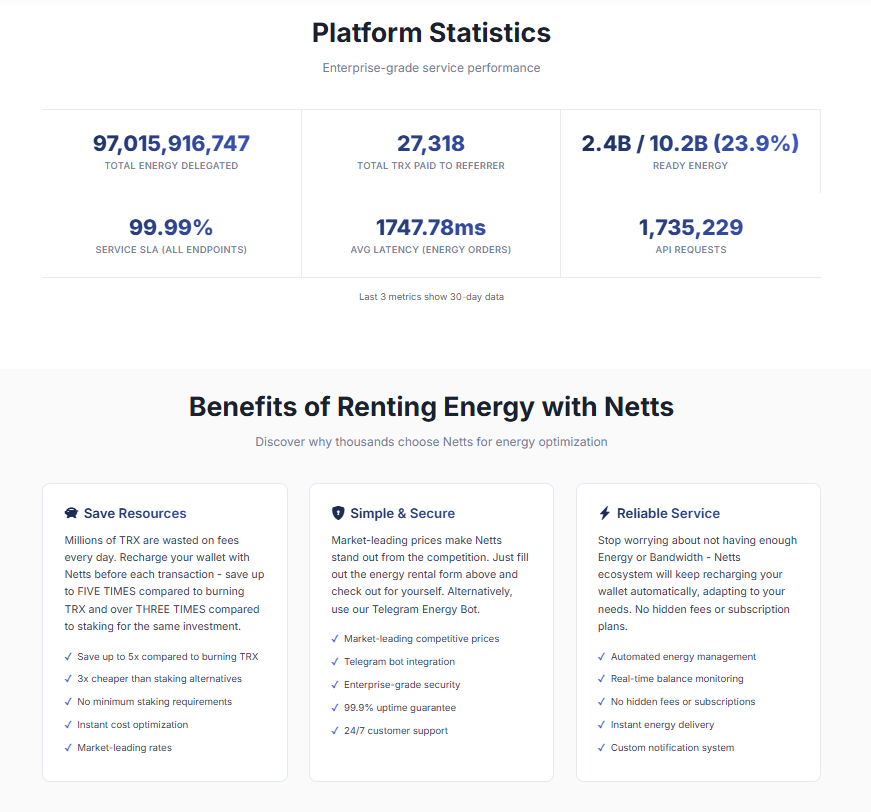
For TRON ecosystem participants, it is critical to maximize spending solutions on the network. The Netts ecosystem serves as a leading Energy aggregator, combining billions of Energy from various supreme verified providers, such as JustLend and private pools. Leveraging intelligent routing, this enterprise-grade service delivers best-priced Energy that can save users up to five times on TRX transaction fees for USDT transfers. With Netts, renting Energy takes seconds and there’s no need to stake or freeze crypto – a painless way to get the most out of resources on the TRON network.