Why Crypto Wins in Speed Compared to Traditional Finances
In this article, we will explain in technical detail the difference in speed between traditional finance and crypto, why crypto — especially TRON — wins.
The rise of cryptocurrencies is at the center of a whirlwind change never seen before in the world of finance. Though global commerce has long relied on traditional financial systems, the speed, efficiency, and flexibility of digital assets have begun to outstrip them. This is more obvious in the case of the TRON network steadily setting records for speed and general experience.
In this article, we will explain in technical detail the difference in speed between traditional finance and crypto, why crypto — especially TRON — wins, how it benefits clients, and whether this could be the future of money.
Bottlenecks of Traditional Finance Systems
The decades-long history of bank processing has led its financial institutions to opt for human-readable systems, legacy infrastructure, and an intermediary-driven network of transactions. While this method is robust in some ways, it also introduces significant runtime and performance bottlenecks. International transfers, for instance, could take days before they are cleared, especially when there are many banks and regulatory checks involved.
And even local transactions are generally limited to business hours, weekends, and holidays, resulting in money held in limbo for hours or days.
The delays can be attributed to these primary factors:
1. Third parties at every step (correspondent banks, clearinghouses).
2. Not available 24/7; processing in batch.
3. Compliance with regulations and anti-fraud verifications.
4. Cross-border complexities and currency conversions.
5. Legacy systems that struggle to keep up.
This, in combination, makes traditional finance a slow and sometimes uncertain place. People and companies are no longer prepared to wait; in a world that increasingly demands immediacy, these delays are becoming less justifiable.
Businesses that wait for international payments may experience cash flow problems, and individuals sending money to loved ones overseas may experience mental stress and inconvenience as they would be uncertain when it would arrive. So the friction isn't just a question of time, it's a transparency question too; users often lack visibility into where their money is in the process or why a transfer has not gone through.
How Cryptocurrencies Change the Game
Unlike this, cryptocurrencies function on decentralized blockchain networks that are built for speed and efficiency. In contrast to the traditional method of processing a transaction through a chain of intermediaries, crypto transactions happen directly between end users, and are validated by a network of nodes distributed around the world. Unlike traditional finance, this peer-to-peer structure removes many bottlenecks.
Perhaps the most important benefit is that blockchain networks operate 24/7 without any downtime, weekends, or holidays. Transactions can start and be verified any time of the day, and from any place in the world. Delegated Proof of Stake (DPoS) is an example of an automated consensus mechanism that enables processing in seconds instead of hours.
This has resulted in a system in which you can transfer funds across borders in seconds, with virtually no fees, and without any human intermediary. This provides more control, transparency and speed for users alike. Real-time transaction tracking and the elimination of traditional banking hours are revolutionary for any person or business.
That is, a freelancer in Asia can get paid by a European client on a Sunday night and have those funds available for his use in minutes.
TRON Network: Engineering for Speed
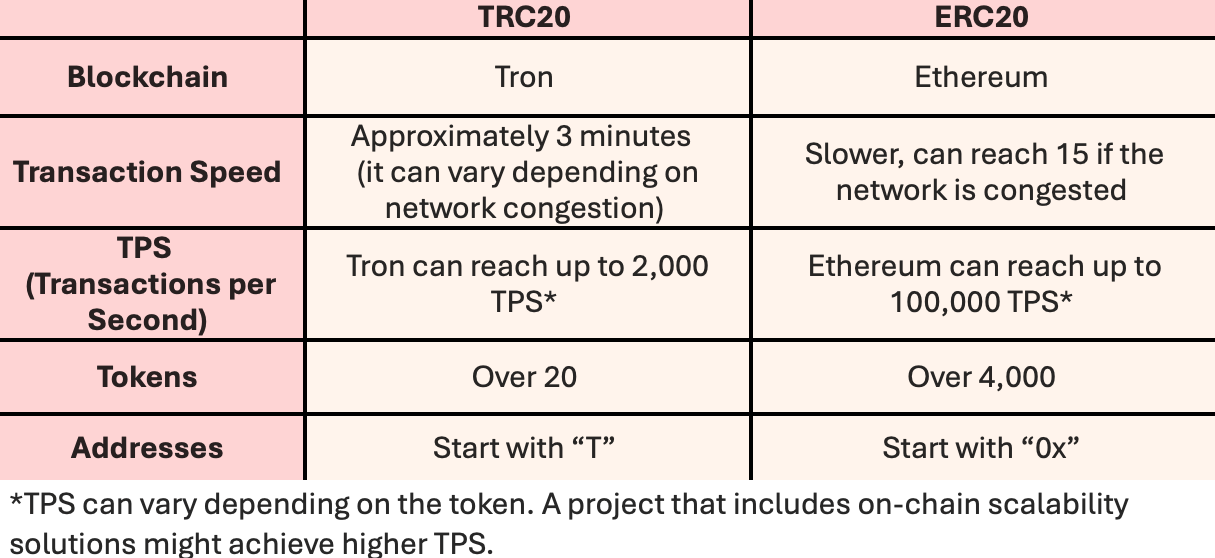
TRON is one of those platforms truly devoted to transaction speed and scalability, making it one of the best options available. The architecture of TRON is based on a Delegated Proof of Stake (DPoS) consensus mechanism, in which 27 Super Representatives are chosen by the community to validate transactions and produce blocks. To make things more efficient, this is how TRON arrives at a block time of approximately three seconds and a throughput of 2,000 transactions per second (TPS), which is far ahead of traditional finance and other chains.
And TRON has more technical innovations to offer. The network uses a three-layer architecture (Storage, Core, and Application layers) for efficient data handling and processing. Transaction finalization occurs almost instantly, making immediate confirmation possible and low latency a critical design objective, which is essential for gaming, DeFi, and real-time payments.
TRON possesses a specific characteristic of its own: the resource model based on Bandwidth and Energy. Transaction processing uses Bandwidth and executing the smart contracts consumes Energy. Fees are paid for the use of these resources, and resources can be obtained by freezing TRX tokens, which also enable free or low-cost transactions and the authority to vote in the network. This design will allow the network to be optimized, scalable and sustainable despite growing levels of usage.
For example, a developer of a dApp can create a game or financial service that performs thousands of microtransactions per minute with no concern for the network congesting or fees being erratic.
TRON being EVM-compatible means developers can smoothly migrate their apps over to TRON to benefit from its high throughput and low cost. This has seen an ecosystem of decentralised applications arise, benefiting from TRON’s technical strengths, ranging from exchanges and lending to NFT and games.
Renting Energy on TRON: More Flexible and Less Costly
TRON provides the feature to rent Energy for users and businesses that need to perform a high volume of smart contract transactions. This removes the need for anyone to freeze large amounts of TRX or burn TRX per transaction — a massive win. Renting Energy on TRON is safe and built into the blockchain: the user who delegates or stakes their TRX to grant you Energy never has access to your funds.
Advantages of renting Energy on TRON include the following:
Reduce fees: For example, if you have USDT on an address, it usually costs 13.84 TRX if you burn TRX to send USDT, and it costs only 2–3 TRX if you rent Energy. Without any USDT on the recipient side, it's 27.70 TRX cost (burn) vs 4–5 TRX (rent) — over 80% cheaper.
Flexibility: Rent only the amount of Energy you need, for just as long as you need it, without tying up your assets for long periods of time.
Fewer surprises: Renting Energy allows transaction costs to stay predictable, making planning and budgeting easier — especially if your business experiences variable transaction volumes.
It not only transforms TRON transactions into something faster, cheaper, and more user-friendly but also something available to all types of users — from an individual developer to an enterprise-level customer. For instance, a business that operates a payroll dApp can rent Energy to process thousands of payments over the course of a day, and then release it when demand subsides. That way, individual users who make transfers once in a blue moon can bypass freezing TRX or fretting over running low on resources at a pivotal moment.
Renting Energy is a simple, safe process. Energy rental markets are directly available to users via wallets or other third-party solutions, where the user indicates the required amount and time unit they need it for. The rationale behind the smart contracts makes the setup trustless so that neither party can reach each other's funds. It also grew popular during the expansion of the TRON ecosystem when increasing numbers of users were looking for more efficient ways to manage transaction expenses.
Fast Settlement and Global Impact
The ability to transfer money quickly and effectively is a major development for the whole planet. Crypto transactions — especially the fast type over networks like TRON — are entering a new era of financial inclusion and invention. Individuals in areas without formal banking are now involved in the global economy, able to transfer remittances with ease and gain access to new financial options.
The advantages are just as meaningful for companies. This leads to faster settlements, better cash flow, less operational risk, and the ability to respond to market opportunities rapidly. It simplifies and reduces the cost of cross-border trade by eliminating delays and hidden intermediaries. The rise of decentralized finance (DeFi) platforms powered by TRON networks is creating a whole new era of lending, borrowing, investing, and building — without the need to give a bank their share in the process.
Furthermore, the fundamental nature of crypto transactions — especially their speed — is driving rapid innovation in gaming, digital collectibles, and real-time payments. The momentum for crypto is only fueled further by more individuals and companies enjoying the benefits of cheap and fast remittances. This enables a charity to instantly distribute aid to those in need across various countries, or a small business to make a payment in seconds to suppliers across the globe.
Now migrant workers sending money home will benefit from the low commissions and short periods compared with traditional remittance services, ensuring more of their income arrives to their households. Crypto also offers a secure form of saving and transaction in countries with unstable currencies or where traditional banking infrastructure has not developed.
It also affects financial innovation. DeFi is erasing the central authority by providing new types of lending, insurance and investment anyone can access with an internet connection — and the changes have already started on TRON and similar networks. And, that democratization of finance that is, in many ways, what crypto is all about — shattering ceilings and opening doors for millions.
Outlook, Regulation and Better Tools
In the future, fast crypto transactions will provide even greater benefits. With the maturity of blockchain technology, we can expect higher levels of scalability, security and user experience. To meet future demands, networks such as TRON are already investigating cross-chain interoperability along with privacy improvements.
Regulatory trends are also evolving. While seeking solutions for security and regulatory risks, governments and regulators are realizing the advantages of the transparency and efficiency blockchain offers. Bringing crypto closer to mass adoption through digital identity solutions, anti-money laundering protocols, and expanding the use of stablecoins represents an important step towards a more accessible and reliable crypto ecosystem.
Instant and low-cost settlement for businesses will become a competitive advantage. Bitcoin, Ethereum, and stablecoins enable crypto payments which many supply chains, e-commerce, and service providers are already adopting, to access new markets, and provide better services for existing customers. And as instant transfers become more prevalent — during payroll, remittances, and even point of sale — the expectation for speed will be the rule rather than exception.
TRON’s deep-rooted innovation spirit, its strong developer community, and expanding ecosystem, are making it the prime leader of this new age. With its emphasis on minimizing the cost of adoption and maximizing end-user experience over everything else, and technical proficiency, the network will continue leading the digital finance revolution.
Netts has come up with tools like the USDT Transfer Calculator to help users leverage the speed and efficiency of TRON. The transfer of USDT on the TRON network uses up Energy and Bandwidth. The network burns your TRX (which is more expensive), if you don’t have enough resources. With the calculator, you can now tell how much Energy and Bandwidth are necessary for a TRC20 transfer, and the cost of transfer whether it be burning TRX or renting Energy.
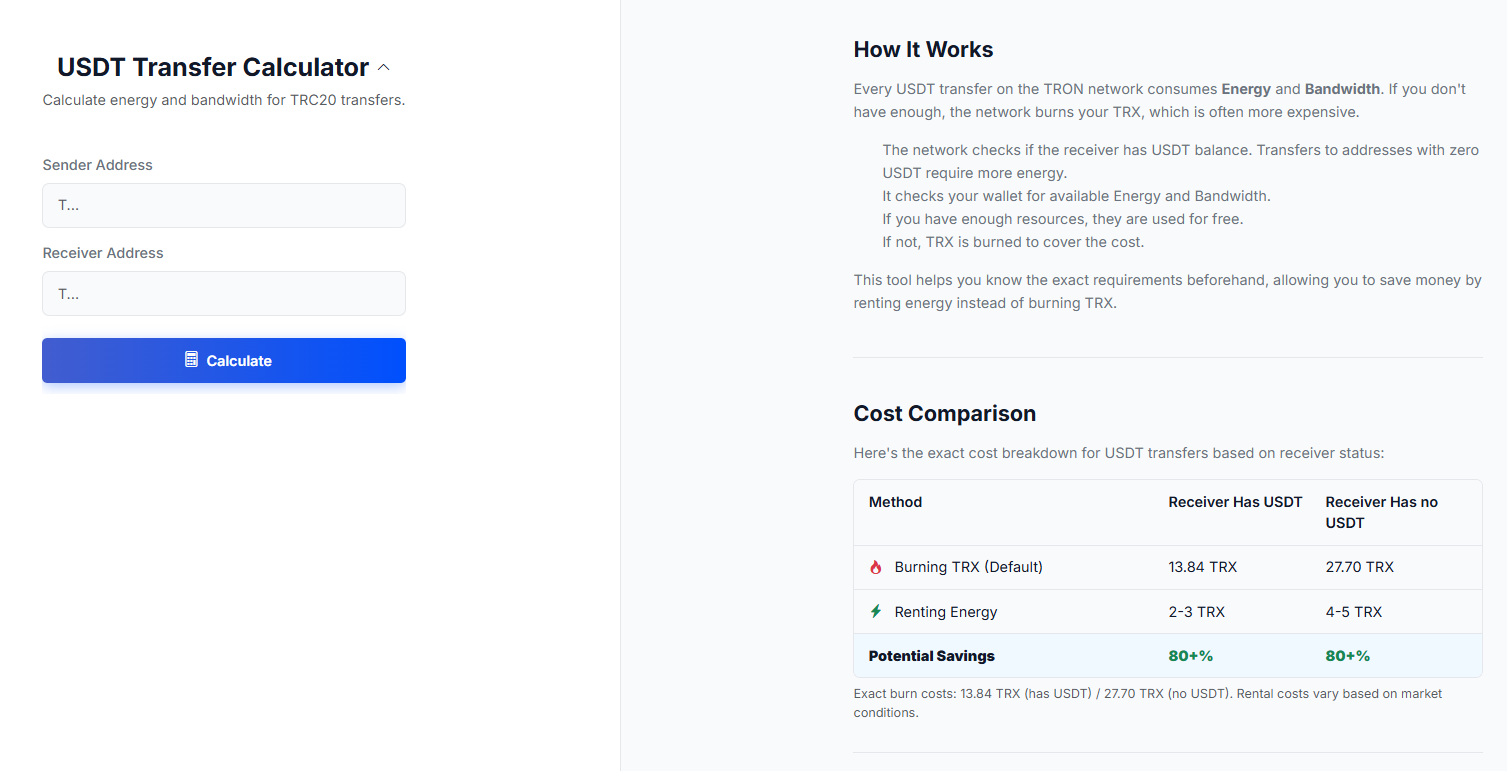
Because sending to addresses that have zero USDT already requires even more energy from the network, the tool can verify whether the receiving party has a USDT balance before it prompts the transfer. It also scans the wallet for resources and breaks down the cost for the user:
TRX Burn: 13.84 TRX (receiver includes USDT), 27.70 TRX (receiver does not include USDT)
Energy Rental: 2–3 TRX (if the counter-party has USDT), 4–5 TRX (if the counter-party has no USDT).
That means you can pay more than 80% less with Energy than burning TRX. The calculator also provides API access for developers and businesses who want to automate calculations and optimize costs at scale.
Essentially this tool helps you to decide wisely before you start transferring. An owner of a business, for instance, can aggregate payroll for dozens of employees, calculate the total Energy needed, and select the cheapest path while avoiding surprises. It enables an individual to determine whether the Energy should be rented for the one-time transfer or whether the current resources are enough. With transparency and usability at its core, the calculator is an invaluable tool for all parties to the TRON transaction.
It also goes alongside the macro trend of user-centric approach tools to crypto. While people are waiting for TRON to bring more functionalities, it is easy to expect much more advanced systems for resource management, cost efficiency, as well as fast and reliable transactions.
In conclusion, the TRON network is a prime example of how crypto is taking the win for speed in the financial sector. Its cutting-edge technical architecture, forward-thinking resources handling, and user-friendly utilities including the USDT Transfer Calculator have made TRON the gold standard for speedy, convenient, and reliable digital transactions. The benefits of crypto speed will only increase as the world transitions towards a more connected and digital landscape. This is not merely a technical achievement, but a catalyst of global economic transformation, financial inclusion and a new era of opportunity for anyone with an internet connection. This powerful ability to rapidly solve problems for clients, coupled with flexibility and low-cost operations, is necessary to allow for scalability.