AI and Crypto Found Each Other — So What Now?
AI and crypto are converging fast — from blockchain analytics to AI agents spending stablecoins. What's being built, what's at risk, and who's worried.
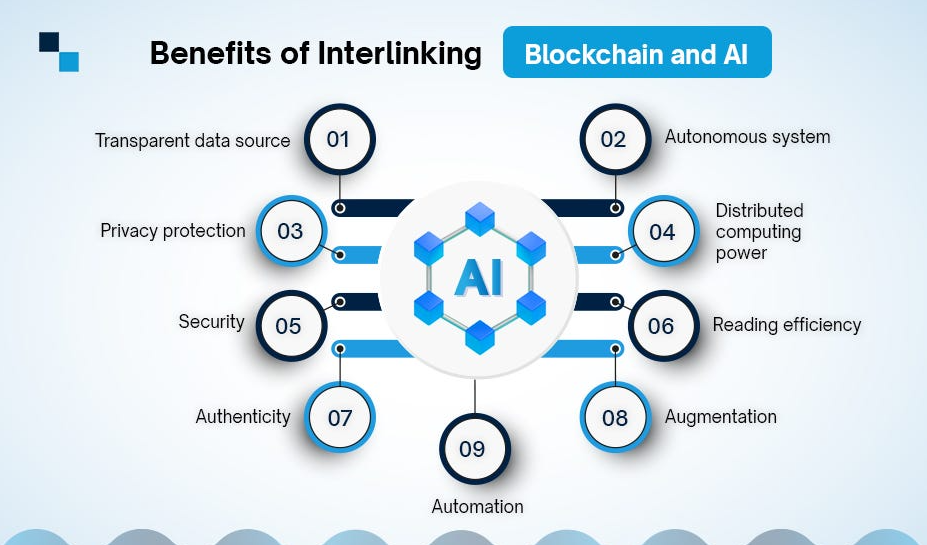
It was probably inevitable. Two technologies that until recently had managed to upset global finance, provoke governments, inspire cultlike devotion and frighten the establishment in equal measure now found one another. Artificial intelligence and cryptocurrency — previously two separate narratives of disruption, emerging in parallel — are merging into one big story about the future of how value moves, who controls it, and whether “who” is even the right word anymore.
This convergence is not theoretical. It’s happening in live markets, in venture-capital boardrooms and in the legislative chambers of Brussels and Washington; it’s taking place in the server farms of companies you’ve never heard of but whose choices will drive what the next iteration of the internet looks like. The fusion of AI and crypto is producing things that truly didn’t exist before — and presenting legal, ethical and economic questions for which no one has sufficient answers at this point.
The public response, as you might imagine, runs the gamut from unquestioning excitement to gut-level antipathy and not much subtlety in between. Those already wary of crypto have found more reasons to worry. Just don’t let that new dimension of alarm be for people who are already alarmed by AI. And somewhere in between, the actual integration is happening anyway, propelled by the same logic that has propelled every other instance of technological convergence: the stuff connects, the money is there to be made and those doing it are not on hold for permission.
What Crypto Already Does for AI — and Vice Versa
It is useful to know what the practical integration looks like on the ground before tackling harder questions. Because the AI-crypto intersection is not one thing — it’s many things happening at once and in different layers of the technology stack.
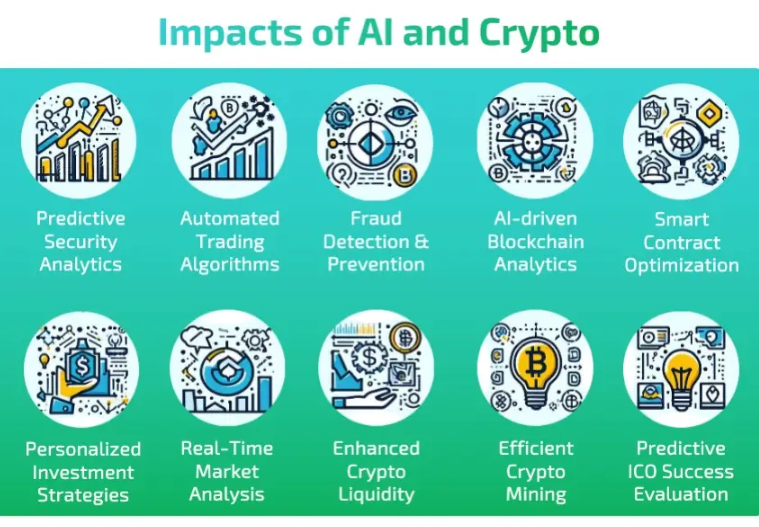
But on one level, the application of AI to blockchain data mirrors that of every other large dataset: finding patterns, detecting anomalies, generating actionable intelligence. Blockchain analytic firms have integrated machine learning into their platforms to surface suspicious transactions, detect wallet clusters tied to known criminal actors and track the flow of funds across chains in real time. It has become integral to the ways law enforcement seeks illicit crypto activity. The same unmoving ledger that makes blockchain useful for criminals also makes it an extraordinarily rich data source for AI training — every transaction forever recorded, every address linkable to every other one, a permanent and complete financial history no other dataset can provide.
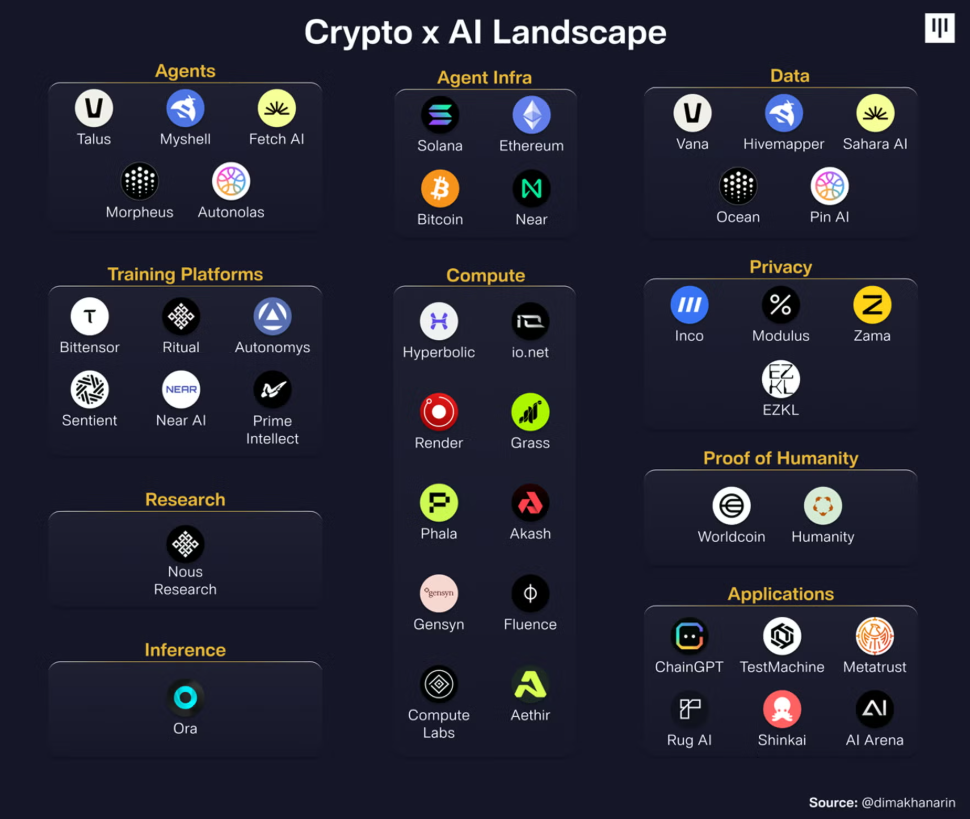
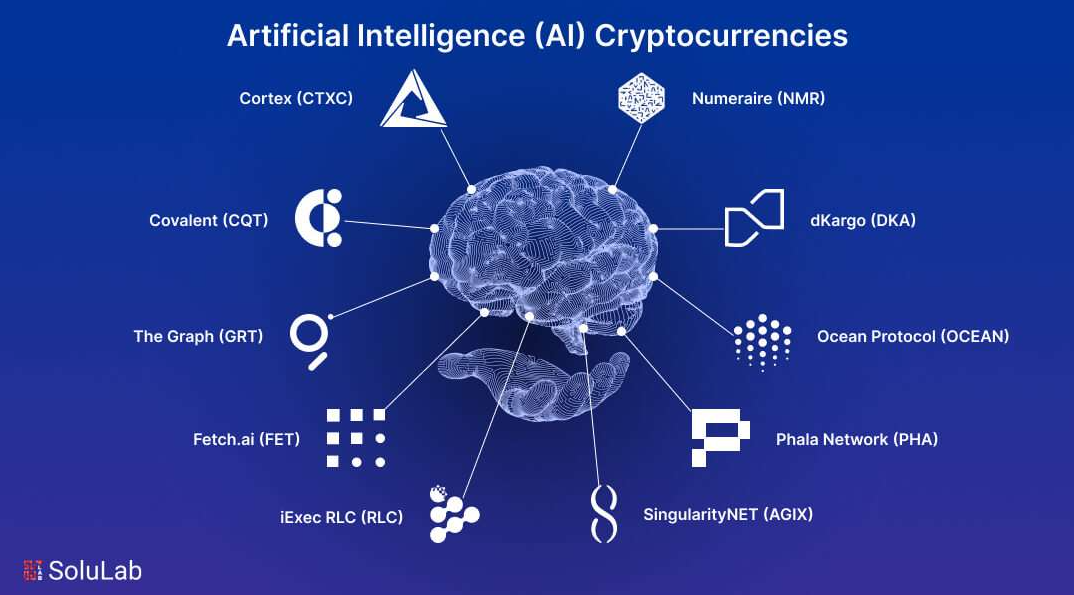
On another front, AI is making its way into the very infrastructure of crypto. Bittensor is a decentralized machine learning network where AI models train together and are rewarded with tokens for the quality of their contribution. It currently supports more than 128 active subnets and has fully trained large language models on-chain — an achievement that, a few years ago, would have been considered impossible. Render Network connects creators and developers with distributed GPU capacity around the world, orchestrating that sharing along blockchain rails and enabling it to cost orders of magnitude less than running the compute needed to enable AI. Ocean Protocol enables data owners to monetize their datasets to AI developers while never losing custody of the raw data — the algorithm comes to the datum rather than having the datum moved to the algorithm.
These are not vapourware projects that produce lofty whitepapers and have no real utility. They are a proof of concept for an ecosystem that works and which is drawing substantial capital. By 2025, crypto venture capital reached $7.9 billion — an increase of 44 percent year over year — and about 40 percent of that figure pitched specifically into AI-integrated blockchain projects. People are placing their money behind the convergence because those people believe the phenomenon is real and lasting. When the major crypto analytics firm Nansen introduced AI-powered agents that can interpret on-chain data, responding to questions and delivering timely market insights in natural language, it was not for show — it underscored a more profound point: AI renders blockchain data readable, accessible and usable by audiences that previously did not know how to read it.
This combination creates a virtuous cycle: blockchain produces uniquely structured, permanent, and verifiable databases that AI systems can work with; AI systems render blockchain data interpretable and actionable for human decision-makers; and AI systems are increasingly becoming participants in the economies of blockchains themselves — rather than simply being used as a tool to analyze them. That last development is where things begin to get really weird.
Machine Economy: The Day AI Gets to Spend Money
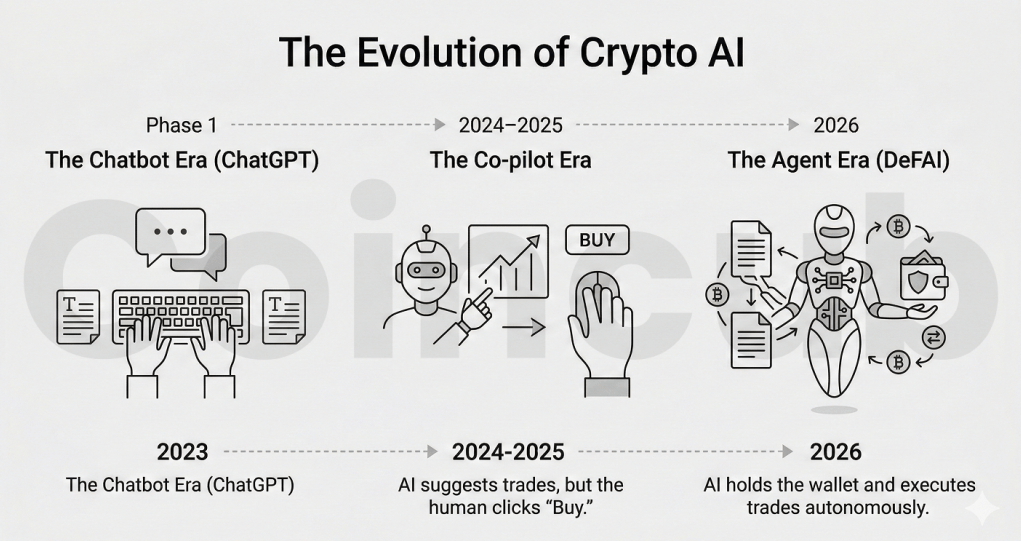
Here is the idea that most fundamentally reshapes that picture. All of the above uses AI as a tool — something humans employ for knowledge acquisition or interaction with blockchain. The next phase is fundamentally different: AI as an economic actor in its own right, an entity that does not merely analyze transactions but also authorizes and executes them by itself.
This is the thinking behind what are becoming known as AI agents: software systems that can act in the world — browsing, purchasing, tapping into APIs, booking services and carrying out tasks — without a human being telling them which step to take before each individual step. An agent that needs to research a market may need to buy a proprietary dataset. In case you have a web service, for example, compute resources would be something to pay for. Someone tasked with managing a workflow may have to pay a fee in order to access an external API halfway through their task. In all of those cases, the agent needs to spend money — in real time and with no humans involved — in amounts that could be a fraction of a cent or several dollars per transaction — thousands of times an hour.
The challenge is that all of the existing payment infrastructure was built for human beings. Credit cards come with billing addresses and cardholder agreements. Identity documents for account holders are needed for bank wires. Subscription services first need a reverse mouse click. All of these mechanisms have friction built in — on purpose, because that friction is also a protection against fraud and error. All of it is completely incomparable to software making tens of thousands worth of micropayments every second in service to some other task.
Stablecoins — and particularly the infrastructure behind USDT dispatching, as well as other on-chain movements — grant a service that no legacy payment rail can provide. A stablecoin transaction needs no cardholder agreement, no existing banking relationship, no mistaking of identity beyond a wallet address. It settles in seconds. It works for micropayments that would be eaten up entirely by bank fees. USDT settlements on efficient networks like TRON barely incur any fees at all, a whole world apart from traditional processors who charge even for one transaction and god-knows for thousands. The economics simply play out in a way that no credit card network, ACH transfer, or PayPal integration can do at machine scale.
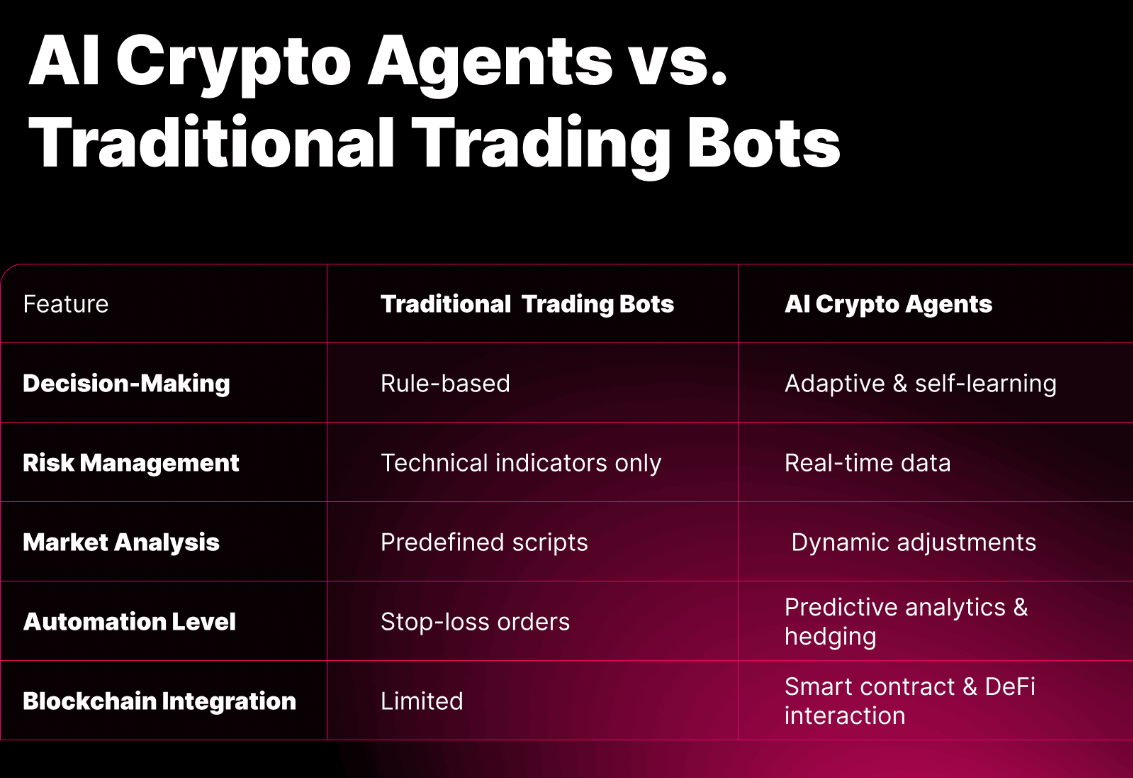
This logic underlies what might be the most consequential infrastructure announcement of the past year. Coinbase and Cloudflare have collectively announced the x402 Foundation — which kickstarted with members like Microsoft, Google, Amazon Web Services, American Express, Stripe and Circle around the table alongside Solana Foundation among other starters — to custodiate an open protocol known as x402 which incorporates stablecoin payments natively in HTTP (the standard unit of web information exchange). An AI agent that runs into a data paywall can simply pay in USDC and finish its task within the same interaction, no humans necessary. The USDT token send — or its equivalent in USDC — emerges a native part of the web request itself, rather than as a different step that’s treated by a separate system.
The race to construct this infrastructure is already fierce. The latest is Cloudflare, which also wants to build its own dollar-pegged NET Dollar for AI agents to exchange money amongst each other. A competing standard called the Machine Payments Protocol was introduced by Stripe along with a chain set up for that — Tempo, built around stablecoin settlements — the crypto venture firm Paradigm. The race is on to be the default payment layer for a machine-to-machine economy that doesn’t yet fully exist but for which every major technology company is gambling that it will.
Sam Altman’s identity project, World, is working with Coinbase and the x402 ecosystem specifically to tackle one of the stickiest issues this raises: How do you prove there’s a real human behind what an AI agent does? The solution they’re constructing involves cryptographic proofs of human identity that can move alongside an agent’s transactions — an effort to maintain accountability in a system otherwise designed to make accountability almost impossible to track down.
That question of accountability is not an academic one. Virtuals Protocol is one of the more active protocols for deploying AI agents with on-chain economics, boasting over 18,000 deployed agents tracked in excess of $470 million in cumulative agent-based economic activity. It has also watched its token drop more than 80 percent from its all-time high — an important reminder that the hype cycle for AI agents is following the same playbook as every other previous crypto hype cycle. And when a nine-year-old vulnerability of an AI trading agent resulted in over $45 million worth of security incidents in 2026, it showed how real, rapid and large-scale damage can be caused by AI agents acting on their own within financial systems. The risks are not hypothetical.
Regulators Lace Up Their Boots
The governments watching this convergence haven’t stood still themselves, but their responses say more about how challenging the problem is than how well equipped they are to address it.
On AI, the European Union has gone the farthest with the EU AI Act — the most expansive piece of AI regulation to date. Under the Act, any system that interacts with a human must disclose it is AI. It requires labeling of deepfake content. For systems deemed “high-risk” — a category that encompasses AI used in credit scoring, recruitment and educational assessment — it includes stringent transparency and human oversight provisions. The penalties might include fines of up to €35 million (or 7% of global company turnover), putting the regulation on a similar tier as GDPR. The ban hit the highest-risk AI categories in early 2025, and requirements for high-risk systems are being phased in until 2026.
There is no unified AI law in place in the United States, but enforcement is underway through existing frameworks. It has applied that with respect to AI by establishing that using such technology in order to deceive or mislead users is an unfair practice under consumer protection law. The Algorithmic Accountability Act is still making its way through the legislative discussion. Individual violations draw fines of $50,000 and civil liability can add exposure in multiples. Russia is pushing a draft of an AI law that mandates disclosure any time a user interacts with AI, notification when decisions are made without humans involved in the process and for individuals to be able to decline interacting with AI — all in accordance with administrative and criminal liability that would apply whenever those responsible “knew or should have known.”
The one thing all of these frameworks have in common is that they were built around the human-AI interaction. They take for granted that there is a human on at least one side of the exchange who needs to know, be protected or be empowered to refuse. That assumption collapses entirely when both sides of a transaction are AI agents. In the case that one software agent is paying another for an API access via a USDT sending operation on TRON, there are no humans to notify. The disclosure requirement is nonsensical. The “know your customer” infrastructure that exchanges painstakingly built out over years hinges on a customer with a photo ID. None of this translates neatly into machine-to-machine commerce.
The legal questions this raises are not trivial:
1. When an agent of a buyer and seller transacts autonomously, who is the legal counterparty?
2. Who’s liable if an agent causes a financial loss — the user who deployed it, the company that built it, or the platform that hosted it?
3. Can an algorithm be “identified” in the same way that financial regulations require counterparties to be identified?
4. What are the implications of AML regulations for USDT fees accruing from an agent with no legal personality and no jurisdiction of residence?
These are the unresolved questions swirling around machine commerce, and a new infrastructure is being erected before anyone has answered them. The GENIUS Act imposed compliance requirements on stablecoin issuers without discussing the ramifications when the end user of those stablecoins is someone who isn’t even a user. The EU AI Act transparency obligations depend on there being a human who can be informed, not a protocol who cannot. The regulations of today were created for a world that’s already being outmoded.
Luddites Objected Too
The backlash against the AI-crypto convergence follows a familiar arc, one that is more readily recognizable the further back you step to get historical perspective.
Skeptics of crypto have long claimed that it is primarily a vehicle for speculation, fraud and criminal activity. Critics of AI have charged that it will take away jobs, centralize power in a few dominant companies, produce misinformation at scale and carries risks its creators are not treating with sufficient gravity. Neither set of worries is unfounded — the documented harms of both technologies are real, and not nothing. But integrating the two does not just double the worries. It generates a fresh class of objection: one sort of moral panic, in which the coming together of two — already-suspicious thing — is interpreted as showing that everything is heading irreversibly off the rails.
Certain specific fears surrounding the AI-crypto marriage are valid. The danger that AI systems might game crypto markets — initiating coordinated pump-and-dump operations, front-running trades, generating phantom demand by placing orders that are canceled before they execute, or activate herd behavior to fracture-apart price crashes — is documented fact, not speculation. What happens when a 24/7 market — without circuit breakers — and AI agents running at machine speed get into the same crawl space? Regulators designed for human-paced trading have no tools on the shelf to manage such events. The concentration of AI payment infrastructure in the hands of a few big platforms — Coinbase, Cloudflare, Google, Microsoft, Amazon — gives rise to legitimate questions regarding who ultimately owns the rails of machine commerce and what that means for anyone not included in that group.
But a lot of that opposition resembles something much older and less analytically interesting. In the early nineteenth century, English textile workers — the Luddites — smashed machinery that they feared would take away their livelihoods. Their economic grievances were real; the upheaval of industrialization was an enormous shock that fell very unevenly. But the stoppage from technology did not come. It persisted, proliferated, remade the world economy and ultimately produced more economic activity, and more kinds of work, than it destroyed — but not without tremendous pain in making the transition. The word “Luddite” remained in the language not as a descriptor of a successful resistance movement but rather as shorthand for ineffective opposition to progress.
And so the pattern has repeated with reliable consistency ever since. Critics of the printing press foretold that it would unleash heresy and disrupt social hierarchies — they were correct about the disruption and stupid to think there was any way to stop the press. Its foes fretted that information would move too quickly for human judgment to cope with. Critics of the automobile said it would never displace the horse. The opponents of the internet warned — not without good reason — that it would be used for crime, fraud and social breakdown, and they were right about all that and very wrong about the net effect. Crypto had its own, with years of confident predictions from respected people that it would be banned, that it would collapse, that it was a Ponzi, that nobody would ever take it seriously. Then BlackRock filed for a Bitcoin ETF and nation-states began adding it to their reserve asset, and the overton window changed.
The convergence of AI and crypto will probably follow a similar arc. The integration will not cease because regulators have yet to hash out the rules, or because critics have legitimate concerns about specific risks, or because a handful of high-profile failures — such as $45 million worth of agent-related security incidents — make the technology appear fragile. Capital is flooding in, protocols are being coded, major platforms are on board, and first principles logic plays out well: if you want autonomous systems to transact they need a way of doing that — and blockchain provides it better than any option available today. The rules — imperfectly — will catch up. New issues are going to crop up at a time no one expected. And in 20 years, the alarmism of this era will seem about as prescient as alarm over the telegraph.
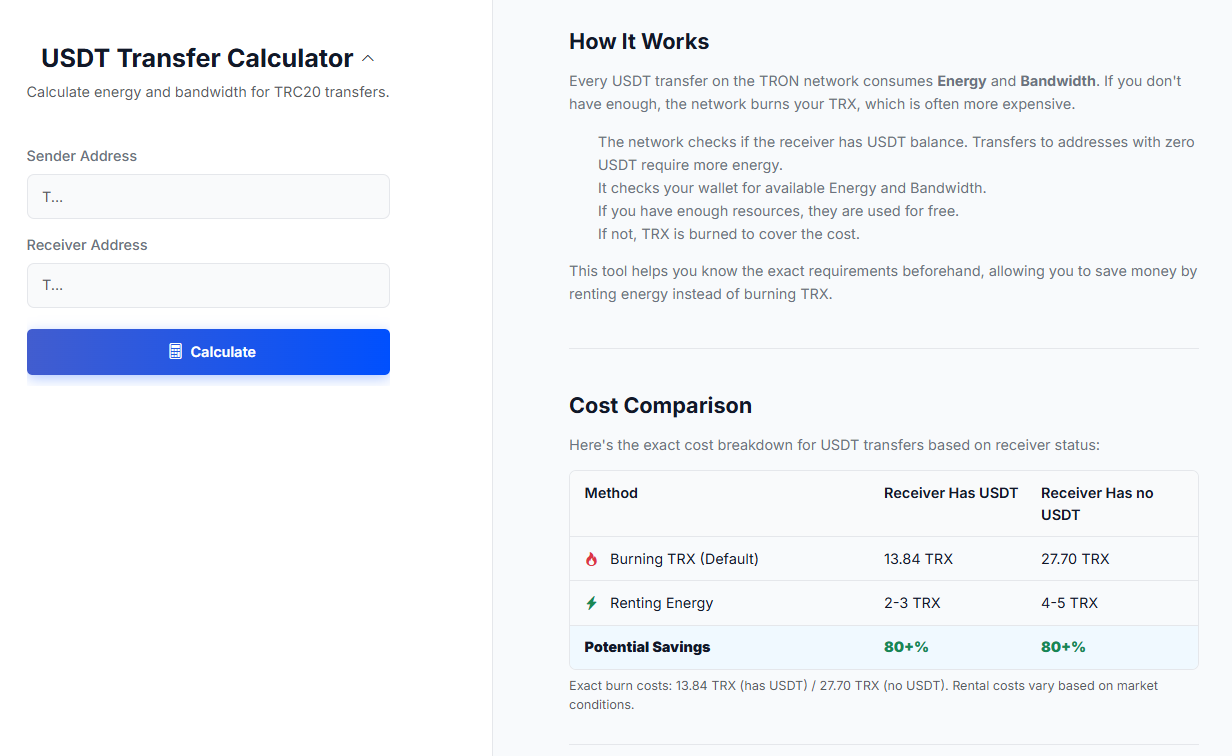
For users of the TRON network who are already operating in this ecosystem of stablecoins, the most practical question is probably simpler and more immediate than any of those above: what does it actually cost to make a USDT transfer, and how can those costs be minimized? Netts (netts.io) has a USDT Transfer Calculator that automatically calculates the exact Energy and Bandwidth needed for any TRC20 transfer — displaying beforehand whether it would burn TRX or rent Energy. To the numbers: burning TRX by default requires 13.84 TRX of a transfer to an already USDT-holding address, and 27.70 TRX when transferring to an address with zero balance of this coin, renting Energy reduces these indicators to 2–5 TRX and saves on average over 80 percent. For anyone issuing USDT at any significant volume, this is just sound business to know ahead of time.