Crypto and Taxes: Illusion of Loophole?
Al Capone's ledger put him in prison. Can crypto's anonymous wallets rewrite that story — or are tax authorities already a step ahead?

As Benjamin Franklin famously wrote, the only things certain in this world are death and taxes. He wrote this in 1789, so he had close to two and a half centuries in which to be proven right before cryptocurrency came along and gave a big part of the internet an argument.
The notion that crypto might offer a real-world way to escape being taxed isn’t some fringe view hatched by basement-dwelling Internet trolls in 2013. It has ideological roots going back before Bitcoin, was intentionally baked into the design of early digital cash systems and serious people with serious money movement have been attracted to it for decades. The “taxation is theft crowd” didn’t just arrive at crypto by accident — for many of them, crypto was always the destination. A digital asset that resides on a public, decentralized ledger and moves peer to peer, with no bank account required for transfer, no identity verification needed when you make a transaction and only the pseudonymous addresses of its sending and receiving parties remaining — what government’s going to see that? What IRS agent is going to audit a wallet that goes nowhere?
This argument has been explored at length over the last fifteen years. The outcomes are both intriguing and complicated, and in some instances lethal to those who put everything on its success.
Al Capone and the Ledger That Took Him Down
At its height, Al Capone ran the most lucrative criminal enterprise in American history. The Chicago Outfit ran bootleg alcohol, gambling, prostitution and extortion through a city of millions during Prohibition — with profits that federal prosecutors would eventually estimate at more than a million dollars over the five years they studied. Capone was believed to have ordered murders. He was allegedly responsible for the St. Valentine's Day Massacre. He was the country’s most wanted criminal, and law enforcement had been trying to take him down for years.
What finally worked was bookkeeping.
One of the agents, Frank J. Wilson, an Internal Revenue Service special agent, spent years compiling financial records that traced Capone’s spending spree — $21,550 on furniture alone; $6,180 for custom-made suits; thousands in telephone bills; parties and a Miami property complete with its own dock. The logic was elegant and devastating: Capone lived like a man with a very large income. That income was never declared. So he had to pay taxes on it. The income did not need to be from crime. The IRS does not care where the money came from; it cares whether taxes were paid. On Oct. 17, 1931, Capone was convicted on five counts of tax evasion — charges stemming from $215,000 in unpaid taxes on more than a million dollars of income. He got 11 years in federal prison, a $50,000 fine and a bill for back taxes plus interest.
The lesson prosecutors learned from Capone — and have used for decades — is that you do not always need to prove the crime. You prove the money. Courts have consistently held that illegal income is subject to tax, meaning the paper trail around money often serves as a prosecution tool even when everything else has been scrubbed. And the ledger sent Capone away when nothing else would.
Now imagine Capone in 2024 with a crypto wallet. These bootleg profits come in as Bitcoin. It is scattered across a dozen wallets, routed through a mixing service and converted into Monero for another layer of obfuscation before being relocated to a hardware wallet stored in a safe-deposit box in the Cayman Islands. The F.B.I. looks at Capone’s spending — the suits, the parties, the Miami property — then attempts to drill backward in time to trace where this money came from. And the trail leads to a series of characters that no one can connect to Alphonse Capone of Brooklyn.
And this is the situation that the crypto tax evasion community has been cheerfully explaining since about 2011, and it’s not completely wrong. But neither is it completely right.
Allure of Untraceable Money
Even before Satoshi Nakamoto published the Bitcoin whitepaper, a strong ideological basis for crypto tax resistance had already been laid. The cypherpunk movement of the 1990s had been attempting to solve the puzzle of how to enable cryptographic privacy for decades — not merely a technical exercise, but one steeped in political intent. Cypherpunks believe the presence of strong cryptography in private hands could change the relationship between individuals and institutions, including governments. If you could transact anonymously, governments could not track you. If they didn’t monitor you, then they couldn’t tax you. To the extent that they could not tax you without your voluntary cooperation, the entire coercive apparatus of state finance was structurally weaker.
Here comes Bitcoin, which to many in this community appeared like the first practical answer to all of this at scale. The original block had a message about bank bailouts — an intentional editorial comment on what Nakamoto thought of the then-existing financial ecosystem. Old Bitcoin forums crackled with libertarian excitement. People spoke of self-sovereignty, financial freedom and the chance to opt out of a system they’d never agreed to participate in. The “taxation is theft” framing spread widely, portraying tax compliance not as a legal obligation but as merely an act of volition — one that sufficiently sophisticated individuals might refuse.
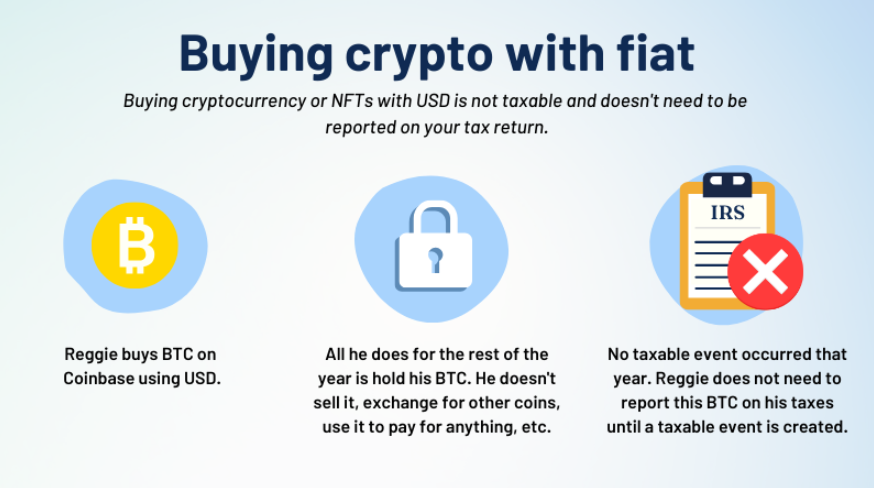
This narrative had telling support for the first few years. Tracing early Bitcoin transactions was hard because there were sophisticated tools that simply did not exist yet. As a pseudonymous address system, this meant that without extra linking — like a name tied to an address, or KYC record from an exchange (or slip in operational security) — there was no clear way for the IRS to connect one Bitcoin wallet with a specific human. The agency's response was slow. The infrastructure did not exist. The legal framework was unclear. And for a brief period, people made real money with Bitcoin without reporting it, and nobody cared.
That opportunity has now practically been missed. But the shutdown was slow enough that the initial optimism hardened into eternal ideology for a particular cohort — people who regarded those early years as proof of concept, and who continued to operate under the assumption that government could never catch up. Some of them were right. A surprising number were wrong.
Cases That Got Prosecuted
John McAfee was the most colorful test of the thesis. For years, the antivirus software pioneer had been a vocal crypto booster, blending an authentic enthusiasm for the technology with a public persona that became more and more unmoored — featuring armed guards, exotic locales and social media posts seemingly signaling that he would never pay taxes in good faith again. He put words to deed: federal prosecutors alleged that McAfee earned millions of dollars in crypto income between 2014 and 2018 — consulting fees, speaking engagements, and promotional deals — without filing any income tax returns at all. He was detained in Spain in October 2020. He was found dead in his jail cell in June 2021, just after Spanish courts approved his extradition. The official cause of death was ruled a suicide. McAfee had tweeted in 2019 that if he ever "suicided" himself, he was murdered. At all events, he didn’t live long enough to put his theory about the IRS to the test in a courtroom.
Roger Ver, who earned the nickname “Bitcoin Jesus” in the industry for his early and evangelical promotion of the technology, had a cleaner record going into it — and a far messier exit. Ver had renounced his U.S. citizenship in 2014, a decision that necessitates paying an “exit tax” on assets at the moment of renunciation. Prosecutors said that he claimed no Bitcoin ownership to the I.R.S. at the time, and then sold nearly 73,000 bitcoins for $240 million in 2017 — post-renunciation — and did not report or pay taxes on those gains, defrauding the I.R.S. of at least $48 million. He was arrested in Spain in April 2024, and fought extradition for months. By October 2025, Ver had settled with the Justice Department for $48 million — a tentative sum that enabled him to avoid criminal conviction through a standard deferred prosecution agreement. It was not jail, but also not freedom — and it cost $48 million.

The case that may best demonstrate how far enforcement has come is Frank Richard Ahlgren III, who in December 2024 became the first person ever sentenced to federal prison for cryptocurrency tax evasion alone. Not a hack, not money laundering, not exchange fraud — just unreported Bitcoin gains. Ahlgren had sold about $4 million in Bitcoin from 2017 through 2019, and when he finally filed on the sales (albeit late) he inflated his cost basis to minimize his apparent profit, hoping that the whole thing would go away. It did not. This resulted in a twenty-four-month sentence and restitution of over a million dollars.
These are the headline cases. The less visible enforcement, arguably, is more revealing. The IRS sent 10,000 letters to taxpayers after acquiring records via a John Doe summons to Coinbase — an action that compelled the exchange to provide account information on customers with large transaction histories. About 577 of those taxpayers amended their returns, resulting in $15 million in new tax assessments. Kraken also had demands for customer data that covered anyone who had transacted the equivalent of $20,000 or more in any given year. The same treatment was issued to Poloniex, Circle and sFOX. The dragnet wasn’t aimed at the famous; it was directed at the average taxpayer who thought that their exchange account was nobody’s business but their own.
The Samourai Wallet case is about a different enforcement vector. In November 2025, the co-founders of Samourai — a Bitcoin privacy wallet that is uniquely built to obfuscate transaction trails through a coin-mixing service — were sentenced to five and four years in federal prison respectively for facilitating upwards of $237 million worth of transactions that prosecutors described as infrastructure for money laundering. They were not, on their own, the tax avoiders; they were the ones who made the tools. The government argued that building mixing infrastructure with the intent to help people hide financial trails from law enforcement was a crime no matter who actually handled the money.
Armies of the Just: An Endless Warfare
Now here is the structural reality of this situation: governments are not static targets. The IRS of 2026 is not the IRS that gaped at its first Bitcoin report in 2013 and circulated it around the office as a curiosity. The agency now spends millions of dollars a year on blockchain analytics contracts, mostly with Chainalysis — a firm that has created tools able to trace transactions across multiple block chains, to detect clustering patterns that connect pseudonymous addresses to known entities, and wherever possible track the money through mixing services with surprising regularity. In fiscal year 2025 alone, the IRS Criminal Investigation unit identified $10.59 billion in financial crimes — a fifteen percent increase from the previous year — including $4.5 billion in tax fraud.
The Monero question is worth dwelling on, because it’s the technical frontier of this arms race. Monero was built by default to ensure the untraceability of transactions — its ring signatures, stealth addresses and confidential transactions come together to provide a privacy layer that bitcoin lacks. The IRS also put a bounty of $625,000 trying to have some kind of tool that could break Monero privacy up for grabs, eventually handing contracts over to Chainalysis and Integra FEC. It has not been publicly confirmed in full whether those contracts actually yielded capable Monero tracing resources — the government doesn't tend to publish its decryption triumphs. What is clear, however, is that Monero still clearly offers an order of magnitude more difficult tracing than Bitcoin, which explains why criminal groups continued favoring it for ransomware payments even after the bounty program started.

In August 2022, the U.S. Treasury sanctioned Tornado Cash, the Ethereum mixing service, claiming that it had laundered more than $7 billion worth of cryptocurrency — including hundreds of millions by North Korea’s Lazarus Group. One of its developers, Alexey Pertsev, received a five-year and four-month sentence to a Dutch prison in May 2024. Another developer, Roman Storm, was charged in the United States federal court. The implication was unmistakable: Creating privacy tools for the crypto ecosystem is no longer a neutral engineering endeavor. The administration has determined that it is something more like infrastructure for financial crime — and so it is prosecuting as such.
Ross Ulbricht was found not because of Bitcoin being traceable but due to operational security mistakes. He posted to public forums under a username that traced back to his actual email address. Just one link between a pseudonymous identity and a real name was enough to get investigators pulling on the string. From seized Silk Road servers, the FBI traced 3,760 Bitcoin transactions to Ulbricht’s laptop. He was sentenced to two life terms in 2015. The lesson is not that Bitcoin was somehow broken — it’s that humans make mistakes, and one mistake on a pseudonymous network can unravel years of careful cover.
Simultaneously, the international dimension is tightening. The OECD’s Crypto-Asset Reporting Framework — CARF — commenced data gathering from January 2026 in its first group of participating jurisdictions, with the first exchanges of taxpayer information planned for 2027. The first round includes more than fifty nations. Come December 2024, all twenty-seven member states of the European Union (EU) will be governed by a new directive — DAC8 — that mandates crypto asset service providers to collect and relay data about customers during transfers. The FATF Travel Rule — which obliges exchanges to collect and relay identifying information about transaction originators and beneficiaries — is being adopted at an uneven pace but with consistent intent in most advanced economies.
The result of all this has been to create a situation where every USDT transaction that runs through a regulated exchange leaves behind a data trace. All withdrawals to a self-custody wallet are recorded. Each move is recorded on the blockchain itself, permanently and publicly. Blockchain analytics companies can track the flow of funds with ever-increasing accuracy. And the international frameworks mean that information collected in one country is increasingly shareable with tax authorities elsewhere.
You could boil down the elements of a world where crypto tax evasion remains possible in 2026 to something like the following list:
1. Self-custody wallets sourced via completely private means (e.g., mining, cash trades with other individuals in person, exchanges that have long since been disallowed KYC/AML).
2. There are privacy coins where strict operational discipline has followed, and there’s no link to known identities.
3. Non-cooperative jurisdictions that are not sharing international tax information — and that list was getting shorter.
4. Years of uninterrupted operational security, without a single error — extremely hard for any individual to do over such long time spans.
5. Gobbling up assets that were never liquidated — since the bridge between a crypto wallet and real-world buying almost always runs through a regulated system, at some point.
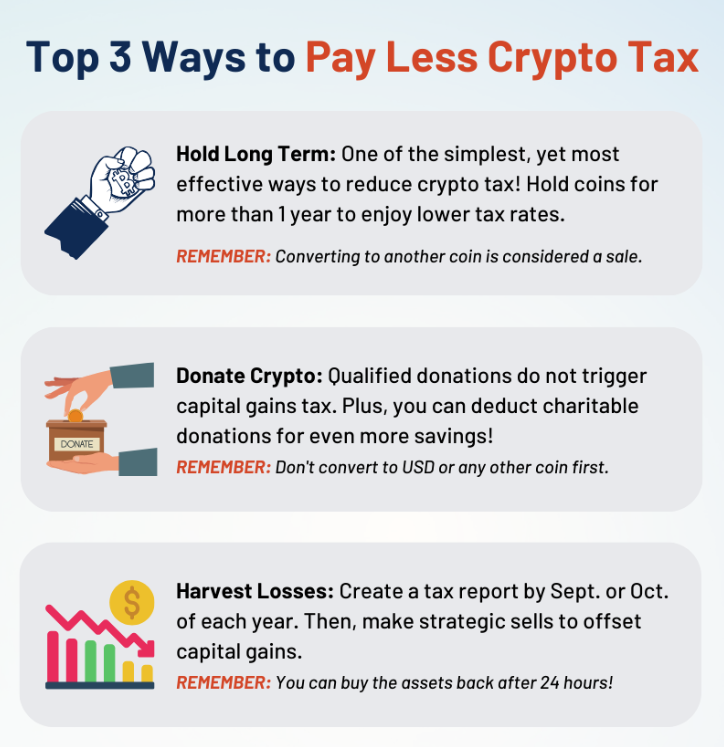
Opposed to this list is everything described above: the analytics infrastructure, the exchange summonses, the developer prosecutions, international frameworks and Form 1099-DA requirements that will from 2026 onward require U.S. brokers automatically report both gross proceeds and basis information for customer transactions to the IRS. The window that existed between 2010 and maybe some point in 2017, when none of this infrastructure was there, doesn’t exist anymore.
You Decide
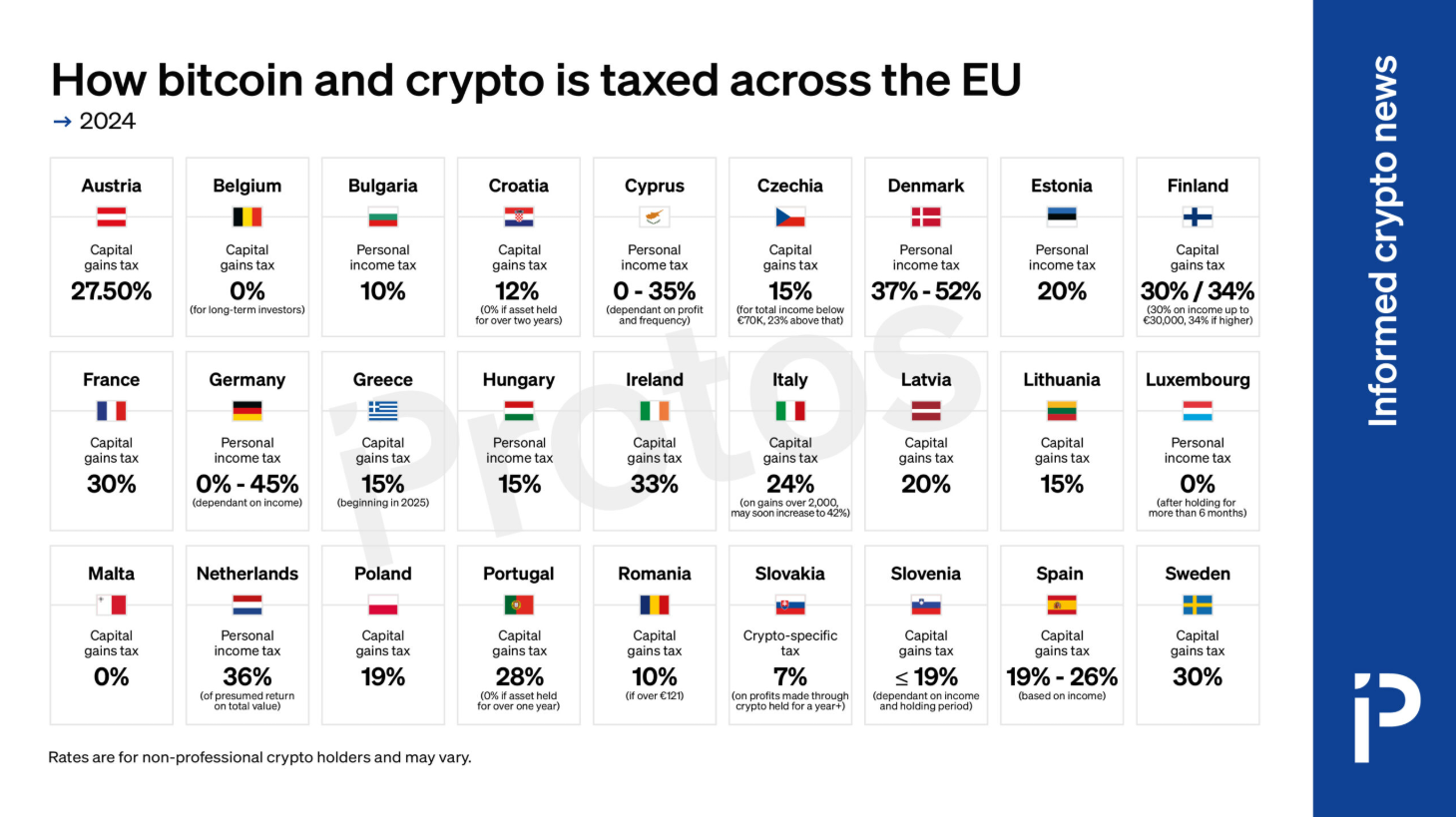
And yet. For there are real cryptomillionaires who earned their wealth early enough and conservatively enough, and live in jurisdiction sufficiently friendly, that the issue of taxes has never been anything more than a theoretical problem. There are no capital gains taxes on any Bitcoin transactions in El Salvador. There is no personal income tax in the UAE. Capital gains are not applicable for the long-term holdings of crypto in Portugal. Motioning wealth and motioning yourself is not a solution available to all, but it is a solution available to those with enough cash on hand to carefully and legally execute it.
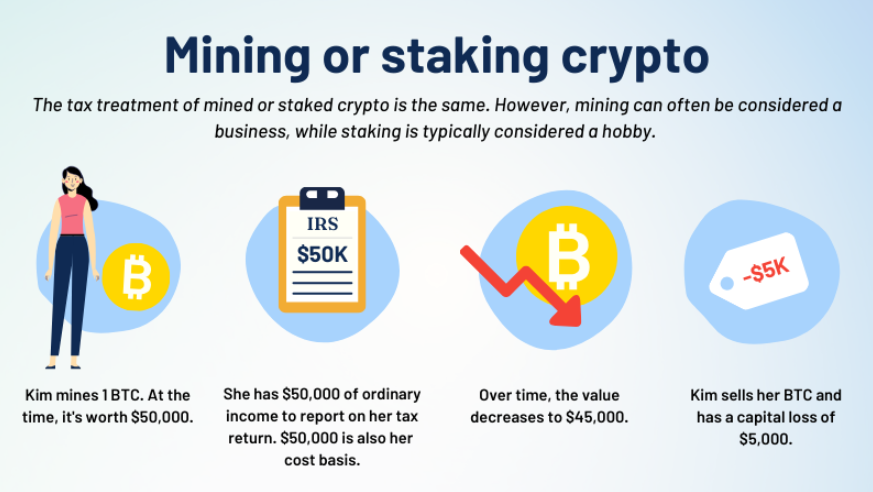
At the other end of that spectrum are people who didn’t treat their $20,000 in crypto gains as income at all, never reported it to the IRS and then received a letter from them after John Doe summons to their exchange turned up records about their trading activity. A few amended their returns. Some did not. Those who didn’t have to are making a calculation about whether the IRS will chase them — and some of them will win that calculation, at least for a time, while others end up facing consequences that seem incomprehensibly out of proportion to the initial non-disclosure.
What this landscape doesn’t resemble is the original cypherpunk vision of a tool that would render financial surveillance structurally impossible. The government has adapted and continues to adapt, with a seriousness of purpose behind that adaptation. The spear has gotten longer. The shield has grown thicker in response. Neither side has won.
Al Capone figured his money was invisible because the people following it had partial information. He was correct, until they developed better methods. The pattern has not changed. What varies is who has better methods at any moment in time, and how much of your freedom you’re willing to wager on which side has an advantage at that moment. There are now people in prison who made that bet the wrong way. Some folk are on yachts if they got it right.
What’s certain is that the game goes on, that the odds have turned slightly in one direction, and that the house’s analytical tools are far more advanced than they were in 2013.

For everybody in the TRON ecosystem who just wants to make plain USDT transactions without dealing with energy issues, Netts Transfer Tool offers an obvious solution. The tool allows USDT to be sent directly without having TRX or managing Energy (paying a dollar fee in USDT instead). API also supports recipient fee model for business handling volume of USDT transactions. It is one more clean solution to the USDT no gas fee conundrum that’s plagued TRON users since the network launched — trimming away one friction point between you and a successful transfer.