Is Cryptocommunity... a Cult?
To an outsider, the cryptocommunity can seem like an exclusive family — one bound by vision and its own language.
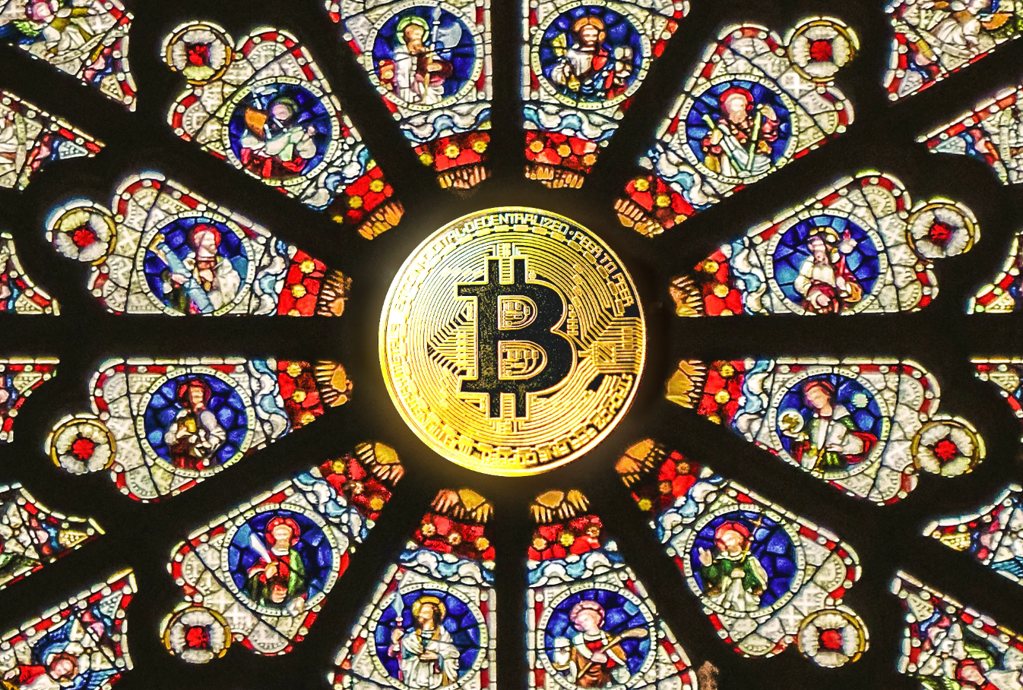
Of all communities in the fast-changing digital finance world, few have ignited as much intrigue, discourse and controversy as the global cryptocommunity. Cryptocurrency is now a cultural phenomenon that knows no boundaries and is appearing in passionate online forums and even high-stakes financial markets.
However, the criticisms have also increased alongside the growth of the movement. That could be more accurate than one would like to think since one of the most enduring and inflammatory questions out there is whether the cryptocommunity, with its rabid enthusiasts and practices like HODLing and burning, is a cult. This is not just a rhetorical question: at least if we ask those outside the sector, those observing the prolific growth — both good and bad — of digital assets with concern and curiosity alike. Answering it requires both consideration beyond the elevator pitch and exploration regarding the deeper realities shaping the crypto landscape today.
Why the Comparison Keeps Coming Up
To an outsider, the cryptocommunity can seem like an exclusive family — one bound by vision and its own language. This sense of community, the memes, the inside jokes, and the zealous defense of blockchain appear to outsiders to be the trappings of a cult.
There are a few characteristics that inspire the cult or sect comparison and these can be looked at in more detail:
Unwavering belief. There is a pervasive, sometimes blind, faith among many crypto advocates in the power of blockchains and cryptocurrencies. Such conviction approaches a kind of endless certainty akin to dogmatic religious or sectarian faith. The idea that crypto will "change the world" is not merely a slogan, but a principle guiding the financial decisions and even world views of many.
Charismatic leaders. Centralized icons like Satoshi Nakamoto, the unknown inventor of Bitcoin, or Justin Sun, the flashy TRON founder known for his outspoken presence, are god-figures to their respective communities. You track what they say, what they do, sometimes with a dangerously fanatic loyalty. Whether these are by design or otherwise, the presence of such leaders with nebulous identities and intentions adds to the mystique and, for some, the mistrust.
Rituals, Jargon and In-Group Dynamics
Many cryptousers are engaged in:
1. Crypto language and rituals. HODL, FOMO, DeFi, renting Energy on TRON, etc. Using these terms can give the impression of some ‘elite club’, where it is almost impossible to break through into the inner circle. These familiar rituals of chart checking, “all-time high” popping, and airdrop or staking events feel like rites of passage.
2. Us and them. The ever-brewing narrative of the crypto community against traditional finance, regulators, or critics. This may encourage solidarity against an imagined common enemy, a classic feature of a lot of sectarian groups. The notion that “we are building the future and they are holding on to the past” that well, is a great way to get the adrenaline pumping, but it also tends to create echo chambers and leads to groupthink.
3. Promise of reward. The promise of a nice payout after making it big never goes away. Stories of early adopters turning their lives around and becoming wealthy by investing in bitcoin are shared as fables, urging everyone else to show commitment to the time, money, and belief in the system. The allure of financial freedom, of being free from being part of the traditional system — is real.
4. Evangelism. Crypto fans tend to be very motivated to get the word out, whether that be to friends, family, or random people on the internet. Such missionary zeal can sound more like religious proselytizing, with social media as the 21st century pulpit.
While the striking parallels are compelling, they are only part of the story. To get a full sense of the cryptocommunity — the one that goes beyond the memes and cycles — you have to dig deeper, to the very foundation of this global movement.
Mainstream Adoption: Differences and Reality
In reality, and despite all of the similarities, the truth is that the cryptocommunity is not a cult (at least not in the most important ways). It differs fundamentally in its organization, its ethos, and the transparency of its processes. While cults tend to be top-down, secretive organizations, the crypto ecosystem is one of decentralized transparency. Blockchains such as TRON are open ledgers with no secrecy, consensus rather than decree.
To be clear, renting Energy on TRON is a public, algorithmic procedure, not a mysterious ritual. Anyone can take part in its activity, check transactions of it, and even suggest changes to the protocol. More than a functionality feature, this openness represents a philosophical statement against the secretiveness and domination seen in cults.
The cryptocommunity is a place full of diverse viewpoints. A worldwide network of developers, investors, regulators, and users that makes up every part of society. That space thrives on debate and innovation — and, well, even dissent — far from demanding conformity. Critical discourse, as well as bug reports and proposals for improvement, fill online forums and GitHub repositories as well as conferences. This culture where you can critique is the very opposite of the unquestioning top down obedience in a cult. Indeed, some of the biggest innovations in crypto have emerged from controversy and forks, with communities smashing apart to follow distinct paths.
Cults in general prefer to exist in darkness, outside the eye of the eagle. However, the crypto space is still better oriented towards interaction with regulators and financial authorities. Some projects like Tether (USDT) and TRON do a lot of quality work to follow up the world metrics — they perform attestations very often and work together with governments for transparency and trust. The desire to participate in the greater economy, to open oneself to audits and regulations, is a definitive marker of legitimacy. It is also an acknowledgement that, if crypto is to deliver on its potential, it needs to be embedded in the global financial system rather than sitting at a remove from it.
Institutions, Volume and Emerging Markets
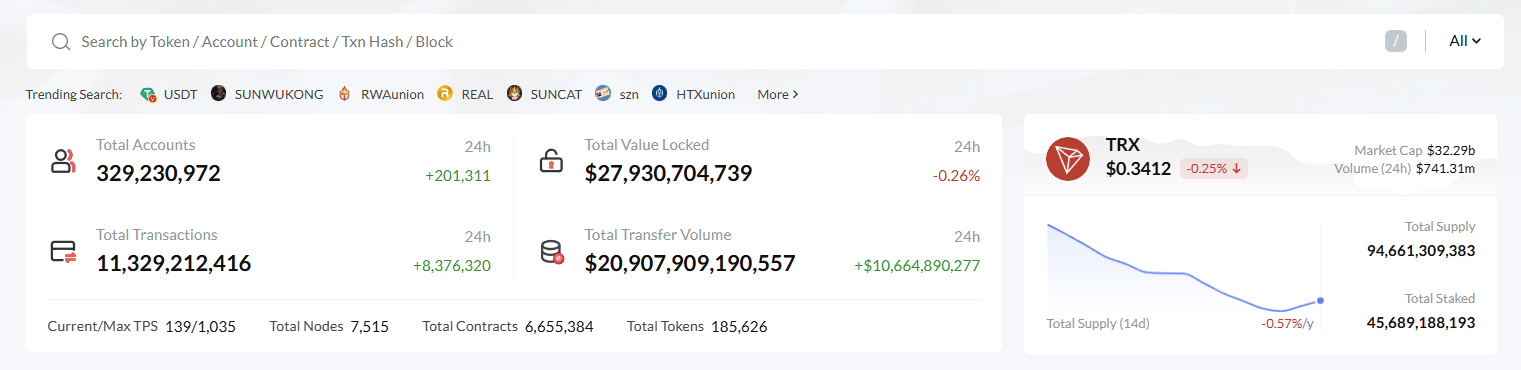
The increasing embrace of crypto not just by banks but by admired institutions and even countries is perhaps the fiercest counter-argument against the cult comparison. Numbers and real-world use cases are evident. USDT (Tether) is the global leader stablecoin as of 2025, by the majority of the world stablecoin volume of payment. TRON, in particular, has been the main network for USDT transactions for some time, with more than 50% of circulating USDT residing on this network. As a confirmation of its scale and confidence on TRON, the total supply of USDT on TRON exceeded $80 billion in June 2025. This is not the action set of an outlier movement, it is far more like the scaffolding of a new financial epoch.
Unlike in the past, major banks and financial institutions are not sitting on the sidelines. Driven by the efficiency and transparency of blockchain-resident assets, global players such as Bank of America and Standard Chartered are investigating or launching their own stablecoins. By integrating stablecoins within their payment systems, fintech giants such as PayPal, Revolut and Stripe are making crypto available for millions of people. These are not speculative experiments; these are strategic moves by world leading financial brands. However, the willingness of these institutions to put their reputations on the line means a lot.
The result is more pronounced in emerging markets. In Venezuela, for instance, USDT is serving as a lifeline for businesses and individuals suffering the brunt of hyperinflation. Payment and wages in USDT have been adopted by universities, retail chains and even local shops — as a way to bypass the local currency volatility. This isn't some fringe experiment — it is a mainstream financial instrument. It has changed lives and businesses — the ability to quickly, securely, and independently of unreliable local currencies, transfer value. The same story is happening in Nigeria, Turkey, and Argentina, where crypto is offering a stable solution during a crisis.
The extent to which crypto is being adopted is unbelievable. USDT traded over $53 billion in a single day on TRON in July 2024, exceeding Visa's average daily USDT volume. This is not the behavior of a fringe cult, but rather a technology that is displacing the entire architecture of global finance. The magnitude of transactions, the variousness of users, and the fusion with mainstream systems are all evidence to a technology which is not going anywhere. Crypto can no longer be dismissed as a fad or a speculators’ playpen.
One of the fundamental innovations of the TRON network is its Energy model, which enables users to rent Energy to conduct almost no-cost transactions with ultra-low fees. Supported by this system, TRON has become the underlying network for digital dollar transfer, facilitating efficient and cost-effective transfers for corporations and individuals. TRON is not a cult — the process of Renting Energy is public and open. Renting Energy (as opposed to owning it outright) makes it easier to get started and opens up access to a greater number of network participants. It is a useful and practical solution to a real problem, not a ritual or a test of loyalty.
Breaking Down Barriers and Earning Trust
While there is great progress, some issues still hang around. For TRON users, one of the most persistent headaches has been the obligation to maintain various degrees of TRX to cover potential transaction fees, or the so-called Energy Wall. For some, it has made what ought to have been a simple matter of receiving USDT turn into quite an odious task. This is a classic tale where funds are locked in a wallet without TRX to move them from the wallet. A reminder that crypto despite its advancements is still maturing and has to cater to actual users.
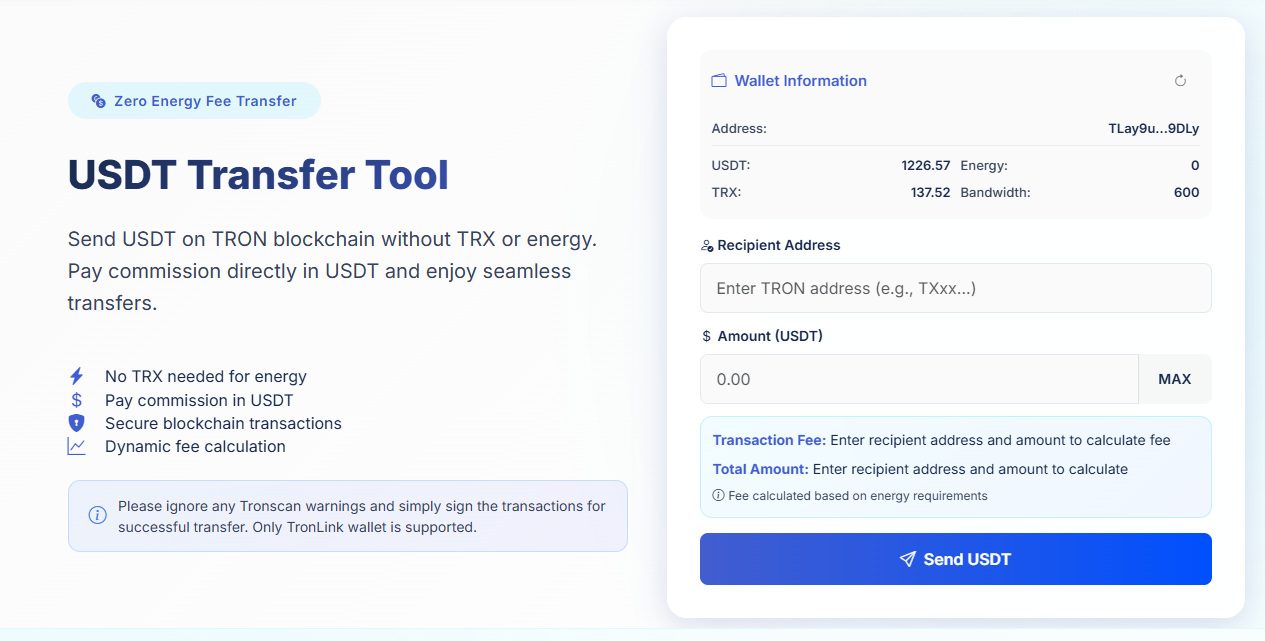
Netts.io developed its USDT Transfer Tool to resolve this issue. This service enables TRC20 USDT deliveries without requiring TRX or Energy. Instead, the commission is charged directly in USDT from users, ensuring smooth, reliable settlement. It is as simple as connecting your TronLink wallet, inputting the recipient address and amount, signing 2 transactions and you are done. By easily identifying what Energy you need, Netts.io automatically assigns it for you and broadcasts your transaction, eliminating friction and making crypto as simple as it needs to be. This is the first time we brought the full firepower of TRON and USDT to users without the typical technical barrier that has deterred so many.
For businesses and developers, Netts.io also provides a seamless payments API and scales USDT transfers through its escrow management, which in turn guarantees no failed deposits. With the new recipient-paid fee model, exchanges, fintechs, and iGaming platforms can simply swallow this small commission, allowing them to provide an authentic user experience. Pushing crypto payments without concern for energy or gas tokens removes barriers to new business models — and to greater adoption. This is a clear demonstration of how the crypto crowd comes together to do real problem-solving as opposed to simple ideological posturing.
The Bottom Line: Community, Not Cult
The fallacy of the cult-like cryptocommunity collapses under examination. On the surface they may appear similar; however, the truth is a colorful, diverse and transparent ecosystem that is growing rapidly in mainstream adoption. Crypto is more than a movement — it is a revolution in the way the world moves money.
Anyone who doubted, the writing is on the wall… this technology is here to stay, and its future has never been more promising. The metamorphosis from outside skepticism to institutional acceptance is a work in progress, but the trend is clear. So no, crypto is not a cult, nor is it a fleeting community — it is merely the first chapter of a story that is only beginning.