UBI, Welfare, and Cryptocurrencies
UBI, welfare rails, and crypto: programmable transfers, audits, and efficiency — plus the governance and privacy tensions nobody hand-waves away.
There is a paradox, an inconvenient society-wide truth that we continue to ignore. We live in a time of unprecedented technological plenty, with no end of bright ideas and shiny gadgets we're issuing into the world to help us deep-fry our foods and rearrange our DNA and listen to TLC between calls on our watches' speakerphones. And yet the financial stability of your average Joe seems shakier than it's been in generations. The divide between the super-rich and everyone else isn’t just wider, it’s growing fast in a way that leaves us with two groups at either end of the wealth spectrum looking at each other like they come from different worlds.
For decades, that has been the promise — a rising tide lifts all boats — but the reality is much more hit and miss. Productivity is soaring, but wages have barely budged for decades when accounting for the true cost of living, especially in terms of housing, healthcare and an education. This gap isn’t an accident of the marketplace; it’s a design feature of a financial system that values asset inflation over rising wages. The dynamics of wealth accumulation have shifted from creating value, to moving rents around, in which capital beats labor in a race that isn't even close.
Ghost of Automation
This concentration of wealth leads to a downward spiral. With wealth accumulating in few hands, so too is political power to influence regulation and tax codes, resulting in more policies favoring the rich. The middle class, which was once the backbone of healthy democracies, is being gutted and left indebted and unable to buy assets. The feeling of running on a treadmill, of having to run faster just to stay still, is a metaphor that resonates across the developed world.
Society is splitting into a small elite, who own “the robots” (meaning the algorithms and the land), and a much larger mass of people, many of whom are fighting for what’s left. At this rate, we’re on our way back to some form of techno-feudalism, in which the majority are bond servants living on online manors not all that different from what went before — commodities now being digital platform monopolists and asset holders charging rents for access to the elements required to live.
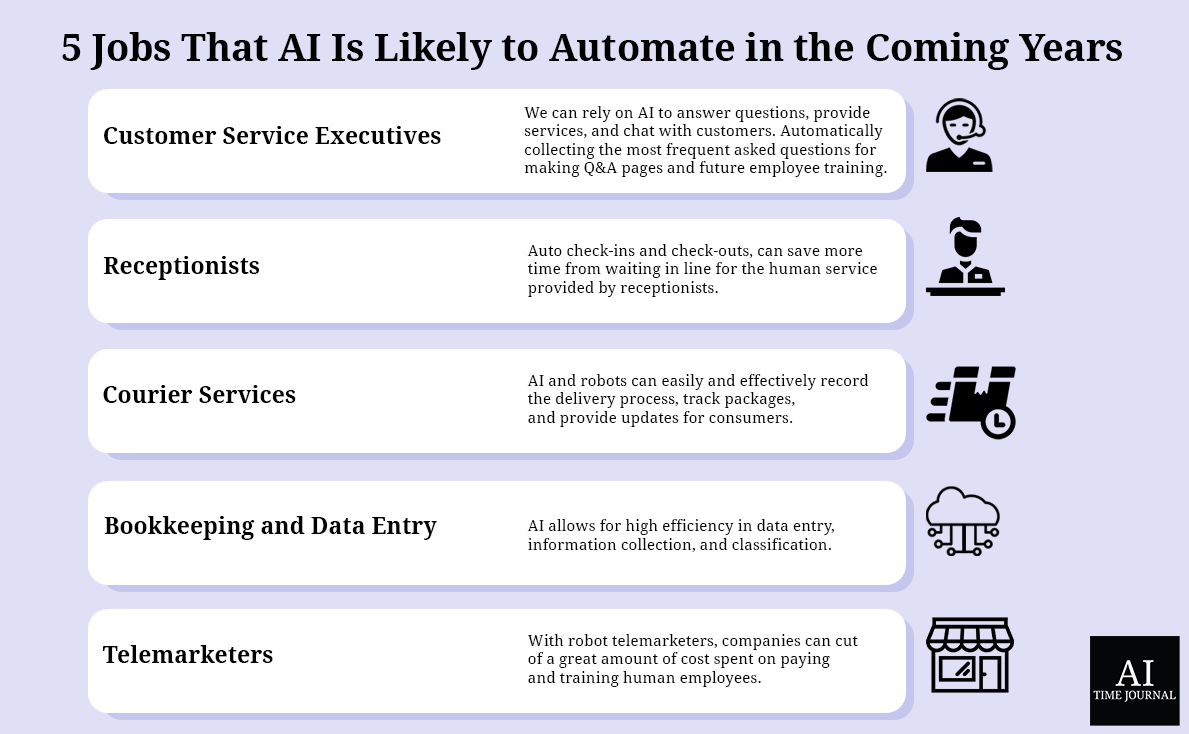
Into this feeble economic milieu marches the disruptive power of AI and enhanced automation. For years, futurists had warned of a singularity — a moment in which machine intelligence would overtake human smarts. We are in the nascent chapters of that transformation now. Unlike previous industrial revolutions in which machines replaced physical labor, but created new forms of cognitive work and ways of organizing time, the AI revolution is directly aimed at the human mind. The “cognitive” jobs that were supposed to shelter the educated workforce are now most at risk. Coding and copywriting, legal analysis and even medical diagnostics are tasks where algorithms have demonstrated their proficiency at doing the job more quickly, cheaply — and often more accurately than humans.
The question that hangs over this transition is a stark one — when their labor is no longer economically needed, what are people meant to do? The historical social contract is an arrangement of labor for wages. You work, you get paid, you exist. But that link is broken if the demand for human labor collapses. We have the potential of a “useless class,” as some historians are saying, who will not serve the economic system any more. It’s not just an economic crisis; it is a psychological one. Work is not just income; it gives people purpose and community, a reason to get up in the morning and take pride in what they do. To strip away that without having in place a practicable alternative is to invite social chaos. The story that new jobs will magically replace the old ones is getting hard to maintain. Even as new roles materialize, they will probably not emerge fast enough or in such accessible form as to absorb the millions sidelined by automated systems.
Lessons from History
To understand what we might be heading toward, we don’t need to engage in lofty debates about the nature of consciousness or the birth of synthetic minds in some speculative future. All we have to do is look at what our species already has done with organic intelligence — and where it’s landed us. The Roman Republic-and Empire-encountered an eerily parallel predicament of success. As Rome conquered the Mediterranean, enormous wealth poured into the city, but it was unevenly distributed. The patrician class (read: billionaires), who were the oligarchs of their age, subsequently used this surge in capital to hoover up huge tracts of farmland — creating immense agribusiness estates called latifundia. They did not employ Roman citizens to work these estates; they employed the “machines” of the ancient world — slaves who had been captured in foreign wars. This age-old automation laid waste the economic foundation of the independent Roman peasantry.
Without their land and unable to compete with the free labor of slaves, hundreds of thousands of citizens sought a new life in Rome. They were free and they had political rights, but they served no economic purpose. They were all impoverished in the capital of the richest empire the world had ever known. The Roman state found the answer in the form of the famous “Cura Annonae” — a grain dole. Free grain (and later oil, and then wine) was given to the state’s citizens in order to prevent riots from breaking out and so to maintain social control. With lavish public games and spectacles, it became the so called “Bread and Circuses” policy.
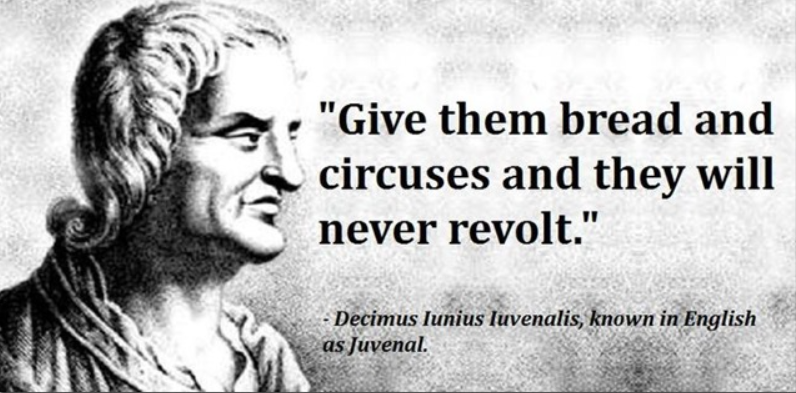
It was a proto-welfare state intended not to empower the population, but to tame it. It created a permanent underclass that relied on the state for sustenance and on the oligarchs for diversion. The echoes of our current recklessness are chilling. Is this the future we are moving towards: a world in which racing to put out one fire after another is the new normal, with masses whose meager handouts of universal basic income are accompanied by immersive digital entertainment that obscures a world where real power and wealth are squirreled away by a technological elite?
Cryptocurrency as a UBI Medium
But history need not repeat itself exactly. The structural risks may be comparable, but the material conditions of the twenty-first century are fundamentally changed. Rome had real scarcity — there are only so many bushels of wheat you can grow and ship, even if you’re Rome with its logistical genius. We on the other hand are headed into a possible post-scarcity era. Automation and AI move the marginal cost of production to zero for everything. Scientifically we can provide every human with a quality of life better than that enjoyed by a Roman Emperor. The issue is not that the resources are not there; it is the unnecessary maldistribution of them.
An automated and UBI-enabled life need not be a pacified-discontented one. It might be a revival of human creativity and liberty. If the need to labor is no more, humanity can rather spend itself in art, quest for knowledge, seeking, caring and participating in solutions, all activities that are today marginalized because they do not "pay". The line between the dystopian, “Bread and Circuses” reality and the Utopian future of "Star Trek" is simply how we choose to arrange our things. This is why the present day fiat economy lets us down. The old-style welfare system is tardy, leaky and bureaucratic. Politically, they are instruments of control and fall victim to shifting administrations. To create a robust UBI that uplifts rather than oppresses, we need to rebuild our financial architecture.
This leads us to the revolutionary aspect of crypto. At bottom, money is a social hallucination: it thrives only because two or more people believe in it. We all agree that a piece of paper or a digital number has value, so it does. If money is an illusion, why should we be wedded to the kind that can be manipulated by central banks and suffer inflation that eats away at the wealth of the poor? Cryptocurrencies provide a way to re-engineer money itself to make it better smoothly suited for a digital, automated society. Unlike fiat currency, which rests on the promise of a government (and its monopoly on violence), crypto can be based in verifiable resources or algorithmic truth or decentralized consensus.
Efficiency of Blockchain Finance
Now imagine a UBI not funded or managed by a bloated government bureaucracy, but by a transparent and unchangeable smart contract. Money could be sent, immediately and directly, to any wallet on the planet, without an intermediary skimming off the top or requiring a bank account. Traditional banking excludes billions of people; crypto is permissionless. All you need is a smartphone to play along. This cuts the frictional costs of aid distribution to virtually zero. And, on top of this, programmable money permits innovations which fiat cannot replicate. We could have money with built-in demurrage to accelerate circulation or tokens designed for essential things like healthcare and education, so that the welfare provided is not diverted.
One of the big challenges for worldwide welfare or universal basic income (UBI) is the cost of moving money. In the current system, cross-border payments are slow and cost money, with middlemen taking a piece of the pie at every step. The fees may even consume a substantial portion of the value being exchanged (if you were trying to send 10 dollars to someone in a developing nation, for example). This renders micropayments, an essential building block for a nimble digital economy, infeasible. Blockchain networks solve this. But when you study the mechanics of a contemporary blockchain, what you’re looking at is a system designed for friction-free value transfer.
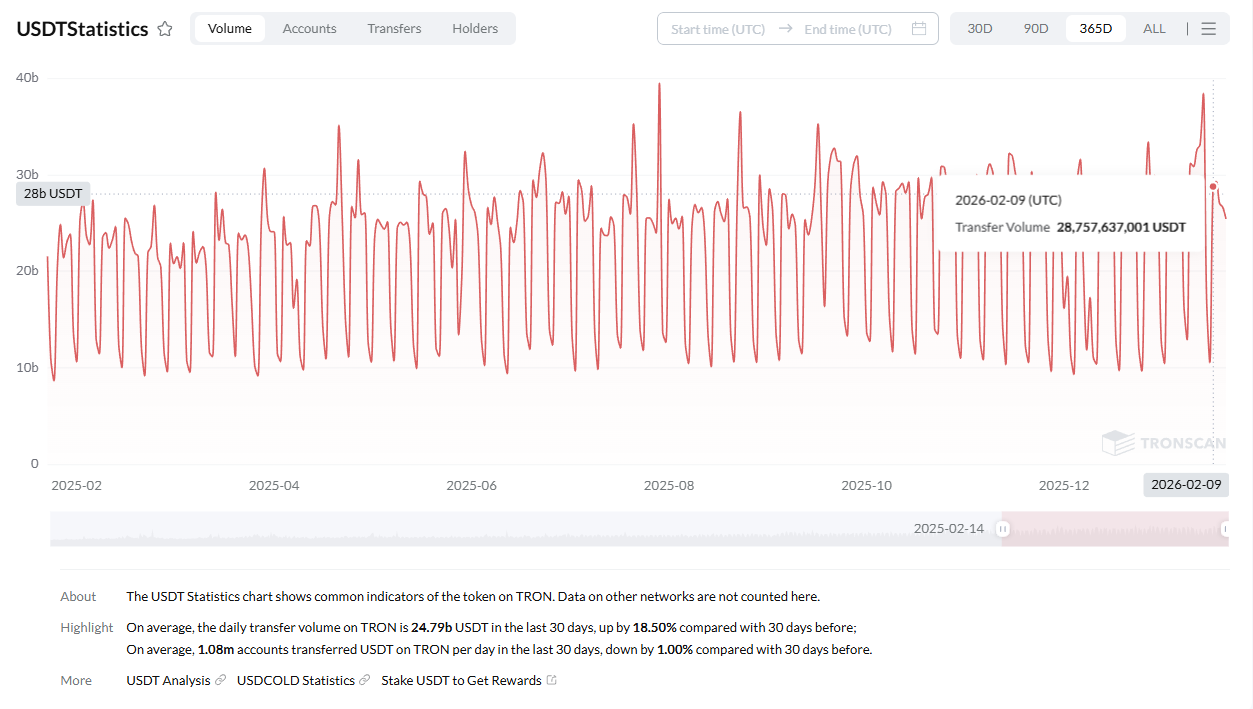
For example, take the question “how much for a USDT transfer?” In traditional banking, a wire transfer fee is high and fixed. The cost to move millions of dollars in efficient blockchain networks can be pennies. This speed is essential for a UBI system that will be required to process millions of tiny transactions regularly. We can send USDT for cheap, going around the SWIFT network and correspondent banks that serve as toll collectors on the global highway of finance. It’s not just a story about saving money; it is also, if anything, the opposite: saving value that already belongs to the recipient.
Transitioning to a Resource-Based Economy
Furthermore, the political weaponization of finance can be circumvented using crypto. In a world where your bank account could be frozen for your political beliefs or because of a bureaucratic mistake, a self-custody wallet is an issue of sovereignty. A crypto UBI ensures the beneficiary has direct control over their money. It reorients the power dynamic from the state distributing largess to the citizen demanding a right. The ledger is public, the rules are encoded and the system is neutral.
And we can go even further. Many people so quickly write off crypto as having no “intrinsic value.” But, as we have seen, fiat money is supported by political power and the implicit threat of violence. It's a possible future of a CBDC or other such cryptoeconomic system backed by the very things that are going to drive our automated future — energy and computation. We are starting to see early examples of this with networks that tokenize bandwidth, storage, and compute. The true effect of a universal basic income could be found in how it is financed — through taxing the robots, which would be taxing workplace automation. This value could then be 'banked' on-chain and distributed at a pre-specified rate.
This harmonizes the incentives of automation with social welfare. The more AI produces, the greater value the network generates and thus the more UBI pays out. It forms a vibrant little ouroboros to maintain the consumer base that the machines need in order to sell the products they fabricate. In the absence of such a mechanism, the automated economy will implode under the weight of its own overproduction, with no one left who has any money to buy anything. Crypto gives you the rails to make this rebalancing automatic, transparent and uncheatable.
Practicalities of Digital Transfers
In such a future, the functional interface tools we use to interact with these networks are going to matter more than ever. We must comprehend the dynamics of movement and management of digital assets. Owning a wallet is not enough — you need to have some idea of what things could cost. For instance, people keep asking about the USDT fee when sending on different networks. Knowing that those costs are there is the difference between losing a chunk of your welfare check to network fees, and getting to keep it all.
The architecture of networks such as TRON has emerged as a popular alternative for stablecoin settlements exactly due to its efficiency. It processes a huge number of international transactions because its built to keep throughput fast and costs low. This is precisely the technical infrastructure a global UBI would need. You can’t manage a planetary welfare system on a network where you can only get fifteen transactions per second, or it costs fifty dollars to do a transaction. You want speed, and you need low-friction.
Knowing how to navigate the charges is a skill in its own right. When users are searching for how to send USDT cheap, in essence they are trying find the most cost-effective way through the digital economy. This will eventually be abstracted away by smart wallets but for now you need to do it by hand. The cost difference of a well-tuned transaction versus lack of one can be huge. And on some blockchain architectures this is where “Energy” and “Bandwidth” come into play.
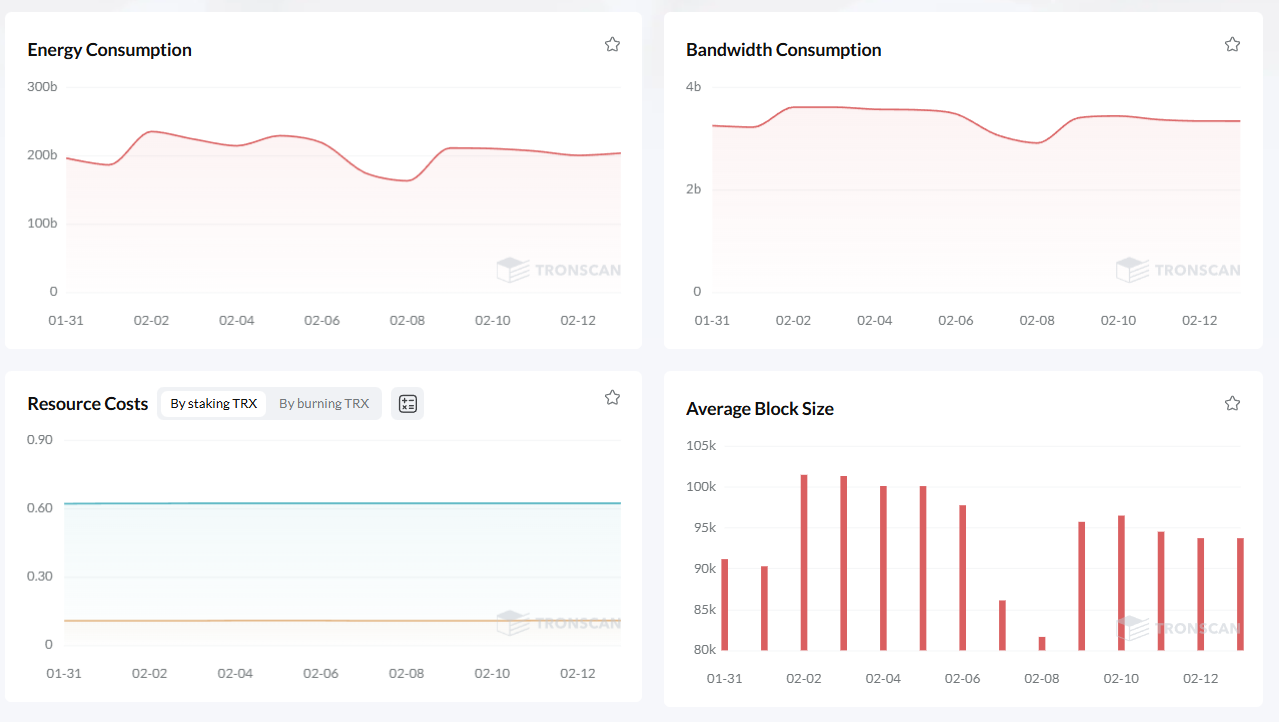
These are not just fancy words but the actual computational resources that it takes to complete a transaction. With the concept of tokenization, these assets are protected from spam and CPU is given to those that need it.
Tools for the New Economy
When it does, we’ll all be living in a new world with millions of systems over billions of nodes making up the infrastructure that makes UBI viable in the future and where managing these resource costs will be as fundamental to someone well-being as balancing a checkbook would have been to anyone capable of writing out a cheque in the 20th century. Suddenly you or your car gets a monthly direct stipend into a smart contract (which is just a special address), and you have to figure out how to "collect" or spend that, without having the value burn away. The bread of the future is digital value, and the circuses are the digital experiences we buy with it. How well the mechanism delivering that bread works is an issue of public policy and personal financial well-being.
The obscurity of blockchain fees can be an obstacle to people new to the market. A user could ask "what is the fee for USDT transfer?" based on what we call a 'dynamic' answer that fluctuates with network congestion, receiver balance, and available resources. Mass adoption depends on a simplification of these arguments. We need intermediaries between the protocol level, which is quite complicated, and our user experience issues. The ordinary citizen should not have to be a cryptographer to collect UBI, any more than they need to know the SWIFT messaging protocol in order to use their debit card.
As we work to usher in that change, though, it's worth noting that we should be creating the tools while also making this vision a reality today. Maybe we are in the process of transitioning. The old is dying, the new struggles to be born. Again, in this interregnum, we have the chance to shape the tools that will define the next century. By embracing crypto not only as a speculation but as the infrastructure for a fairer distribution of wealth, we can make sure that the age of automation is an age of gold for humanity and not a return to the vulnerable instability of the Roman mob.
For the many who are participating in this ecosystem, and especially on TRON (where USDT is actively transferred due to its prominence), dealing with the costs of Energy and Bandwidth is a day-to-day experience. These resources are consumed with every transfer and if a wallet doesn’t have them the network burns TRX to cover the computation. This is where, too often, users lose money without knowing it.
1. The network queries whether the recipient has a USDT balance; sending to an empty address requires more Energy.
2. Checks how much Energy and Bandwidth the sender has.
3. There is no fee for the transfer if enough balance is available; otherwise TRX is burned.
4. It can be much cheaper to rent energy than to burn TRX.
5. It eliminates failed transactions and loss of resources as the actual requirements are specified in advance.
To aid users in understanding these mechanics the Netts service includes a unique USDT Transfer Calculator. This is an online tool in which the user can input sender and receiver address, to find out how much Energy would be consumed by a TRC20 transfer.
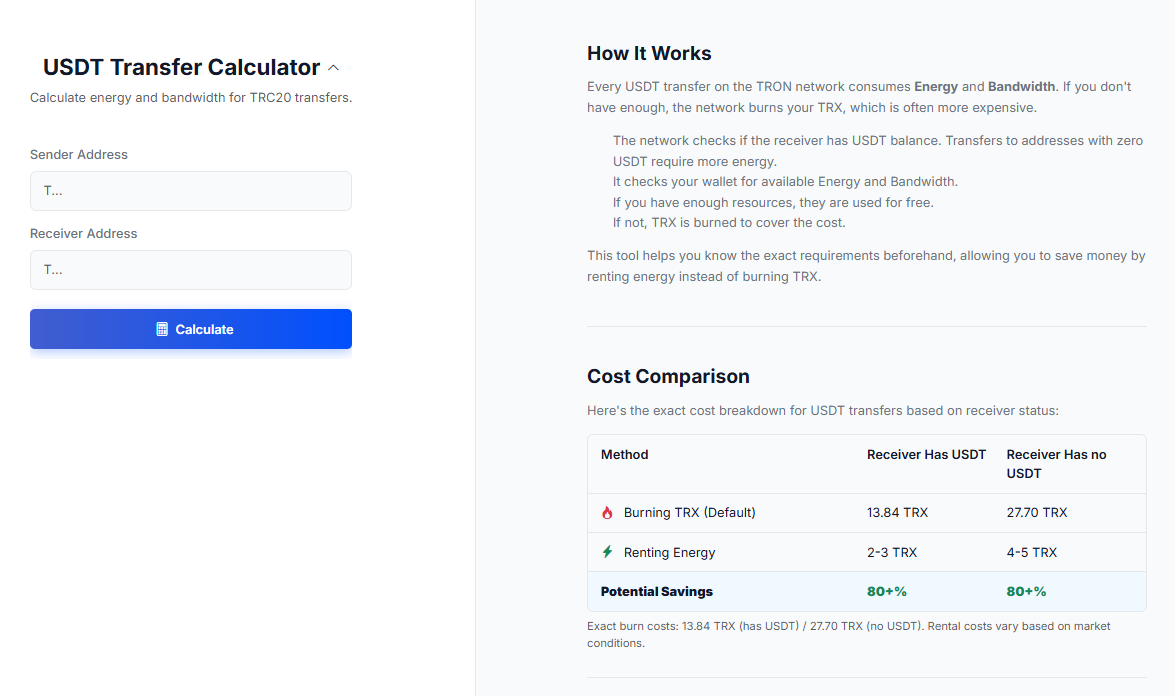
It demonstrates the importance of cost in bold terms: if the recipient has USDT, sending and burning TRX can be as cheap as 13.84 TRX, or 27.70 otherwise. To rent Energy directly from the platform can lower this cost to 2-5 TRX but that is still well over an 80% saving. The service also offers an API for developers to include these calculations in a programmatic manner, so whether you are an individual attempting to reduce your spend on fees or a platform sending out thousands of payouts per week, you can handle the trade-off when it comes to centrality and fees.