Cost of Crypto — How Much Resources Wasted?
The real resource bill for crypto — electricity, e-waste, opportunity cost, and how incentives stack up against traditional finance’s hidden overhead.
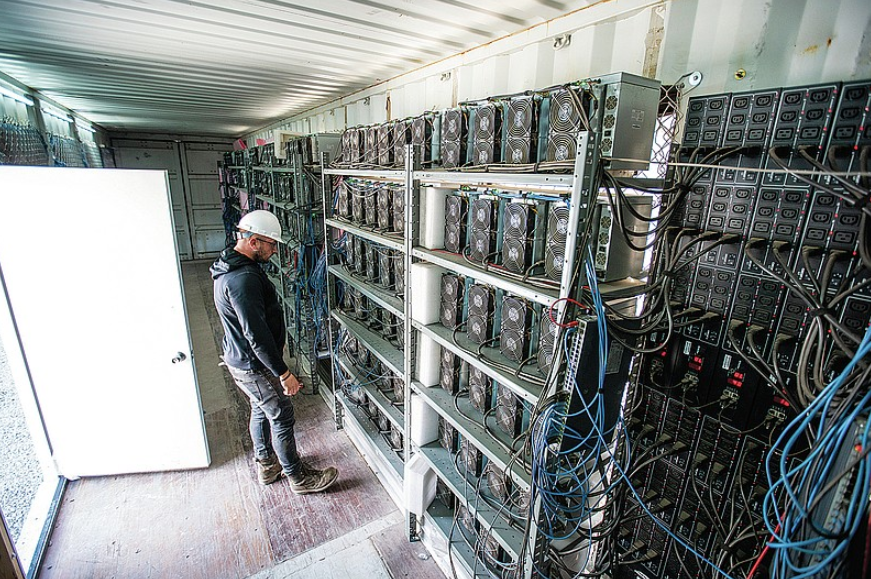
We call it "virtual" currency. The language we use to describe the "cloud" and our "digital assets" suggests that they're floating somewhere in nebulous space, not bound by the physical world that my body lives in. It’s a comforting linguistic sleight of the mind. It gives us the power to watch a green candle on a price chart and see nothing but profit, rather than the smoke rising from a coal plant in Kazakhstan or of the mountain of obsolete circuit boards composting in a landfill next to a data center. The truth is, the blockchain is a heavy thing. It has mass. It generates heat. It drinks water. And as a technology that was supposed to revolutionize value frictionlessly, it has eclipsed nearly all previous engines of consumption for the amount of friction it causes us.
When you strip away the slick user interfaces of today’s exchanges and peer into the mechanics, you don’t see a nice clean system. You find a furnace. A blast furnace of electricity, hardware and human time at a scale that’s difficult to comprehend even with the numbers right in front of you. We are not talking about the cost of doing business. We are discussing the price of junk.
Furnace That Never Sleeps
I mean, it’s akin to leaving a car running in the driveway 24/7, pedal to the metal all the time. Now imagine a whole country doing the same. That’s the energy footprint for Bitcoin. It does not sleep. When demand is low it does not throttle down. The network requires a constant, unforgiving flow of electrons to maintain its ledger, using roughly 173 terawatt-hours per year. To put that abstract figure into perspective, it is more electricity than the entire nation of Poland uses to power its factories, light its homes and run its hospitals for a year. And it outpaces consumption in Switzerland. It compares with the production of small nuclear powers.
It's a huge misplacement of thermodynamic potential. Instead, we are burning through 10 gigawatts of continuous power, enough to supply one million homes, for a chance to guess random numbers in a race to solve an unconditional lottery that makes it costly to tell a lie. This isn’t computing as most people understand it — you know, things like solving the protein folding problem or modeling climate change. It is computation for the purpose of artificial scarcity. And while advocates love to boast that the energy mix is increasingly green, with renewable use jumping to a projected 52 percent in 2025, that argument conveniently ignores the opportunity cost. That green power could, in many cases, have replaced fossil fuel in the grid. It was instead devoured by the mining industry.
The dirty stuff still accounts for 48 percent of that energy. Coal, gas, whatever’s cheap and will burn. The result is an annual carbon footprint of something on the order of 39 million metric tons. By minting 0.72 kilograms of CO2 per transaction, the invisible exhaust pipe from every purchase is expelled into the atmosphere. You could drive a gasoline car from New York to Miami and back, and you’d still emit less carbon than that one digital transfer.
And then there is the water. These machines run hot. Unimaginably hot. Preventing them from melting down involves massive cooling infrastructure. One Google data center consumes about 1,100 gallons of water a night for every megawatt of electricity it uses. Industrywide, water used for cooling looks likely to more than triple by the end of this decade. Elsewhere, like Texas — home to an unregulated grid that crypto miners have swarmed to during local drought — this is not just an efficiency problem. It is a resource war. The water that cools a mining rig is water that does not irrigate a crop, or pour from a tap.
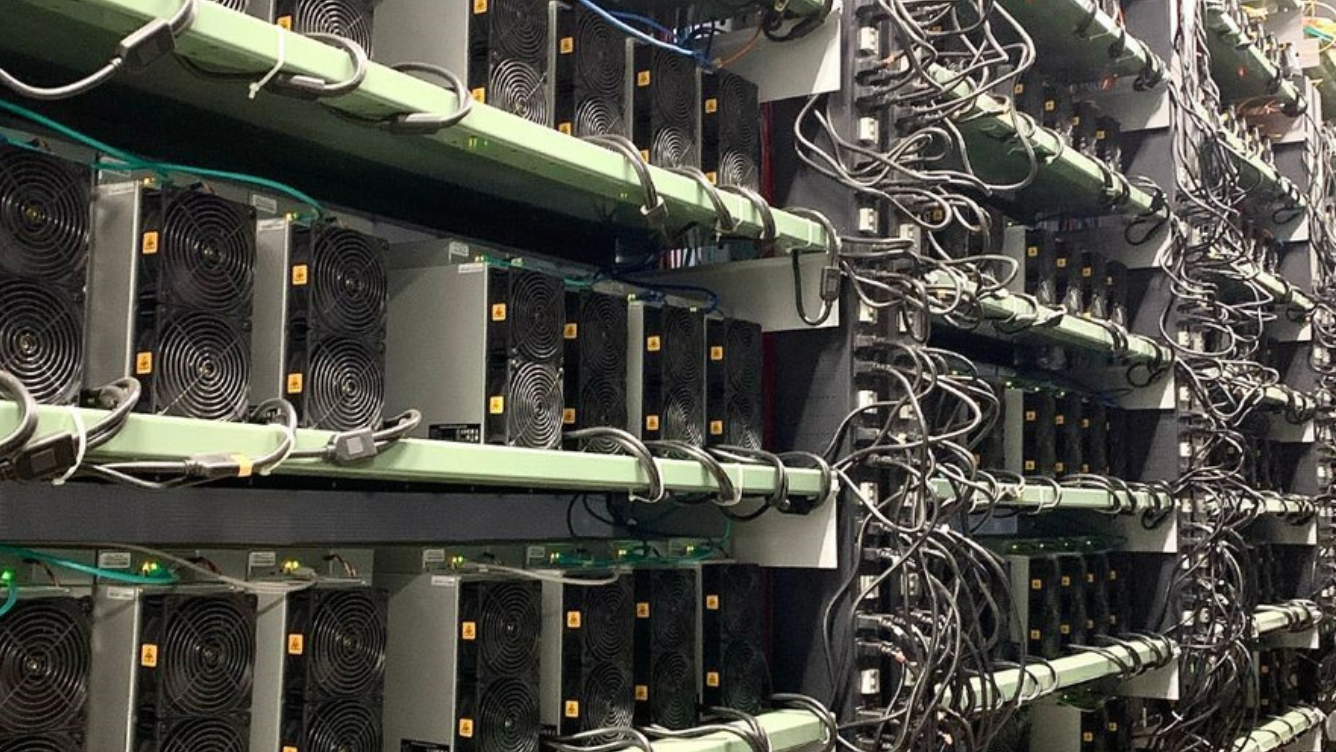
There’s also a sensory expense that seldom makes headlines: the noise. A mining center is not the gentle hum of servers. It is a roar. The fans needed to cool thousands of ASICs create a steady, industrial roar that can be heard for miles. Although sound levels at a distance of 300–500 m are below the human auditory threshold, neighbors complain of headaches and sleep disturbance due to the steady, subsonic vibration shaking their windows. We’ve converted silent countryside into industrial zones to grind a currency that most of the locals will never touch.
Silicon Shredder
The hardware is the engine — and this engine self-destructs inherently, if energy consumption is the exhaust. The crypto industry’s physical waste is arguably its most visible failure. We are building some of the most resource- and energy-intensive devices in human history, only to ditch them almost as quickly as a single-use plastic.
For bitcoin mining, it's ASICs — application-specific integrated circuits. These are not versatile computers. You can’t run a spreadsheet on them. You can’t play a video game on them. The hardware is intended to do one thing: hash the SHA-256 algorithm. And they are built to do it, that is, if only until the higher order of slightly faster machine arrives. As soon as a new, more efficient model is released, the old one becomes virtually instantaneously waste. You will use these machines for about 18 months. After that, they are trash.
We are creating some 29,000 tons of this electronic waste annually. That is the equivalent of hundreds of Boeing 747s, all constructed from high-grade silicon, copper, gold and plastic dumped into the waste stream each year. That figure can double when the market is hot. The 2024 halving was a mass extinction death-event for mining hardware; older machines that were just about breaking even turned into paperweights overnight, resulting in a global wave of recycling.
The voraciousness around hardware affects us all. We all know about the GPU shortages. Miners were buying up every graphics card that rolled off the assembly line, and for years gamers, video editors and researchers couldn’t afford to get into the market. Though Ethereum’s transition to proof-of-stake has relieved some of that particular heat, the marks linger. The semiconductor supply chain is brittle. We are looking at a confluence of the requirements of AI, the tail end of demand from crypto mining, and raw fundamentals in consumer electronics.
It takes years and tens of billions of dollars to build the fabrication plants that make these chips. But we’ve spent the past decade putting an enormous percentage of our global chip output into mining rigs that are on their way to the garbage in less than two years. It’s a waste of high-tech manufacturing capacity that will bemuse future historians. We drilled into the earth for rare earth elements, refined them using poison chemicals, shipped them across oceans and created engineering wonders — all to get a guess that would be thrown away.
The Brain Drain and the Token Cemetery
Energy and hardware are tangible. You can measure them. But there’s a more subtle, and perhaps even more destructive, resource that crypto has squandered: human intelligence. The blockchain industry has, for several years at least, served as a giant gravitational drain on technical talent. Some of the sharpest minds in computer science, cryptography and game theory have been dragged into the field from other areas to construct protocols, exchanges and tokens.
So, what’s the return on that investment in human capital? In 2025, for one year only, we observed 11.6 million projects fail. That is not a typo. Eleven point six million. That number accounts for 86 percent of failures the project has documented in four years. The speed of failure alone is sickening. By the fourth quarter of 2025, we were seeing more than 80,000 tokens failing every single day.

Consider the hours it takes to code those smart contracts. The weeks building the websites. The months I’ve spent moderating these communities. The marketing budgets. The legal fees. The "partnerships." All of it, evaporated. Yes, the bulk of these were memecoins — jokes in code, released on platforms like Pump.fun in a place with a 99 percent fatality rate on projects. But beyond the blatant swindles, there were still thousands of “serious” startups that raised serious venture capital, recruited armies of engineers and constructed complex but fatal product roadmaps no one wanted.
We’ve wasted millions of developer hours on “decentralized Uber” clones that are slower and more expensive than the original, on “play-to-earn” games that are no fun and not profitable to play and on “governance tokens” for protocols with nothing to govern. This is the hidden inflation of the crypto economy: the inflation of effort. We have lavished a generation’s worth of technological creativity on a sector where the failure rate is 19 out of 20, even by the industry’s own metrics (the much ballyhooed Silicon Valley maxim that you need to fail fast and often in order to get it right eventually).
The services secondary market that developed around this ecosystem is equally wasteful. Advertising agencies that focus on "shilling" tokens. Influencers who ask for five figures to send a tweet. Conferences in Dubai and Singapore that scorch jet fuel to fly in speakers who talk about “community” as they dump their bags on retail investors. It is a whole economy premised on selling hot air, hoping that someone else will be left holding the bag.
Friction of Moving Money
What, in the end of all this — after burning the coal and frying chips and folding startups — are we left with? A system that so often fails to deliver on its most fundamental promise: moving value efficiently. What’s ironic about the crypto revolution is that for vast majority of users, sending money has become more difficult and often even more expensive than it was in the financial system before needing to be displaced.
Paying for a transaction is this wasteful cycle’s last, buck-passing gasp. When you pay a network fee, it’s as if you are paying for your piece of the energy and hardware that the network is eating. On inefficient chains, this charge will be high because the garbage is high. Even on more contemporary, greased-lightning-efficient networks, the user experience is typically a nightmare of snares and chasms down which one falls to forfeit undue pennies.
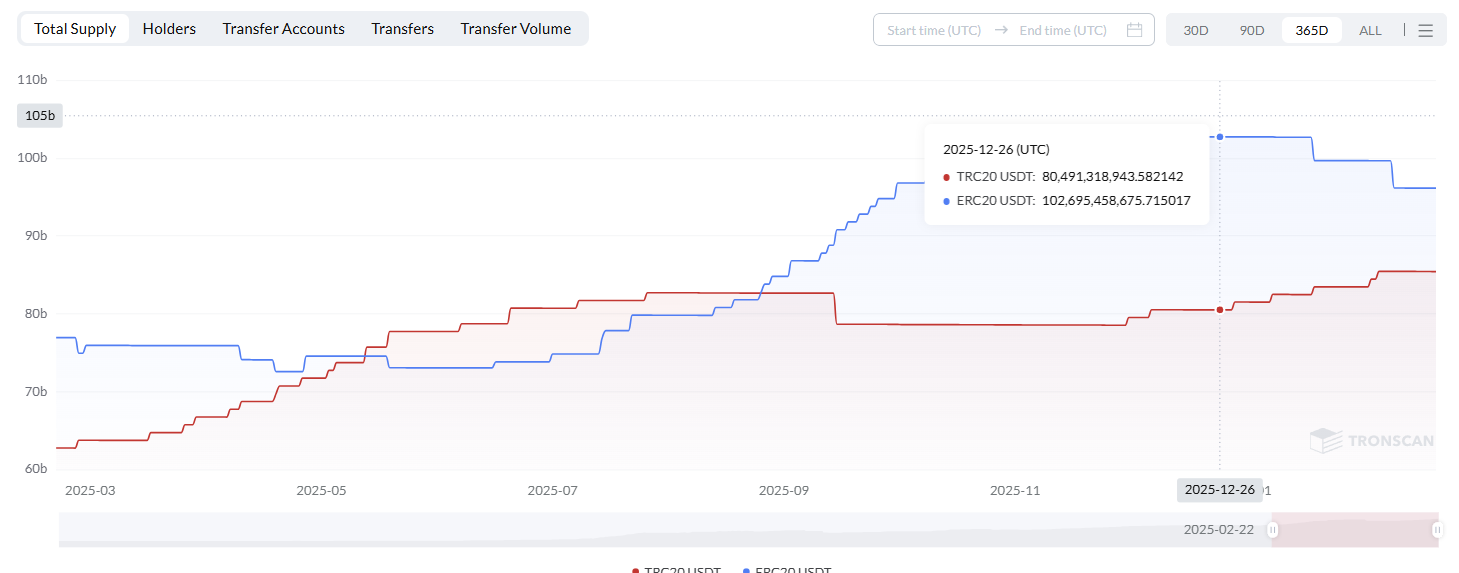
Consider USDT, the most widely used stablecoin. Right now it moves mostly through the TRON network as it’s faster and usually less expensive than Ethereum. But “cheaper” is relative. You get penalized, if you don’t understand the mechanics of the network. TRON is following a resource model of Bandwidth and Energy. When you send USDT to a wallet that currently holds some of it, the transaction requires around half of the Energy when compared to sending it to an empty wallet. Average users are not even aware of this difference. Instead, they click “send” and let the network burn their TRX in a transaction to pay for it.
This burning of TRX represents another type of waste — economic waste. You’re burning through value to pay for a move. The regular cost of sending USDT can vary from 14 TRX to as high as 27 TRX based on the user you are paying. That’s like 2 to 4 dollars just for shuffling your own money around. For a micro-transaction economy, that’s the kiss of death. That’s a crippling tax if you’re a remittance worker sending money back home to family. There are effective mechanisms built into the network, but they’re obscured by complexity.
For a poor KaiOS user there is a long sought dream to send USDT cheap but the interfaces do not help them at all. They pay too much in fees, fail transaction because of slippage, or get stuck in high fee environments. The industry has put a Ferrari engine under the hood of a car with no steering wheel, and is requiring users to burn fuel trying to work out how to get out of the driveway. The mantra of “banking the unbanked” is meaningless when it costs ten percent of a principal to move twenty dollars.
We have built a system where the amount of careful tuning it takes to transfer is equivalent to getting a degree in computer science. Users trawl through forums seeking the cheapest way to send USDT and typically fall victim to scams or unsound bridges, all in an attempt to save a couple of dollars. The friction is real, and it’s a result of the system that values complexity over usability.
Regulatory Hammer
This relentless consumption has not escaped notice. Not too long ago, governments worldwide were slow on the draw but are now swinging the pound of regulation with greater ferocity. They see the strain on their power grids, the mountains of e-waste and the financial uncertainty engendered by unrestrained speculation, and they are reacting with the blunt edge of law.
More than a dozen major economies introduced new taxes or regulations that targeted cryptocurrency mining already in 2025 alone. Some countries have gone farther, imposing outright bans on new mining permits or moratoriums. This, in turn, sets up a game of cat and mouse, as miners load their hardware onto trucks and head to jurisdictions with more accommodating laws and less expensive power — then are forced out again several years later. We saw it when China banned mining and miners rushed to send the machines to Kazakhstan and the United States. Now, with mounting pressure in the West, the industry is eyeing Africa and South America and exporting its environmental externalities — from storm-water runoff to air pollution — to the Global South.
But there is a price to regulation in the form of its own kind of waste — compliance costs. There are legitimate projects that are having to spend millions on lawyers, audits, and regulatory filings just to survive. The “permissionless” vision of the early cypherpunks has descended into a bureaucratic nightmare that chokes innovation with red tape. Necessary as it may be to rein in the worst of the excesses in the industry, this regulatory friction is another layer of cost ultimately borne by us. It is more evidence that crypto, rather than a sleek, streamlined alternative to traditional finance, is evolving into a bloated and expensive version of the system it was supposed to replace.
Stopping the Bleed
The profligacy of crypto is not a law of nature; it’s the result of choices and policies. We can choose differently. We can select networks that don’t burn coal. We could choose not to purchase disposable mining hardware. Oh, and on a personal level we, too, could just decide to stop overpaying for something quite as basic as the movement of assets.
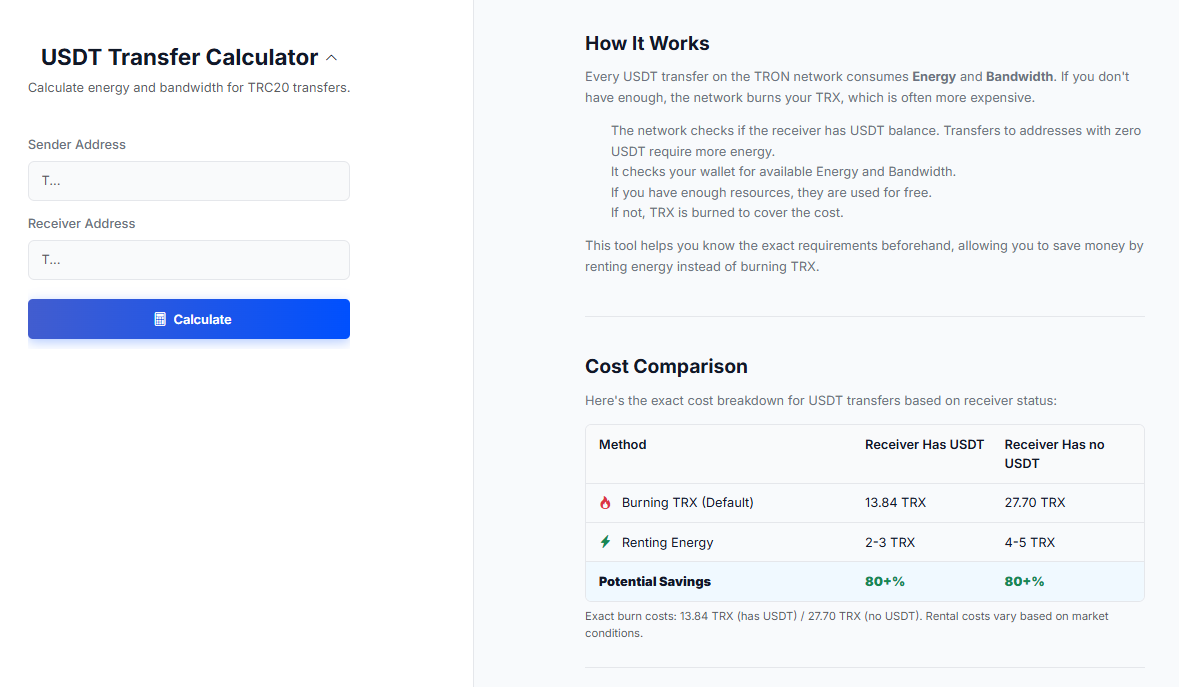
This is when aids such as the Netts USDT Transfer Calculator come in not for convenience but necessity. It enables a user to preview the energy and bandwidth consumption of a transaction before confirming it. Rather than spending 27 TRX to just send a transfer or something similar that is being sent to an empty wallet, the user can see already that renting the same amount of energy we pay on staking at the moment (3 or 4) might be all they want. It's a straightforward arbitrage of resources — rent don't burn — that can cut USDT fees by more than 80%. It makes blind, wasteful spending a smart, effective investment.
If the crypto industry is ever going to grow up, and move beyond its current role as simply a speculative casino that devours electricity, it will need to do so by achieving this kind of granular efficiency. It will not come through another trillion-dollar token launch or a manifesto on the future of finance. It will be through stopping the bleeding. It will be by realizing that resources — whether gigawatts of power, wafers of silicon or simply the coins in your pocket — are finite and throwing them away isn’t a measure of progress at all. It is just waste.