Crypto and Competition: the Best Chain Wins
Chain competition as a market for blockspace — fees, liquidity, developer gravity, and the memes that hide structural risk for retail users.
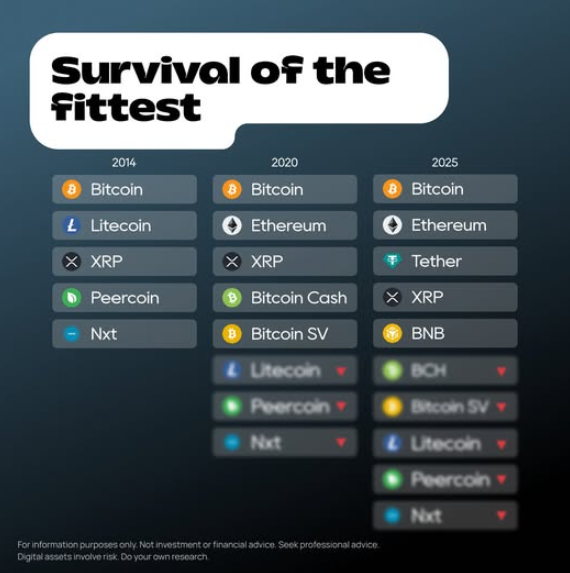
Walk into a major crypto conference — in a converted warehouse in Denver or a five-star hotel ballroom in Singapore — and you’ll hear the same tired slogans until they become meaningless. Speakers speak of “community” as though it were a house of worship. They chant “WAGMI” — We’re All Gonna Make It — like a protective spell to stave off the Chart world. The marketing polish presents the industry as a group of insurgent freedom fighters, facing off against the tyranny of traditional finance: a united front of do-gooders who are innovating their way to a better future.
It is a beautiful lie. The truth of the cryptocurrency arena is that it’s not a cooperative barn-raising, but a knife fight in a phone booth. It is a zero-sum space; liquidity and attention are limited; one of the most basic ways to win is to eat someone else’s market or lunch before they do. That “community” is in fact an aggregation of warring tribes, each zealously certain that its own bagful of digital assets will either become the future or else deservedly cause all other digital assets to be wrung out as scams, grifts or dinosaurs awaiting extinction.
But when the price candles shift to red and venture capital money dries up, any pretense of cooperation drops away completely. Below the polite panels is a world of industrial-scale espionage, predatory pricing, weaponizing regulations and straight-up theft. And the projects that do survive don’t have the most pure ideals. They are the ones who know that in a deregulated environment, the only law that is truly followed is survival of the fittest. The psychological cost of this environment is enormous; traders end up with a sort of financial PTSD, always looking out for the next rug-pull, the next exploiter, the next black swan that will render them wiped-out. Paranoia is not a pathology in this world; it is a survival strategy.
Art of the Vampire Attack
And nothing demonstrates the predatory nature of this space so much as the “vampire attack.” The name is great — it evokes a plan to leech the lifeblood out of an opponent until it’s just a husk. The most notorious execution of this strategy took place in the summer of 2020, a time now mythologized as “DeFi Summer,” but which then tragically resembled nothing so much as a gold rush.
Uniswap was the king of DEXs. It had the volume, it had the users and it had the brand. But it was open-source, and in crypto, open source code is an invitation to compete. A pseudonymous developer going by the name of Chef Nomi didn’t merely fork Uniswap’s code; he also forked what was on it. He created SushiSwap, a clone that did the same thing as Uniswap but added a token — SUSHI — that rewarded people for betraying their loyalty. If you took your liquidity out of Uniswap and transferred it to SushiSwap, then you got paid. It was a bribe, straightforward and simple, and it succeeded. More than a billion dollars in liquidity had fled in days. Uniswap was left bleeding, and has had to issue its own token in order to attempt to staunch the flow.
Then the turn that no one could have seen coming — but maybe everyone should have. Chef Nomi, the so-called people’s hero, dumped his developer tokens onto the market and exited with $14m of ETH, tanking SUSHI in the process. The community exploded. It was a betrayal within a betrayal. He finally returned the money only after he was shamed by an entire industry, but the damage had been done. The lesson was evident: In this game, your heroes are simply villains who haven’t fully cashed out yet.
This was not an isolated occurrence; it was the playbook. Look at the "Curve Wars." Curve Finance emerged as the dominant place for stablecoin liquidity, and with its governance token in control of where rewards went, other protocols began to vie for control of it. Convex Finance and Yearn Finance participated in a mystical multi-billion dollar arms race to suborn Curve voters. This wasn’t about making a superior product; this was about commandeering a rival’s political machinery, to strip out rents that could then flow into your own pocket. It was corporate raiding, decentralized.
The OpenSea vs. Blur war followed a similar trajectory. OpenSea was the elder statesman of NFT trading, a platform that honored creator royalties and at least attempted to pretend to preserve some artistic integrity. Blur saw weakness in that model. They combined a platform meant for mercenaries, not collectors. They removed royalties, gamified trading with points systems and made JPEGs high-velocity financial assets. They didn’t try to shape a better gallery; they built a louder casino. And they clobbered OpenSea’s market share by playing on the rawest of human instincts: greed.
The imitation is bordering on ridiculous. When the team behind the payment network Blur rolled out their Layer 2 network, Blast, they were accused of plagiarizing Optimism’s code in its entirety. They didn’t even bother to update the comments in a few files. They breached the open-source license by removing attribution. Did the market punish them? Did users boycott? No. Blast drew deposits of more than a billion dollars in just weeks. In the liquid restaking wars, Renzo and Kelp DAO were discovered to have code that was so similar they even shared the same inline comments — prompting a Spider-Man pointing meme of people accusing each other of ripping one another off. The lesson is evident: originality costs a lot, but it doesn’t cost anything to Ctrl+C!
Tollbooth Mafia
If the decentralized protocols are dueling with knives, the centralized exchanges are dueling with nuclear weapons. These entities are not mere neutral marketplaces; they are the gatekeepers of the entire economy. They determine what is valuable and what is not. And, just like every monopoly in history, they want all of your money for crossing their bridge.
Reports that emerged late in 2024 and early in 2025 about listing fees resemble not so much “a couple of schoolboys with a stop sign” as extortion to make a mob boss blush. The Moonrock Capital co-founder then made a startling revelation with regards to Binance — the biggest exchange in existence — and their demand for 15% of a project’s total token supply, simply to list it. “We’re taking fifty to one hundred million dollars of value and delivering it as if we are doing a favor, letting people trade your asset.
It descended into a public airing of grievances. The CEO of Limitless Labs added his own nightmare story, noting that Binance had demanded 8% of the supply and a few million dollars in cash.
The founder of TRON, Justin Sun seemingly threw Coinbase under the bus and stated that they wanted 500 million TRON (approximately 80 million US dollars) and a huge Bitcoin deposit. He had the support of the legendary DeFi figure Andre Cronje.
The exchanges, of course, rebuffed it all. They were called “security deposits” or “marketing campaigns” or “Earn programs.” They split hairs over terminology. But when dozens of founders from radically different sectors all share the same tale, it’s a pattern you can’t ignore. The listing process is broken. It is a pay-to-play racket in which the rich get liquidity and the poor go begging. Even Changpeng Zhao, the man who made Binance, had conceded it was a system with failings, although he pointed out that the whole wait between announcing a listing and opening trading only amounted to giving insiders a four-hour window in which to front-run the market.
This is the anticompetitive nature of the “open” financial system. It is a club. If you can’t pay the entrance fee, you remain out in the cold. And it’s not only fees, it is politics. Before it failed, FTX was infamous for its efforts to lobby regulators in Washington to enact legislation that would have kneecapped its rivals, particularly Binance. They were not trying to compete on the merits of their product; they were attempting to use the power of the state to legislate their rivals into extinction. It was the most cynical of moves — and it almost worked, until their own fraud overtook them.
Dirty Laundry and Digital Wash
The race to the top also doesn’t just result in unsavory fees; it results in downright swindles. When the only measure of success is “number go up” — whether that number represents price, volume, users — cheating becomes irresistible.
We all watched FTX implode. That was not merely a business failure; that was fraud bred by hubris and competitive desperation. Sam Bankman-Fried stole 8 billion dollars from his customers, but he had to do it to keep the machine running. He had to purchase the stadium rights, pay off politicians and fund the venture bets that kept him one step ahead of Binance. As a result, he scored twenty-five cell years and his clients received an education on the distinction between custody and IOU.
But FTX was simply the noisiest explosion. The quiet rot is everywhere. Binance faced fines exceeding four billion dollars for operating what U.S. regulators deemed a “Wild West” of money laundering. They were handling transactions for terrorists, ransomware gangs and child abusers. And the terrifying part? It didn't stop. Reporting from 2025 indicated they were still moving hundreds of millions of dollars on behalf of the Huione Group, an enormous money laundering concern, even after guilty pleas and monitors were in effect. OKX did the same thing. They wrote their checks, spoke their “sorrys” and let the channels of dirty money stay open because the fees were simply too lucrative to turn down.
And this isn’t just abstract money — it is real blood money. Some of it comes from “pig butchering” scams, in which organized crime groups in Southeast Asia lure the unsuspecting to invest their life savings in phony crypto platforms. These syndicates then launder away that stolen booty through the big exchanges, which happily turn their heads in feigned ignorance since it makes volume look good on a balance sheet. It’s a symbiotic relationship between high-end corporate finance and low-level human misery.
Then there’s the fake volume. “Wash trading” is the industry’s dirty little secret. It’s trading an asset to and from yourself, lest you think that it is real demand. The blockchain analytics company Chainalysis has estimated that billions of dollars of trading volume is between bots talking to other bots. A quarter of the activity in prediction markets like Polymarket was fake, researchers discovered.

Market makers such as ZM Quant and Gotbit were also sued by the SEC for providing “manipulation-as-a-service.” They literally traffic packages to projects that promised to air their volume and price in unison using algorithms.
And don’t forget the hackers. North Korea’s state-sponsored hacking team, the Lazarus Group, filched billions of dollars in crypto to pay for its missile program. They didn’t accomplish it by piercing encryption; they did it by taking advantage of human frailty. They used phishing e-mails, hacked private keys and drained protocols that had been quickly rushed to market without the right auditing. More than $2 billion was stolen in 2024 alone. Welcome to the cost of doing business in a system where code is law, and the law has bugs.
Survival in the Meat Grinder
So how do you stay alive in a jungle that wants to kill you? You stop falling for the fairy tales. You stop expecting loyalty. You begin to move with the cold perfection of a machine.
Indeed, for the blockchain networks themselves, survival is all about raw performance. It’s not the one with the nicest mascot or the most philosophical white paper. Solana didn't tempt Ethereum into fisticuffs by being "nicer" but by being faster. It chugged through their billions of daily transactions and let the outages become someone else’s problem, once the outages ceased to matter. Ethereum flipped to being the settlement layer for the world’s stablecoins, processing trillions of dollars not because it was cheap, but because it was safe.
For those users — the traders, the developers, the businesses — survival comes down to managing resources. It’s not so much about being more sophisticated than the guy on the other side of the trade, it’s understanding how its chain works better than he does.
Look no further than the TRON network for the ideal case. It has quietly become the spine of the global stablecoin economy. It transacts more USDT than anyone else. But be a tourist and you will get eviscerated by fees. One lone transfer can cost you upwards of 28 TRX if you run out of Energy. That may not seem like much, but consider a payment processor processing 10,000 transactions in a day. That’s 280,000 TRX destroyed daily — tens of thousands of dollars actually lost in a puff of nothing.
TRON: The only ones surviving on TRON are the users who through tools refill their Energy! What they don’t do is burn tokens; they rent resources. They are aware of the fact that on network level there is a specific economy to Bandwidth and Energy, and they take advantage of this. They rely on platforms to automate renting of Energy, driving their costs down by seventy or eighty percent. It’s a straightforward arbitrage: if you know, you pay pennies; if you don’t know, you pay dollars. In a low-margin, high-volume game like this, that difference is also the difference between profits and going out of business.
This applies everywhere. You do what you need to do with your weapons. You need to diversify your custody so that when, not if, an exchange goes down you don’t go down with it. You need to audit every smart contract you touch, because it’ll have a 20 percent chance of being exploitable. You have to presume that every yield that’s too good to be true is a trap — because it almost certainly is.
1. Trust code, not faces — charisma is often a leading indicator of fraud.
2. If you’re not paying for the product, you are the exit liquidity.
3. Minimise on-chain overhead — as in the case of Energy delegation services on TRON, it’s not optional.
4. Some sub-exchanges are insolvent until proven solvent and others still prove insolvent even after they appear to be doing fine.
5. Let the trend be your friend until it bends you over and sours on you.
The crypto industry is a brilliant, terrible, Darwinian experiment. It kills the innocent and rewards the paranoid. The best chain wins. The best trader wins. The best infrastructure wins. There is no award for second and there are no refunds for being rugged.
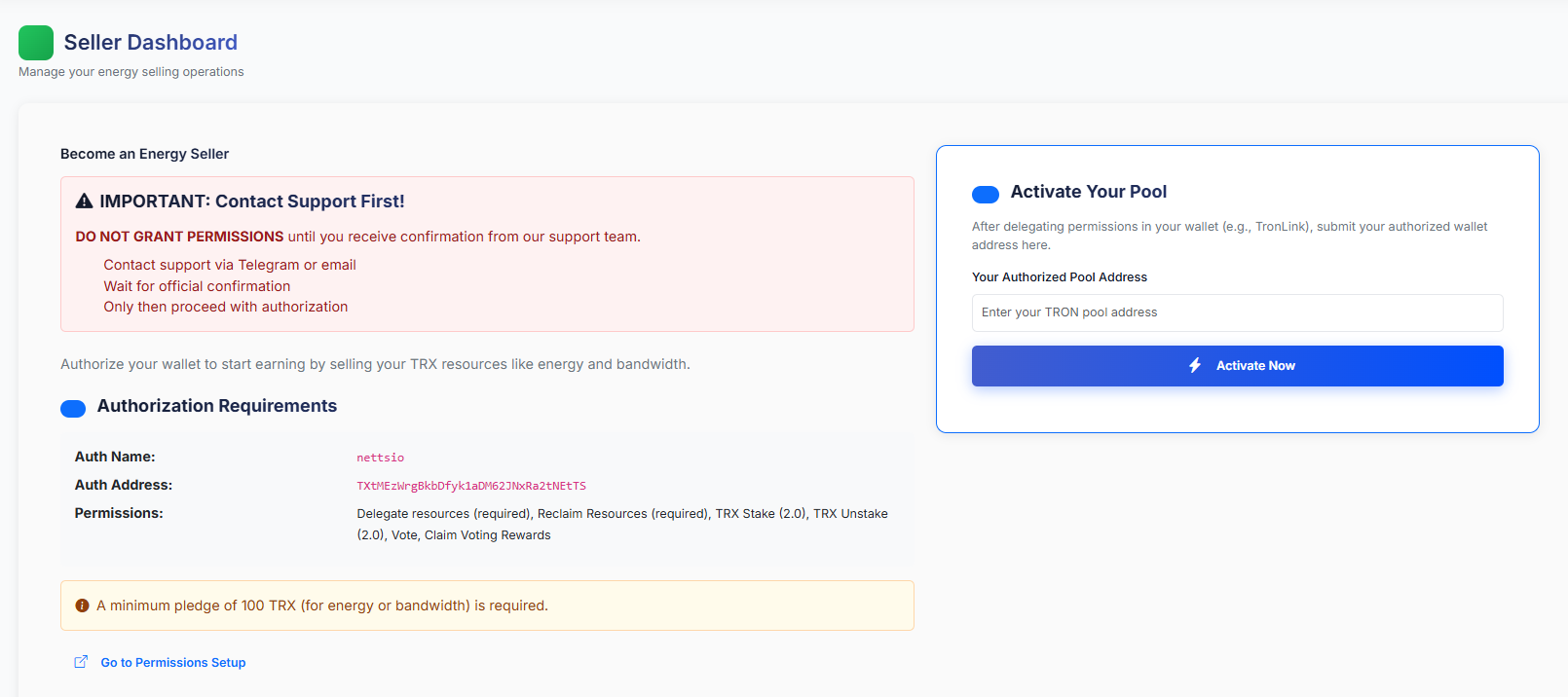
As the ecosystem grows, so do the survival tools. We are changing from the age of going in-by-hand into the age of robotization. On such networks where resource control dictates profitability, platforms like Netts Workspace are beginning to fill the void. When paired with automated Energy delegation, intelligent scheduling and real time analytics, users can forget about the details of the chain and focus on taking home the trophy. That’s the sort of armor you need if you intend to come through the war.