TV and Crypto: Camera on Blockchain
TV still frames crypto as crime and crashes — that narrative weaponizes bias, while networks like TRON show utility media often skips.

In the era of streaming gargantuans and viral social media clips, it has become en vogue to proclaim television dead. Pundits and futurists have been writing its obituary for years now, arguing that the drop in cable subscriptions is irrefutable evidence the network’s carcass has already been picked clean by numerous vultures. But this story, however widespread, is an oversimplification of the truth.
It's not that TV is dead — it's just changing. It is still a powerful, ubiquitous part of our lives, there in homes and the corner of the bar, at the center of our shared cultural experience. The numbers speak for themselves.
Huge live events are still smashing viewership records, with telecasts often exceeding 100 million people watching one network, whether it’s the Super Bowl or some other sort of spectacle. The season openers in the N.B.A. and the World Series games still draw tens of millions of viewers. It’s not the sign of a dead medium but of one with peculiar and lasting ability to bewitch masses.
This power is not just about entertainment; it’s about shaping minds. The saying “you are what you hear” has never been more true. For a huge part of the population, television is still the way that they see the world, and its portrayal of complex subjects like cryptocurrency can have wide-ranging effects — setting a base understanding — or misunderstanding — that can be hard to dislodge.
Television is the invisible guest in millions of homes, the storyteller of our era, and its power, if less brutish than that of its mainstream-enslaved heyday, is just as real. It establishes the terms of public debate; it determines which stories are told and which are not; its decisions shape the reality we inhabit.
Crypto Narrative on Screen
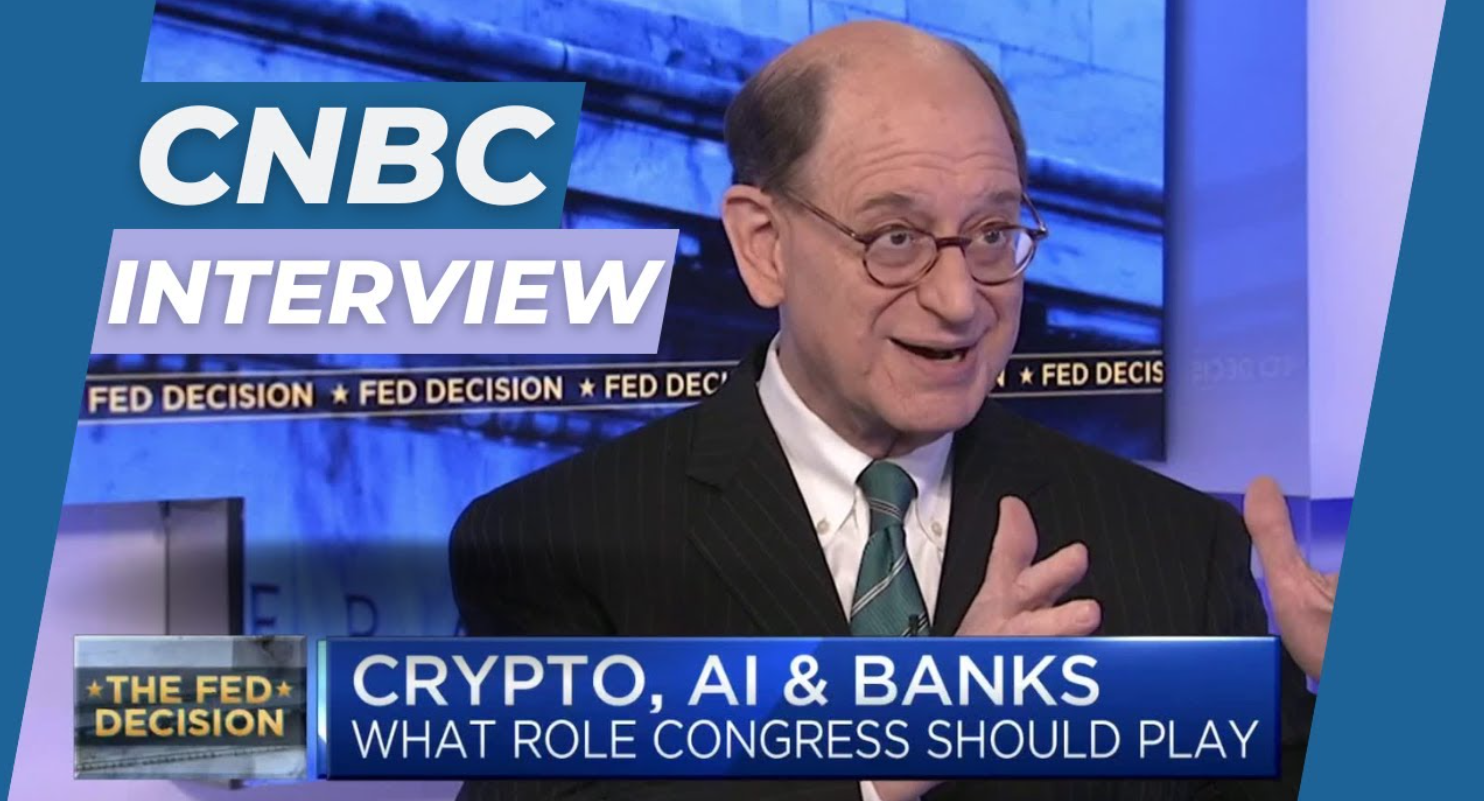
And when the universe of cryptocurrency does find itself catapulted above all that noise, onto our television screens, more often than not it’s an unbecoming image we are being shown. The reporting is commonly shallow, sensational, and almost uniformly negative. Crypto is presented, not as a technological marvel potentially changing the face of finance, but as this shadowy world occupied by criminals, speculators and fools.
The narratives that get the most airtime are invariably about a dramatic market crash, a high-profile hack or a harsh warning from some government regulator. We watch hysterical news anchors beside charts covered in red, downward-sloping arrows and listen to “experts” solemnly discussing the “dangers” and “risks” of digital currencies. This relentless emphasis on the negative is more than your usual “if it bleeds, it leads” journalism.
This has a huge psychological impact. Your everyday fan, with no context and/or education on the matter, creating a consistent negative stimulus that builds mental barriers of the mind.
Crypto comes to represent loss, crime and complexity, a frightening and predatory realm that sensible people would be well-advised to steer clear of. This storytelling also glosses over the transformational potential of blockchain in supply chain management, digital identity and voting systems, to name a few, and focuses solely on that speculative side of the assets. It is a caricature, a fun-house-mirror version of the rich tapestry we see when our eyes are open, but it is a caricature that millions upon millions view in their living rooms day after day until it becomes indistinguishable from the truth.
Using Confirmation Bias and the Availability Heuristic
This media play works so well because of human psychology. The first, which has been written about a lot lately, is confirmation bias — the fact that we are hard-wired to prefer information that aligns with our existing beliefs. For those of us raised in a world of traditional finance, the decentralized currency aspect is already foreign and suspect.
It is no wonder, then, that the press’ negative image suits this natural doubt so well. Second is the even more powerful principle of the availability heuristic. It is a cognitive bias in which we tend to place unduly value on information that can be most readily called up.
The brighter, more affectively-freighted and fresh are our memories. A TV news story about a person who lost their life savings in a byzantine cryptocurrency scam is far more memorable and emotionally compelling than a dry, technical discussion about the benefits of blockchain. It’s the media, who keep hitting viewers with these sensational negative stories, which are at forefront of people's minds when they think about crypto.
It produces a false sense of risk, in which the exceptional lurid occurrences are treated as typical. This mixture of reinforcing preexisting fears and establishing a mental database full of the worst, easiest-to-remember examples is a winning formula for the manufacture of consent and acceptance-acquisition effort against a new technology.
Sponsored Narratives and Financial Interests
It’s a bitter pill to swallow, but no major news network is just an honest, objective source of what-is-happening out there. They are sponsored and their reporting reflects the vested interests paying the bills. And when people of power in the old financial world start to consider crypto a threat to their established systems, they have reason to want these things painted in an unfavorable light.

The press becomes a highly effective weapon in this duel of narratives, and journalists, wittingly or not, can end up serving as organs of their owners’ corporate interests and politicians’ ideological projects. The rationales they offer are often peppered with the rhetoric of consumer and financial safety, but what's at play is an attempt to protect a system from which they profit greatly. They will say that Bitcoin is too volatile to have as part of an asset mix (while ignoring the volatility of many individual stocks and indeed much larger swaths of the stock market).
They’ll emphasize the role of crypto in nefarious activities, all while looking past — very conveniently — the fact that less than 1% of laundering and other financial crimes happen exclusively with crypto, and by far the greatest overall percentage happens from fiat currencies such as USD. They will discuss the environmental cost of mining Bitcoin, without raising an alarm about the outsize energy consumption of traditional banking or pointing out that many crypto projects are moving toward more efficient consensus mechanisms. It’s a one-sided argument, packaged as an objective analysis, and it makes it nearly impossible for the average American television viewer to be sold on crypto when all they hear is nothing but this continual echo of doubt and fright.
The web of influence is intricate, and much of it remains under cover, but it exists — a nexus of overlapping directorships, advertising contracts and personal connections that guarantees the story media tells will hew to the interests of high finance.
Out of the Past: Media Witchhunts
Attacking new and innovative technologies through the press is a well-known tactic. History is littered with examples of powerful incumbent industries that used their power to generate fear and doubt about newfangled innovations that challenged the status quo. During the final years of the 19th century, a battle exploded between Thomas Edison, an advocate for direct current (DC), who launched a malicious smear campaign against Nikola Tesla and his alternating current (AC).
Edison’s company conducted public animal electrocutions using AC to “demonstrate” its danger, all in the interest of preserving his DC empire. Just as a similar pattern appeared with the emergence of the automobile. The landed horse-and-buggy interests, along with city planners concerned about noise and safety, filled newspapers with lurid stories of horrifying high-speed crashes and moral panics over the “devil wagons” that were disturbing their cities’ peace.
Those highly questionable in hindsight, but quite successful at the time campaigns, were used to generate public reaction strong enough against a technology that would later change the world. The war on cryptocurrency is just the latest installment in this age-old and unsavory history of incumbents driving through fear to destroy innovation. If we learn from these historical echoes, we can recognize the actual nature of today’s media narrative: not its delusional self-image as a beacon of truth and reason, but a force every bit as craven and irresponsible as the politicians it claims to be protecting us from.
Battle for Public Perception
The war for public opinion is waged on many fronts, none as important as television. If we look at how the crypto narrative has been painted from day one it is no wonder that mass adoption for many is a stretch to fathom. It encourages skepticism, and it solidifies the view that digital assets are nothing more than a super risky bet for tech geeks and speculators.
This climate is not conducive for a nuanced discussion on the technology’s potential to create a more decentralized and equitable financial future. Many, the concept of a world in which is not dominated by governments and big banks controlling our money supply and financial system may be outlandish, but the media’s representation of it does no favours to demystify. Instead, it feeds on fear of the unknown and runs with the idea that cryptocurrencies are a digital wild west where your savings could vanish instantaneously.
Viewers are trained to see risk, not opportunity, and trust the safe embrace of traditional finance over blockchain’s frontier. But this manufactured consent is a powerful thing, and it keeps millions of people on the bench, without even examining what might be plausible with this new technology. The irony is that people are taught to trust in the traditional financial system, which was the cause of the 2008 financial crisis; a global disaster from which many have yet to fully recover.
It’s a system that we know to be capable of greed, corruption and systemic risk again and again – but is pitched as the safe/responsible option – while the emerging world of crypto is derided for its (often better acknowledged) gambling aspects.
TRON: A Signal in the Noise
In the era of media disbelief with crypto, there are networks and assets that stand out better than others. The network that has been only lightly battered is TRON with native token TRX, as well as USDT on its blockchain achieving some level of stability and acceptance. In a market that can at times feel like it will literally never stop convulsing with violent swings, stability is an incredibly potent counter-narrative.
TRON has assumed its place as the number one blockchain for stablecoin transactions, supporting an overwhelming majority of the total supply of USDT in circulation. It’s no small feat. It's a testament to how much trust can be placed in the infrastructure of the network; one that moves billions of dollars every day with extraordinary efficiency.
It's this emphasis on what works and performs that has steadied the ship somewhat against some of the more wild criticisms levelled at other projects. As your network is the fastest, and cheapest way for goods to travel from A to B across the globe, you have a much harder time dismissing it as just another speculative instrument.
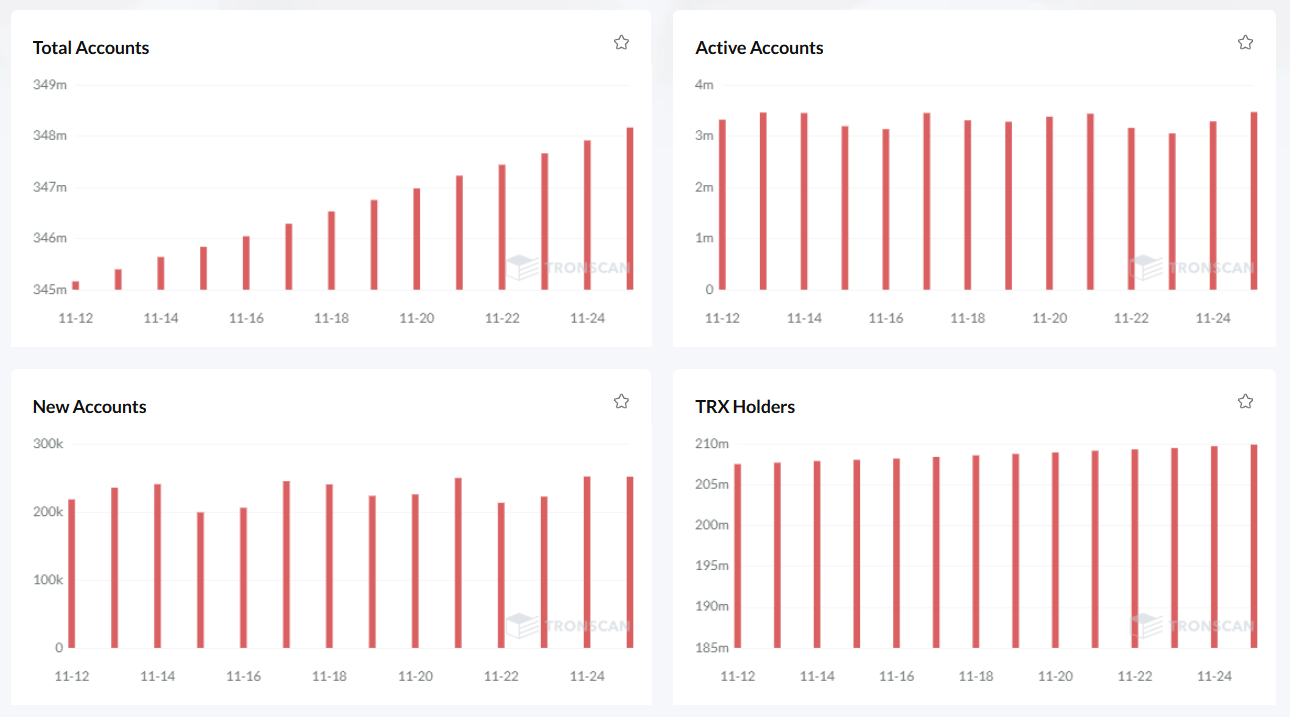
Getting technical now, TRON prides itself on being a robust network due to its Delegated Proof-of-Stake (DPoS) as the consensus algorithm. By comparison to the energy-guzzling Proof-of-Work that Bitcoin uses, DPoS is a lean and democratic alternative. TRX holders elect a limited number of “Super Representatives” who are tasked with validating transactions and generating new blocks.
This system not only enables orders of magnitude more transaction throughput — thousands of transactions per second instead of the few Bitcoin might be able to handle — but also points the way to network power usage that is a tiny fraction of its antecedents. Its network is a three-layered structure of storage layer, core layer and application layer, which is scalable and developer-friendly. That has contributed to a rapidly growing ecosystem of decentralized applications (dApps) such as the JustLend lending platform, the SunSwap decentralized exchange, and an active NFT marketplace.
This increasing use case forms a strong pillar on the network’s long term growth and acceptance. Requests for offerings allowing users to rent TRON Energy (to use in transactions) illustrates a dynamic and vibrant user activity. TRON network of Energy renting is not just a “high” function: it’s a real-world solution to an issue that draws its benefits directly from the ability to reduce transaction costs, and consume the blockchain services in a more efficient way.
Therein lies the secret to TRON's staying power and how they will be able to succeed in difficult media landscape.
Stories Behind the Story
The burden of truth-seeking has in a complex and contradictory information environment shifted increasingly to the individual. You can’t simply be a news consumer today; one must also learn to be an active and critical media literate as well. First would be diversifying your sources.
If you rely on the mainstream television news for your knowledge of cryptocurrency, then you are only hearing one side of a much bigger picture. Find independent journalists, trusted online communities, academic reports and the original white papers of the technologies. Secondly, who is writing the information and what could their bias be?
Ask yourself, who is the owner of this media outlet? Who are its major advertisers? What is its political leaning? A news organization’s business model can sometimes explain a lot about the stories it pushes. Finally, make reporting/opinion distinctions.
Most of what passes for “news” in the television world is in fact, not news at all but speculation and commentary intentionally calibrated to make viewers react emotionally without informing them. If you make a conscious effort to pursue multiple perspectives and critically analyze the data you are fed, over time a truer picture of reality is revealed, one that has not been distorted by vested interests.
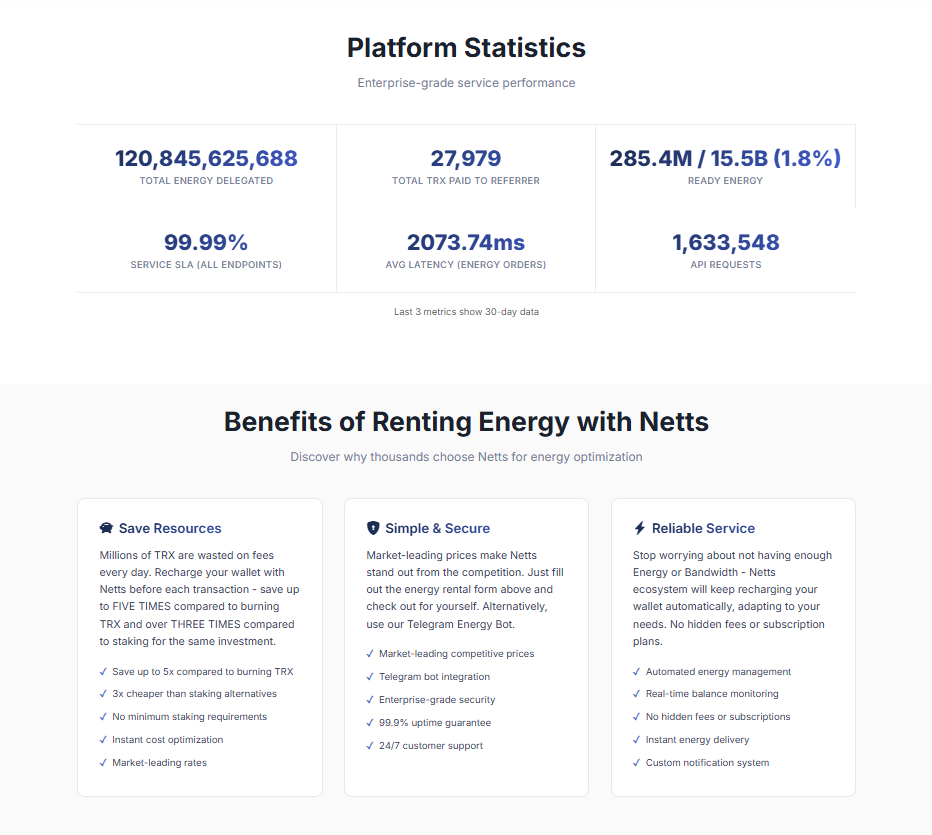
As the digital world changes, our instruments of interaction with it will also develop. Towards users of the TRON ecosystem services are being offered to make it easier for them and cheaper. The Netts Ecosystem, for example, offers established service that allows users to rent Energy for USDT transfers five times cheaper than burning TRX. It is enabling the TRON network to be more accessible and efficient, for both individual users and mega enterprises.