Raw Materials of Blockchain: How It's All Made
From silicon wafers to data centers and submarine cables, blockchains rest on heavy industry — and efficient chains like TRON still ride that physical stack.
In our more virtual reality, it’s not that hard to view the services we use as ephemeral, just part of the code running somewhere in a mysterious “cloud.” We tap our phones, there is a transaction and the end of each is immediate. But even this impression of weightlessness is false.
Behind each frictionless digital act of commerce, and behind the blockchain technology that undergirds Bitcoin and its descendants, is inconceivable amounts of energy: a massive physical infrastructure whose exact size can be difficult to make sense of. The blockchain isn’t software; the blockchain is a machine, and there are almost no features that you can change in this machine without changing what it is. It’s an antique sound system so large, heavy and fragile that running it comes to define more or less its entire physical instantiation: Thousands of tons of rare metals and processed minerals (aluminum oxide, zirconium dioxide, palladium-tantalum), plastics, ceramics for insulators, exotic chemicals for circuit etching, water for cooling or steam to run turbines. Tremendous as it is, though, to truly understand blockchain, you need to go back to its crude origins — and we do mean crude — whose path runs from violent explosions deep in the earth up through the silence of a server rack.
Heart of the Machine: a Look Inside an ASIC
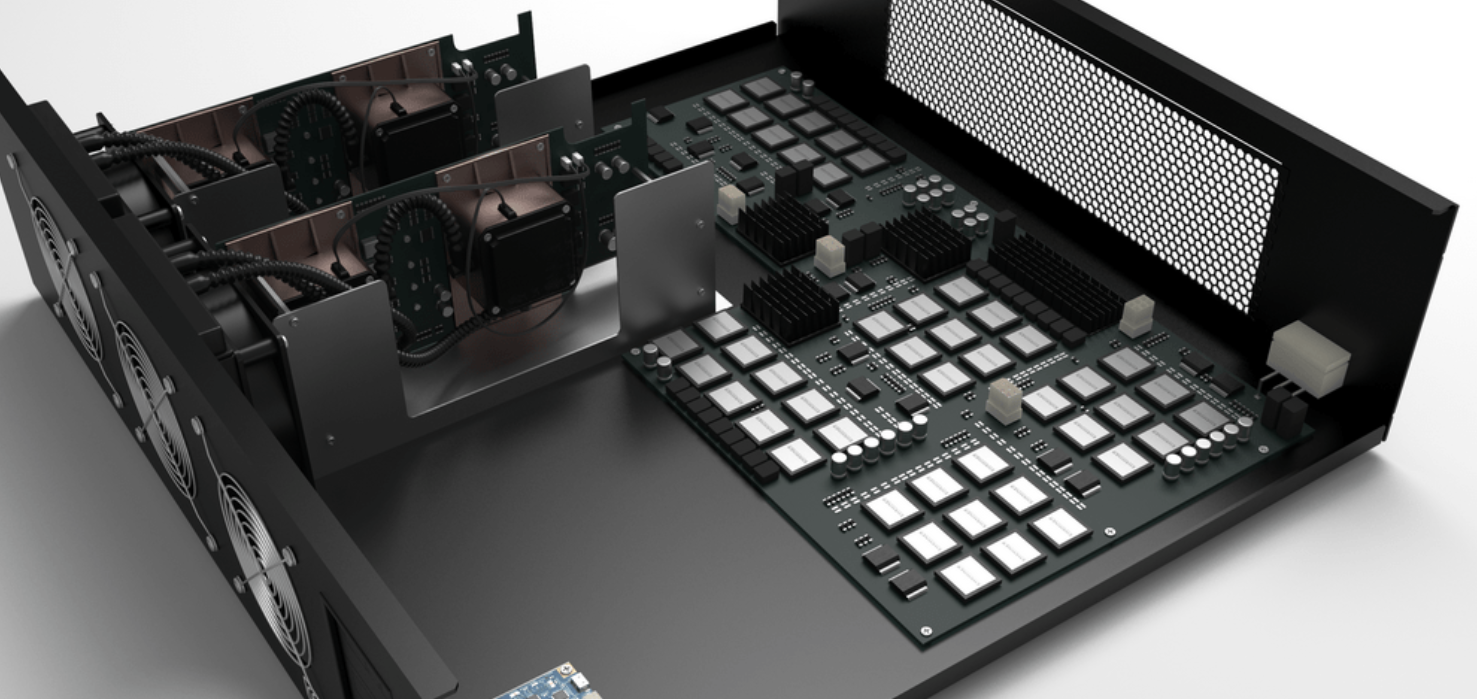
The heart and soul of most blockchain networks, but especially those such as Bitcoin's that utilize Proof-of-Work is the Application Specific Integrated Circuit (ASIC). While the processors in personal computers are jack-of-all-trade devices, an ASIC is the master of one: it is created from scratch to do one thing and one thing only — in this case, hashing cryptographic formulas — with ruthless efficiency. But this digital juggernaut starts out as humble sand.
The foundation behind microchips is silicon, the silicon must be made perfect from quartz by removing all impurities to a level of purity of 99.9999999% — pure enough that a piece of silicon the size of one grain of colored sand in an entire mile-long beach would have to be pulled out before it was considered “impure.” This electronic grade silicon is then melted at more than 1400 °C and allowed to grow into a large single crystal, which takes the form of a large diameter cylindrical ingot, called a “boule”, using the Czochralski method. This shining cylinder, perfect in its atomic architecture, is then sliced into ultra-thin wafers with diamond-edged saws — each one a plain canvas for the most intricate manufacturing process ever conceived by mankind.
A modern fab costs billions of dollars to build and to outfit with factory robots in order to begin the process at all.
The magic takes place in a procedure called photolithography, which is performed in these fabs that are some of the cleanest places on Earth. A single grain of dust can ruin a chip, so the air is filtered to a level 10,000 times cleaner than that in a surgical operating room and workers wear head-to-toe “bunny suits.” Here, a light-sensitive chemical, the “photoresist,” is deposited onto a silicon wafer.
A design of mind-numbing complexity, etched out, often in extreme ultraviolet (EUV) light — with a wavelength that is shorter than X-rays — from patterns of the chip’s circuitry and beamed onto the wafer by multimillion-dollar machines, in themselves marvels of engineering. It chemically changes the photoresist where it hits; this changed layer can be washed away with solvents. The exposed silicon is then bombarded with ionized gases — a plasma of fluorine-based chemicals such as carbon tetrafluoride — in a process called etching, carving away the microscopic trenches and structures that will become transistors.
The process of coating, exposing, etching and cleaning is repeated hundreds of times as materials such as copper, cobalt and tungsten build up the billions of transistors that give the chip its power. No wafer will contain only perfect chips; the manufacturing yield is an important number, and chips are frequently tested at various stages of production and assigned to a bin based on their performance and quality. The best chips go to the highest-end miners, and those with small flaws could be used in less demanding products.
This complex dance of light, chemicals and elemental metals is how a slice of purified sand becomes the thinking core of a mining rig. An ASIC is also much more than just this chip. It is installed on a printed circuit board, or PCB — which is also layered composite of fiberglass, epoxy resin and copper foil — and encased in other components.
There are dedicated memory chips that store the data that hashing needs, a sequence of voltage regulators and capacitors that drive the chip with very stable voltage power. And in order to keep this machine from melting, it needs a powerful cooling system. That often includes heat sinks composed of aluminum or copper that use intricate fin designs to maximize surface area, along with powerful fans and motors containing rare earth magnets like neodymium and dysprosium, all products of their own global supply chain.
The Power Supply Unit (PSU) is a minor wonder on its own, packed chock-full of transformers and rectifiers and large capacitors to take high-voltage AC from the wall and stuff it down into the low-voltage DC needed by the chips in a modern system, while running at 90% efficiency or better so as not to waste any more heat or electricity than you absolutely have to.
Trip Around the World: Global Supply Chain
Each part in an ASIC miner is the result of a cross-planet journey. The raw materials are torn from the earth on every inhabited continent, and the supply chain that links them is a monument not just to modern industry but also a network of logistics without which neither tanks nor cars could exist.
The quartz for silicon could be brought in from Brazil or the US. Most of the bauxite for aluminum comes from Australia or Guinea. Data center batteries often contain lithium from the salt flats of South America.
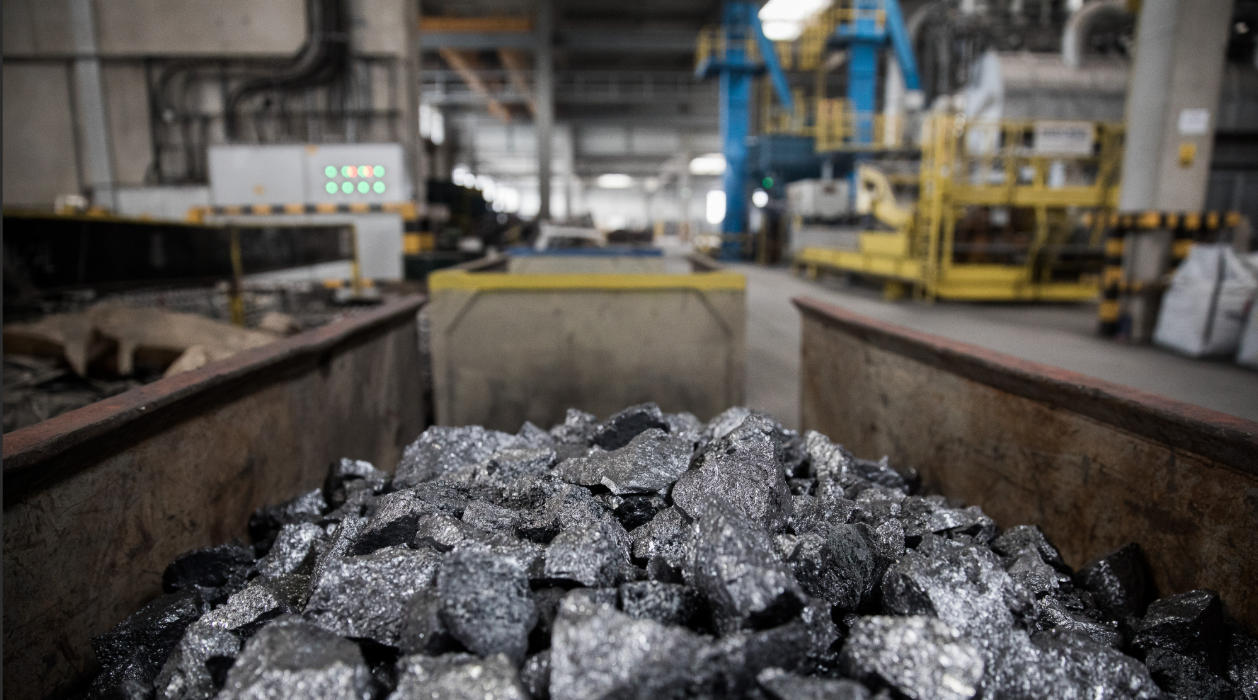
And the tiny but essential quantities of rare earth metals come almost exclusively from China, which dominates their processing into a usable state. This geographical disparity results in a logistical nightmare of mammoth proportions. Raw ore is placed on some of the largest ships ever built, in the form of enormous container vessels that travel the oceans for weeks and then deliver their payload to a refinery in another country.
Cleaned materials are then sent to a specialized factory, such as the ones operated by TSMC in Taiwan or Samsung in South Korea, where they are transformed into silicon wafers and chips.
The geopolitical importance of this concentration can hardly be overstated: Taiwan’s place at the center of advanced semiconductor manufacturing has made it a choke point for the global economy, as well as an area for international friction. This is driving what has been dubbed the “chip wars,” a global strategic struggle in which countries employ subsidies, tariffs and export controls to prop up domestic chip industries and restrict rivals’ access to state-of-the art technologies. The United States’ CHIPS and Science Act, for instance, pours billions of dollars into the construction of new fabs on American soil in an effort to reduce dependence on manufacturing in Asia.
And this world-wide chess match is having a direct effect on the cost and availability of the very ASICs that are utilized in mining blockchains. Those finalized chips are then shipped to another country, typically China, where they’re put together into the final product. At every stage of this journey, millions and billions are involved.
Miners slaving away under desperate conditions, sailors working on colossal container ships, chemical engineers in sterile refineries, line workers on assembly lines in factory towns like Shenzhen and the logistics experts who choreograph a global ballet. This supply chain does not come for free. Semiconductor fabs are extremely thirsty, consuming millions of gallons of ultrapure water each day to scrub wafers in between layering.
The mining of these materials, especially many rare earths, can have a substantial environmental footprint due to extraction processes that leach toxic byproducts into local water supplies and landscapes. The human face of something like this is also a vital part of this story, with people's livelihoods around the world directly linked to that relentless global demand for the physical building blocks of our digital world. The finished product, a single ASIC miner, is a concentrated brick of global trade, human labor, geological resources and parts from every corner of the world — not to mention corporate intrigue.
Cathedrals of the Internet: Data Centers and Global Networks
Though individual miners and tiny farms are still part of the picture, the industrial backbone of blockchain can be found in giant data centers customized for the process. This isn’t just rooms full of computers; they’re technology fortresses, and many are built in remote locations with cheap electricity and good airflow. Made from thousands of tons of steel and concrete — “digital cathedrals for our connected age,” as the technology writer Stephen J. Zweig has called them — these data behemoths are all business, surrounded by chain-link fences, tended by drones and watched over by armed guards.
Inside, they are an orchestrated cacophony of controlled chaos of hot and cold aisles meticulously designed to control airflow. Physical security is a top priority, and many of them have mantraps, seismic bracing against earthquakes, and state-of-the-art fire suppression systems with inert gases such as Novec 1230 to put out any fires without damaging equipment. The most important need for them is energy.
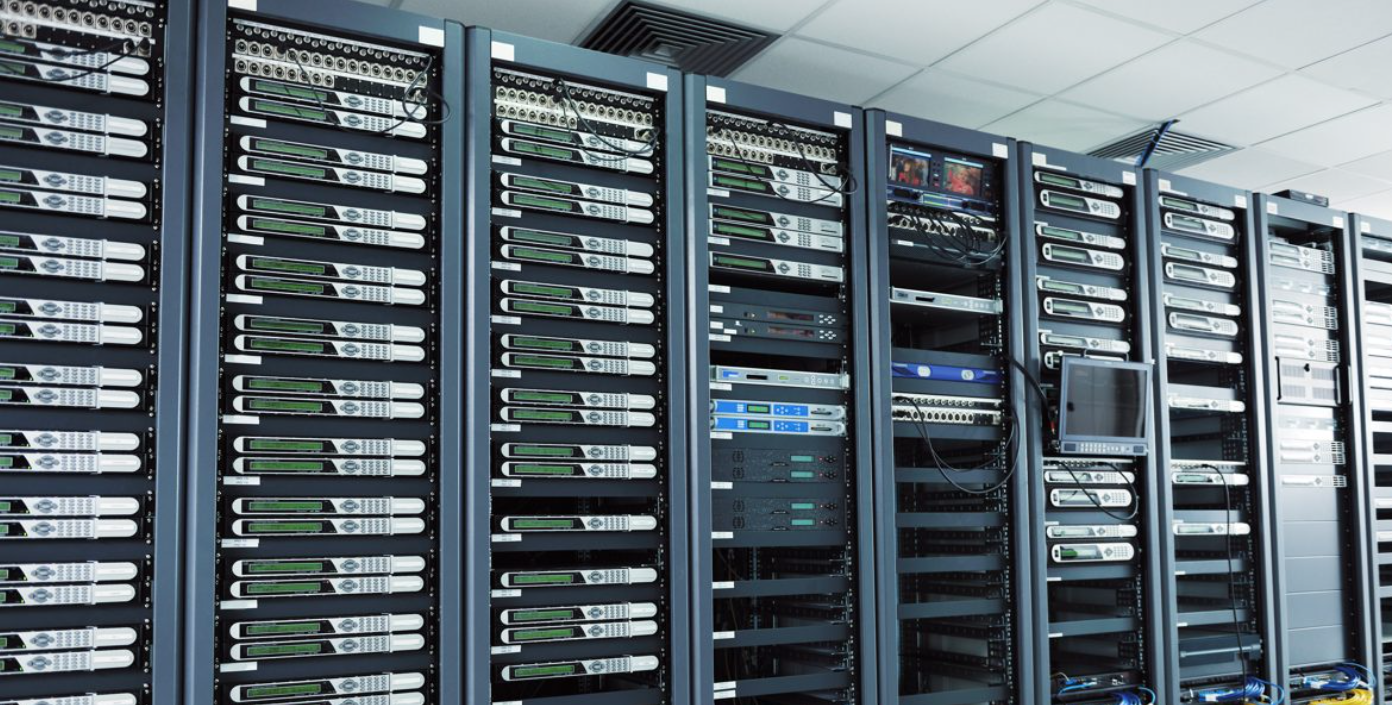
A single large mining operation can consume electricity equivalent to what a small village might use, having its own substation and direct line to the electrical grid. To keep from going down, they tend to be reinforced with massive uninterruptible power supplies (UPS), which are in essence rooms full of lead-acid or increasingly lithium-ion batteries that can spring into action the moment there is a power failure, backed by fleets of diesel generators that can run facilities for days.
All of that power generates a lot of heat. Preventing thousands of tightly packed servers from overheating is among the biggest engineering challenges. That effort takes industrial-scale cooling systems, including complex cycles of air-cooling that rely on the outside air (like in Scandinavia) and a variety of evolved liquid cooling.
At a few state-of-the-art data centers, they use immersion cooling in which individual servers are dunked into tanks of nonconductive dielectric fluid and heat is drawn directly away from them. Sometimes the heat captured is even reprocessed and used to heat local community swimming pools or warm greenhouses, a small nod toward sustainability in a power-hungry industry. But a data center is useless if it is an island.
It has to be plugged into the wider world. This is done using a network of fiber-optic cables. These wires, which are made up of strands of pure glass as thin as a human hair, are the real arteries of the internet — and by extension the blockchain.
Over 500 of these submarine cables, which together cover more than 1.3 million kilometers, are resting on the ocean bottom after being laid there by ships built specifically for that task. They are more fragile than one might expect, at times being marred by anchors or natural events. A financial transaction kicked off in London could be confirmed inside a data center in Texas, this data packet crossing through these undersea cables moving at almost the speed of light.
That whole system is the circulatory network that keeps the blockchain’s distributed heart pumping, a global apparatus that includes everyone from your local internet service provider to those widely dispersed undersea webs and internet exchange points.
TRON Ecosystem and the Search for Efficiency
That whole physical infrastructure — from the mines to the data centers — is what helps facilitate specific blockchains like TRON. Anything that happens on the TRON network, from a basic USDT transfer to a more complicated smart contract, consumes resources. There are two main resources, Bandwidth and Energy.
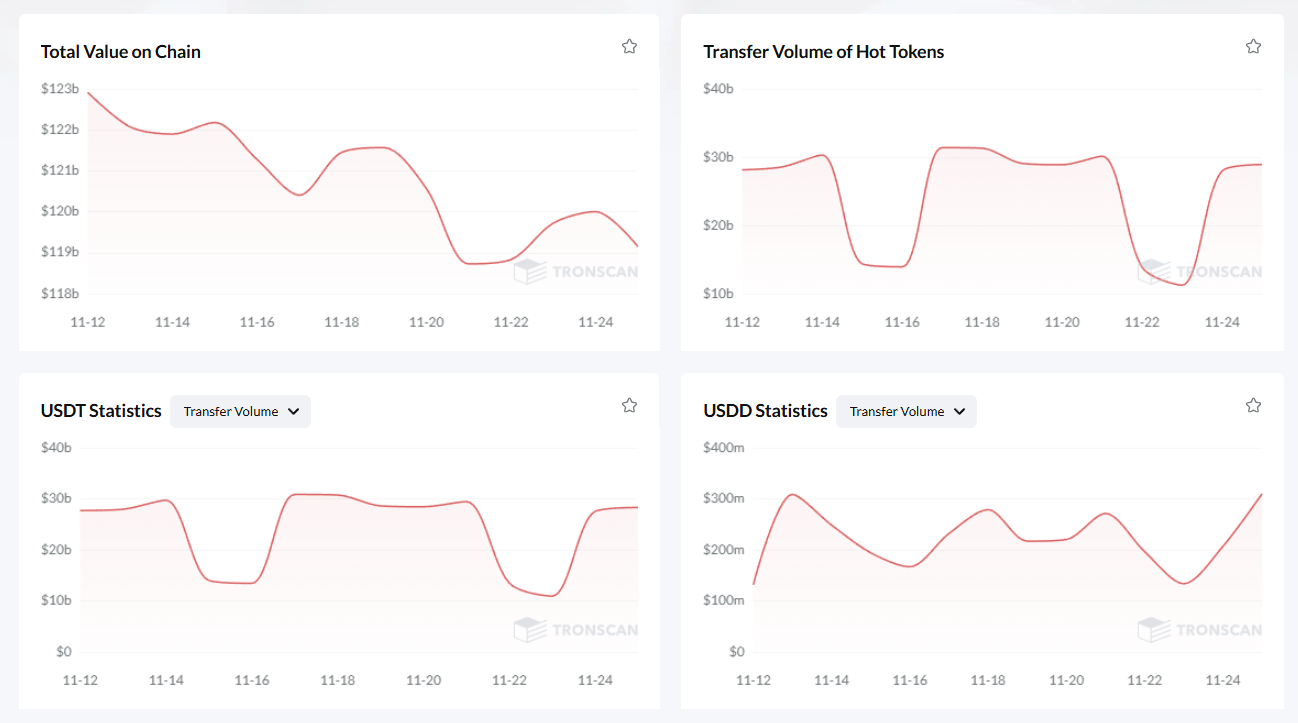
Bandwidth is spent on most standard transactions, and each account refills a small pool of Bandwidth for free every day. But what really fuels smart contracts is Energy, and it doesn't grow back. It is a real manifestation of how much hard work it takes for the network's physical hardware to verify and confirm the transaction.
Instead of relying on Proof-of-Work which requires massive mining farms, TRON adopted the Delegated Proof-of-Stake (DPoS) method of consensus. Here, TRX holders can vote for 27 “Super Representatives,” who produce blocks and verify transactions. Their voting power is tied to the funds they "freeze" — locked up as staking.
The work that these Super Representatives are doing is with top of the line nodes, which need to be high performing and include enterprise level server hardware, fast storage and multiple high-bandwidth internet connections — all of which must be located in secure data centers. Like Bitcoin mining, it’s less energy-intensive but depends on that same basic silicon and copper infrastructure — and global connectivity.
This high demand drives an active economic environment in the ecosystem, leading to the TRON Energy Market. Many such users can either lock their TRX to produce Energy, or just rent it from others. Therefore, a lively market for TRON Energy rental has flourished.
For companies and individuals who are active on the chain, getting TRON Energy cheaply is not only a matter of cost control, but also significantly more capital efficient compared with self-lockup. Such a market has dozens of platforms and bots, promising renters automated energy renting by the hour, day or month. How does all this work? Simply put: a big lessor of frozen TRX is "delegating" the Energy produced from their stake to your address for a small amount of time.
This way the renter can go on to deploy their smart contract without giving access of their private key to the platform, keeping it secure. And this economic stratum is born out of the dynamical constraints and overhead costs associated with the hardware operating that network. The TRON blockchain's need for energy efficiency is reflective of that of its physical counterpart: the entire production supply chain.
From the unrefined ore that is pulled from the earth to the complex logistics of global manufacturing. And then there are also all those data centers which need electricity, a lot of it. The sleek, speedy digital transactions we experience at the surface are only the final, visible ripple from a tidal wave of industrial effort. Acknowledging this allows us to better understand the genius (and for that matter, cost and dependencies) of the technology.
As the tech gets more and more advanced, the quest for efficiency and sustainability becomes increasingly central, with discussions over various consensus mechanisms reaching a fever pitch across industries and a movement toward the development of “green mining” operations that are powered by renewable energy sources. Resource management is critical for busy users in the TRON network. This created the need for a solution to this, and services such as the Netts Energy Charge Bot have risen up to provide a more hands-off way to save on USDT transfers.
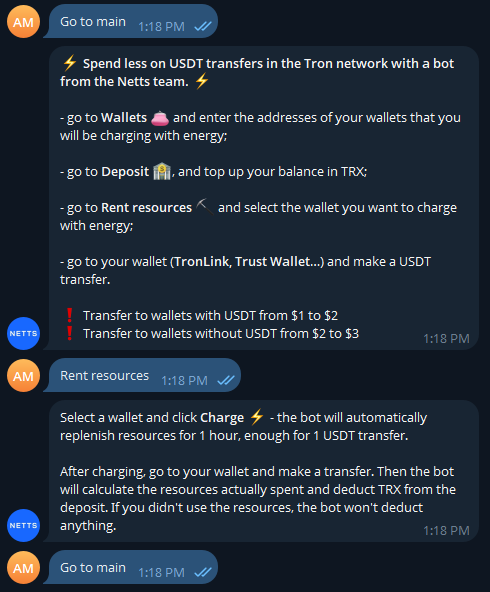
The bot supports linking your wallets, and when you want to send a transaction, it automatically rents exactly the amount of Energy that is needed for one hour so you don’t overpay. Then, after the transfer has occurred it debits that amount from your balance; if the funds aren’t used nothing is debited – a clever and frictionless way to engage with the very real resource economy of the network.