Psychology of Crypto — Mind Tricks
FOMO, loss aversion, and cognitive biases drive crypto trades — disciplined plans, journals, and cost-aware networks help keep emotion from steering decisions.
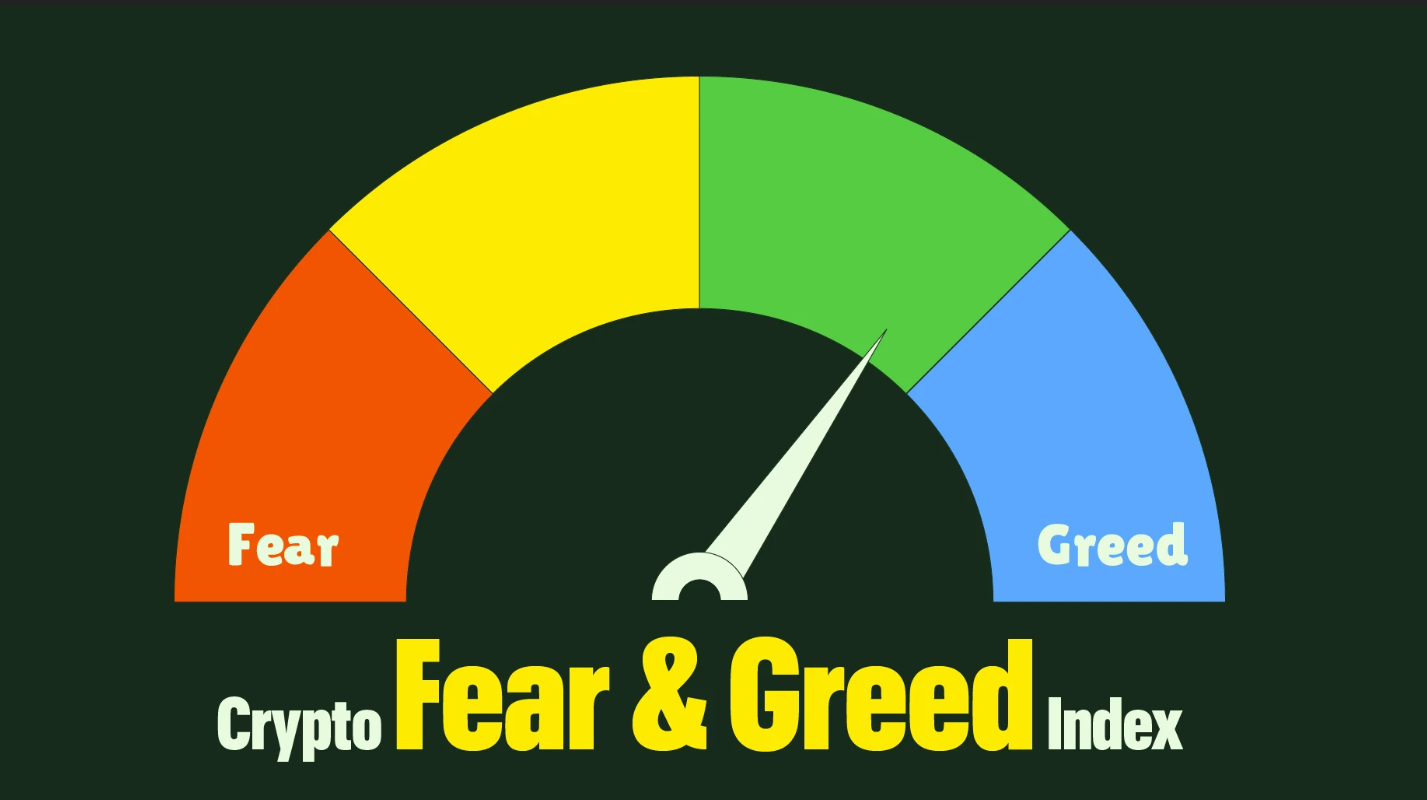
Hope and fear are chiseled onto a face glowing digitally from the screen. For weeks, a crypto trader who we’ll call Alex has been tracking a new token’s price on the TRON network. He’s spent countless nights dissecting whitepapers, trawling community forums and Telegram channels to stitch together a mosaic of information that has one clear implication: this is the one.
Each chart, each scrap of data, every anonymous “insider” tip is shouting out: “buy!” The possibility of finally catching that life-changing return is so real he can nearly taste it, picturing the comfort and security it would provide. With a shaky finger, Alex finds his way to the exchange, the figure he intends to invest already punched in — what amounts to years of saving on his part.
“But then there’s that surge of self-doubt.” A single negative comment on a mailing list, an errant breeze in the market’s direction, a strong memory of a loss that stung months before — everything combines into one emotion.” It’s called “analysis paralysis,” where the sheer terror of making the wrong decision is so paralyzing that no decision ends up being made.
What if it’s all a sham? What if the market reverses as soon as he clicks “confirm”? Loss, cold and cutting, clutches at him.
He shuts the window, telling himself to wait for a better, less lethal way in. Then he watches in horror a week later as the token’s value skyrockets a thousandfold. The rocket to the moon has already left without him and, as he knows better than anyone, his inaction is more expensive than financial ruin.
In a different part of the crypto universe, there’s Jordan. Jordan had that same seductive pull of another token, one already on a rocket ship trajectory. She wasn't a tireless researcher, the way Alex was.
Instead, she was caught up in the social media maelstrom — the steady stream of memes, posts filled with screenshots of enormous gains and testimonies from overnight millionaires swearing that much more was on the way. Anointed by influencers with millions of followers as the movement’s next revolution, it was a potent form of social proof that turned an investment into what felt like collective certainty. The charge of having been part of something was exhilarating.
She bought in close to the peak, her heart pounding with excitement that finally she too would have a success story of her own. But the euphoria was short-lived. The token’s rise was not a gradual ascent but the last, dazzling flare of a dying star, before it fell back on itself from its lack of substance.
The value collapsed, along with Jordan’s investment. The screen used to be a ray of hope, now it symbolizes a crushing defeat. There was no longer the communal rejoicing of old; in its place, there was only an ugly cacophony of blame and despair.
Gain-Loss Psychology
The tales of Alex and Jordan are two sides of the same psychological coin that powers one small corner of the otherwise frothy cryptocurrency market. Alex is a classic candidate for what’s been dubbed the Fear of Missing Out, or FOMO. This is no mere tinge of envy, but a potent and often uncomfortable state of mind that has an actual neurological basis.
In the face of other people’s success, our brains can flood with a stress hormone — not dissimilar from what happens when we face danger — and that is because of an almost primal fear that we are watching others move ahead without us. This subconscious fear may hijack our ability to think logically and causes us do the silly things we often times act on. It took two psychologists, Daniel Kahneman and the now-deceased Amos Tversky, who are considered the pioneers of behavioral economics, to shed light on this issue with their revolutionary Prospect Theory.
They showed that the pain of loss is in psychological terms about twice as powerful as the pleasure of an equivalent gain. The “loss” for Alex was not one of money he already possessed, but rather what could have been the significant profit. It’s this imaginary loss that could lead to a series of nonsensical actions down the line, forcing him to bet on things too quickly (because he won’t bother his head doing his homework) and careen headlong into another “big thing” just out of fear – primitive and irrational.
Jordan, meanwhile, is having to deal with a financial hit that exists in the immediate and visceral reality of actual loss. Such shock can hijack the decision-making centers of the brain. The prefrontal cortex, which handles the reasoning, becomes subdued, while the amygdala — the seat of fear and emotional response in our brains — gets hyped up.
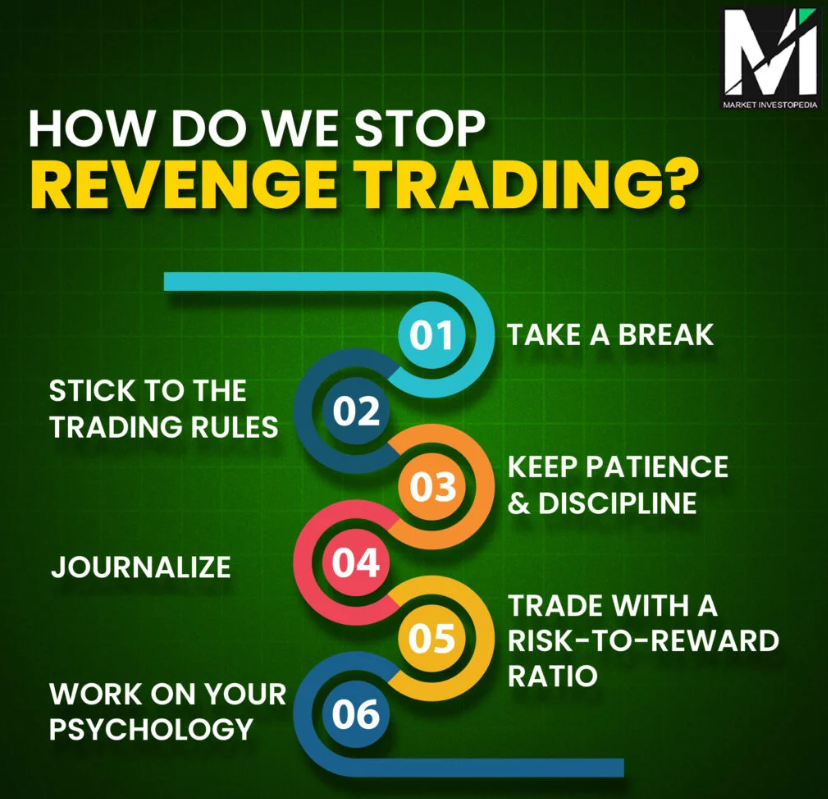
This situation frequently leads to an insidious psychological state: the itch to “get back at the market.” This is not some kind of a calculus, but rather raw, emotional response. It's a desperate attempt to un-do the wrong and win back not just the lost money but a sense of control, mastery, self-respect.
What can result is “revenge trading” — engaging in ever riskier bets in a frenzied bid to make back losses. Each defeat makes the psychological scar deeper but this is a vicious circle of desperation over logic. That’s also where Richard Thaler’s theory of “mental accounting” applies.
For a trader, that might entail compartmentalizing their “crypto money” away from their “real money,” regarding a crypto portfolio as just like gambling with someone else’s cash in a casino. Somehow this psychological compartmentalization convinces them to engage in risky behavior with their crypto which they would never dream of doing with their paycheck or savings, all the while forgetting that a loss is a loss no matter how one ends up there. Related to this bias is the Endowment Effect: we overvalue an asset simply because we possess it.
For a trader who invested in a losing token, besides the sunk cost, they might not want to sell because of their inflated sense of ownership that skyrockets its perceived worth even more than it should so they “HODL” far past what makes sense.
Biases that Confuse and Consume Us
The promise of quick riches and manic volatility that the crypto market offers is a fertile environment for many of these cognitive biases. These are underlying non-rational patterns of departure from what would be normal or rational judgment, and they can be punishing to traders who do not recognize them. And there are a host of other mental traps that lie in wait for the unwary investor, ones even more insidious than FOMO and loss aversion:
1. Confirmation bias: The tendency to interpret new evidence as confirmation of one's existing beliefs. A crypto trader might focus only on the good news and hype about a token they hold, for example, and dismiss any negative signs or even critical analysis as “FUD” (Fear, Uncertainty, and Doubt). This builds an echo chamber that further entrenches their original decision, regardless of whether it was a good thing to do.
2. Overconfidence Bias: Traders can be overly confident in their ability, for the next trade when they do well on some past trades. They fancy themselves as having the inside track on markets, a “golden gut.” This can cause them to assume too much risk, to throw caution to the wind and forget or ignore prudent principles of risk management and then ultimately — when their luck runs out — to take massive losses. It's highly related to Dunning-Kruger: absolute beginners don't have the self-awareness to understand their incompetence.
3. Herd Mentality: We are a social species as humans, and our investment habits reflect that. As we observe that lots of people are investing in a certain token, our immediate reaction would be to do the same. This can result in gigantic speculative bubbles that eventually burst, leaving a second wave of joiners with major losses. The herd is a fig leaf of false reassurance, but the cliff is still there.
4. Survivorship Bias: This is a subtle and potent pitfall where we focus on “the survivors” — the handful of tokens or traders who were wildly successful — and disregard completely the fact that for every winner there are countless losers. We hear from those who bought Bitcoin for $1, we don’t hear about the thousands who lost on a failed project. This gives an artificially misleading view of the chances of success.
5. Anchoring Bias: This is when people use an initial piece of information (the “anchor”) to make subsequent judgments. For a crypto trader, the anchor could be the all-time high price of a coin. They might look at a token that’s down 90% from its all-time high and call it “cheap,” even if the fundamentals have eroded and its true price is much lower.
6. Gambler’s Fallacy: The false belief that if something happens more often than normal during some period, then it will happen less often in the future. A trader might observe a coin land on “red” (or down) five times in a row, then assume that the next day must be “due” to turn up. As an observer of a market influenced by countless factors, past performance is no guarantee of future results.
The Currents of the TRON Network and the Modern Trader
These psychological minefields are difficult to navigate without sufficient self-awareness and the right tools and environment. For example, the TRON network has been a favored chain for new tokens these days as it enables fast and inexpensive transactions. This is an efficiency that can cut both ways.
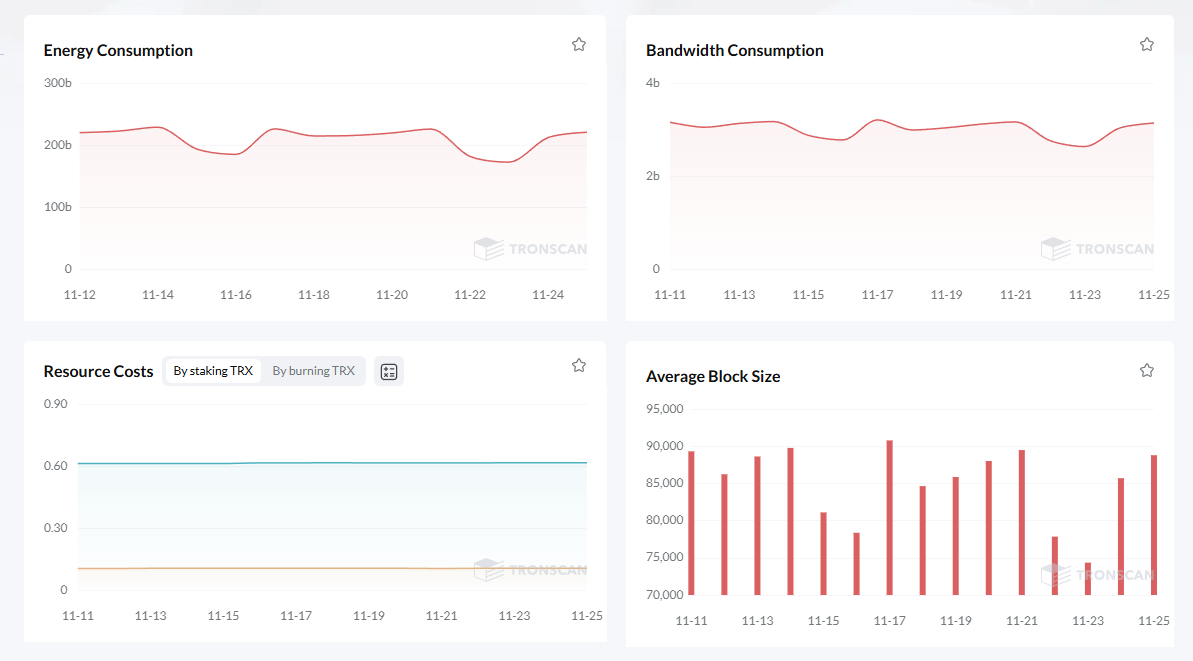
On the one hand, it enables nimble traders who practise technical discipline. On the other, the deluge of new projects and scant threshold for transactions can promote a sort of impulsive strafing that looks more like gambling than staid investing. This can result in “decision fatigue,” a state of mental exhaustion caused by making too many decisions, that results in poorer, snap judgments.
Apprehending specifics about the network, such as TRON Energy price dynamics can be a game-changer. Successful traders are always looking to minimize transaction costs, and using cheaper Energy renting can play a large part in that. Focused on your strategy, not transaction costs. Rather than having to constantly worry about fluctuating fees!
This can, in turn, reduce the psychological burden to execute large, risky trades that are needed to cover high fees. But traders can be more patient and deliberate when they optimize for lower costs, helping to blunt the effects of emotional impulses and decision fatigue.
Chart Navigation: Rational Approach to Trading
In this high-stakes ecosystem where fortunes can be won and lost in an instant, it’s not just about reading the charts or understanding how technology works. It’s a matter of taking control of one's own mind. For whatever their opinion, it isn’t the market that should keep any crypto trader up at night — but his own reflection in the screen.
The next step is to develop our targeting strategy to correct for these biases. This includes things like a strict trading plan with predetermined entry and exit points, risk levels you’re willing to accept, position sizing rules (for example, never risking more than 1-2% of your trading account on any single trade), and goals. A solid plan serves as a rational touchstone in the midst of emotional upheaval.
And when you keep a detailed trading journal to record your trades and also the emotions and thought behind each one of them, It is a very effective method to help you discover as well as correct negative patterns. Managing expectations is also key; pursuing slow, steady growth will take you a lot further than hoping for the moon. Finally, it’s important to practice managing your emotions through mindfulness and taking breaks from the screen so as not to burn out and lose perspective.
Traders who want to stay ahead of the fast-paced industry of new token offerings on the TRON network gain an edge by keeping in the know. Services such as the SunPump Alert Bot for Telegram can be a massive help. This app will provide you real time notification when a new token is generated on the SunPump network.
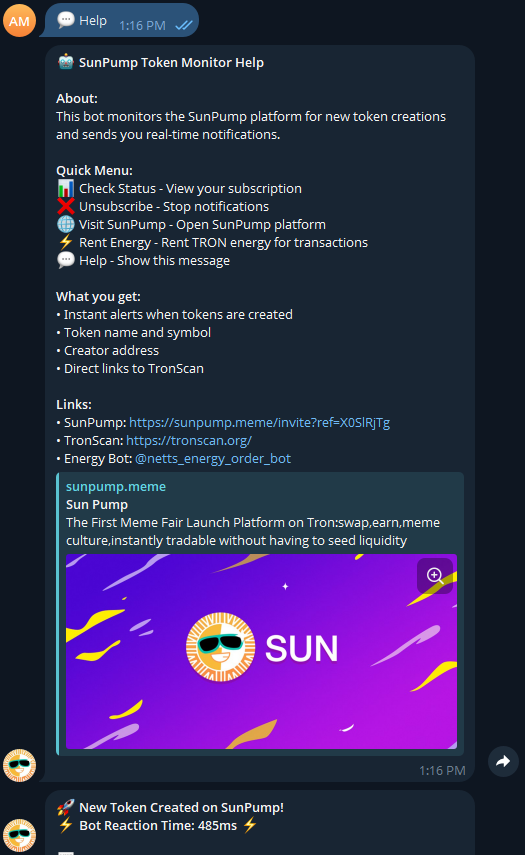
The add-on reports filled orders within seconds – often much less than a second (an estimation I did once was 200ms) following an order fill, giving traders immediate and impartial disclosure of what specifically triggered their takeover including token name and symbol along with a direct link to the transaction at TronScan. This provides instant research and decisions, to offset the emotional and probably irrational impulses associated with FOMO (Fear Of Missing Out) driven by fear of being the last to hear. In a world where timing is everything, having something like this at your disposal can be just the crutch one needs to make better, more methodical buying and selling decisions based on data rather than emotions.