Chaos Theory and Crypto - Game of Chance
Chaos theory’s butterfly effect maps onto crypto — tiny triggers, huge swings, and why risk management beats pretending markets are predictable.
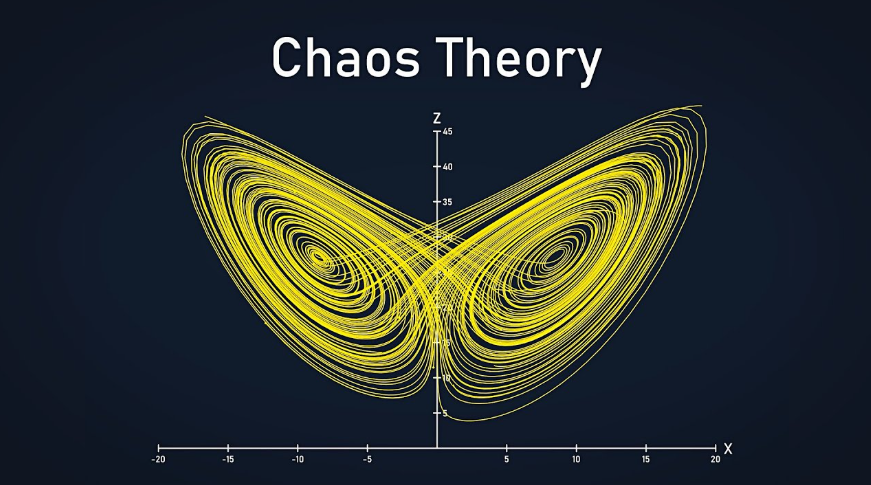
Chaos theory focuses on the discovery and description of surprising, non-linear and unexpected phenomena. It teaches us that such nonlinear complex systems, even those which initially appear to be random chaotic jumbles, actually incorporate patterns beneath them, forms of interconnectedness among them, feedback loops and a way they manage themselves (which is also how they become critically loaded). The best-known metaphor for this is the “butterfly effect,” which suggests that the tiny fluttering of a butterfly’s wings in Brazil could lead, through some long string of atmospheric occurrences, to a tornado in Texas weeks later.
The quintessential picture of chaos is given by its limit: sensitive dependence on initial conditions. It refers to the fact that a small, almost minuscule adjustment at the outset of an undertaking can subsequently result in wildly different — and sometimes uncontrollable — consequences. But chaos is not just disorder or randomness.
It's deeper, more detailed order that doesn't allow for straightforward, linear predictions. Consider the double pendulum — a pendulum with another pendulum hanging from the end. Its motion is controlled by the elementary principles of gravity and inertia, but it follows a path that can be wildly unpredictable — swinging out in a beautiful, mesmerizing, but fundamentally inscrutable pattern.
Another favourite area is population modelling. Even an ordinary map equation, the logistic map, describes how a species' population varies with time. The population stabilizes for suitable choice of the parameters. But poke that parameter just a little bit, and the population can begin to oscillate between two values; then four; then eight — spiraling into what’s called a chaotic state, never repeating its values but always staying within some bounded range.
This finite region is what chaos theorists refer to as a “strange attractor.” The system also never becomes still around a fixed point or loops simply, but its behavior is stuck in a particular detailed pattern — the abstract space of all its possible states, what’s known as “phase space” — within which nothing repeats itself. That's what the chaos is all about: you have deterministic laws, and somehow they produce unpredictable but some patternable behavior.
From Butterflies to Bitcoin Bubbles
This deep-seated principle of sensitive dependence on initial conditions is not an arcane point of academic interest it is the daily existence of the cryptocurrency market. The global crypto market is the epitome of a chaotic system — a whirlpool of cutting-edge technology, raw human psychology and feelings, shifting global economics and capricious regulators. In this environment, a tweet by a single influential tech billionaire, an unsubstantiated rumor on a Reddit forum or even a small vulnerability found in code can serve as the butterfly’s wing flap that causes massive price gyrations across the entirety of the market.
Millions or even billions of dollars in market value can be generated or destroyed over a few hours with such what seem like minor triggers for good or ill. We saw it with GameStop spilling over into crypto, and the rise and fall of meme coins like Dogecoin and Shiba Inu, whizzing past the stratosphere on nothing but social media hype and collective cheer — a digital butterfly effect sparked by memes and influencer marketing.
Look at the explosive failure of the Terra/Luna economy in 2022. The system was constructed off a derived algorithmic stablecoin, TerraUSD (UST), that was meant to have a 1-to-1 peg with the U.S. dollar through a feedback loop with its sister token, LUNA. For a time, it worked. But a couple big strategic redemptions — the little flutter — caused some small de-pegging.
This set off a spiral: as UST lost a bit of its value, the algorithm automatically created more LUNA to try and keep it level — which in turn devalued LUNA itself. When it became clear that stability was slipping further out of reach, more people panicked sold UST and LUNA to drive down the prices further, faster. The downward spiral was yet another case of a chaotic system tipping past the edge, with those very mechanisms put in place to ensure stability transformed into engines of catastrophe.

Likewise, the catastrophic meltdown of the Mt. Gox exchange in 2014 was anything but a single event; it was an aggregation of small-scale, snowballing failures — from undetected security infractions to software glitches — that systematically eroded the integrity of the system over time until it collapsed in a fit of chaos and confusion that rattled the emergent Bitcoin community. Indeed, even the 2017 ICO mega-boom can be seen through this lens. A couple of successful projects generated a feedback loop of hype and "fear of missing out" (FOMO), driving a speculative bubble in which investors put billions into total vaporware (projects that had nothing more than a whitepaper).
The system broke loose, and when several high-profile projects failed to materialize the sentiment changed into a negative feedback loop that caused an industry-wide crash. What this episode demonstrates is that in crypto, as in chaos theory, linear thinking doesn’t work. The market is not a machine that can be anticipated but a continuously adapting living organism, forever on the edge of chaos.
Architects of the New Science
The intellectual exploration of these complex systems had, surprisingly, started with meteorology. Weather had long been modeled by mathematicians to try to understand it better, ever since the 1930s or so, says Penn State University meteorologist Michael E. Mann.“What Lorenz discovered was that this type of system was unforecastable,” adds Marshall. People have always tried to predict weather, but in the 1960s a then-radical transformation was taking place: forecasting using computers. In a decision that would change the trajectory of modern science, he chose to re-run one such simulation. In order to save time, he had manually re-entered the initial conditions from a printed chart, but rounded off (from 0.506127 to a seemingly menial 0.506).
This tiny change — fewer than one part in a thousand — would have seemed inconsequential. Instead, it delivered a new weather forecast of its own: the long-term one. By now the two scenarios were so far apart that they didn't even resemble each other any more. That brought him to an arresting, disturbing conclusion: Long-range weather forecasting was not merely hard, it was impossible.
The chaotic system was the atmosphere, and its inherent sensitivity to initial conditions meant that perfect prediction would always be a fantasy.
This finding was the birth of chaos theory. It wasn’t supposed to find order in disorder, but rather a new kind of order — an account of systems whose behavior was neither completely unpredictable nor entirely predictable (you start with your Heisenberg and you take it from there). Other great minds quickly joined society to reveal new truths. The mathematician Benoît Mandelbrot, meanwhile, investigating price fluctuations in cotton markets and noise in communications transmission lines, stumbled upon the idea of fractals — complex, self-similar patterns that recur at every level of magnification.
He demonstrated that this underlying fractal geometry also characterizes many apparently chaotic natural objects, from the jagged coastlines of Britain to mantled trees. Financial charts were no exception, he contended. A chart of the price of a stock over the course of a single day will frequently look nearly identical to a chart for that same stock over the course of a month or year. It is this fractal structure which is the essence of chaotic behaviour.
Taken in sum, the work of pioneers like Lorenz and Mandelbrot helped give us a new mathematical language to describe the beautiful, intricate complexity that governs our universe from galaxy formation to your beating heart — and now, from the wild swings of digital currencies.
Managing the Anarchy: Strategy for Success
So, if crypto is a fundamentally chaotic and unpredictable market, does that mean success comes down to sheer luck? Not necessarily. The first step to getting over this hurdle is recognizing that the market is inherently chaotic. Rather than attempting to foresee the unforeseeable, a chaos-informed strategy concentrates on managing risks and being adaptable.
It means recognizing that black swan events and sudden market crashes are not anomalies but part of the system. That leads to practical strategies such as radical diversification across different types of crypto assets (not just different coins, but also different sectors — like DeFi, Layer 1s and NFTs) so that you can be cushioned if any one area collapses. It also exposes the extreme danger of high leverage: in a chaotic system, a small unpredictable fluctuation can be compounded by leverage into a disastrous portfolio-ending loss.
The point is to trade with humility, knowing that no model can ever completely capture the intricacies of the market. This would incentivize a concentration on long-term fundamentals and value rather than the short-term speculative bets, and constructing a portfolio that can weather — if not benefit from — some of the inherent turmoil.
These concepts are also important in assembling reliable systems in the crypto space. For example, we can consider the TRON network, which is live and buzzing with activity: 24 hours per day; transactions on a perpetual high-speed roller coaster ride; smart contract executions stacking up around the clock
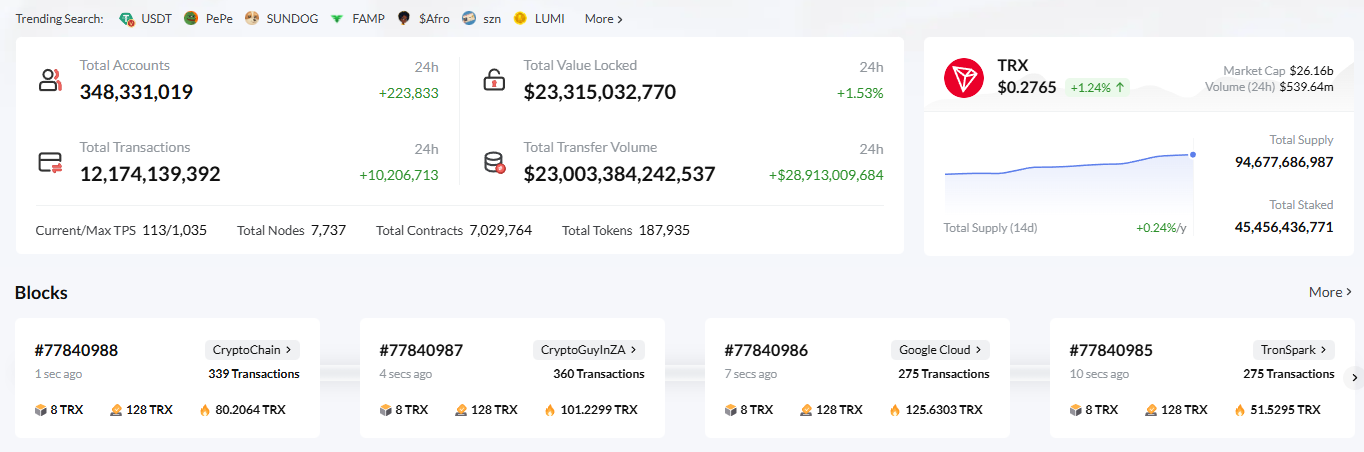
From what you see, a reliable one such as Energy rental automation is not something treated as a luxury; instead it is a need for businesses to run without hindrance and participate in saving cost — via efficient production processes. An advanced platform could use complex-system algorithms to dynamically forecast demand for power from network traffic, transaction volume and perhaps even social media sentiment. It would then be able to auto-rent Energy at preferred and best times/costs, dynamically managing cost effectively for thousands of customers.
It embodies a concrete example of how to tame a piece of the crypto chaos — not by predicting the value of some altcoin, not by, gaming out its token price — but by managing intelligently the system’s internal resources. Like chaos theory has been applied in other extremely complex, mission-critical domains with great success, so too does it provide an incredibly useful framework for analyzing the intricate and vital living systems of contemporary blockchain networks.
The New Frontier: AI, LLMs and Crypto-Chaos
And the most beautifully chaotic real-time playground for dice-throwing chaos theory is the cryptocurrency market. It is totally digital, producing a staggering (and very largely unfathomable) amount of granular data every second of every day. It is governed by a mixture of what are said to be deterministic laws — with rules embedded in its open-source programming — and the wild, woolly actions of millions of people with little daily relation to one another but who are increasingly connected across the planet.
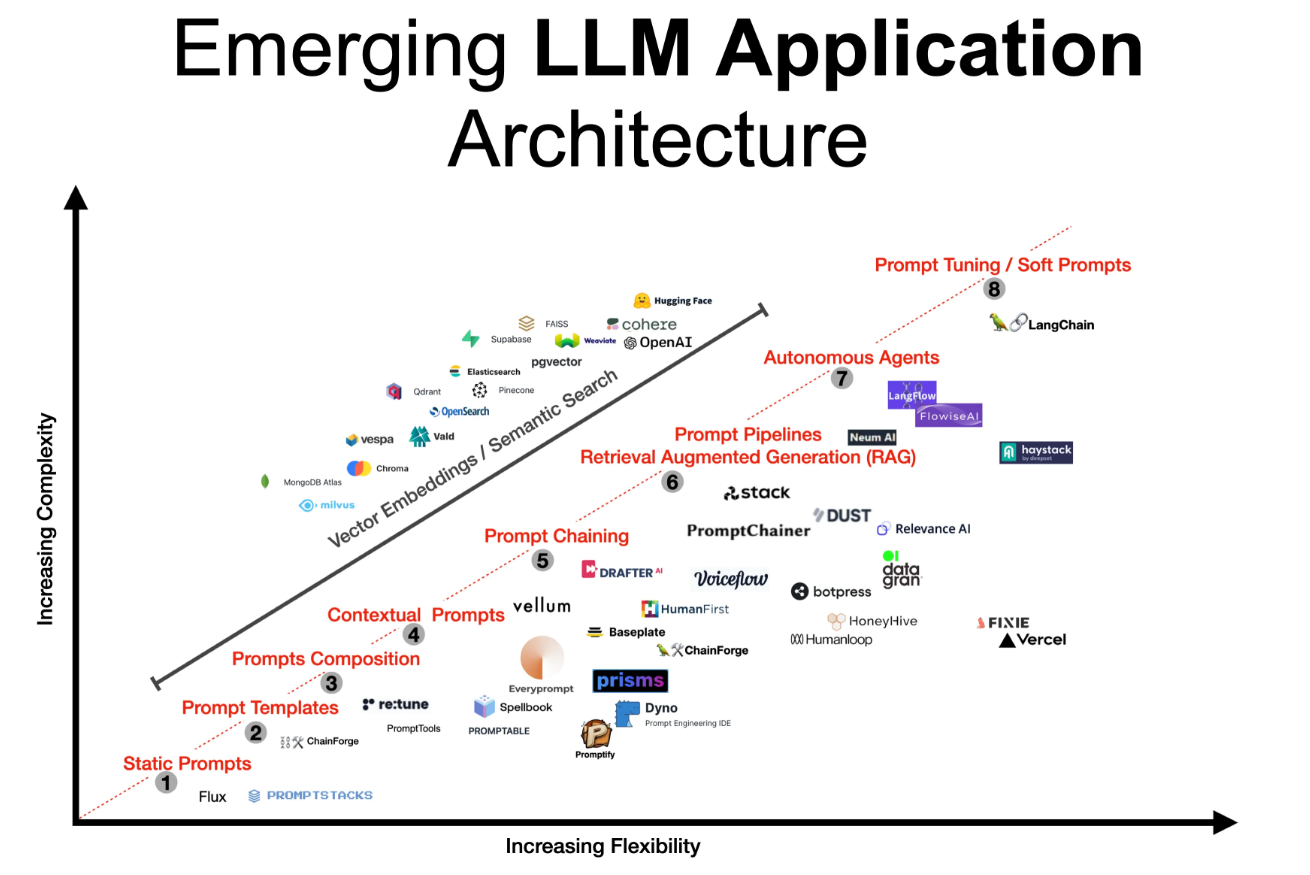
The recent emergence of powerful modern technology, particularly in the area of deep learning (DL) and Large Language Models (LLMs), has opened up unparalleled possibilities to investigate and explore this intriguing domain. LLMs are trainable to read through lots of unstructured, big (in terms of energy) data on-the-fly — anything from the nuanced sentiment across millions of social media posts and breaking news articles over the technical nitty-gritty on developer forums through to raw immutable contents of an on-chain transactions. For example, an AI could link a spike in GitHub commits for one project with on-chain “whale” accumulation and a change of social media sentiment from neutral to positive, detecting an emerging trend long before it is visible on a price chart.
These AI models are able to identify very complex, non-linear patterns and correlations that are utterly opaque even to the most experienced of human analysts. Those patterns can be used to build more complex, dynamic models of the market’s chaos that go far beyond technical analysis and consider a wide range of contributors to an asset’s value. And though absolutist predictions can never be more than asymptotic, as the theory itself underscored, such AI-augmented understanding of a system is bound to significantly improve our insight into the underlying drivers, and result in much better management of risk and much more confidence about transitory stretches of opportunity.
This convergence of chaos theory and AI is ushering in a more sophisticated, data driven, scientifically rigorous method for sailing the thrilling new uncharted territory of the crypto-financial markets.
Finally, handling the complexities of a sophisticated blockchain ecosystem is a job for specialized toolkit. Operating within the TRON network itself, fighting through the disorder presented by transaction Energy can be quite a task. Here is where a platform like Netts Workspace can help with its first class TRON Energy management solution.

It brings automation for Energy sharing, smart scheduling and immediate cost-optimization — essentially a little oasis of order and efficiency tucked away amid the blink-and-you’ll-miss-it craziness of blockchain. By making the multifaceted resource management simple and automatic, it lets you concentrate on your work rather than be overwhelmed by network currents.