Blockchain Book Guide: Best Cryptoreads
Serious crypto learning still starts with books — from The Bitcoin Standard and Mastering Bitcoin to Ethereum, history reads, and investor frameworks.
In an era of immediate information, when headlines blink on screens and notifications buzz in pockets, it can be tempting to think that everything we need to know lies just a click away. We have a limitless supply of articles, video explainers and social media threads guaranteeing to reveal the secrets of impenetrable issues like blockchain technology or cryptocurrency. They provide fast takes and bite-sized analysis that can help keep you up to date.
But for all that technological immediacy, a wall of good text — a well-made book — still can’t be beat when it comes to a serious deep dive. A book does what a quick post doesn't: It’s structured, deep and has a coherent narrative that guides you from fundamental principles to detailed nuances. It provides an author with a way to create a world, develop an argument and probe contradictions without the restraints of a character count or the need to chase momentary fashions.
When it comes to grasping the revolutionary possibilities, as well as the intricate mechanics, of the crypto world, book wisdom is not just a good option; in this case, you might say that for most people it’s actually an imperative one. The online firehose is frequently at cross-purposes with itself, responsive to hype cycles and not immune to self-cancellation; it also often doesn’t have the focused fact-checking that undergirds and refines a traditionally published book. A print book offers a solid, full-fledged frame.
It’s an investment in real understanding, a means to establish one’s own solid base of knowledge that will be stable long after the passing of the latest woodland creature market hype. It instructs you to fundamentally understand the technology, so that when presented with new projects or ideas you can review it in a position of strength not one of “OMG I must have this” just because it’s being whispered by the market. What a good book doesn’t tell you, it teaches you to ask the right questions — an essential skill on a planet increasingly awash in data.
For Would-Be Economists: The Bitcoin Standard
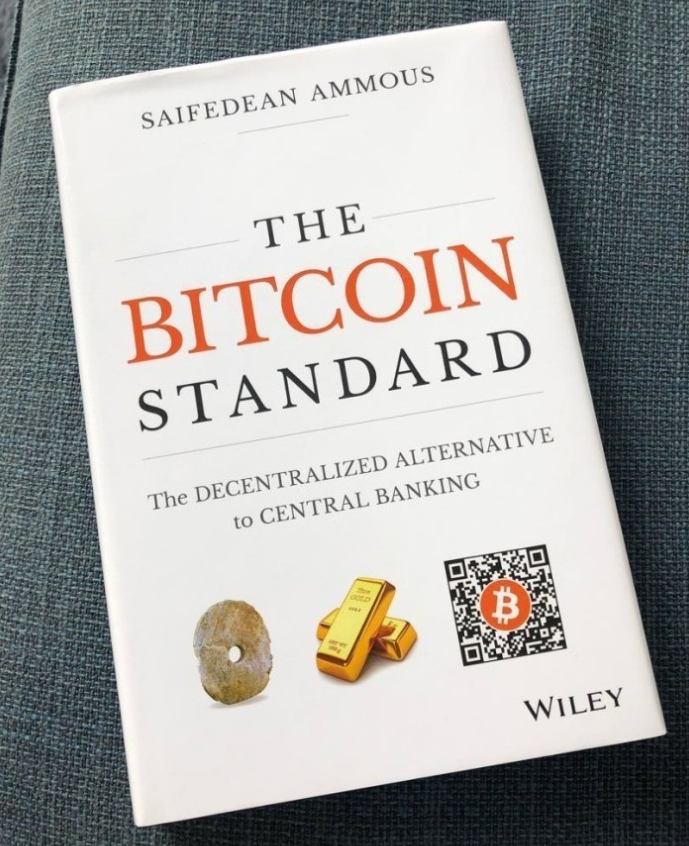
For people less interested in the technical gymnastics of cryptography and more interested in the sweeping economic ramifications of a new form of decentralized digital money, “The Bitcoin Standard: The Decentralized Alternative to Central Banking,” by Saifedean Ammous should be mandatory reading. Less a technical manual than a historical and theoretical examination of currency, this book situates Bitcoin in a long line of technologies used for the storage and exchange of value. Ammous claims that Bitcoin’s ultimate innovation is its unyielding, computerized scarcity — a form of “hard money” like gold itself and an effective rebuke to the easy money represented by today’s government-issued fiat currencies, which have the capacity for unlimited inflation.
The book is ideal for those interested in economics, history, and political science. If you’re still asking “why” Bitcoin also has value, instead of just “how,” Ammous makes a strong, if very opinionated, case. He leads the reader through a fascinating history of money, from ancient Rai stones on the island of Yap to the gold standard and its ultimate destruction, making the case that money is inseparable from civilization’s health.
What he suggests is that long eras of human flourishing and great art are associated with periods of hard money, while social decay occurs at times when the currency is debased. One central concept he explores is “time preference,” observing that loose money leads to a high time preference (a tendency to care more about present gratification), inducing debt and consumption, while hard money leads to a low time preference (caring relatively more about the future), encouraging saving and investment. This context is critical to understanding the philosophical, almost radical nature of the Bitcoin movement.
But be forewarned — Ammous takes what can best be described as an explicitly Austrian view of the economics underpinning Bitcoin, and one that’s maximalist to the extreme — qualities which may not resonate with those who believe in a more varied ecosystem of cryptoassets. But for a scholarly, challenging dive into the monetary attributes that make Bitcoin a disruptive force, there’s no better place to start. It will change the way you think about not only cryptocurrency but money writ large.
Mastering Bitcoin: for Tech-Savvy Devs
If “The Bitcoin Standard” is the book that explains why, Andreas M. Antonopoulos’s “Mastering Bitcoin: Programming the Open Blockchain” is an absolute tour de force that tells you how. It is a fixture in the halls of crypto for a reason. It's an incredibly technical (though very accessible to non-programmers) journey into the Bitcoin protocol.
Antonopoulos also displays the rare ability to demystify extraordinarily challenging ideas — everything from cryptographic hash functions and elliptic curve digital signatures to UTXO vs. account models and payoff graphs, transactional depth size, and consensus algorithm particulars — into read-it-and-get-it chunks. This is the book for the curious engineer who wants to understand how this technology works, without needing to understand everything about the system from inception down to its committee members. It breaks the technology down showing that it is not alchemy but a clever recombination of current computer science ideas.
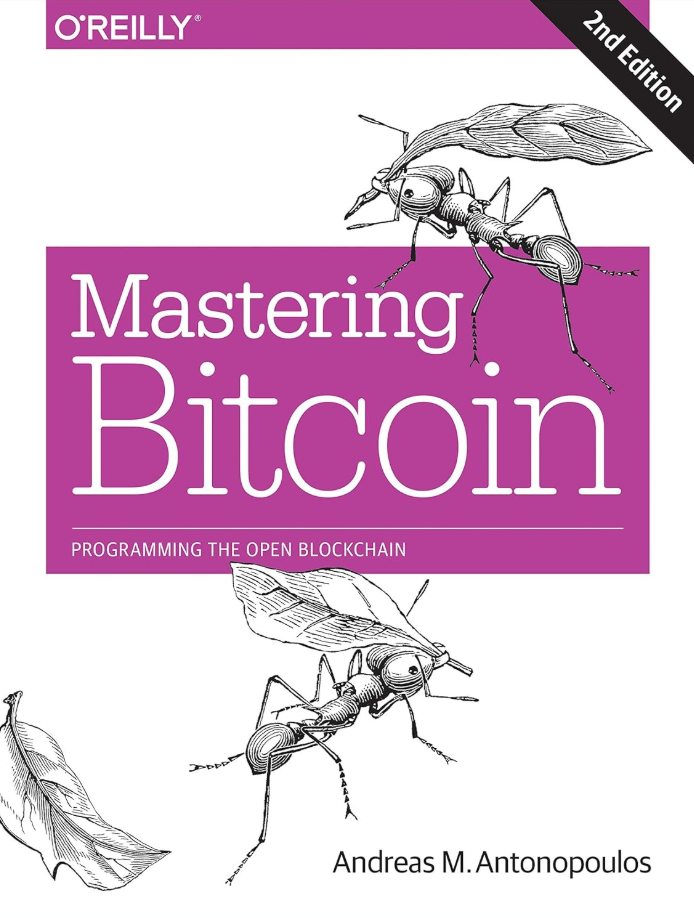
Antonopoulos presents Bitcoin not just as a new kind of money, but as the first completely accessible form of "programmable money," opening up the door for smart contracts and decentralized applications to come.
"Mastering Bitcoin" is designed to help a wide range of readers — from Linux programmers to protocol developers and systems administrators. The early chapters are so accessible that even a non-technical audience can wrap their head around concepts like wallets, transactions, and the blockchain. But from there, the book accelerates and moves deep into code and data structures that make Bitcoin feasible.
It is laden with code snippets in Python and C++ as well as by practical examples, until you're finally provoked into building your own Bitcoin-aware application. In short, for those of you wishing to develop atop Bitcoin or even just learn about its inner workings at a granular level, this book is invaluable. Anyone working in the space needs to be familiar with these mechanics, as it affects real-world decisions like how to manage resources for transactions.
For instance, a developer who has been working with other blockchains might require to get around the ability to obtain TRON Energy for his application's logic in order to support thousands of operations. The fundamentals learnt from "Mastering Bitcoin" enables awareness of the mental models for solving such problems on any chain and therefore teaches a universal language of blockchain mechanics.
For Building Pros: Mastering Ethereum
For a reader who has already taken-in the lessons of “Mastering Bitcoin”, and is looking to progress beyond programmable money towards programmable agreements, the next logical move would be “Mastering Ethereum: Building Smart Contracts and DApps” by Andreas M. Antonopoulos and Dr. Gavin Wood. If the first book was about the bedrock of revolution, this one is about building cities on top of it. It starts from the elementary scripting level of Bitcoin and moves all the way into entire cornucopia that is the Ethereum Virtual Machine (EVM) — a Turing-complete global computer enabled by interconnecting all PCs and performing complex computations.
From this book, you are to learn how it is possible for a computer program or an entity to run in parallel on the network and also be independent from those executing its source code. This is the book for the real builder — not just transactions — the architect of a decentralized future!
This book is even more technically rich than its predecessor, and for good reason. It's A-Z, from brief history to critical design patterns for secure development, including Solidity language features and the life and death of a smart contract. It goes into detail on token standards such as the ERC-20 and the ERC-721 (used for NFTs), which serve as cornerstones for the entire Decentralized Finance (DeFi) & digital collectibles space.
Most importantly, the authors spend a lot of time discussing smart contract security, approaching well-known attack vectors (e.g. reentrancy and integer overflows) that caused millions in losses before. Knowing about these weaknesses is (I'm sorry to say) simply not optional for anyone deploying code that is going to handle real value. Resource management, including the use of “gas” to pay for computation are described in depth, with a clear analogy to be made with thinking about TRON Energy pricing when creating cost-efficient applications elsewhere on smart contract platforms. “Mastering Ethereum,” the bible for a blockchain technology known as Ethereum, is among those books that manage to get noticed.
For the Big Picture Thinker: The Truth Machine
But after you’ve gotten your arms around what Bitcoin and Ethereum actually are, the next question we hear is: What does it all mean for the world? The answer, delivered in brilliant and expansive detail in “The Truth Machine: The Blockchain and the Future of Everything,” is that these two boys aren’t so young, after all — over a decade now according to some definitions of their shared birth date. For those who have read about the creation of Bitcoin and now want to understand the broader societal and business implications of blockchain, this book is an ideal next step.
It goes beyond cryptocurrency as a financial asset and delves into the blockchain’s potential as a new kind of trust-building machine that could revolutionize entire industries and institutions.
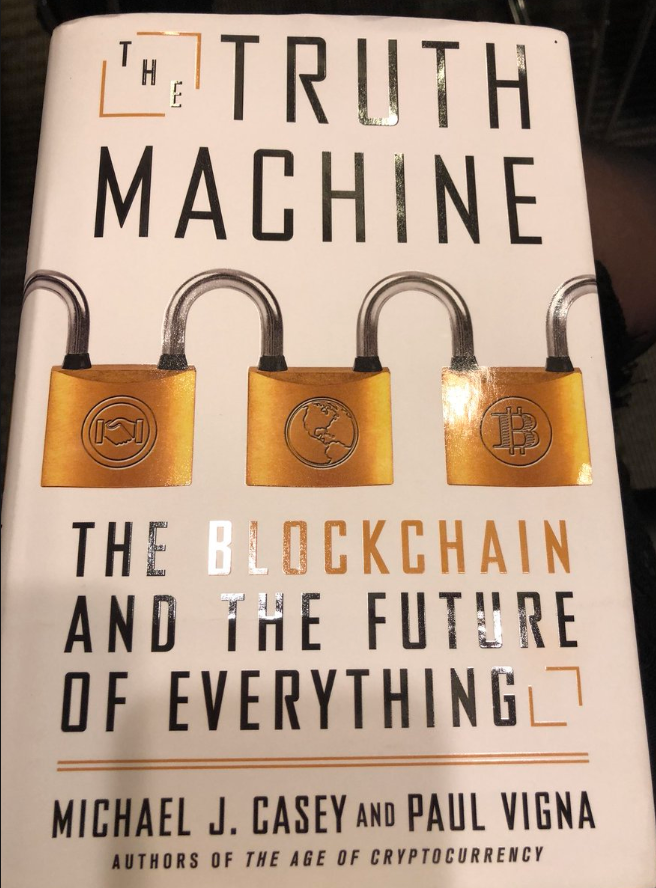
Intermediary institutions like banks, governments and corporations have long been used by humans to create trust and enable complex transactions, Casey and Vigna argue. The blockchain, they argue, provides a technical fix — a decentralized and tamper-resistant form of record-keeping that can be used to track ownership, establish identity and enforce contract terms without the need for any single authority. The book is brimming with captivating case studies, including tracing the provenance of diamonds to prevent the sale of conflict minerals and giving refugees a secure, self sovereign identity.
But the writers are not naive utopians. They also discuss some serious difficulties, such as the “oracle problem” (how does a blockchain receive consistent real-world information?) and the challenge of scalability that have long plagued these networks. The book is a hopeful examination of the technology’s potential to fight corruption, return ownership of personal data and privacy back to individuals, and build more efficient and transparent systems. “The Truth Machine” is for the reader who was fascinated by business, sociology and the future of governance.
It’s not so much about how technology operates as what it can do, which makes it a fine read for entrepreneurs, policymakers and anyone wondering about the next wave of technological disruption.
For the Story Lover: The Infinite Machine and Digital Gold
Tech is so very human at its heart, and cryptocurrency is a wild one, with geniuses and weirdos — and ideological battles and millions won and lost. If stories are your learning mode of choice, two books constitute required histories of the space: Nathaniel Popper’s “Digital Gold: Bitcoin and the Inside Story of the Misfits and Millionaires Trying to Reinvent Money” and Camila Russo’s “The Infinite Machine: How an Army of Crypto-hackers Is Building the Next Internet with Ethereum.” Read together, these two books summarize the process of getting to now in Silicon Valley as well as anything I’ve read.
“Digital Gold” is investigative journalism in the same way it’s such a page-turning thriller. Popper, a New York Times reporter, follows the improbable growth of Bitcoin from its origins in the cypherpunk mailing lists all the way to mainstream acceptance, vividly narrating things like the Mt. Gox exchange being destroyed in spectacular fashion as they happen. He introduces us to the central players — from the mysterious creator, Satoshi Nakamoto, and early adopters like Hal Finney (who received the first transaction ever made on Bitcoin) to conflicted entrepreneurs like the Winklevoss twins.
It is a tale of ideals colliding with the messy realities of commerce, regulation and human avarice. Russo’s “The Infinite Machine” follows up where Popper leaves off with an equally thrilling tale of Ethereum. She traces the path of the prodigious Vitalik Buterin and his vision for a “world computer” that could accomplish more than just moving value around.
It’s a story of a greatest-hits team coming together — including the technical wunderkind Dr. Gavin Wood and the brash but divisive Charles Hoskinson, among others — to build something audacious, weathering infighting, the infamous DAO hack (which led to a controversial hard fork and the birth of Ethereum Classic) and the ICO bubble that both validated and nearly ruined their creation. These books are for the reader who wants to know the human story behind the code, who is interested in the drama behind the decentralization.
For the Modern Investor: Cryptoassets
For those who get the philosophy and science, the next question is simply: what’s my investment angle? “Cryptoassets: The Innovative Investor’s Guide to Bitcoin and Beyond” by Chris Burniske and Jack Tatar was one of the earliest, and remains among the best, books that offer a solid framework for investing in this new asset class. It dispels the hype and provides a straight-to-the-point guide for portfolio managers, financial advisors, and retail investors seeking to gain an edge in the cryptocurrency market by choosing a disciplined approach and strategy.
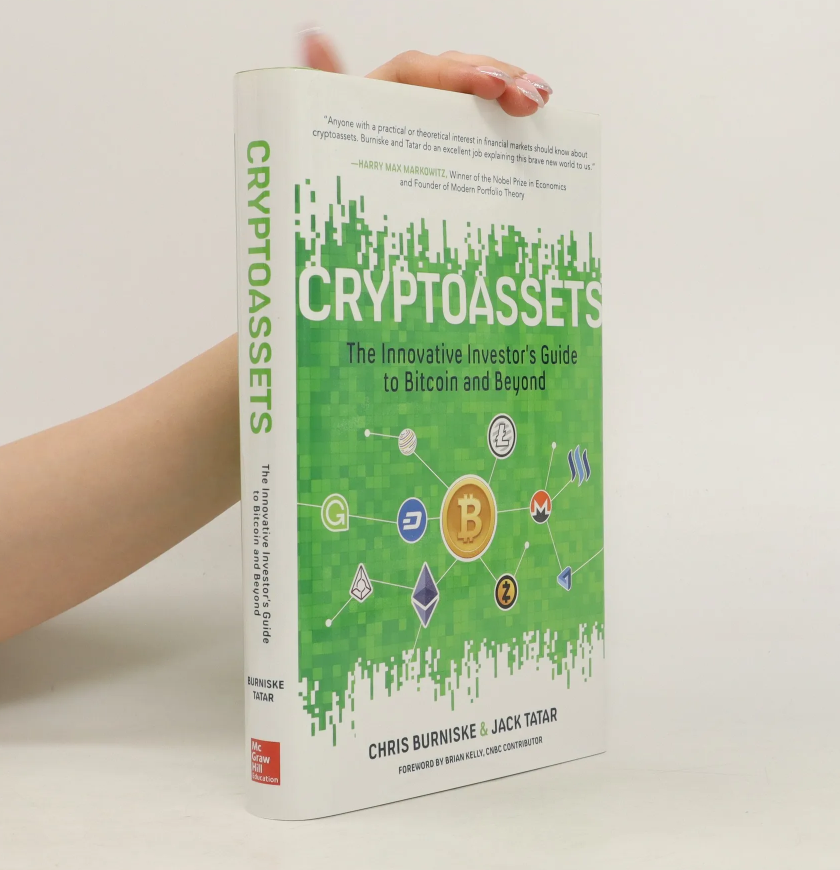
A partner in a crypto-focused venture capital firm, Burniske has an institutional-level perspective that was sorely missing to help interpret and understand the early days of the market.
Where this book has most value is that it gives you specific tools for valuing and analyzing in an asset class where traditional methods often do not apply. The authors create new metrics such as the “Network Value to Transactions” (NVT) ratio, a crypto analog to the traditional financial P/E ratio and investors are able to evaluate whether an on-chain transaction volume validates a network’s value. They provide clear taxonomy of crypto assets, which can help investors differentiate between currencies, commodity-like, and equity-like tokens.
The book also outlines the framework of portfolio planning, examining strategy and risk in the blockchain industry with this high-risk asset class. That is critical in a market cluttered with thousands of projects, all with different goals and mechanics. For the investor, appreciating these subtleties is critical to managing risk and seeking opportunity.
For instance, a knowledgeable stakeholder in the TRON ecosystem would not simply possess assets but will also be aware of how things like prices for TRON Energy can affect their transaction charges as well as overall returns and thus use them to fine-tune these factors. The book instructs you to think critically about the life cycle value of a project and that’s far more valuable than simply chasing the next hot thing.
A Glimpse into the Future
At any rate, the world of blockchain is a huge and growing library of ideas. The books listed here are just a jumping off point, the basics that you should learn first in order to have navigable understanding, history and conception of this juicy domain. No two are alike in the way they approach studying the digital revolution taking place.
Whether you’re game for the economic case, the technical problems, the human drama or investment possibilities — there is a book that can talk to you and deepen your understanding. This is a process of continuous learning, since the technology itself never stands still as it evolves into new verticals such as DeFi, NFTs and DAOs. But with a firm foundation of knowledge, you’ll be equipped to understand what unfolds next and the opportunity to help shape the future.
And once you dive deep in the theory aspects of blockchain it’s understandable that... Practical experience is where knowledge becomes power. To manage cryptoassets effectively it is not enough to know how the big picture works, you need to master transactions at a daily level. For power users who are using I/O to interact with the TRON network, transferring a simple USDT can be an incredibly expensive experience if you consider network conditions and wallet balances.
This is where specialty tools come in handy. The Netts USDT Calculator is an example of such a service, by making TRON transfer fast and clear. It allows users to estimate the exact Energy and Bandwidth a transaction needs, preventing them from wasting costly TRX.
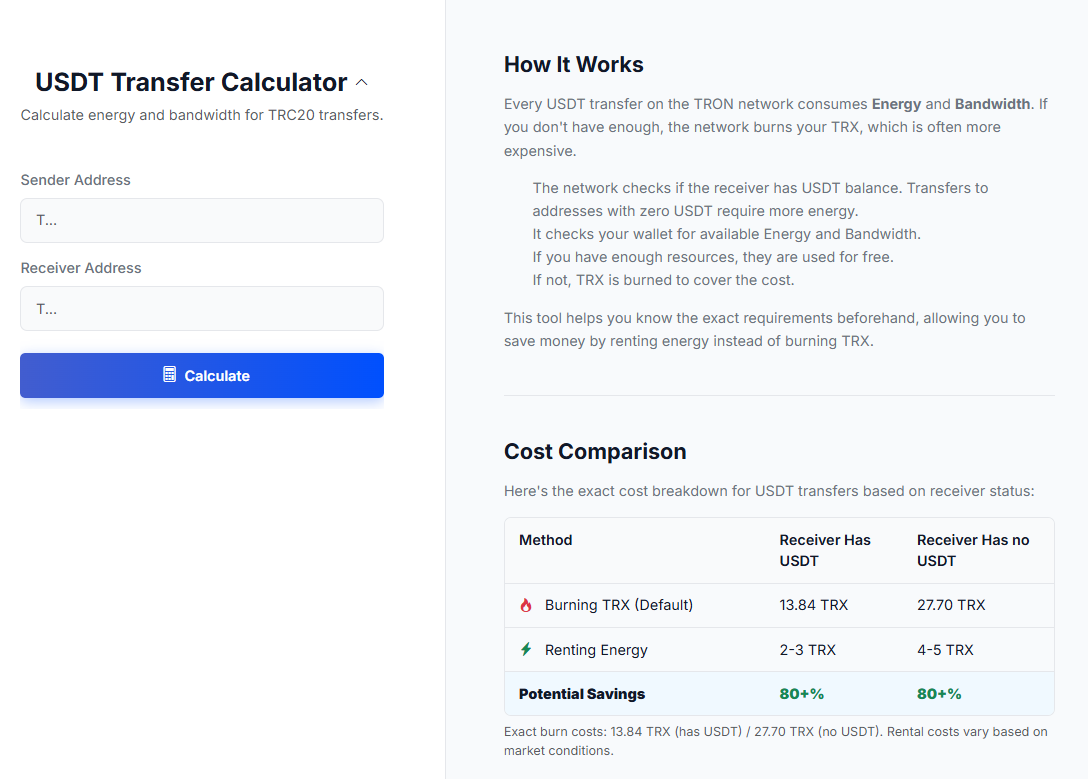
It allows you to choose whether to burn TRX or rent Energy – by indicating the price difference for buying and renting Energy, it helps users make more informed financial decisions, saving up to 80% in transaction fees. This is an illustration of how in-depth understanding accompanied by the correct tools, can make navigating through crypto that much more efficient and rewarding.