TRON Network - a True Unicorn?
TRON as a payments layer: USDT volume, energy and bandwidth economics, uptime, and why stablecoin traffic defines real-world utility.
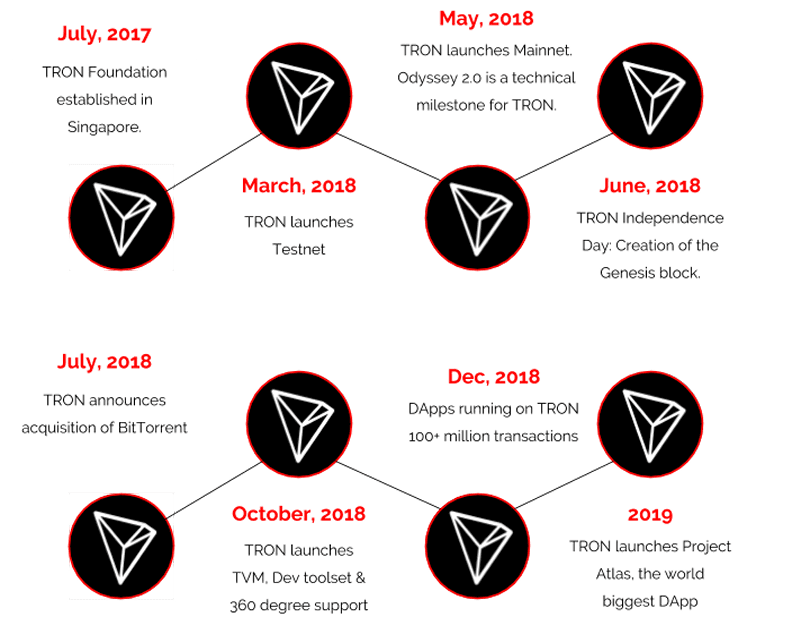
The history of the cryptocurrency realm is an adventurous narrative laden with jubilant highs and excruciating lows. Since Bitcoin was created in 2009, the market has had a history of wild price swings that have given people whiplash. The year 2017 was particularly tumultuous, when daily Initial Coin Offerings were promising to transform everything from banking to banana farming. And it was in this fevered environment that the TRON network came into being. Established by Jack Ma’s protégé, Justin Sun, TRON shook up the internet with a huge idea — to decentralize the web. Back then, Bitcoin had the digital gold narrative and Ethereum was — even back then — a growing smart contract ecosystem. But both of them suffered from severe scalability problems.
Bitcoin was slow and costly to transact with, while Ethereum was just beginning to see the ripple effects of congestion that eventually hobbled it at moments of peak usage. TRON came in as a disruptor, first starting life as an ERC-20 token on the Ethereum blockchain before moving to its own mainnet in 2018 — hailed by some to be Independence Day. This move was crucial. It was not simply a new token to be designed; it was a whole infrastructure that could process the throughput necessary for a genuinely decentralized internet. Although many projects from that time have either failed to deliver or disappeared, over promised and under delivered, TRON has proven to be a landmark in the digital landscape.
Stability When the Market Shakes
One of the interesting concepts in the crypto space is the relationship between BTC and certain altcoins. For so long, the market has been subject to a predictable pattern: When Bitcoin sneezes, the rest of the market catches a cold. A 10% decline in Bitcoin frequently correlates to a 20-30% dive for smaller cap tokens. This relationship has in turn made it difficult for a standalone project to detach from the macro shifts of the orange coin. But TRON has had the most distinct divergence from this pattern. But TRX, the token of the TRON network, hasn’t been immune to market crashes across the board (although it is one of few projects with this much stability).
When Bitcoin is super volatile, TRX tends to stay put or rebound quickly relative to its peers. This stability is not accidental. It’s the product of a seismic change in the way that people use the network. Unlike many “zombie chains” with high valuations sans activity, TRON is a hawk of constant utility. It now serves as the main transport layer for the stablecoin universe, with USDT. This utility gives a floor to the price; people require TRX not only for speculation, but in order to transact over the network. This demand for utility forms a shield against the pure speculative panic that causes Bitcoin’s most extreme swings.
The advances TRON introduced were not limited to technology but also economic in nature. At a fundamental level, TRON is based on the Delegated Proof of Stake. This represented a massive shift away from energy-hungry Proof of Work which Bitcoin employed and Ethereum still used at the time. In the DPoS, participants in the network select Super Representatives who process transactions and generate blocks by voting using their tokens. This means there are only twenty-seven of these Super Representatives, which should allow for blazing speed and efficiency.
Blocks are created on average every three seconds, and transactions confirmed within seconds. This enables the network to process thousands of transactions per second, a throughput that was critical to enable a decentralized web. But speed was just one piece of the puzzle. The brilliant thing about TRON is its resource model.
Energy and Bandwidth: How the Network Runs
Most blockchains follow a straightforward fee market: pay the native token as a fee to get your transaction processed. You pay for more if the network is congested. That results in bidding wars, as plain transfers can end up costing hundreds of dollars when looking at Ethereum during the N.F.T. craze or DeFi summer. TRON had a dual-resource mechanism which included Bandwidth and Energy. The system is perhaps the most important breakthrough on usability and adoption of the network. There is a certain number of free Bandwidth that every account on the TRON blockchain receives per day. For this, users can do some basic transactions — say, send TRX — entirely free of charge. Users also need Energy for more sophisticated activities, such as calling smart contracts or even sending TRC-20 tokens (e.g. USDT) to other users’ wallets.
The network spam is achieved such that the legitimate users always know how much they will have to pay in the worst case. You can't just buy your way into congesting the network; you need the resources for this. These resources can be obtained in two ways: by burning TRX or freezing (staking) TRX. Burning TRX is like a fee — the TRX that is burned pays for computation. But both enthusiasts and pros have a better go-to: staking. Users can freeze TRX and receive Bandwidth and Energy which renews with time. This effectively means free transactions as long as you have enough stake. It flips the economic model from “pay per use” to “stake for access.”
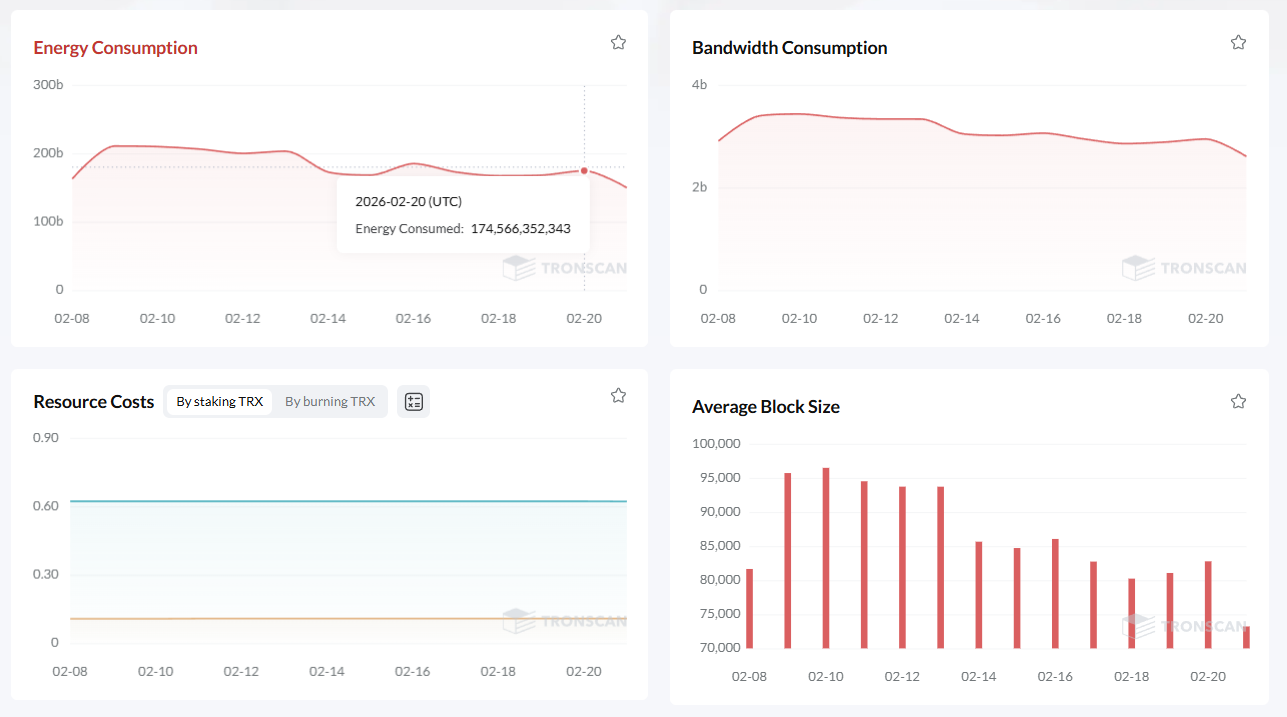
For developers and those of us who use the shell a lot, this is ground-breaking stuff. Imagine a decentralized application where your users didn’t have to pay 5 dollars every time they pressed a button. This design is what has propelled TRON to the go-to network for high-frequency applications and, most critically, for stablecoin transfers.
In numerous locales around the world, there is no access to reliable banking and typical currencies are suffering from hyperinflation. To millions of people in the developing world, USDT on TRON is not a digital trading tool, it’s their bank account. It is how they pay suppliers with invoices, get salaries and save their money. Meanwhile, the low gas fees — which can be a fraction of a cent or even free with the right staking — enable micro-transactions. You can send ten dollars to a friend on the other side of the world, and your friend will get ten dollars, not five dollars after fees. This use case in the real world is what holds value to the network.
Real Recognition
It is no longer a speculative asset, but an important part of our world’s financial system. Hence, the stability of the network is rooted in its use. People aren't staking TRX in hopes of it going to the moon, they are holding it on purpose to use as Energy to move their dollars.
Moreover, the TRON based staking works in a two-way system. It supplies the required resources — Energy, Bandwidth and voting. When you freeze TRX, what you get is TRON Power. This power allows you to vote for Super Representatives. These agents are motivated to be good to their voters because they get block rewards, part of which they transfer back to the voters. This enables a kind of passive income for holders of TRX.
Built-in staking is an elegant mechanism that rewards you for helping secure the network. Unlike some other staking systems where you have to follow complicated setups or lock up your funds for months, running the risk of having them slashed, this one is user-friendly. You are able to unfreeze your tokens after relatively short periods, and the chance of losing your whole stake is negligible compared to a slashing scenario in other networks. This "vote and earn" incentivization being used to encourage participation and break down barriers, since in many instances the user that votes only gains if they vote for a trustworthy delegate.
Transparency is also a cornerstone of the TRON system. Here all transactions, votes and execution of smart contract can be seen in the blockchain. The TronScan explorer allows users to visualize the state of their network in real time. This is the case for most public blockchains, but TRON's transparency goes as far as governance. The Super Representatives are entities (frequently large exchanges, developers or community formations) of known identity. This transparency is what keeps the network honest. And if a Super Representative does not do its job for the network, voters just move their votes to someone else. This fluid governance mechanism has enabled TRON to evolve and improve without the divisive hard forks that have become synonymous with other communities.
A Chain That Developers Love
For developers TRON functions as a refuge from all the confusion and expense encompassing other chains. The TRON Virtual Machine (TVM) is entirely compatible with the Ethereum Virtual Machine (EVM). This implies that code compiled for Ethereum in Solidity can be quickly moved over to TRON with minor modifications. But TRON takes a step closer by offering strong support for Java, the language of millions of enterprise developers. This reduces the cost of admission considerably. It offers a comprehensive guide and API for developers to author software that interfaces with the blockchain. Whether you’re creating a wallet, a game or a decentralized exchange, the tools exist. The API is very well documented and stable, so can be easily integrated.
The price of interaction remains one of the largest barriers to entry for blockchain developers. On Ethereum, deploying a smart contract can cost hundreds or thousands of dollars in base fees when the network is congested. TRON, the cost is negligible on TRON. This encourages experimentation. Developers can deploy, test and iterate without blowing their budget. And the Energy model can also help app developers to buffer the transaction costs for end users.
Developer stakes TRX and gets Energy for deploying his smart contract meaning the end-user interacts with the application absolutely free. This is a game changer in terms of getting users. It eliminates the friction of explaining “gas fees” to a user unfamiliar with crypto-native concepts. They simply open the app, and it is good. It is this emphasis on developer experience and user experience that has driven the TRON ecosystem to host thousands of thriving DApps.
The notion of “buying TRON Energy” has already created a market. Energy is a scarce resource necessary for performing transactions, so a secondary market has developed where users may rent TRON Energy from those who have extra. This means that users can trade without liquidating a large part of their capital. If you plan to transfer a lot of USDT and don’t want to buy $1000s worth of TRX just to stake, you can instead rent the Energy that you need for short term by simply paying a small fee. This flexibility is something the TRON network offers which makes it more efficient. It effectively balances the network resources, maximizing the degree of Energy those in need are receiving.
Why the Future Might Favor TRON
The future is always a blur when we gaze upon the cryptocurrency market in 2026. Technology changes, regulations evolve and market sentiment blows one way and then the next. But the TRON team is evidently aware of something the rest of us are not. They knew early on that for a blockchain to be successful, it needed to be cheap, fast and usable. They ignored the purists who derided their consensus mechanism, and just built a product that people actually wanted to use.
From the perspective of countless white papers for chains debating block sizes or sharding techniques, it was here however that TRON was onboarding millions of users in developing countries. They saw that crypto’s killer app was not just decentralized finance for the rich, but simple financial access for those without banks. By tethering themselves to the fortunes of stablecoins, they guaranteed they would remain relevant in a world that will only want more and more digital dollars.
The stability of the TRON isn’t so much about price; it’s performance. With "growing pains" being the norm in most industries, TRON has boasted an excellent record of uptime. This reliability builds trust. When you transfer money, you of course want to know it will get where it’s going. You don’t want something like a traffic jam or a stuck transaction to mar your experience. TRON provides the boring but crucial reliability. It is an instrumental background tool which provides a lot of world’s crypto volume.
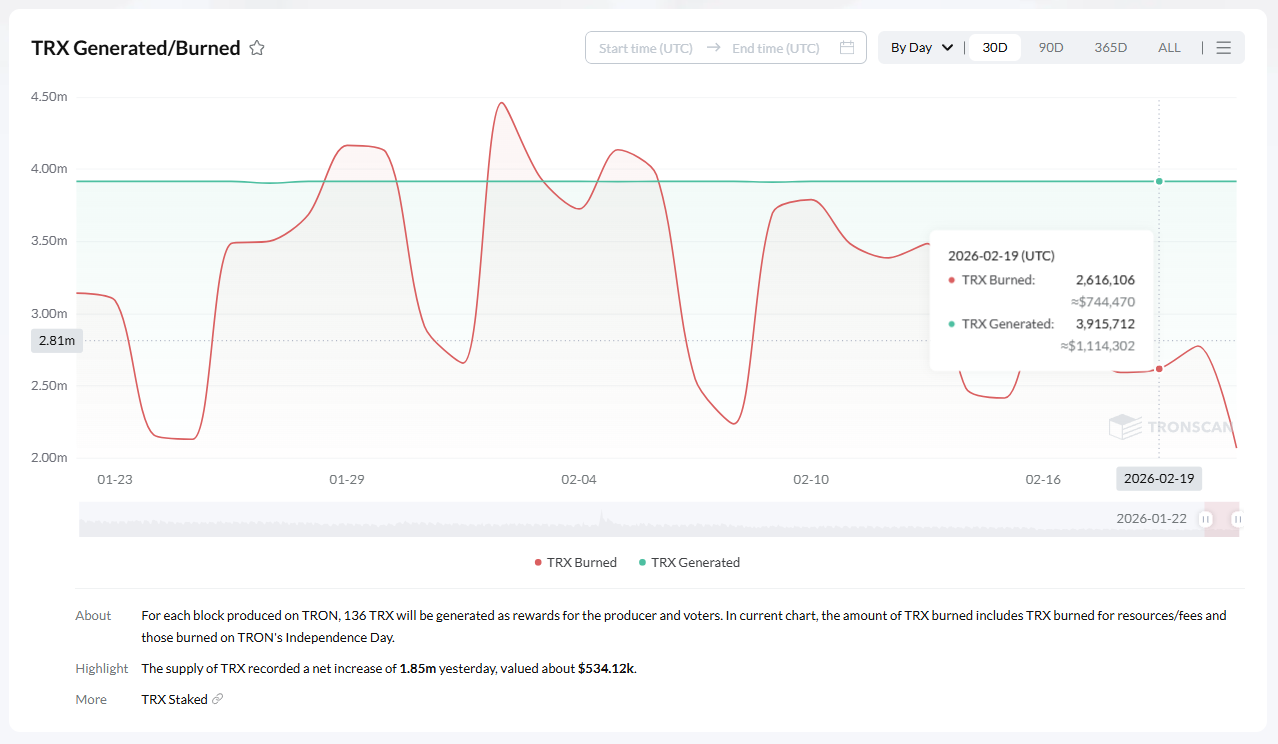
The ecosystem continues to evolve. The deflation of TRX from the burning for resources supports its economics for holders. With added use, additional TRX is being burnt and in turn reducing supply. This is in contrast to inflationary coins which are dilutive to the holders at all times. It creates a highly effective flywheel between deflationary dynamics, staking incentives and utility in the real world. People are attracted by the low USDT transfer fees, they stick around for staking rewards, and they develop on it because of an easy API and low fees.
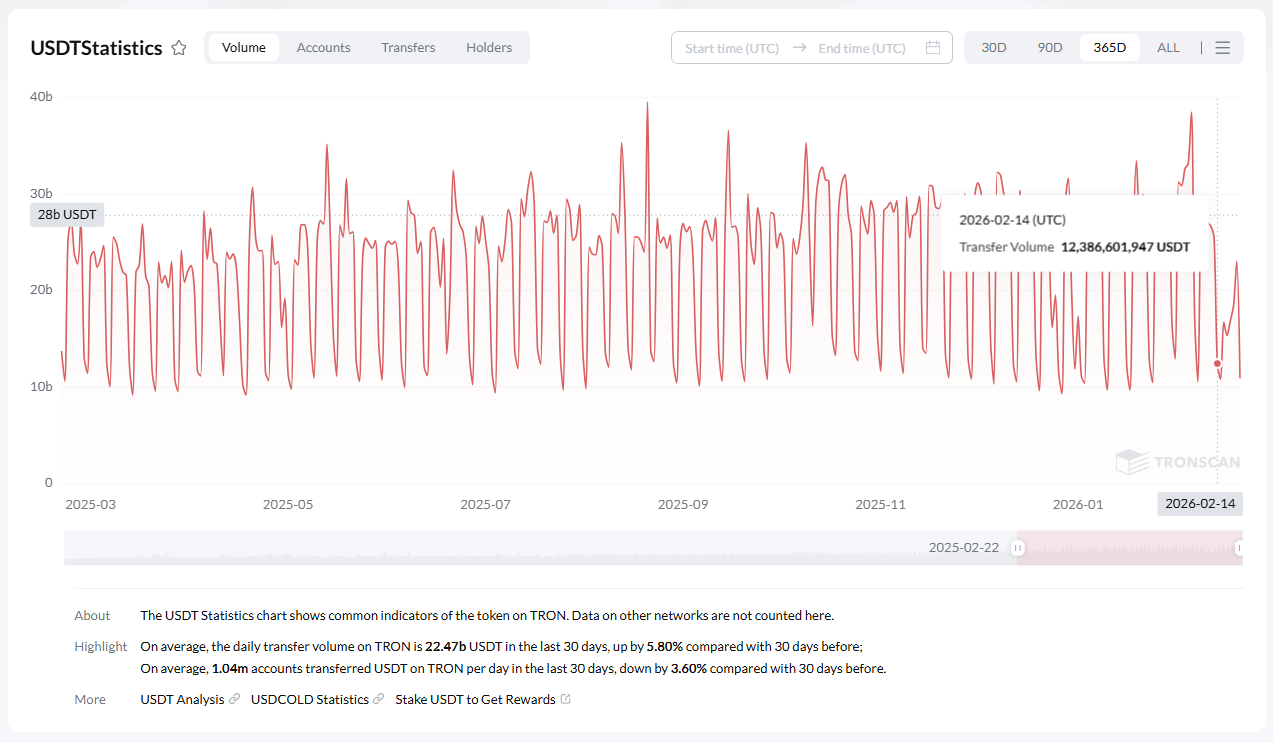
The story of TRON is one of endurance. It withstood bear markets that killed off thousands of other projects. It came through the regulatory scrutiny that focused on the entire industry. It made it through the internal turmoil and external carping. It remains a leader today, in not just survival but in key metrics such as daily active users and transaction volume. It is a unicorn among ponies. Others talk about the future, TRON is delivering today. It is the plumbing of the cryptoeconomy — unglamorous to many, but essential. Being able to lease TRON Power and minimise expenses has resulted in advanced economy that lives on its own, thus expanding the liquidity and usefulness of the token even more.
1. The network’s durability is demonstrated by its years of uptime and market leadership in stablecoin transfers.
2. Energy and Bandwidth mechanism overcomes high-fee issues existing in other chains.
3. Developer tools and APIs are fantastic, which just further encourages rapid innovation and deployment.
4. Link to the real economy via USDT provides a utility floor that cushions the price.
5. It has transparent and incentivized governance and its interest is to align everything for everyone.
In short, the TRON story is just beginning. It has become one of blockchain's seminal narratives. Its performance and low costs, coupled with the user experience have proven worthwhile. This single resource model with its associated notions of Bandwidth and Energy has proved to be a more natural solution for high-throughput applications. As the world continues down its path toward the digital age, the demand for a cheap and fast mechanism to transfer value will only increase. TRON is in the perfect spot to provide that.
Let’s face it: if you’re a developer looking for an API that’s part of our platform, a trader who wants to rent TRON Energy and take down your fees - or one who has decided it doesn't make sense sticking around on Centralized Exchanges, or simply someone somewhere in the world needing some yield, then we at TRON have awesome value. It is a network that has evolved from noisy upstart to reliable giant, and it shows that in the end utility is the only metric that really matters.
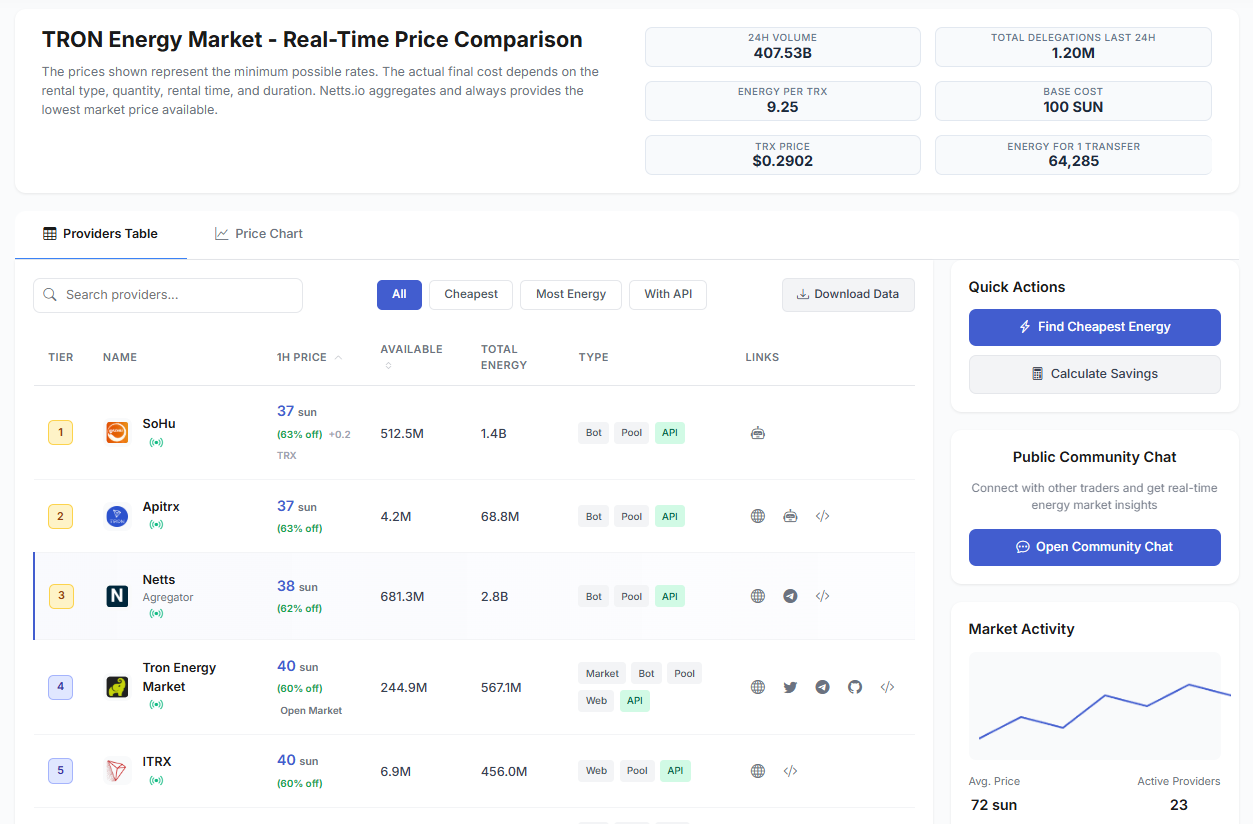
For those who want to reduce their transaction costs even more, some services — like Netts — offer a great solution. The Netts service: TRON Energy Market is a real-time pricing comparison meta-local billing platform for the purpose of discovering the cheapest rental energy rates. Instead of burning TRX, users can rent energy in order to save as much as ninety percent on fees. It aggregates providers like Feee.io, ITRX etc so that you see right through market with the price being at 37 Sun and more. Whether you're sending a USDT or powering a large scale DApp, Netts will see that you receive the market best value for your TRON whilst making the already efficient network even more economical.