The Biggest Secrets of Crypto
Crypto’s enduring mysteries — Satoshi, vanished billions, and quiet industry truths — plus what those stories reveal about power, trust, and anonymity.
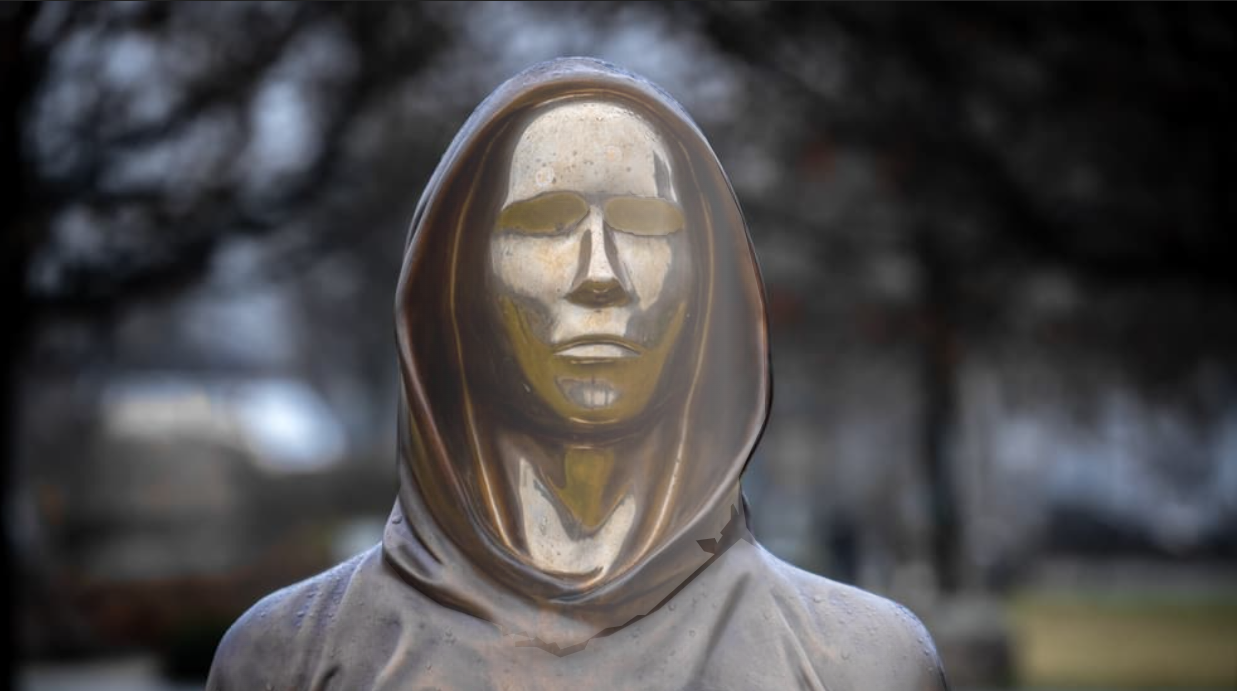
As far as cryptocurrency world mysteries go, nothing tops the identity of Satoshi Nakamoto, the figure behind the original white paper. Even today, nobody can say whether Satoshi was a single genius programmer, a group of cypherpunks, or a government experiment that had spiraled out of control. In 2008 he released the landmark whitepaper that would reshape finance, then in 2009 he mined the first block of bitcoin, later communicating only through emails and forums until he mysteriously vanished in 2011. In his last email address to fellow developer Mike Hearn, he simply stated that he had "moved on to other things."
Satoshi's wallet is worth over a million Bitcoin — a fortune that has never been touched, and with it perhaps an everlasting record of a disciplined creator, or they never survived to be unmasked at all. Despite speculation of founding names from Hal Finney to Nick Szabo and Dorian Nakamoto floating about, nothing has been confirmed. Even as we entered the year 2024, documentaries still sought to expose him and implicated developers such as Peter Todd, then seeing the community persist in denying the obvious signals and his clear presence. Some others mention the late cryptographer Len Sassaman, who passed just after Satoshi vanished, as a plausible end to that genius. And it's this original mystery that seems to set the tone for the whole industry — a place where anonymity is a feature, not a bug, and where absenting yourself is the only divesting strategy.
Yet, where Satoshi disappearing sounds good, helping to decentralize power, the cryptosphere is home to disappearances that are equally puzzling and downright nefarious.
The Queen Who Never Was
When it comes to the pantheon of crypto villains, few stories are more elaborate (and grotesque) than that of Dr. Ruja Ignatova, the so-called "Cryptoqueen." She dazzled the world with OneCoin — a Bitcoin killer she debuted in the mid-2010s. Chic, educated (a lawyer at Oxford) and globally recognized (putting out her feelers from London to Dubai), she made the money revolution seem like a concert tour. They invested more than $4 billion into her vision, supposedly getting in on the ground floor of the next big thing. However, OneCoin was not a crypto at all. There was no blockchain. A low tech Ponzi scheme in a fancy tech suit was basically what it was, an SEC nightmare running on a centralized SQL server pretending to do transactions. So when the checks started coming her way in late 2017, Ruja did what a lot of cornered scammers do — she disappeared. They left Sofia on October 25, 2017, taking a Ryanair flight to Athens. It would be the last known sighting of the woman behind one of history's biggest cons.

As the years tick past, the enigma of Ruja Ignatova only becomes more mysterious. Although her brother and other partners were caught, Ruja was a specter. She was subsequently placed on the FBI's Ten Most Wanted Fugitives list (the only woman in that hall of infamy) in 2022 along with an eventual $5 million bounty on her head. Speculation about her fate has included everything from getting plastic surgery and starting a new life somewhere in Russia to the sinking of the ship, which would have ended with her corpse at the base of the Ionian Sea.
Even more recently, Bulgarian investigative journalists have claimed that Ruja was murdered on a yacht in the Ionian Sea by a drug dealer known only as Taki (Hristophoros Amanatidis), who had been her protector, in November 2018. She was allegedly drugged, dismembered and thrown overboard, taking the only person with knowledge of where the billions went with her. The theory goes that she became a liability to the mafia men using OneCoin to launder money.
Another twist in the story is the involvement of Frank Schneider, who had been Ruja's official crisis manager and later became the spy chief of Luxembourg. Schneider was waiting in house arrest in France, pending extradition to the US when in 2023 he suddenly dropped off the face of the planet — cutting his ankle monitor and disappearing without a trace. Did he go to ground with Ruja, or did he suffer a similar fate? OneCoin's network of spies, criminals, and bankers implies a conspiracy much larger than just one woman. If this is the end-of-Cryptoqueen story, she is not drinking cocktails on a beach somewhere but sleeping with the fishes, having left behind her ruinous legacy and a fortune that may never be reclaimed. And the uncertainty about her fate is a reminder that beneath the ever-thicker skin of each of her victims, the wound will never close: in this wild west of crypto, where former humans seem to think they are unregulated, the monsters are real.
Let the Bodies Hit the Floor
Money vanishing almost always means people disappearing, and no story makes this point better than QuadrigaCX and its creator, Gerald Cotten. It was a bizarre tale: Cotten was the 30-year-old CEO at the helm of Canada's biggest crypto exchange, who had reportedly died on his honeymoon from complications related to Crohn's disease in India in 2018. The death left 115,000 customers uncertain about the future of their funds, as he was the only one with the passwords to the exchange's cold wallets where it claimed users' assets of $190 million are stored. But as investigators finally popped those digital vaults, they were empty.
Long before he passed away, however, the cash had been transferred elsewhere, funneled into various exchanges, and betting sites in a hopeless bid to recoup trading losses made earlier on. His death was shrouded in speculation. The trip came just days after he signed his will. Even today, victims call for Cotten to be exhumed from the grave so that they may prove he is actually there and not alive and well, spending their money. One of his detractors had noted that the death certificate misspelled his name as a hint, or as a breadcrumb that had been dropped in the pair's quickly created fiction.
Another spooky twist came when it was uncovered that Cotten's co-founder, Michael Patryn, was in fact Omar Dhanani, a former member of the widely publicised and nefarious identity theft ring, ShadowCrew.
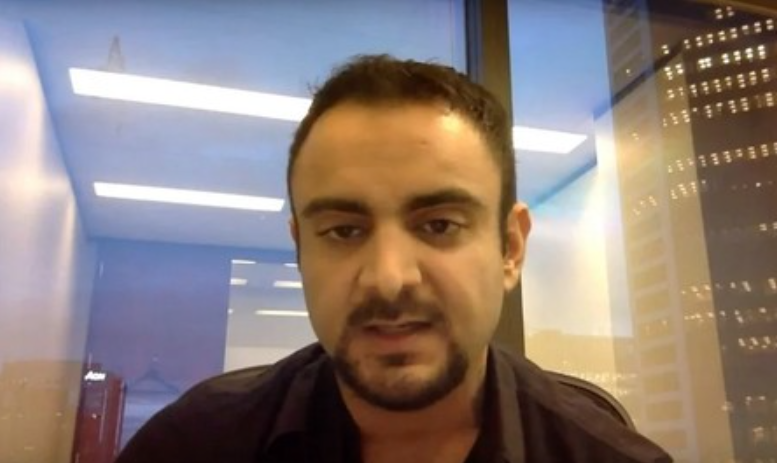
The shadow of Patryn's criminal history loomed large over the operations of the exchange, a criminal history that he had changed his name legally to hide. Throw in a CEO who died with the keys and a co-founder with a history of financial crimes and you've got a perfect storm of suspicion.
So the official narrative stands, but the missing millions and the other strange details of the case continue to surface. So far, the QuadrigaCX saga continues to be a harsh lesson in relying on a single point of failure, and for many the price of learning the lesson was their life savings.
In 2022, however, conspiracies of a mass eradication campaign targeting crypto billionaires and developers were revived following a new wave of unexplained deaths. In just one month, three high-profile figures died mysteriously. A drowned body of 29-year-old Nikolai Mushegian, the genius behind the stablecoin protocol MakerDAO, washed up on a beach in San Juan, Puerto Rico. He was killed just hours after stating on Twitter that agencies would "torture him to death," then make it appear like a suicide. An ironic twist, however, was that the timing of his paranoid Twitter post so close to his body washing ashore set off a media firestorm, with his friends blaming his mental health history. It was three weeks later, in November, that Tiantian Kullander, co-founder of the Amber Group, was found dead in his sleep, aged just 30, in an incident that shook the crypto world to the core as the young man had no known health problems.
Just as quickly, Russian billionaire and Libertex founder Vyacheslav Taran died in a helicopter crash near Monaco. The weather was clear, and the pilot skilled, so suspicions of sabotage arose instantly. From there, it was said, Taran had also connections to foreign intelligence agencies, which changed the tragedy into a geo-political event.
With these deaths occurring so closely together during a turbulent market collapse, it left many people asking whether or not these men knew too much or had possibly crossed the wrong people. Did they get silenced, or is this just a horrible coincidence exacerbated by the bear market psychology? The absence of concrete answers allows these tales to simmer, making them a type of modern-day ghost story for the digital world.
Ghost in the Machine
Mt. Gox was the first Quadriga. The Tokyo-based exchange once handled 70 percent of all Bitcoin transactions when it collapsed in 2014 after saying 850,000 Bitcoin was stolen over the years. The CEO was Mark Karpelès, who was arrested (and spent months in a Japanese detention center) and put through a Japanese court system, but the real masterminds behind the theft operated in the shadows for years. The probe discovered trading bots, cheekily dubbed “Willy” and “Markus,” that were discovered operating on servers owned by the exchange itself.
These bots were purchasing Bitcoin with imaginary fiat money, pushing up the price and hiding the insolvency of the exchange. Although Karpelès confessed to operating the bots with the intention to "stabilize" the market, the mystery of the missing Bitcoin remained.
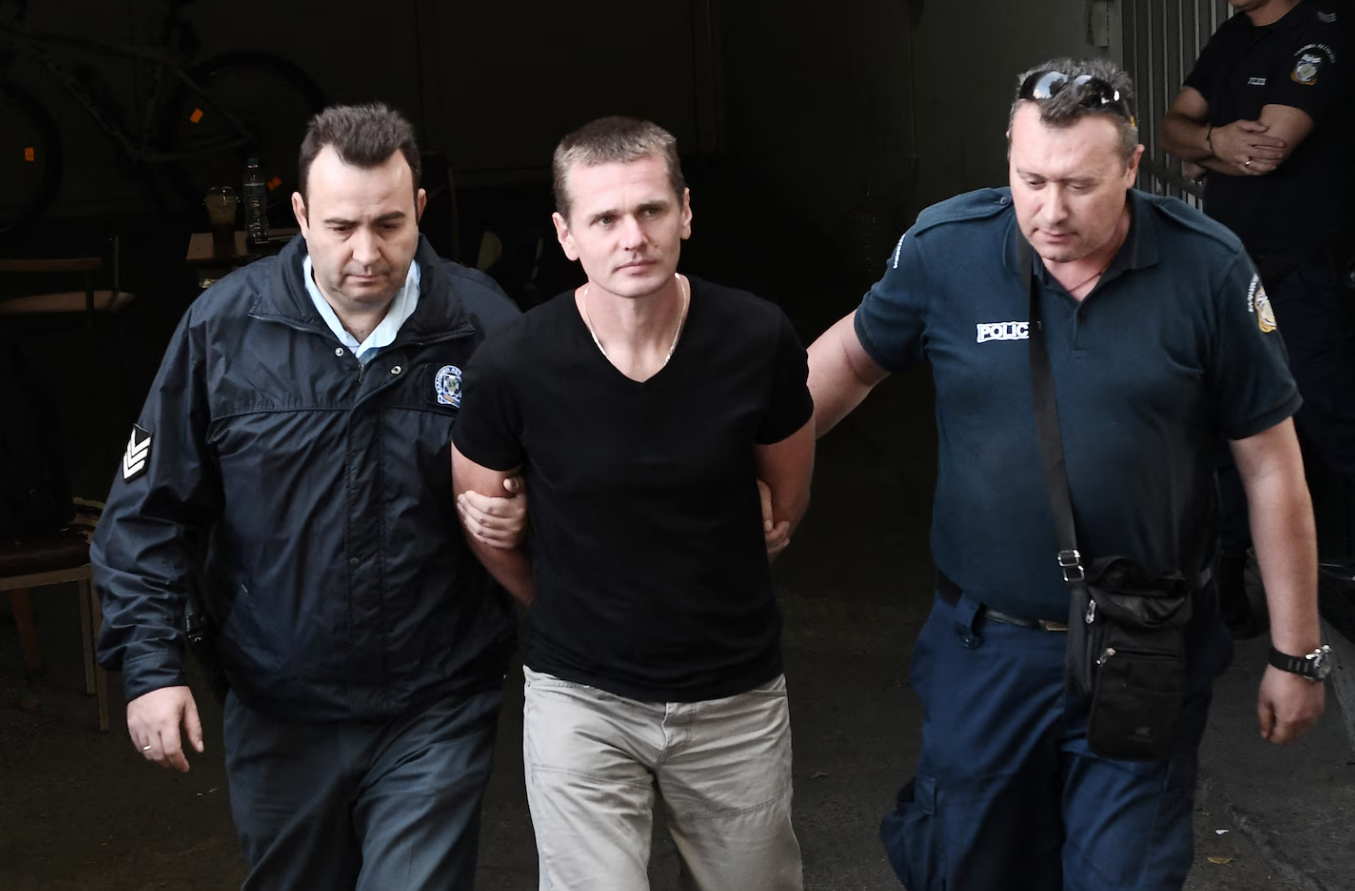
The trail eventually led to Alexander Vinnik, a Russian citizen behind the BTC-e exchange. According to investigators, Vinnik laundered more than $4 billion in Bitcoin, a large part of which belonged to Mt. Gox funds. The Russian has been in custody since 2017, when he was arrested in Greece during a vacation, prompting a three-way diplomatic tug-of-war between the US, Russia and France. However, even with Vinnik in custody, tens of thousands of Bitcoin remain unaccounted for. Coins have always moved periodically and given the market a panic, much to the delight of creditors who want to be repaid after over a decade of waiting. It was not a smash-and-grab; it was a slow bleed, a quietly bleeding of funds before anyone realized the coffers were dry; the Mt. Gox hack. It is a touchstone for original sin in the world of crypto exchanges, testament to the fact that not your keys, not your coins, is a lesson learned in billion-dollar losses.
Big Sleepers and Phantom Transactions
And aside from the human tragedies, it itself (i.e. the blockchain) has mysteries of its own in the form of the waking whales. These are wallets that have laid idle for more than ten years, holding thousands of Bitcoin, mined during some of the network's early days. A market shakeup happens when one of these wallets moves. A wallet which hadn't been touched in 13 years suddenly moved more than $85 million worth of Bitcoin — in early 2026.
Anyone who held onto such a wallet would have watched their pennies blossom into a multi-million-dollar fortune, with only two or three crashes of around 80% along the way, all buoyed by diamond hands so psychologically painful as to need a psychologist of their own to unfurl. How many of you could look at your portfolio fall 80% and not sell for years? A long-lost pioneer who recently recalled their password? A prison sentence ending? Or finally make an air-tight plan to launder the loot?
These threads are often hopping from address to address in a complex series of transactions to try to disguise the trail. These movements are closely scrutinized by analysts for potential links with existing hacks or darknet markets. The money stolen in the 2016 Bitfinex hack, for example, was washed in small groups over a period of years in a slow-motion laundering scheme that mystified law enforcement — until the arrest of Ilya Lichtenstein and Heather Morgan. Yet, other hacks remain unsolved. In 2016, an attacker siphoned millions from The DAO deployed on Ethereum, leading to the hard fork of Ethereum turning into Ethereum Classic. But while there are whispered allegations about possible suspects, the money itself has still either not been touched, or dispersed so widely that it is beyond recovery. We can see the money move, and the USDT fees being paid, but we often cannot see the face on the other side of the screen.
The value that large dormant wallets that awake are moving makes their transaction costs negligible. A whale can shift a hundred million dollars and spend a few bucks on network gas fees. Sending USDT for the average user (or the scammer looking to wash smaller dollar amounts) is still cost-prohibitive enough to serve as a deterrent, especially if we are trying to send on Ethereum when gas goes wild. Which is why so many shady actors as well as everyday users have transferred their traffic to the TRON network with cheaper fees and quicker settlement speeds. But there, too, the mechanics of energy and bandwidth can be a black box to the naive. TRC20 USDT now serves as the de facto currency for anything from genuine remittances to dark web trades.

Another recent baffling mystery is related to the funds of the Multichain protocol disappearing. The CEO, nicknamed Zhaojun, was detained by Chinese police in 2023. A few moments later, money was drained from the protocol's bridges to the tune of hundreds of millions of dollars. They claimed that they did not have access to the keys for the server, which are all with Zhaojun. It left users with all the questions after it simply moved the funds to unknown addresses. Could this be a police seizure? A hack by an insider? Or maybe the result of a dead man's switch activated by the arrest? There has been a deafening silence from official channels within China. And this case is the ultimate example of the centralization risk we have in an industry supposed to be decentralized. If one person holds the keys to the kingdom, then the kingdom is only as safe as that person stays free.
Cost of Visibility
With the crypto industry developing, secrets become harder to hide; however, the level of risk increases. The wild west is slowly ending, with forensic analysis and high-tech tracking capabilities taking its place. Each transaction creates a digital trail, permanent documentation that can be scrutinized many years later. The cost to send USDT is not only a transaction fee, it includes the cost of making a permanent mark on an irreversible book. Sixteen years ago in 2010 criminals had what they thought were clever tools to operate behind anonymous networks. The blockchain remembers everything. It remembers the hacks, the scams, the dirty money, the forgotten fortunes. It acts as a public witness to each and every crime and miracle of the crypto world.
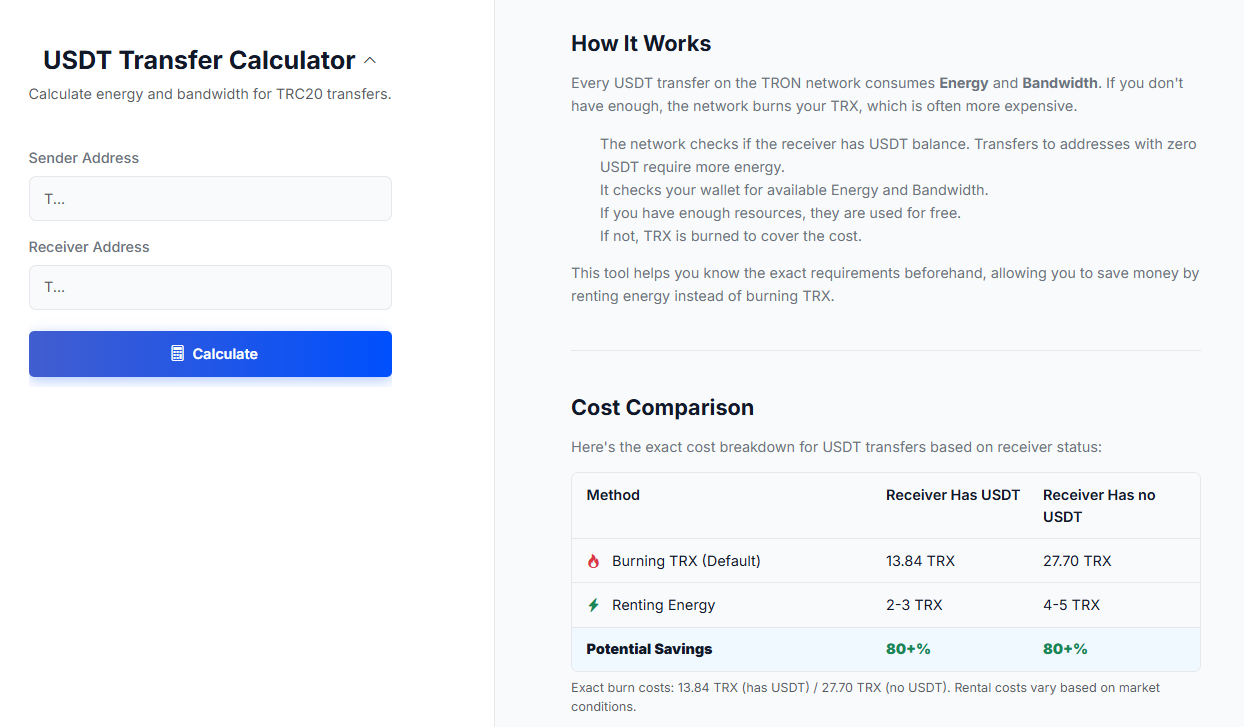
The average user is faced with such a complicated landscape as to make the route potentially inaccessible due to the technical barriers; therefore we need tools that allow us to overcome them. In order to successfully make transactions on the TRON network, it is important to know about network resources such as Energy and Bandwidth. It is where services like the Netts USDT Transfer Calculator come in and calculate exactly how much a cheap USDT transfer will cost and estimate the energy and bandwidth needed on the TRON network in order to avoid burning more TRX than needed and have your transfers as efficient as the networks they cross.