Enemies of Crypto - Who Wants It Gone
Who opposes crypto — banks, politicians, naysayers, and opportunists — and how each group’s incentives shape regulation, narrative, and adoption.

You must know your enemy. And crypto users think they got zero — for doing something good! They think they're creating us a free, decentralized and transparent future of money. That since the technology is disruptive, everyone will adopt it sooner or later. This is a dangerous misconception. In actualness, the road to mass adoption doesn't just involve lovely ideas but loud opponents too that want to either see crypto collapse or fall in the hands of centralized forces trying to exercise more power compared to governments.
We will discuss all potential players in this article who really didn't want crypto to happen in the first place (too late fro this!) and now that it exists, try make sure it becomes useless or forbidden. We will talk about the politicians who fart in the general direction of Luddite electorate, about some businesses like banks which have nothing to gain from competition, about companies which want to short crypto for their own gain, about hackers & scammers who consider crypto users to be their prey, about law enforcement who consider crypto just as drug money, and finally about plain naysayers, who really enjoy just hating something new. We will give the context for each — why each forms, and how to manage each scenario.
Pandereres to Luddite Audience
The opportunistic politician is the first and also probably the most visible enemy of cryptocurrency. Though a fair number of legislators have indeed shown promise when it comes to realizing the potential of blockchain technology, there is still a huge section adamantly against it. These politicians are often pandering to a Luddite voting bloc — older, tech-averse, change-averse voters. To this cohort, cryptocurrency seems like a frightening mystery, a technocratic version of the "wild west" that threatens both the ruin of their nest eggs and the value of the fiat money that has sustained them throughout their lives.
Politicians exploit this fear to win votes, speaking not of crypto as innovation, but as a danger to national security and economic stability. They come up with bills that sound nice on the outside — "protecting consumers", "preventing money laundering", "ensuring financial stability" — but a closer look at the details shows a completely different agenda. These bills often carry provisions that are impossible to comply with, effectively banning the technology without using those words.
The context here is power. Governments use money as a means of economic control, including the ability to impose sanctions and to tax people. Coincidentally, cryptocurrency was designed to confront this anomaly. A politician who will go on to rail against "magic internet money" is often defending the state monopoly on the ability to print money at will and surveil each individual transaction. Central Bank Digital Currencies (CBDCs) provide the appearance of ubiquitous digital payment without the privacy and freedom of true crypto. To counter this foe, we have to engage politically and educate ourselves. Crypto community needs to stay politically correct. But it has to lobby and have an educational aspect to teach lawmakers and help elect policymakers who get technology right. It also requires patience. Once digital natives compose the majority of the voting block, the Ludditic appeal will disappear. But in the meantime, regulatory tussles seem here to stay.
Established Banking System
If politicians are the public face of opposition, traditional banks are the silent giants operating behind the scenes. OpenFinance is bringing people centered protocol to the game; banks have been kings of the financial castle since time immemorial. They decide the loan applicants, and who can open an account, and the price you pay for transferring money from country to country. They make beaucoup bucks off of this friction. We will see and do more on this in a moment but, globally, cryptocurrency is threatening to break this entire business model down. Instead of paying a bank a large fee and having to wait three days, why not just wire the money internationally in seconds on a blockchain for a fraction of a cent? DeFi protocols offer up to 20% or more yield, so why are your savings sitting in a 0.01% bank account? Well, the banks know the answer to those questions, and they are shitting themselves. Instead of an opportunity to connect better with users, they see blockchain as an existential threat to their profits.
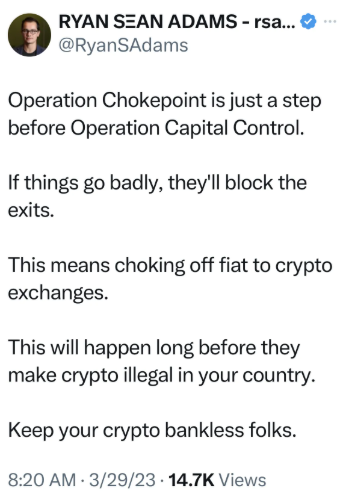
Banks understand this threat perfectly. They don't need a competitor. They have spent years enacting "Operation Chokepoint" — closing accounts for pseudonymous crypto exchanges, ordering banks not to service transfers to crypto firms, and pressuring regulators to impose draconian capital requirements on whatever institutions choose to engage with digital assets. They argue crypto is "high risk" and use this as an excuse to refuse to service the industry.
Some large institutions are now providing crypto custody services for their wealthy clients, but the banking sector as a whole continues to oppose peer-to-peer finance that excludes them. The context is profit protection. The role of banks in the financial system is that of a rent-seeker. It is why crypto removed the requirement for the rent-seeker. In response, the crypto industry has had to create its own infrastructure parallel to this one. We witness the emergence of neo-banks and payment processors that are friendly towards crypto. But the final beating of this foe will be with better utility. They will have no choice but to adapt or die when stablecoins are so much cheaper and quicker to communicate value across borders than the SWIFT network. In the meantime, they will be using that vector to try and slow adoption down, and cast doubt on digital assets whether for their own financial gain or to reduce risk to their existing businesses.
Shortsellers and Market Manipulators
Not all crypto foes want the digital asset class wiped off the face of the earth for all time — some simply want to see it crash and burn at this very moment in time, so they can cash in. This is what short sellers and market manipulators are. They are the scavengers of the environment. Shorting is a legitimate market function that aids in the discovery of true price, but in the wholly unregulated and volatile world of crypto, it quickly evolves into coordinated attacks. The entities will then build up a huge short position and then start to release wave after wave of FUD.
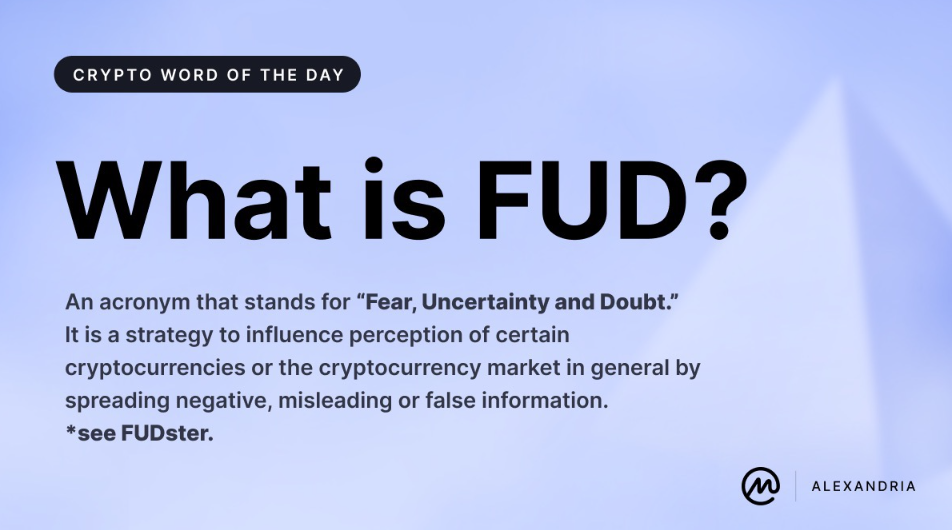
This could involve buying hit pieces in the media, leaking false information about insolvency related to a large exchange, or deliberately exploiting a small bug in a protocol underlying a panic sell-off. They thrive on chaos. I mean, what they enjoy more than a solid bear market is buying back those same assets at 5% of the price after having fun inducing panic selling in the retail investors.
The context here is greed. These actors care little for the technology or the philosophy. They look at crypto as a casino to rig. They take advantage of the weakness of anybody investing and trading with a retail mindset. They exacerbate that market fear when the market is fearful. They search the system for as much leverage as possible, and are aiming to trigger liquidations deep within the cascade. We have witnessed this spiral out before, where healthy projects get munched through orchestrated FUD to cut token prices off at the knees. They are engaging in wash trading to create a facade of volume and activity that does not exist.
The interaction with the shorters is a psychological game. This takes diamond hands and not falling for fear. It also requires due diligence. The community needs to improve at separating fact from fiction and recognizing when a coordinated FUD attack is happening. If a sensationalist headline pops up at the same time as a key Bitcoin resistance level is hit, ask yourself: who gains if the price goes down? Transparency is the best disinfectant. The reality, on chain, often paints a different story once we unpack what the news is saying versus what is actually happening and the data reads; whales selling versus buying. This is why long-term conviction is the only defense against those who benefit during short-term pandemonium. As you need to recharge Energy when your TRON transactions don't go through due to high activity, you need to recharge your mental energy to overcome the volatility these manipulators cause.
Hackers, Scammers and Predators
The most pernicious foe may be within — or at least, in the seedy parts of the internet. To hackers and scammers, cryptocurrency users are not pioneers; they are prey. Crypto transactions are permanent and non-identifiable, which makes them a prime target for being stolen. Not the lone wolf hacker in a basement — we are talking about serious state-backed groups, including those from North Korea who literally view crypto theft as a key income stream for their regime. From attacking bridges to exploiting design flaws in smart contracts to doing all kinds of advanced phishing. They just never relent, always seem to have their finger on the pulse, always changing tactics to stay in front of researchers. They find the weakest link in the chain: the human user.
Then there are the scammers. The social media "giveaway" bots, the made-up support agents in Discord channels, the "pig butchering" romance scams that empty bank accounts. Such predators destroy confidence in the entire system. With every pensioner fooled by crypto into losing his life savings, the ammunition for the "Luddite" politicians to demand a ban on it grows larger. When a major protocol gets hacked, it is the banks who are able to gloat that the system was broken. These crooks are not only robbing money from citizens but also their future. They do this by making it more difficult for legitimate projects to build their community. It is creating an atmosphere where mistrust amongst all is the norm. They are the tumours that consume this potential in this technology.

The context is vulnerability. The blessing of "be your own bank" comes with the curse of "be your own security guard." Most users are just not prepared for this. Fighting this enemy is a battle where security education and improved user interfaces need to be the main weapons. We need wallets that protect users from signing malicious transactions. We also need to stop blaming the victims. Without the user experience of crypto being as secure as using a modern banking app, these predators will continue to thrive and they will forever be the biggest impediment to mass adoption. Just like you top up TRON Energy to make sure a transaction goes through, you need to top up your information about security best practices regularly.
Policing and the Surveillance State
Crypto has a complex relationship with law enforcement. You made clear that while they will utilize blockchain analytics to investigate crimes — a full report will be released soon — within these organizations, crypto is seen much more as "money for drugs." They remember the Silk Road. Still, they witness ransom being paid with Bitcoin and Monero. They observe both terrorist financing and sanctions evasion. As the saying goes, to a hammer, everything looks like a nail, and to a detective, privacy looks like guilt. They are annoyed at the pseudonymity of the blockchain. They are irritated that they cannot just issue a subpoena to a bank and receive a customer transaction list. For them, encryption hinders justice — not a tool for privacy. For them, any mixer and privacy coin is inherently a money laundering tool, with no consideration to either legitimate reasons that a business or individual may have to keep their financial history private.
That context is the craving for everything to be watched. Your assets can be frozen by the government with a phone call — in the old world system. They can track every coffee you purchase. Crypto threatens this panopticon. Hence, privacy coins and mixers are especially demonized, as they bring back the digital equivalent of cash — a cash that is untraceable and private. Austrian police demand encryption backdoors and full KYC anonymization that renders itself useless. A world where every single wallet is linked to a government ID. They want to track every satoshi from its mined origin to the spending destination. To them, this is an acceptable sacrifice to prevent crime, yet the trade-off is that good citizens are left with no financial privacy at all.
This is going to necessitate a nuanced, fact-based defence of privacy as a human right. We have to make the case that we do not outlaw the internet just because criminals use it. We do not outlaw cash just because some criminals use it. We need privacy to be physically safe and have corporate security. We need to back technologies such as zero-knowledge proofs that enable compliance without requiring exposing individual users. While we must also recognize that there are bad actors and that some cooperation with law enforcement to arrest real criminals should be reasonable to help to legitimatize the industry, we must never concede this at the cost of the natural right to financial privacy. We should make sure that our tools — such as a TRON Energy refill service — are neutral and user-focused, not surveillance-state-focused.
Naysayers and the Hate Mentality
And lastly we have our basic haters. These are not politicians stood up defending against their own loss of power, or banks defending their profit margins. These are just regular journalists, academics or general techno-pessimists who love to hate on crypto. Some liken it to a Ponzi scheme, a greater fool theory, an ecological calamity or a solution in search of a problem. By pooh-poohing the whole asset class, they get a charge of intellectual snobbery. They pen scathing op-eds foretelling the death of Bitcoin for the umpteenth time. Every crash is a validation of being right, and every recovery is ignored. They are the financial-world Cassandras, every one of them staring into the abyss and proclaiming that it is getting closer.
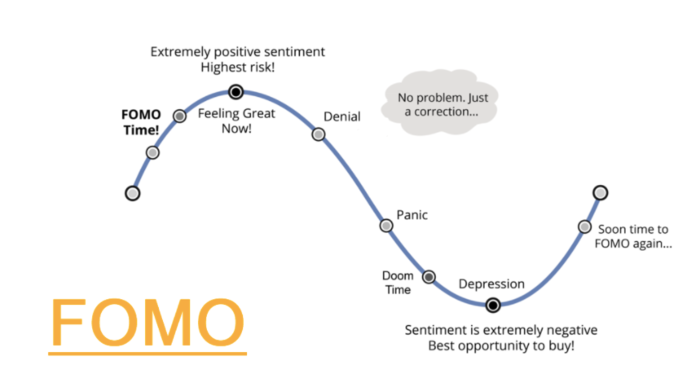
Here, the context is often psychological in nature. It's a reaction against the perceived hubris of "crypto bros." It's a response to the FOMO they experienced when prices went up all without them. Easier to call the whole thing a scam than to concede they may have blown it on a new technological paradigm. They seize upon every negative story — the environmental impact of mining, the scams — and dismiss any positive use case. They will not or cannot see the innovation happening in DeFi, in NFTs, in DAOs. This is what prevents them from seeing the signal through the noise. They are, in many respects, dragged by an underlying conservatism, a conviction that the one way of doing things is the only way of doing things.
Shouting down naysayers is often best left to people with megaphones — literally or figuratively — instead, just ignore them and build. "Enjoy being broke" is a fun meme but not a hearts and minds campaign. The right answer is to demonstrate tangible use cases. When aid is being sent to war zones instantly, when it helps those in hyper-inflationary economies hold their wealth together, when it powers new digital art and new forms of ownership — those truths drown out their cynicism. We must also be humble. There are a lot of unfounded conjectures and rubbish in the industry. When one recognizes the faults in where crypto is at now, it absolutely strengthens the case for its potential to do better. We have to invite them to take a closer look, to learn the technology before they write it off.
1. The Political Class. Motive: power, the need to win a vote from frightened demographics.
2. Old Banks. Out of fear of competition and out of desire for profit.
3. Manipulators. Due to the greed and the potential they can earn due to volatility.
4. Criminals. Motivated by the ability to take advantage of both technical and human weakness.
5. Law enforcement. Motivated by the urge to surveil and to investigate more easily.
6. Naysayers. Motivated by psychological resistance, skepticism, cultural aversion to crypto.
It's not more elegant code — the stakes ahead for crypto are all about training for this minefield of enemies. You need a different solution for each group (political lobbying, security hardening and cultural outreach). The technology is tough, but the social and political layer is fragile. Knowing who wants crypto dead, and equally important, why they do, will help us fight for the digital future that we are trying to make. We have to stand together to protect this technology. We need to lift each other up, teach each other and create building blocks that allow anyone to join this revolution more simply and securely.
In fact, one actionable thing to know when navigating the crypto ecosystem: transaction costs (the semi-esoteric kind) — particularly on TRON. In case you need to accumulate Energy to help in your transfers, there are quick techniques to make it happen. A good TRON Energy refill service helps you save lots of TRX from burning as fees. If you refill TRON Energy through a dedicated service, you can optimize costs and make sure that your operations avoid overpaying for transactions with any risk of failure.
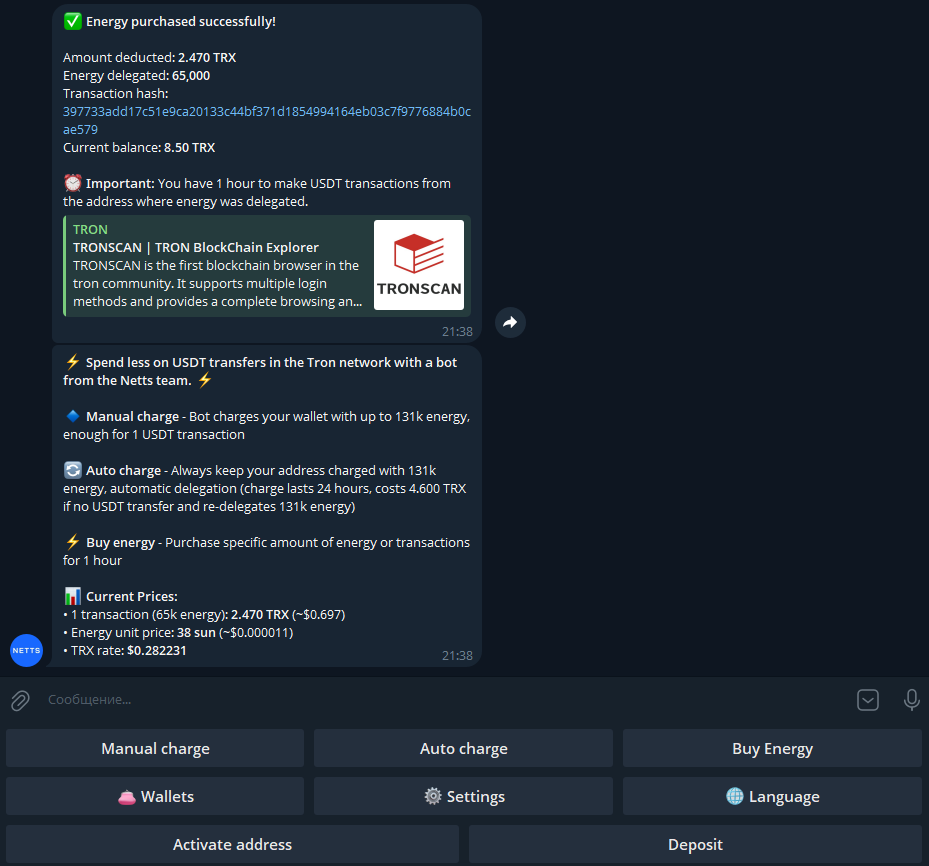
On the optimization side of things, there is a very simple solution to this: the Netts service. Netts Energy Charge Bot is designed for easy resource rental. Just choose a wallet, press recharge, and the bot will replenish resources for an hour (which is enough to transfer USDT). Once the transaction is completed, it measures the true amount of resources consumed and deducts the corresponding TRX from your deposit, which means you never pay for Energy that you haven't used.