TRON Energy Renting Explained - Just Like Car Rentals
In this piece we will investigate how rentals of TRON Energy operate — using the car rental business as an analogy.

Let's say, you want to drive a weekend out of the city. To be clear, you do not want to purchase one, nor do you want to own one long term. Rather, you rent a car and drive it until you no longer need it before returning it. Nowadays this simple but flexible model is reflected on blockchain, precisely on the TRON network with a chance to rent Energy, which is necessary for the execution of smart contracts, but without the need to block significant amount of TRX tokens. In this piece we will investigate how rentals of TRON Energy operate — using the car rental business as an analogy. We will also talk about how this evolving market TRON rentals pave the way for the future of blockchain transactions.
Leasing cars have been around since the early 20th century. One of the first rentals was a Model T Ford by Joe Saunders of Omaha, Nebraska, who in 1916 began renting out his Ford to travelers, charging them on a per-mile basis. This creation granted people the convenience of driving without the encumbrances of ownership, upkeep or long-term financial obligation. The years rolled on and car rentals became an international business, providing versatility and ease of access to millions of people. Through the use of a car rental model, transportation was made available to people of all socio-economic classes, allowing for travel, commuting and exploration without the economic strain of car ownership. Also, as cities expanded and people traveled more, car rental agencies changed their operations, providing a wider variety of vehicles, insurance options, services for every need, whether it was a business trip or family holiday.
In a digital era, the same thing is happening in the blockchain ecosystem. Energy is a resource required to execute smart contracts and perform certain transactions, which is introduced by TRON network, one of the largest public chain that runs decentralized applications. Previously, users could only acquire Energy through freezing (or locking) their TRX tokens, making liquidity and flexibility impossible. With ecosystem maturity, it became obvious that the dynamic solution should be adopted – and here they are – TRON Energy Market platforms will provide the opportunity to rent Energy on TRON as easily as you rent a car. This transition allows anyone to get started with blockchain, whether they want to sell their digital art for the first time or build enterprise-level solutions across the marketplace.
When you rent a car, you:
1. Choose a rental service based on the price, reputation, and convenience.
2. Clarify what kind of car you are renting and for how long.
3. Pay the rental fee and confirm other particulars.
4. Get the automobile and utilize it according to your requirements. 5. Drive the car for as long as you need, then return it.
The process for renting Energy on TRON is astonishingly similar. You pick a TRON Energy Market provider, enter how much Energy you want and for how long, pay a fee in TRX and get the Energy delegated to your wallet instead of freezing your own TRX. This Energy can be utilized for executing smart contract, sending of TRC-20 token and interaction with DApps. At the end of your rental period, the Energy is simply taken back by the provider and you can rent again as you need.
The process is made to be user-friendly and quick. TRON Energy Market platforms mostly have a simple user interface where you are able to compare different providers, look for the price in real time and get the most optimal deal for yourself. In some cases, you can even automate the process, enabling recurring rentals or API integrations with your applications. This type of flexibility is similar to what you get with modern car rental services; you can reserve a car online, select from a diverse range of vehicles and arrange to have the car delivered or picked up upon your request.
Case Study: How to Rent Energy on TRON
For instance, you want to send USDT on TRON, but you need to have enough Energy. Rather than burning TRX for every transaction or freezing a large amount, you go to a TRON Energy Market platform. A list of providers appears and with them you can see the price and the time for which you can place an order. You pick a vendor that offers you about 131,000 Energy for 24 hours at a competitive price. Once the details are verified and the fee paid, the provider instantly transfers the Energy to your wallet. Now, all you have to do is perform your USDT transfer and any additional smart contract interactions while your rental period is active, paying up to 90% lower transaction fees compared to directly burning TRX.
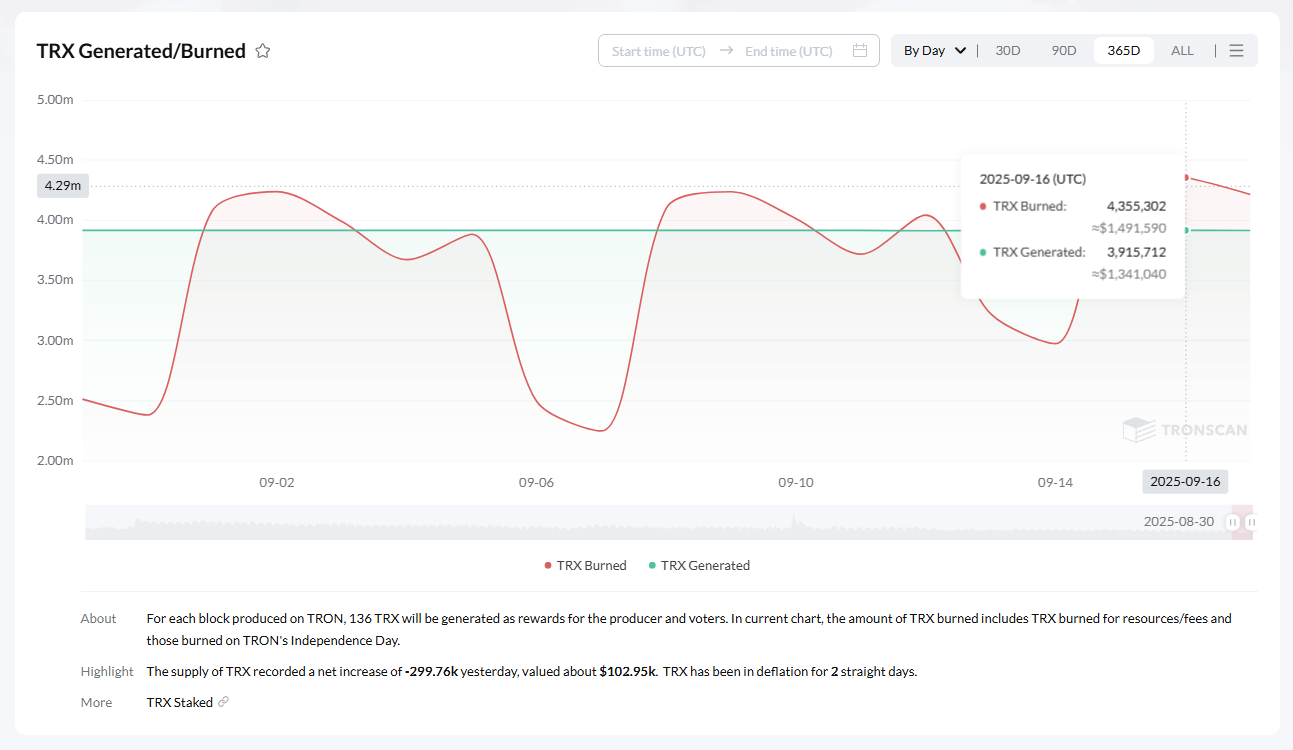
Now allow us to examine the figures. It costs around 131,000 Energy for a typical USDT transfer to a new address on TRON. This would cost you anything between a couple of TRX to burn for this transaction if you were burning TRX. The savings add up fast for those users that transfer often, trade on DEXs or use DeFi protocols. It would be like renting a car for a week long road trip instead of purchasing a brand new vehicle for one drive.
Similar Approach, Different Industries
Car rentals and TRON Energy rentals are both about flexibility, efficiency and cost-saving — that's why such a model works in the first place. You don't need TRX frozen for a blockchain process you might not even do everyday, just like you wouldn't buy a car for one trip. Additionally, TRON Energy rentals enable on-demand access to required resource, avoiding redundant expenditure and maintaining liquidity of their assets. This model is particularly essential for developers, traders and everybody that interacts with smart contracts occasionally or in bursts.
The analogy goes even deeper. When automobiles were a new luxury item they were expensive; only the rich could own a car. Car rentals' democratization of access opened up travel and business to the masses. Likewise, back in the early days of TRON, it was only large TRX holders that could afford to freeze tokens and create enough Energy for day-to-day use. Energy rentals have reduced the entry threshold of participating in the TRON ecosystem, making it available for more users. This, in turn, has spurred innovation and higher volumes of transactions, resulting in the phenomenal growth of the network.
Why and How TRON Energy Rental Evolved
Initially with the launch of TRON network, Energy can only be acquired by freezing TRX. Such a method, however, catered to power users and big holders but left many everyday users and developers on the outside looking in. With the boom of the decentralized finance (DeFi) and decentralized applications (DApps), the need for a more convenient solution exploded. Welcome to the TRON Energy Market — a marketplace of competing providers giving you side-by-side price comparisons for real-time price deliveries at flexible-term rentals. Now, Energy can be rented by users on TRON for a few hours to several days, and the price changes dynamically based on supply and demand.
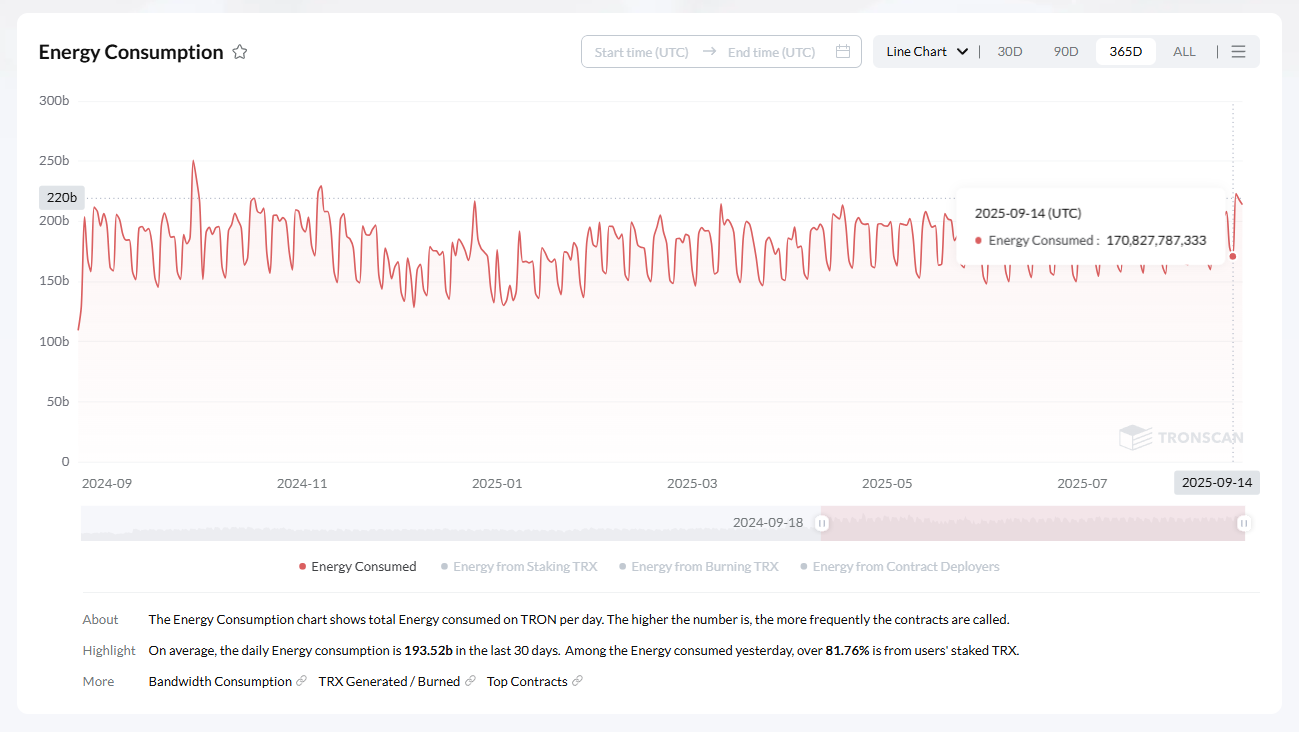
Impressive does not come across as exaggeration in reference to the growth registered by the TRON Energy Market. Previously, users needed to seek their own arrangements with specific providers or through informal channels to lease Energy. Well-heeled platforms now collate the offers of dozens of providers, keep an eye on the market and offer instant price transparency. Thus competition increased, as did lower prices and better quality of service. This market processes million daily delegations with total volumes in hundreds of billions of Energy units! The market keeps growing by attracting new providers to rent Energy, as we see more users enjoying the benefits that it brings with it.
Market Mechanics — How the Providers Work
Providers in the TRON Energy Market own huge pools of TRX which are frozen to yield Energy and are then delegated to end customers. Rental prices for Energy vary, depending in part on market conditions, the capacity of the provider and the length of the rental. Most providers also support instant delivery, API to automate rentals and bulk pricing. This situation is similar to the car rental industry, where companies compete on price, service and availability, which creates a competitive environment where consumers always have access to cheap Energy.
Providers can take advantage of advanced algorithms to manage their Energy pools, optimize delegation schedules and react to variations in demand. A few have dynamic pricing, meaning they will adjust the price in real time depending on the congestion of the network and how much of the market activity there is. Some offer you to leave a loyalty plan, a bonus for a recommendation, or a deal for frequent consumers. API access grants developers and businesses the ability to easily integrate with wallets, trading bots, DApps - making automated Energy consumption and cost saving a reality.
Use Cases: Who is the Beneficiary of TRON Energy Rentals?
This feature to rent Energy on TRON has unlocked new opportunities for all types of users:
Rent Energy instead of burning TRX, which helps fee payers save a significant amount on transaction fees for TRC20 token transfers (e.g. USDT, USDC).
Decentralized exchange (DEX) traders have a stable Energy supply for more frequent swaps and trade executions.
Developers can deploy and test smart contracts without tying up capital, which accelerates the development process and reduces costs.
After onboarding, DeFi users can use protocols like JustLend or Sun.io with less concern over TRX price volatility.
Aside from these primitive use cases, Energy rentals can also be used to mint NFTs, game applications and cross-chain bridges. For instance, when a game developer launches a new DApp on TRON, they can rent Energy to power thousands of user transactions in a launch event while protecting themselves from unsustainable costs.
Arbitrage traders and liquidity providers can also rent Energy to make high-frequency trades — in this case, profit becomes a cost-minimization goal.
Future Peek: The permanence of TRON Energy rentals
If car rentals drove modern transport, rental of TRON Energy is leading the blockchain ecosystem. Daily, the market processes many millions of delegations and the volume exceeds hundreds of billions of Energy. However, as more decentralized applications are launched and more users begin to adopt them, the demand for more flexible, affordable Energy will continue to rise. With smart routing, Energy futures and cross-chain solution, TRON Energy Market is transforming to ensure that no user is deprived of resources at any time.
In the future, TRON Energy rentals will only keep developing it seems. Marketplaces are looking to take user experience to the next level by introducing innovative analytics use-cases, predictive pricing and automated order matching. A difference with several platforms are they are trying Energy futures and options so those wishing to lock in rates or hedge price fluctuations are able to. In addition, cross-chain solutions are on the way by which user can visit multiple blockchains to rent resources in one interface. With Energy rentals, we will have an expanding ecosystem that will not only support further innovation, but also lower costs and bolster adoption as we continue to grow.
TRON Energy rentals will be more integrated into the blockchain experience in the future and will offer seamless, automated solutions for users and enterprises alike. Gone are the days of burning TRX for every transaction, and in their place is a more intelligent, efficient, mutually beneficial model.
Spotlight: Netts TRON Energy Market
Among the varying platforms in the TRON Energy Market, Netts sits on top of the list, pioneering real-time consumer price comparison and service quality. Netts aggregates over twenty providers to ensure that users will receive the lowest available rates for their Energy needs. Netts has everything needed for seamless Energy rentals on TRON — from instant delivery and easy API integration to flexible rental durations that can accommodate anything from a single transaction to all of your ongoing operations.
Netts has a clear pricing model and a simplified user experience, and processes hundreds of millions of Energy units daily. Users can compare providers, calculate savings and decide with confidence using the platform's real-time market tracker. Netts has found support with its API enabling powerful automated Energy management for developers and allows Developers to bring DApps and trading bots that offer people the ability to automate Energy management.
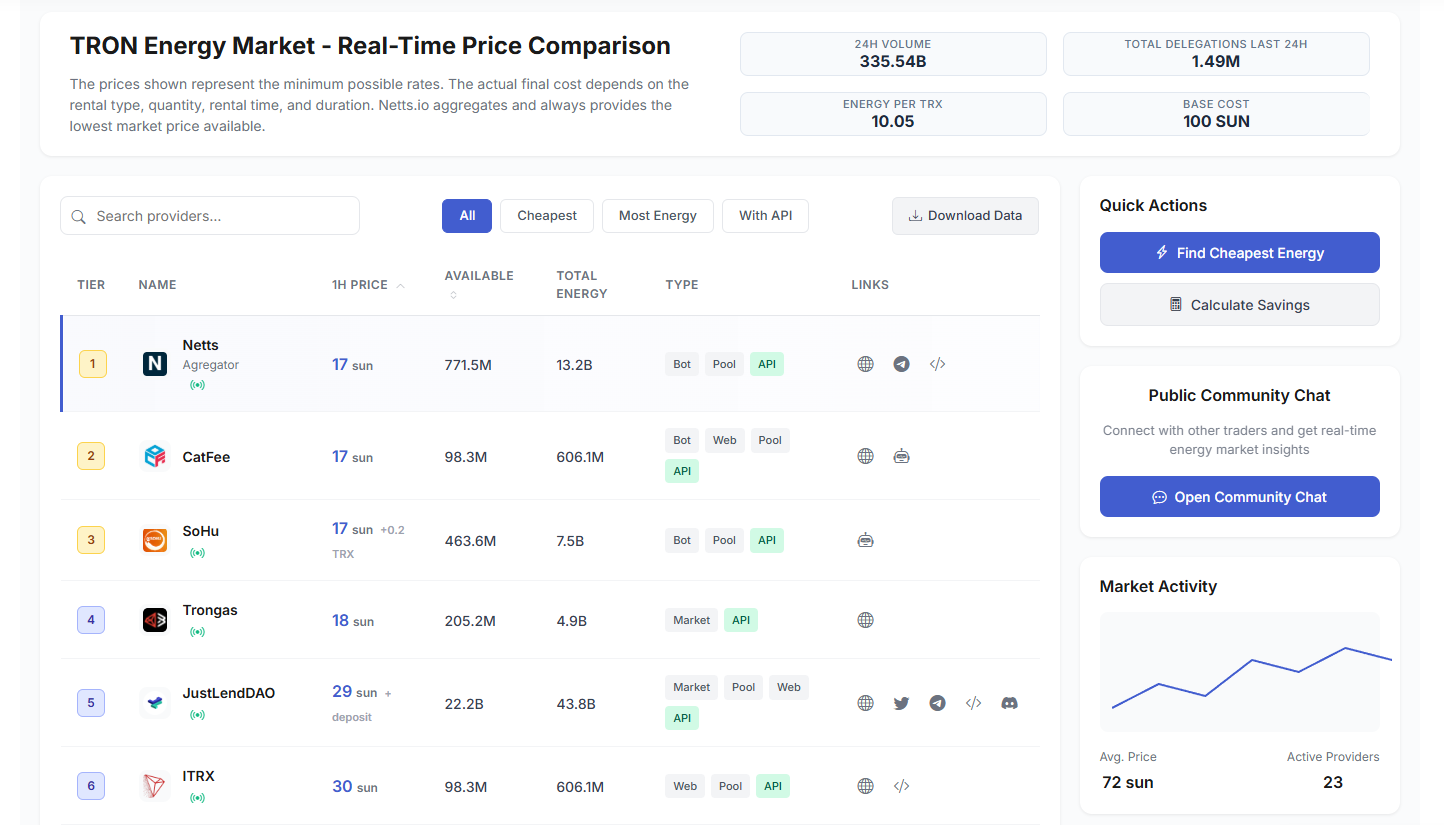
What differentiates Netts.io is its commitment to transparency and innovation. With extensive analytics and historical price charts, essential features such as customizable alerts allow users to make data-driven decisions. Netts allows the use of various payment partners like TRX, USDT, etc. Cryptocurrencies and is hence available to more people over the globe. Netts.io provides dedicated support, customization integration solutions and a pricing plan tailored to businesses and high volume users. Netts has developed a reputation as one of the most trusted names in the TRON Energy Market due to its emphasis on customer satisfaction.
Conclusion: The Road Ahead
Entire TRON Energy renting endeavour is a tale of innovation, accessibility and efficiency. The TRON network has designed a free and user-friendly approach to blockchain resource allocation by taking cues from the car rental industry. This makes blockchain participation more affordable than ever, as renting Energy on TRON is now accessible to everyone — casual user or developer or DeFi enthusiast. TRON Energy rentals are here to stay and are going to build the next waves of blockchain adoption — as the market matures and new features come, that much we know.
Ultimately, the similarities between renting a car and being able to rent TRON Energy demonstrates the need for flexible, available and efficient renting of resources. Energy rentals are enabling a major transition on the blockchain, taking everybody from power users (no pun intended) to passive observers and renters just as car rentals did for transportation. The TRON Energy Market has moved on from being a passing trend and comes as a paradigm shift in the blockchain utility perspective and it is not leaving anywhere as such.