Bitcoin Treasuries: Modern Reserve or Balance Sheet Theater?
Bitcoin treasuries promise digital Fort Knox reserves, but companies and governments still ask users to trust what outsiders cannot fully verify.
Fort Knox did not become a household name because every Joe Sixpack checked the bars. Almost nobody actually did that – precisely because the place was secure, inaccessible, imposing, official, and almost religiously secretive. Gold behind bars served as a handy confidence booster for the state; and if the gold standard ceased to be a reference frame for the dollar, the image of the vault did not become irrelevant. Behind bars, somewhere in the distance, there was still gold. It was enough that the people knew that it was there.
Bitcoin treasuries are an attempt to recreate the Knox effect; the metal has been replaced by a private key, the vault by cold storage, the audit by a dashboard, a filing, a wallet balance, a quarterly statement, statements by the government or the CEO about how the coins are not for sale. A similar psychological mechanism is used - the reserve is a guarantee that nothing will fail, that there will be something to rely on in the future.
This kind of reassurance is in demand because, in current conditions, life offers people few reasons for optimism. The bank account is shaky, the fiat collapses, the shares are diluted, the state budget is propped up, the token burns, the exchange fails - all this, and many other disappointments, teach the crypto enthusiast to be wary. He knows what it feels like to watch helplessly while his two-week salary evaporates in a couple of days due to a price drop. He does not need sermons about volatility - he knows the taste of it. Such an investor will tremble at the prospect of further losses, but he will also try to protect himself from the fear of the loss of the chance to make a profit. That is why Bitcoin treasuries are so badly needed - they create the illusion that the institution possessing them is simultaneously conservative and adventurous.
For states, the rationale for a Bitcoin treasury can be expressed in dozens of variations: from the most banal desire to diversify to the most solemn speeches about the strategic importance of digital assets in a post-crisis world. The same applies to businesses: the allocation of coins to the treasury might be motivated by factors ranging from the avoidance of dilution to the most fanatical visions of financial sovereignty. Yet, despite the attempts to mask it with economic rationalizations, the motivation for such moves is often no different from the desire to inspire confidence in one’s ability to withstand the oncoming financial tempest.
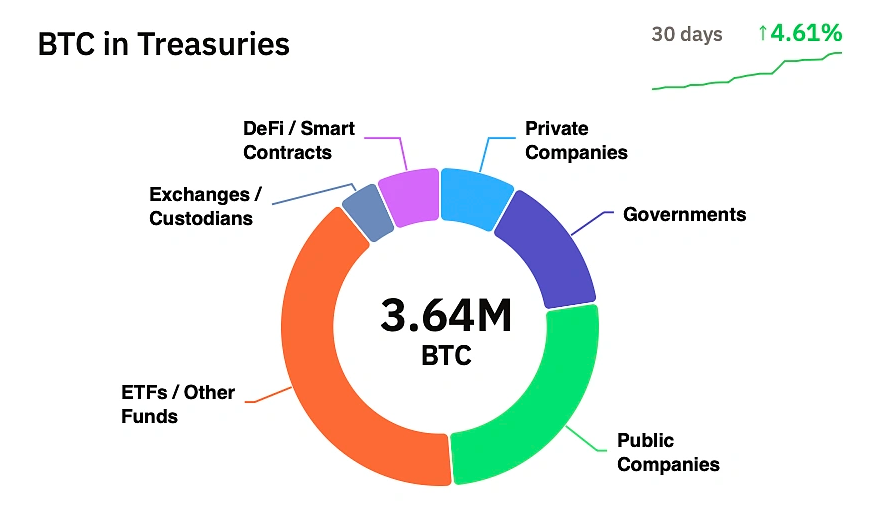
Meanwhile, the public may not be aware of particular complexities related to the reserve or the state of the allocated resources. Therefore, the idea that “we have something” can be incredibly compelling for the uninformed customer. States and institutions that hide their resources’ true capabilities behind a veil of secrecy possess an advantage over those who boast of their achievements but lack the corresponding technical abilities. For the uninitiated, such a statement can be decisive in choosing between two alternatives: a suspicious reserve with unknown capabilities or a confidently proclaimed Bitcoin treasury that, however, may have critical vulnerabilities.
One way to combat the lack of trust and the resulting fear of deception is to appeal to the transparency of the treasury. However, it should be understood that the visibility of resources does not always translate into the likelihood of survival in the long run. In principle, the very fact of the public display of resources should reassure the customer or investor: the organization does not hide anything. However, even if the wallet balance is public, this does not mean that the state or the company will keep all the coins in the future - for example, if the custodian fails. Nor does it mean that the coins will be available to the customer immediately - if the manager decides otherwise. It also does not say anything about the technical risks of the custodian, or the possibility of a hostile takeover, or the ability to use the allocated resources for other purposes, or the withdrawal of these resources for the personal use of officials - in short, a hundred different things that the owner may have hidden from view. These details may well be insignificant to the uninformed user, but they are not insignificant for the potential fraudster.
How Reserves Are Made
The creation of government Bitcoin treasuries usually does not imply a heroic action of the finance minister, buying ten thousand dollars worth of crypto every morning with trembling hands. More often than not, these are local initiatives that emerge from the interaction of specific departments with Bitcoin as an asset. The United States, as expected, is the most prominent example of this - the 2025 Strategic Bitcoin Reserve order, which created a reserve and funded it with coins obtained through various law enforcement activities. In other words, the practice is entirely realistic, since the State already possesses a certain amount of crypto, the further use of which it is now exploring (whether to sell it or not).
Of course, the amount of the reserve will vary depending on the source, because the different government agencies have different methods of accounting for their assets. One of these, for example, may be a rough estimate of the amount of money the United States has in total. Meanwhile, the official wallet may have a much more modest balance. As a rough estimate, federal reserves are said to hold around two hundred thousand coins, while all American state funds, combined, hold more than three hundred and twenty.
This discrepancy is entirely reasonable - it is a consequence of the way accounting works. Different agencies are responsible for different aspects of state security: while one is investigating crimes of a financial nature, another is protecting state property and therefore has a more direct interest in ensuring the preservation of the value of the dollar. This also explains the different approaches to funding the reserve, based on the availability of resources. The existence of seizures as a source of income does not seem to be excluded anywhere - even China is said to have a large amount of crypto reserves obtained through criminal proceedings. The UK has a similar history, while Ukraine’s narrative is inextricably linked with donations. El Salvador, on the other hand, is famous for making publicly stated purchases of Bitcoin as an asset. Meanwhile, Bhutan is experimenting with state-owned mining farms owned by the government, investing in their development, and gradually accumulating profits in the form of digital assets.
All this is an illustration of the fact that the term “Bitcoin Treasury” covers a large number of concepts. It can be both state purchases and donations, both direct mining and the allocation of resources from law enforcement agencies, both the concentration in one wallet, and the joint custody of several government bodies. Each step is entirely realistic and has its nuances, but if all of them are combined under the name of the “reserves,” it can be difficult to understand what exactly they represent.
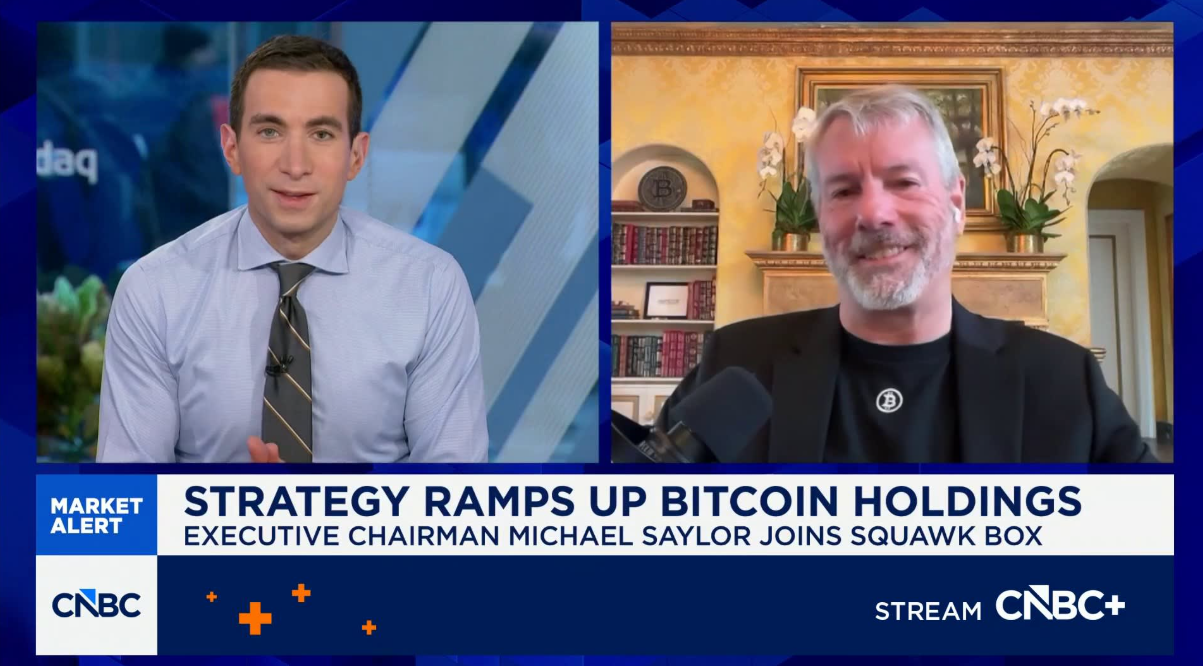
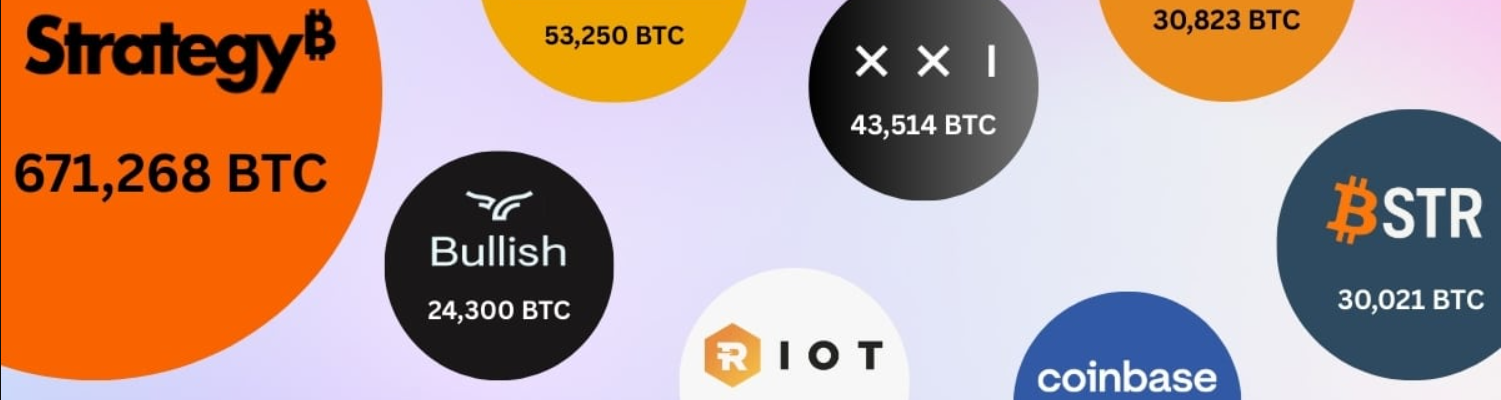
Companies’ Bitcoin treasuries differ from state ones in that they are based on a hierarchy from the bottom up. While governments have no clear accounting strategy, companies have a well-defined system of decision-making, based on the separation of responsibilities. Who speaks for the treasury, who takes responsibility, who owns the resources, who audits the wallet, who lends against it, who owns the coins, and who ultimately buys the product are all important questions. The most prominent example of corporate treasury management is, of course, Strategy - the company owned by Michael Saylor, whose public statements on the subject inspired thousands to join the Bitcoin rush. The company’s shares were initially purchased as a short-term speculation tool, but as the value of the treasury grew, so did demand for the shares. At the moment, the company owns more than any other business, making its reputation as a Bitcoin treasury incredibly strong - in fact, the entire reputation of the company rests on this.
However, Strategy is only one of many. Other corporations have different approaches: from the most fanatical advocacy to the most cautious possession. Metaplanet - a Japanese investment company - has a rapidly growing Bitcoin reserve and has seen its share price climb to new heights. Twenty One Capital is another company that has made Bitcoin its own treasury, and the rationale behind this move was largely motivated by macroeconomic concerns. MARA Holdings, Riot, CleanSpark, Hut 8 - these are all companies engaged in mining, which, by virtue of their work, gradually accumulate Bitcoin. However, they are sometimes forced to sell it to raise funds - to pay off loans or cover costs. Tesla, meanwhile, is a company that has adopted Bitcoin as a treasury without necessarily proclaiming it as such. The company’s existence is not inseparable from the crypto industry - on the contrary, it is being challenged by the rise of electric cars - but the purchase of Bitcoin serves as a kind of insurance policy. Finally, Coinbase, the largest exchange, has a Bitcoin reserve that acts as both a corporate treasury and a demonstration of loyalty to the industry. There are also lesser-known entities, from Semler Scientific to private investment funds, which are also examples of the concept of a company that is not actually a company but a Bitcoin treasury.
It is important to note that there is a fundamental difference between companies such as Strategy and Tesla in terms of their attitude towards their Bitcoin reserves as corporate assets. While the latter company continues to function as a traditional technology corporation, regardless of the value of its treasury, the existence of Strategy’s Bitcoin reserves has become deeply intertwined with the company’s very existence. For the customer, this distinction is significant, since he buys not only the product but also the narrative that may accompany it. As for the investor, the fundamental importance of the company’s existence as a whole is the factor that forms the basis of his choice - while the value of the shares is correlated with the value of the coins.
The hierarchy within the corporate treasury is crucial because each of the stakeholders plays a specific role and has certain expectations that must be met. The founder may want to promote a particular narrative in order to increase the value of the shares. The manager will take responsibility for the proper functioning of the treasury and its security. The auditor must ensure objectivity in evaluating the allocated resources. The lender is ready to provide financing, which, of course, is entirely dependent on the value of the allocated reserves. The customer, on his part, wants reassurance that he will be reimbursed in the event of fraud or bankruptcy. The voters want stable leadership and good ratings. The state official wants to demonstrate to his constituents that he knows how to protect the national assets. And the one who initially promoted the idea of the reserve, having received support from all the above, may expect a political career in the future.
The desire to protect oneself led to the creation of reserves; the understanding of the need for them translates into reassurance for the customer and the general public. That is why people like reserves - this is a manifestation of psychological optimism. Families live with reserves, businesses, states keep them - everywhere, in one way or another, the principle is used. The reserve is the ultimate protection against uncertainty because it says that something is being kept for the future and, therefore, there is something to fall back on in the worst case.
Reserve’s power is in the fact that it combines the guarantee of protection and the opportunity for profit. With Bitcoin, risk is added to this volatility - the value of the wallet can fluctuate significantly over a short period of time. This, of course, applies to the customer directly - he sees a growth in the value of his assets, which serves as additional motivation to use the services of the company or the state. For the company, on the other hand, such a move can have several effects at once: it shows its competence in the selection of assets, reassures the customer, and at the same time serves as a great marketing tool. In a word, the benefits are undeniable.
Seized Coins and Moral Alchemy
It is not a big secret that states have been appropriating goods and assets that belong to criminals for a long time. Confiscation as a method of depriving the offender of the ability to enjoy the fruits of crime has a long history, during which it has acquired a considerable amount of variation and complexity. Various measures fall under it - from the seizure of personal property to the confiscation of estates, ships, or even entire towns. Moral philosophy does not differ much from its practical implementation - depriving the criminal of what belongs to him gives the state resources for its own free use. In addition, it is a kind of moral cleansing, since from now on the criminal cannot enjoy the pleasures of life that are available to the state.
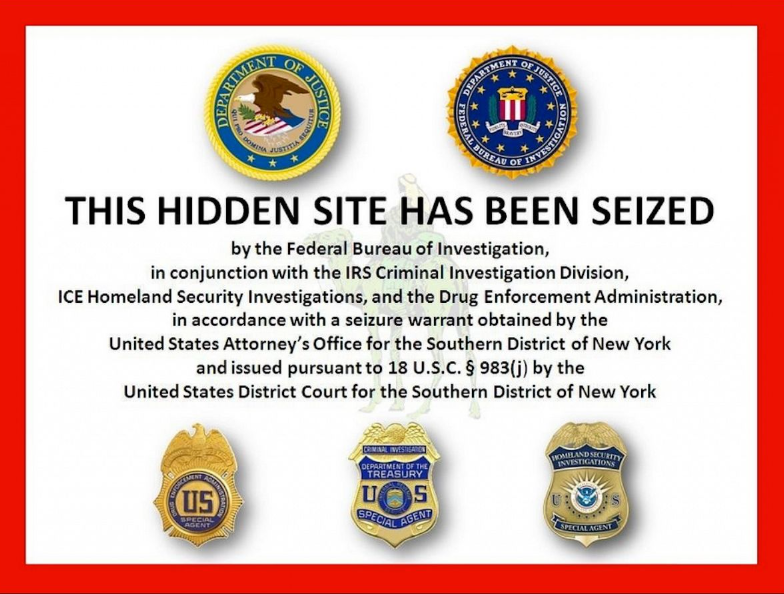
Crypto did not invent anything new in this regard - the principle of confiscation is similar to the traditional one. The seizure of Silk Road coins as evidence is not that different from regular arrests, which are subsequently auctioned off. At the same time, Bitcoin has more opportunities for tracking and transparency, which makes all the procedures even more fascinating. Ransomware wallets can be frozen, fraud coins - tracked down, and bridge deposits - returned. In addition, the movement of coins continues even when they change hands several times: mixing services, OTC desks, and even exchanges can be tools for further transfer or concealment. When the state seizes these assets, the trail turns out to be closed, but the coin itself turns out to be in the new owner: the state, which will now take care of it.
Nobody Counts the Bars
It seems that the discussion of the topic “treasury” inevitably leads to an attempt to understand what exactly it constitutes. However, in most cases, the only thing an outsider can do is analyze the publicly available information and draw conclusions based on it. This leads to certain misinterpretations of the actual state of affairs, which may be critical for the customer or investor. Nevertheless, the facts that the company officially makes public are only a small part of the overall truth. A more detailed study involves a close examination of each aspect of the treasury - from the technical side of its security to the economic one.
The reason for this is simple - the concept of a reserve is designed to inspire confidence in the ability to withstand a crisis. However, in order to do this, the fund needs to be strong, which, in turn, means having enough resources. The actual size of the reserve is often exaggerated due to the desire to create a positive atmosphere of security and stability. At the same time, it is not always clear whether the assets that the fund owns are fully liquid - that is, whether they can be converted into cash at a given moment. This is a critical detail for the customer, since it directly affects his ability to protect his assets.
A similar situation occurs when the reserves are allocated to the fund in a suspicious manner. In principle, the state has the right to use all available resources for the most pressing needs - paying off debts, increasing the level of life, and so on. However, such a move can be perceived by the consumer as a lack of dedication to his security. That is why it is so important to choose which assets will constitute the reserve - only those that are critical for the state or company in the face of a financial crisis.
One way to reduce the risks associated with creating a reserve is to take steps to ensure the integrity of the fund itself. This includes selecting trusted custodians who will hold the assets, as well as taking into account the insurance against possible losses. In addition, the organization must ensure that the chosen solution is optimal in terms of cost-effectiveness and is suitable for the size of the fund. The final aspect of the issue is the transparency of the reserve, which involves disclosing all facts that could affect the perception of the fund. Although a fully honest publication of details is not always possible, even an attempt to do so will raise the trust level among the company’s stakeholders.
As for Fort Knox, it served its purpose precisely because the majority of citizens did not check what exactly was inside. They trusted the government because it had the means and opportunity to secure the gold, which reassured them about the stability of the economy in general. The situation with Bitcoin is similar in many ways, although the technology used makes some nuances clearer. In particular, the availability of the wallet balance allows people to know exactly how many coins the treasury possesses. However, this knowledge is limited to a basic understanding of the situation since it does not say anything about the ability to use the assets or protect them from being taken away.
For this reason, Bitcoin treasuries should instill the same confidence as traditional ones - they should serve as secure havens for the protection of assets in times of a crisis. However, this is only the case if the company that owns them is trustworthy and has enough resources to ensure the safety and integrity of the reserve. In the end, the reputation of the company, and the image created by it, are the foundations on which the trust of the consumer is being built.
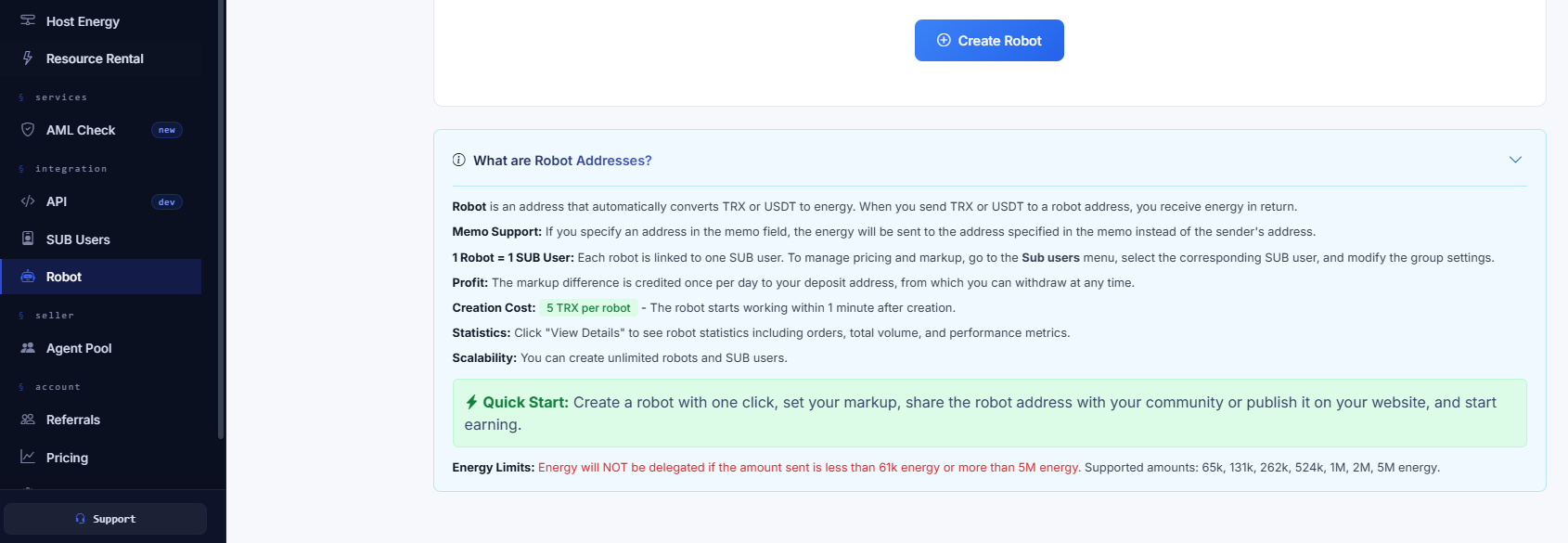
On a smaller scale, Netts Workspace takes the same trust challenge to a more tangible level by providing the TRON users with the means for Energy API Programming, TRON automation, AML checks, transaction history reviews, and USDT fees management, without trying to convince anyone that dashboards replace judgment. It is an investigative workspace where the costs and delegations can be reviewed before the crypto-economy consumes them.