Stablecoin Wars: Why Every Company Wants Its Own Dollar
Stablecoin wars show why traders, companies, and payment giants keep returning to digital dollars when crypto volatility burns them.

For years, Tether has been haunted by the possibility that its reserves, paper, disclosures, audits, banking, and regulatory relations could leave it exposed as an irresponsible oligopoly. These concerns were not without grounds, and they continue to be relevant to this day. Yet, they did little to hurt its status as the crypto-dollar of choice for millions of users, due to its accessibility, liquidity, and speed.
The irony is that the more suspicious institutions became about their exposure to various fiat liabilities, the more said liabilities grew in value. This is not necessarily reflective of increased popularity among speculators, but rather a broader trend of users who want exposure to something they understand hedging against unpredictable alternative assets. This could mean a risk-averse trader dumping his altcoins in Tether during a crash, a crypto-skeptic enterprise buying dollars from a stablecoin-firm, or a founder launching a token-raise on a stablecoin of choice. The very idea of a new financial frontier is not appealing enough to regular users; the only thing that can convince them is a familiar liability during black swan events.
While Tether and similar entities focus on their volume, another stablecoin called USDC was climbing up the ranks, promoting its institutional credibility. The company behind it, Circle, did not attempt to beat Tether at its own game, instead leveraging the demand for safer crypto-liabilities by emphasizing its own adherence to financial regulations through regular reporting and careful partner selection. In essence, if Tether was the global crypto trading platform and USDT the unofficial proxy for OTC in emerging markets, USDC represented a fiat-dollar liability used by fintechs and regulated financial institutions. As the market value of stablecoins skyrocketed, this differentiation became critical in determining a stablecoin’s appeal to specific markets and businesses.
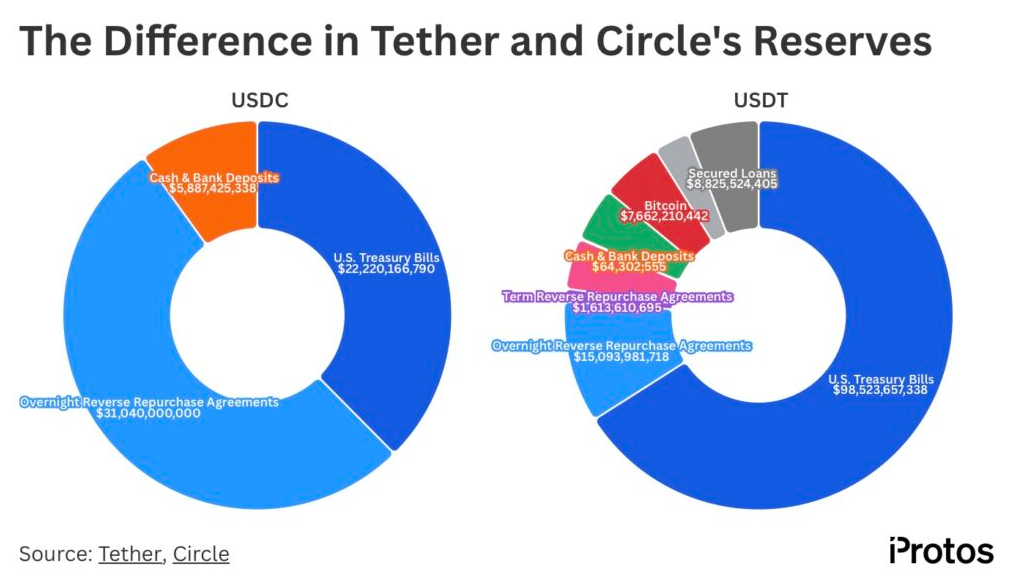
The market is now replete with examples of either approach being conducive to growth, with users understanding their options and choosing accordingly. Some want a universal stablecoin that may not be welcome in as many jurisdictions but will always retain its value against the dollar; some want a stable liability that will be allowed nearly everywhere but may give up some liquidity and volume. Either way, there is an audience for every type of stablecoin, as the promise of a dollar deposit with enhanced digital characteristics remains appealing to users in need of dollar exposure. The demand for such products is driven not only by speculators looking to hedge or speculate on the swings of other assets but also regular users looking to settle payments in a universal manner, bypassing the costs and delays of traditional finance.
Selling Safety
Each firm active in the space has its unique angle, but the underlying economics are similar: a stablecoin product offering a particular flavor of “safety.” Liquidity and ubiquity are the primary attractions for Tether, while Circle sells transparency and institutional credibility. PayPal promotes its own stablecoin as a familiar brand the user may already trust; MakerDAO, rebranded as Sky and launching the yield-bearing USDS alongside DAI, promised a crypto-native asset tied to on-chain governance and offering the safety of a dollar-pegged stable asset through a careful algorithm. Ethena, through USDe, promises a yield-generating engagement with a dollar-vault, with the risks apportioned between the depositor and the exploitative tendencies of the greater markets. Ripple’s proposal for RLUSD and First Digital USD are also examples of product safety, as well as Paxos and Gemini Dollar, TrueUSD, and dozens of other protocols seeking to fill the niche with their own takes.
The economics are relatively simple for any stablecoin issuer, but the competitive advantage they afford is difficult to ignore. The mere fact that users may flock to one’s product in dire straits is enough to make all manner of crypto-native platforms attempt to create a stablecoin of their own, as the safety product affords an issuer a critical mass of depositors who may then become a permanent part of the ecosystem. This is why stablecoin rivalries are extremely relevant to a large swath of crypto-native activities. Liquidity in one venue, user deposits in another, exchange trading pairs in the third, and settlement mechanisms in the fourth – all of these functions can derive critical benefit from a stablecoin being deposited with one’s wallet or exchanged on one’s platform. That is why stablecoin dominance battles are so fiercely fought at multiple levels by numerous entities. It is not only the end-users speculating on the movements of macro-assets using the unique advantages of stablecoins that fuel this competition, but also major payment processors, as well as traditional finance, all of which want to capitalize on the stablecoin phenomenon by securing a larger chunk of the growing dollar deposits. Everyone from BlackRock and Visa to Stripe and Coinbase, BNY and the Open USD consortium, have joined the fray, recognizing that it would be unwise to let a single entity control the programmable dollar.
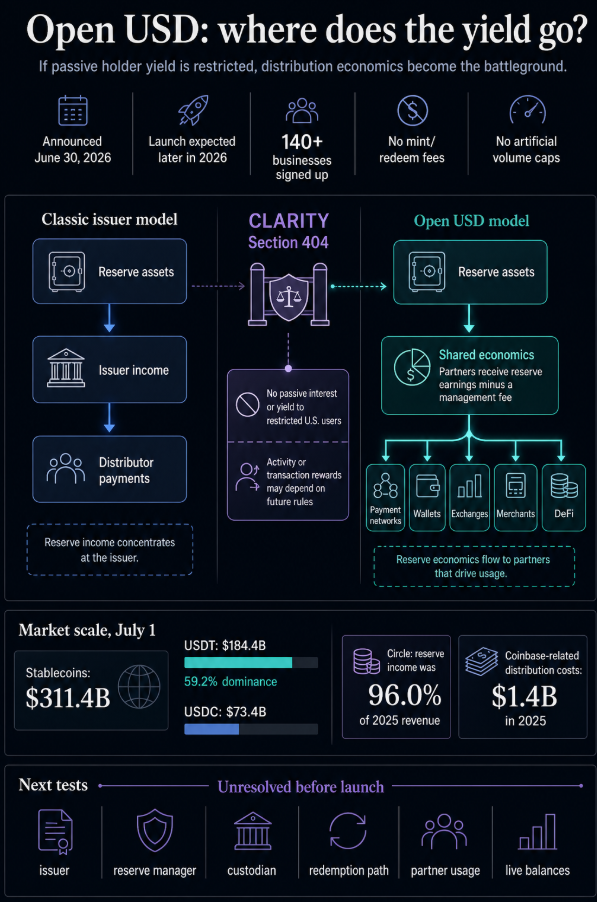
The Open USD proposal, in particular, is notable for its potential to drive stablecoin competition at the infrastructural level. By introducing the idea of shared stablecoin tokenization, the Open USD founding members appear to recognize the need for a stablecoin-specific competition to drive the growth of the sector, where the benefits of network effects can be accrued by more than one contender. It is a clever way to suggest that their banking and fintech partners are not being cheated out of the stablecoin market dominance by a single proto-bank, but rather invited to participate in a shared economy where tokenization revenues may be split.
Reserve Income
Reserve income is the hidden jewel at the center of deposits, and every stablecoin issuer knows it. By holding cash and government bonds on behalf of users, the issuer generates income through the yield on government debt and the spread between deposit and withdrawal rates. In a high-interest environment, the allure of enhanced yields on tether deposits drives demand for the asset. By itself, it is not a scandal, nor is it an unfair advantage; rather, it is the awareness among major institutional investors that drives the stablecoin competition, as the yields may be critical to their bottom line.
This is why discussions about stablecoin yields are so interesting, as they represent one way in which major traditional finance players, payment processors, institutional investors, and crypto-native issuers, can compete for the same pool of users. Each has critical insight into the inner workings of one segment of the stablecoin economy and seeks to profit from its understanding. A payment processor recognizes float as a competitive advantage; a bank is aware of the value of deposits; a fintech views the balance within one’s web wallet or app as an engagement tool; an exchange understands the importance of pairs and liquidity; and a crypto-native wallet is cognizant of the default stablecoin. All of these players see the opportunity to generate income via the stablecoin mechanism and are positioned to benefit from the stablecoin economy taking a bigger slice of the economy.
When Stability Breaks
The name stablecoin hides the potential instability of the promise behind it. Thus, every stablecoin has its terms, risks, and specific threats. The most famous example of a stablecoin that failed spectacularly in its mission to remain stable is, of course, Terra. UST was a genius idea with a catastrophic unwind in its value because of the promise of increased yields through the Anchor Protocol. Anchored to the LUNA token, the stablecoin promised a superb yield on deposits via Anchor while the algorithmic design was supposed to keep UST’s value pegged to USD. The sudden loss of confidence in the LUNA-UST mechanism initiated unwinding of the Anchor deposits by liquidators who had short positions. Thus, the confidence in the peg between the two tokens was shattered, paving the way for the token’s depegging from USD. Ultimately, billions of dollars were locked in the UST stablecoin and the promised high Anchor yields, with the entire system collapsing shortly after the unwind of deposits.
Another prominent example of a stablecoin’s failure to maintain its peg is the 2023 depegging incident of USDC. The stablecoin temporarily dropped below the dollar before recovering soon after. The reason behind the drop was, unfortunately, the reliance on the banking system for keeping reserves of cash in the vault as proof of reserves. Indeed, USDC deposits in the Silicon Valley Bank were inaccessible to depositors during the weekend, causing temporary panic. While the deposit insurance technically covers such risks, most investors in the stablecoin were not aware of the details of the banking mechanics and dumped the stablecoin in the wake of the panic, with the regulators ultimately intervening. The lesson was not as important as in the case of Terra, but it was certainly a valuable lesson for investors who trusted the banking system to protect their deposits when the stablecoin’s reserves were supposedly fully covered by cash.
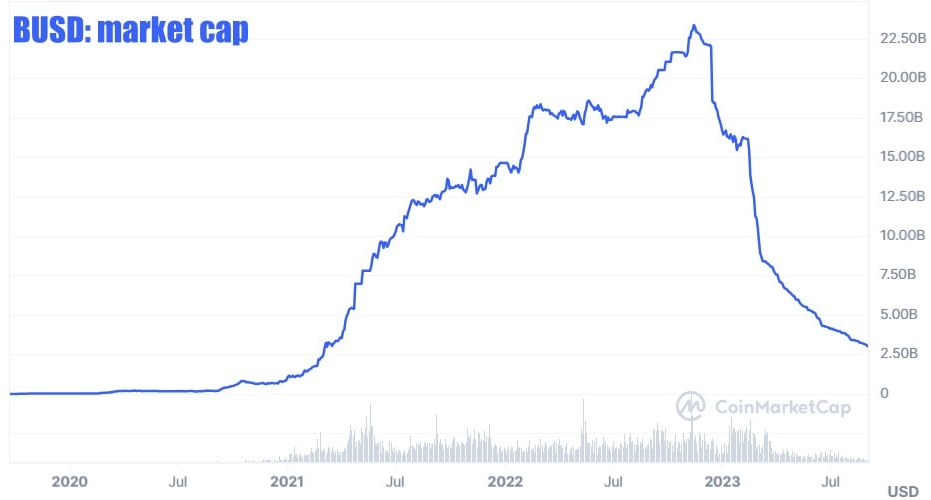
Finally, the BUSD stablecoin and its recent delisting provide yet another lesson on the importance of regulation, state intervention, and the impact of regulators’ actions on the stability of stablecoins. Following regulatory pressure, Paxos, the issuer of BUSD, decided to delist the stablecoin, leaving it stranded in the market. TrueUSD and several other stablecoins have also had their share of difficulties with regulators recently and the market volatility surrounding these events serves as a much-needed reminder that regulatory scrutiny is one of the potential threats to stablecoins. Simply put, the stablecoin economy is not only subject to design and assurance risks but also to regulation and adoption risks, with the combination of the three being potentially devastating to stablecoins.
It is common to hear stablecoin advocates discuss characteristics and mechanics that are relevant to the stablecoin’s peg and, ultimately, its ability to deliver on its promise. However, the trust in a stablecoin and, specifically, confidence in the stablecoin’s ability to be redeemed for the benchmark currency (typically USD) on short notice is built on a combination of different factors beyond just the peg. For instance, investors seek reassurance about their ability to redeem their stablecoins for cash. Therefore, the performance of the stablecoin on exchanges, broader market conditions, and the general perception of the project (in relation to big investors) are relevant to confidence in a stablecoin. In other words, stability is not the sole indicator of confidence in a stablecoin. A stablecoin’s peg, adoption, exchange rates, and big investors are some of the elements that impact confidence in a stablecoin.
Regulation Enters the Safe Room
Regulation has always been a concern for stablecoin issuers, but the introduction of the GENIUS Act in the U.S. has created a new set of risks for anyone wishing to issue a payment stablecoin. This legislative framework has also influenced the business strategies of firms like Circle, which have opted to comply with the requirements of the EU’s MiCA regulations. Tether, on the other hand, refused to subscribe to MiCA’s terms for USDT, with the firm claiming that such rules do not apply to its business model. This has resulted in an adjustment of the stablecoin landscape, as previously unregulated markets favored by USDT have been impacted by the entry of regulated stablecoins.
This shift highlights the importance of regulation and how different stablecoins may appeal to diverse markets. While USDT still enjoys immense popularity, its presence in markets where users care about banking aspects is limited, as those individuals have gravitated towards USDC and other regulated stablecoins. This is yet another illustration of the value of choice, as well as the different flavors of stability that users desire. In essence, the same user may employ various stablecoins depending on their location and needs, with offshore users employing one set of options, while those operating within the jurisdiction of a particular regulator choosing from a different menu. The same applies to the stablecoins used within a financial application, such as PYUSD offered by PayPal, or a DeFi application utilizing one of the yield-bearing dollars.
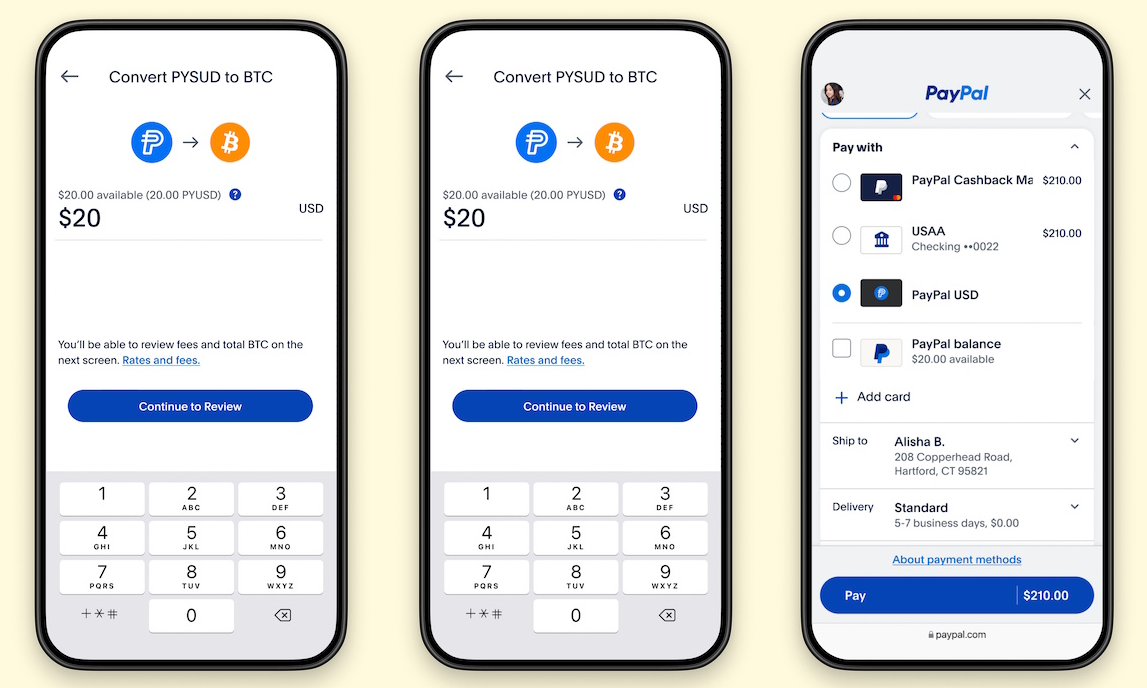
The same dynamics are in motion at the institutional level, with exchanges adopting certain stablecoins while steering clear of others. The competition for institutional users is just as fierce as the competition for the everyday user, as each firm recognizes that the adoption by such entities may lead to enhanced visibility and adoption among their customers. In addition, the regulatory compliance of a stablecoin is a critical consideration, as it is necessary for a cryptocurrency to be accessible to institutional investors. The entire system is rather fascinating in the sense that it all begins with the desire to provide dollar exposure, but the competition spans across multiple levels, from everyday users to fintechs and major exchanges. In short, every company wishes to establish its own dollar due to the value of the safe room, which is why they are eager to acquire the reputation of a serious stablecoin issuer.
The human pattern is all too often repeated: a person feels burned, folds into the nearest safe asset. When such behavior is institutionalized, it becomes the object of research. If a trader gets tired of the fall and throws his altcoins into the refuge of USDT – then Tether wins. If big institutions and hedge funds fold their losses into USDC – then Circle wins. If a PayPal user, feeling righteously confident in the superiority of crypto over fiat, nevertheless keeps his money in the familiar PYUSD, then PayPal wins. If a company receives a stream of incoming payments through Stripe in Open USD – the consortium wins in whose sandbox this money is stored. The stablecoin is no longer a tool, or rather, an auxiliary for the safekeeping of value. It is a trap laid for the speculator, a sandpit into which the asset is returned via a chain of reactions, which the market itself builds around the instrument.
Dollar Legend
Crypto purists’ visions of an impending dollar demise are regularly dashed against the rocks of reality. The dollar was and still is a bridge, albeit an ugly one. It was built long ago – you can see the scars of the previous crossing, but right now, this bridge is needed. The very fact of its existence is not conducive to the transition to a crypto utopia, however, in a country with weak banks, capital controls, hyperinflation, and unstable politics, the desire to create a digital alternative to the state currency is not just understandable but necessary. The user doesn’t care if the monetarists are annoyed by the presence of the dollar in the public consciousness – he wants the money of tomorrow to be as close to the money of today as possible.
This is where the stablecoin war will be fought, not only for the technical characteristics of the instruments, the choice of chains, and the mutual accusations of censorship. The one who lost yesterday, sitting in a chart with a declining asset, will take the nearest opportunity to turn his crypto holdings into fiat. The company offering an open button to move money from crypto to stablecoin wins this battle because security is always in demand, even more so when pain is freshly felt. Not only does the user need a refuge, he needs it most when he burns his crypto assets. And the company that gives him this refuge wins big, as only a few products have such a demand after personal losses.
There is nothing wrong with this, by the way – it is this idea that has made crypto so attractive to ordinary users. They want the security of fiat, the volatility of crypto, the freedom to move anywhere on the blockchain without fear. A stablecoin acts as a middleman, masking the dollar with crypto skin, waiting for the moment when the law, the state, or bank authorities peel back this mask to reveal the familiar digits. This is not a criticism of either stablecoins or crypto, but rather an observation that the old legends never die. Bitcoin became the first cryptocurrency, but the dollar was no less legendary long ago. Stablecoins are proof that legends can be renewed, wearing both crypto and fiat skin, using different chains, and waging war on different banks. The arrival of the digital dollar did not end the stablecoin war – on the contrary, it began, and now each company wants to become the new reserve asset because the user always runs to the familiar, even when he burns there.
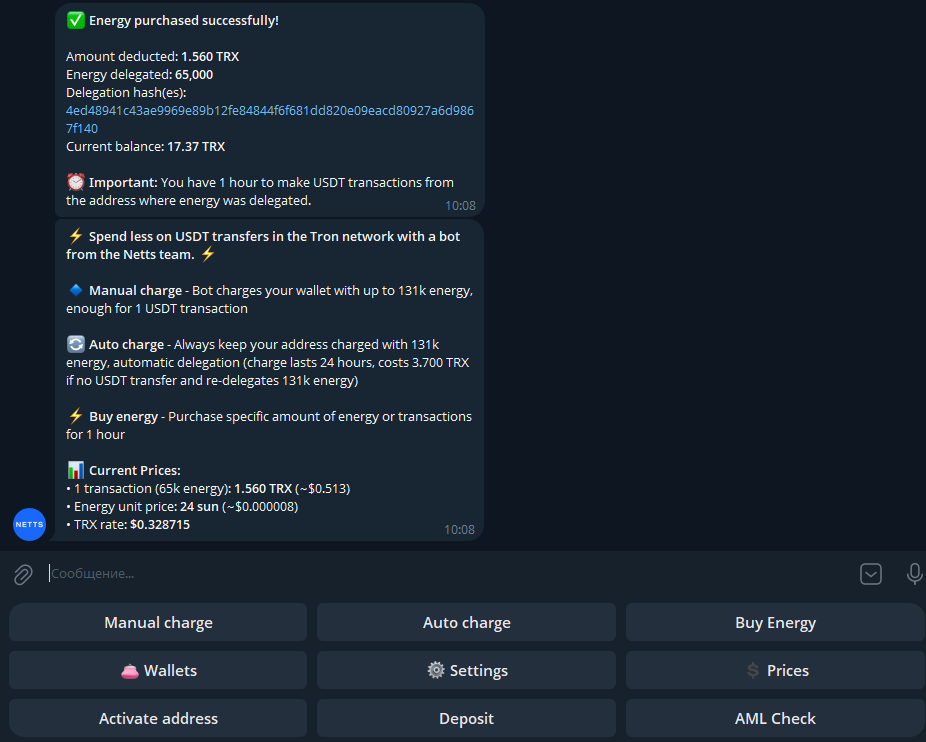
And as users turn to stablecoins to escape the volatility of other crypto assets, remember to let Netts Energy Charge Bot take care of the mundane task of TRON Energy topup, recharge TRON Energy manually or automatically, and buy specific Energy for a short transfer window at a cost of approximately 65,000 Energy for one USDT transaction at 2.405 TRX; for users moving USDT on Tron, the TRON fee reduction and Energy delegation may prove more valuable than any number of lectures on the future of money.