Hard Wallet Unboxing Anxiety: Was Yours Tampered With?
Hardware wallets can be tampered with in the supply chain. Learn how to detect compromised devices before your crypto is stolen forever.
For three years Marcus had stored his crypto in wallets on an exchange and it was working all right until the day he awoke to discover that the exchange had stopped allowing withdrawals. There was no warning given and no explanation provided, merely a general message regarding technical difficulties which continued for weeks. His coins were there, showing on the screen, completely inaccessible. He could see the balance but he couldn't access it.
It was then that he made the decision to purchase a hardware wallet; this was not due to paranoia, since the unpleasant feeling of watching money that you can't access is worse than simply not having it. He placed an order for a Coldcard straight off the manufacturer's website and paid extra to get it sent more quickly before waiting.
It came in a simple brown box with a shipping label on it. The Coldcard box inside appeared to be professionally made, with glossy cardboard, clean printing and a holographic seal covering the USB port. Yet there was a strange feeling about it. The outer shrink wrap had a small tear along one side, just noticeable enough to make him suspect that the package may have been opened and then resealed. Although the holographic sticker seemed okay, the box opened rather easily, as if the adhesive had been weakened.
He stood there with the box and was trying to make up his mind. If he returned it he would have to wait another week and go through customer service, explaining that nothing was definitely wrong but that something still seemed off. That sounded paranoid and like the sort of thing a person would say just as customer support was politely telling them everything was all right and that they were wasting everyone's time.
Therefore he told himself that it must be nothing. Perhaps the delivery man had dropped it and had checked the inside to see that it wasn't damaged. Maybe the factory seal was merely uneven. In any case, the item was most likely all right. He carried out the setup, produced a seed phrase, transferred his coins, and decided to stop worrying.
The choice he made — the one in which he convinced himself of the suspicion that he had originally held — might have cost him everything.
What Tampering Actually Looks Like
Hardware wallets are considered the most secure method of storing cryptocurrency since the private keys never leave the device; these keys are generated within a secure chip, the transactions are signed inside the device, and even if your computer is compromised the attacker will not be able to access the keys. However, this is based on the assumption that the device itself has not been compromised.
Should a person intercept the wallet before it gets to you, they will have both the time and the privacy necessary to carry out actions which you won't notice until it's too late. They could replace the firmware with a modified one that sends your seed phrase to a remote server as soon as you generate it. They might beforehand load a seed phrase that they themselves control, in which case, when you believe you are setting up a new wallet, you are in fact transferring your funds to an address that somebody else can access. They could also entirely substitute the secure chip by using one that appears identical but produces predictable keys.
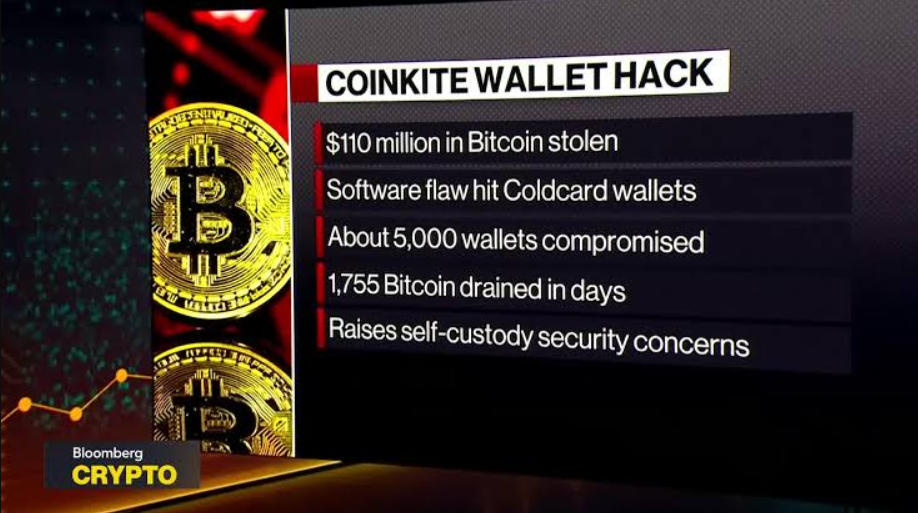
The hack of the Coldcard in 2026 demonstrated just how undetectable such a breach can be. Beginning in July, the attackers siphoned off more than 1,300 Bitcoin — the value of which ranged from 89 to 130 million dollars according to the different reports — from wallets that had never before been connected to the internet. The problem did not lie in the hardware but in the firmware; there had been a bug since 2021 which caused the device to produce weak seed phrases by using predictable randomness rather than true entropy.
The wallets appeared to be working properly; they operated normally and the interface displayed no errors. However, the seeds they produced were so weak that an attacker could reconstruct the private keys off-line without having to touch the device and then withdraw the funds using coordinated on-chain transactions. One address was emptied in forty-one minutes and another suffered a loss of over a million dollars. Individuals who had not used their wallets for years awoke to discover that they had been drained.
A number of people have begun to question whether the bug was intentional, specifically considering the possibility that Coinkite, the company which makes Coldcard, had secretly included a backdoor that was later discovered and used. Although there is no evidence to support that theory, the fact that people are asking shows just how easily trust can break down when a device that you depend on to safeguard your money turns out to have been quietly compromised for five years.
Supply Chain is Longer Than You Think
Tampering doesn't begin when the box reaches your door; it begins a lot earlier. The hardware wallet that is in your hands is the result of a supply chain which involves chip manufacturers, firmware developers, assembly factories, shipping logistics, and retail distribution. At each stage there is an opportunity for someone to carry out malicious activity.
The chips which produce the randomness and in which your keys are stored are manufactured by semiconductor companies of which most people are unaware. In the event that an attacker gains access to the foundry or to the design files, they might produce a chip that appears legitimate but has a backdoor. The firmware is prepared by developers, compiled into binary code, and then loaded onto the device at the factory. Should a person gain access to the build server or introduce malicious code during a software update, all devices that are flashed with that firmware would be compromised as soon as they are switched on.
The device is then put into a package, sent to a warehouse, shipped once more to a distribution centre, given to a delivery company, and finally left at your address. At any stage of this process, a person who has physical access to it could open the box, make changes to the device, reseal the box and continue sending it on its way. If they are careful, you will never know.
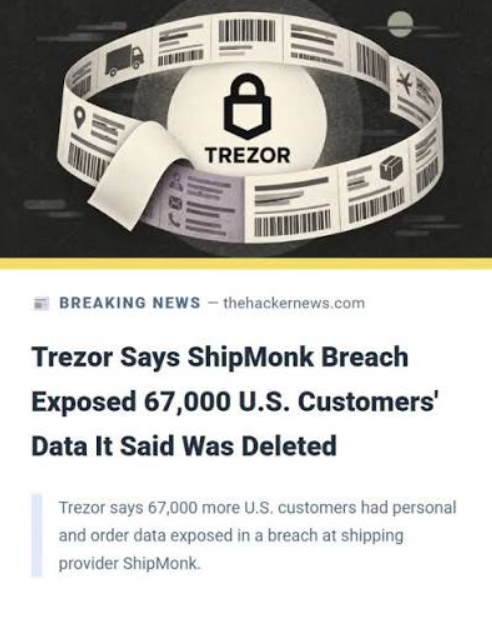
This isn't just a matter of theory. In August 2026 ShipMonk, Trezor's shipping partner, was attacked and as a result the names, addresses, and email addresses of almost fourteen thousand customers were made public. The devices themselves were not compromised by the breach, but the attackers were able to determine exactly which addresses were linked to hardware wallets. That kind of information is dangerous because it allows someone to send a fake replacement device to a particular address, or to target specific houses for physical theft, or to send fake security alerts by email to a person's inbox.
A month before that, the Chrome extension for Trust Wallet had been compromised via the official Chrome Web Store, with malicious code being distributed through a trusted channel and causing seven million dollars to be drained within forty-eight hours. The concept of a supply chain does not refer merely to the physical route that the hardware follows; it also includes the software you download to use the device, the update servers which send out new firmware, and the app stores that host the wallet interface.
Once any of those links has been compromised, the entire chain is compromised and you won't realize it until your balance reaches zero.
How Tampering Happens in Practice
There are a few methods which have been well recorded for altering a hardware wallet, the various approaches differing in both complexity and detectability.
The easiest approach is to intercept the item and reseal it. The attacker has the same wallet model made, takes care to remove the tamper-evident seals without damaging them, alters the device, and then reseals it with replacement holographic stickers that are almost exactly like the original ones. When the package is intercepted during transport, they replace the genuine device with the modified one. As long as the resealing is carried out properly, most buyers will not notice; they see the seal, take it to mean that the box has not been opened, and go ahead with the setup.
The other option is to replace the firmware. In some hardware wallets firmware updates are provided, which is useful for fixing bugs but at the same time introduces a potential point of attack. An attacker who has physical access to the device can connect it to a computer, flash malicious firmware onto it and then disconnect it. The device continues to function as normal, but is now running code that either steals the seed phrase or alters the receiving address during transactions. A number of wallets, for example Tangem, use firmware that cannot be upgraded in order to avoid this kind of attack. The drawback is that any bugs cannot be corrected after the devices have been manufactured, but the attack surface is reduced.
The third method involves replacing components. This one is more difficult and calls for a higher level of expertise, but it is also almost impossible to detect without carrying out a detailed physical examination. To carry out the attack, the device has to be opened, the secure element or the randomness generation chip taken out and replaced with a replica which gives out predictable results. Since the altered chip is built to respond properly to attestation requests, the device will pass all the software tests. The only means of detecting it is by closely examining the chip under a magnifying lens or by carrying out entropy tests on the generated seeds.
The fourth method involves pre-loading a seed. The attacker creates a seed phrase on a device that they control and then sets up the compromised wallet to use that seed. When you are setting up the wallet, the process omits the actual generation step and instead shows the pre-loaded seed as though it had been generated fresh. You record it, believing that no one else knows it, and then deposit your funds into addresses that the attacker already has control of. This technique is easier to detect if you know what to look for, since the device should never show you a seed phrase unless you have specifically chosen to generate one. However, if you are new to hardware wallets and are unfamiliar with the setup procedure, you might think it is normal.
The Coldcard case belongs to a different type: it involved an unintentional backdoor. The firmware fault which had weakened seed generation had not been deliberately inserted by an attacker; it was a programming error that came with every device and remained for five years. Yet the outcome was the same: wallets which should have produced unpredictable seeds instead produced seeds that could be brute-forced offline. The attacker did not need to handle the device at all; they only needed to know that the flaw existed and then carry out the necessary calculations.
What is disturbing is that the hot wallets—those which people claim to be less secure since they are always connected—should actually have been the safer option here. A hot wallet that used a properly random seed generated by a standard software library would not have suffered from the low entropy issue. On the other hand, the hardware wallet, the one that customers had paid extra for precisely because it was meant to be more secure, introduced a vulnerability that would not have been present otherwise.
Protecting Yourself When Trust is Not Enough
What then are you to do if you can't completely trust the supply chain, the firmware, or indeed the random number generator within the device?
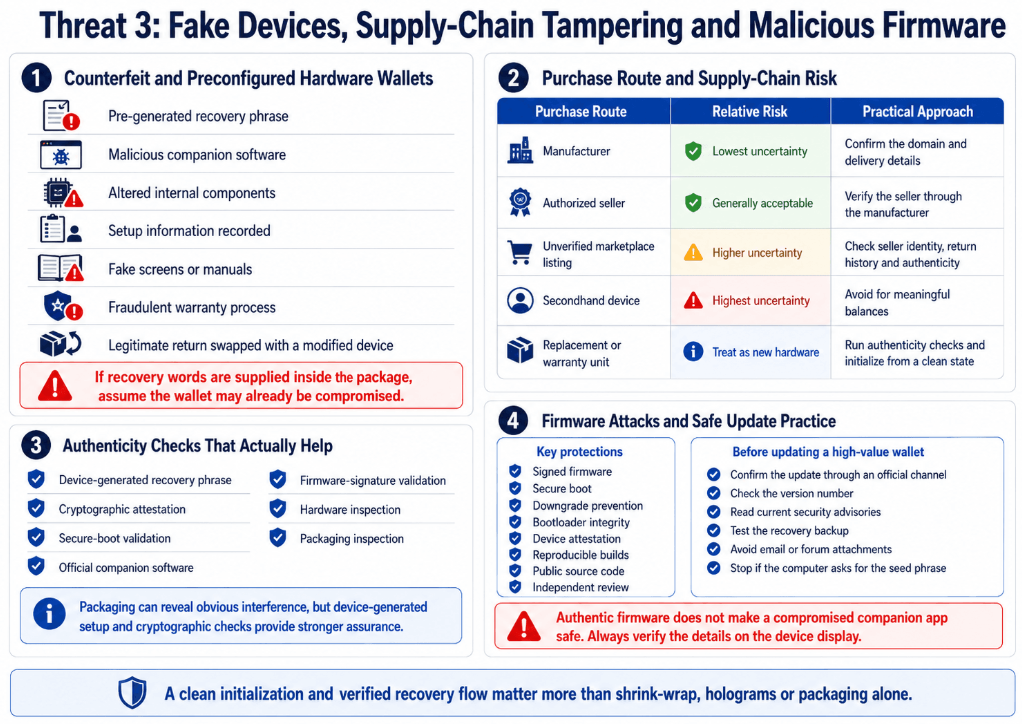
1 It is advisable to buy straight from the manufacturer and not through third-party resellers or online marketplaces; if hardware wallets are being sold on Amazon or eBay at a reduced price, then the savings do not justify the risk. Although authorised resellers can be accepted in the case where the manufacturer specifically lists them, a direct purchase is preferable.
2. Before opening, carefully examine the packaging. Check for tamper-evident seals, holographic stickers, and factory-applied tape. Make sure the packaging matches the official photos provided by the manufacturer. If the seal appears to be damaged, the adhesive looks weak, or anything else seems out of place, then halt and take photographs before contacting support.
3. Use cryptographic attestation to verify the device; most modern hardware wallets have a genuine device check which connects to the manufacturer's servers to confirm that the secure element is authentic. When you connect the device, carry out this check immediately, before generating any keys. If the check fails or the app doesn't provide the option, this is a warning sign.
4. Do not use any device that comes with a pre-configured seed phrase or one that has already had its setup completed. Genuine hardware wallets will require you to generate the seed the first time you use the device. If the device asks you to use a seed that you did not produce, then assume that it has been compromised.
5. Include some entropy if the wallet allows this. For example, certain devices such as the Coldcard enable you to roll dice and use the results in the seed generation process. This ensures that even if the device's randomness is poor, the dice rolls introduce an element of unpredictability which an attacker cannot reproduce. If the wallet has this feature, make use of it.
6. Start by testing with a small amount; don't put all of your portfolio into the new wallet at once. Send some negligible amount, wait for a day, and then try to send it to another place. If that succeeds, slowly increase the amount. Although this doesn't guard against every possible attack, it does limit your exposure should anything go wrong.
7. Make sure that the firmware is up to date, but check the updates using cryptographic verification. The firmware updates are signed by the manufacturer, and your wallet software should verify the signature before carrying out the update. If it doesn't verify the signature or if the way the update is carried out seems unusual, then stop and check whether other users are reporting the same issue.
There is a more fundamental issue which checklists fail to address: you have to place your trust in a machine which generates and safeguards the secrets that determine access to irreversibly transferred money, the machine in question being the result of a supply chain that you can't examine, employing firmware that you can't read, and making use of chips the internal details of which are kept as trade secrets. Eventually, trust must be accepted, and all you can do is reduce the number of points at which that trust might be breached.
What We Are Really Protecting
Unboxing anxiety doesn't arise because people are paranoid; rather, it is due to the fact that the consequences of making a mistake are permanent. In the case of a hardware wallet, if it is tampered with and the fact is not detected, your funds will be lost and there will be no customer service number to contact. Banks will not reverse the transaction and no insurance will pay for the loss. The money is gone and the person who took it remains anonymous.
It is this permanence that makes it so dangerous to decide to ignore a suspicion. The fact that Marcus looked at the torn shrink wrap and concluded it must not be significant shows that he was balancing the trouble of having to return the item against the risk of losing everything. In most cases the shrink wrap is torn since the box has been dropped. In most cases the seal appears odd because the manufacturing tolerances are not perfect. In most cases, nothing occurs.
Not in all cases. And when something does occur, it does not make itself known. The wallet functions properly. The interface is normal and the coins transfer without any problems. One morning, after several months, the balance is found to be zero. At that point, there is no evidence, no means of proving what has taken place, and no possibility of taking action.
The people who suffered losses exceeding one hundred million dollars did not overlook the warning signs since there were no such signs. The devices functioned precisely as they should have for many years. The vulnerability was invisible and had been built directly into the firmware, and could only be detected if one knew exactly what to look for in the code. Some of those individuals are still questioning whether it was intentional, whether someone at the company had known, or whether the entire situation was a long-term scam.
For a person with an empty wallet the answer makes no difference; no matter whether the compromise was the result of malice, happened by accident, or came about due to a supply chain attack, the end result is the same. This is the reason why the anxiety persists even when all the proper steps have been taken. It is because taking all the proper steps is not always sufficient, and the only certain way of finding out is to wait and see if your money is still there tomorrow.
Marcus had some good luck; his wallet was unharmed and the tear in the shrink wrap had actually just been caused by rough treatment during shipping. Yet he sometimes thinks back to that moment when he was in his kitchen holding the box and deciding whether to trust it. He wonders how near he came to making a mistake and if he'll be quick enough to notice it next time.
Even if you do manage to set up the wallet correctly, there remains the issue of actually using it. Each transaction involves a cost, this being either Bitcoin network fees or, in the case of transferring stablecoins on TRON, the Energy and Bandwidth needed to carry out the transfer. Many people are not aware of how much those costs differ depending on whether you burn TRX or rent resources.
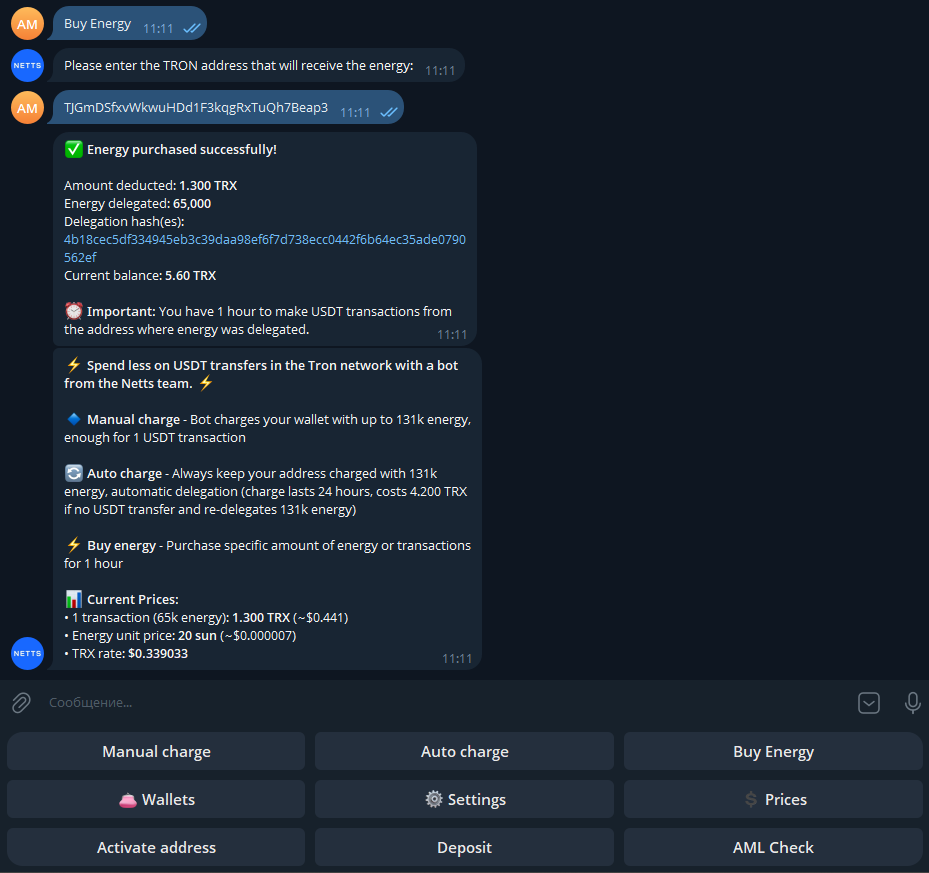
On TRON, each transfer of USDT uses up Energy; if you don't have enough, the network will use your TRX to pay for it, and that ends up costing a lot. A better method is to pre-charge your TRON Energy by using a service that allows you to rent it for a set period of time. That's where tools such as the Netts Energy Charge Bot come in handy because it lets you refill your TRON gas before carrying out a transfer, so you end up paying the best available TRON Energy rates rather than having your TRX burned at a high rate. For those who frequently move stablecoins, this makes the difference between having to pay double and paying only what the transaction actually costs. The bot can be used to make one-off charges, to automatically recharge wallets that remain active, or to buy Energy in bulk for specific amounts. Although it's a small kind of optimization, such marginal improvements add up when TRON gas fees are high and you're making regular transfers.