Whale Watching as Career: Following the Bigger Fish
Crypto whales move billions and small traders follow. Learn how whale watching became a career and why most retail traders lose the race.
Envision a coral reef at dawn time. Small fish zip among the rocks, feeding on algae and fighting for the leftover bits. The hierarchy remains stable and everyone knows where they stand. Suddenly the water changes. A shadow passes overhead. The whale has turned up.
The whale has no interest in the politics of the reef; it simply goes through the area, feeding, and as a result the water becomes turbulent. Nutrients from the deep rise to the surface, the small fish scatter in confusion, but some of them had been observing. They had seen where the whale was heading before it arrived at the reef, so they positioned themselves in advance, and when the chaos occurred they were already feeding on the upwelling.
It isn't an article from National Geographic concerning ocean life, but the principles involved are the same.
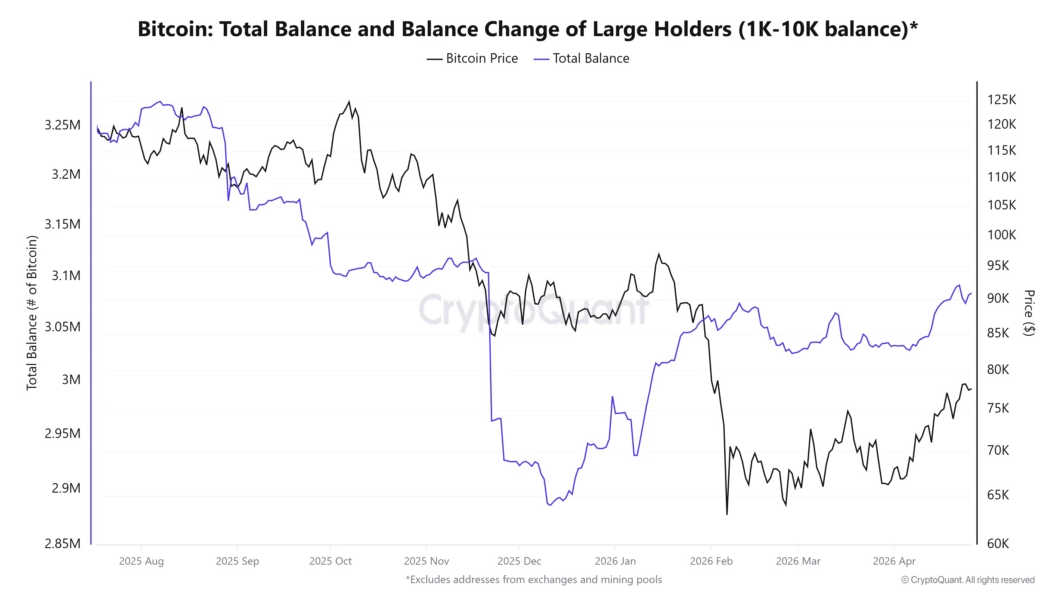
In the crypto world, whales are defined as wallets containing ten million dollars or more. In early 2026, addresses that held at least 1,000 Bitcoin had control over about 42% of the total circulating supply. Their activities are not private since every transaction can be seen on the blockchain, which is a public ledger accessible to anyone. Whenever a whale makes a move, the market reacts; prices fluctuate and liquidity moves from one side of the market to the other. Just as happens on the reef, a small number of traders have managed to get into position in advance by observing the whale's path before the rest of the market does.
The point is that in the world of crypto, whale watching is not merely a metaphor; it is in fact a career.
When the Whale Wakes Up
In December 2025 one wallet transferred 7.5 billion dollars' worth of Bitcoin to Binance, a move which showed up on the blockchain. Shortly afterwards, warnings were sent out through Telegram channels, Discord servers and the company's own tracking dashboards. The retail traders saw the alerts and became frightened. Such a large deposit into an exchange generally indicates that somebody is planning to sell, so they all started off-selling in order to get out before the whale carried out its sale. The price fell within hours, even though the whale had not yet sold, merely because everyone else thought that it would.
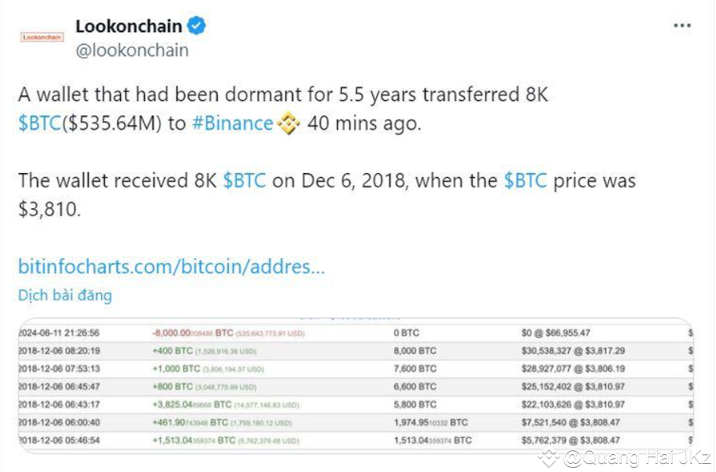
That phenomenon is known as the cascade. The whale starts it, but it is the small fish that amplify it. When the whale finally carries out the transaction, the price has already changed. Those traders who had sold out of panic managed to lock in their losses. The traders who had bought when the price dropped ended up making a profit as the price later recovered. And at some point, quietly, the whale carried out whatever it had originally intended to do, even if that hadn't been a sale. It might have been a custody transfer, a move of loan collateral, or an internal reallocation between wallets. The intention was not visible, but the effect was real.
In 2026, research carried out by the Federal Reserve looked into how quickly retail traders respond to the actions of large traders. They discovered that following a large trader's buy, the smaller traders increased their buying by almost fifteen percentage points, and after a large trader's sell, the medium-sized traders increased their selling by twenty-nine points. The timeframe for this reaction was short and activity had returned to normal within an hour. The researchers referred to it as a fifteen-minute race that the retail herd had already lost.
It takes at least fifteen minutes to read the alert, consider it carefully, and then decide on the action to take. Once you've worked through the information, the opportunity has already disappeared. The traders who are earning money from whale watching aren't sitting in front of a screen constantly checking Whale Alert; they use automated systems, consisting of bots which detect the transaction, interpret the pattern, carry out the trade, and then close the position before a human could possibly have finished reading the notification.
The people responsible for this are not responding; they are forecasting, and the thing they are forecasting is not what the whale will do, but rather what all the rest of people will do when they see what the whale has done.
Following the Whale Before It Moves
In early 2026 the Bitcoin whales gathered more than 270,000 BTC over a period which most traders saw as one of consolidation. The market appeared to be dead. Prices were steady. Trading volume was low and everyone was waiting for either a breakout or a breakdown but nothing took place.
But it was. The buildup was obvious all along. On-chain data revealed that large wallets were steadily increasing their holdings from week to week without making a sound. They weren't purchasing on exchanges where their orders would appear in the order book and cause the price to move. Instead, they were buying in over-the-counter private transactions that settled on-chain but never touched the public markets. Although the transactions were visible to anyone who wanted to look, most people weren't doing so. Those who were looking noticed it weeks before the price change took place. When the breakout eventually occurred, they had already taken their positions.
There is a difference between merely observing what whales are doing and actually understanding what they are aiming at. Each individual transaction counts as a data point; a series of transactions over a number of weeks forms a thesis. The traders who build their careers on watching whales are not chasing alerts; instead they monitor accumulation zones, distribution zones, wallet clusters which move in coordination, and liquidity shifts which indicate that a large position is being prepared.
A number of them go even further. In July 2026 Trump Media introduced the Truth API, a service which offered early access to posts on President Trump's Truth Social platform. The charge was said to be as high as 100,000 dollars a month. The customers were high-frequency trading firms. The service provided access within milliseconds. Trump's posts have an impact on the markets, particularly in the area of cryptocurrencies. Whenever he announces a policy, endorses a coin, or indicates a regulatory intention, prices move. If you are able to see the post a few milliseconds before all the rest of people, you can place a trade before the market has reacted. The advantage does not lie in understanding the content. The advantage lies in speed.
He referred to it as insider trading, while the critics described it as the most explicit example of paying for information asymmetry that they had ever witnessed. From the point of view of market structure, however, it was simply whale watching pushed to its logical extreme. Trump is a whale; his statements have an effect on the capital markets. If you are able to predict or detect his actions before the rest of the crowd, you can get yourself in a position to benefit from the upwelling.
The companies that were buying millisecond access to his posts weren't trying to outsmart Trump; instead, they intended to act before anyone else who was going to respond to Trump. This is just as true in the case of a Bitcoin whale transferring coins to an exchange—there's no need to know why the whale is carrying out the move. All that is necessary is to realise that when others see it, they will sell, and you can then position yourself for that reaction.
It is the difference between professional whale watchers and amateurs. While amateurs watch the whale, professionals watch the people who are watching the whale. The money does not come from forecasting what the whale is going to do next; it comes from predicting how the market will misinterpret what the whale has just done, and then positioning themselves for that misinterpretation.
The same thing happens with on-chain whale transactions. When a wallet which has not been active for three years suddenly makes a move of 5,000 Bitcoin, alarms go off and Reddit threads are filled with speculation. Although no one knows the reason, everybody comes up with a theory and these theories in turn influence trading decisions. The traders who end up making money aren't those who have the best theory; rather, they are the ones who had positioned themselves for volatility as soon as the movement was detected and then exited before the speculation died down.
The Tools You Are Up Against
If you wish to make whale watching into an income stream, the people who are already doing it have already set up systems that you are having to compete with. These systems work quickly, are automated, and operate around the clock.
The fundamental tools are available. Whale Alert keeps an eye on blockchains and issues notifications whenever large transactions take place. CoinLobster offers live feeds of trades that have been executed on fifteen exchanges. Arkham Intelligence and Nansen tag wallets so that you can tell which addresses are associated with known entities. Lookonchain selects and presents significant activity. Cielo enables you to set up alerts for particular wallets. Everything available is public and you can begin monitoring now.
That doesn't mean that simply watching is equivalent to winning. The traders who succeed have gone beyond using alerts; they operate bots which link directly to blockchain nodes and check for transactions before those transactions appear in the public feed. They make use of APIs from Glassnode, Chainalysis, and Dwellir in order to obtain on-chain data in real time, analyse wallet clusters, and pick up on accumulation patterns days or weeks before such patterns become obvious. They are developing AI systems based on Ollama that function locally and are able to identify million-dollar transactions without having to rely on third-party services which would introduce latency.
A number of them are developing copy trading bots. These bots keep an eye on wallets which regularly produce profitable trades and then automatically replicate their positions, adjusting the size of the positions in proportion. There is an open-source project on GitHub relating to Polymarket that carries out precisely this task: it keeps track of whale wallets, copies their trades and implements automated take-profit and trailing stop-loss rules. The reasoning is straightforward: if a wallet has a proven record of success and you are able to carry out the same trades with almost no delay, you can take a small part of their advantage without having to formulate your own thesis.
The hardware needed is by no means unusual, but it is intentionally chosen. A virtual private server should be situated near the data centres of the exchanges in order to reduce latency. API keys from a number of different exchanges should be used so as not to have to wait for manual order entry to place trades. Webhook integrations must be used to initiate trades as soon as a given condition is met. If you are attempting to compete with this kind of setup by using just a laptop and a Telegram alert, you will always be fifteen minutes behind.
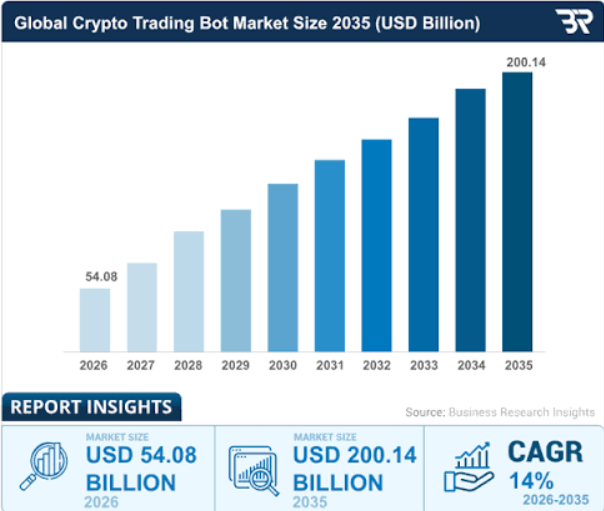
The fact is that between 70 and 90 per cent of the daily trading volume in the major crypto markets is now carried out by bots. While not all of them are tracking the large traders, those that are do so with speed advantages amounting to milliseconds. A retail trader receives an alert but a bot has already opened and closed the position; by the time you decide on your course of action, the opportunity has disappeared.
People underestimate the psychological aspect of this. If you are watching the whales by hand, each alert seems urgent. Your brain treats the notification as something that requires an action, and this causes you to feel a pressure to respond to it. In most cases, taking action is the wrong thing to do since the alert is just noise. However, as long as you are watching and the alert has drawn your attention, you end up feeling as though you must act. This emotional reaction has a financial cost.
Bots aren't suffering from that issue. They don't experience a sense of urgency. Instead, they assess the conditions, and if those conditions aren't satisfied they take no action. They never get bored and they don't doubt their own decisions. Each day they carry out the same logic thousands of times, act whenever there is an edge, and ignore all the rest. The level of discipline needed to carry this out by hand is something that most people cannot maintain.
It doesn't make it impossible for individuals to engage in whale watching. Rather, it indicates that the opportunities left are those which bots are not suited for. This is because long-term accumulation signals become apparent only over a period of weeks, and patterns that demand human interpretation of the context—such as regulatory announcements or macroeconomic changes that whales are preparing for but have not yet carried out—fall into this category. Also included are newly emerging chains where whale tracking tools have not yet developed to a mature stage and where early detection still gives an advantage.
You can't achieve victory over existing institutional infrastructure through speed, but if you know what you're looking for you could overcome it by exercising patience and demonstrating pattern recognition.
There is still one more advantage. This involves information which has not yet become public but will do so soon. Whales tend to get hold of this information before it reaches the market; they find out about listings before they are announced and are aware of partnerships before any press release is issued. This does not count as insider trading in the legal sense since crypto regulation is still unclear. However, it does constitute information asymmetry and as a result provides them with an edge.
The individual trader isn't part of that network, but they can observe what the whales do when they have the information and haven't yet taken action. If you notice funds being accumulated from a number of large wallets in a token which has no apparent catalyst, that should be taken as a sign. Someone must know something. You don't need to know what it is; you only need to know that someone who is moving a significant amount of capital believes that something is about to happen. That is the advantage—not the information itself, but the shadow that the information casts on the blockchain before it becomes public.
What You Are Really Betting On
The main issue with whale watching is that you're not basing your actions on fundamental factors; instead, you're relying on reaction mechanics, betting that when other people see the whale move they will respond in a predictable way and that you can then make a profit from that predictability.
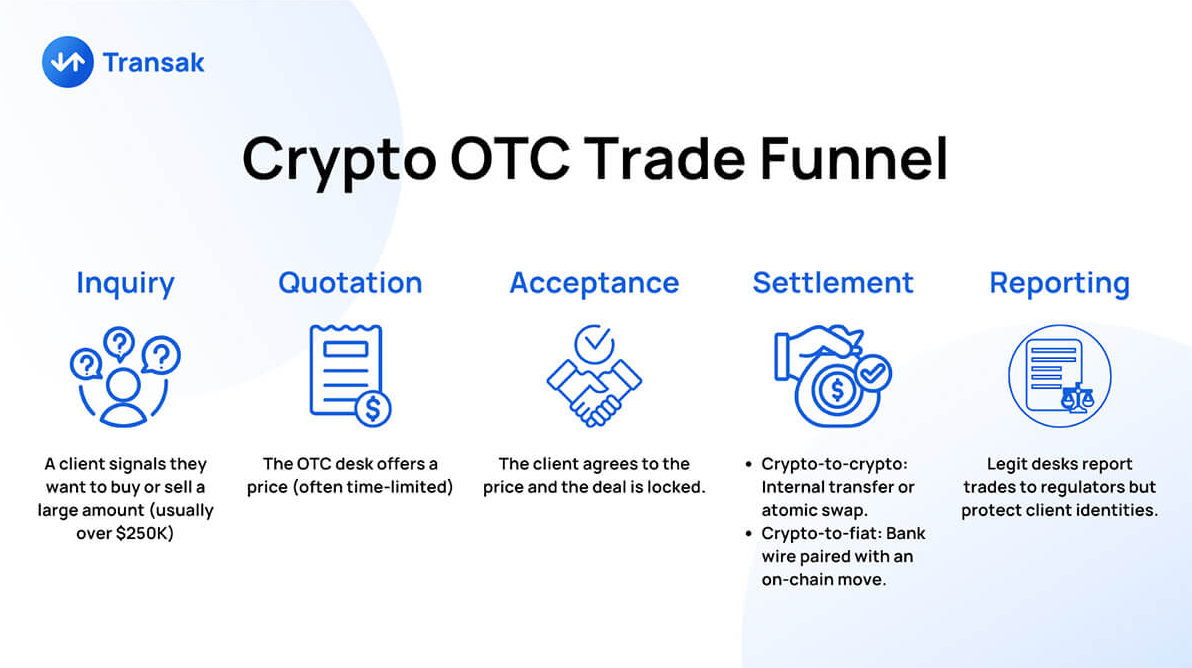
It functions until it ceases to do so. Once a sufficient number of people are observing the same signals and responding in the same manner, the signal itself loses its effectiveness. For example, if all the people see a whale making a deposit into Binance and immediately sell, the price will fall before the whale carries out the deposit, causing the whale to modify their approach. Instead of making a single deposit, they begin to divide their deposits among several wallets in order to avoid setting off alerts. They pass the funds through mixers to hide the origin of the money. They make use of OTC desks that settle transactions off the blockchain. The very transparency which enables whale watching also makes it vulnerable, since the whales know they are being watched and can therefore adjust their behaviour.
There is also the question of interpretation. A whale putting money into an exchange could be getting ready to sell. It might be placing the funds as collateral for a leveraged long position. Or the move could be for custody reasons. Or it could be carrying out an arbitrage between different markets. The on-chain data will show the funds have moved but will not reveal the intention behind the move. Traders who act without understanding the context are often responding to the wrong signal since they see the whale make the move and assume it means one thing, while in half the cases it actually means something different.
The traders who make a profit over the long term do not merely watch transactions; instead, they develop models of whale behaviour. They observe which wallets tend to front-run rallies, which ones spread their holdings when the market is strong, and which ones build up their positions during times of fear. They are searching for patterns that repeat themselves since such patterns can be exploited. A single transaction is just noise, but a wallet that accumulates each time sentiment turns bearish is a signal.
However, that advantage eventually disappears. As soon as a particular pattern becomes well known, it ceases to be effective since the market has now taken it into account. The whale-watching strategies which were successful in 2026 are not the same ones that worked in 2023. The game changes. The whales change. The infrastructure changes. To keep ahead one must constantly adapt.
That is the reason why whale watching as a career tends to be exhausting for the majority of people who attempt it. The advantage you gain today becomes outdated within six months. The wallet you've been monitoring starts to behave differently. The tool you have depended on either gets rate-limited or is shut down. You are not creating a system that will keep running forever. What you are building is something that functions until it stops, after which you have to rebuild it.
The individuals who are successful in carrying this out over the long term aren't those who have come up with a single good strategy; rather, they regard the discovery of edge as an ongoing process, constantly testing new signals, getting rid of the ones that cease to work, and improving those which still have value. The actual effort lies in identifying what still works when all the other things have lost their effectiveness.
Real Edge Is Not Watching — It Is Waiting
Most people who take up whale watching get tired quickly. They check the alerts all day long. They respond to each large transaction. They follow movements which turn out to be just noise. They lose money on ten trades and only recover it on one, and then tell themselves that they are developing a system when in fact they are merely gambling on a reaction speed that they don't possess.
The people responsible for making it work do not keep a constant watch; instead they wait for certain conditions to arise. They use models which indicate when a whale's movement is likely to cause a foreseeable cascade, and they only take action when the situation is clear. Their aim is not to make a profit on every transaction but rather to do so on the few transactions each month when the signal is strong and the timing is appropriate.
Taking a career in whale watching is not so much about keeping an eye on every single fish as it is about knowing which movements are important. It means having the necessary infrastructure in place to act when the time comes, together with the self-discipline to do nothing at all at other times. It involves realizing that the whale itself is not the opportunity; it is the turbulence that the whale creates, and the small group of traders who had taken positions in the current before the whale arrived.
The ocean is vast. The whales are continually in motion. Usually, all you do when watching them is watch passively. But from time to time, if you're in the correct place, have the appropriate equipment, and are there at the right time, the water becomes turbulent and then you get a feeding opportunity.
Infrastructure Nobody Talks About
If you are carrying out operations which demand fast execution, low fees, and a reliable infrastructure, then the mundane aspects become important. You need systems which deal with TRON gas automation without any manual involvement. Instead of refilling your TRON gas when you need it, you should do so before a position demands it. Your TRON API must not rate-limit you when the volume increases. You need to automate TRON costs so that execution can be predicted and fee optimisation is constant.
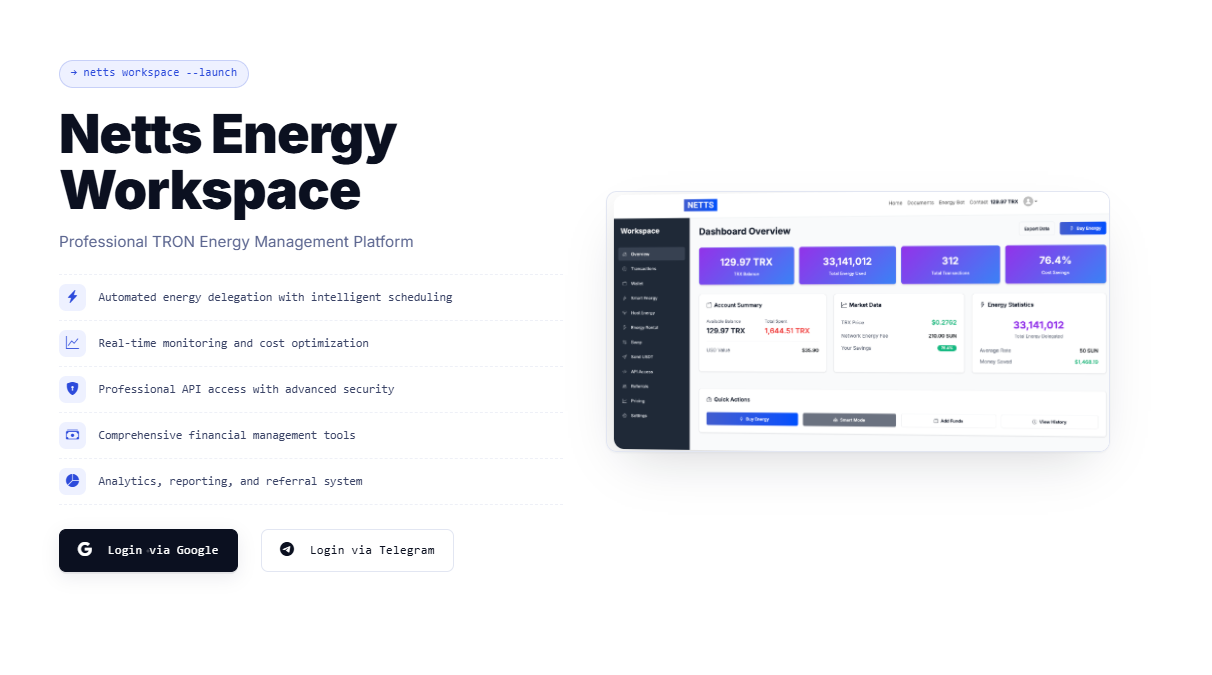
That's the sort of situation in which tools such as the Netts Workspace prove useful. It isn't a trading platform, but rather infrastructure that enables efficient management of the blockchain layer, ensuring that whenever you need to transfer funds, rebalance your positions or act on a signal, the costs and speed are reliable. The tool takes care of automating USDT fee payments, keeps an eye on your balances, schedules Energy delegation, and integrates with your current systems via API access. This kind of arrangement allows you to concentrate on your trading logic rather than having to manually add gas each time you want to carry out an action. For a person running whale-following strategies on a large scale, that operational component is not optional; it's what makes the difference between executing in time and missing the opportunity.