Layer 3 Blockchains: Scaling Solution or Manipulative Branding?
Layer 3 blockchains promise custom appchains and cheaper UX, but extra layers can also mean new risks, dependencies, and marketing theater.
Layer 1 blockchains were originally grand public squares. Bitcoin was a serious settlement square, a gruff and unadorned plaza, hardened and unyielding. Ethereum brought programmability to the mix, and suddenly there was a public square where one could construct token-issuance platforms, exchanges, games, lending protocols, NFT marketplaces, DAOs, prediction markets, and financial machines that only made sense in the presence of lawyers.
But the thing about a public square is it attracts people.
In early days that was a feature! Activity on the chain was a sign of vitality, and everyone from developers to miners to investors to founders wanted that vitality to grow. They wanted their corner of the crypto internet to be the place where value settled. No one wanted their on-chain plaza to be empty. Congestion was a badge of honor, at least at first, evidence that the world had taken notice.
Congestion quickly became a burden. Ethereum users are familiar with the sour taste of paying exorbitant fees for a transaction to go through. The average Joe is much more likely to close the browser tab if he has to pay $500 for a few NFTs or a small amount of tokens to be transferred. During bull runs, the social hierarchy on the chain flips - whales continue to move large sums of value, but everyone else watches the gas price oracle and shrinks away.
And so, the first hints of scaling Layer 1 appeared, not in a white paper or a research note, but in the hearts and minds of developers, users, investors, and protocols.
All of them felt the pain in different ways. End-users were frustrated that their on-chain activity was being taxed beyond reason. Developers were often helpless to the rising costs, unable to subsidize their users and stymied in their ability to build. Investors were dismayed by the spectacle of demand being choked off by infrastructure costs. And protocol developers were annoyed that their wares were being compared on a value vs. cost basis and that the entire system had to be justified in terms of costs saved by a competitor. Everyone had an incentive to make the plumbing bigger, and every voice was heard in the development of alternate scaling solutions.
Layer 1 chains either built on themselves, promising higher throughput for cheaper costs - but not always - or sought to rebrand speed and efficiency as value propositions unto themselves. Ethereum opted for the latter, a cleaner version of itself at the base-layer while most of the on-chain action would happen elsewhere. A polite fiction, perhaps, but not an entirely dishonest one, since it was true that the higher layers were in many ways an annex to the main chain.
Layer 2 Was Not an Accident
The rise of Layer 2 networks was similarly not an accident. No one wanted to give up Ethereum’s perceived stature and security, but everyone wanted cheaper infrastructure for their particular corner of the app economy, and rollups were a compromise. By handling the messy on-chain transactions elsewhere and letting the smart contracts battle it out in a provable manner, developers and users could have their cake and eat it too. Ethereum’s reputation remained intact while everyone else enjoyed cheaper, faster transactions with fewer headaches.
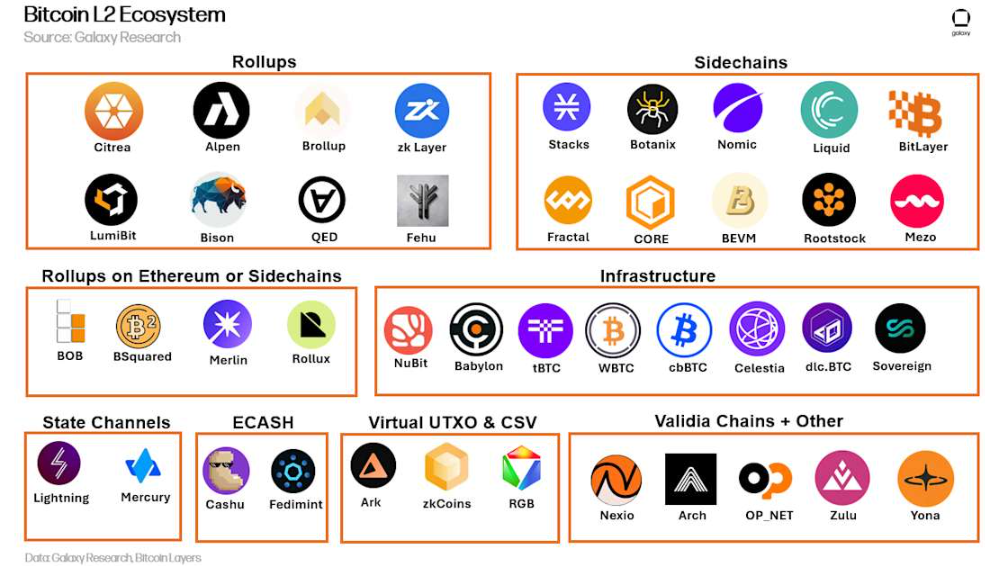
It was a political solution as much as a technical one. Ethereum didn’t have to turn into Solana, and developers didn’t have to flee the ecosystem. Venture capital firms didn’t have to admit that demand for crypto apps had undershot their lofty expectations while users got to keep believing in Ethereum’s promise of decentralization and openness while enjoying faster transactions and cheaper fees. Everyone got to keep their narrative, and everyone got what they wanted.
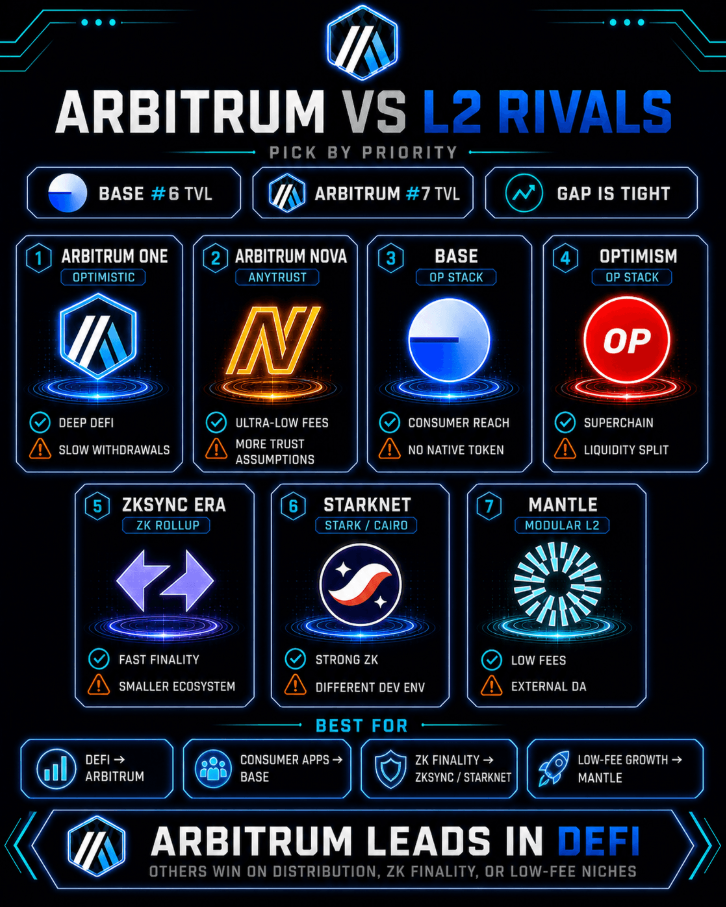
Optimism, Arbitrum, and Base, and other optimism- or zero-knowledge-based rollups, and zkSync and Starknet and Polygon’s various scaling initiatives, and indeed the entire space’s understanding of what a Layer 2 represents, were all predicated on this shared view of the problem and this particular solution. Other than technical details concerning fraud proofs, validity proofs, execution environments, settlement layers, and settlement chains, every voice in the space agreed on the rough contours of the problem and the solution. Developers building on Ethereum wanted to maximize their transaction throughput, but they also wanted to minimize costs and headaches for their end-users. In other words, everyone wanted what they have today in Base, Optimism, Arbitrum, etc.: a settlement chain with cheaper, faster transactions that somehow continued to pretend to be Ethereum.
Layer 2 made perfect sense as a response to first-layer congestion and the resulting surge in fees. And that, in part, is why we are talking about a Layer 3: because a Layer 2 solved the problem of first-layer congestion and everyone is already looking to the next level of scaling.
Layer 3 Pitch
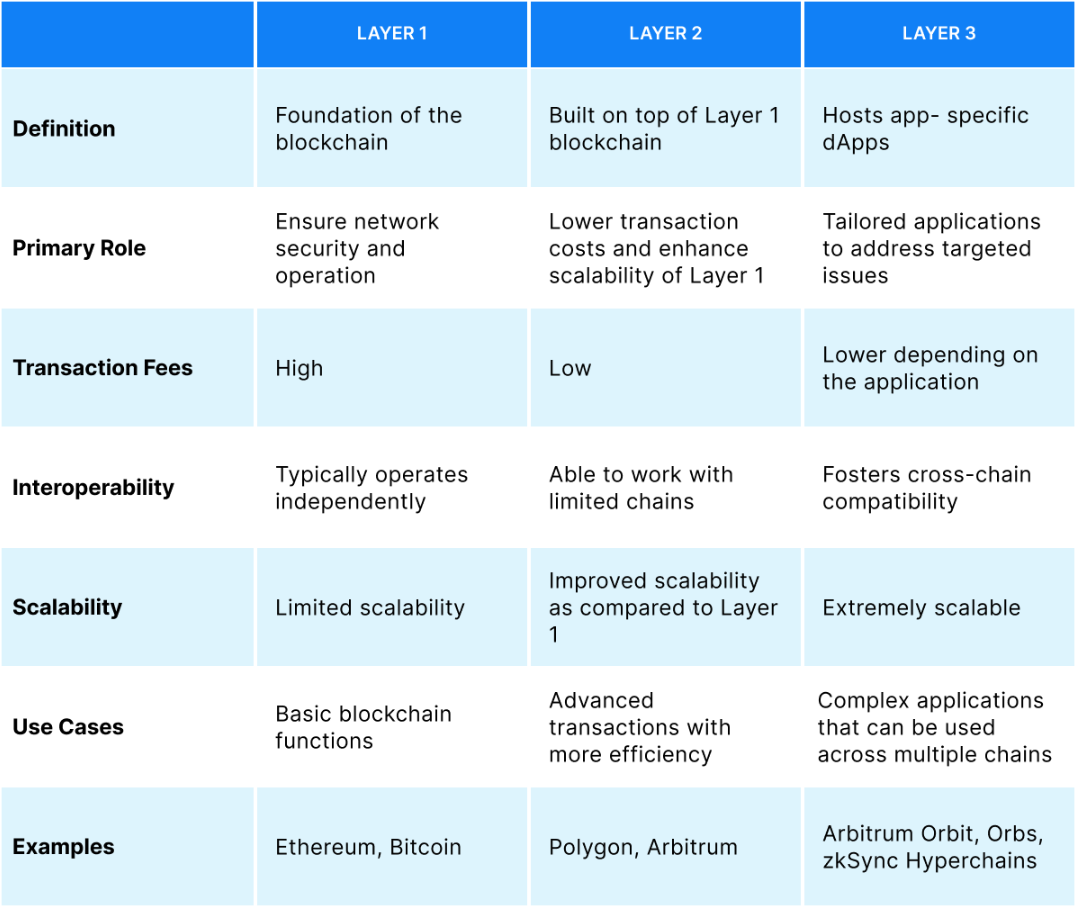
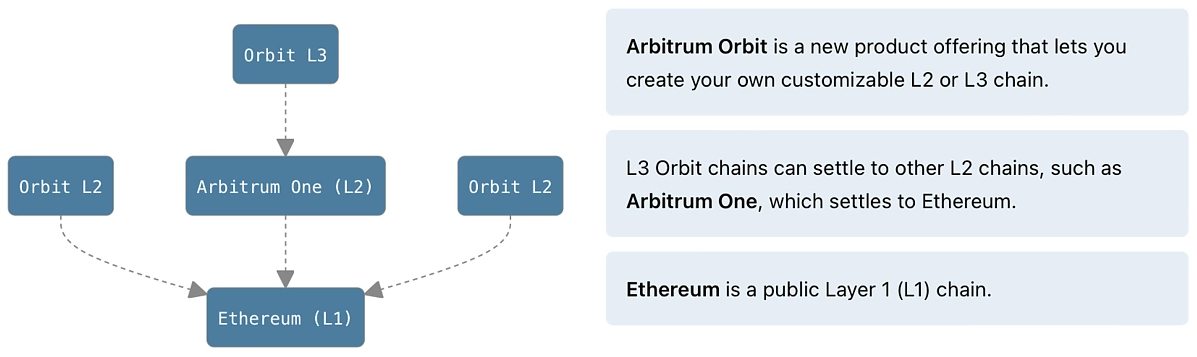
A Layer 3, at least according to the official party line, consists of application-specific blockchains built on top of Layer 2 networks. In other words, specific apps can carve out their own niche within the larger ecosystem. A game does not need to run on the same environment as a social media platform, and a lending protocol does not share its settlement layer with a prediction market. A loyalty platform might want its own gas token, while a competitive shooter might need its own settlement layer to support high-frequency transactions. An enterprise application might want to prioritize privacy, permissioning, and predictable throughput, while a derivatives exchange might seek faster block times and lower latencies for its order books.
An ecosystem as diverse as crypto needs a settlement layer as multi-faceted as Ethereum, argues the pitch. But developers and users of specific apps do not want to share their smart contracts, wallets, gas tokens, bridges, or data availability with everyone else. Everyone wants a Layer 3.
Arbitrum Orbit and zkSync’s ZK Stack offer a peek into the future, one in which developers can build their own customized ZK-Rollups or Optimistic Rollups, each with their own gas token, data availability solutions, governance structures, settlement assumptions, throughput, and performance characteristics. Arbitrum Orbit, for instance, allows developers to build their own chains on top of Arbitrum One or Nova, with customization options ranging from settlement layer to data availability. The language is all very pretty, as one would expect from a space that lives and dies by venture capital funding - dedicated throughput, application-specific performance, tokenized gas, enhanced UX, all in the comfort of your own personal chain - but the underlying economic and technical realities are hard to ignore. A rollup built on top of a rollup might be what everyone needs, or it might be the thin end of the wedge.
Some of the motivations are clearly articulated, while others are less clear. End-users are not concerned with layers, per se, but they are often intimately aware of UX costs and benefits. A game developer might be willing to spend more on infrastructure costs in exchange for better user retention, but the same developer might not want their users to be aware that they are on an alternative settlement environment. In other words, a Layer 3 is great as long as the users do not have to think about it. If the game’s UX is good enough, the casual player might not even be aware there is a difference between a Layer 1 and a Layer 3.
The pitch to developers is similar but more nuanced - in theory, a sovereign app-specific rollup is all gas and throughput and performance, with little to distract the protocol itself, but in practice, the developer has to think about every single aspect of the infrastructure and operations, from bridge security to wallet UX and upgradeability and transaction costs. A developer building on Ethereum knows that he shares the same settlement environment with everyone else, a useful reminder that he is only one cog in a very large machine, but sovereignty comes with its own set of burdens.
The pitch to companies is more complicated. It is about performance, but it is also about positioning: everyone loves a good story, and developers love to tell their users that they are on their own chain. In the world of venture capital funding, there is not much difference between “we built an interesting contract” and “we launched a revolutionary new Layer 3.”
Company That Discovers a New Layer
One day, in the headquarters of Moonforge Studios, an employee looks up from her lunch and realizes that the company’s only game and two proto-games and its token and its exhausted community manager and its CEO who speaks too much about infrastructure moats are all in danger of being forgotten by the crypto markets. The games’ costs are not outrageous, but they are not exactly conducive to organic user growth either, and the token economy and the NFT item trading and general in-game purchases all take a toll on the average Joe. The product team talks to the engineers about gas abstraction and transaction fees and item crafting costs, asking if a bespoke chain would be able to handle some of these expenses while improving the overall UX of the product. The engineers are eager to talk about their own ideas, but the CTO is quick to remind everyone that they need to ensure compatibility with the wider ecosystem. The product lead wants every user to be able to engage with the game without thinking about blockchains and wallets and tokens - the gas fees should be invisible to him, as should be the withdrawal UX should he want to cash out his in-game assets. The CFO is more interested in how the chain fees could serve to monetize the game - could the gas token be used as a revenue channel? Could the tokenomics of the in-game token be altered to encourage adoption? The token team wants to tie everything to the game’s token, but the marketing team wants to talk about an overarching metaverse narrative. The CEO listens to it all and thinks about how Moonforge’s launch of a high-performance Layer 3 for on-chain fantasy economies would make the press release.
There is nothing wrong with this hypothetical, except perhaps the assumption that a game needs a bespoke settlement layer in the first place.
If there is enough demand, a custom-built Layer 3 could serve to improve the performance of a specific economy while insulating the users from the costs, risks, and complications of interacting with the larger Ethereum ecosystem. Developers could subsidize their own gas, dictate their own terms and conditions, and provide an environment more conducive to their product’s success. In theory, a tailored app-specific settlement environment could serve to improve the experience for everyone involved.
But what if the demand is not there? What if a bespoke token, much like a bespoke token economy, fails to gain traction? What if the promise of a sovereign rollup is used as an excuse to bloat the user base with lazy promotion before any meaningful value is created? What if the desire to build a high-performance, self-contained UX stack is really just a smokescreen for positioning the project as cool and innovative and visionary? What if a Layer 3 is not what the product really needs?
It all depends on who is asking. A company building the settlement environment for the game, the social media app, the enterprise suite, or the derivative dex might have very different priorities from a protocol team launching a product on the said environment. For the company, a bespoke chain is a statement of intent, but for the protocol team, it is an obstacle to adoption and an affront to the Ethereum ethos. A company building its own wallet, sequencer, and bridge and settlement token and data availability and governance mechanism and UX layer might want to convince its users that it is all about the seamless experience, but in reality, it is about differentiation and positioning and venture capital tractability.
Where the Buzzword Breaks
There are good reasons for Layer 3 networks to fail, or at least to underperform. The first has to do with complexity, both technical and political.
Settlement layers settle, but they also have to manage the ever-growing list of ancillary services: data availability, wallet support, bridging, RPC nodes, block explorers, indexing, monitoring, fraud proofs, upgrades, gas pricing, etc. If an app-specific settlement environment is too difficult to operate and monitor and maintain, it will fail. If the protocol itself - and by extension, the company behind it - cannot absorb these costs, it will fail. In other words, giving your app its own settlement layer is not an easy way out. It is, in fact, one of the hardest ways to build a sustainable business in crypto. If the rollup is difficult to operate, building a rollup on top of a rollup is challenging for the wrong reasons.
A Layer 3’s primary weakness, however, is its security inheritance, which often fails to account for the practical realities of supporting a chain. Settlement layers settle on top of other settlement layers, which settle on top of Ethereum. It often seems as if everyone wants a Layer 3 because everyone wants the benefits of Ethereum security while avoiding the costs of Ethereum’s settlement finality. By design, every additional layer adds more assumptions to the security model, more attack vectors, more opportunities for mistakes. A settlement layer built on top of an L2 settlement layer, in turn, is vulnerable to the same risks as an L2 settlement layer: fraud proofs, data publication risks, sequencing censorship, and centralization of key management. The same risks apply to a settlement layer built on top of a Layer 3 chain. If the chain’s security is questionable or its assumptions faulty, its users bear the brunt of the risk. In practice, that often means weaker wallet security, poorer bridging UX, an insecure on-chain governance model, an unreliable data availability strategy, insufficient monitoring and auditing, and a problematic dispute resolution process.
Degen Chain’s infrastructure issues were an instructive episode for the ecosystem. Designed as a fast, low-cost, and community-first Layer 3 connected to Base through Arbitrum Orbit tooling, it drew in users looking for an alternative to Ethereum’s notoriously slow and gas-heavy UX. At the time of the incident, most users were largely unaware of the technical details of how the Layer 3 worked, but when the infrastructure issues cropped up - a poorly tested upgrade from an infrastructure provider resulting in downtime, corrupted state, and lost assets - they were quick to blame the team for the migration, bridge security, and gas theft. At the most basic level, the issues reflected a failure to understand how the bridge and settlement security worked. The more technical users - the ones who knew about the Arbitrum Orbit tooling, the Base settlement chain, and the Degen Chain’s own proof-of-concept - were more skeptical of the claims that the Layer 3 was secure, available, and reliable. In practice, it seems, few people understood that their keys were not their only keys: the migration and state root verification process had relied on a large number of trusted external entities, none of which - in the eyes of many - were particularly trustworthy.
It is not a criticism of Degen Chain, necessarily - it is an observation that few people understand how a Layer 3 settlement infrastructure works, and that building one is extremely difficult from a technical and operational standpoint. The problems in Degen Chain were no different from the problems in other early Layer 2 chains, with the exception that few people truly realize the extent to which a Layer 3 settlement layer requires trusted external entities to operate, monitor, and maintain it. It is hard to say with any certainty what the long-term risks were, but it is possible to speculate about the short-term ones. Fewer than expected users, liquidity, or developers would be detrimental to the future of a settlement layer, especially when competition for the same audience is fierce. Poor wallet support or a lack of liquidity would put additional strain on the fledgling environment. Worse yet, an operational failure could undermine confidence in Degen Chain and, by extension, its underlying Arbitrum Orbit tools. Any one or combination of these problems would hurt the young Layer 3.
Another weakness of a bespoke settlement environment concerns liquidity isolation, which is an operational challenge that rarely appears in theoretical discussions. The problem occurs because most smaller Layer 3 chains will not acquire sufficient liquidity to support their users. Assets on these chains may have poor token economics, or native bridges to other chains or even other Layer 3s may not be available, or wallet support may be lacking, or on-chain data may be unavailable to regular block explorers. In other words, a Layer 3 settlement chain with few users and little liquidity may find itself in the unenviable position of discouraging further liquidity provision and adoption. Developers may also miscalculate the level of UX friction their users are willing to tolerate for an app-specific environment. In practice, this often results in a chain that is theoretically capable of supporting millions of transactions per second but fails to attract a single user due to its poor integration with existing infrastructure and uncompetitive tokenomics.
Real Chains and Real Results
The clearest cases for a Layer 3 are in gaming and social apps, where the value captured from each transaction is low, but the volume is high. Xai, a ZKP-based game infrastructure founded on top of Arbitrum Orbit, is the prime example of a game-specific settlement environment. Built to let games adopt ownership without having to deal with the UX costs of a shared chain, it has seen tremendous adoption from games such as The Lost Glitches and Tollan Universe, with millions of transactions already recorded on its Ecosystem. The same argument can be made for Proof of Play’s Apex and Boss chains, which are similarly tailored to games and have seen the rise of apps such as Pirate Nation and other on-chain play-to-earn titles. The value captured per transaction in games is low, but the frequency is exceptionally high for crypto-native apps, and the ability to isolate gas costs and general UX friction is valuable to both developers and users.
Degen Chain, for its part, represents the social token argument for a bespoke settlement layer. A chain built on top of Arbitrum Orbit, it has seen an explosion of usage from Farcaster-native projects and developers who want to build an alternative to Ethereum’s UX costs for microtransactions and NFT activity. Its future, however, is uncertain and complicated by its infrastructure issues and its relatively small user base. It has, nevertheless, demonstrated that a Layer 3 settlement environment has potential appeal among users, developers, and even larger organizations that want to migrate their operations elsewhere while retaining Ethereum’s security guarantees.
Same goes for ApeChain and Treasure Chain, which represent the other end of the spectrum - very large communities or gaming ecosystems that want to build their own settlements rather than rely on a single shared one. Similar arguments can be made for Orbs, which is not marketed as a Layer 3 but rather as a cross-chain infrastructure for DeFi applications. It seeks to provide a settlement environment specific to DeFi apps but one that operates across chains, including Ethereum. Finally, ZK Stack chains and the broader Elastic Network concept represent the opposite vision - a world of interconnected ZK-Rollups with a shared settlement layer, offering specialized features per-chain rather than per-deployer.
Critical Thinking Above the Stack
There is nothing wrong with a bespoke gas environment. But it is important to remember that most crypto users are not interested in being pushed toward one, particularly if their interactions with blockchain technology are limited to a single app. Users care about the experience offered by the product, not its technical underpinnings or the positioning of the company that built it. If a wallet prompts them to engage in a complicated multi-step withdrawal process every time they want to cash out their tokens, they are unlikely to view the transaction as seamless and convenient, regardless of what the company behind the wallet claims about its superior settlement UX. Most importantly, every company making claims about its own infrastructure should be aware that venture funding and hype are rarely effective antidotes for a poor product design.
Layer 3 settlement environments present a unique challenge to end-users in terms of UX and value capture. But it is a small price to pay for an improved product design, as long as the company remembers that its own strengths are what make it successful in the first place. It is difficult to say with any certainty whether a bespoke gas environment is truly superior to a shared one for every application - but it is fair to argue that no company benefits from presenting either as some sort of holy grail for the crypto industry.
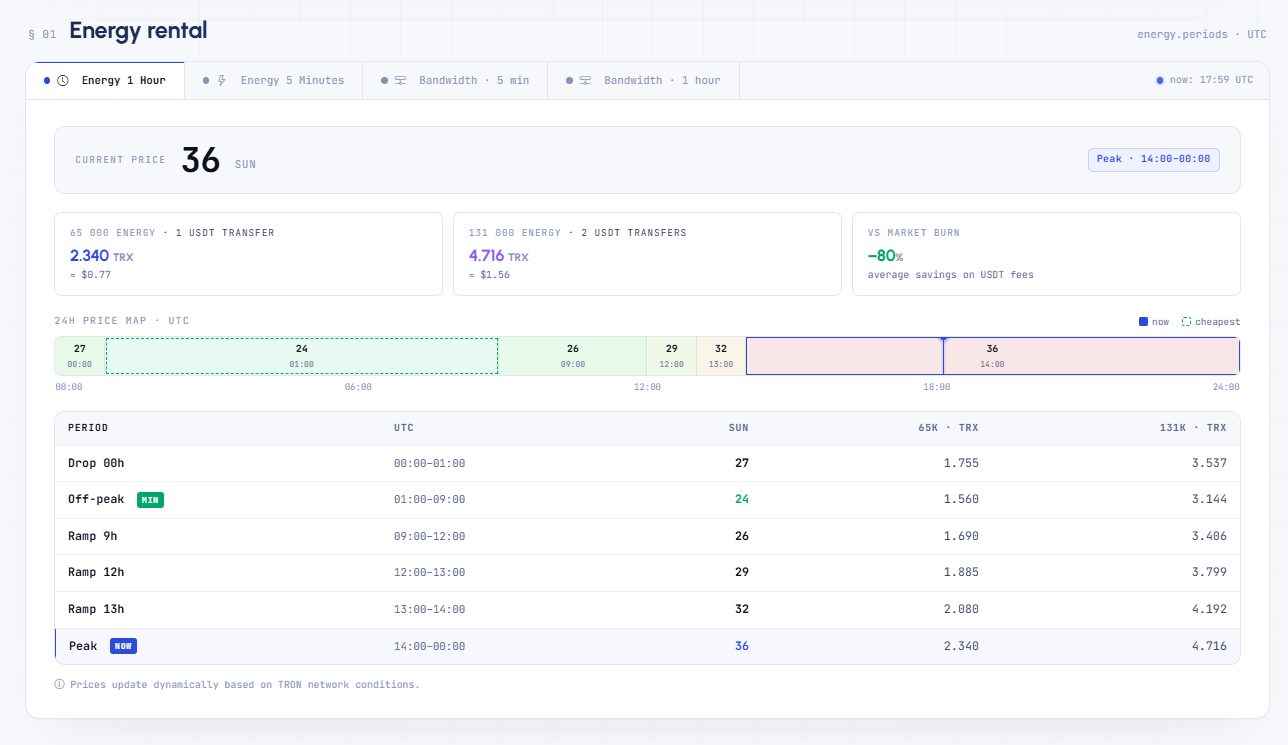
That is where the Netts Pricing comes in handy in practice: it allows checking what are the current TRON Energy prices so that one could buy TRON Energy, seek the best TRON Energy price, and make a cost-benefit analysis of cheap TRON Energy offers prior to making a USDT transfer and spending TRON Energy. In other words, the fee choice becomes a transparent value before initiating the transaction.