Cinema and Videogames that Predicted Crypto
Movies and games foreshadowed digital money and decentralization long before Bitcoin — a cultural roadmap to today’s crypto.
From time immemorial, the best laden and fertile brains have sought to figure out what lies ahead. From Leonardo da Vinci’s flying machines to Jules Verne’s voyages under the sea, fiction has a miraculous way of drawing up the blueprints for reality. It’s a cultural sandbox where humanity gets to play with ideas, poking at the social and ethical ramifications of potential new technologies while they are still far out of reach. This visionary zeal wasn’t confined to industrial wonders. In the latter part of the 20th century and the birth of the 21st, movie and game storytellers started creating fictional universes that were (robustly galling in retrospect) eerily prescient with how digital currency was all gonna play out. These digital frontiers, which date back long before Bitcoin existed as a whitepaper, were the proving ground of alternative money systems, decentralization and even the nature of value itself in a world liberated from physical cash. The similarities are so strong that they demand we not see the rise of crypto as a strange historical accident, but rather as something that was always going to happen — a dream with its time finally come, like space travel, which had to wait for the rocket technology.
Birth of Digital Credits in Cyberpunk
The earliest murmurings of digital money in pop culture, meanwhile, emanated from the grimy extrapolations and neon-soaked landscapes of cyberpunk. This genre, focused on the transfusion of man and machine, of course had to question the nature of every kind of centralized power — including the financial. Its literary groundings — particularly William Gibson’s 1984 novel “Neuromancer” — posited a future in which data was the ultimate currency and multinational corporations functioned as nation-states. Gibson’s “cyberspace” was a “consensual hallucination”; a visual metaphor for the planet-wide computer network onto which elite hackers, or “console jockeys”, surfed rivers of data defended by “ICE”. This vision, which was to influence Hollywood for decades thereafter, made two key points: that value could be entirely digital and that control over such data had become the new form of power.
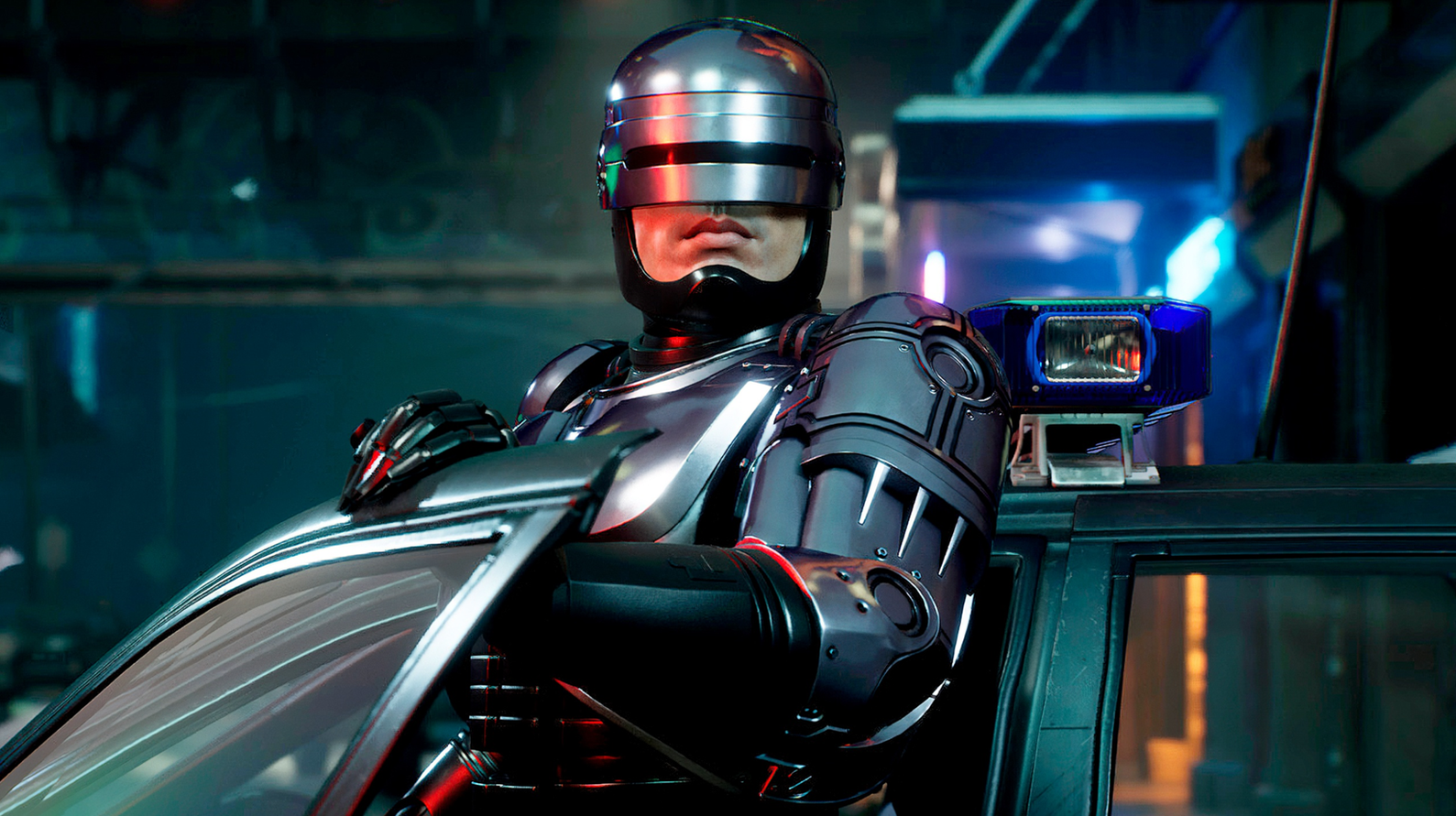
These ideas were finally put on film by filmmakers. In the 1987 film “RoboCop,” a fascist movie parable for our times, the world where Omni Consumer Products corporation had its very own kind of “ED-209 Credits” — an early look at a corporate-owned currency that did not exist within government hands.
That detail, minor though it was, suggested a future in which value could be defined and presented not by a state entity but by some other kind of institution — a basic premise for many private blockchain projects today.
If “Blade Runner” (1982) didn’t show digital cash per se, its off-world colonies and god-like corporations primed the pump for a society in which new kinds of value would be needed. A few years later, “Total Recall” elaborated on this concept with its ubiquitous “Energy Credits.” The credits were the film’s unit of currency in the Martian colony, and had no physical manifestation. This was an important piece of spadework: sowing the notion that money could be nothing more than data, a programmable unit of account unmoored to actual minting or any physical thing.
Animated Futures: Value of Data in Anime
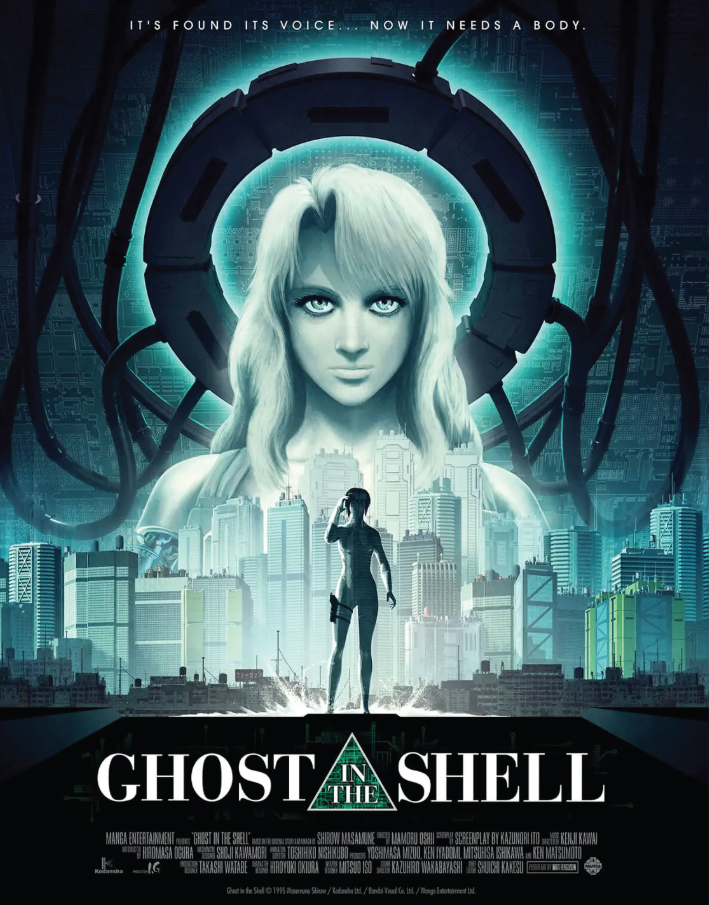
It goes without saying that you cannot talk about the imaginary digital future without discussing the influence of Japanese animation or anime. Works such as “Ghost in the Shell” (1995) ventured deep into questions of what digital identity is — and consciousness itself, as well as the blurring of human with machine. In this world, the currency and even the self are digital. The movie’s vision is of a world in which people can upload their minds into networks and plastic bodies. Hacking the human brain makes it hard not to wonder who owns — or should own — our digital selves. There is the notion of decentralization here, as well — the Major (named Motoko Kusanagi), the hero, is always maneuvering through a world in which centralized powers and rogue actors vie for control of information and power. The precognitive depiction of a world in which value, identity, and memory itself can be digitized and exchanged carries particular appeal to the ethos of blockchain and DeFi.
Another blockbuster anime, “Summer Wars” (2009), depicts a global society reliant on one immense digital platform named OZ, the backbone of social media to banking and government services. When OZ comes under attack, the boundaries between reality and virtual reality begin to blur, making it clear that increased centralization must be accompanied by secure distributed systems. For those used to thinking about centralized platforms in terms of validators battling for influence or the importance of distributed security models in today’s blockchain space, battles over blockchain governance and the rise of DAOs are analogous to this scene.
Virtual Worlds as Economic Sandboxes
As the digital cash was being brought to life on screen in cinema, that other imaginative realm of gaming began building entire sustainable economies with it. Well before the phrase even existed, games have been building their own DeFi ecosystem. Among the most high-profile of the early examples was 2003’s “Second Life.” It was not just a game, but a giant virtual world whose economy relied on the “Linden Dollar,” a currency that could be traded for real money. This was truly a game-changer, demonstrating that the time and work people were investing in a virtual world had real economic value. It wasn’t just that players played, they earned, invested and traded in a player-driven market.
Other MMORPGs also developed very complicated internal economies. The practice, known as “gold farming,” in such games as “World of Warcraft” had players in some countries using the harvesting of in-game currency to support themselves full time, selling the virtual gold made to other players for real money. Perhaps one of the easiest large-scale implementations of a play-to-earn model, it showcased that there was indeed a worldwide interest in digital assets that can be earned from playing. But the real exercise in virtual economics was presented by “EVE Online”.
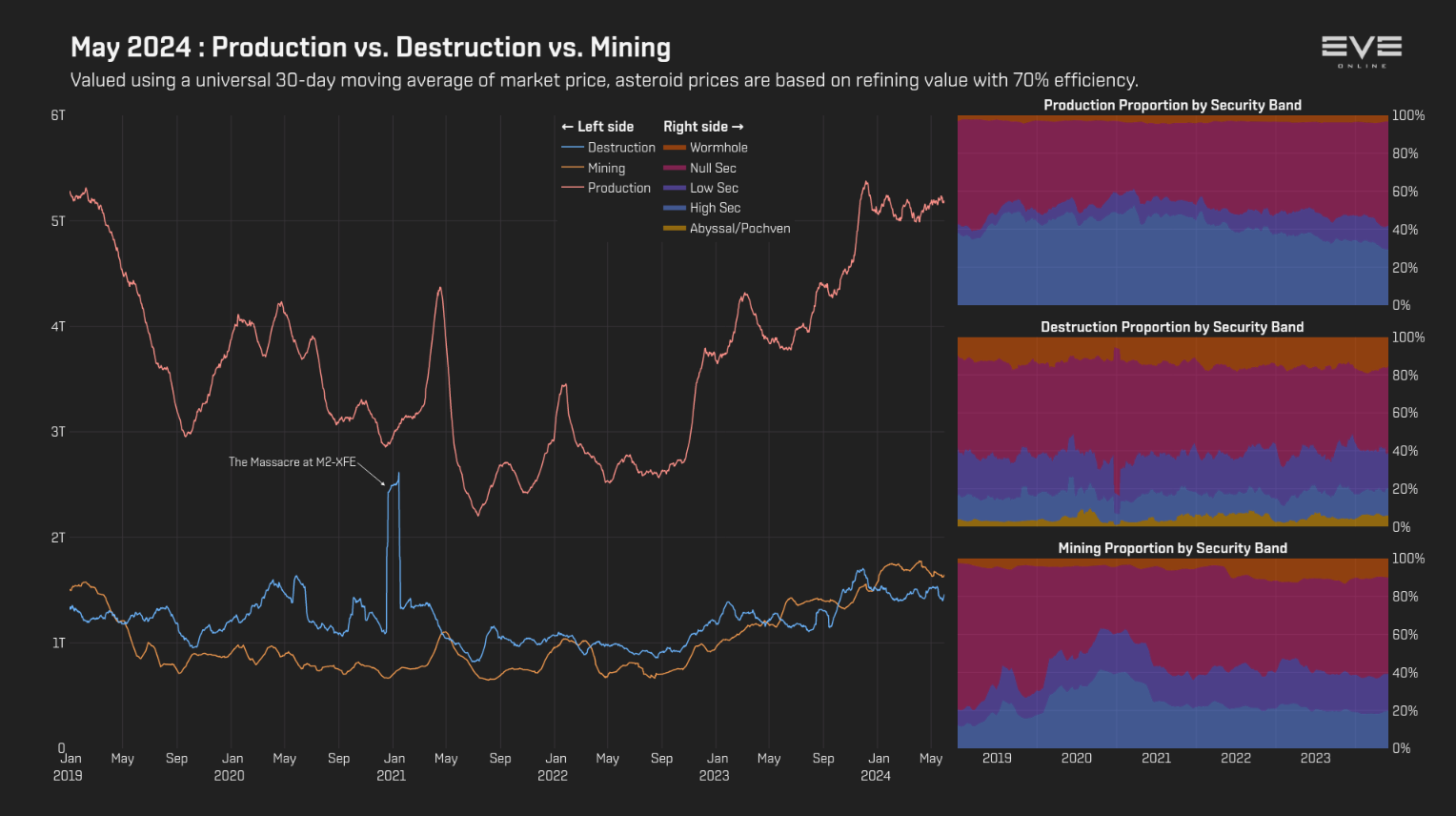
It was a 2003 space-faring MMO with a one-shard universe and entirely player-driven economy. Its economy is notoriously complex, featuring its own markets and companies as well as big wars fought over raw economic resources. These player-run companies can in many cases be eerily similar to contemporary DAOs (Decentralized Autonomous Organizations), with sophisticated rules of governance and shared treasuries. The game has had its bubbles, crashes and even instances of corporate espionage that are hauntingly similar to real-world financial events, showing that a currency or an asset doesn’t need to exist in physical form for it to be valued — it just needs a community that can agree on its value.
DeFi Stories: from Fantasy to Reality
The development of decentralized finance — known as DeFi — is one of the clearest real-world analogues to the economic experiments in fiction. Over the last decade, however, DeFi has surged from a niche concept to a multi-billion dollar ecosystem that allows users to lend, borrow, trade and earn yield without having to use traditional banks. It's similar to a play-to-earn video game, where economies are created by players and the trust relationships they build — based on code and consensus, rather than some central government. Decentralized exchanges, automated market makers, and renting resources (like TRON Energy) — all of these have their roots in the imaginary trading floors and guilds that existed solely within the world of games or film. The Energy Market, in particular, shows how far things have come: users can rent, trade and optimize blockchain resources in ways that would have seemed like science fiction 10 years ago.
From Tron to the Metaverse: Decentralization on Film
As technology evolved, so too did visions of digital worlds on screen. The 2010 movie “Tron: Legacy” plopped viewers into the middle of the Grid, which was an entirely self-contained digital world with its own rules, physics and currency (being: “Units”). This was an alternative world in which value could exist only in digital form and even the concept of any outside or central authority was suspended.
This notion of a permanent, collective virtual space came to its peak with the concept of the metaverse, coined in Neal Stephenson’s 1992 novel “Snow Crash” and later dramatically depicted in “Ready Player One”. Stephenson’s book proved eerily prophetic, portraying a virtual reality where people purchased digital real estate and goods with digital currency. His protagonist was a hacker who made pizza runs in the physical world but whose improvement-upon-reality role was as a warrior prince within what he called the Metaverse. This duality demonstrated how digital and real-world economies could become entangled.
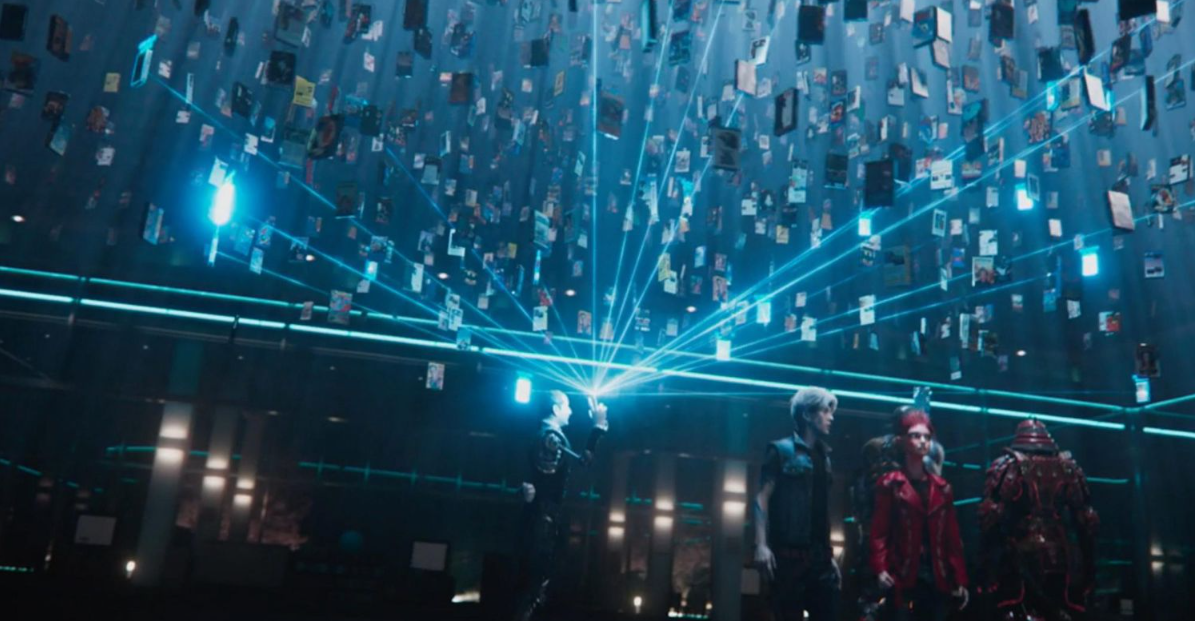
“Ready Player One” projected this line of thinking to a logical extreme: It imagined a world where many humans work, live and even socialize via digital avatars. But in these worlds, digital ownership is paramount. The contest to locate the Easter Egg in “Ready Player One” is a battle over dominion of the digital world itself. This is the immediate antecedent for the role NFTs are playing in the contemporary cryptosphere. NFTs offer a mechanism for proving ownership of one-of-a-kind digital items, whether it’s art, a collectible or virtual land. They are the technological manifestation of those special digital trophies we’ve been all striving to collect in imaginary universes for years. In these stories, the virtual Energy Market is not so much a venue for transactions as a battlefield over ownership and control.
In hindsight, the breadcrumbs are all too easy to trace. Our fiction has been workshopping the ideas of cryptocurrency for decades. These were stories that got us used to thinking of digital value, decentralized systems and the prospect of money not being under the control of banks or states. This wasn’t all done in a vacuum. And it’s not only film directors and game designers who have been influenced by cyberpunk fiction; the movement contributed to a real-world, cypherpunk subculture of the 1990s. The group, which included cryptographers, computer programmers and privacy advocates, used mailing lists to develop and implement systems designed to employ the use of cryptography to secure individual freedom in the digital age. Digital cash untraceable by any government was their dream. Out of this rich soil of rebellious, future-looking tech culture inflected with the themes of science fiction, Bitcoin eventually sprung.
That such a diverse group of fictional and now non-fictional creators converged independently on the same conclusions is strong evidence. It posits that cryptocurrency was never just chance, but rather an almost-inevitable development of our technological and incremental social ascent, a solution in search of a problem whose mounting prevalence could no longer be ignored. Our financial systems — designed for the analog age — were having a hard time keeping up with the new era of globalization and digitalization. The ideas of decentralization and digital scarcity, including those developed in speculative fiction and promoted by the cypherpunks community, presented an attractive alternative. It was a fantasy, not so different from humanity’s dream of walking on the moon, just waiting for its moment: waiting for the right undersea cable to rise out of the Pacific Ocean and into California; waiting for technology to catch up with the imagination. Crypto is the future that we’ve all been imagining together for so long.
New Tools for the New Money World
As today's former fictional world of digital assets becomes increasingly complicated, a new wave of technologies is turning it into something more accessible and efficient for all. These immensely powerful blockchain networks, however, aren't always easy to use. On the busy TRON network, for example, processing transaction fees has spurred novel user-friendly solutions where abstract concepts like Bandwidth and Energy can become directly synonymous with savings. Rental service of resources such as TRON Energy was gradually developed and became a significant part of the user experience. The idea of being able to rent resources on demand, as opposed to investing and locking up capital, is a simple answer to the demands of a fast-moving, network-centric economy — but it’s also an idea that anyone who ever had control over virtual resources in a game or has watched their share of movies about digital futures would immediately recognize.
One such weapon is the Netts Energy Charge Bot. It is developed to enhance the efficiency of TRON network and reduce fees while facilitating all transactions, especially USDT transfers. Instead of burning their own TRX for Energy use, which has always cost quite a bit if you had none left to begin with anyway (except during test periods), the bot will do it for you whenever it seems fit for entering or exiting Energy rentals.
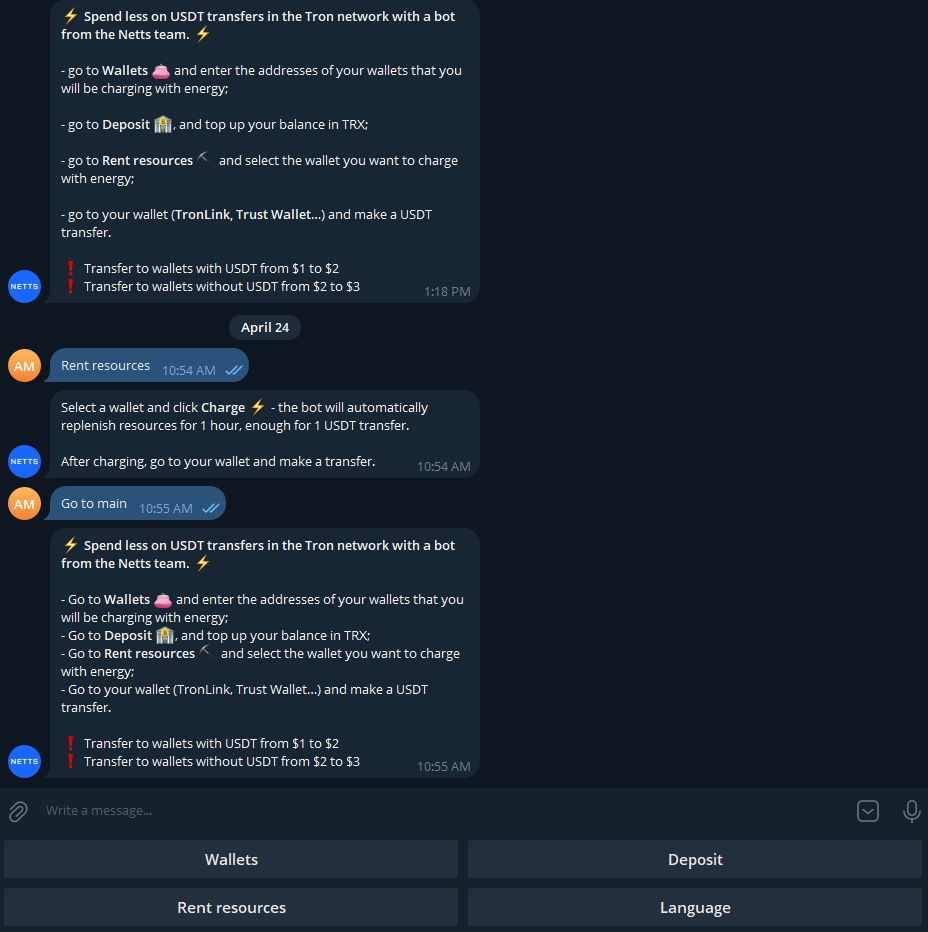
More than a project or protocol intermediary, the Netts Energy Charge Bot is more than a utility — it’s the missing link between the complex blockchain infrastructure and everyday users. By commoditizing the rental and allocation process of Energy, it brings down the entry walls while letting you take part in the DeFi world without turning into a network mechanic.
The process is straightforward. To use the bot, users input their wallet address, deposit some TRX into a balance account and choose which of their wallets they want to “charge” with Energy. The bot will automatically top up enough for a transfer and rent Energy for 1 hour. The bot counts up the exact Energy usage as soon as the user makes their transaction and deducts the correct TRX from the deposit. If they don’t use the resources, nothing is deducted from them, and users end up only paying for what they need. The idea: it’s a workable solution for making the crypto landscape that little bit more navigable.