Crypto Behind Bars: Underground Prison Economy
How inmates use smuggled phones, privacy coins and USDT to run a parallel prison economy — and what it reveals about crypto's adoption curve.
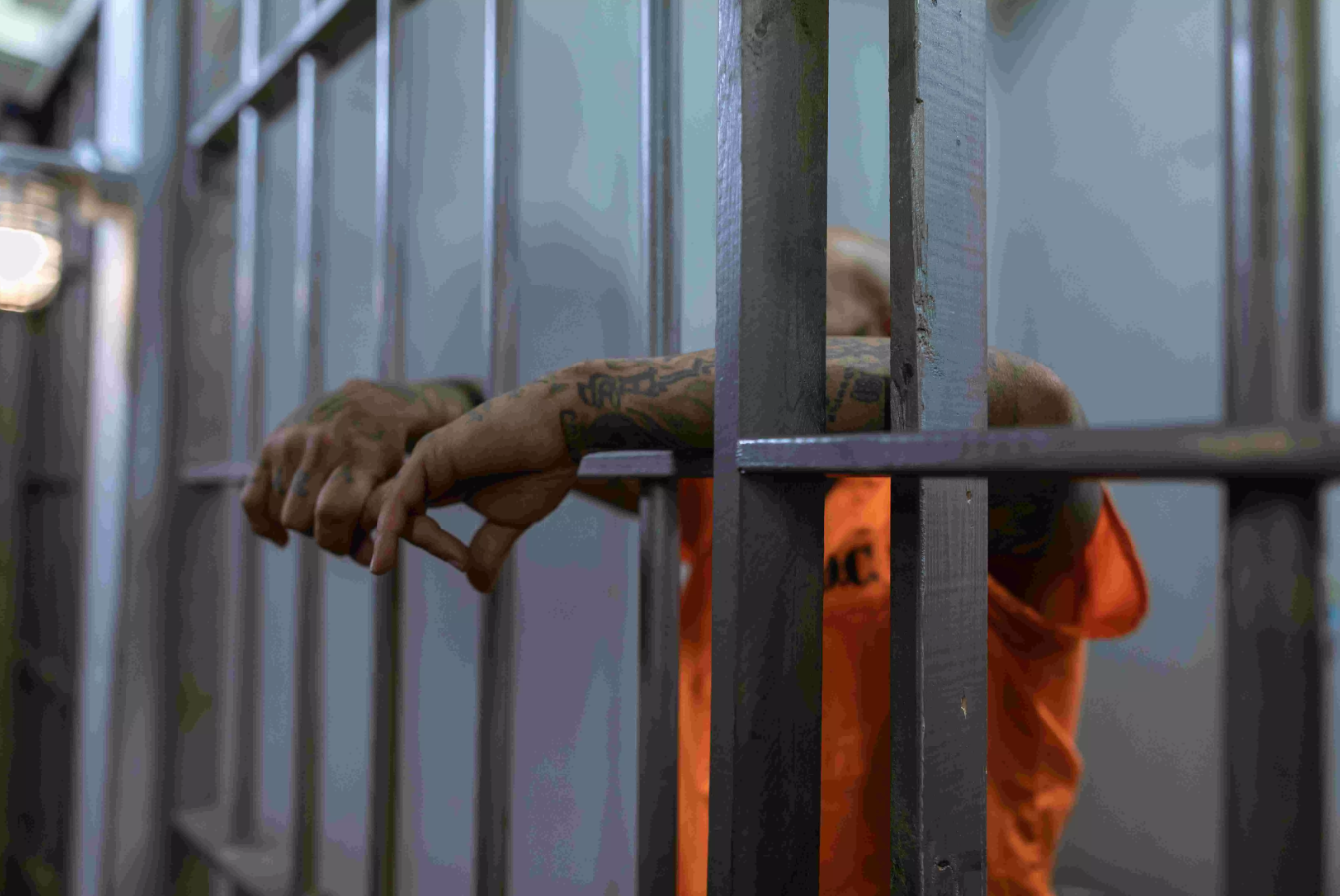
Prison is a microcosm of society in that prison is still society: it functions by the same basic rules of supply and demand, monetary exchange, goodwill, and favoritism. The difference is that the official currency — the commissary account, fed by family through a licensed pipeline and siphoned through a licensed store — pays only the licensed half of the psyche. The other, a monolith in comparison, operates with an unregulated currency that has existed in some basic form in every prison system for the past century and a half. Mackerel pouches. Ramen packs. Postage stamps. Cigarettes (those were the days) and then every other thing under the sun. That informal currency has grown to be the last decade or so and, at an increasing rate, it has started to become digital — in the last few years specifically, cryptocurrency.
This is not a story about one prison or one scandal. It tells the story of an economy that has always been there and has finally gotten its hands on the same tool the outside economy had been working to adopt for over a decade. Cryptocurrency: depicted as portable, censorship resistant (at least if you can pick your own currency) and at least partially anonymous, this is basically the encryption analogue of the square peg to fit the square hole of the needs of a population so incentivized to keep wealth mobile, invisible and uncensorable from administrators. The thing that shouldn't be surprising is that the prison economy has embraced crypto. The surprise is that it took this long to do.
Economy Behind the Walls
Anyone you know who's been incarcerated, or worked in a correctional facility, or researched prison life in any substantive way, will tell you that little things gain outsized importance when bigger things have been stripped away. A stamp book is thirty on the street but three hundred inside. Except this one pack of freeze-dried noodles is a perfect store of value that you can cut into fractions and sell for more than $2 at a time. After the cigarette ban, pouches of mackerel — yes, mackerel — emerged as the new standard medium of exchange in federal prisons; they're easy to carry, and they have some other characteristics commonly found in money, mate: they're durable, uniform, cheap, and withdrawal-resistant.
Prison economies are not free markets in any meaningful sense of the term. They create their own rank, their own monopolism, their own policing. But they're real economies — prices respond to the laws of supply and demand, arbitrage exists and people specialise in certain trades. Someone runs the laundry. Someone sells haircuts. Someone on the compound prepares gourmet-like meals using items purchased through the commissary — for a price. One other is the link for that one thing that trumps everything else in the aggregate total (the drugs, the phones or, in some cases more rarely, both) and that person sits atop a small but lucrative pyramid whose constituencies fluidly ebb and flow as inmates are released, moved or put in solitary for some unrelated matter.
And for most of the history of the prison-economy, the money at the very top of the chain was still, in fact, a tangible object. Money sent by relatives on visits or by corrupt staff. Stamps, for smaller amounts. Commissary credit for routine transactions. They just lacked apparatus for settling sizable transactions without the presence of cash, and for containing stored value beyond arm's reach — both from guards and from cellies and even law enforcement, anyone who might have sufficient incentive to rob you. The adoption of crypto inside prison systems has been quieter and less publicized than on the outside (but not in a fundamentally different shape) precisely because crypto solves both of these problems in one step.
Phone Is the Real Contraband
If inmates could not go on the internet, all of this would not matter and, officially at least, they cannot. Fact is that, in most large correctional systems these devices have become so ubiquitous that many administrators have as good as surrendered the struggle. Another dozen channels push phones in, most of them corrupt, not inventive. Multiple internal reviews over the past few years have shown that corrections officers are the leading source of smuggled phones in most facilities. A significant portion comes from visiting-room transfers, usually disguised among containers of food, children's clothing or body cavities. More recently, drones that drop packages in yards when inmates sit in certain windows.
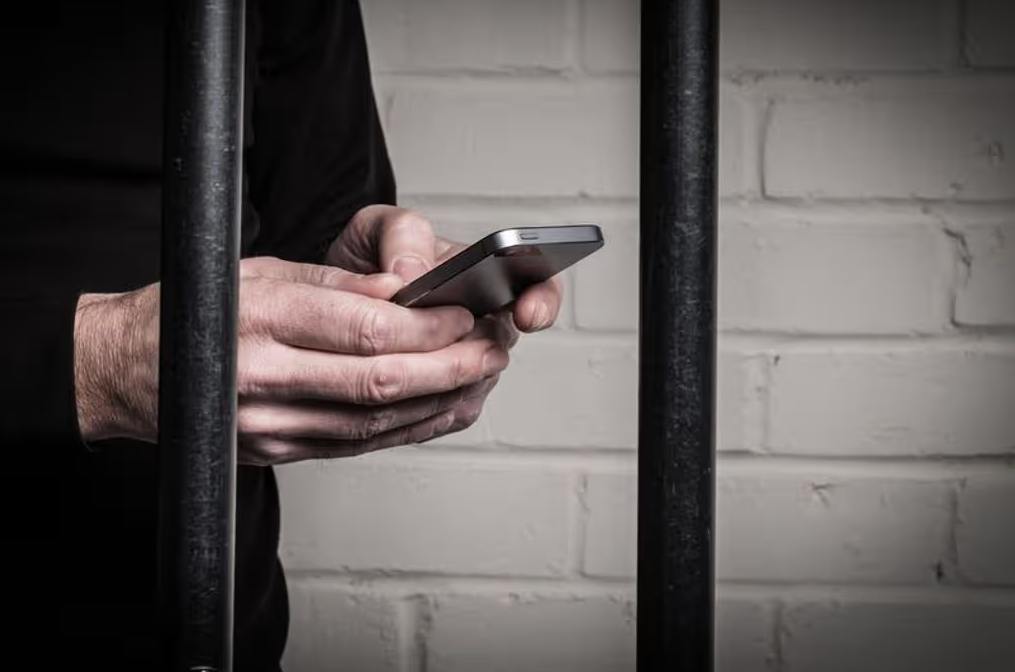
As soon as you get a phone in it, everything else can become possible. Text messaging. Encrypted chat. Signal. Telegram. And, inevitably, crypto wallets. A prisoner equipped with a functional phone and an operable wallet is, in many financial respects, a player in the global digital economy — at least, a dexterity- and battery-life limited player. That same phone that has the conversation with a spouse also has the passphrase to a Monero wallet or the log-in details to an exchange account a relative decided to open in their own name just prior to incarceration.
Among the most stunning cases are those of prisoners who have taken the long free time as an opportunity to do real digital labor. One well-publicised instance in the US consisted of inmates who built working computers from contraband computer parts smuggled piece by piece into the prison, stole staff login details and began opening Bitcoin wallets, Stripe accounts, bank accounts and credit-card accounts within the prison. The ambition on show was sizable. In actuality, that same thing can be done by any inmate with a phone, a little bit of cash, and an agreeable friend on the outside, just without the dramatic flair.
How Crypto Goes with Prison Ecosystem
The most practical use of crypto in prisons is also the most common use of crypto outside of prisons: buying stuff without being detected. Inevitably, drugs are still the most requested illegal product within almost all jails. More than half of this contraband drug found in federal prisons in the last reporting period has been for buprenorphine, the prescription opioid-addiction medication that is small, easy to hide, and in high demand among inmates with opioid-use disorders, who generally do not receive medication-assisted treatment at the facility. That's a large part of the rest, and standard drugs moved in small volumes, the rest is synthetic K2.
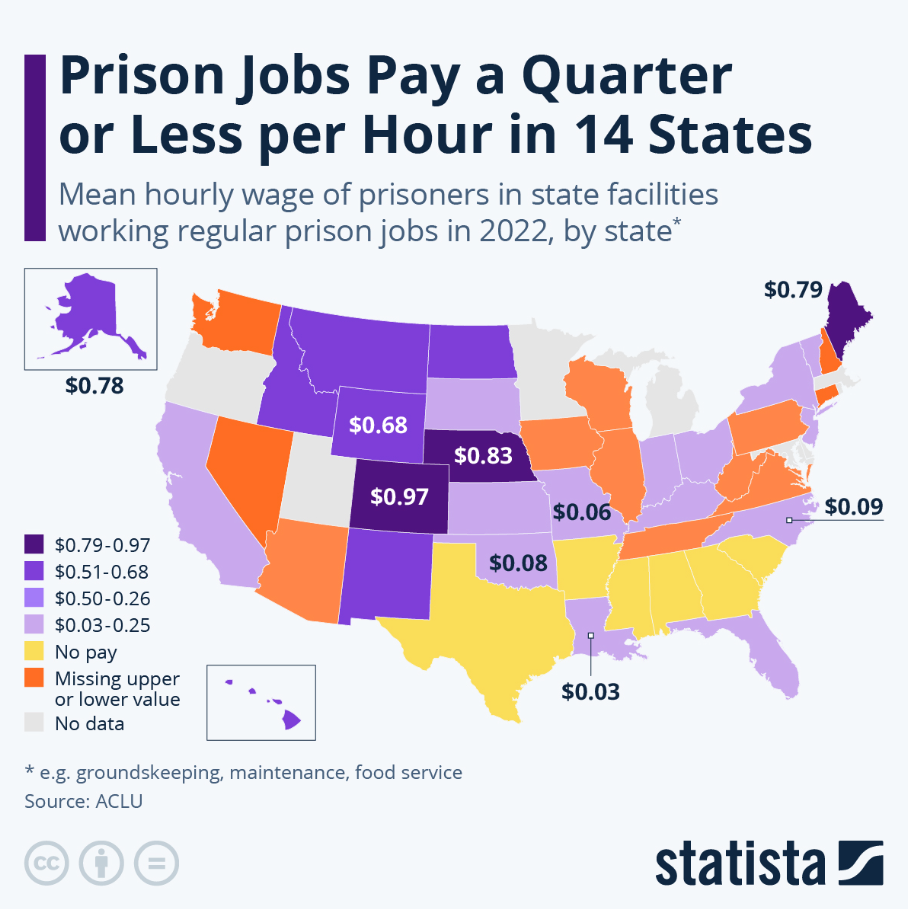
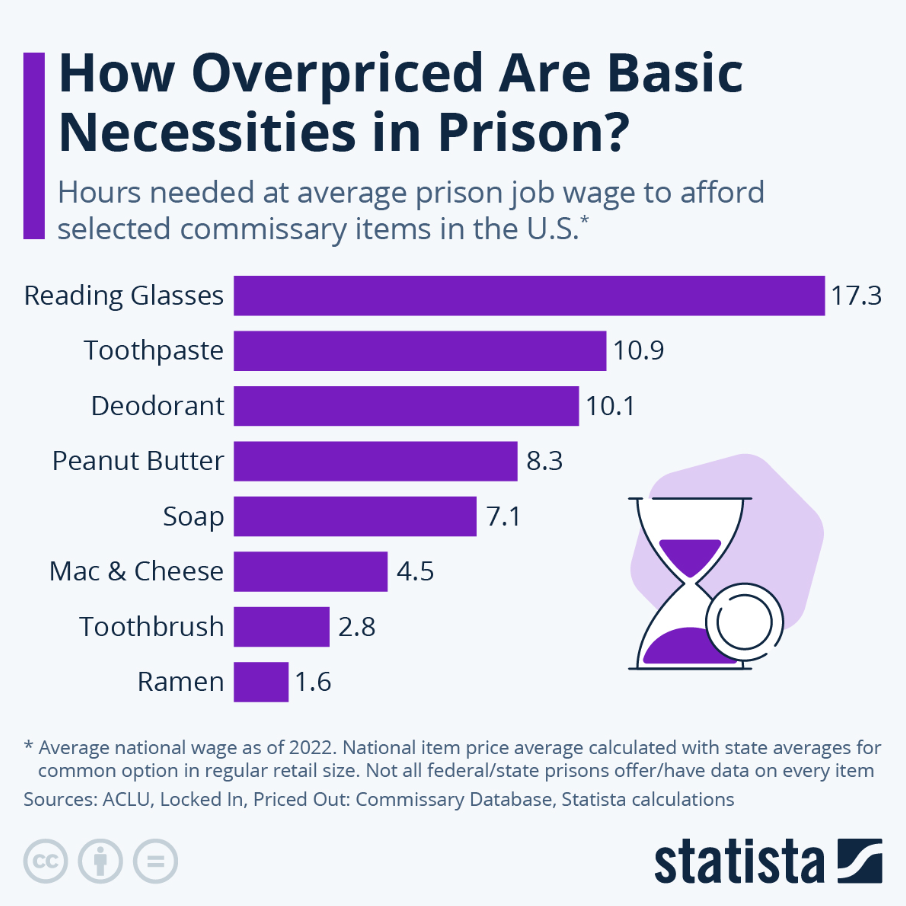
As you can see, from picture above, actual incomes of inmates make any significant purchases seem pretty much impossible - doesn't mean it stops them. All transactions of these products must finalize the money in some location outside the jail's guidance. Regular ol' channels, whether cash exchanged at visits, pre-paid debit cards, money going to family members of the seller; all work, but all leave tracks that can be subpoenaed, seized, or used as evidence in later investigations. Crypto largely sidesteps those tracks, particularly using privacy coins or through stablecoin transfers over chains like TRON, to sweep funds from one wallet to wallets controlled by outside helpers on behalf of the inmate and the dealer. The model is very straightforward: the outside contact of the inmate receives USDT or Bitcoin, forwards that to the wallet indicated by the supplier and the contraband comes in through whatever channel is this week's favored route. The ledger is not in a bank; it is on blockchain.
Corruption payments also use crypto. Often, the guards who smuggle in phones or contraband charge extra for this privilege, and the safest way to pay guards through a digital wallet, for both the sender and the recipient. Cash is traceable on investigation. A bank transfer establishes a direct connection between the recipient and the sender. For example, if a correctional officer accepts a monthly payment in USDT, the inmate's family can pay the officer from their own account without ever leaving a paper trail connecting the two individuals but the family can fund those payments without ever going through a bank that may recognize their activity as suspicious. Examples unearthed in recent years — a corrections officer and nurse caught transporting drugs inside an Ohio facility; District of Columbia cases involving relatives diverting payments; similar tales in a half-dozen other states — illustrate that this has been going on for years and the only reason to catch anyone is some unrelated overreach elsewhere in the scam.
Lastly, are the simple facts about preserving historical wealth. Most of those imprisoned had cash before their arrest, and a lot of that money is, under normal asset forfeiture procedures, at risk. An individual who quietly had Bitcoin in self-custody prior to their conviction may still have coins that are in a legal sense theirs, still safe at a trusted third party, and still completely invisible to asset-forfeiture proceedings that had power over bank accounts and real estate. That leaves a legal gray area where prosecutors are broadly asking specific questions about cryptocurrency holdings in plea discussions. However, the real-world difference between "what the court knows about" and "what the defendant owns" is wider than it ever used to be, and part of the reason is crypto.
Within this economy, every little operational detail matters even more than it would otherwise. A wallet operator inside looking out has little room for error as the margin of profit on bringing fresh currency in is thin, with each dollar spent on network fees being a dollar they could not use to take 20% off their next purchase. For exactly this reason USDT fees on the TRON network have come under special scrutiny — USDT is the most levelled stablecoin in the prison-adjacent crypto world, also because it is dollar-stable, that it is widely supported, that it runs on chains where USDT sends low-cost enough to make micro-transactions realistic. All the third-party helpers who deal with inmate wallets depend on USDT-sending optimizers since burning TRX on each miniscule transaction can get expensive much more quickly than even the average daily user appreciates.
Problem of Reputation, and Its Opposite
Whenever one of these cases crops up in the media, a similar set of comments follows suit. The use case that spurred the regulation outcry against prison using it will get brought up by politicians who are anti-crypto for entirely different reasons as an indication that crypto is criminality built into its core. Some of the well-known financial-industry voices nod because they have the institutional incentives to want to see cryptocurrency fail. And another kind of commentator, those have been waiting for vindication since 2013, wrote another column about how crypto's most devoted users are in fact the people that society already decided should not have any money.
None of this is wrong, precisely. Prison-related crypto is almost by definition illegal to use — these are things that were non-legal outside of prison, and the access itself is illegal in many cases since it involves corrupt officials. But it is also myopic. All the history of the adoption of consumer-technology is the history of bad looked-in-isolation early-use cases that were actually leading indicators of broader utility. Before it was home to Grandmas and e-commerce, the internet was a place for piracy and child porn. Organized crime embraced encrypted messaging before journalists and normal users who were just hoping to keep their employer from reading their texts. All of these technologies gained early users who had concrete reasons to require its features — and rather focused reasons at that, specifically both legitimate and less than legitimate.
Crypto fits the same pattern. A technology that is literally life-saving to people who low-trust the institutions because they have been abandoned by them, because they are hiding from them, or because they know first-hand the institutions are corrupt — is valuable also to people who just want a different option. Inmates are literally at the far end of the "people with reasons to distrust financial institutions" distribution. If they are heavily adopted crypto, it does not mean crypto is a prison tool. It confirms that the tool does exactly as it says. And if it works for the person with every logical structural motivation to paranoid watch out for being monitored, then it will also ultimately work for the rest of humanity, just on a different scale and different applications.
What This Means For Adoption
The logic here is not new. It's the same kind of argument that applies to just about every technology, the early users of which were, let's say, less than socially desirable than its later ones. American drug dealers helped to introduce fax machines in the United States for the rapid transfer of documents between cities. Only criminals needed them before, and that served to put them off limits to ordinary people, until, of course, ordinary people began using them for outside-the-law reasons. VPNs went mainstream in part because regular folk wanted to watch foreign Netflix, but they started as security tools and were early among the tools used by those trying to escape one state supervision or another. For each, the arc was identical: features that made the tool relevant to early adopters were, it turns out — quietly — relevant to the masses, and the mainstream followed in 10, maybe 15 years.
The population within prisons is distilled down to the characteristics that really matter, making prisons a strangely good test case for this pattern. Low trust. Limited access. Strong preference for privacy. Every transaction comes with attached high stakes. All the heavy implications of that tech failing. Crypto would never be a proper technology if it could not work in that environment. The most convincing evidence that it is built on good design decisions is, quite simply, that it does. It is functioning under those assumptions, it is doing so at ever greater sophistication and scale.
This uncomfortable corollary is also true: the next decade of mainstream adoption is bigger than whatever edge cases policymakers can apply. Stripping mixers from wallets, disallowing privacy coins, forcing KYC on exchanges — those are the moves that will define what the adoption curve looks like, but it won't change the fact of an adoption curve. It works even at the hardest end of the use-case distribution. The easier ends will follow.
Indeed, the irony here is that it may be the normalization of crypto payments within challenging environments that propels the groundwork for consumer infrastructure for the average user. And those very edge cases which draw political ire have been among the most vocal forces behind innovations in user-experience tools, fee arbitrage, and low-friction transfer services. If reliable services make sending USDT seamless, without the need for an accumulated TRX balance, pre-rent Energy to broadcast an action, or maintain Bandwidth manually (basic household services for today), they are satisfying a deep need: moving value, frictionlessly, just like a remittance worker or an operator of a distant wallet operating funds for someone inside a facility would spot instantly.
This should not be interpreted as an endorsement of illicit use of crypto-assets in prisons. This is merely a comment on reality — the way in which technology adoption occurs. Cryptocurrency is not going to be un-invented. It is not going to have its wind crushed by regulatory pressure no matter how strong. Its features will continue to suit the purposes of those who have more reasons to appreciate them — those behind bars, those building independent newsrooms, those simply tired of having their money flow through four banks and six middlemen on its path to someone they meant to pay anyway. Not a scandal that these populations use some of the same tools. This is a sign that the tools are addressing a genuine need.
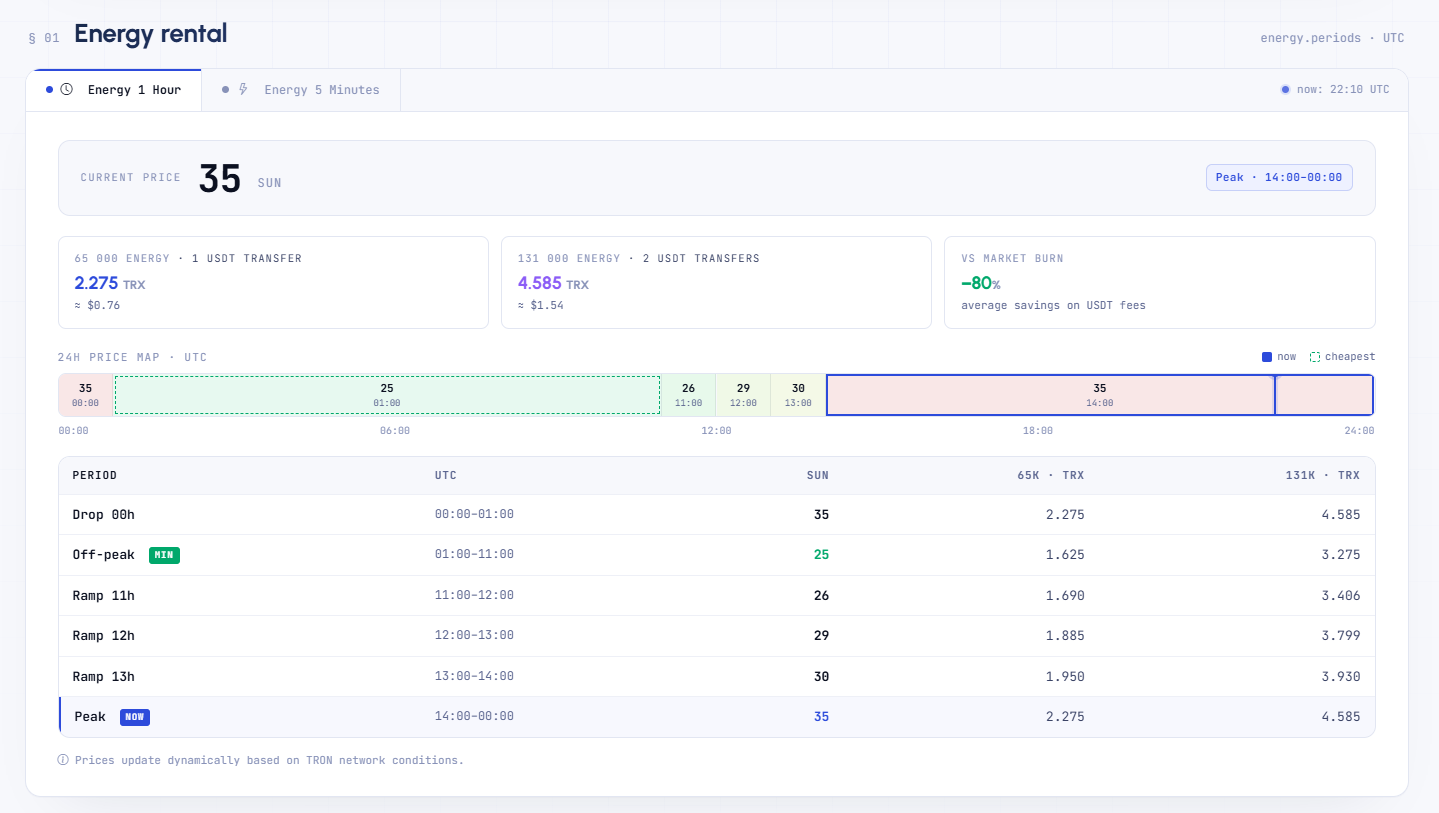
And for those on the outside that just want to transfer USDT without huge fees, Netts provides real-time monitoring of prices for Energy - buy when others dont pay attention and improve your transaction efficiency. All the prices are updated live - just monitor the statistics and save based on peaks and ramps that happen naturally each day on average.