Control over the Idea of Money — Why Crypto Rewrites the Rules
Who controls money? About central banks, reserve currency and why Bitcoin and crypto challenge the old monetary order.
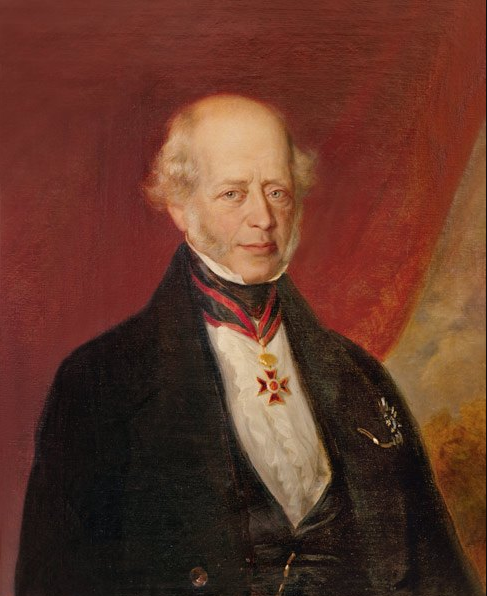
Who gets to decide what money is? A right to issue currency has typically belonged to nation states and their central banks — and with that right comes dominion over the economic lifeblood of countries. This power isn’t only the capability to create pieces of paper (banknotes), it is about creating the value itself. The same holds for reserve currencies — the few currencies in which governments around the world hold value, and that underpin global trade and finance. The power to print a reserve currency is the power to rule global economics, and empires have waged wars for it from time immemorial.
Money is itself a social contract, an agreed illusion or a system of faith in both paper and metal and digital code — with little intrinsic value; it’s the con that we’re all getting played by. Or as Voltaire said, “Paper money eventually returns to its intrinsic value — zero.” Whether it was the Spanish Real, the Dutch Guilder, British Pound Sterling or U.S. Dollar — being the reserved currency status has served geo-political power and financial supremacy. But the privilege of printing (or creating digitally) the world’s reserve currency is more than a technical detail: it’s a lever of global influence and a mechanism for determining the destinies of nations.
Iron Fist of Monetary Dictatorship
Scarred by two world wars, the 20th century was a violent clash for economic dominance in many ways — at its core, over who should issue and control money. Millions died not for ideology, or territory, but in the fight over whose pieces of paper stamped with whose official seals would be adjudged valuable. The history-minded among us were not oblivious to this. Add to that the well-known quote of Mayer Amschel Rothschild's "Give me control of a nation's money and I care not who makes its laws." A.K. Chesterton, 1946 — “Money can only be understood in terms of power. In the hands of the consumer it is power over goods. In the hands of the creative capitalist it is power over the means to produce goods. In the hands of the finance-capitalist, or money-lender, it is not only power over producers and consumers, but power as well over nations and their governments".
The fight for control of money has, however, already changed the world. The Silver Real of the Spanish Empire made from the New World riches was one of the world’s first truly global currencies and it circulated around a straight line between Manila and London. The Dutch Guilder was up next and banked on the might of the Netherlands’ domination of global trade and finance. Another voice of sound and stable currency in the 19th century was Britannia’s British Pound Sterling — whose strength was impressively anchored by Her Majesty’s powerful Royal Navy and widespread Empire. But the cost of two world wars and the economic rise of the United States resulted in the dollar overtaking the pound as that standard-bearer before mid-20th century. These shifts were more than financial events, however; they were sudden reordering of global power that often arrived with conflict and disorder and redrawing maps.
And historically there was no escape from that one. Its currency was a fortress whose gates were hard and fast ramparts of law, guarded with threat of vengeance. To rebel against the state monopoly on money was by definition to defy authority, that is, in practice, an act of treason. The rules were stern and inexorable, iron bars behind which the whole force of state repression fixed you in place. Now, consider the fate of countries whose currencies used to rule the world. And that dethroning of Spain’s Silver Reals — the currency of the world’s first global empire, founded on silver from the Americas — did not last as that empire lost its luster. Dutch Guilder: The Dutch golden age of trade apocalypse, when the Brits were in charge with their Empire on which “the sun never sets”. Britain's influence fell as a result, and following WWII the pound was replaced by the US dollar. All of them were on the order of tectonic shifts in global power, and all drove home the lesson that having money is indeed possession — if not necessarily of an empire, then at least of many who do.
The cost of breaking the law was steep. In 18th-century Britain counterfeiting was punishable with the death penalty — meaning the accused would be hanged.
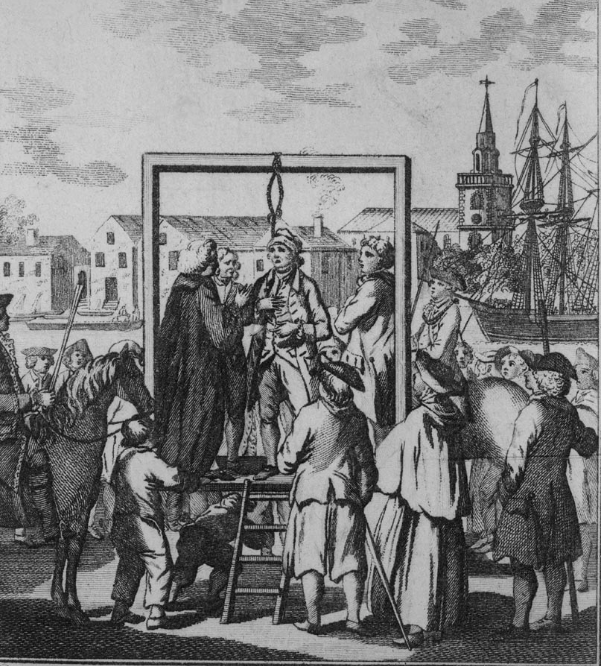
Throughout the United States, any effort to innovate in private currencies or competing ideas around the dollar was stamped out with long prison sentences. And because the state had a monopoly on money, it could enforce it not just in court but at gunpoint. Even in the 21st century, attempts to create alternative currencies have met with regulatory crackdowns, seized assets and prison terms. The message was clear: you do not break money’s rules.
Digital Revolution Was Unthinkable
From that history of centuries, if not millennia, of outrageous centralization of power, it wasn’t only revolutionary to have decentralized money; it was preposterous. At any other time in history, something like Bitcoin would have been squashed before it even got started. Its creator — who went by the pseudonym Satoshi Nakamoto — would have been the target of a manhunt, and perhaps also faced its harshest sanction.
Yet in 2009, Bitcoin debuted. It was the first to solve a long-standing problem in digital assets: double-spend without relying on a trusted central authority. It was a complete game changer, an under-the-radar revolution launched with a whitepaper and some genesis code. It created a value-transfer system that answered to no government, had no king above it and obeyed no central bank. Bitcoin opened the floodgates to a torrent of innovation. That soon turned into projects like Ethereum and smart contracts, which put this idea of programmable money on blockchain and built the foundation for a thing that looks something like a new global decentralized world financial system. Then we had the stablecoins; USDT on TRON for example, with the stability of a fiat currency like the US Dollar to cross borders faster than ever before and in some ways making it easier to transact than cash itself. This explosion of creativity, all taking place outside the priestly channels of traditional power, was more than the old worlds were prepared for.
The technical breakthroughs of blockchain technology — shared ledgers, cryptographic security and consensus protocols — made possible a new sort of trust that did not rely on intermediaries like governments or banks. The crypto market went berserk, exploding with thousands of new projects, tokens and decentralized applications. Ethereum’s smart contracts make it possible to create entire financial systems without intermediaries — lending, borrowing, trading, insurance. Rising DeFi craze and the large-scale application of stablecoins like USDT on TRON are the important factors that facilitate person-to-person and real time cross-border remittance value transfer which is financially inclusive, admin-permission-free. In the case of USDT on TRON, transfers have become part of the foundation for global crypto liquidity and set an efficiency standard that legacy banking systems cannot reach.
Challenging the Old Guard
Cryptocurrency is something that challenges the authorities which have monopolized currency in the past. Every time that somewhere in the world somebody interacts with someone else without requiring an intermediary, power is ever so slightly leaking from the old gatekeepers. Whenever a programmer constructs a new financial service on the cryptonetwork, she has to start by creating an entirely new currency and persuade everybody to use it whether or not it is in fact better suited to that particular application than an alternative. And that is why the newly ascendant crypto market has met so much resistance.
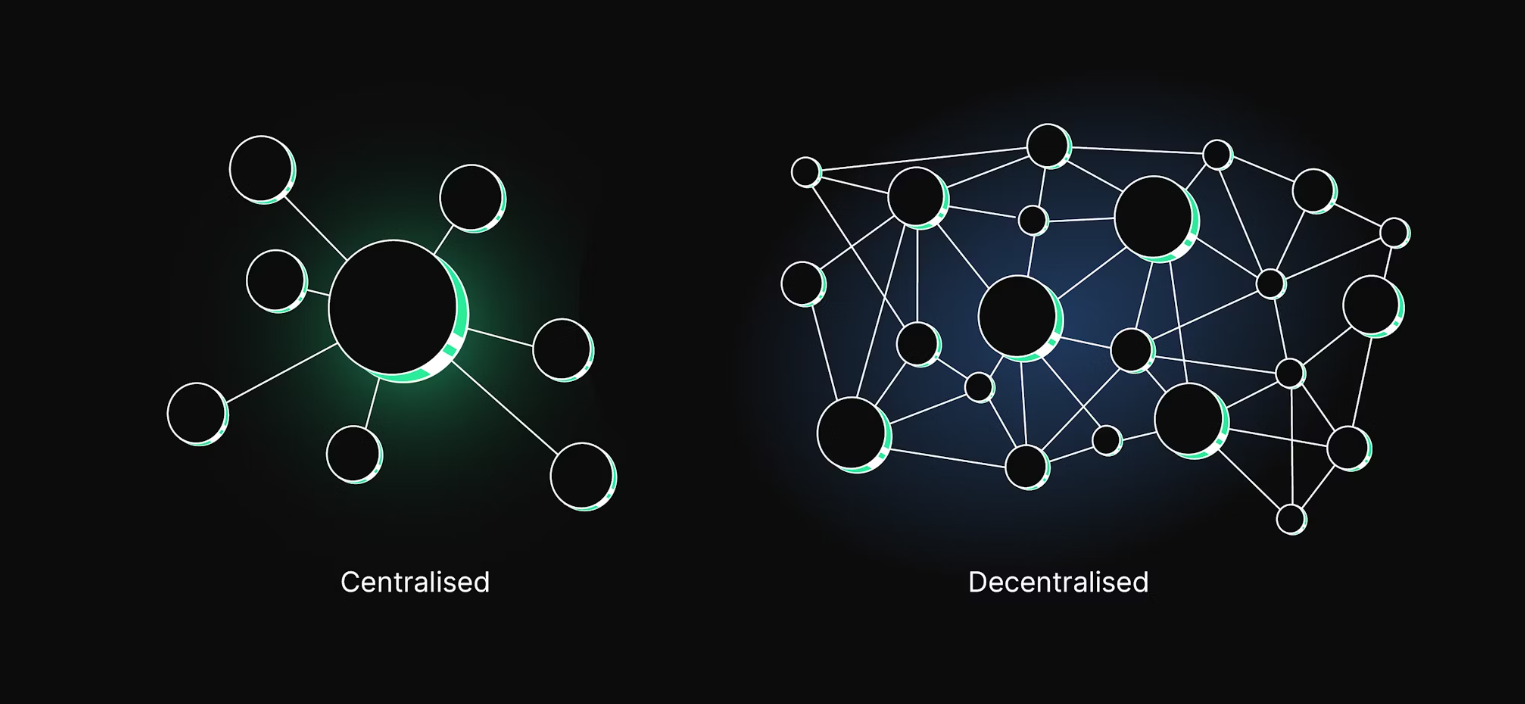
The idea of an open, borderless and permissionless system for value transfer per se doesn’t sit well with those who cling so dearly to control.
But the struggle is not over. Crypto is rewriting the rules, but the book isn’t done being written and we’re still in Chapter 1. It’s working, as anyone who is actually paying attention can see. But those who have a stake in the old order are not going to surrender power without a fight. They will want to mock, control and cut off this progress at every turn. We read about it in the news every day. Politicians who haven’t the foggiest notion what blockchains and encryption are, love to scapegoat it as a route for drug runners, effectively ignoring that massively superior volumes of criminal activity still take place with good old-fashioned paper. Central bankers are often in such great rush to present their CBDCs (wolves in sheep’s clothes) as a solution for even more surveillance and control disguised as innovation. They work to gatekeep the financial system so that it’s difficult for crypto companies and their customers to get bank accounts, and hard for users to move money between the old financial world and the new one.
The media tends to highlight risks and problems in the crypto area, while overlooking innovation and benefit. But, despite these attempts, adoption rates are on the rise. Big banks drool as they finally offer crypto custody and trading services, new products are being created — and countries like El Salvador have become symbiotically attached to Bitcoin.
Unstoppable March of Progress
But momentum is unstoppable despite these headwinds! History provides a clear parallel. Politicians and military, always in the employ of the aristocracy, were turned on the people to keep them living as some of them had long been comfortable doing when most were bending under a system that served to line only relatively few pocketbooks. They also reviled the rising merchant class and new industries that were reshaping society. They passed laws, they fought wars to protect their power, but they could not resist the coming changes. The world changed, commerce adapted and a system that was built on capital and industry replaced the old one. Their battle was an unwinnable one, against the currents of history themselves.
The result will be no different for those who try to fight the spread of currency. Today’s aristocracy is, for the most part, comprised of gatekeepers of an old financial system who are clinging on to a failing world. They can get in the way, and they can spread FUD, and they might be able to delay things — but ultimately there’s no stopping it. The underlying desire for financial self-sovereignty is just too strong. As for efficiency, transparency and worldwide access, cryptocurrency is a vast improvement upon the expensive exclusionary old-school model. You can’t get this genie back in the bottle.
There is a snowball of momentum behind cryptocurrencies now. Global crypto market cap surpasses $2.5 Trillion. Cryptocurrencies have served as a lifeline to people in places with hyperinflation or capital controls, allowing them to preserve the value of their money and make purchases that would otherwise be impossible. Growing USDT transfers over networks like TRON have enabled people in emerging markets to access dollar denominated assets without requiring a local bank. It’s lowered the political bar of getting users at least once they have them in TRON’s world of rentable Energy and USDT with fees.
Inventing the New Finance World
And as this new world of finance takes shape, it’s full of pragmatic inventions that tackle actual problems and disperse the system. One such is the Netts USDT Transfer Tool — it tackles what appears to be a small issue but can actually be more than annoying on the TRON network. A majority of users are in a “Catch-22” — they are unable to pay the transaction fees or even acquire Energy (TRX) with which to transact, using their USDT. Their funds are effectively frozen.
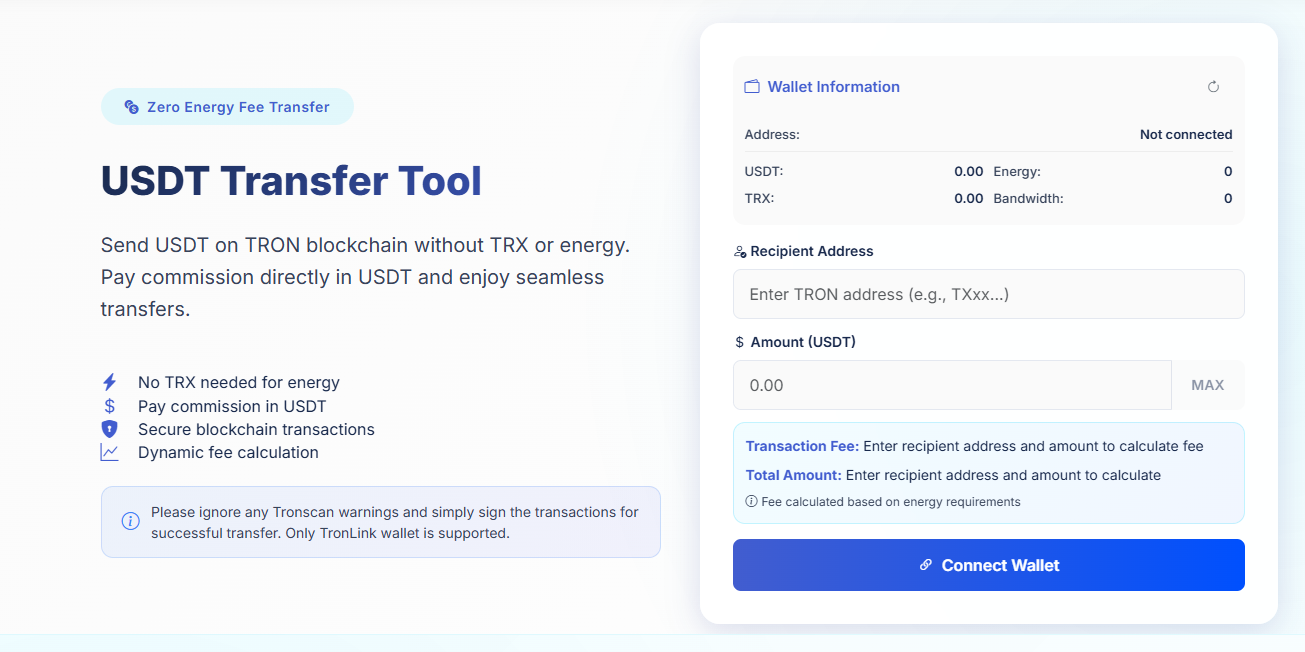
Traditionally, the solution was cumbersome. For the user to do so, however, the user would need to go get off exchange a small amount of TRX and then withdraw it to their wallet. From that point there’d be multiple steps making things difficult and slow. Netts elegantly solves this problem. It allows users to make USDT deposits by only paying the network fee, and also supports transactions of USDT. Part of this is that the tool takes care of all that backend machinery, whereby you can essentially think about it as renting Energy on behalf of a user to power that transaction without them ever having to hold TRX. It’s all seamless and secure.
The Netts solution is more than a clever technical hack — it’s a glimpse into what the future of frictionless finance might look like. By removing the need to hold TRX and by allowing users to pay all fees in USDT, Netts has removed one of the biggest bothers in the TRON ecosystem. For instance, its service is completely automated and designed for both beginners as well as experts. It is also an interesting way for businesses to cover a transaction cost, as well as provide a frictionless experience for customers.
1. Transfer your USDT on TRON with no need of any TRX or Energy. Pay commission in USDT, and make the transfers easy, secured and non-custodial.
2. Goodbye, "Energy Wall" — Netts determines the correct Energy for you and completes your transaction.
3. Can be used with your TronLink wallet. No middleman: no back and forth between multiple wallets.
With an increasingly mature crypto market, products like Netts are breaking new ground in the adoption of digital assets which are both safer to use and easier to obtain. The old world of money was of gatekeepers, barriers and exclusion. And the new world, fueled by decentralized technology and novel solutions, is here. The rules are being rewritten, and we will never go back.