Dark Side of Crypto — Currency of the Underworld
Crypto’s dark side: laundering, mixers, and darknet pipelines — and how law enforcement uses the blockchain to fight back.

In early 2023, the international criminal law enforcement announced that they took down Bitzlato, a Hong Kong-based crypto exchange. It was no small operation — a capstone on a multiyear investigation into a financial hub that had apparently established itself as the leading money laundering vehicle for the darknet’s infamous Hydra Market. Hydra was a leviathan of the dark web, processing hundreds of millions of dollars in drug sales, stolen data and other illegal goods and services. Richard Bernard was alleged to have laundered in excess of $700m through Bitzlato, providing a key intermediary service for criminals seeking to turn their digital profits into apparently legitimate funds. The initiative was a collaboration between law enforcement agencies across the United States, Europe and Asia, which had seized servers and digital wallets used by the cybercriminals and arrested some of their leaders.
This case pulled back the curtain on a harsh reality: for all its innovation, the world of cryptocurrency has a vast, uncharted underbelly that — as it continues to find valuation and legitimacy in markets around the world — is becoming an increasingly sophisticated financial backbone for a new age of organized crime.
The Bitzlato affair was not unique. In the years prior to its demise, the Hydra Market had signaled just how large and advanced today’s cybercrime world could be. Its keepers constructed an expansive system that enabled two-bit criminal enterprises to shuffle millions of dollars around the world while flying low under law enforcement’s radar. The Hydra-Bitzlato pipeline was just one of hundreds, but an illustration of how the crypto market has been weaponized by such players — those with technical expertise and a readiness to operate beyond the law. The takedown reverberated in the underworld but also underscored the dynamic cat-and-mouse relationship that criminals and enforcement authorities continue to play out in the digital era.
Crime-Baiting Allure of Digital Currency
Why does an outlaw go digital, rather than just carry a suitcase full of unmarked bills? Apart from anything else, there is the matter of pseudonymity. Unlike a bank account, a crypto wallet has no connection to a person’s real-world identity. Transactions are posted on a public ledger — but only as a string of letters and numbers. For a multinational drug smuggling operation or arms dealer this is an incredibly useful layer of obfuscation; hundreds of thousands can slush about between faceless accounts.
Second, most cryptocurrencies are decentralized: there’s no central institution — a bank or company with access to your money and personal information — for hackers to attack and no authority with the power to freeze transactions or question their legitimacy. That does away with the choke points that law enforcement has relied upon to shut down illegal financial flows. Combined with the fact that it knows no geopolitical boundaries, crypto makes for a criminal’s cross-border gateway. Payment for a weapons shipment can skip a continent in minutes, without setting off the alarms that flash with a multimillion-dollar bank wire transfer. That efficiency, that obscurantism, has made digital currencies a boon to the funding and operation of massive criminal enterprises in modern times.

But the appeal runs even deeper. Traditional financial systems are constructed on mounds of regulation, from Suspicious Activity Reports to international agreements that make it possible for resources to be frozen and forfeited. Cryptocurrencies, on the other hand, exist in a regulatory patchwork. Some have restrictive guidelines in place, others are safe havens for exchanges and wallet providers. Criminals use these gaps to move money through a chain of exchanges in multiple countries — a practice known as regulatory arbitrage — to help disguise the source and destination of illegal funds. The advent of the decentralized exchange (DEX), which enables the direct peer to peer exchange of assets without the involvement of a broker, has served to complicate matters further, offering up new methods for laundering funds under little or no scrutiny.
Hard Part of Chasing Phantom Money
For years, law enforcement was in a desperate game of catch-up. Tracking dirty money amid the shadowy universe of cryptocurrency was like chasing ghosts. Criminals soon became more sophisticated in their efforts to deepen the shadows they operated within, creating services at one remove from criminal markets called “mixers” or “tumblers” that pooled and mixed crypto pulled from multiple sources, effectively making it nearly impossible to trace any single coin back along the path it traveled. Tornado Cash, a mixer accused of laundering billions, including money for state-sponsored hacking groups, was as big as this problem got.
Apart from mixers, criminals have adopted a variety of obfuscation strategies. Moving wealth discreetly between blockchains, a practice known as chain hopping and typically done with bridges or wrapped tokens, is now becoming a popular strategy to try and obfuscate the trail. Then there are privacy coins like Monero and Zcash, which were specifically designed to make transactions untraceable, adding another complication. Others employ one of these so-called peel chains — breaking down large sums into thousands upon thousands of little transactions all sent to a new address — that the money trail is nearly impossible to follow. Others take advantage of the absence of KYC (know your customer) requirements on some platforms, or use middlemen over-the-counter brokers who are in the business of exchanging large amounts with little checking.
These hurdles can help many to get away with crimes for long periods of time. For nearly a decade, James Zhong kept 50,000 Bitcoin — an “extravagant” sum worth around $484 million today and once believed to be worth far below that amount before the digital boom — that he had stolen from the Silk Road marketplace in its early days. He employed a web of wallets and obfuscation, maintained an opulent lifestyle in secret, and left investigators nowhere to go but cold. It was by dint of years of meticulous digital forensics that they were finally able to put the dots together and recapture their fortune.
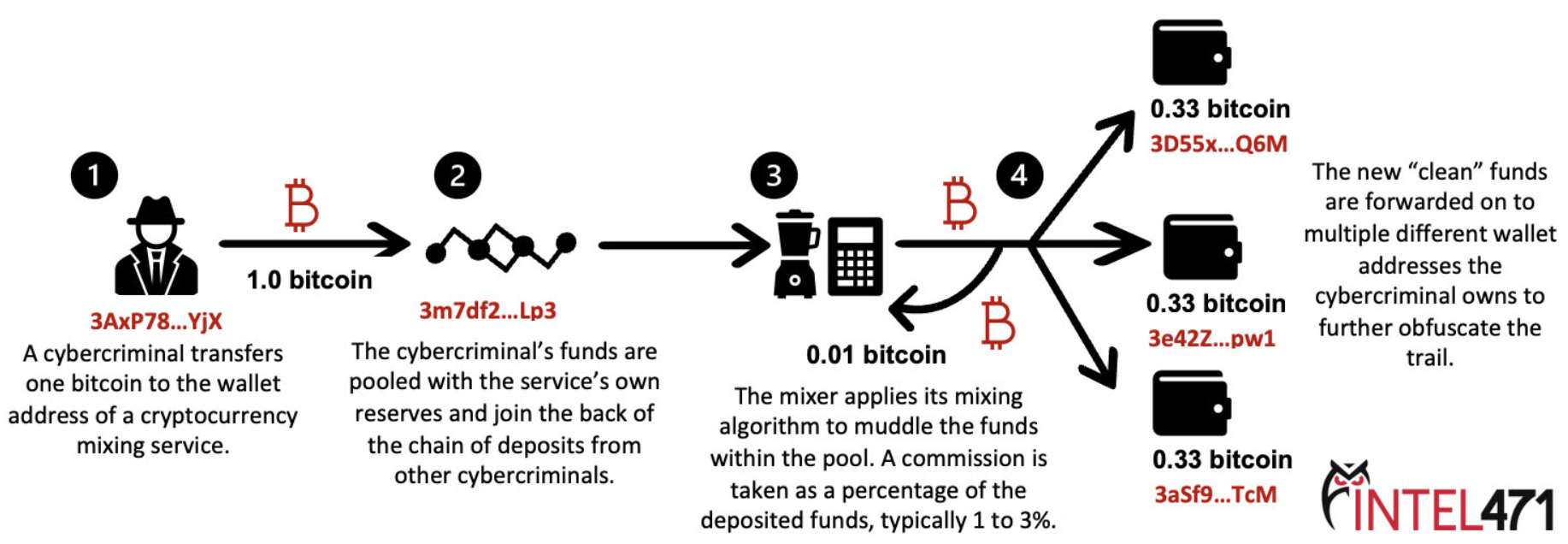
In a separate instance, the owners of the Helix mixing service handled over 350,000 bitcoins to help launder more than $300 million for the darknet markets and ransomware crews. These kind of cases heightened the public impression of crypto as a Wild West — an unregulated territory where lawbreakers roamed free and the lawmen couldn’t keep up.
The Tide Turns: Light from Darkness
But the story of crypto as a flawless, untrackable safe harbor for criminals is increasingly one that no longer holds. The technology that gives pseudonymity — the blockchain itself — is also a permanent, immutable ledger of all activity. This public ledger has since become one of law enforcement’s most powerful weapons. Specialised blockchain analysis companies have instead created advanced tools that track the money in transactions across complex chains, de-anonymise criminal wallets and connect the dots between bad behaviour onchain and real-world identities.
New blockchain analytics companies, like Chainalysis and Elliptic, apply advanced algorithms and machine learning to graph the movement of money around crypto markets. They can spot patterns that indicate potential money laundering, raise flags over suspect USDT transfers and even connect apparently disparate wallets to known criminal actors. Such tools have factored in some of the biggest asset recoveries in recent years. In 2022, for example, U.S. authorities recovered more than $3.6 billion of the Bitcoin stolen in the 2016 Bitfinex breach after tracing funds through a labyrinth of wallets and exchanges. In another big case, the FBI and international officers followed the money to recover millions in ransom paid to the REvil ransomware group, showing that even very advanced bad actors can leave a cybertrail.
A growing number of law enforcement officers around the world work directly in such units, staffed with financial investigators who know the ins and outs of digital currency exchanges. They know that even if the criminal is pseudonymous on the blockchain, they are not a ghost. At some point, to spend it, they have to convert their crypto back into traditional money, and here is where they become exposed. By watching the on-ramps and off-ramps — where cryptocurrency is bought and sold — investigators have no trouble uncovering the crack in the criminal’s digital armor. The billions of dollars in recent years of large-scale crypto asset seizures are proof positive of the new dynamism. The shield is, in fact, chasing the sword.
Safer Crypto Ecosystem Emerges
The battle against the crypto dark side is no longer reactive, it’s getting more proactive. A worldwide gathering of regulators is being organized, all in an effort to construct a moat around the legal crypto market. Most centralized exchanges have more stringent Anti-Money Laundering (AML) and Know Your Customer (KYC) requirements in place already. These rules force users to prove who they are, thus taking away the veil of anonymity criminals need. Measures such as the Financial Action Task Force’s “Travel Rule” require platforms to share information about senders and recipients of transactions, so transferring USDT or other crypto payments becomes subject to similar oversight as sending traditional bank wires.
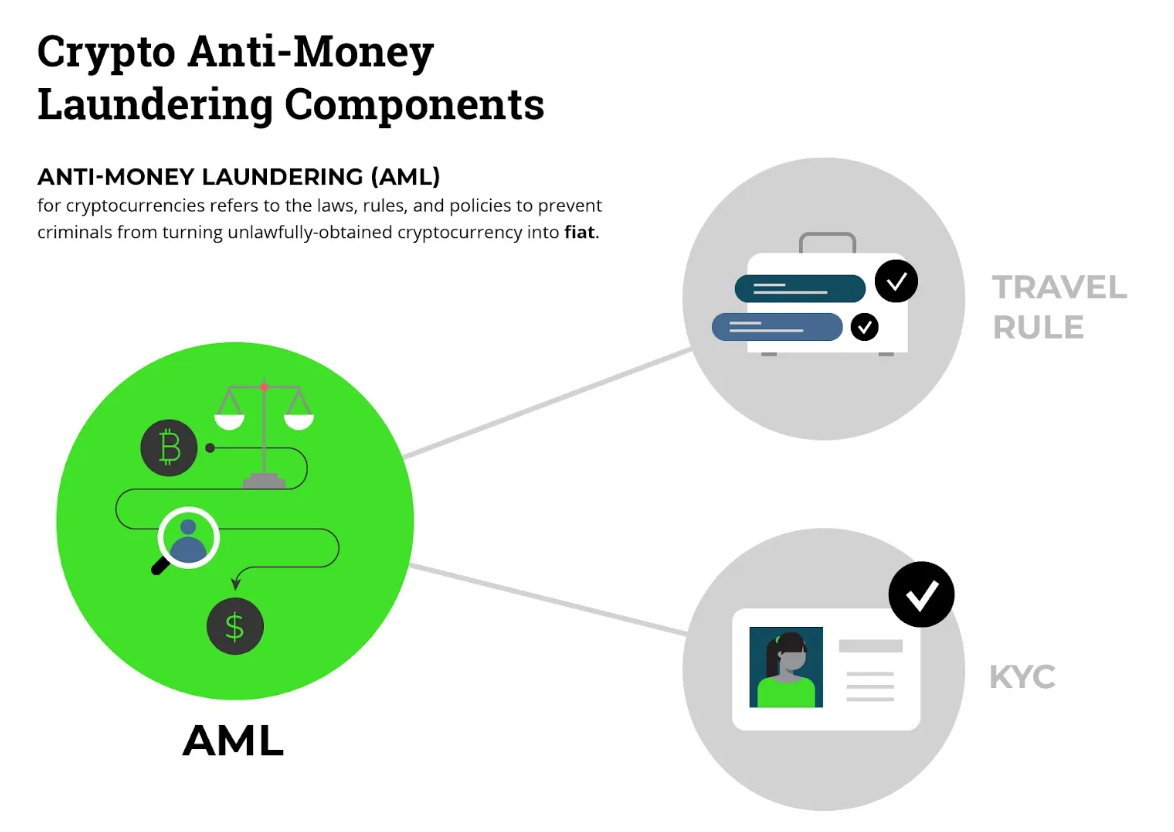
An example is the European Union’s Markets in Crypto-Assets (MiCA) regulation, which comes into full effect in 2025. It sets out clear expectations for providers of crypto services, on transparency, consumer protection and anti-money laundering controls. In the United States, both the Department of Justice and Treasury have increased their enforcement efforts to seek not only criminals but also the platforms that facilitate them. Asia and Middle Eastern countries are doing the same, making for a patchwork of regulations that, while not perfect, makes it harder for criminals to act with impunity.
At the same time, companies within the crypto industry itself are rising to the occasion. Top exchanges and wallet services are spending on compliance, threat intelligence and user education. Industry groups are sharing information on new threats, and some platforms are paying bounties for tips that lead to the discovery of shady behavior. Users, too, have grown more savvy. They are starting to identify scams, use safe wallets, and test the credibility of USDT transfers or renting Energy before transacting any business on platforms. This collective vigilance is helping to make the crypto markets a less friendly place for wrongdoers.
Key developments in the fight against crypto crime:
1. International application of AML/KYC standards on exchanges;
2. Introduction of the FATF Travel Rule on international transactions;
3. Introduction of blockchain analytics tools to monitor in real time;
4. Work with international efforts on asset recovery and enforcement;
5. Improving user education and industry self-regulation.
As the crypto market grows, so do legitimate tools increasingly utilizing more advanced features in pursuit of security and efficiency. Indeed, for those on the TRON network who are dealing in TRX, monitoring transaction costs via resources (e.g. Energy) has now become an important focus. It is almost necessary to rent Energy, which is a process that ensures that you are capable of carrying out your day-to-day activity (like sending USDT) at a low price. But it's important to keep in contact with trustworthy resources, so you won't fall victim to a scam or something not viable.

This is where the aggregator such as Netts TRON Energy Market has a big role to play. It is a safe gateway to the Energy rental ecosystem, using a list of verifiable and secure communities. The service provides instant value comparisons, helping users to have the best rates as well as dealing with trustworthy suppliers. Tools like these are essential in a security-conscious world as they remain necessary to successfully and confidently traverse the world of crypto, so that all enjoy the benefits of the technology without succumbing to its dark side.