DeFi Landscape 2025-2026 — What's New?
DeFi in 2025-2026: capital efficiency over raw TVL, with stablecoins, RWA, L2s, omnichain flows, and clearer regulation.
Decentralized finance (DeFi) is back in the spotlight, regaining heat during the summer with a frenzy of new initiatives and protocols launching while markets bootstrapped themselves in search of meaningful price discovery. Cooling down during the bear market, the sector has not only recovered; it's been completely reshaped. By the middle of 2025, the DeFi space was booming with heavy inflows of capital, innovative new protocols and a change in philosophy. Gone is the old adage of just locking up as much value as you can. It has been replaced by a new paradigm — capital efficiency. It’s no longer a measure of money, or how much is in the system, but about how efficiently it is used. This evolution mirrors that of a maturing market, one that is inching close to traditional finance and aimed at sustainable, high-performance solutions which are appealing to both seasoned crypto players and wary institutions. The technology backdrop is stronger, the user experience has matured and the financial instruments are more sophisticated – overall painting the picture of a sector coming into its own.
New Wave of Growth and Capital Efficiency
The numbers themselves paint a powerful story of revival. The sum value locked (SVL) of all DeFi networks, after hardly reaching $51 billion just two years before, in July 2025 reached around $135 billion. That was shy of the record high for that date in 2021, when $215 billion had been raised just after the end of September, but rapid growth again suggests a clean break from the market’s doldrums. That said, industry analysts warn that some investors should be wary of taking TVL as the only measure of the health of the sector. The market has outgrown the paradigm where participation meant you needed to stump up excessive collateral and piled your stack severely leveraged as you chased yield. The emphasis has flipped dramatically towards making capital work harder and smarter. This new focus on efficiency is reflected in the evolution of yield farming strategies that are now more complex and risk-adjusted as well as in liquidity pool architecture which is created for firmer floors, slippage reduction, and better returns for providers alike.
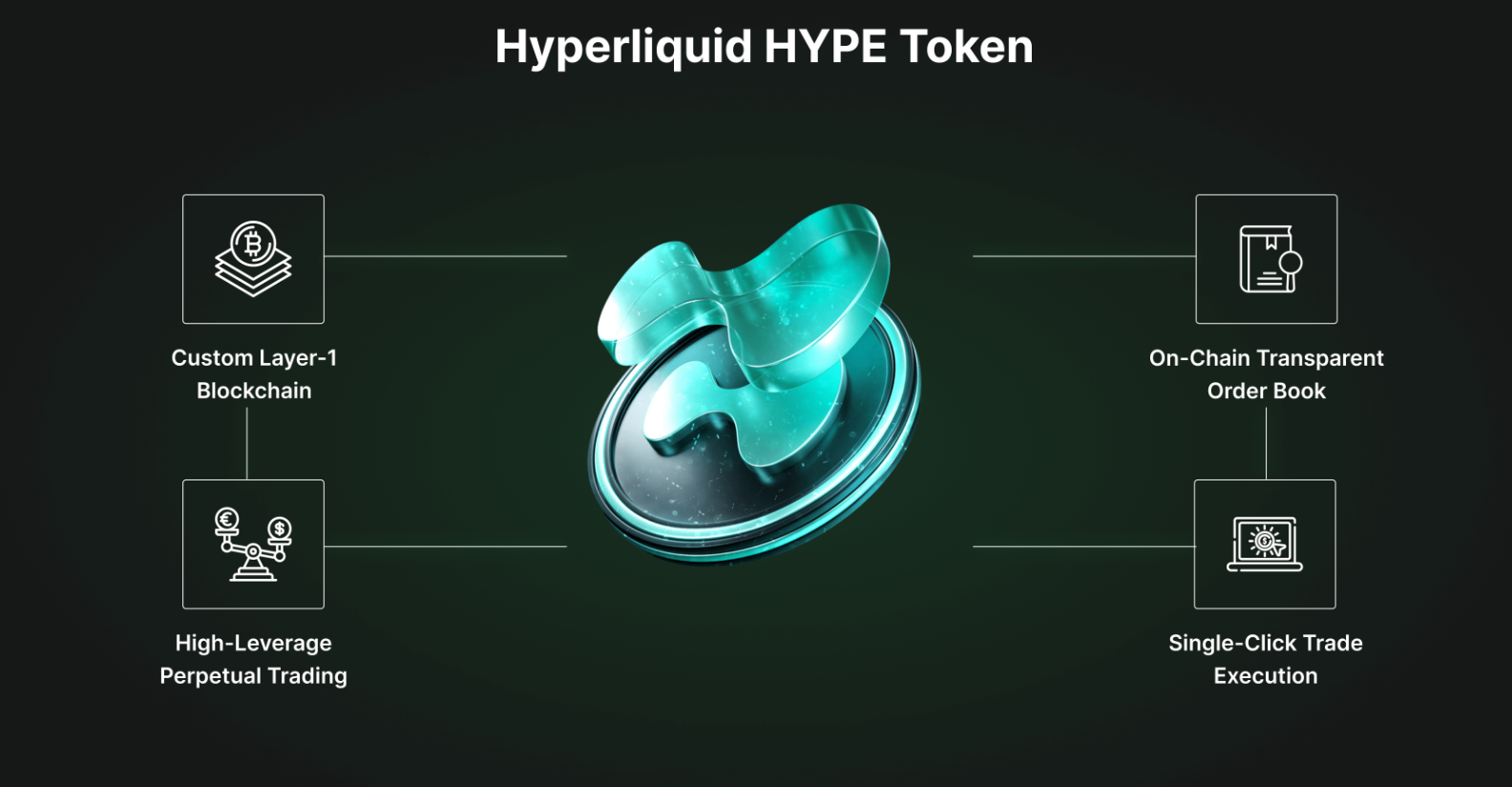
In this new era, next-generation protocols have reconfigured the rules of engagement. Take the Hyperliquid network as an example, which without any type of token incentives already has over $500 million volume traded daily, making it the first blockchain network ever to break into the top 10 by TVL share prior to native asset release. This indicates a key trend: attention is turning to real utility and performance, versus speculative rewards. Other tokens native to novel projects saw equally impressive growth as well:
1. SYRUP from Maple Finance;
2. ENA from Ethena;
3. HYPE from Hyperliquid;
4. EUL from Euler;
5. Well-established AAVE.
All of these platforms show that you can attain significant trading volumes, yet not have a necessity to hold billions in smart contracts. Now, the discussion has shifted from “how much is frozen” to “how much is flowing”. And what was once a meme in DeFi — the notion of capital efficiency — has become the future standard by 2025, forcing developers to build leaner, more effective and more integrated financial products.
Market Movers — Stablecoins, RWA and the Enduring Reign of Ethereum
Below the efficiency-first exterior lies several emerging verticals offering structural support for DeFi at large. The market for so-called stablecoins has still exploded; at last check, there were $258 billion worth outstanding. This sector has also received strong validation from major payment players, like PayPal entering the market space confirming its status as a foundation of both DeFi and internet economy at large. Meanwhile, it seems that the tokenization of real-world assets (or RWA) has gone a long way from being just another niche concept to become a more than promising field. With less than a few years of existence, the RWA market now holds over $25 billion in TVL, thanks to financial behemoths such as BlackRock and Franklin Templeton which are unifying traditional finance with the blockchain.
This integration, as explained in a blog post today, is bringing tried and tested asset classes such as real estate, private credit and government securities onto the blockchain giving DeFi access to more stable collateral with less volatility while also unlocking diversified yield opportunities for lenders.
In the slew of innovation, and amidst game-changing competition, Ethereum has somehow retained its status as industry leader. At the time of Q2, 2025, it holds about 57% of all DeFi TVL which has been remarkably stable and even increased from its low of 51% in early 2023. This resilience is particularly impressive when one considers the dozens of new, high-speed blockchains that have appeared. And a lot of that success is thanks to Ethereum’s growing L2 scaling ecosystem. Platforms such as Base and Arbitrum, which process transactions off the main chain for speed and cost savings before writing them permanently on Ethereum itself, shouldn’t be seen as competition; they should be viewed as extensions of the network. All of that growth, with Base and Arbitrum now representing more than 3% and over 2% of TVL respectively, is an in-network displacement showcasing the success of Ethereum’s modular path to scaling while not abandoning its baseline security properties.
Interconnected Future — Omnichain, TRON and New Trading Hubs
But in terms of daily trading volume, the chart looks a lot different. And at least when it comes to decentralized exchanges (DEX), Ethereum’s mainnet is no longer the only game in town volume-wise. It now claims to process some $3 billion of trades per day — nothing to be ashamed of, really, but it has been overtaken by faster and more efficient ecosystems. BNB Chain is at the top of that list and boasts a substantial $5.7 billion in daily volume, followed by Solana at $3.3 billion. This information paints the picture of on-chain trading moving to services that provide a better, faster, cheaper user experience. This fragmentation is being resolved, however, by one of the most important emerging trends: omnichain DeFi. This concept allows for the easy communication between various blockchains, with assets and data that can be freely transferred across networks. By breaking down the barriers that separate these silos, omnichain solutions address liquidity fragmentation, providing users access to deeper liquidity and broader sets of financial products independent of their home chain.
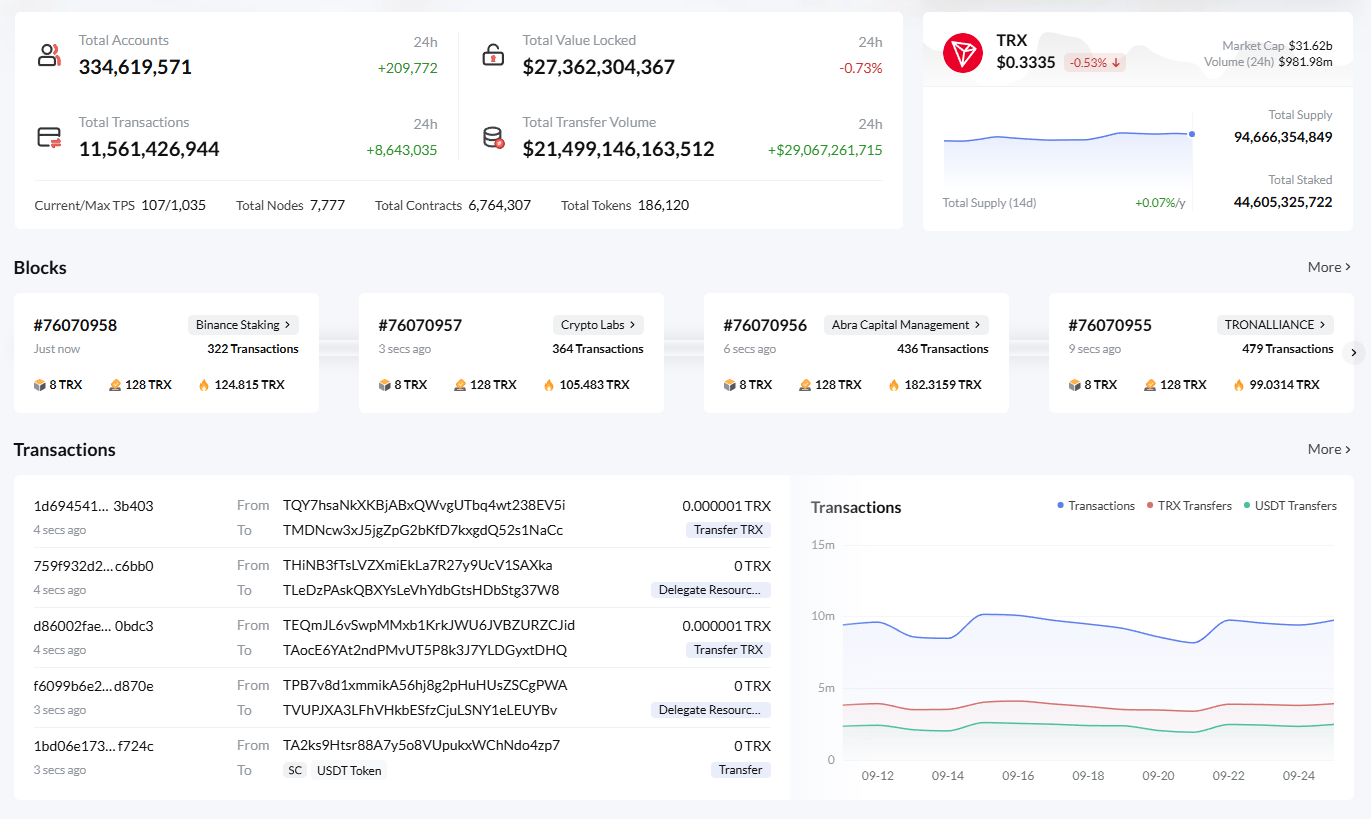
In this fierce and increasingly interconnected landscape, the TRON ecosystem has been able to establish its value proposition and is continuously growing in many vital aspects throughout 2025. Among the most significant breakthroughs, there is USDD 2.0 which brought a decentralized collateral minting model by community consensus. Users can now mint vault stablecoins backed by TRX and USDT as well. This has been accompanied by the growth in network participation, with TRON’s staking ratio rising to over 47%, due to wider adoption of its Stake 2.0 model. Additionally, strategic collaborations with industry leaders such as Wintermute have significantly improved liquidity and trading performance for TRON-based tokens, solidifying TRON’s position in the stablecoin and on-chain finance space. Its emphasis on low fees has made it a hotbed for stablecoin action, notably USDT transfers.
The Next Frontiers — AI, Derivatives and Regulation
The 2025 evolution of DeFi isn’t just about the capital and trading volume; it’s also a more fundamental technological and structural maturation. Things have become more practical, with artificial intelligence (AI) taking center stage as a buzzword and tangible tool. AI is already used in automated trading, risk valuation of lending protocols and in predictive analytics for market trends. These are some utilities that allow you to be a more financially responsible DeFi user. Meanwhile, the DeFi derivatives market has exploded. Exchanges are offering a growing variety of derivatives, such as options, swaps and futures, some even on top of Bitcoin layer 2 solutions. It unlocks the titanic, dormant amount of capital held in Bitcoin’s pockets and lets it be used as collateral to fund advanced hedging and trading strategies.
This rapid development is taking place against a changing regulatory background. The markets are gradually moving away from the vague or hostile government positions towards more well-structured frameworks such as the European Union’s Markets in Crypto-Assets (MiCA) regulation. As difficult as it is to comply with these regulations, they are also bringing some welcome clarity. All of which is now bringing the interest of more and more institutional investors who want to know before they spend a lot of money that they understand the rules and how much leverage is open to them. Compliance-focused DeFi solutions are the initiative to bridge this gap, to create an ecosystem in which innovation will live on but consumer protection and financial stability is guaranteed.
Maximizing Transaction in the Changing DeFi Landscape
As DeFi grows up, the emphasis on efficiency doesn’t just apply to capital — it applies to the mechanics of trade, too. On networks including TRON where there are huge stablecoin overheads, keeping transaction costs down has become so important to users. Each operation (for example, a USDT transfer) requires Energy and bandwidth to consume the network resource. If users don’t have enough assets in their wallets, they need to burn the network’s native token, TRX — a much more expensive payment method. This requires tools that support users in a meaningful way through those costs.
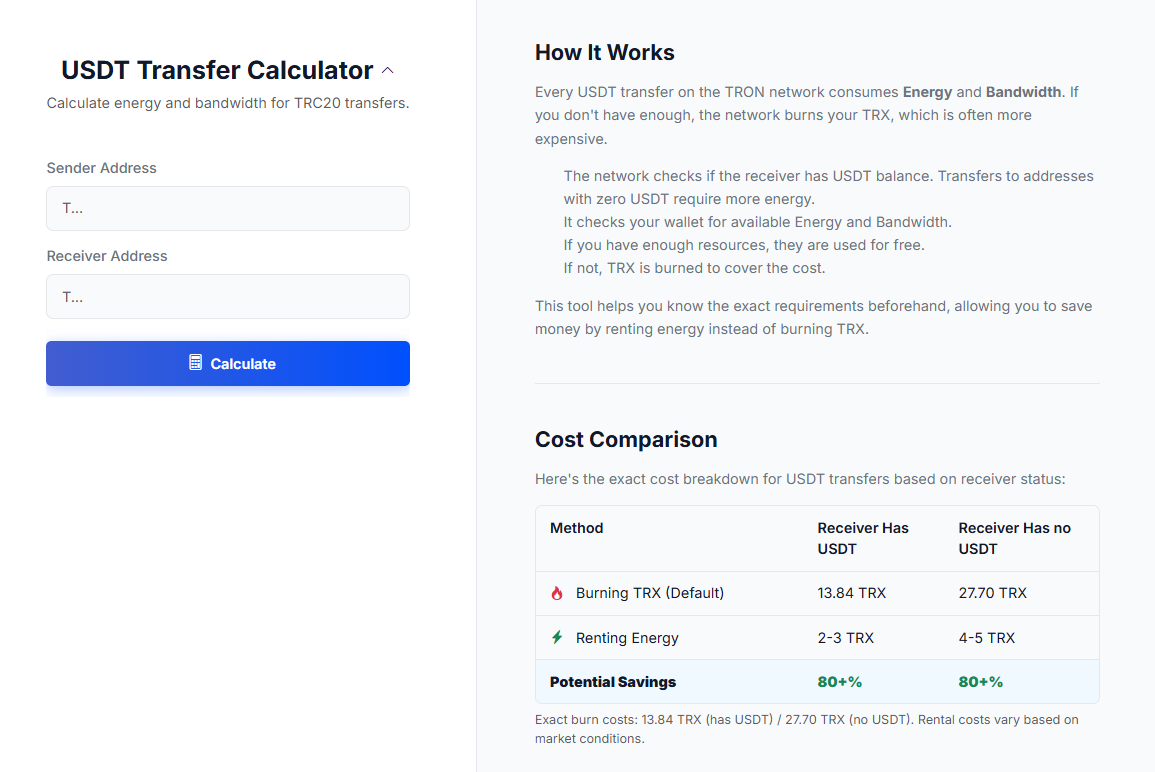
Fulfilling that same requirement, Netts service has launched a USDT Transfer Calculator for TRON network. With this app, you can see exactly how much Energy and bandwidth it will cost for any TRC20 transfer. Users can make a well-informed decision not to burn TRX, by knowing exactly what costs are involved in advance. However, they have another option: renting TRON Energy by navigating to the open Energy Market. This one small thing can make a world of difference in costs.
The savings are substantial. The burning of TRX for a common USDT transfer based on the same sender and receiver addresses already in possession of USDT is around 13.84 TRX. However, by renting TRON Energy instead of burning it, the price drops to around 2-3 TRX. The differences are even starker looking at transfers to new addresses that have never received USDT, which require twice as much Energy from the network. If that were the case, burning TRX would be at 27.70 TRX but renting Energy would still be only 4-5 TRX. In either case, users could expect to realize more than 80% in savings. Netts also offers API access suitable for developers and companies, which makes possible integration of cost calculating logic directly into the applications to optimize transactions on such a rapidly expanding and active DeFi field.