Traditional Economy Principles and Crypto
Old-economy ideas meet crypto markets — scarcity, incentives, network effects, and why “free lunch” branding still breaks on human behaviour.
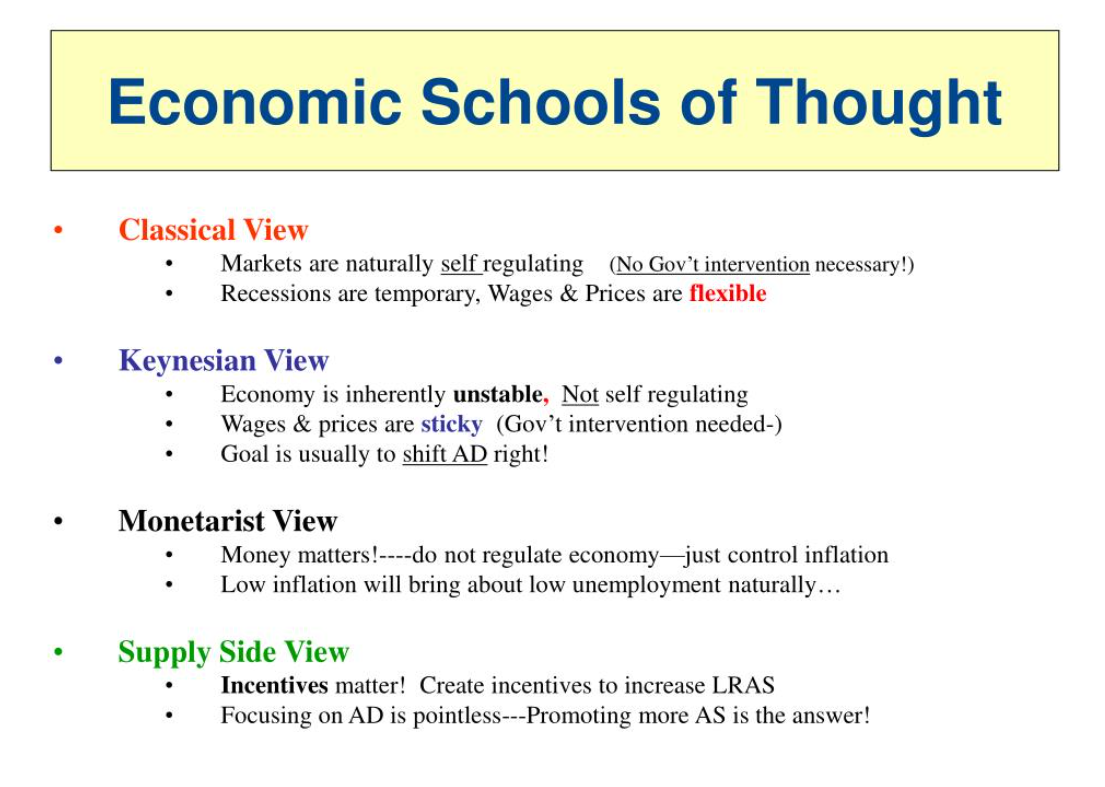
But when we put it in context using the vast and intricate history of the world economy it is clear cryptocurrency is such a new concept, that it is merely a dot on the radar for the time-being. Humans have been finding and making trades, exchanging value for centuries, creating and recreating the ways in which this is done in a cyclical manner over hundreds and thousands of years.
Since the beginning of time — from trading shells, beads and livestock to the extremely complex derivatives markets and algorithmic trading of the present day — the economy has always been in flux. Numerous ideologies and sets of rules have risen, occupied the international landscape for a period, and either fragmented or mutated beyond repair. The economy is not an immovable object chiseled in granite, instead the economy is water — it can flow freely, feeding societies and generating progress or it can break with overwhelming fury, washing wealth away and changing the land in a split second.
The development of digital assets is just the latest current in a river that has been flowing since civilization dawned in this ever-changing environment. Moving value from physical to digital is at least the largest economic event since the birth of coinage itself.
However, in order to grasp how significant the change cryptocurrency represents, we have to first look back to the beginning of economic thought. Just think about Adam Smith and how original his ideas were, within the social context. Mercantilism was the economic theory of the day when Smith published The Wealth of Nations in the late eighteenth century.
Countries based on a zero-sum game theory of wealth thought that the only way to get ahead in the world was to keep as much specie as possible and maintain a balance of trade through state interference, tariffs, and monopolies. The international economy was a zero-sum game, in which advances by one nation came at the expense of others. By proposing a new worldview — that of the invisible hand — and suggesting that the self-interested person acting within a division of labor and in a society/market of free exchange will yield not only his own benefit but the best that can be achieved for society, Smith challenged these two fundamental aspects of social organization which, needless to say are as old as antiquity.
As such, his ideas were revolutionary, shattering the conventional rules of the day and providing the foundation for modern economics. However, the Holy Spirit pouring out on America then was not the same as today. Smith saw an economy in transition from agrarianism toward early industrialization, a world of material goods and concrete labor where value was driven by the slow movement of ships across oceans.
The shift from mercantilism to a classical model of economics was neither immediate nor universally embraced. Traditional powers raged against opening trade for decades, convinced that trading away their grip on tariffs and monopolies would spell national doom. They could not imagine how (or, more accurately, they did not believe that) decentralized bottom-up decision-making could result in a stronger, more resilient economy than top-down state planning.
This historical pushback is reminiscent of current-day wariness. This change necessitated a deep restructuring of societal perceptions of where to find value, what constitutes work, and how to accumulate wealth. It insisted that individuals rely on the visible hand of the market instead of the visible iron fist of the king.
Modern Economics and the Advantage of Wealth
A comparison of the time of Adam Smith and of our time of digitisation makes a deep, important point: the world is changing fast, and hence for the second time economists do not and cannot read from a book. Books get old fast. Finally, at least as applied to decentralized networks, crypto tokens and digital consensus at scale, the theories that worked so well for the industrial revolution, the growth of the railroads, or the post-war economic boom are often misplaced.
In the same way that Smith had to get beyond the welfare-warp of mercantilism to see the trends of free trade and industrial manufacture that we had to learn to take for granted, so too today must all these financial thinkers, think well beyond the one-size-fits-all piety of modern central banking and fractional reserve to absorb what blockchain can mean. An ever-changing economy means there are models that need to be constantly adapted to the changing market or else be cast aside.
When the rules of commerce change, among the decadent rafts of texts to which we cling inertly to save our shoppers from drowning, the current invariably sweeps us away, the old texts buried and replaced by a new practice, and only those nimble enough to navigate the new waters surviving to determine which dictates and which words live on to power the future.
Historical Precedents of Broken Rules
Suffice it to say that this is not the first time the conventional rules of economics have been challenged and shattered. As far back as the Renaissance, long before Adam Smith, you can trace improvements in our handling of finances, with the great Medici banking family in Italy, introducing double entry bookkeeping and enabling bills of exchange to be a widespread tool.
As the Church of the time had a very strict prohibition against usury, and as it was dangerous to transport gold physically, these financial inventions made it possible for merchants to move gold for international trade without the risk of transporting large quantities of actual gold. Avoiding the archaic restrictions, they established a new order of credit, trust and paper wealth that eventually evolved into the present-day banking structure.
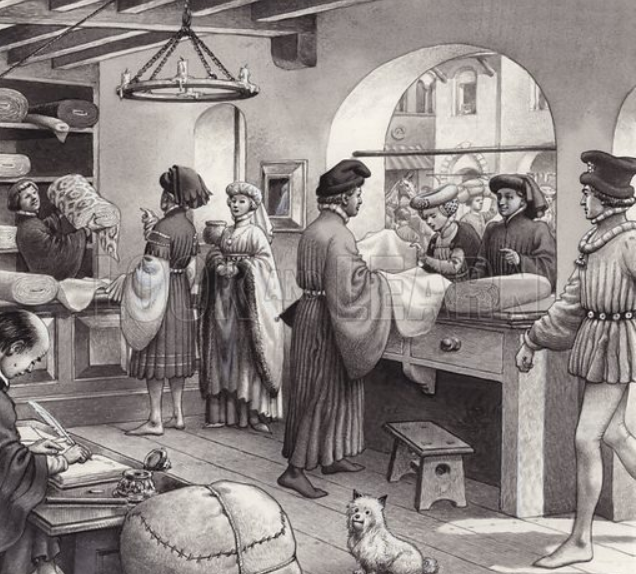
The concept of moving value across long distances without the physical movement of coin was a leap forward that propelled European trade and was a key cog in the Renaissance economic engine. The Medici did more than take part in the economy, they changed the mechanics of it, demonstrating that financial systems are as meltable into new shapes as they are challenged to make room for progress.
These early financial innovations affected much wider than just the merchant class. More simply, the Medici and their ilk put the continental economy on a faster cycle by establishing a dependable system of credit. Using the power of abstract financial instruments, they paid for explorations, financed the arts, and supported the giant buildings that symbolize a society.
This illustrates an important axiom: when the friction of transferring value is minimal, human potential is released. The previous economy, where we exchanged immediately and settled physically on the ground, was simply too slow and clumsy to allow for a growing global economy. The shift to paper wealth was a required adaptation to the higher scale of human aspirations, and demonstrates that economic systems must change to meet the needs of their participants, rather than vice versa.
So too, in the twentieth century, one of the greatest breaks from the past, the total repudiation of the gold standard. Until recently, the unquestionable law for generations was that make-believe money needed to be supported by a bodily commodity for it to have any value. So when governments, under the economic pressures of war and depression, cut this link and moved on to fiat currencies, they were breaking one of the basic principles of traditional economics.
Such was the transition that paved the way for a regime of monetary policy by central banks, quantitative easing, and floating exchange rates that would be unfathomable to generations of economists before it. We ended up rewriting the very definition of money from a gold claim — a claim on the future productivity and taxing authority of a nation-state.
Paradigm Shifts and Institutional Resistance
When looking at all the major paradigm shifts in history, one can make some comparisons with crypto once again. But like the bills of exchange abstracted value away from empty coins or pieces of silver, and fiat currency abstracted value away from gold, so too does crypto abstract value away from state and institutional trust. At each of these transitions, we were met with howling skepticism, fears of the establishment imploding and various forms of active resistance.
Of course the old guard always sees the new paradigm as irresponsible, unpredictable, or just plain broken, because it steps outside the rules they learned and the systems of control. However, the economy, like water, always finds a way. Economics is not an unchangeable manifestation of the laws of physics; it is a social construct as much as technology, and as technology evolves, so do its constituent parts in response to creative human minds, unforeseen market needs, and social changes.
So where in the world do existing rules fit within crypto and what rules does it break? In many respects, digital assets operate the same as traditional commodities, stocks, or currency and as a result, they can be evaluated through economic lenses with which we are already familiar. They are governed by the simple laws of supply and demand; when more people want to purchase a certain token then sell it, the price goes up, and vice versa.
They can act like a medium of exchange to obtain goods and services, and they provide a speculative store of value to millions of people around the world. That means traditional financial concepts, such as gas, market capitalization, liquidity pools, order books, arbitrage, and volatility, are fully relevant to the crypto space.
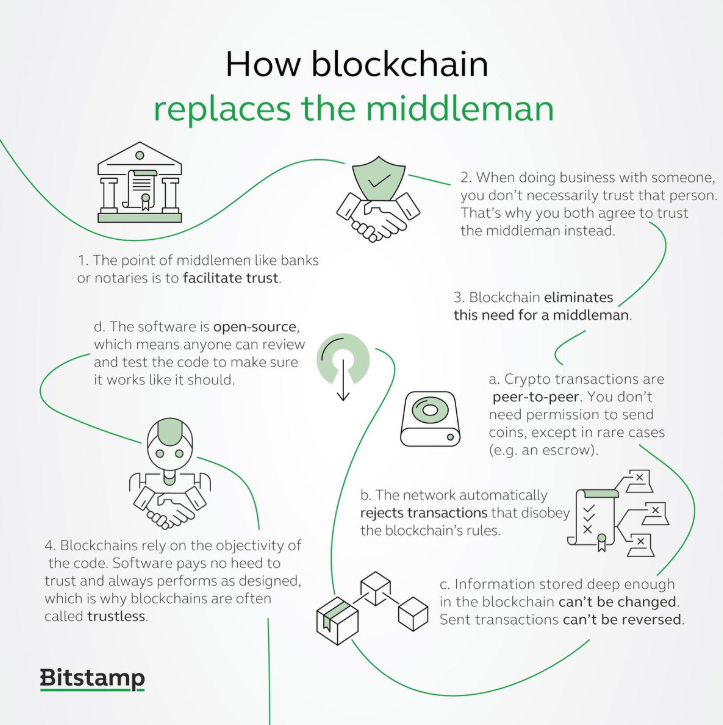
But crypto truly shatters the mold by eliminating a centralized third-party intermediary. Trust in the traditional economy is heavily regulated and institutionalized. We rely on banks to retain on deposit our capital assets, clearinghouses to finalize our trades, and governments to authenticate the transactions and secure the nation’s ledger. It is the most basic break from the past.
It challenges the centralization of banks over the money creation process, and the centralization of large financial institutions over the flow of global capital. As long as we circumvent a trusted third party, crypto enables a level of financial sovereignty that traditional systems can never provide.
A few notable differences can be observed when comparing this new paradigm:
1. A horizontal, decentralised network of networks, with no single point of failure and no institutional bottlenecks.
2. Security through cryptography eliminates the need for trust in established legal and regulatory frameworks.
3. Digital cash. Money that can self-execute an agreement between two parties.
4. Global access. Anyone with an internet connection can join.
New Economic Assets and Resource Markets
On top of that, the crypto ecosystem has created new economic assets and functionality that do not map directly into traditional finance. Various high-throughput blockchain ecosystems require users to control computation resources to run smart contracts, use decentralized applications, and transfer assets in an efficient way. As a result, we see secondary resource markets forming where participants purchase or rent TRON Energy in order to pay for their everyday operational needs.
TRON Energy and TRON Bandwidth function as the fundamental fuel that powers the infrastructure of the network in this digital economy. The native token can be frozen by users in order to create these resources for themselves, or they can alternatively rent Energy from one another in a dynamic, peer-to-peer marketplace. This creates its own micro-economy, where the laws of supply and demand determine the price of network access on a real-time basis.
Split Among Academic Economists and Investors
It defies the traditional rules, so it's no wonder that there are so many learned economists at loggerheads about cryptocurrency. In the academic and institutional scenes, many of the most notable individuals are still in a strictly old-school mindset that treats digital assets as at best something dangerously speculative and at worst something clearly evil.
Cryptocurrencies are useless, they say, because they don't represent anything in this physical world, whether it's based on gold, silver or any decree of government. They allege that these assets are too volatile to be used as mediums of exchange and usable in any normal commerce and define the whole ecosystem as speculative excess, means to evade regulation and source of financial instability.
They are, in some ways, correct. If the crypto market captures a portion of irrational exuberance, gigantic speculative bubbles and catastrophic busts, it is because that is the inherent nature of the beast, a perfect representation of the destructive nature of the economic water without the seals of a rudimentary civilization.
But the deeply fundamental mistake these ivory tower economists often make is in not seeing the tech macro shift and the innovation direction of travel. In focusing only on immediate price action, speculative trading, and the growing pains that come with any new asset class, they overlook the greater importance of decentralized networks. They want to enforce legacy fiat system rules on what is, specifically, technology built to not work within the legacy fiat system.
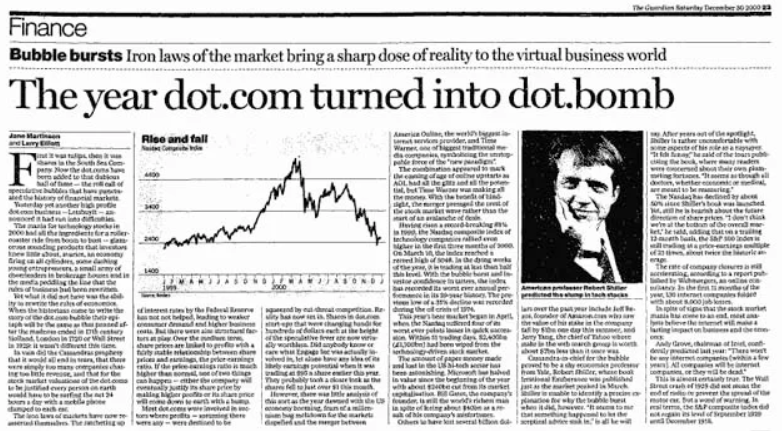
It's a bit like judging the power of the internet in the late 1990s purely by the dot-com bubble, ignoring the potential of worldwide low-friction collaboration because a few internet startups didn't work out. The tech itself — the ability to transmit value globally instantaneously, safely and without rent-collecting middlemen, is on its own a quantitative leap forth in human economic infrastructure.
Commentators wholly dismissive of crypto run the grave risk of reading only the old book, oblivious to the underlying tectonic plates that are changing, with new paradigms being established before your very eyes.
Ideological Divide in Investing
This ideological divide is also apparent among market participants and institutional capital allocators. And some people have more faith in old economists than ever, staking their investments with near lockstep conviction that what we know as cryptocurrency is a temporary thing, akin to the tulip mania of centuries past, sure to collapse in the face of regulatory pressure and its own contradictions.
They are faithful followers of ages-old valuation models and are hiding under the umbrella of traditional equities, sovereign bonds, and the precious metals — actively steering clear of the digital frontier. And somewhere at the other end of the spectrum, are the ones who adapt and survive. These more visionary investors understand that things are changing and that future financial systems will be structured in a very different way (compared to the centralized systems of our past).
They realize, despite how jagged and prone to faux death the road may be, that the raw directional macroeconomic trend can only keep heading in the direction of digitalization, tokenization and decentralization. However, those proactive enough to get familiar with these uncharted waters — be it by taking part in DeFi protocols, adding liquidity to AMMs or simply learning how to rent TRON Energy to pay as little as possible on their transactions — put themselves in the best position to profit from the upcoming epic revolution of economic mobilization.
New Books on Economics
Projecting ahead some years, the inclusion of cryptocurrency and blockchain technology into the wider global economic model will necessitate a fundamental reassessment of the old economic paradigms. Familiarity with historical shifts, both past and present, cannot be ignored and is hugely instructive. The shift from mercantilism to free markets, from the gold standard to fiat, required new theories, new mathematical models, and new institutional structures and the digital asset movement is no different — it simply needs its own economic lexicon.
No more than the wisdom of the past can inform the choices we face today around decentralized autonomous organizations, algorithmic stablecoins, smart contracts, and tokenized economies. The old rules were made for very good reasons, most of which barely existed 30+ years ago but can't hold up anymore. The velocity of digital assets, the tokenomics, the effect of automated market makers on liquidity and the behavioral economics of decentralized communities at large — we need new models to understand this.
There too, though, the economy will keep flowing like water, carving new channels, undermining old barriers, and remaking the financial landscape in ways that are hard to conceive of today. People who are determined to hold onto the old rules and the safety of the known will be relegated to the sidelines, unable to understand, let alone engage in, the processes of the new paradigm.
We need not shy away from the dynamic nature of wealth and the ever changing nature of commerce. Not as in something that should be ignored as a temporary speculative fad, but rather as an intrinsic change to the economic paradigm which is going to change the very way that humanity interacts with value. Similar to how the industrial revolution changed the focus of wealth from land to capital, the digital revolution is changing the focus of human wealth from physical assets to cryptographic networks and decentralized digital protocols.
At this unique period of transformation and upheaval, books should not just be read — they should be written.
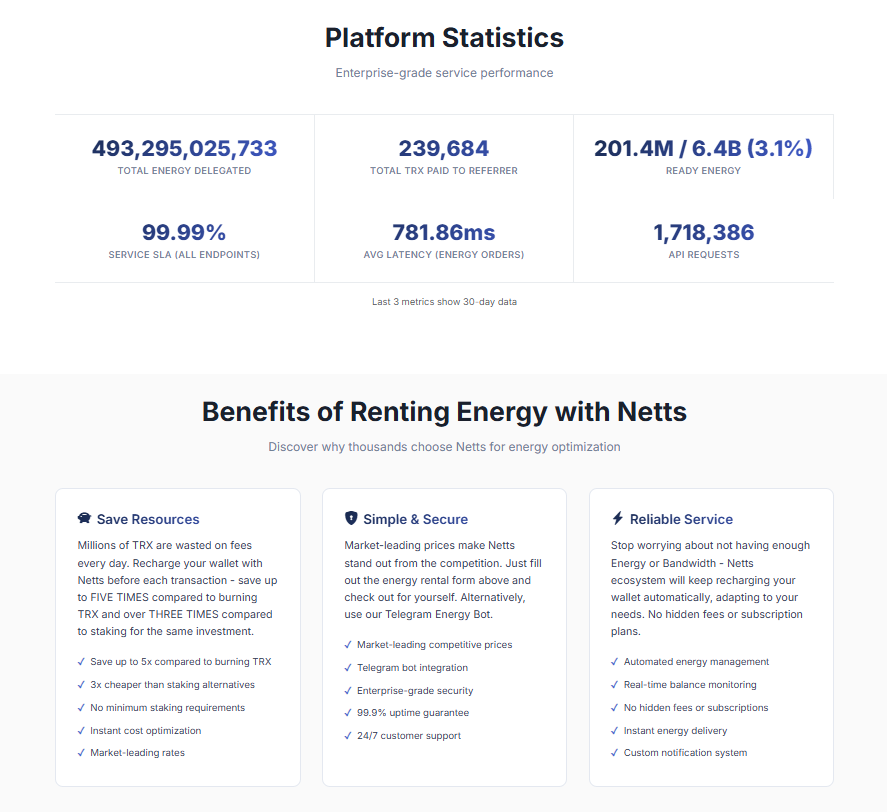
For those seeking to engage with this latest evolution and streamline their operations on the leading edge of new blockchain networks, finding that middle ground between digital assets has never been more important. Netts.io provides a one-click solution to rent energy if you want to transfer USDT on Tron. It is an enterprise grade service that intelligently routes optimally priced energy from billions of energy units from both verified and unverified providers, making it a premier energy aggregator.
Users can reduce the transaction costs, rent 65k or 131k Energy in seconds without the need for staking or freezing their crypto for a day and get it delivered instantly, so that their digital economic activities can be both economic and efficient.