Masters of Ceremonies: Best Talkers in Crypto
Crypto’s talkers and hosts — hype, circuits, and narrative capital — alongside the builders, and why attention remains an industrial resource.
The crypto space is perceived as an arena full of numbers, cryptography, and blue data analysis charts. Quantitative analysts, developers and blockchain architects come together to build the backbone infrastructure of decentralized finance. To many, making sense of this ecosystem translates to reading numerous whitepapers, auditing smart contract code, and reviewing on-chain data to trend price movements.
Essentially, they think that code is law, and the tech should talk for itself, thinking the approach itself should persuade users through the very value of what they have built. But this way of thinking is just half the story. For some, crypto success has nothing to do with the data at all, but rather everything to do with networking, bravado, and the ability to make a crowd.
Each of these two methods of reaching full-stack status is entirely valid, and ultimately, they have given rise to some of the most important figures in the field. But, whereas the quants and coders construct the engines behind the scenes, the networkers are often the ones who are selling the vision, securing the investments and paving the trail for mass-market adoption.
In this piece, we will look purely at the last category — the purveyors of incisive repartee, the talkers of crypto, and the socialites that have been able to climb to the very heights of the industry.
Hype Mastery: Building Blocks of TRON Empire
If you talk about the power of networking and public relations in crypto, you could not miss out on Justin Sun, aka the founder of TRON. In some ways, Sun is the ultimate crypto leader who has used his charm, tireless enthusiasm and media prowess to create a colossus. Sun had many, many talents (besides stealing intellectual property) but from the early days of TRON, he understood the concept that in a crowded market attention was literally the most valuable commodity.
He used the image of himself working around the clock fighting for his platform as the primary method of securing investors and growing a user base. So-called "announcements of announcements," the social tactic that made him famous, keeps the observers in a constant state of anticipation. Though such efforts may occasionally be dismissed by purists as surface level, it does certainly work to help keep the TRON ecosystem relevant and in the media spotlight.
What Sun understands is that in the modern world, visibility equals value, and few in the industry get the media game like he does, always customizing himself into conversations relevant to the news cycle.

To the public, Sun is an engaging, approachable, and plugged-in entrepreneur. Whether streaming live on social media, hitting up high-profile events or simply keeping his followers updated with his post goings-on and business interactions, he regularly interacts with his public. This is something pure code could never replicate; his instinctive knack for mingling with traditional finance people, celebs, and political leaders has brought a level of legitimacy to his projects that far outweighs their actual merits.
And he knows this well, hence he pays millions for charity luncheons with legacy billionaires just for the association, which he uses to elevate himself and his blockchain. But this hard sell approach has also gotten him in trouble. Regulators have scrutinized him, he has faced lawsuits, and he has drawn extreme ire from the wider crypto community for promotional, aggressive or even misleading tactics that some consider over the top.
However, Sun has a strange knack for shrugging off scandals. Though imperfect, his image does at least pack Peterson-like resilience — as Teflon in its ability to absorb nearly any damage that is supposedly ultimately lasting.
That resilience is bolstered by his closeness to his base and the attention he gives to the people working to build his platform. One thing he does know is that in the world of crypto, you only have to wait a few news cycles to bury a scandal, as long as you can keep the community interested in what you are doing next. He remains the only point of communication and the only whiff of value to be had for all of his fans and clients.
His reaction to this is to constantly keep the TRON ecosystem on the move, integrating new features so that his users have no choice but to stay within his realm. This loyalty negates the need for heavy conventional marketing; his community performs this role on his behalf via word-of-mouth and social media amplification. One example of this phenomenon is when users look to obtain TRON Energy to allow for low-cost transactions to occur on the network, users do not go through official channels, but rather use solutions that have been recommended in good fashion by the community, this is an example of how the ecosystem grows within itself.
The number of transactions that happen on TRON, as powered by this active user community, is evidence of Sun's networking-first philosophy.
Academic Populist And Cardano Community
The founder of Cardano — Charles Hoskinson — stands in the stark contrast to Justin Sun in the level of hype. In contrast, Hoskinson has a very different way of approaching networking and public relations, but he certainly does well in his own manner. He has worked on a personal brand largely as the "academic populist" of crypto. His social skills are not in big media stunts or celebrity endorsements but long-form and intellectual communication, a more exploratory engagement with the community that approaches the philosophical.

Hoskinson got to where he is now by driving Cardano as the tough, peer-reviewed option to all other blockchain offerings. By catering to the slower, delay-patched-with-science crowd — de facto investors and purchasers of his products — who prefer measured development, scientific rigor, and formal verification to the break-things-and-fix-them-later techniques of many of his competitors — he landed funding by the tons and controversially mushroomed a huge following.
Hoskinson self-styled as a thought leader, an educator, and a person who is working on creating a financial operating system for the world, mostly targeting the unbanked people in those developing countries. His main social strategy is the regular Ask Me Anything (AMA) video stream. The broadcast, usually from his office at home or while traveling, needlessly gives a feeling of closeness and openness of the office.
He has conversations with his audience, providing answers to technical queries, talking about world politics, embryonic philosophy, and why he dares to dream so big. By doing this, he has cultivated a fiercely loyal tribe that sees him more than a CEO of the company, but now as a trusted guide and thought leader. He makes believers feel like they are part of a massive, historic, paradigm-shifting movement instead of a speculative, near-zero-sum, high-stakes gamble.
But this approach has its dangers. His feat of being able to drink anyone under the table was no match for his smoking reputation when allegations around his controversial opinions led to potential partners turning away and critics coming out to play further shadowed Hoskinson.
Navigating Criticism and Controversy
Sometimes his social skills dip into pugilism, removing him from the image of a detached, scholar-leader, and walking him into the muck of internet drama. As far as maintaining a clean image, Hoskinson is a divisive character. To his fans, he embodies intellectual integrity; to his critics, he has been overly defensive and arrogant and slow to deliver.
But — and he has that same trick as Sun — you really have to shrug off criticism. And he is able to do this not by avoiding it, but by confronting it in his long monologues, usually flipping a scandal/critiques into a chance to reiterate a single dictating philosophy and to re-energize his base. It does leave him open to toxicity — his predilection for tussling with trolls/critics can get him pulled into unapparent public squabbles that detract from the ends of his project.
But his connection with his audience is so strong, none of these incidents ever seem to have any lasting impact. His fans are constantly ruminating over his words, analyzing his AMAs, translating his videos into dozens of languages and otherwise preaching the gospel of Cardano so that a relatively traditional corporate marketing-style campaign is not needed for the project to maintain such a huge market cap.
Institutional Evangelist and Bitcoin Standard
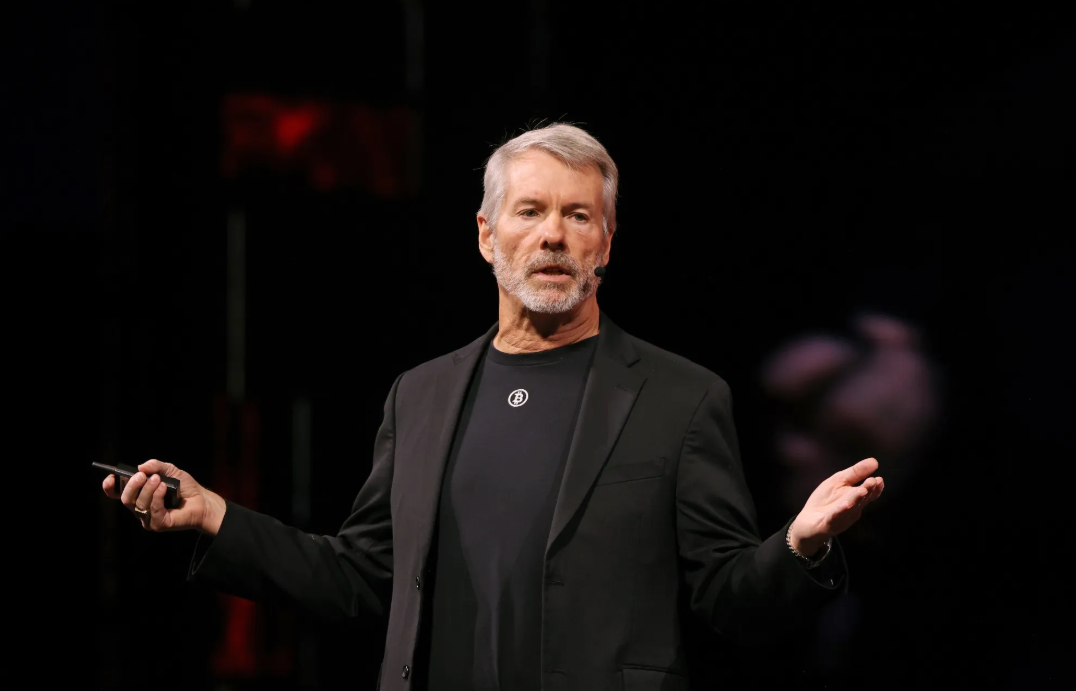
Enter Michael Saylor, the executive chairman of MicroStrategy, another crypto master of ceremonies. The emergence of Saylor as a crypto heavyweight is a great lesson on how a business executive using only networking and oratory skills and a lot of willpower, can rival the voices in a decentralized movement. Saylor assembled no blockchain; wrote no crypto code; just bought Bitcoin.
But what made him a crypto icon was his social skills — his ability to speak, his ability to give a macroeconomic explanation of why Bitcoin is important. He attracted both — billions of dollars of corporate debt to purchase Bitcoin — all fueled solely by his charisma as a monetary genius and convincing institutional investors of the rigidity of his thesis.
Through the sheer force of his rhetoric and tireless institutional relationships, he turned a sleepy software company into a proxy for the world's largest crypto.
Saylor presents to the world as a stoic missionary for the "Bitcoin Standard". His social tactics are rigid with a level of relentlessness one would expect from a corporate roadshow that has no end in sight. He cleverly discusses energy, architecture, thermodynamics and engineering metaphors behind the ugly economics of price, making the complex fascinating to the layperson while radiating an air of great intelligence.
A staple of podcasts, networks that report on anything finance-related, and crypto conferences, he always pushes the same unflinching line on the superiority of digital property, voice steady if slightly robotic. And therein lies his greatest strength: consistency. This is very effective since it gives a sense of stability and certainty in an otherwise volatile and chaotic market.
When the market is collapsing, he is the psychological anchor investors cling to. Yet this single-minded focus is also something of a weakness, making his whole persona a constant subject of public scrutiny and mockery whenever the market has a multi-year downturn.
The Power of Conviction
Still, Saylor has almost a spotless reputation in crypto. He's regarded as a man of conviction who literally puts his money where his mouth is, a true believer who will not surrender. He is relatively immune to the petty fights that dominate quite a lot of crypto Twitter, where other leaders are throwing slings and arrows at each other with a feedback loop that makes the toxicity grow, because he hardly engages with that.
In the event of controversy regarding MicroStrategy's creative accounting or the dangers of his leveraged play, Saylor is always able to wave it away by returning nimbly to his thesis: Bitcoin is digital real estate, fiat money is melting ice, and anyone who is in it for the long haul does not care about the short term. The relationship between him and his audience is defined by conviction and common ideology.
He doesn't bother selling MicroStrategy software products to the crypto crowd — they just have to keep talking about his latest Bitcoin purchase, his philosophical musings about the essence of money, and his unshakeable confidence. This natural, continuous discourse ensures he will always be one of the biggest talkers in the space, or a narrative driver for institutions, by himself even.
The Charismatic and the Personality Type
Now, right on with the controversial end of the scale as we have Richard Heart, HEX founder, PulseChain founder. The way Heart goes about networking and PR is provocative, flashy, and the result of a methodical approach to a borderline cult of personality. Heart raised funding directly from retail investors, avoiding VCs altogether and positioning his projects as an insurgency against the existing financial order.
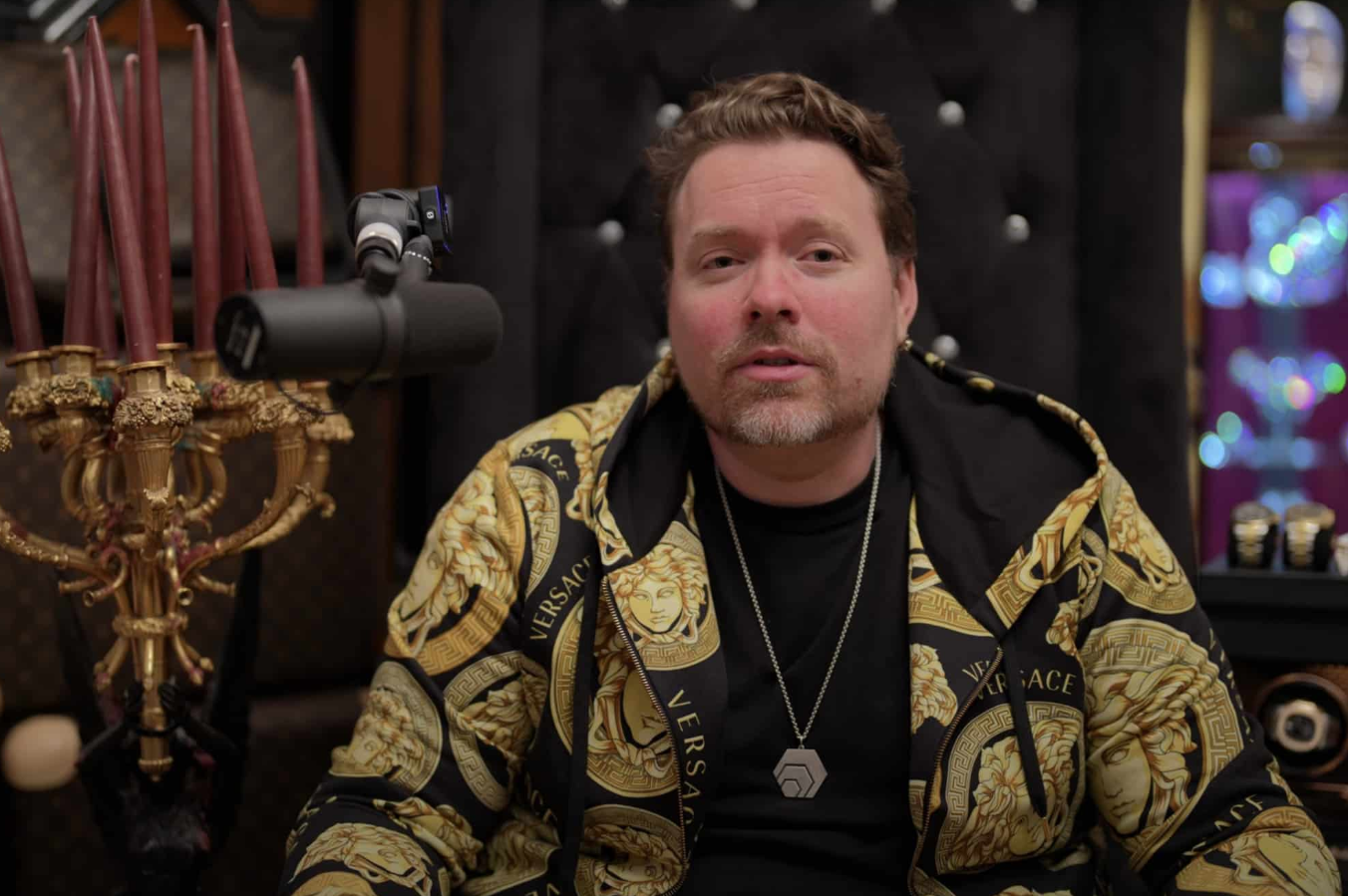
He trades, curates, shares, lives, breathes his image as the smartest person in the room, the one who called the top, the one who called the bottom, the only one who will lead you out of economic slavery. He courts controversy because he knows, in this day and age of the internet, outrage is just another form of interaction.
Outwardly, Heart presents himself as a loud, brash and unapologetic billionaire. He regularly parades around in high-end fashion, oversized diamonds, luxury wristwatches, and extravagant automobiles as props qualifying his success and, as such, the success of his projects. He likes to use aggressive debate & calling out supposed "scams" in the industry — reigning over discussions and fostering an echo chamber of loyal followers.
This method works really quickly to grab attention in an attention deficit economy and rally up retail troops. But what was good for them obviously landed him in trouble and detracts from his marketability in the eyes of the larger, more institutional crypto community. Perceptions of his maneuvers as being tacky, in-your-face or like a Giant pyramid scheme turn a large chunk of the market against him and subject his plans to an especially harsh scepticism from mainstream financial observers.
The Cult of Personality
Heart is definitely no squeaky-clean image. The SEC is just the latest in a long line of leaders who would love to see him and everything he has created disappear, and there are plenty of industry veterans who view any work he is associated with an angry glare of distrust. His skill in shrugging off a scandal is tested repeatedly, and for the most part, he mitigates by doubling-down on his rhetoric, attacking his critics, portraying regulatory actions as evidence of his disruptive force, and rallying his base to defend him.
It means that he is extraordinarily prone to toxicity because everything about him is predicated on an adversarial, contrarian mindset and an "us versus them" approach. However, his connection with his fans — known as "Hexicans" — is extremely passionate and mutually beneficial. Access to these people is limited, but once they latch on to something, they form an all-points defense in all social media — a marketing machine that runs 24/7.
Heart can eschew traditional marketing entirely, since his campaign workers are so loud on the ground, and they work so hard to propagate his message. Whether fans or detractors, everyone is talking about him and in the crypto economy that concerns attention, this polarization is typically sufficient to sustain the project into the coming days and keep his name among daily conversations.
Diverse Paths to Influence
Different strokes for different folks and there is more than one way to skin a cat, especially in cryptocurrency networking and PR. These event emcees are successful because of the unique qualities a person demonstrates and how effectively that person is able to align those qualities with the particular needs of the audience in mind. There is no one size fits all solution.
Together these operators illustrate that sucking up the oxygen in the room might be at least as much of a social skill and networking game as a code and data game: Justin Sun with his relentless hype and media hijackings, Charles Hoskinson with his academic populism and constant philosophical engagement, Michael Saylor with his stoic evangelism and corporate conviction, and Richard Heart with his flamboyant provocation and retail mobilization. Be it squeaky clean or scandalous, their notoriety, resilience against criticism, and cultivation of rabid communities enables them to be narrative shapers within the space, and execute on their vision without hesitating in attracting adoption.
While the technology may be based on mathematics and crypto, the business is driven by people, stories, and big personalities, as they prove. Crypto's best talkers know that technology alone rarely works without a story.
On the topic of efficiency and making your experience as a crypto user more efficient, particularly when wasting native assets paying for people to relax on networks, tools that cut costs should be recognised. Managing transaction costs is a recurrent fear for all who operate on the TRON network. Enter services such as the Netts Energy Charge Bot for reduced TRON USDT transfer fees. In case you have no choice however to have your TRON USDT transfer fees charged at the nominal fee, you can also use TRON Energy bot, which recharges Energy.
This bots enable you to rent resources without the need to burn TRX and seamlessly get TRON Energy right in your wallet.
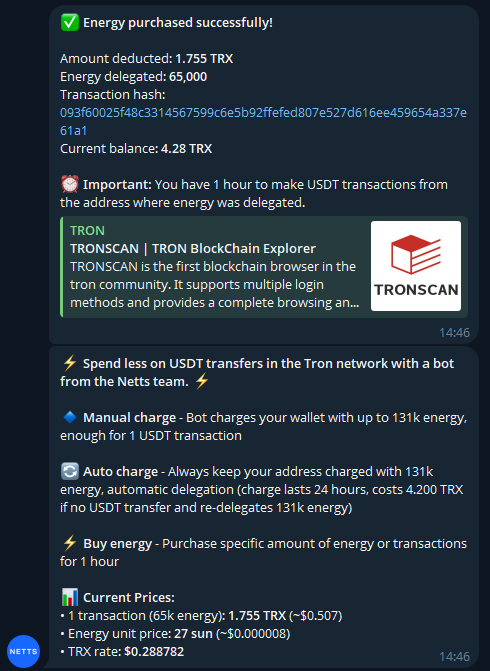
Go to Wallets and fill in the addresses of your wallets which you will be charging with Energy, go to Deposit, recharge your balance in TRX, and you go to Rent resources: choose the wallet that you want to charge Energy, and transfer USDT.
This means all the networking and transactions you make in the ecosystem will cost you as little as possible, conserving your TRX and your Bandwidth to spend in the future.