The Evolution of Value: from Gold Coins to Digital Tokens in Virtual Economies
For decades millions of people have been engaged in virtual economies, trading assets with no physical counterpart
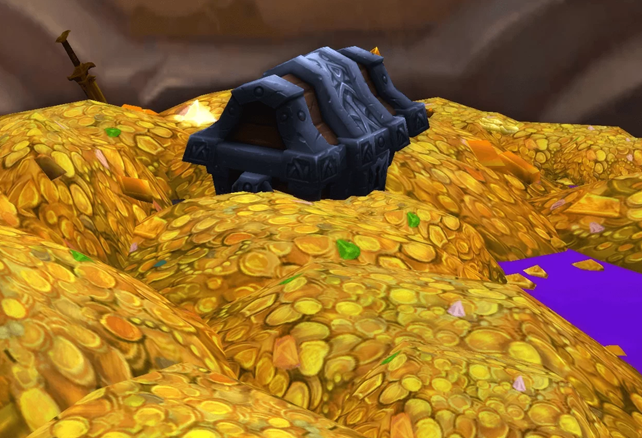
Virtual currencies long predate the 2009 creation of Bitcoin. For decades millions of people have been engaged in virtual economies, trading assets with no physical counterpart, but whose value can be complex in terms of in-game money. When we look at the similarity between traditional video game currencies and recent trends in cryptocurrencies, we realize that institutions and governments do not create value on their own; people create it.
First Virtual Economies: Currencies in Early Video Games
MUDs (Multi-User Dungeons) were text-based games that emerged in the 1980s and on America Online in 1993, in which players earned and spent “gold” or “credits” in the game world. While rudimentary, these initial systems adhered to a simple principle: digital abundance leads to value destruction, whereas digital scarcity creates value. If game developers restricted the quantity of virtual currency while producing commodities that could only be obtained through it, players soon began to attribute real-world value to these digital tokens.
One of the earliest and most advanced regulations of virtual currency in a non-monetary user-generated sphere can be found in the gold system of World of Warcraft (2004). Gold in the game was rewarded through questing, monster hunting, and trading items with other players. Gold was valuable, but the real-world monetary value was determined solely by actual player behavior and market dynamics — even though Blizzard Entertainment held the supply, they did so purely through the mechanics of the game.
It does go on to parallel a cryptocurrency model in some interesting respects. Just like WoW gold, which was more precious in the player community rather than by the will of Blizzard, is the value of Bitcoin and other cryptocurrencies outside the consensus of network participants rather than any other authority. The main takeaway is that value is determined not by institutional ownership but by widespread belief and functionality.
RuneScape Case: Discovery of Virtual Currency Evolution
Perhaps the most illustrative example of how virtual currencies can form complete economies can be traced back to 2001 with the online game RuneScape. GP from the game has powered a multi-billion-dollar-a-year virtual economy with surprising sophistication. Everything from low-end resources to high end items worth millions of GP are traded around, pricing shifts based on supply and demand as well as any updates to the game.
One of the most interesting aspects of RuneScape’s economy is its systematic approach to inflation. The game continuously creates new gold into the system from monster drops and quest rewards but through different “gold sinks”, mechanisms that drain currency from the economy, which ensures relative price stability. It is really similar to the way modern cryptocurrencies handle their tokenomics.
Like a cryptocurrency exchange, the game’s Grand Exchange acts as a centralized marketplace where players can trade items. A system where prices are determined by supply and demand, which no central authority sets. This shows that volume led price discovery in virtual economies exactly like in modern financial markets.
EVE Online: Most Complex Virtual Economy
But EVE Online takes the economics of virtual currency to a whole new level. Its Interstellar Credits (ISK) have powered an economy so intricate, it has been tracked and studied by economists in the real world. EVE has all the ups and downs of real life economics — there are inflationary periods and deflationary periods, market manipulation and economic warfare between player corporations.
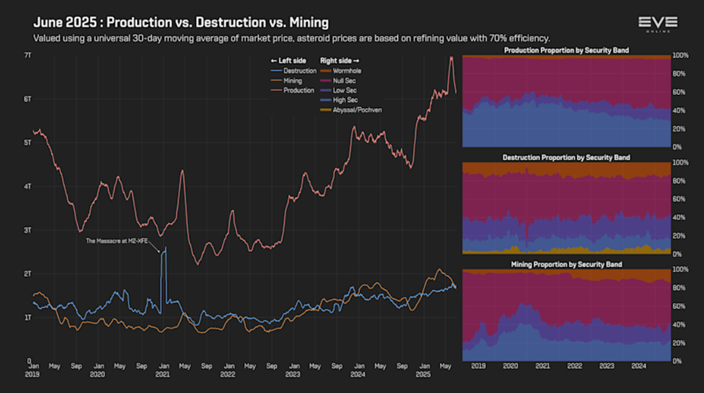
Perhaps the most intriguing topic about the game is its economy, which illustrates the idea that virtual currency can be more complex than most of contemporary fiat currency. Complex financial instruments, insurance and banking services have all been created by players in EVE. The ISK economy is so complex that it has even attracted academic research and economic analysis.
And that complexity looks very similar to how cryptocurrency ecosystems have evolved over the past years. And similar to how EVE having a natural organic economy was able to evolve into sophisticated financial services, so too do we see the same with cryptocurrency networks spawning DeFi protocols, lending platforms, to advanced trading strategies. The parallel is that when humans have the power to build for themselves the building blocks of an economy, they rapidly create a complex financial network.
Pricing is a Reflection of the Psychology of Creation
Whether you are talking about the currencies used in video games or the so-called cryptocurrencies themselves, the really interesting philosophical and economic question is: how does something that possesses no actual value, become desirable? This has an explanation in human psychology and mass belief systems.
Video games make currency valuable because it is rare (limited by game systems), it provides value (able to buy things and services you want), other players trust it (easy payment), and it’s liquid (for goods and services more or less).
The same principles apply in the case of cryptocurrencies. People have already seen that Bitcoin has value, not because it is backed by gold, not because a government has declared it is money, but because people have come to agree that it can be used for transactions, they trust it will contain value over time, and they choose to accept it as money. It was network effects and belief, NOT institutional authority, that gave that value.
Common Thread: Inflation Problem
Inflation is a broader challenge to the value of such currencies, and is something that video game currencies and cryptocurrencies both have the same but different type of challenge around. Inflation is counteracted in traditional MMOs like World of Warcraft through several different means, including sinks (repair costs, auction house fees, etc.) for gold, keeping high-value items in limited supply, and frequent content iterations that develop fresh demand.
In contrast, cryptocurrencies react to inflation in different ways: supply is absolutely fixed (bitcoin will never have more than 21 million coins), there are diminishing returns for proof-of-stake rewards, and token burning mechanisms apply.
The bottom line is, of course, inflation management is what really keeps the currency value no matter it is virtual or digital. That both systems work on economic incentives and game theory to hold them up.
Energy Economy: New Paradigm
For example, modern blockchain networks such as TRON have put forth the captivating idea of an energy economy. Energy is used to perform transactions and it can be obtained by staking TRX or renting from another user in the system of TRON. This forms a market where Energy generates its value, price discovery occurs in a dynamic market.
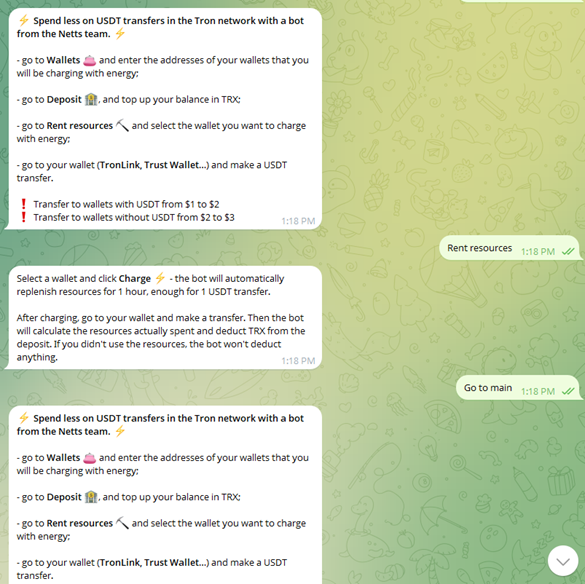
The TRON Energy rental market functions essentially the same as a marketplace where players in EVE Online will trade resources. Energy can be rented by users for limited amounts of time, and the prices vary according to an economic model that follows supply and demand curve. Such a system leads to the emergence of services such as the Netts Energy Bot that can automate the whole renting process for USDT transfers.
The Energy rental bot concept is a step forward in the management of virtual resources. Similar to automated trading bots used in EVE Online to manage ISK, cryptocurrency users are now able to simply automate the management of Energy using bots. This automation smooths the process and, therefore, makes the system available to non-regular users.
USDT: At the Crossroads of the Virtual World and Real Life
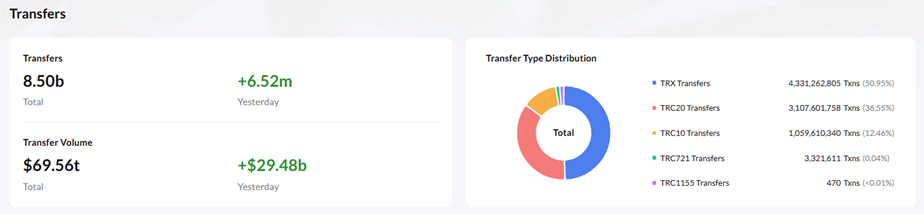
Perhaps the most substantial bridge between the virtual economy and the real economy is Tether (USDT) on the TRON network. The issuance of TRC-20 USDT surpassed 81.6 billion tokens in August 2025, as the TRON Network has supported 2.4 million daily USDT transfers on average. That comes out to over 50% of all USDT in circulation.
This is an important lesson demonstrated by the success of USDT on TRON: The value of a currency does not come from what is backing it, but rather what it can do and where it is accepted. Although USDT is theoretically collateralized with US dollar reserves, the actual value of USDT lies in the fact that millions consider it a means of payment and use it to conduct transactions.
This is similar to how currencies work in video games. WoW gold is worth something not because there is something real backing it up, but because millions of players (that are also playing the game) accept it as a form of payment for goods and services in the game world. Value arises from consensus and usefulness, not backing from an institution.
Virtual Currencies Going Forward
As time goes by, the chasm between video game currency and cryptocurrency is ever growing smaller. To take the best of both worlds, developers are now creating complex economic systems for modern blockchain games. Axie Infinity and The Sandbox are examples of a wider range of token types, economic mechanics that are emerging into complexity, and even some real-world value exchange.
This development of these systems indicates that the monetary future could be more pluralist and adjustable compared to typical monetary schemes. We might have ecosystems with different specialised currencies, instead of one currency, like one currency to rule them all, which will be backed by government authority.
One of those use cases is the Energy rental market on TRON. Simple bot interfaces are now turning intricate economic activities into basic financial services within the reach of anyone in the world. This includes the Netts Energy Bot which automatically rents Energy when sending USDT, saving you money and time:
Closing the Collective Belief Window
This long journey from the depths of simple video game currencies to the heights of sophisticated cryptocurrency ecosystems leads to one simple conclusion about value: people, not institutions, create value. The value of WoW gold, for example, comes from the fact that everyone believes it has value – the same goes for EVE Online ISK (which has had a far more storied and interesting history than the still hemorrhaging WoW gold focus of 2004) or Bitcoin.
The 81.6B circulating USDT on TRON and its millions of daily transactions, speak to the notion that it is what actually works for people, not the institutional branding stamp, that actually wins over a real-life userbase. But the Energy rental market is a good example of these systems growing ever more advanced and automated.
Digging deeper into the similarities between video game economies and cryptocurrency networks leads us to the conclusion that the future of money may be more democratic and less state-bound than traditional monetary systems. The currency value is not a functional application of institutional decrees by a government, but rather a collection of decisions made by millions of people to use the currency.
The transition from primitive gold coins in a video game to replete Energy rental systems in cryptocurrency networks demonstrates that if people have the economic operating systems, they will naturally seek out enriched, performant and scalable economic architectures. Money is not an institutional thing — it is international collective knowledge owned by people of the world.