How to Enable Digital Commerce: Ways to Integrate Crypto for Businesses Everywhere
Whether it’s cash, cards, or contactless digital payments, the desire to create a faster, cheaper, and easier way to transact never ceases.
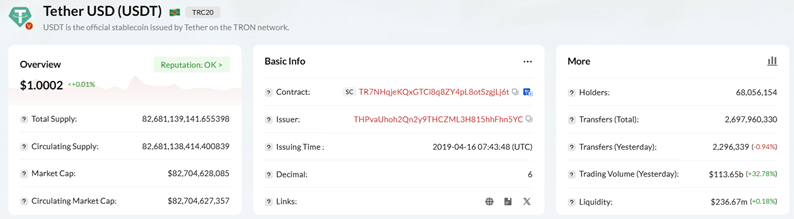
The domain of commerce is constantly changing. Whether it’s cash, cards, or contactless digital payments, the desire to create a faster, cheaper, and easier way to transact never ceases. Today, we sit on the verge of the next big change for businesses: the entrance of crypto. Digital assets were once a niche reserved for tech enthusiasts, but have recently matured into a dominant player in the global financial ecosystem. And by 2025, with a user base exceeding 500 million users worldwide — disruptive enterprises can no longer afford to ignore this revolution.
But crypto adoption isn’t just slapping a “Pay with Bitcoin” button on the checkout flow. To address the challenges that have historically prevented it from being used for day-to-day transactions — specifically price volatility — and get excited about the fresh solutions that have come to market to address them. For businesses, the trick is not on speculation but on utility. The most advanced tool we have for utility in the crypto space today is the stablecoin, especially in a seamless environment powered by a fast public blockchain such as TRON.
Stability Bridge: Why USDT Provides a Solution for Payments
The biggest hurdle for using cryptos like Bitcoin or Ethereum for everyday payments was always their volatility. No business can be pricing its products/services in a currency that can swing 10%-plus in one day. This has been the issue this whole time that stablecoins were designed to mitigate.
USDT (Tether) is the number one stablecoin that is pegged to the U.S. dollar at a 1:1 ratio. This peg creates the kind of predictability and stability needed by businesses. If a USDT user pays $50 to a merchant, the merchant receives $50 worth of USDT and can hold or convert this value at a time convenient to them without the fear of a sudden market crash. It is a simple but effective innovation that has the effect of turning cryptocurrency from a speculative asset into a functional exchange medium. It is the best of both worlds: the traditional fiat currency stability with the benefits of being a digital transaction on a blockchain that can give you speed, globality and low transaction costs.
TRON: New Digital Dollar High-Speed Rails
USDT offers the “what,” the TRON network offers the “how.” TRON isn’t the only blockchain that supports USDT, but for good reason — the fact is TRON is just more efficient. Compared to other networks, TRON offers high throughput and low transaction costs, even during congestion times, when other chains are either slow or expensive. It serves as the de facto standard for USDT transfers, with the majority of the stablecoin’s circulating supply on it.
For a business, there are actual benefits. TRON has solved the problem of inefficient international payments that took days running through archaic banking systems; now these can be conducted within minutes and at a fraction of the cost. It creates new markets, smooths the cross-border commerce and decreases the dependence on expensive intermediary financial institutions. Together, this not only makes USDT as stable as possible, but also makes the TRON network a payment infrastructure that is in many respects better than the legacy systems we use today.
The User Experience Hurdle: What TRON Means by “Energy”
Although powerful, the TRON blockchain is difficult for the average user to interact with directly — a friction point for users that businesses need to be aware of and address. As we know, every action that goes through the TRON network, whether it be a straightforward transfer or an intricate smart contract interaction, utilizes two resources: Bandwidth and Energy.
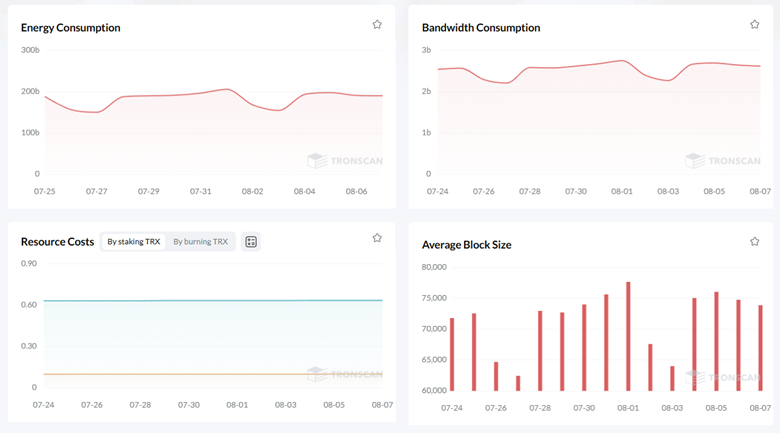
Bandwidth is abundant for most users, whereas Energy — in using TRC-20 tokens like USDT — is a necessity for smart contract execution. It takes lots of Energy to process just a standard USDT transaction. In cases where the account that proposes to send a transaction does not have enough staked Energy to cover the transaction cost, the network will automatically burn their TRON (TRX), the native currency of the blockchain. It may be something like 13–14 TRX for a standard transfer, and can be doubled if the recipient address is new and does not already own USDT yet.
This makes what many refer to as the “Energy Wall” — an incredibly annoying paradox for users. For example, a customer could have thousands of USDT in their TRON wallet and be unable to send it, because they do not possess a separate balance of TRX to pay for the Energy fee associated with the transaction. It’s the number one headache on the TRON network. Picture this — a customer lines up at a checkout, card ready in hand, only to be told they need to visit a bank to purchase a special kind of “payment voucher” before they could use this card. The absurdity is clear. Many experienced crypto users have had this experience:
1. They already have USDT in the wallet to pay with.
2. It executes and fails with OUT_OF_ENERGY where they have no TRX.
3. That means users have to exit the payment flow, go to a crypto exchange, buy TRX, and withdraw to their wallet.
4. Then they can only come back to pay that original USDT after the drawn out, complex, multi-step process.
No company looking to deliver a seamless customer experience will deal with this level of friction. This is one hurdle which must be removed to fully realize the power of USDT on TRON.
Solutions Will Actually Depend on the Payment Flow
Fortunately, the market has offered up some clever ideas to address this very dilemma. For businesses looking to accept USDT, this complexity is to be abstracted away from the end user so that the payment process becomes as simple as a credit card transaction.
A very early method is to enable users to utilize the emerging Tron energy rental ecosystem. These specialized Tron energy rental services realize that most users need Energy only for short periods of time, enough to cover their transactions. Instead of permanently purchasing and holding TRX, users need only pay a nominal fee to have a significant amount of Energy delegated to their address for a specified time period – one hour or one day, for example. Renting energy on Tron blockchain is up to 80% cheaper than burning TRX directly. Although this approach is a nice workaround for the more tech-savvy among us and people who trade high volumes, it still places another layer of complication and a degree of knowledge about network functionality in front of them, which is definitely not ideal for a seamless point-of-sale experience for Main Street. While these TRON energy rental platforms are one half of the solution, they are not the entire solution to mainstream adoption.
The solution has to be integrated, 100% non-custodial, and invisible to the customer. It must enable them to pay with their existing funds (USDT) safely from their own wallet with zero consideration for Energy or TRX.
Final Ingredient: netts.io USDT Transfer Tool
And this is exactly the kind of innovation that the platforms such as Netts.io bring to the table. In this sense, USDT Transfer Tool is the last evolution in this journey, tearing down the entire “Energy Wall”. By rethinking how transactions should happen end-to-end, it allows for an incredibly smooth payment experience.
It basically allows the user to pay the network transaction fee directly in USDT. If a user now wants to make a transfer, they sign two transactions from within their normal TronLink wallet. One for a minimal USDT payment to pay for the Energy cost, and the other for the actual large USDT deposit transaction for the recipient. This service is taking care of the backend process of delegating the necessary Energy to their address in order for the main transaction to be successful automatically.
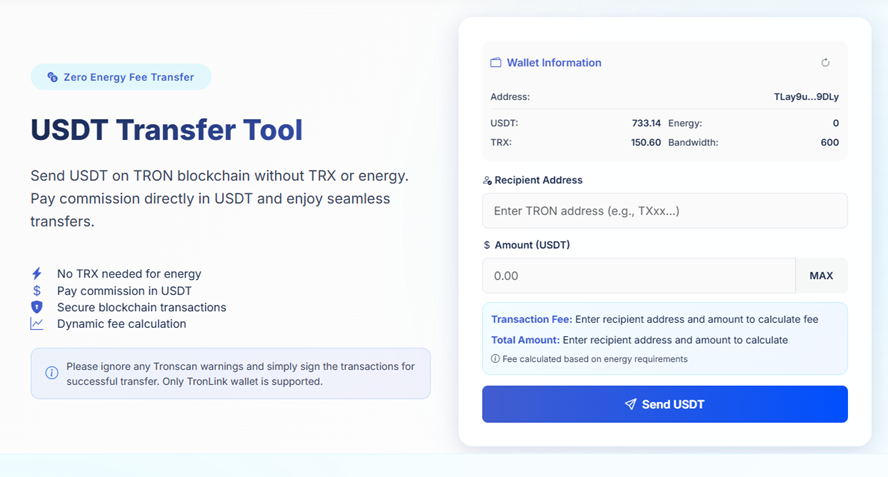
This entire procedure is non-custodial, so funds and private keys will never leave the security of the user’s own wallet. And this transforms the experience for the user. What was a convoluted, multi-step ordeal is now reduced to two clicks. The user connects wallet, enters recipient address and amount of USDT, approves transfer. No TRX is needed. The friction is gone.
That is even more revolutionary for businesses. Companies can build this functionality directly into their platforms by integrating with an API. This gives rise to a compelling power: being able to offer a recipient-paid fee model. By having the crypto exchange pay the minuscule cost of the USDT fee for a user depositing, you leave a user with no failed deposit and no support tickets. Providing a one-click crypto payment method on an e-commerce or iGaming platform is as simple as any traditional method, and pushes conversion rates by an order of magnitude further by eliminating the technical barrier for new users.
Future of Commerce Is Here
This indicates a transition on the journey of cryptocurrency in business away from “if” where the question has been for years to one of “how.” Stablecoins, like USDT, now thrive on performant networks such as TRON, paving the way for a new stage of digital commerce with mature technology supporting it. The biggest hurdles that still lie there are not due to technology limitations but rather the user experience side of things.
Only by understanding these challenges and adopting new solutions that are user-centric, innovative and abstract away complexity can businesses offer crypto payments that are not just feasible, but desirable. The aim is to create a tomorrow when you can send digital dollars to the ends of the world with the same ease you send a text. A future free from the friction of network fees and requiring separate assets is no longer a dream but an achievable reality through technological innovation.