The Brave New World of Value Creation — Minting Money: from Crime to Crypto
We live in the 21st century and this is a world in which anyone with an internet connection can spin up their own digital currency.
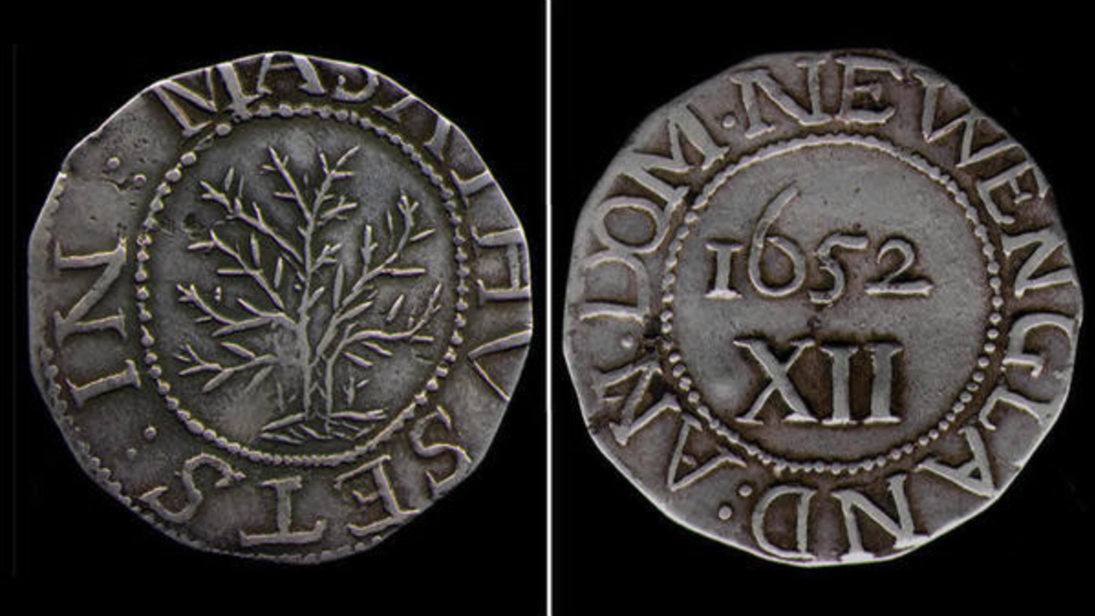
This was the historically ultimate expression of sovereignty — control over the creation of money. The power to mint coins and print banknotes has always been fiercely protected by kings, emperors and governments alike as the very basis of their power. To have even challenged this monopoly was to threaten the state, a crime typically punished by the most severe of all possible penalties. However, we live in the 21st century and this is a world in which anyone with an internet connection can spin up their own digital currency. How did we get here? And what does that mean for the future of the money?
Mint’s Age-Old Fight
Money is a story about power. The emperor’s face engraved on a coin in ancient Rome was not ornamental, it was a branding of legitimacy. So, the punishment for counterfeiting was death or exile and as they looked at it as an attack on the state. And medieval Europe was by no means an exception to this rule: violators could end up tortured, mutilated, or executed. In England, for example, counterfeiting was treated as high treason, punishments for which included hanging, drawing, and quartering.
For centuries, governments waged wars, assassinated opponents, and enforced draconian measures to keep a monopoly on money. Some have found the minting right quintessentially valuable; entire dynasties have risen and fallen over the minting right. It was punishable by amputation or death in the Ottoman Empire. As recently as the 20th century, Nazi Germany carried out Operation Bernhard in an attempt to sabotage the British economy by flooding it with counterfeit pounds — a scheme serious enough that captured forgers were executed or sent to concentration camps.
Coin Clipping and Counterfeiting — England
England regarded coining as high treason — the most grievous of offenses — between the 16th and 19th centuries. It was also meant to deter would-be criminals and serve as a display of royal authority. The coiners were then dragged by horse to the site of execution, hanged but spared, macerated (that is men dismembered and eviscerated) and beheaded. The severed torso was then split into four sections and delivered to the monarch. So only those who attacked the king’s money had to endure this terrible fate of hang, draw and quarter.
The Hanging of Thomas Green (1576)
In 1691, goldsmith Thomas Green was hanged for clipping precious coins. He was also front-page news, paraded through the whole town as a warning. He was hanged at Tyburn probably castrated and disembowelled while still alive before being beheaded and quartered. His body was then put on display as a deterrent.
William Chaloner (1699)
Among them was William Chaloner, one of England’s most infamous coiners, who was pursued by Isaac Newton, Warden of the Mint. Chaloner was eventually hanged at Tyburn, but only after Newton had used both informants and an old-fashioned legwork to get the church on board for a prosecution. Chaloner’s tale expresses just how far the state was willing to go to defend its currency — and his own behavior reveals the price of the risk an individual took in daring to do battle with it.
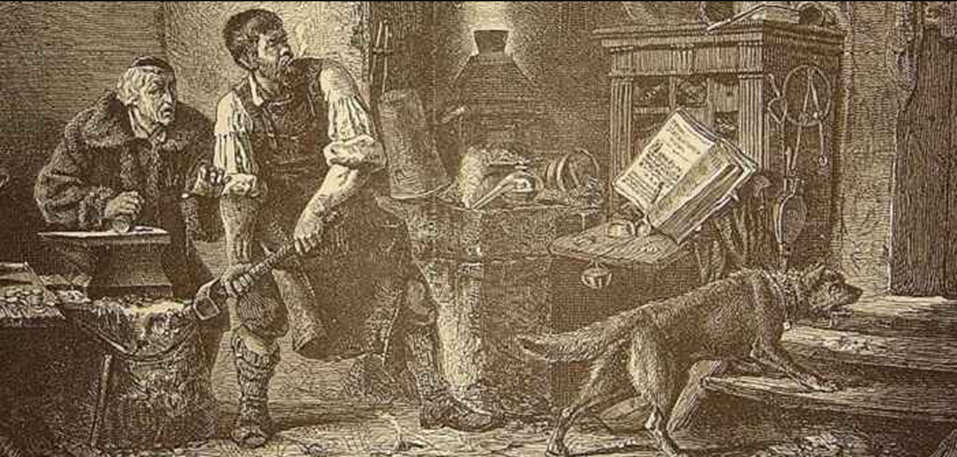
Dangerous Coining Career
Those convicted of coining, if female, would be spared mutilation, but not death — they would be burned at the stake. Catherine Murphy was the last woman to be burned for coining in England, in 1789. In those days, it was largely only symbolic, and the person being punished was actually strangled before the flames were set.
The Vauxhall Coiners (1827)
The Vauxhall coiners, a crime group, notorious in London, was captured making thousands of fake coins. Daniel Buckley and Jeremiah Andrews were convicted of high treason and hanged. As such, their case was the final forger execution in England, a bloody period in the history of currency that also bookended more humane approaches towards handling supposedly counterfeit bills.
Sweden: Death for Counterfeiters
By the 18th century in Sweden, counterfeiting also became a capital offense. According to the records of the Riksbank, money forgers were executed, and in most cases, the punishment was carried out in public to mark the gravity of the crime. The stigma was enormous: the families of counterfeiting were often ostracized for generations.
China: Harsh Punishments Across Dynasties
Dynasty and locale dictated the severity of the punishment; wherever they traveled across Imperial China, counterfeiters could find themselves imprisoned, exiled and forced to labor, perhaps forced to wear signplates with their ‘crimes’ inscribed, and in cases of large scale counterfeiting, a death sentence — frequently carried out via beheading. Counterfeiting drew particularly severe punishment during the Qing Dynasty, which saw counterfeiting as a direct assault on the emperor’s mandate. Minor infractions could put someone to death.
Socioeconomic Impact of Counterfeiting
It was not simply a crime against the state — it was a crime against society. Counterfeit coins and notes have damaged confidence in the currency, destabilized economies, and in some cases provided the necessary funding to wage rebellion or war. England’s Great Recoinage of 1696 was a consequence of rampant coin clipping which in turn also attracted selfish people who resorted to counterfeiting thereby eroding the value of money plus threatening the financial stability of the nation. The effectiveness of this new system was aided by the creation of the Bank of England, and, as new technologies in counterfeiting became available — like the use of milled edges and then watermarks — so new systems in currency control were added.
Modern Punishments for Counterfeiting
Even with the advancements of the technology, counterfeiting is a crime that is harshly punished in all parts of the world. As of 2025:
United States. The federal crime of Counterfeiting U.S. Currency is punishable by up to 20 years in prison. The Secret Service investigates counterfeiting crimes and is tasked with aggressively prosecuting anyone involved in the manufacture or distribution of fake currency. The psychological effects of counterfeiting in the US run deep — fake bills can drive down faith in commerce, and the government plows massive resources into anti-counterfeiting technology, from color-shifting inks to security threads embedded in the paper and microprinting.
The United Kingdom. Making or even just having counterfeit notes can lead to 10 years of imprisonment. UK polymer banknotes introduced in the 2010s are some of the most secure globally with transparent windows, holograms and raised print.
India. Life imprisonment or up to 10 years imprisonment, in addition to fine, under the Bharatiya Nyaya Sanhita, 2023 for counterfeiting. If an operation is on a larger scale then the Unlawful Activities (Prevention) Act can also be invoked. In India, the battle against counterfeiting is not over yet, with announcements about high-quality fake notes entering circulation coming out on a regular basis.
Singapore. Up to 20 years in prison and caning for currency counterfeiting. With state-of-the-art security elements on its notes and a legal architecture that views financial crime as an existential threat to the nation, Singapore takes no prisoners in dealing with counterfeiting.
China. Severe sentences here include life imprisonment or even death. With the size of the world’s second largest economy and the large amounts of cash that circulate, anti-counterfeiting remains ever a challenge, with new technologies and harsh penalties used to help maintain faith in the yuan.
This is a very clear message that you just do not challenge state monopoly on money. Money touches national identity and trust like nothing else of deep cultural meaning. The reverberations through society — of the erosion of that trust — are felt in everything from everyday transactions to international diplomacy.
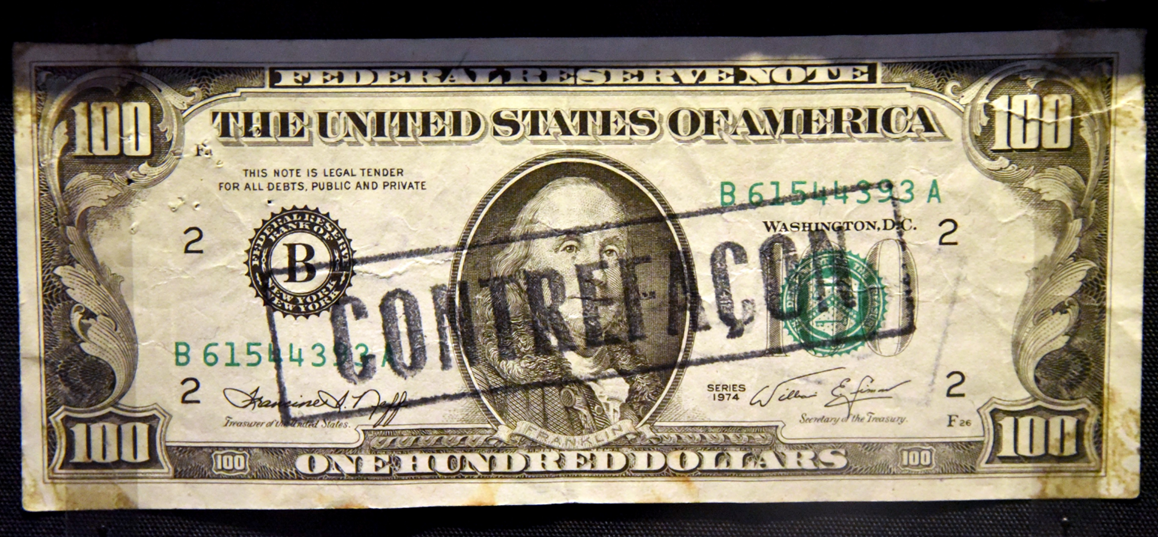
Money Is Belief — the Death of the Gold Standard
Money used to be backed by stuff (gold or silver, natch) for centuries. The situation changed dramatically on 15 August 1971, when U.S. president Richard Nixon finally severed the dollar from its gold backing, full stopping its convertibility in gold. The age of fiat currency was upon us: money backed not by metal, but by the trust that the issuing government would be good for it. At that point in time, the U.S. dollar — and with it, most every currency on the planet — was backed by faith.
This shift was revolutionary. Out of nowhere, the distinction between “real” vs. “imaginary” money was settled. As long as the dollar remained a matter of faith, the dollar had value. When that belief faltered, however, so too did the value of the currency. The same can be said for denominated fiat currencies today: the euro, yen, rupee, you name it. While the psychological jump from commodity to faith-based money was a massive one, it set the stage for the next iteration.
The Crypto Revolution Where Everyone Can Be A Money Mint
Enter the age of cryptocurrency. The year 2009 brought us Bitcoin, which democratized money creation. Anybody could now create a token, form a community, and persuade the world that it was worth something. From killing you could die for to a hobby to a business … to a movement.
The contrast is stark:
Once upon a time, minting money was a life or death situation. But a token can be created as a smart contract with little to no permission (it is trivial to create a new token nowadays).
However, not all tokens are created equal. The majority of them are forgotten in an instant while some rise to global recognition, such as Ethereum, TRON, and their stablecoins. But the truth is, the technology itself is very similar — what sets them apart is the community backing them, their belief. And the risks are valid: scams, rug pulls, and failed projects are a dime a dozen. But so are the freedoms. Whenever currency meltdowns or capital controls hit many countries, crypto tokens and stablecoins such as USDT have become a priority for people seeking to preserve value and make cross-border transactions.
Token Creation and Its Worldwide Ramifications
Minting tokens has created a seemingly endless amount of creativity and experimentation. The crypto world could be seen as a laboratory of new forms of value, from meme coins to DeFi protocols. Stablecoins are used for remittances and day-to-day purchases in Venezuela, Argentina, Turkey and other places where local currency has imploded. USDT is accepted at airports and by large businesses in Bolivia, where the use of the stablecoin represents a hedge against surging inflation — much more appealing than the boliviano — through 2025.
But with that freedom comes new challenges. The ghosts of regulatory uncertainty, security risks, and potential abuse never go far away. Second, the philosophical question: if anyone can mint, what is it worth? As with fiat, the answer is: belief (underpinned with utility, transparency, and community).
Fiat or Tokens?
Both fiat money and crypto tokens are based on belief after the gold standard was abandoned. The dollar is valuable because people believe in the US government. USDT is the most used stablecoin and it is worth something simply because people think Tether will honor its peg. In both examples, value is a social contract. The difference is that in the world of crypto, the contract is open for anyone who is trying to build and maintain it.
However, this brave new world of money isn’t risk-free. There is loads of obvious scamming, rug pulling, and just plain unsuccessful projects. However, the way in which we can experiment, create and disrupt those old systems, is unlike ever before. Money is changing from an imposition of those in power to a negotiation between people.
TRON Energy Ecosystem: Fueling the Economy of Tomorrow
The TRON network is one of the best use cases of this new paradigm. TRON with its dual-resource model, Bandwidth as the resource used for basic transactions and Energy for running smart contracts, has rapidly established itself as the backbone for stablecoin payments (particularly USDT). It costs 13.8 TRX if burning Energy, or 2–3 TRX if renting Energy; at $0.31/TRX that is roughly $0.81. A typical USDT transfer in 2025 to a wallet that already holds USDT requires about 65,000 Energy. The transfer of USDT may be relatively low, but if the wallet of the recipient has 0 USDT ever received it costs about 131,000 Energy (27.7 TRX if burned or 4–5 TRX if rented, $2.73). Approximately 65,000 Energy daily from staking 10,000 TRX (sufficient for 1x daily USDT transaction to a non-empty wallet). This led to energy rental platforms, where most users and businesses are able to avoid locking up TRX, thus saving up to 80% of the costs.
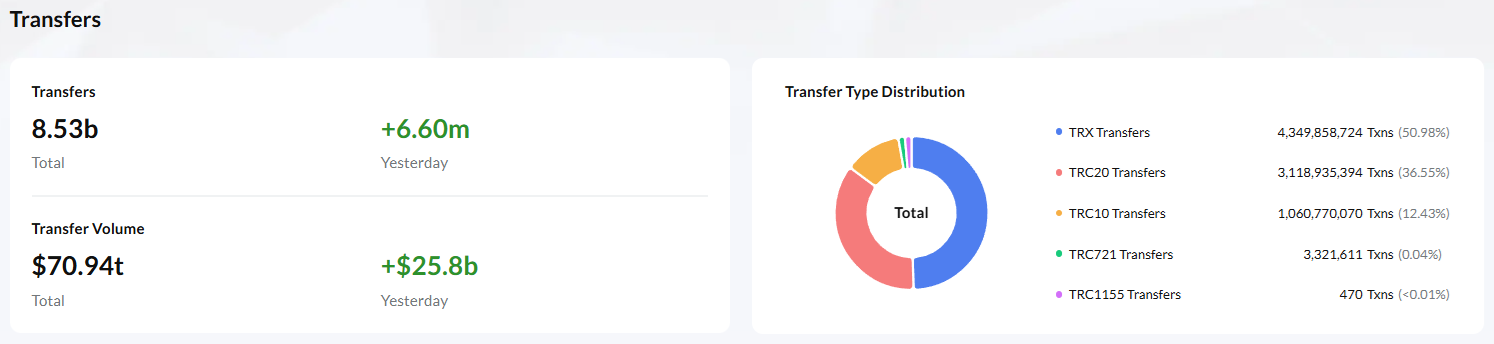
The TRON Energy ecosystem is a glimpse of the future of money — decentralized, efficient, and accessible to every user on the planet. Renting TRON Energy has become a common process by which enterprises and individuals can save costs without the hassle of submitting overwhelmingly high TRX to obtain TRON Energy through staking. This has created a new era of financial accessibility for many, particularly in areas with limited or no access to financial institutions.
How Money Creation Has Evolved and the Consequences
The ancient and medieval eras: Unauthorized minting = death, torture, or exile.
Current Age (20th–21st Century): Counterfeiting means long prison time, fines or worse in some countries.
Post-1971 (Fiat Age): Money is belief; governments still hold the monopoly over printing, but faith is the basis.
Crypto is the Era where you can pick out a token from here and there but it gets its value depending on the belief of the community and not by some decree of the king.
Crypto Dollar: USDT and Its Alternatives
USDT has the status of the de facto crypto dollar as the world’s most traded stablecoin. It fuels millions of daily transactions on TRON, especially from nations struggling due to inflation or currency controls. However, this freedom also made things complicated: every USDT transferred on TRON will need Energy and Bandwidth. In case you don’t have enough, the network also burns your TRX, which in most cases is very expensive.
That is the purpose of the Netts USDT Transfer Calculator. The tool allows users to:
1. Compute required Energy and Bandwidth for ANY transfer of TRC-20 USDT.
2. Save at least 80% or even more cost compared to burning TRX.
3. Get real-time data and API integration capabilities for business and power users.
Sending USDT to a pre-filled wallet => 13.84 TRX (if burning). If renting Energy, price is around 2–3 TRX. About 27.70 TRX if burning, or 4-5 TRX if renting, sending to a wallet without USDT.
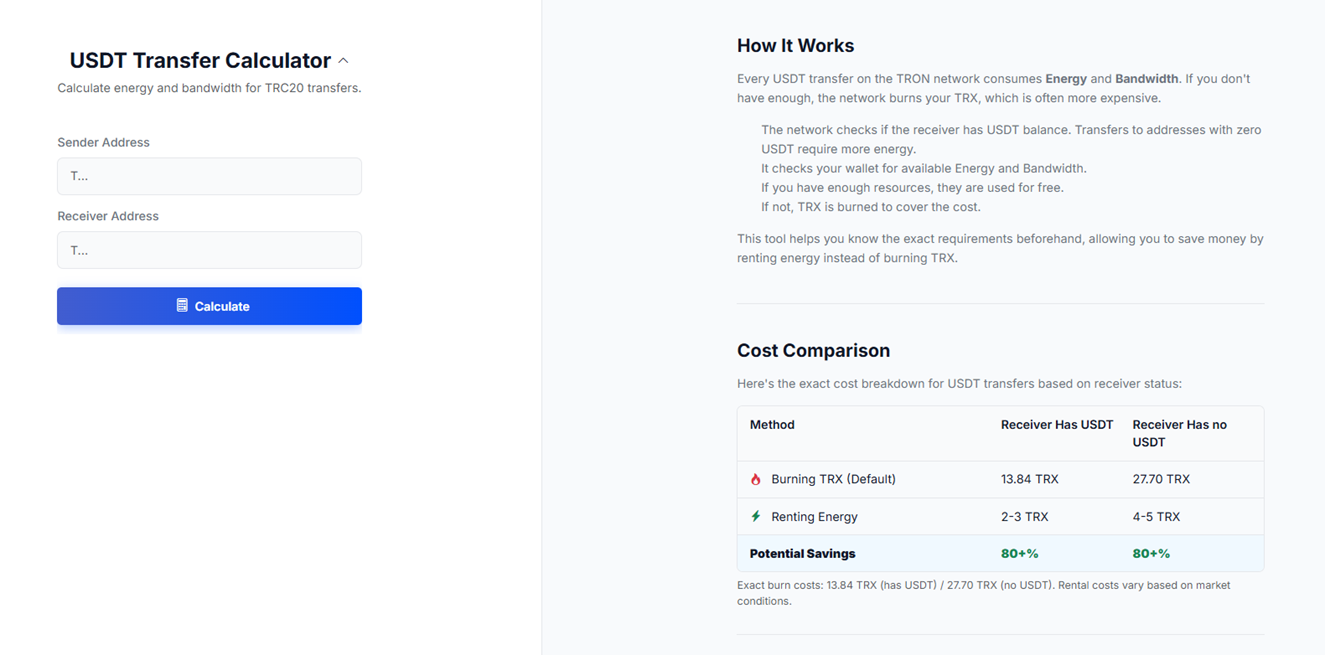
With the TRON Energy ecosystem and useful tools such as the Netts calculator, stablecoin payments have become accessible, efficient and cheap for millions. This is a world away from when it was punishable by death to mint money. The tools of value generation are available to everyone today.
Conclusion: Welcome to a New Age of Money
Earliest monetary fraud drove enemies to kill for their misacquired, illicit wealth, and cryptos are now a realm for public experimentation — the saga of money is the constant interplay between faith and dominion. These days, anyone can generate their own ‘money’ — but the proof is in whether anyone will trust it. The idea is simple — as we build, the tools and ecosystems we create, like TRON and Netts, will shape just how accessible, equitable, and innovative a financial future we can have. Here in this brave new world — the only limit is our imagination. It should not be difficult to see that the transition from crime to creativity is not merely technological, but cultural and philosophical — and may well frame the next chapter in the history of money.