Stocks or Crypto: Which Side Are You On?
The ongoing battle between the stock market and crypto has become even more relevant in 2026, with the two markets affecting one another a lot
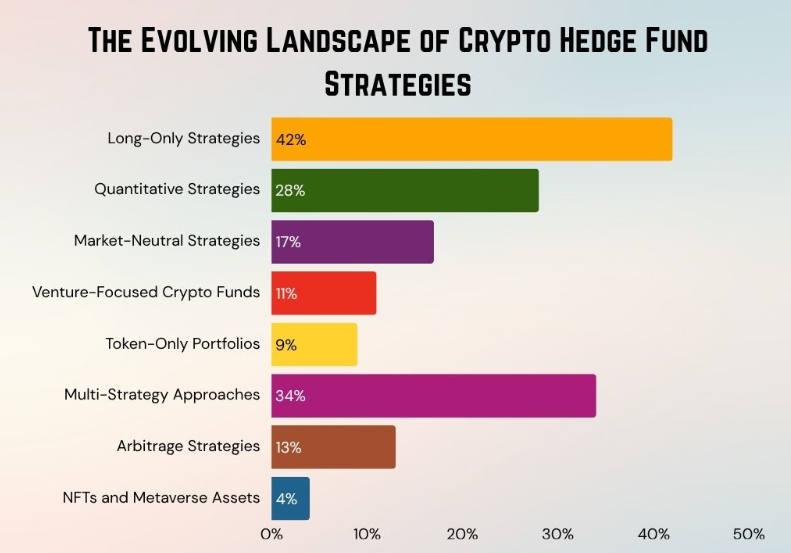
There has never been a more dynamic and diverse world of investing than today. The stock market ruled the roost over capital returns for decades, a domain where winners and losers were determined by corporate and macro-sentiment. However, the new paradigm of crypto and tokenized asset classes does introduce new challenges in how they treat the nature of value, property, and risk. The ongoing battle between the stock market and crypto has become even more relevant going into 2025, with the two markets affecting one another in ways that felt unthinkable only a few years prior.
The Bottom Line: What Do You Actually Purchase?
Investing in the stock market, at its core, is a way to acquire ownership of a company. Buying shares means you are one of the owners, getting a portion of the company profits (through dividends) and a vote on certain corporate matters. Stocks are regulated securities, which means that they are traded on established exchanges with rigorous disclosure requirements.
In contrast, the terms cryptocurrency and tokens refer to a much wider range of assets. Many of them, like Bitcoin and Ethereum, are currencies that cannot be tied to an underlying company. Some, such as TRON’s TRX, or DeFi tokens, support a decentralized network or provide access to some type of service. While others are NFTs, so, essentially one-of-a-kind digital items. Ownership is created on-chain and the rights granted can vary from protocol governance votes to access to dApps — or to mere speculative upside.
Similarities and Differences: Comparing Stocks and Crypto
Although stocks and crypto assets are both forms of investment and speculation, the comparability usually has its limits. Let us examine how they stack up against each other more closely:
Regulatory, safety factors. A lot of protection for investors in stocks, with mandatory disclosures. The crypto markets are decentralized with regulations ranging from varied to nonexistent per jurisdiction, per asset, and many markets exhibit little to no regulation.
Market Hours. For example, stock markets trade during market hours which are during the week. All crypto markets trade nonstop 24/7 around the world!
Uncertainty. Stocks are volatile for sure, but the crypto asset is in a league of its own. Daily fluctuations can be in the double digits — up or down — and it only takes one tweet or a breath of regulatory news for entire tokens to pump or dump.
Liquidity. While large stocks and leading cryptos are very liquid, many altcoins and microcap tokens can be difficult to buy or sell at scale.
Benefits. Dividends and influence on the company, which stockholders receive are somewhat similar to staking rewards and voting rights on TRON, for example, for those who hold the crypto.
Custody. Stocks are stored in brokerage accounts and are safe from theft or loss. With crypto self-custody is an option and not mandatory, while you still can make use of exchanges (all of which run the risks of getting hacked or going bust, or having keys lost).
Transparency. Financial and material event disclosure happens with public companies. Many crypto projects are open-source and transparent, while others kept in the dark.
Stocks vs Crypto: Does One Affect the Other?
Originally, crypto was a completely different animal from stocks. However, since institutional and hedge funds started entering the crypto sphere, the two markets have become more and more coupled.
Bond sell-offs on the stock market when minimizing risk or raising cash can cascade into crypto liquidations. On the flip side, rallying crypto prices can seep over into equities, particularly those with large amounts of crypto exposure or balances. Over the past few years the lines between crypto and traditional finance have been blurred by the launch of crypto ETFs and the listing of some blockchain public companies on major exchanges.
Institutional Investor: No Longer the Skeptic
One of the most obvious recent changes has been in how institutional investors feel about crypto. Through the first half of the 2010s, bitcoin and its peers were written off as speculative fads or scams by most mainstream stock market players — Warren Buffett among them.
However, now that the market has matured, and the regulatory skies have cleared, crypto has become a widely accepted asset class, with many of the largest funds, banks and asset managers now onboard.
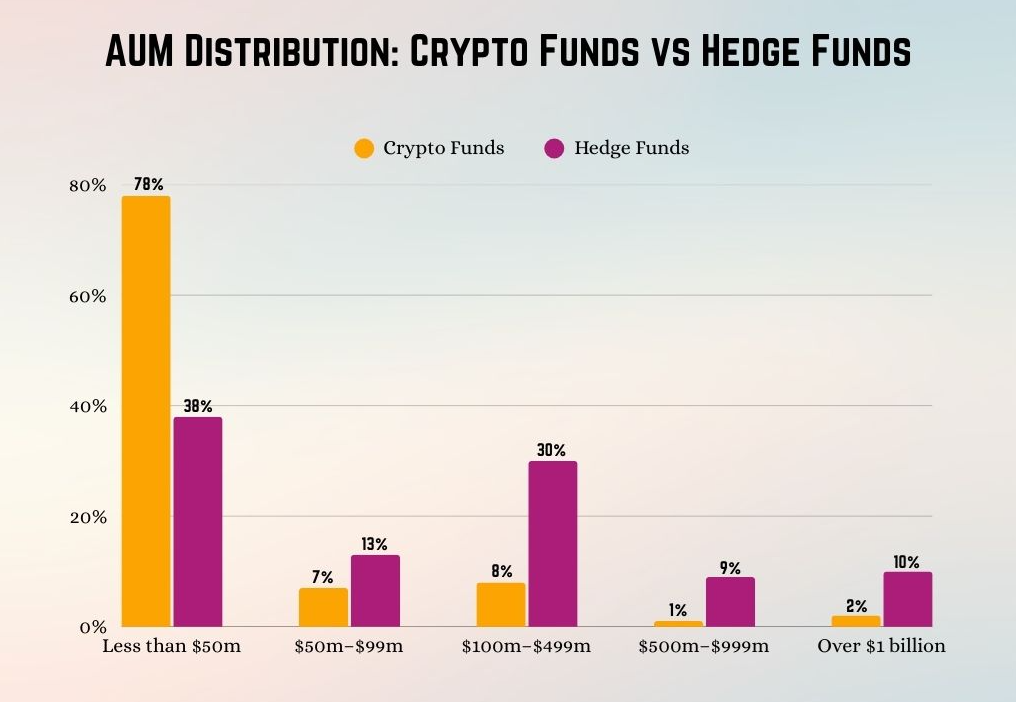
Pension funds, endowments and sovereign wealth funds have a small allocation to crypto these days, mostly via direct investment but also via derivatives and ETFs. Fabled investors who once mocked digital assets, are now mentioning them in the same conversation as stocks and bonds. The narrative has changed from an “if” to a “how much” story, with discussions now revolving around allocation, custody, and risk.
Influence of Stock Prices on Crypto and Vice Versa
The connection between stocks and crypto is complicated and is constantly changing. In times of bullishness on economic conditions, the two markets can rally in tandem, supported by demand for risk and plenty of available liquidity. And in a flight to safety, both can collapse at the same time, when fear grips the market — from inflation, war, or regulatory crackdowns.
However, there are key differences. Berkshire’s sound investment principles demand that stocks are linked to the real economy: source of earnings, source of employment, source of consumption demand. Crypto is, despite increasingly institutionalized, still mired in sentiment, focused on innovation and speculation. However, that feedback loop is stronger now that companies are keeping crypto on balance sheets, or are building out services leveraging blockchain technology.
What Experts Surmise: Views on Institutions in 2025
The attitude of institutional investors in 2025 looks significantly brighter than it did ten years prior. More of them have started to offer crypto funds, but alongside traditional products. Even some of the world’s most renowned stock pickers have taken note of the permanency of blockchain tech and the diversification potential of digital assets after having been prominent naysayers themselves.
For a number of institutions, crypto is considered an inflation hedge, anti-currency debasement, or hedge against geopolitical risk. For some, it serves as a source of alpha, or returns that are not highly correlated with traditional markets. With the proliferation of regulated crypto exchanges, custody solutions and financial products, it has become relatively easier for institutions to participate safely.
Still, caution remains. The worries over volatility, regulatory uncertainty, and security do not disappear. The typical allocation to crypto advised by institutional investors is therefore small, with conventional assets balanced again. There seems to be a consensus that crypto won’t be going anywhere anytime soon, as well as the reality that it’s not a replacement for stocks but rather an additional tool in the investor tool belt.
The act of owning a stock is very different than holding a crypto asset. In stocks, you get some legal rights, you might receive dividends from the company, and in case of a liquidation, you could lay claim to assets of the company. Your ownership is noted and accounted for by a central authority, which protects you with a network of regulations.
You own it and it is self-sovereign with crypto. The possession of your asset lives on a decentralized ledger and the proof of ownership is your private key. It lacks any intermediaries, and it lacks any safety nets. Without a key, your asset is lost. With a faulty project — there is no process for compensation. On one hand, the good comes with freedom and flexibility; on the other, the bad brings with it risk and responsibility.
TRON and the Birth of the Digital Utilities
Networks like TRON that provide real utility, not just a speculative token, are among the most exciting developments in the crypto space. Through TRON, the users and developers work with the smart contracts, dApps, and digital assets, in an environment with higher throughput and lower fees. Users on TRON can rent Energy — an indispensable resource in TRON that is used as fee for executing smart contracts and token transfers — it can be obtained via the TRON Energy Market.
It has never been easier to access the TRON Energy Market through the instant and cost-effective Energy rentals offered by platforms like netts.io, including API integration, automated purchase and rental management tools. This is worlds different than stocks, where utility is related to company performance and dividends — rather than network participation or resource optimization.
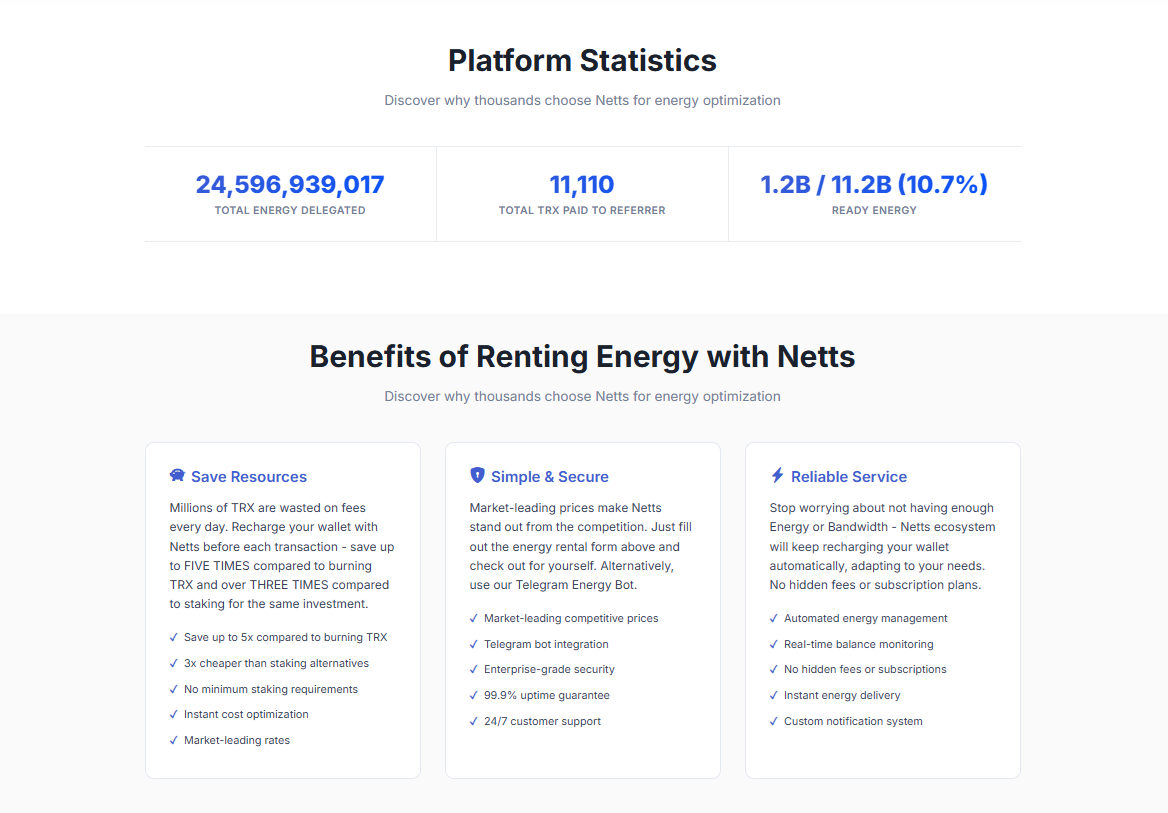
Innovation & development: as the crypto ecosystem matures, netts.io is taking blockchain from barebones infrastructure to usable solutions that not only power other projects, but also empower end users. netts.io aggregates Energy providers, provides the lowest prices on the market, and saves users on transaction fees and automates their operations, so they can spend less time worrying about these minor details, and more on what truly matters — trading, building, or just token exploring.
Ultimately, choosing between stocks and crypto is not an either/or decision. Both provide their own opportunities and challenges: we suspect portfolios with a bit of both will serve investors best. The key takeaway is knowing the differences, mitigating the risks, and utilizing the tools — such as the TRON Energy Market as well as the sites like netts.io — that deliver a smarter, safer and more efficient participation experience.