Datacenters, Mining and the New Energy Economy — the Physical Backbone of Crypto
Every blockchain, every token transfer, every smart contract is eventually backed by some kind of physical infrastructure, which is broad and complex
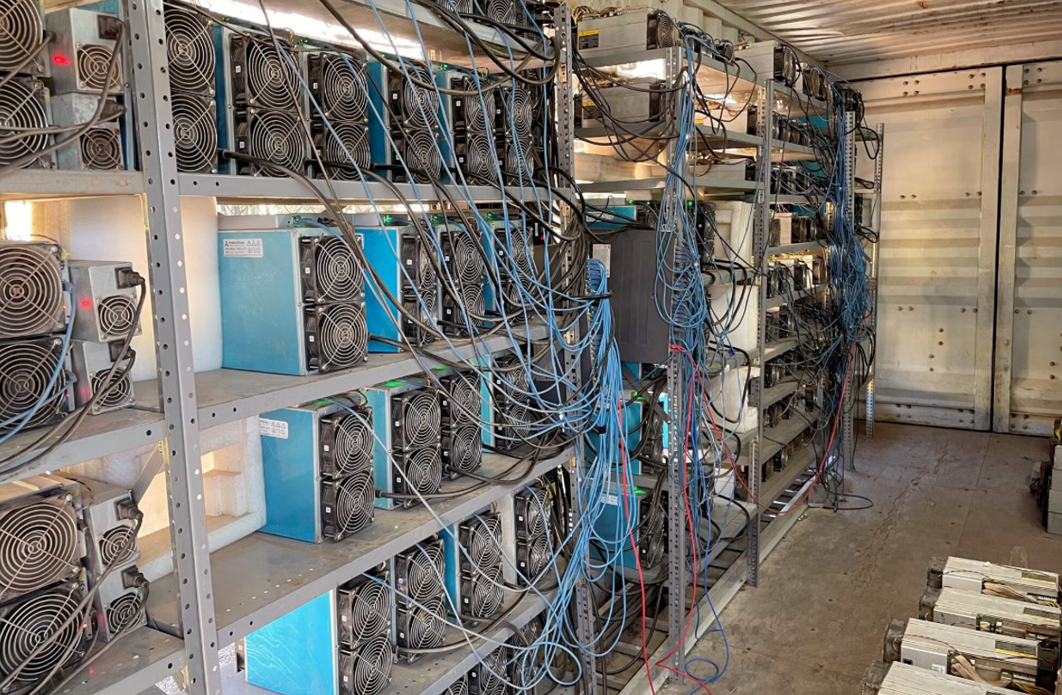
You might envision the world of cryptocurrency as an etheric space — a realm where code and tokens and transactions whiz through cyberspace. However, we need to remember that every blockchain, every token transfer, every smart contract is eventually backed by some kind of physical infrastructure, which is broad and complex. Such hardware ranges from massive datacenters and mining farms to fiber optic cables and NAND — the crypto part of the hardware ecosystem is as real and indispensable as the software it enables. This future progress in digital finance will be determined by the challenges and innovations that arise in this hardware layer now, when the industry has matured and scaled.
A core network of computers (nodes) — which either validate transactions, store data, or maintain consensus — lies at the center of every major blockchain. In certain PoS and delegated PoS (DPoS) networks such as TRON, Ethereum and Solana, the hardware is different, but no less important, emphasizing high-availability servers, secure storage, and fast network connections.
Mining: Arms Race Is On
Crypto continues to be one of the most hardware-intensive industries out there. By 2025, the world is filled with large crypto mining facilities in places with low-cost electric power and favorable governmental rules. Bitcoin and the majority of PoW coins have some of the most efficient miner communities ever, but that efficiency comes at a high price. The cheapest of the top mining rigs may run you into the thousands of dollars, and the largest operations typically have thousands of these things running to eat up megawatts of power.
On proof-of-work (PoW) blockchains such as Bitcoin, mining rigs are specialized machines that crunch numbers to solve cryptographic problems in return for block rewards.
Miners are competing for block rewards and will seek any advantage they can gain: purpose-built cooling systems, immersion tanks, on-site renewables. But ever-increasing global electric prices and growing regulatory oversight of environmental footprint have brought profitability into sharper focus. Smaller miners have been squeezed out, leaving big, well-capitalized players as the only show in town.
Datacenters: the Brains Behind Blockchain
Datacenters are the nerve centers of the crypto world (not just mining). These sites house validator nodes, full nodes, and infrastructure for exchanges, DeFi platforms, and NFT marketplaces. Now, these standards are pretty high: dual power supplies, state-of-the-art fire protection, biometric security, and high speed optical fiber.
In particularly large cities and tech hubs, datacenter space is extremely expensive. The price of rent even for high-spec capabilities can compare with prime office real estate. Global supply chain disruptions coupled with soaring demand for GPUs and SSDs have exacerbated expansion plans with hardware shortages. For operators the compromise between performance, reliability and availability on one hand, and budget on the other is real.
Network Communications: Essence of Decentralization
A blockchain is no more secure than its network. That necessitates fast and low-latency connections for consensus, transaction dissemination, and forking too. In 2025, the majority of major blockchains operate their infrastructure using both public internet connections and private, dedicated links for selected key nodes. A few networks even started to implement satellite relays and mesh networks to increase resilience and reach populations with no or poor coverage.
Bandwidth costs are still a major cost centre, especially for global projects. Will this be a new wave of growth as new users and dApps onboard, or will it be the straw that breaks the camel’s back for network infrastructure? Any outages or slowdowns could create a domino effect from DeFi trading to NFT minting, etc.
Storage: The Growing Challenge
At its most basic level, every blockchain is a distributed database. The more the chain is adopted, the bigger the chain becomes. The amount of data on Bitcoin’s blockchain is now greater than half a terabyte, and Ethereum’s is larger yet when factoring in the smart contract data. The high-throughput networks like TRON and Solana have had to deal with the same problems as well. This data can only be collected and synchronized using the vast arrays of SSDs and hard drives, which naturally build redundancy to mitigate the risk.
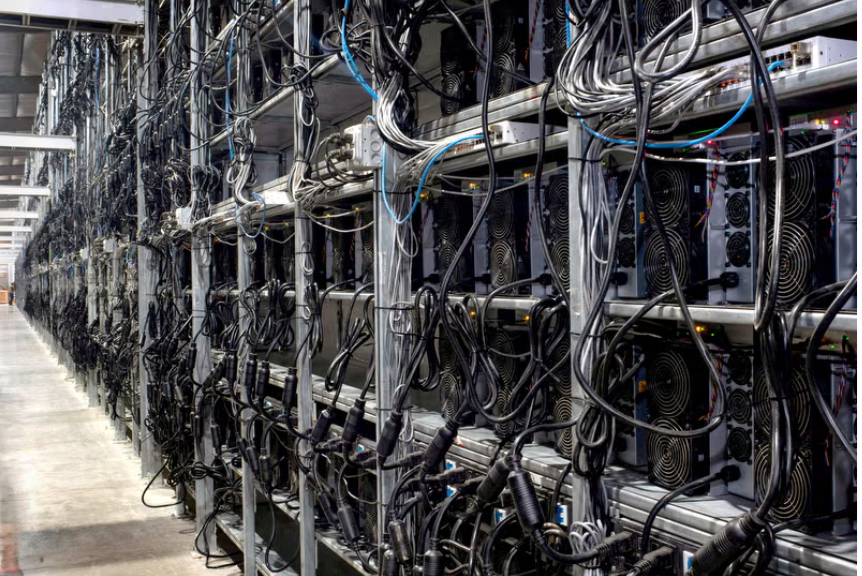
While cloud storage solutions have gained traction, there are many projects done on physical hardware due to more security and control. Enterprise-compliant storage is now pricier, as well as hard to track down in large quantities due to supply chain woes with the latest drives. This has some networks looking into other measures, including sharding and off-chain data storage, to prevent unmanageable growth.
Real-World Expansion Dilemma
The cryptocurrency industry is experiencing continuous growth, and as it grows, so does the physical footprint of its infrastructure. This leads to a number of actual world difficulties:
Increasing Rental Costs. Datacenter space is expensive, particularly in areas with stable power and connectivity. There is stiff competition from cloud giants and AI companies for the best facilities — operators know this all too well.
Hardware Costs. The cost of high-quality miners, servers, and storage arrays has increased over time due to demand and supply chain issues.
Electricity Consumption. Crypto is notoriously hungry for power. Mining farms use more electricity than small towns, but even PoS networks need a lot of energy for cooling, redundancy.
Regulatory Pressure. As more countries examine crypto effects on the environment, they are discovering regions are limiting or increasing the taxes associated with mining and datacenters.
Unpredictability in the Supply Chain. Global events are still rocking the trade in chips, GPUs, and other vital components, creating a costly and unpredictable expansion.
TRON: Doing It the Other Way
Though much of the crypto world is characterized by its hardware arms race, the TRON network has pursued an alternative path. Since TRON is a DPoS blockchain, it only requires a limited number of high-performance validator nodes, eliminating the need for large and expensive mining farms. This contributes to network energy efficiency and avoids heavy reliance on hardware-specific infrastructure.
However, demand for resources does exist even on TRON. Each smart contract execution, each token transfer, each dApp interaction, uses Energy, a limited consumable network resource which must be managed carefully. With increasing usage, competition for Energy will become prevalent, creating a new market.
TRON Energy is a digital resource, which is different from the electricity that supports mining devices and data centers. Used when smart contracts are executed or TRC20 tokens are transferred. Either burn TRX to get Energy, or, more often, go to the TRON Energy Market, where users can rent the Energy they need.
Renting Energy on TRON has proven to be an essential way for individuals and businesses alike. Users can acquire delegated Energy from providers at a fraction of the cost instead of freezing large amounts of TRX or spending high transaction fees. Such a system provides dApps, exchanges, and high-frequency traders who need cheap and predictable access to resources, with great value.
TRON Energy Market and Netts.io
TRON Energy Market has transformed into a competing real-time ecosystem. Over 20 providers are available, including Feee.io, Tronsave, ITRX and various others, providing Energy rentals for instant delivery, flexible periods and an API for developers. Netts.io especially stands out for collecting the lowest market prices and advanced automation tools.
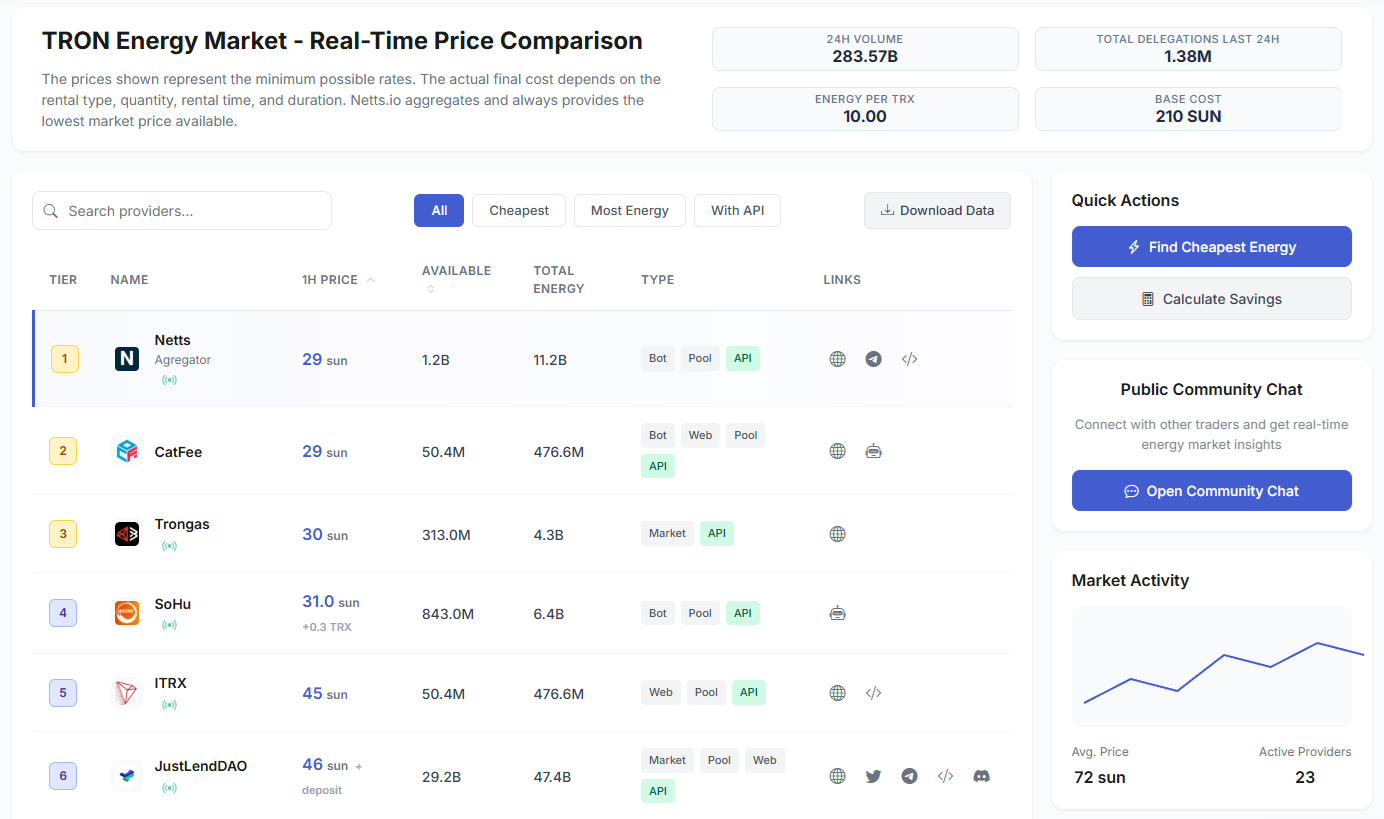
With netts.io, customers can use different possibilities of benchmarking rates, automate Energy rentals and ensure all their transactions are processed at the minimum price available on the market. With the API of the platform, businesses can deploy the Energy management directly in their workflows enabling the launch of TRON operations by eliminating threats around the resource shortage and cost spikes.
The Future: Hardware, Energy and the New World of Crypto Hardware
With the evolution of crypto, the relationship between the physical and digital will only grow stronger. While datacenters, mining farms, and network hardware will continue to power the industry forward, things like the TRON Energy Market are changing the way value and utility is priced and delivered.
Understanding both the hardware and the new digital energy economy will be necessary for both users and developers. Whether your use-case is to run a mining farm, deploy a dApp, or just to send some tokens, the decisions you make now regarding infrastructure and resource management will determine your success in the years to come.