Some Regretful Blunders in History of Crypto
Lost keys, exchange collapses, leverage wipeouts, and DeFi hacks show the costly mistakes that shaped crypto’s harshest cautionary tales.

The cryptocurrency world is frequently described in stories of rapid success, with vast fortunes seemingly created overnight. Personalities such as Changpeng Zhao, the founder of Binance, and Brian Armstrong, chief executive of Coinbase, have themselves become symbols of success in this whipsawing market. Their stories power a narrative that, by making the right moves, anyone can achieve financial freedom through crypto investments. But this celebration of triumphs leads to a kind of survivorship bias, as we ignore the cautionary tales of people whose lives have been destroyed. Today, we look to some of the worst mistakes we have seen in crypto that need to be remembered as warning shots for the dangers that come with this wild west of the digital age.
The Tale of Lost Fortunes
In 2013, James Howells, a British IT worker, lost his hard drive with 7,500 Bitcoins on it. At the peak of Bitcoin, this stash was worth more than half a billion dollars. Despite several attempts to find the hard drive at a landfill in Wales, Howells has not been able to retrieve his lost millions. His experience demonstrates very clearly why secure custody is so crucial in the world of digital assets.
Stefan Thomas, a programmer in San Francisco, also can’t access the 7,002 Bitcoins he was paid more than a decade ago as a reward for making a video explaining how the cryptocurrency works. With just two more guesses before the disk locks itself up for good, Thomas's case is a reminder of what it takes to be vigilant about passwords. It's a reminder to all of us in the crypto world.
The tale of Laszlo Hanyecz, who famously spent 10,000 Bitcoins on two pizzas in 2010 is a different sort of regret. Not that it was a loss in the typical sense, but those Bitcoins would be valued at over $400 million at peak prices. Hanyecz’s tale is just one example of how the early users of Bitcoin vastly underestimated the future value of their holdings.
Exchange Catastrophes
At one point facilitating 70% of all Bitcoin transactions, Mt. Gox was a titan among crypto exchanges. It faced a devastating hack in 2014, when 850,000 Bitcoins disappeared. The fiasco caused the company to go out of business and thousands were left with no recourse. This incident highlights the risks of centralized exchanges and the need for stronger security.
Sam Bankman-Fried, the one-time crypto wunderkind, watched in 2022 as his empire crumbled when FTX went belly up. The exchange’s collapse resulted in billions of dollars in losses for investors and customers. Allegations of misuse of funds and risky financial behavior led to FTX’s bankruptcy, wiping out Bankman-Fried’s fortune that had been estimated at $16 billion. It proves beyond doubt the dangers of lack of oversight and governance in the crypto industry.
Gerald Cotten, the CEO of Canadian cryptocurrency exchange QuadrigaCX, died unexpectedly in 2018 and with him he took the passwords to wallets holding more than $190 million of his customer’s digital currency. The incident has ignited controversy and conspiracy theories with some suspecting Cotten might have faked his own death. Whatever the truth, with thousands of investors in financial limbo following the loss, it underscored the importance of transparent and secure fund management.
The Cryptopia collapse this year is an example of users losing access to funds when the New Zealand exchange was hacked. The platform, which was set up in 2014, lost millions in cryptocurrency before going into liquidation, leaving its users little recourse in their efforts to recoup funds.
Algorithmic Failures and Platform Collapses
In May 2022, the proprietary tokens of the Terra network — UST and LUNA — suffered a devastating crash. Their joint market capitalization crashed from more than $40 billion to $500 million in a span of 24 hours, losing almost all of their value. The crash was caused by the unpegging of UST, an algorithmic stablecoin, which eroded confidence and resulted in a panic sale. This incident just goes to show the risks involved in algorithmic stablecoins and how trust between parties needs to be preserved.
And Celsius Network — a high-yield fintech company that claimed to be revolutionizing personal finance — experienced an epic fail. The company came up $1.7 billion short, filed for bankruptcy and left 1.7 million customers, many of them teachers and retirees from all 50 states, unable to access their life savings. Its chief executive, Alex Mashinsky, was accused of fraud — this kind of underlines the risks inherent in giving money to platforms which have unsustainable business models.
The Thodex exchange scandal in 2021 is yet more evidence of how widespread crypto scams are. After the C.E.O. of Thodex, Faruk Fatih Özer, disappeared with all his customers’ money — some $2 billion from about 400,000 investors — its clients were in disarray and its vulnerability was on display. The platform had attracted investment based on lavish giveaways, only to abandon investors.
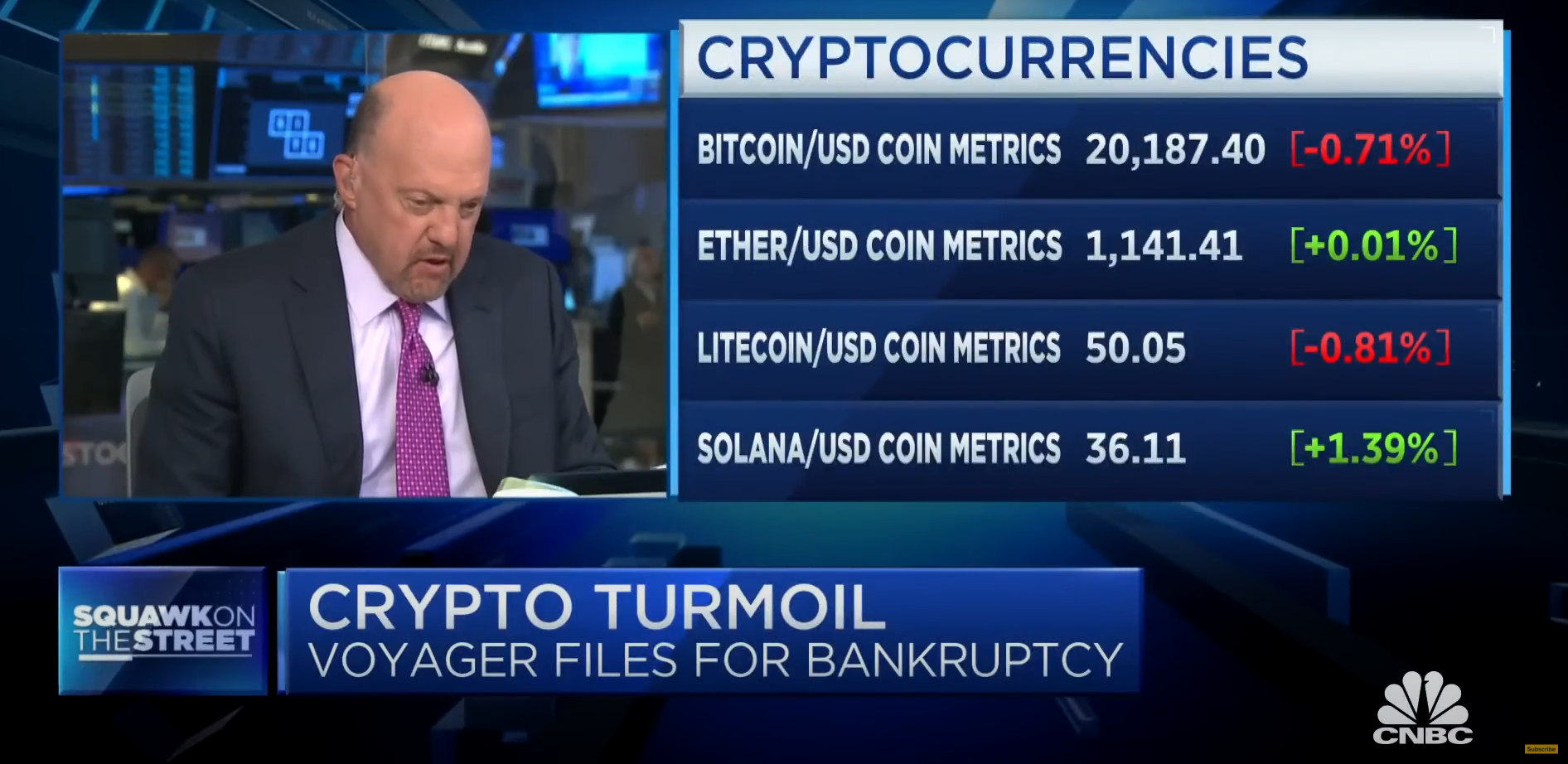
When Voyager Digital declared bankruptcy in 2022, customers were unable to access their funds after the business incurred large losses due to their links with Three Arrows Capital. The lending platform had promised high returns, but it failed to deliver in the end, and thousands of users found themselves in financial jeopardy.
Trading Disasters and Leverage Catastrophes
Cryptocurrency has seen many tragic losses tied to overleveraged trading and poor risk management. In May 2021 a trader on Binance was left holding one of the largest bags in crypto after losing half a billion dollars following high-leverage trading during a Bitcoin crash. A loss of this magnitude demonstrates the risks of leverage trading, which can result in huge gains — as well as enormous losses.
One of the most high-profile ones came when a trader got burned for $1.2bn in one day in the 2022 crypto market crash. The man made enormous leveraged bets on multiple platforms, betting the market would keep going up. Once the market shifted, margin calls led to position liquidations and caused one of the biggest individual trading losses in crypto history.
There’s the Japanese trader who lost $1.3 billion trading Bitcoin futures — another cautionary tale. That person apparently had leveraged heavily and tripled the size of their position on a Yellen hint, getting cornered on margin when it went against them and having everything sold out when prices slipped below a level they'd have expected.
DeFi Disasters and Smart Contract Fails
The decentralised finance sector has seen several smart contract flaws cause catastrophic loss. The 2016 DAO attack led to the theft of 3.6 million Ether, valued at over $50 million then. This is the incident that sparked a contentious hard fork in the Ethereum blockchain and exposed the dangers of a smart contract catastrophe.
The Poly Network hack last year saw hackers make off with more than $600 million in multiple cryptocurrency types. Though the funds were later recovered, the exploit revealed a glaring lack in cross-chain designs and provoked debates over decentralized finance (DeFi) security.
A flash loan hack caused a loss of $130 million during the Cream Finance hack in 2021. The protocol itself had been senselessly battered a number of times in the past but continued to soldier on with gaping security holes that would eventually be exploited by bad actors.
BadgerDAO lost $120 million in 2021, to a highly technical phishing exploit on the protocol's frontend. The attack showed how susceptible DeFi space is to social engineering attacks.
Meme Coin Mania and Speculative Disasters
Meme coins have opened up a new realm of possibilities for people to win big — and lose it all. Although a few early investors in tokens such as Dogecoin and Shiba Inu became millionaires, many more lost their entire investment trying to catch the next viral token. Many of these projects offer little to no intrinsic value, so they are very risky investments.
The Squid Game token scam in 2021 left investors millions of dollars in the hole when the developers behind the token made off with their money. The token, which drew inspiration from the popular Netflix series, saw its price dramatically pumped up before all of the developers sold their stakes and vanished without a trace, taking with them investors’ tokens.

The SafeMoon controversy called attention to the dangers of tokens with convoluted tokenomics. Its high transaction costs and falling value let down many investors, who lost huge sums.
Human Side of Crypto Failures
All these reports follow the same theme: human error. From misplaced passwords to rogue insiders, bad luck to downright theft, the human errors and nefarious interventions that have blighted the history of crypto around shared ledgers are as compelling as they are ghastly. This is a testament for the necessity of strong security, careful forethought and as much automation as possible to reduce human risks.
The promise of fast money frequently obscures basic risks to investors. Many others are cautionary tales of people who flaunted basic security precautions or got suckered into schemes that promised mind-bending returns only slightly more plausible than 30% monthly interest. Volatility in the crypto market, along with human psychology can make a fatal cocktail for loss.
The psychological side of FOMO (fear of missing out) has lured a lot of people in to making snap decisions without really researching or understanding what they are doing. Social media amplifies the effect, voicing fanfare for success but dismissing or ignoring tales of caution.
Recent Developments and Ongoing Risks
The space has seen massive screw ups even in the past couple of years. Numerous DeFi protocols have fallen due to smart contract exploits that cost hundreds of millions. Flash loan attacks have grown more complex, leveraging flaws in AMMs and lending protocols.
Many crypto companies have also been caught unawares by regulatory crackdowns. A number of exchanges have been fined heavily and have had to take steps to limit their operations, while some have simply shut down. The shifting policy landscape remains challenging for corporates and retail investors alike.
Three Arrows Capital’s fall in 2022 was felt throughout the crypto sector. The hedge fund, which oversaw billions in assets, imploded because of heavy leverage and shoddy risk management that had kept many platforms and investors exposed after suffering losses.
The Psychology of Loss
What makes these stories especially powerful is the psychological effect they have on the people that suffer those losses. Some of the people who lost large sums on crypto weren’t savvy investors but regular folks lured by the promise of a windfall. Bereavement also brings a high emotional price as the effects have an impact on relationships, mental health and the potential for financial choices.
But the fear of missing out, or FOMO, has led a number of people to rush into investments without thoroughly researching them or weighing up the risks. Social media doesn’t help with this, giving people echo chambers of where we only praise success stories and ignore/disregard cautionary tales.
Lessons Learned and Moving Forward
These cautionary tales are a reminder that behind every crypto success story, there is a growing number of stories of painful losses. The fickle nature of the cryptocurrency market, compounded by mistakes made by mere mortals and fraudsters can result in devastating financial outcomes. It is important for investors to keep their eyes open, do their homework and use secure methods.
Diversification counts, big time. Most of the most catastrophic losses were people who put all their eggs in one basket, be it an exchange, a specific token or style. Risk is better diversified when you lend to many borrowers, multiple lending platforms, and buy into as many assets as possible.
Education and knowledge are also fundamental. Knowing the ins and outs of crypto technology, the risks to investing in it, and care that should be taken for security can give you a more balanced platform for decision-making. The crypto sector is fast-paced, and keeping abreast of new developments, legislation, and risks is important.

With winners, there are always losers. The high volatility of the cryptocurrency market and the possibility of earning huge sums also carry huge risks. And the anecdotes of lost fortunes, forgotten passwords, ruined platforms and crashed schemes are sobering reminders of what can go wrong in this world. As the crypto-scene remains in motion, it is also worth reminding that a promise of high yield carries extremely high risk, however it can be managed responsibly by making use of best security practices and automation tools to deal with these challenges safely. Like Netts Energy Workspace, which will allow you to automate the entire Energy renting process easily and without programming knowledge: