Solana Industrial Complex: Memes Making Millions
How Solana became the internet meme coin factory — from Trollface to brainlet, what drives the market, and what is actually under the hood.

For much of the early internet, memes existed entirely outside this dynamic — and it seemed perfectly natural that they did. A meme was a frankenstein of cultural DNA, shared freely, remixed at will with no copyright, owned by no one. Trollface was not a trademark. Distracted Boyfriend was not a product. They went viral because they were funny or relatable or encapsulated something indescribable that many of us had been experiencing. This fact, that no one could assign any precise value for the entire power of a meme. That shared ownership was what provided the momentum.
That arrangement didn't survive for long. It never does.
First Time Anyone Ever Gave a Joke a Price
Memes began to monetize slowly, then all at once. Early commercial usages were awkward — mid-2010s brands gave Facebook ads crummy encrustations of meme formats they had yet to earn. Then it was something a little more structurally interesting: the memes were starting to realize money all on their own, outside of advertising. The original Nyan Cat GIF was sold as an NFT in 2021 for about $590,000 at the time of purchase.

Charlie Bit My Finger, the original YouTube video was sold by its creator as an NFT for over 760,000 dollars. There was Bad Luck Brian — a gap-toothed yearbook photo that served as the punchline for 10 years, generated NFT sales that saw real cash enter the hands of the actual human in the picture. It was the cultural artifact that everyone had borrowed without permission, only now it had an owner who could get paid for the privilege.
Even so, these NFT sales were still rather awkward. They were novelty spikes, one-time events. Then came something structurally distinct: not a meme peddled as an asset, but a meme that became the asset — a coin whose only fundamental value was cultural resonance that could be traded for profit. That was the memecoin.
Dogecoin was just a beta test and it became almost accidentally. It was created by engineers Billy Markus and Jackson Palmer in December 2013 as an intentional joke — a satire of the crypto speculation craze, clad in the garb of the then-omnipresent Shiba Inu meme. So they thought that in a week it would just be immaterial. Instead it picked up a community on Reddit, and then a tipping culture that followed shortly after, to the point that you really had people speculating with their hard earned cash. This propelled Dogecoin to a market cap (over 85 billion dollars) in 2021 partly on Reddit momentum and partly by continued Elon Musk lobbying via Twitter. It was a coin that was designed as a joke in regards to speculation, and became the 8th largest cryptocurrency on earth thereby cementing the formula that all those who came thereafter would follow.
Shiba Inu debuted in 2020 as a direct Dogecoin homage — dubbing itself the "Dogecoin killer" — and its community ballooned to the point of creating its own derivatives-ecosystem and eventually even its own blockchain layer. The rudimentary lesson had been absorbed: coins that only claimed to be funny or community-adjacent would sell. If enough humans bought them, the cap was real — no justification required.
Solana Becomes the Factory Floor
Memecoins have finally found their home — a chain fast enough, cheap enough, and culturally on-point to facilitate what is quite possibly an industrial operation. Memecoins were not born with Solana. However, it has managed to industrialize it in a way that no other blockchain has to this day.
The Solana meme coin sector boasts a combined valuation of more than three billion dollars and typical twenty-four-hour trading volumes of over 900 million dollars in active days. As we see the most popular coins by mid-2026, we have a feeling for an incredible cultural diversity. Number one is Official Trump (TRUMP) with a nearly 500 million dollar market cap. Coming over from NFTs, Pudgy Penguins (PENGU) is around the 426 million line. The original Solana-native meme coin BONK, launched in December 2022, has about 390 million. With a market cap over 150 million, Dogwifhat (WIF) — this photo of a Shiba Inu in a hand knitted hat that became one of the most memorable images in crypto. Riding on the backs of those leaders is a longer tail: Fartcoin, Moo Deng, Peanut the Squirrel, Popcat, Comedian (BAN — named after the artist who slapped a banana to a wall of a gallery and sold it for 120 grand), dozens more each with their own community or viral origin story.
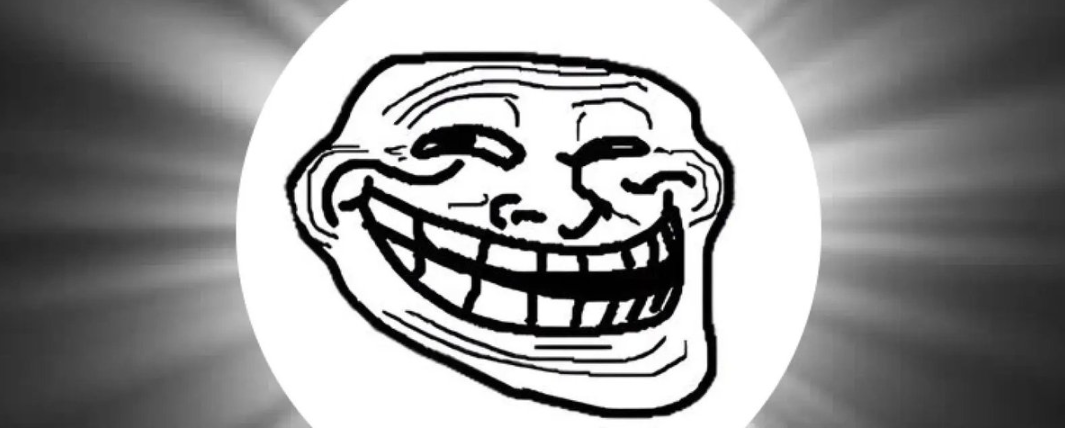
The lexicon of these coins represents a kind of genealogy of internet culture, from the oldest meme templates that you might still recognize today to the latest and greatest in brainrot. The seed: Trollface — a purposely-ugly MS Paint smiley from 2008 — which later made its way onto a blockchain as an asset you can trade (around 70m market cap at the time of writing). Before Brainlet, the bald-headed mockery of low-effort thinking across most any forum that expanded out from 4chan became a common image in the crypto shitposting ecosystem, the meme had appeared in tokenized form. Pepe the Frog, arguably indeed the most well travelled meme of this century, proliferated countless token variants across a multitude of chains and therefore warrants its own sub-category to be established. The memecoin economy is, in part, an Internet history museum where the entrance fee is your judgement of which names will win before everyone else.
We should investigate exactly what about Solana we have ended up as the primary venue for all of this, because it wasn't an inevitability. Other chains tried. Ethereum had meme tokens. Binance Smart Chain had its meme mania in 2021. Neither of those, however, ended up as the de facto capital of the meme coin economy. Solana won on infrastructure, Solana won on timing, and the moment that all three aligned perfectly.
How Solana Works: The Engine
Solana is a proof-of-stake blockchain, which it differentiates with a mechanism known as Proof of History. The idea is a cryptographic clock: validators do not need to interact to agree on the time of a transaction, since the system embeds an append-only, verifiable sequence of events into the chain itself. Which directly allows Solana to not process transactions in sequence but place them in parallel, the reason why it is fast. The theoretically possible maximum throughput of the network is 65,000 transactions per second under ideal conditions, and while real-world throughput is lower, its practical upper bound still dwarfs Ethereum's (approximately 15 to 30 transactions per second on the base layer).
And that's the fee differential that makes meme coin culture on Solana possible at all; A transaction will cost you some hundredths of a dollar — usually it can reach only up to 0.000005 SOL, which is less than 1/1000th of a dollar. The same operation on Ethereum during these busy periods could cost anywhere from a couple of bucks to several hundred. A $2 gas price is a prohibition on impulse buys of coins because a frog picture made you laugh. A sub-cent fee is not.
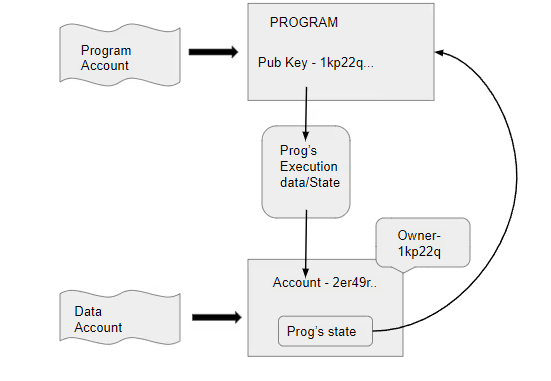
The SPL (Solana Program Library) token standard is a Solana token that uses the SPL implementation for tokens. Specifically, deploying a program to the Solana runtime that describes how to create one with a mint account, supply parameters and metadata. This meant that up until recently a non-negligible amount of technical knowledge was required. Pump.fun changed that entirely. Soon after, this fully functional SPL token creation portal would be launched and it would be able to create an SPL token with an arbitrary name, ticker, image and description in under 2 minutes for ~0.02 SOL fee and thus launch on the SOL chain in early 2024. No coding required. The platform features an early price discovery mechanism through its bonding curve — a starting token price of zero that increases along a mathematically defined curve as buyers come in. When its market cap passes about 69,000 dollars it goes to Raydium — Solana's main DEX so the token can trade without restraint. By mid-2025 Pump.fun was processing its creation of millions of tokens. It was at its busiest seeing thousands of tokens launched per day
Legitimately, deploying a memecoin is just a mechanical effort available to whoever has a wallet and browser. Educating people about it is a whole other discipline — community management, marketing instant, social media targeting, and much of the time good fortune from simply the correct individual sharing the privilege picture at its ideal time. A now-fairy-tale of the typical failed memecoin: a token is minted, the creator spams X and a handful of Telegram groups, max longs start buying in with what little may be left on crypto exchanges, and for a brief moment it seems like an inverse moon shot. Then it stalls. The creator built no real community to keep the spark alive; or it launched alongside ten other aesthetically similar tokens in that same week, diluting general interest even further. The token comes nowhere near the graduation line and the early adopters are left with something that will never see a market again. This is the fate that befalls most launches.
Coins that move beyond their initial price threshold generally have one of the following working in their favour:
A solid community already existing — a meme that is known and loved already before the token was built which means that community came before the coin making it easier rather than having to build one from scratch.
This was pure organic virility, an image that resonated at an absolute high time when something in the culture clicked.
Support from wallets with large sums to give that initial liquidity, run the chart and then get people who are scanning for tokens that are moving.
For most of these serious projects, they create a liquidity pool on Raydium by pairing the new token in combination with SOL. This makes it possible to trade continuously with the absence of a centralized order book - since this pool is run according to an automated market maker model. The price at any given time is determined by the amount of first asset vs. second asset available in the pool. There are projects that remove their liquidity pool tokens, or "burn" them — this means these teams either have no ability to drain the pool they created or simply did not desire payments in return for running a publicly traded company. Some do not and the "rug pull" where the creator drains the trading pool to zero and runs off with your money is now a common enough term it has its own glossary. On-chain transparency on Solana makes this technically detectable beforehand, however is so rapid that by the point a lot of retail consumers are looking, the decision has already been made.
The Cult And The Crash Log
Maybe some of the toughest critics are from the crypto community itself.
One camp — chronically online, already acclimated to the reality that internet culture has an economic side — models with gusto. There's no contradiction here for these users; the fact that their favorite meme now has a market cap is an affirmation. If you figured out why xyz is funny before everyone else, then that cultural insight should accrue to your balance sheet. Although it includes a truly enthusiastic democratic pitch: memecoins offer ordinary retail investors the ability to participate in high-risk speculation from day one at the same price as anyone else. You do not require a venture capital round, there are no private sales and you have no requirement for an accredited investor. A fair launch and all starting at the same price, which — compared to token launches earlier in this cycle where insiders received tokens fractions of a cent, while retail is entering with those prices already being marked up a hundred times — actually makes it pretty appealing.
The argument against that is just as compelling. The critics call it hustle culture: by way of describing the memecoin mill is an engine not for productivity, but for messing up artificial scarcity of things that were meant to be valuable because they belonged to no one. The spirit of the memes, the jokes we all share and take part in creating and recreating together — it gets re-enclosed. A ticker symbol is placed on top of it, buyers are found and value captured from the very same grassroots community that conjured the cultural meaning in the first place. Carlos Ramirez, the man behind Trollface himself, never agreed or profited from any of the Trollface-adjacent tokens placed on the market using his work. The relationship of Pepe creator Matt Furie (photo below) with the multiple lives his character has taken — specifically, in token form — has been long and strange, often seemingly adversarial.

All this anger is compounded when financial consequences are evident. If a well connected team puts out a coin, creates an organic looking chart, gets retail buyers to jump on the momentum and sell liquidity — well then you have the money moving from the audience who believed in the meme into the hands of the team trading it. This has occurred hundreds of times at a small scale, and a handful of times at a large enough scale to compete for mainstream media attention.
There are, of course, serious collapse stories hidden within the memecoin history. In October 2021, the SQUID token — built on hype from the heights of Netflix's airing of Squid Game (where apparently a lot of people also confuse caps/loss) — plugged in a mechanism that prohibited holders from selling and plummeted some 99.99% after minutes. SafeMoon was able to run a more sophisticated scheme for the longest period of time, achieving a multi-billion dollar market cap in 2021 and later plummeting over 99% from those highs which ended with its founders being indicted on fraud and money laundering charges. Then came the political memecoins, which brought a whole new level to it. Official Trump (TRUMP) and Melania Meme (MELANIA), launched just weeks before his presidential inauguration in January 2025, reached a peak market cap of near two billion dollars only to fall back drastically. TRUMP carries a market cap of almost 500m — whether that is an enduring cultural institution or just the protracted echo of a political moment is something the market continues to answer.
It is not always obvious (in advance) which coins will survive and which will not, and the very fact that they do not need to be obvious means that the market can never completely clear. BONK was a community airdrop to Solana users that withstood the chaos of FTX woes in late 2022 — given out freely to wallets, NFT holders and developers as statement with no venture backing, and no presale. It now stands at just under 400 million dollars market cap. Dogwifhat — the photo of a real dog named Achi is fascinating in how the image evolved from wholesome Instagram post to market cap with hundreds of millions when even cynics shy away from outright dismissal. Whatever went on there, it was not nothing.
Multiple platforms have made real efforts to compete with Solana. Ethereum is still home to large-cap meme assets like Shiba Inu. However, both the fees and general friction with Ethereum push a lot of retail memecoin action to faster, cheaper chains. Coinbase's Ethereum layer-2, Base, has had a wild ride with BRETT as its flag-bearing meme asset. The era of Binance Smart Chain has been upon us. TON based on Telegram native blockchain is building meme coin ecosystem to be powered by massive TELEGRAM users around global especially in developing countries. None have had Solana's unique trifecta beforehand: sub-cent fees, sub-second finality, memecoin trading already hammered out from the BONK-era culture, and a Pump.fun pipeline between creation and market that is actually simple to use. Solana also underwent something that gives permanent identity: The FTX crash of late 2022 almost killed the chain, SOL dropped from over 200 dollars to under 10, and it had a community rebuilt on the story of surviving something. BONK was born in that moment.

We expect memecoins on Solana will follow a familiar bifurcated journey that all speculative asset class types go through ultimately: small number of veterans that have proven community viability over many cycles, and ongoing turn as new launches forming around each new cultural zeitgeist — most to fail but some become the next absolutely established brand. The developers, traders, and communities who inhabit this ecosystem are not blind to the criticism or the bodycount. They approach it the same way seasoned traders in any volatility market approach risk — as part of the terrain to be traversed. The post-mortem is never "this whole category is bogus!" when a coin goes belly up, but rather "here's where the signals broke" and "here's what we got wrong. Each iteration has lessons reviewed so the integrated plan can be improved upon as you leap to next launch.
Then there are the more silent players: those who held a few hundred dollars of BONK throughout the 2023 recovery and ended up, a year later, with something much higher worth. The early Pump.fun users that learned the bonding curve mechanics so well, they could pre-empt graduating tokens before they got to Raydium, and were consistently banking real returns doing it. These stories don't make the headlines, but they are precisely what keeps the ecosystem alive and participants willing to deploy capital into the next launch.
Total category market cap is above three billion dollars over some of that time as the market has seen pronounced turbulence. Whether this means the category has earned a place in real capital infrastructure, or exposed the lengths to which financialized concern can sap an attractive cultural object, is really a question that depends on who you ask. The chart does not care which interpretation you are happy with.
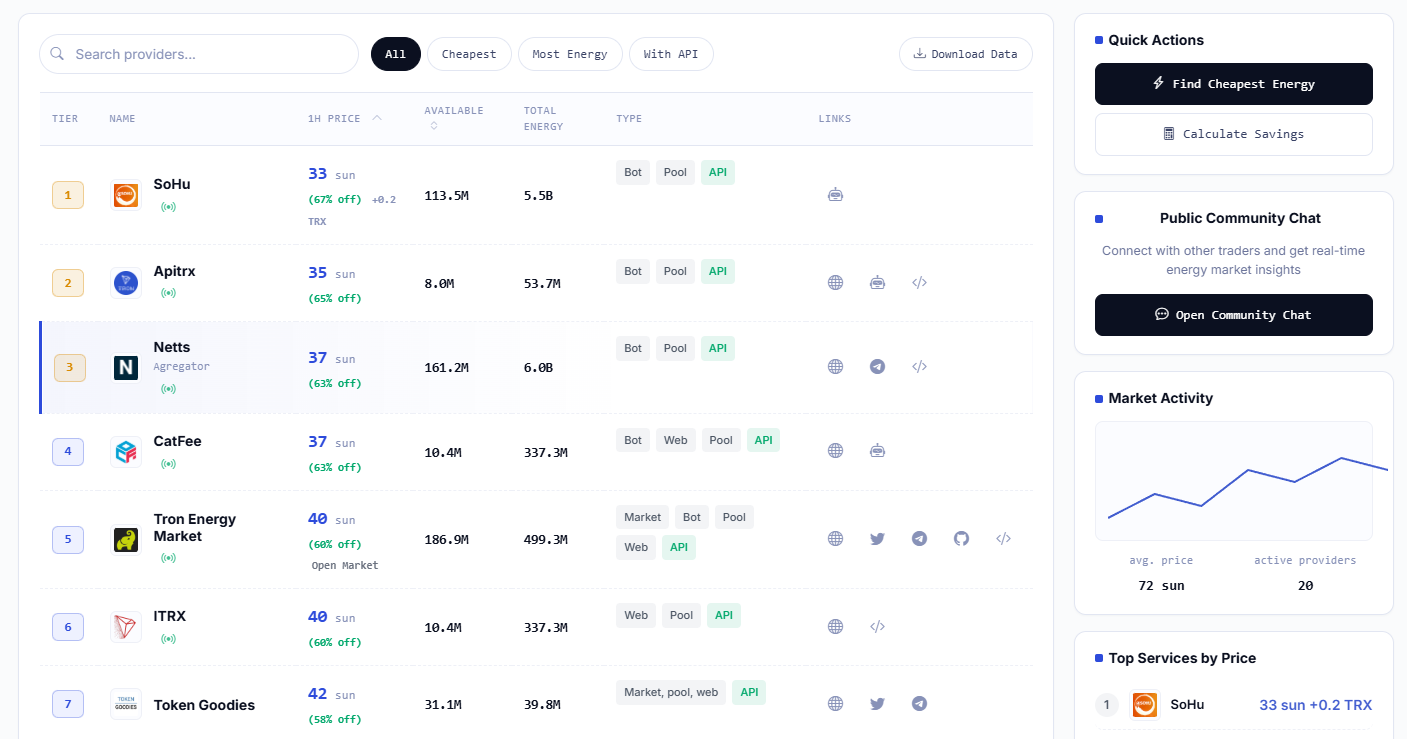
For example, for all the stablecoins moving on-chain through TRON — whether for remittances, payments or just trading — second layer infrastructure that makes it cheap to move that coin has its own market. Netts is a TRON Energy aggregator that tracks live pricing from over twenty providers and routes each transaction to the most economical provider, so users can obtain cheap TRON Energy with no need for price comparison across platforms. With TRON Energy prices as low as 25 sun per unit from leading providers (vs 100 sun for direct TRX burning), the saving on frequent USDT transfers is material and persistent, a microcosm of competitive efficiency that underpins the best infrastructure anywhere in crypto.