Crypto and Prediction Markets: Polymarket, Kalshi and Similar
From Iowa experiments to Polymarket billions — how prediction markets priced information as a tradeable asset, and why crypto made them global

Ever since there has been a next to bet on, people have been betting on what happens next. Crowds in Rome wagered on chariot races — and when that became dull, on the identity of the next consul. In the 1700s coffee houses in London had bet books on whether a certain nobleman would recover from his illness, an unrefined practice even then and one that hardly slowed the action. Your uncle's got a take on the election and twenty bucks bet that he's right. The office March Madness pool is a horrible version of Polymarket, one with higher fees and a Dave that never pays.
So the instinct is not new. The plumbing — who gets the bucks, who determines the winner, who can compete and how badly you get swindled down the middle — is what was different century by century. For nearly all of history the answer to all four was a person you had to trust and probably should not. The line is set by the bookie, the bet is paid to the bookie, only to be determined a winner or not at the discretion of the bookie, and should you complain about winning or losing then it will be your knees that take their revenge from them. What has crypto done for this one ancient game: Everything and nothing at the same time — all unglamorous. And took the bookie out of the room.
Yes, that pretty much is the entire story, while everything below are details. However, this where it becomes interesting because as soon as you remove the trusted middleman and allow strangers (anyone) to place anonymous money on a finely defined question, people will reveal things about themselves that they will never say in front of each other with their mouths — mouth is where lies come from — but are true, by making a wallet statement.
Iowa Lab to Manhattan Apartment
The respectable origin story dates back to 1988, when economists created a miniature real-money market (the Iowa Electronic Markets) on the presidential race at the University of Iowa as little more than an experiment. It was a hunch that people with their money on the line would bet against the polls. It did, repeatedly, for years. That is because the traders were not masterminds. They poll your opinion and you can lie to them for free, just to make yourself feel good or please your side. The market is a proposition on what you feel is right and subjects you if you're wrong. And lying is suddenly very costly, so people mostly stop.
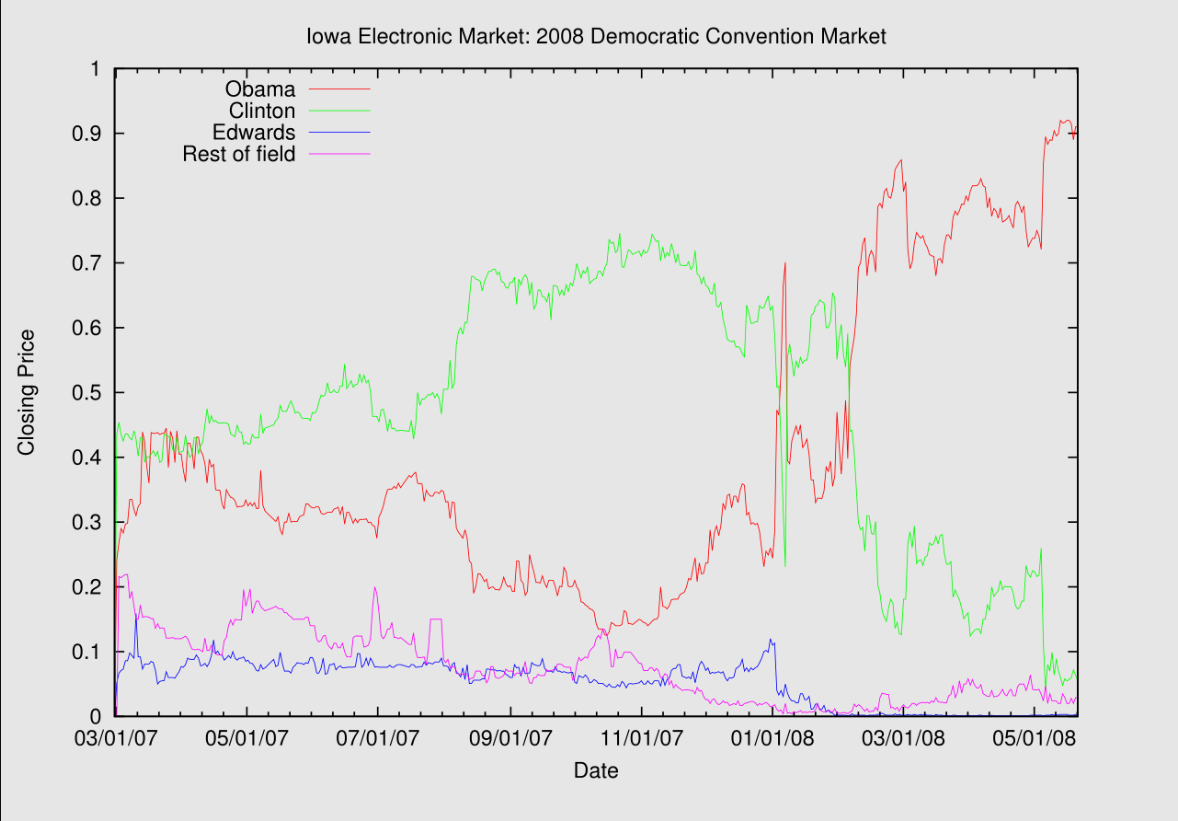
The internet versions stayed somewhat niche and perhaps a little disreputable for a while. Through 2001 Intrade, out of Ireland, ran the thing political obsessives kept refreshing all day long. It predicted the 2008 Democratic primary, and the Supreme Court's healthcare ruling, before the pundits who were getting paid to know. However, in 2013 it collapsed through regulatory pressures and the accidental death of its founder, and a funny thing happened: responsible people actually cared. Polls resumed being the only tool in town.
PredictIt attempted to plug the gap left by 2014, running under an academic exemption and capping individual investments at 850 dollars per market. That cap was the entire issue. When the most committed, well-informed trader in the room is throttled down to pennies, you cannot erect a deep honest market. The prices wobbled. There was nowhere for the smart money to express conviction at scale. Everyone felt that the format wanted to be larger than what the rules would allow it to be.
So the crypto people swung and first swing was a whiff but an instructive miss. True believers like those in Augur, which launched on Ethereum all the way back in 2018 with no company even in the loop. Any market could open, and it was the crowd of token holders who voted on what really happened that tended to rule against your bet. Philosophically it was beautiful. In practice, it was like attempting to place a bet while doing your tax return in half-passable Spanish. This was expensive, slow and barely anyone used it. In the case of Augur, it showed that not only did the idea work, but even if you are right about the architecture you may be wrong on delivery if regular humans bounce off your front door.
This is a lesson Polymarket learnt: it made the trade — nobody wanted to admit necessary — of somewhat less purity for much more usability. Launched in 2020 by Shayne Coplan, a twentysomething still working out of an apartment, it put everything on Polygon so fees were nugatory and confirmations quick, and settled transactions into a dollar-pegged token wrapped around USDC. During that time the user never sees what is happening, and thus comes the clever part. You insert dollars, you acquire a position, you withdraw dollars. You never need to know what a gas fee is, or that pUSD is doing the accounting because it happens automatically under-the-hood in the blockchain. The bookie has disappeared, the whole experience is like a clean app as compared to a cryptography seminar.
And because the money is simply stored in a wallet, not an account bearing your name like a sticker on a cereal box, two important things follow. Code takes care of who won and lost when a market finishes. There's no clerk who says your bet just happens to be inconvenient. You don't get vetoed by any payment processor in your country. This means that this man in Lagos and this woman in Seoul are both looking at the same screen with the same terms, neither feeling like they needed to ask permission.
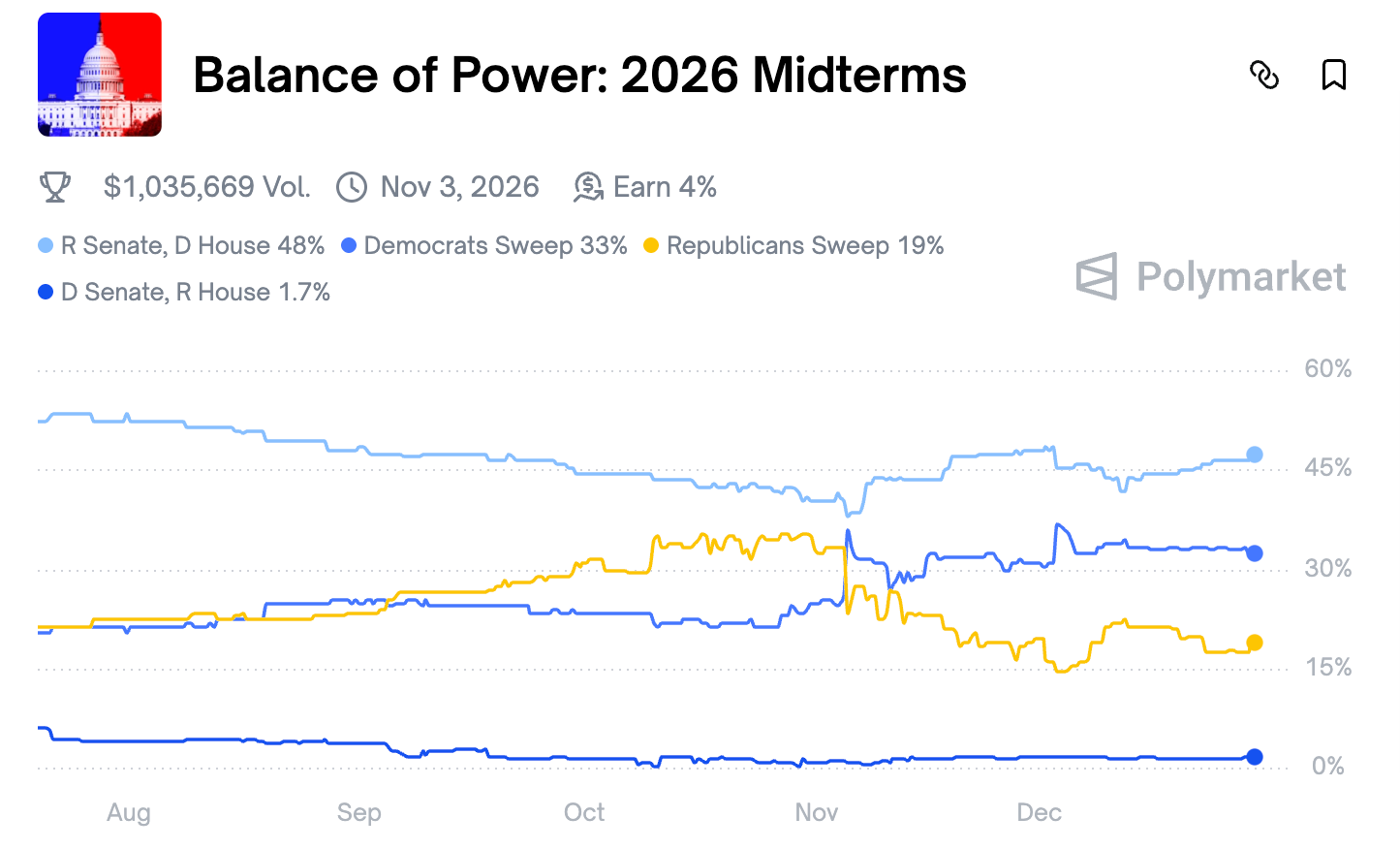
For years this had been an inside joke, loved by a few thousand crypto natives and hidden in plain sight from everyone else. November 2024 ended that overnight. And though the networks would soon be spinning a Harris-Trump coin-flip story, for weeks Polymarket had Trump pegged at about sixty cents on the dollar. When the result finally came in, the awkward thing was not who won. It was why a crypto betting site had understood the country better than an industry that pours fortunes into polling. Monthly volume that had been below 200 million dollars in early 2024 hit 2.6 billion. The platform that had roughly 4,000 active traders a month two years earlier had, by early 2026, exceeded 734,000 active traders per month. That is not growth. That is a phase change.
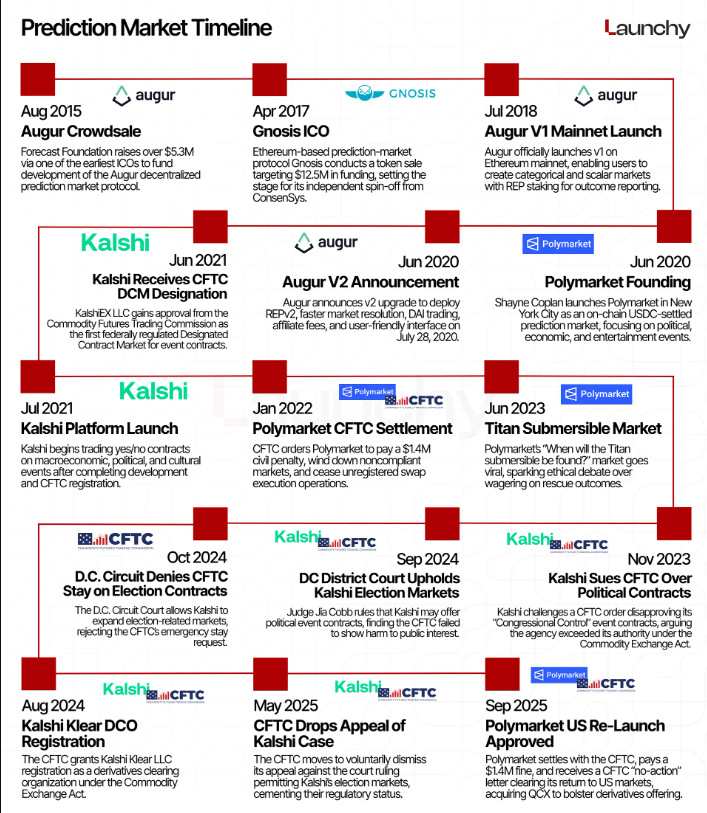
On the other side of it, Kalshi scaled that very mountain. Founded by Tarek Mansour and Luana Lopes Lara in 2018, launching to the public as of 2021, it did the unfashionable thing (within current regulatory circles) and went directly to the regulator. For money in segregated accounts similar to ones the big commodity exchanges have their rulebooks on (not cleared out, but a good enough sign), you get the first event-contract exchange whose CFTC blessing is finally out there. So this thing has no crypto under the hood, just dollars and a license. The former cost Kalshi the global, anonymous crowd Polymarket lives off of, and bought it what Polymarket has never been legally allowed to sell most Americans: the ability to function on open soil without constantly looking over its shoulder. Kalshi plunged deeply into sports, which by 2025 represented the vast majority of its revenue (it won court fights over election contracts in 2024), with football betting alone running into the billions. A 2026 raise pegged the company at a value of 22 billion dollars. Two companies, two beliefs, and one wager that future pricing is a business today.
What People Really Bet When Nobody Is Watching
The headline markets are exactly what you think would be and actually useful: who wins what election, will the central bank cut rates, will the gov't shut down by Friday, does a bill pass before recess. Kalshi operates clean markets on inflation prints and jobs numbers which traders almost use as instruments, a means of taking a position on the economy that regular finance makes strangely complicated.
However the species shows itself in the long tail. The bets have been on aliens being declared real, whether Trump would be seen smoking weed in 2024, if a pop star was pregnant, if a world leader would face criminal charges by a certain date. Small markets, real money and real people on both sides all settling cleanly when reality answered. It is a touchingly earnest society, one willing to pay cash for its idle curiosities. The polls never ask if you believe in aliens. The market will happily take your money on it.
Much of this is dark, with the platforms not yet having worked out where to draw the line. When markets touching on the leadership of Iran and a call for famine in Gaza in 2025 were listed at Kalshi, the backlash was loud. The defence is not stupid — perfect information is the most useful probability to relief organizations, even if profiting from these scenarios feels grotesque. What you have is both true and does not resolve itself. Next you've got the plumbing rot you would expect of any real markets with live money in them. Well placed Polymarket bets on US foreign-policy moves came under the scrutiny of insider-trading allegations in early 2026 when reports indicated that certain traders were days ahead of the news. And researchers have flagged that about 25 percent of Polymarket's volume resembles wash trading, wallets selling to themselves in order to conjure a crowd. Welcome to markets. On Nasdaq the same thing, dressed up in a suit.
Coward's Math
This is where the polite write-ups skip over but, this is the key. Its success in prediction markets was not due to the fact that crypto is awesome. Anonymity took away the single largest reason by which people lie about who they are and what they believe: the fear of looking like an idiot in front of constituents whose opinion you depend on to win at life.
Think about how this real pro conducts himself. Okay, a story of the little ugly equation facing utility funds. You are stuck as a fund manager having to own the best loved company in these parts, privately deciding that the stock is garbage. If he shorts it and is correct, he makes money while a few people smile. He shorts it and he's wrong, it's in the filings now his investors see it, his peers laugh and the story of the year is how he bet against an obvious winner. The imbalance is vicious, so he plays the logical coward: shut up and long with everyone else. Then scale that across every pro in every single marketplace, and you have prices that people will subtly slant to protect their reputations — rather than deliver their judgement. This is not a fringe theory. The careers in finance are based in plain sight on never being wrong the wrong way, which is not quite the same as getting something correct.
And now place in front of an anonymous wallet that same individual. The office is unaware he placed a bet of USDC 1,000 on the consensus candidate losing their primary. His wife doesn't see it. His boss doesn't see it. The group chat with the smugness can't see it. So the social cost of getting it wrong (which was really everything from holding him hostage on how he actually felt) will fall to zero. So he wagers his true opinion. When thousands of people cease acting out their opinions and come to the table to price them, the number you get on the other side is more likely to be truthful than any survey; a survey is a stage; a market is a confessional.
This extends beyond money, to that which people literally can't utter. Some opinions have you fired or frozen out, depending on your living environment and who is facing you. A man could be confident that a government is on the verge of collapse, or that a once-soaring public figure is about to come crashing down to earth, or just that the official narrative on some issue is horseshit and he will never mention it at dinner. But he'll bet on it. In silence, under a string of characters that doesn't belong to him either. And the market prices all of those private convictions punished in the public square. That is not gambling. A society that speaks while asleep, can not lie.
And so, there is another human truth hiding under that first layer: these markets compensate those who know something the crowd does not. Ten thousand analysts and a battalion of algorithms pick over a blue chip stock for breakfast, so you might as well flip a coin because your chances at having an edge are more or less zero. But say, a market on some local election, or a ruling from some specialist regulator, or whether some factory actually starts producing again, might only have a few dozen serious traders. If you live there, work using that industrial knowledge or read the local press in the local language — you're not squaring off with all of capitalism. And you are competing against any other person who cared to click on some weird question this week. That is a fight that can be won; it is the closest thing to fair edge there is in our markets today, where normal access to anything half-decent was all paywalled and front-ran years before.
Just don't get drunk on it. Confident traders who thought the crowd was dumb are resting in the graveyard, because they found out that the crowd knew something that they did not. Particularly, what you are sitting on is less secret than it seems, and why everyone else agrees with them is right often enough for reasons one cannot yet see. I believe that more or less conviction scales with how rare your information genuinely is, and most information ain't rare. The market does not pay you for being smart. It only rewards you for being right which is a much cooler, tighter thing.
Rails Underneath
The comparative practical advantage of the crypto version is that there is virtually zero friction between forming an opinion and taking action on it. All you need is a wallet, some stablecoin, and an internet connection — you're in within minutes.
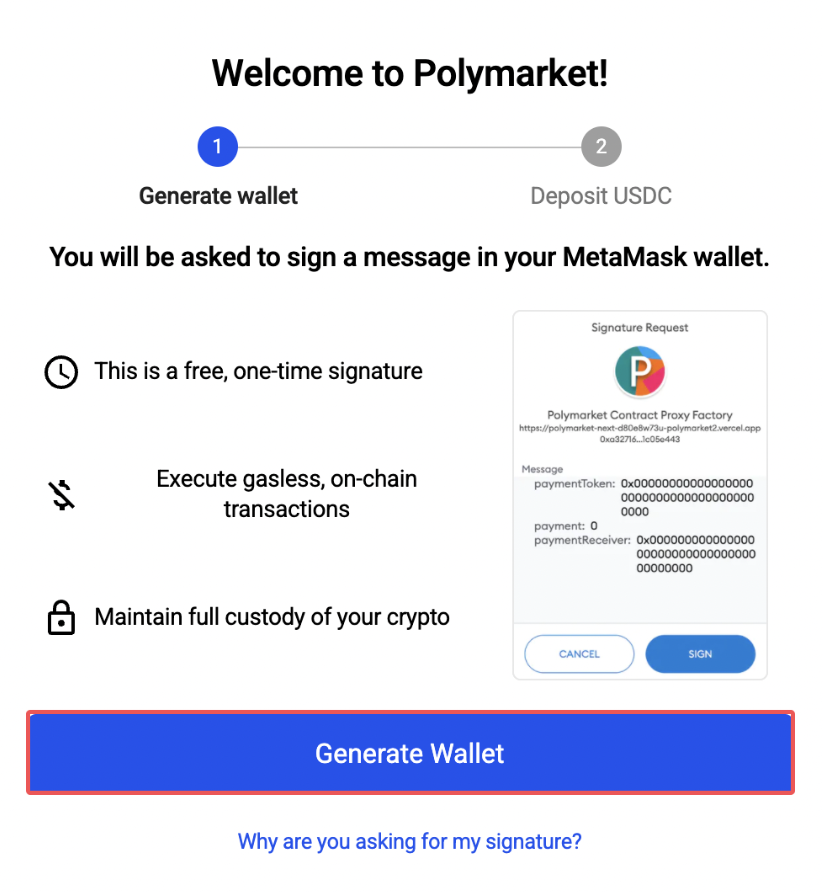
For Polymarket the loop runs like this:
Link a wallet like MetaMask or Coinbase Wallet.
Deposit USDC and the platform seamlessly bridges and wraps it to its trading token.
Purchase YES or NO shares at any price ranging from zero to one dollar, which merely tells us what the market is currently estimating as the odds.
Just sit back and see how the event resolves: the winning side pays a dollar per share, the losing side nothing.
Withdraw your funds to USDC whenever you want.
This world is the boring, load bearing bit where TRON comes in. That's very much the reason: USDT on TRON is the workhorse stablecoin of vast swathes of the planet; it moves like lightning, at close to zero cost and people park-and-shuttle value through it before its ever even seen a betting platform. Polymarket itself settles in USDC on Polygon but the money does not originate there. Most of it simply originates as USDT on TRON in a TronLink wallet, bridges over and arrives ready to trade. For a person rebalancing a dozen small positions across markets, every tiny transfer is the difference between a strategy that works and one that slowly eats your returns alive. For that person, moving USDT cheaply is not a luxury — but a necessity. It's the whole margin.
After the Bell
None of this is complete or neat. The manipulation is real, the wash trading is real and what should even be allowed to have a price — looms over the whole affair without solution. The map, by design, is a mess: Polymarket fenced out Americans after a settlement found that it was running an unregistered US exchange in 2022 (this bit of land remains walled off), Kalshi mostly stays inside US lines and what you can touch often depends on where your passport says you're from.
And it keeps growing anyway. Prediction markets went from being a curiosity to an actual thing serious people cite when it comes to the 2024 election. The total offshore has only measured in the tens-of-billions the last year, but volumes have continued to rise through 2025 and 2026 across social, politics, and economy. Nobody is consolidating. The door keeps swinging wider and wider, thanks to new platforms, new types of contracts and cheaper rails.
Remove the tech, and the remaining structure is almost embarrassingly simplistic. Humans have always wanted to bet money on what will happen, and as long as we have had any kind of society or system to relay information it has been middlemen, gatekeepers and very importantly their own fear of being wrong that prevented them from picking up those wager pads. Crypto didn't invent the desire. All it did was eliminate excuses one by one until the only thing between you and the bet is if you were right or not. The market is indifferent to who you are, your location, and what your peers believe. It cares about one thing and one thing only, and it's the very same thing that life otherwise lets you streak right through.
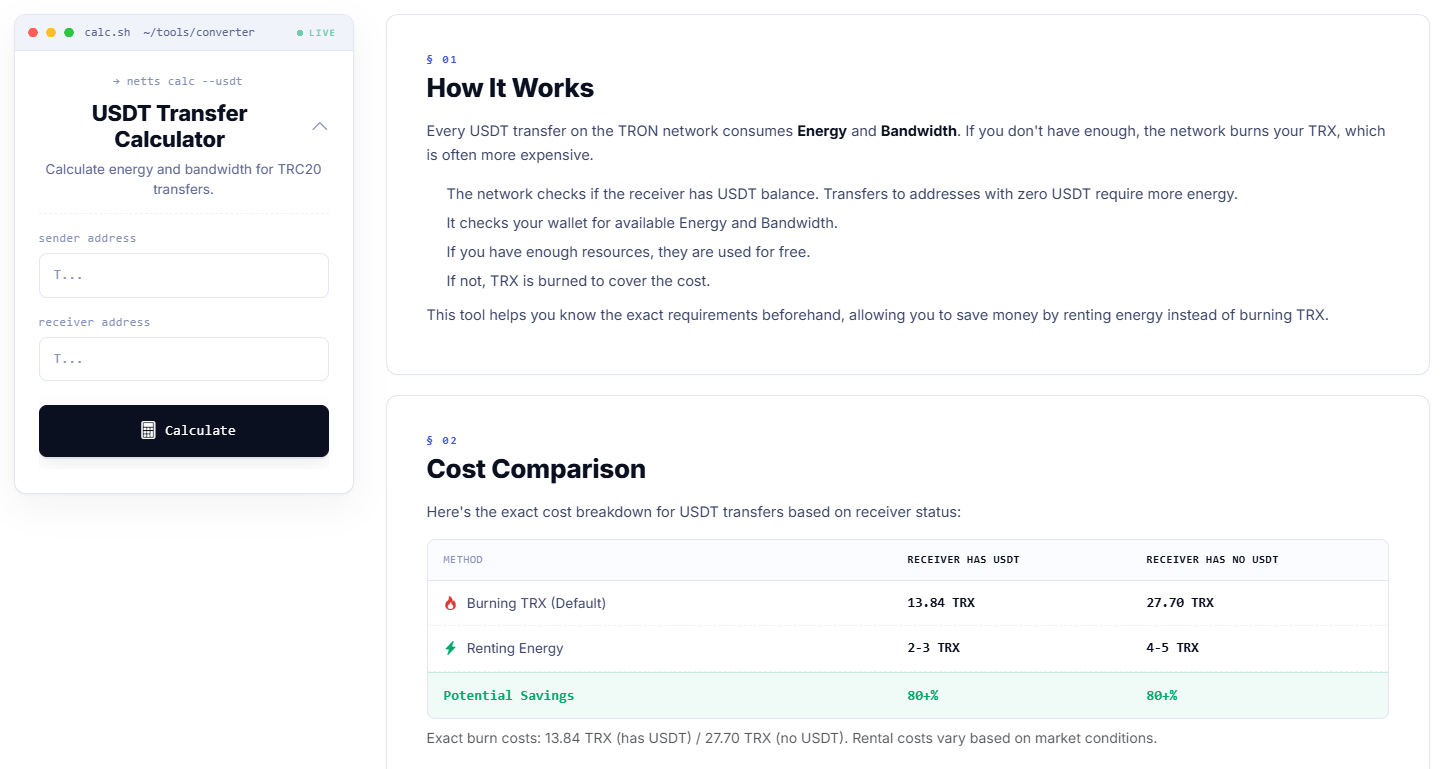
The small stuff is worth getting right if you are the kind of person whose money lives in TRON and wanders off to Polygon from time to time, because that is where returns leak out. Before you send, the Netts USDT Transfer Calculator tells you exactly how much a TRC20 transfer will cost in Energy and Bandwidth. By default, paying by burning TRX, a USDT transfer costs about 13.84 TRX to an address that already has USDT (and a punishing 27.70 TRX to one that doesn't); rent Energy and they drop to around 2 to 3 TRX (and 4 to 5 TRX), saving north of 80 percent either way. You can read the exact numbers on the Netts site and calculate ahead of time how much you will pay depending on your USDT transfer. Make enough transactions and that gap goes from trivia to actual cash.