Crypto's Carry Economy: Funding Rates, Basis Trades and the Hidden Mechanics
Borrow cheap, invest dear, pocket the spread — how carry trades work in crypto, from funding rates to basis plays, and what it actually takes.
Somewhere, in the world today, a bank is borrowing money at two percent and lending it out at six. For all the years there have been banks, for as long as history bears writing — and plenty of time before it did — there has existed such a bank. A yield minus cost of capital spread is not a financial innovation — it the oldest equation in organized commerce predating compound interest, joint-stock companies, even the word "finance" itself. Amongst the exchange differential between various currencies and credit rates between the different city-states, Medici banks of fourteenth-century Florence financed their trade. Dutch merchants in the seventeenth century commonly borrowed against warehouse receipts at prices far below what the same capital could earn in the spice trade. The logic is immutable because the underlying psychology is immutable: given a choice between (1) cheap money producing expensive returns and (2) human nature, what do you think the obvious answer will be?
Even though we call it greed, this is not the graph of greed in the traditional sense. It is the instinctive action of anyone who understands that capital has a cost and that cost differentiations are arbitrageable. Successful carry trades do not feel like speculation — they feel much more like reading a non-obvious fact about the world and acting on it while somebody else is too slow. This risk, which is all nice and theoretical until the instant it isn't, always seems distant away.
This intuition turned systematic in the foreign exchange markets of the late 20th century into what we would now call a modern financial carry trade. The traditional thing was to borrow in Japanese yens — historically a very low interest rate currency — and then deploy the proceeds into higher yielding assets — Australian government bonds, emerging market debt, anything with high enough pickup vs. JPY.
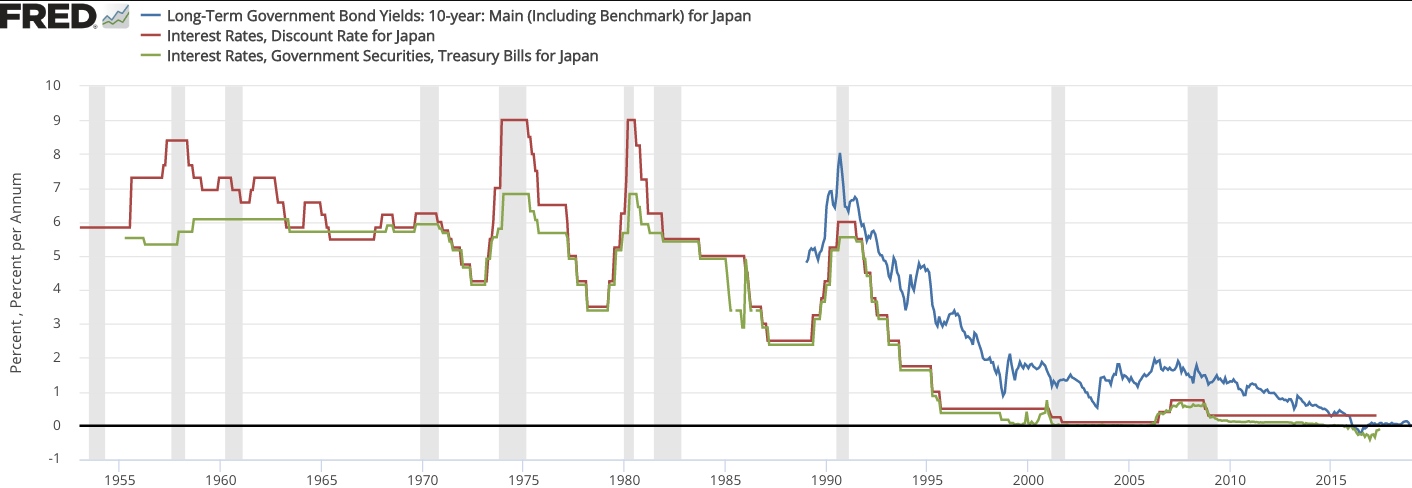
This trade was ran for decades mainly by institutional traders, hedge funds and eventually retail players as well. The reason was that the yen remained cheap and the yield differential continued to exist (it did by some measures, with interruptions). August's unwinding of yen carry trades — the number of which were triggered by a BoJ rate move causing the spread to compress — saw a flash crash that quickly sent crypto markets crashing in lockstep with equites and ramming home a very sore lesson for an entire generation of traders: low volatility until suddenly not is literally exactly how the carry trade works. This means that the same alarm bells go off in crypto and other global markets when the Bank of Japan announces new tightening moves planned for 2025 and 2026.
Crypto did not get this trading as an afterthought. In doing so, it created its own iteration from the ground up — one largely more accessible, diverse and constantly available than traditional finance has ever been able to deliver.
Funding Rates: The Engine Underneath
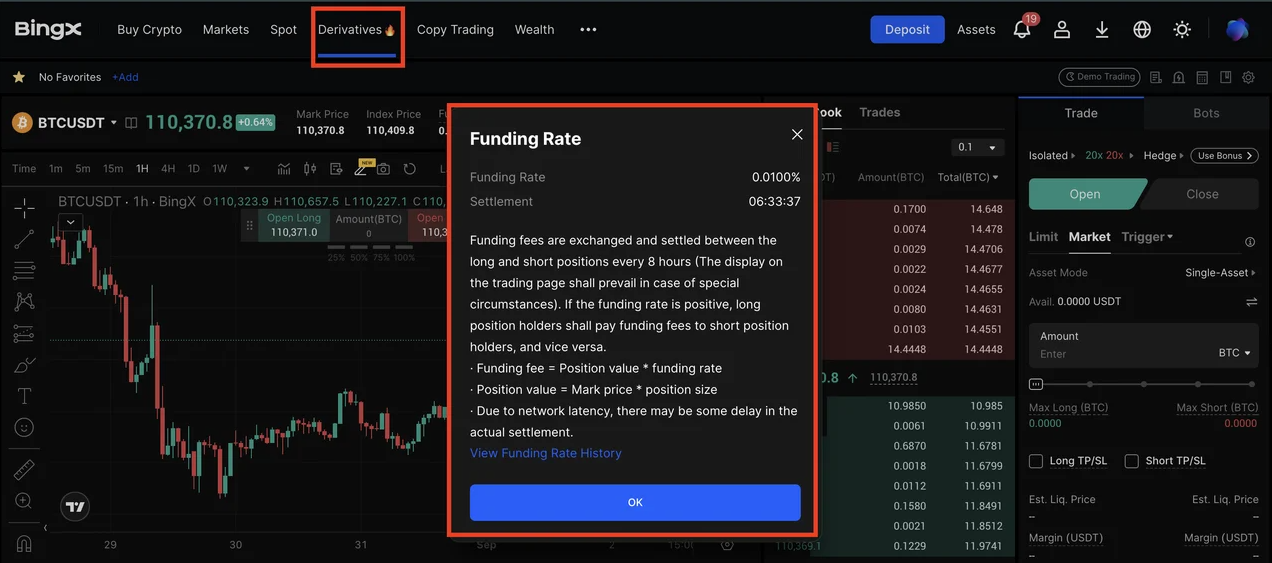
If you want to understand carry in crypto, you need to understand perpetual futures — that is where the mechanism exists. An expiry-free derivative that follows the price of an underlying asset — Bitcoin, Ethereum, Solana, anything with a liquid market — is called a perpetual contract. Perpetuals do not have traditional futures that expire/force settlement. The lack of expiry causes a structural issue: without expiry, there is no natural pressure to keep the contract price in line with spot. This is solved by exchanges with a funding rate which amounts to a cash transfer (positive or negative) between long and short positions at specific time intervals — around every eight hours, three times per day.
The transfer's direction, heavily dependent on market sentiment. When longs are paying shorts that means the perpetual is trading at a premium to spot, which is what happens when traders are net bullish – because more people want to be long. When the perpetual is trading below spot, shorts pay longs. Funding rate is designed to close this gap: If longs are paying, it gets more expensive for traders to remain as a long and cheaper for traders to be short which pushes the price at the perpetual back toward spot. The mechanism is elegant. That is actually the basis of the carry economy: the way you leverage it.
Another trader executing a straightforward funding rate harvest will be long the spot and short the perpetual by equal measures. These two positions cancel each other's directional exposure — if Bitcoin goes up then the spot position will be profitable by X amount and the perpetual short would lose Y amount in exactly that same direction, meaning price movement leaves us at net-zero. What is left, when longs pay shorts and the market is bullish, is a funding payment every eight-hours. This is carry in its purest crypto form: no directional bet, no market view; just the capturing of a fee that the structural mechanics of the market generates.
These are anything but trivial numbers. Estimates of global funding payments during the recent 239-day period based on Ethereum perpetual open interest across the major exchanges, range from $1.5 billion to $2.2 billion, depending on assumptions about open interest size. Extrapolated annually, the net funding flow across all perpetual markets is probably several billion dollars a year in active periods. It is money between counterparties, moving because someone on one side of every trade is fine paying it for leverage and directional exposure.
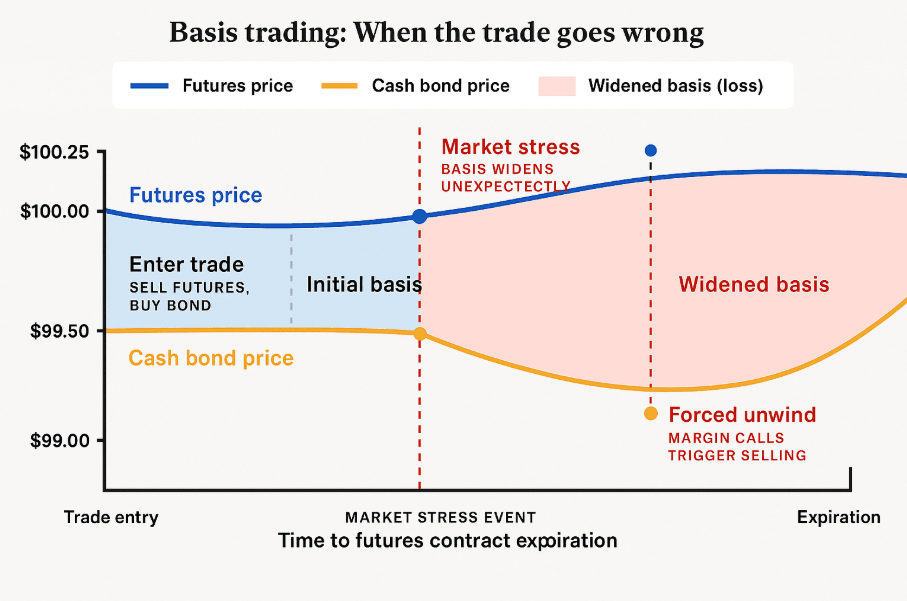
The basis trade is a closely related cousin. 'Basis' is the difference in price between a futures contract and the underlying spot asset. Example: a quarterly futures contract expiring in three months trades 3,000 dollars higher than the spot market — say Bitcoin is at 60,000 dollars on spot and the contract at 63,000. This can be captured by a trader who buys spot Bitcoin while shorting the futures contract, which is also delta-neutral. With the passage of time up to expiration of the futures contract, it becomes closer and closer to spot, and so does the 5 percent spread which collapses into a trader's account in full. This is the coin-and-carry trade in crypto context (the cash-and-carry is exactly the same), and its annualized version could be many multiples higher than whatever a money market fund offers over the same time period.
Signal and Noise, Authority and Secrecy
These methods created a devoted following of analysts, researchers, and practitioners who now publish findings, sell subscriptions and run educational communities. That kind of skepticism is required to navigate that information environment.
Legitimate signals in this space consist of: academic research into the funding rate behavior and basis dynamics ranging from economists who have no economic stake in your voyage; on-chain data gathered by analytics firms such as Glassnode or CoinGlass that track open interest, funding rates, and basis spreads live; and fund operators with verifiable performance histories compounded over at least a few market cycles. In a block of work on crypto carry, the CEPR research group — which consists broadly of senior academic economists from leading European universities — looked at how market segmentation produces long-lasting price distortions that allow for the trade to be done. That type of research is as pure a signal in the space as it gets.
This noise is louder and more plentiful. There are clear incentives against audiences for influencers who push funding rate strategies while being affiliate partners of the exchanges those strategies operate on. Communities offering a subscription service with semi-daily signals on carry positions for entry and exit provide feelings of being guided rather than any reproducible edge. This "secret recipe" type problem is a general condition: any party who has actually discovered a stable funding rate edge has no reason at all to decompose it for the public and every reason to exploit that edge in secret until the gap closes. The strategies described in the blog posts are either working already or have never been specific enough to apply.
The information that is actually useful — precise levels at which funding rates across different exchanges differ by enough to turn a profit, the capital efficiency of alternative execution structures, and what conditions correlate with predictable basis widening or narrowing — is either owned by the quantitative funds that are running these trades at scale, or buried in academic papers that likely reside unread on some bookshelf somewhere. Those who actually talk publicly about it provide frameworks and concepts, but do so in a very loose manner. That is rational behavior on their part. This should also be ringing alarm bells in your memory when someone seems strangely eager to telegraph exactly how they make money.
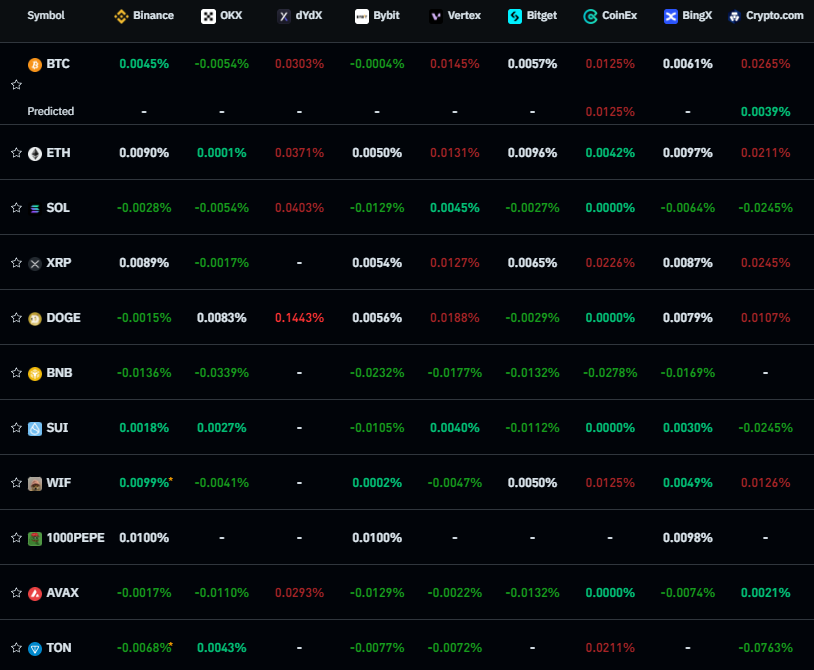
Here are the biggest things to watch for if you care about this space:
Funding rate levels and direction on leading exchanges. CoinGlass collates this in live time. The fact that their positive rate holds stable across Binance, Bybit and OKX at the same time points to the persistent bullish leverage that can be seized from carry trading.
Spot basis to quarterly futures. When Bitcoin's quarterly basis is running above 10 pct annualized, the coin-and-carry trade that it's offering is returning more than most traditional fixed income instruments.
Using open interest as stability barometer. Very high open interest translate into a very crowded market, i.e more participants chasing the same spread (and compressing returns) and having increased risk that if there is a spike in volatility you will trigger mass liquidations on their way to the exit place.
Exchange-specific funding divergence. In instances where the funding rates on a comparatively smaller venue diverge from those on the major platforms, cross-exchange arbitrage may occur with execution complexity increasing dramatically.
How the Market Gets Away with This — and Not Always
The most likely question about a persistent arbitrage opportunity is why it exists. Why do funds not compete this riskless profit away immediately, if the funding rate harvest is so reliably profitable?
The answer has a few real frictions which allows for the trade to not be completely compressed. The first is capital requirements. A meaningful delta-neutral carry position needs capital deployed in two places at once: spot holdings and margin on a derivatives exchange, so you have to lock up more capital than a basic directional bet. The marginal return is not worth it for the majority of retail players and thus, they will look elsewhere considering there are complexities associated with these activities along with capital lockup. In institutions, custodial and regulatory impediments to holding crypto across multiple venues create operational friction that keeps their participation a challenge.
The second friction is risk aversion. The carry trade is not zero-risk. When markets move dramatically, such as if Bitcoin were to crash 20 percent in an hour, the loss on the spot holding offsets a corresponding gain on the perpetual short — when also maintaining that delta-neutral status. However, the mechanics of margin requirements imply that although this trade is theoretically flat (assuming they hold zero notional for the underlying future position), during the drawdown the perpetual short was going to need more collateral. The intervened volatility causes the trader to be liquidated ahead of his position being able to recover, if he cannot meet margin calls. This tail risk can lead to a very different magic number if accounted for properly in the capital efficiency calculation.
The third friction is information asymmetry. Not everyone has the ability to view real-time funding data across all exchanges simultaneously, run it through execution logic and allocate capital at a pace that can match or exceed the rates shifts. Well, algorithmic traders and high-frequency firms could do this — most participants cannot.
This third friction is also the one that faces the most imminent threat from technological disruption. High-frequency trading firms and AI-driven quantitative systems have been pouring into crypto carry in growing numbers through 2024 and 2025. The speed at which they trade and the continuous monitoring of these positions is beyond any human or small team. The spreads they go after can be so little — just a few basis points — they collect it scaled through volume. In traditional equity markets, the emergence of high-frequency trading (HFT) firms in the early 2000s systematically squeezed plain vanilla arbitrage spreads until only those fastest and most capital-efficient players could pick off at-the-margin profits. Crypto carry is on a similar path but starting from a much larger level of spread.
Whether the trade is already dead for non-algorithmic participants depends on which version of it you are asking about. Pure funding rate harvesting across the major BTC perpetuals (Binance, Bybit, OKX) — the inefficiency on these markets was previously arbitraged almost instantly with spreads tracked and exploited by automated systems. The margins are considerably smaller than what they were during 2021 or even 2022, when funding rates in the bull run ran at annualized yields of as high as 30, 50 and even 100 percent for spans of time. However, those days are probably not coming back anytime soon. But the trade is not dead. The basis spread on quarterly futures is still very deep in a range that beats traditional fixed income almost always, and the funding rate on less-liquid assets and smaller exchanges continues to diverge fairly meaningfully from the major venues. What is disappearing, however, is the era when even the most novice of market participants could run these trades casually. The residue is real operational rigor.
Who Actually Makes This Work
Those who have a true track record to maximise their gains with crypto carry trading all fit a number of profiles that are fairly similar by empirical observation and anecdotal accounts from those who have been in the space long enough.
They approach it as an infrastructure rather than speculative. The mentality is more akin to a utility operator than a gambler — it seeks to extract yield from a structural market phenomenon, not make a high-conviction directional bet. To them they also have their eyes on funding rates and basis spreads like an electrician observes voltage: implemented but not with excitement, instead with the cautious devotion of someone who understands that deviations from normal come with implications to how operations function.
They embrace complexity without being seduced by it. Implementations are over-engineered by complexity that is well-justified — the moving parts of position sizing, margin management and basis shifts or rebalancing, time-series monitoring across multiple exchanges. The best operators manage to keep their structures as simple as the strategy allows, which is usually much simpler than almost all of the constructions participants initially create when they first come into contact with the space.
They have an authentic relationship with downside scenarios. Not theoretical awareness — raw, corporeal experience of the nature of liquidation, what a funding rate inversion looks like, what 30-percent spot drawdown does to delta neutral in margin pressure. Your experience in the real world will help you to cope with the situation, but be warned that the traders who were able to stay alive long enough to compound returns are those who modeled worst-case scenarios before using any capital, not those who found out what they are by living through them.
They are patient but in a different manner: content to earn a low yield on their seat for very long timeframes, and not looking to leverage the trade, or scour for an alternate version of trade that earns higher yield but carries greater risk when the low-yielding variant feels too leisurely. By passive patience — we mean that you are not just sitting on your hands; there is active monitoring, continuous adjustments to portfolios and walking away altogether when the risk-reward skews unfavorably. This is not the kind of patience you have while waiting for a bus. It is the preparation, patiently waiting like a surgeon who has performed this procedure literally dozens upon dozens of times realizing that most of the work comes well before you ever pick up a scalpel.
The technical backbones these operators utilize tend towards deliberate boredom: bored exchange API connections, simple position monitoring dashboards, automated alerts to funding rate thresholds and margin levels — an active risk management protocol that determines before a position is even taken exactly when it will get cut out or rolled up. Those who rely on manual monitoring and discretionary judgment do worse than those who have codified their rules in advance because the moments where judgment is most needed are the exact moments when stress will reduce it.
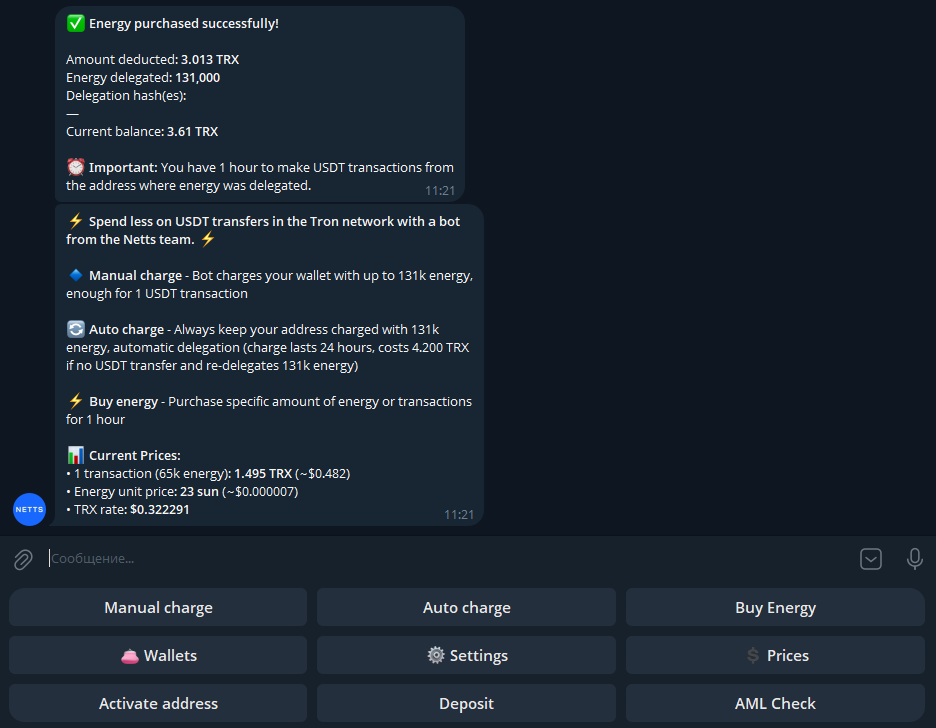
But for traders, who are moving USDT at mass volumes around networks to pay out these positions — bridging from one exchange to another, cross-venue management of collateral, keeping capital deployed correctly — this stablecoin transfer cost piles up thousands of times across the course of a year. It is the Netts Energy Charge Bot that addresses the TRON Energy management layer designed to support those low-costs — a single command in Telegram brings your TRON Energy supply back online for a USDT trade and costs off-peak around 25 sun per unit, with instant settlement. Auto-Charge allows for a recharge TRON Energy cycle to be performed automatically — keeping the address topped at 131,000 Energy indefinitely, redelegating every 24-hours — meaning that active traders will never need to stop a position management session mid-way through in order to process handling a TRON topup. It is the boring redundancy of operational automation that keeps carry operations clean in operation, for infrastructure running behind the scenes while monitoring spreads and managing margins run in the foreground.