Account Abstraction vs. EOAs: Why You Should Care
Lost card? Call the bank. Lost your private key? Gone forever. Account abstraction bridges that gap — with trade-offs and new attack surfaces.
Now imagine a character who has lived life in the financial world through all of its stages and methods within the traditional banking system. They do everything in a mobile app and have never wondered what happens when things go wrong, because whenever it has happened the answer is known by heart: something goes wrong call the bank. Lost your card on a trip? A fresh one comes to the hotel. Forgot your PIN? A verification call and new pin, all fixed within minutes. The record is recoverable, because the bank, which is the guardian of record controls it.
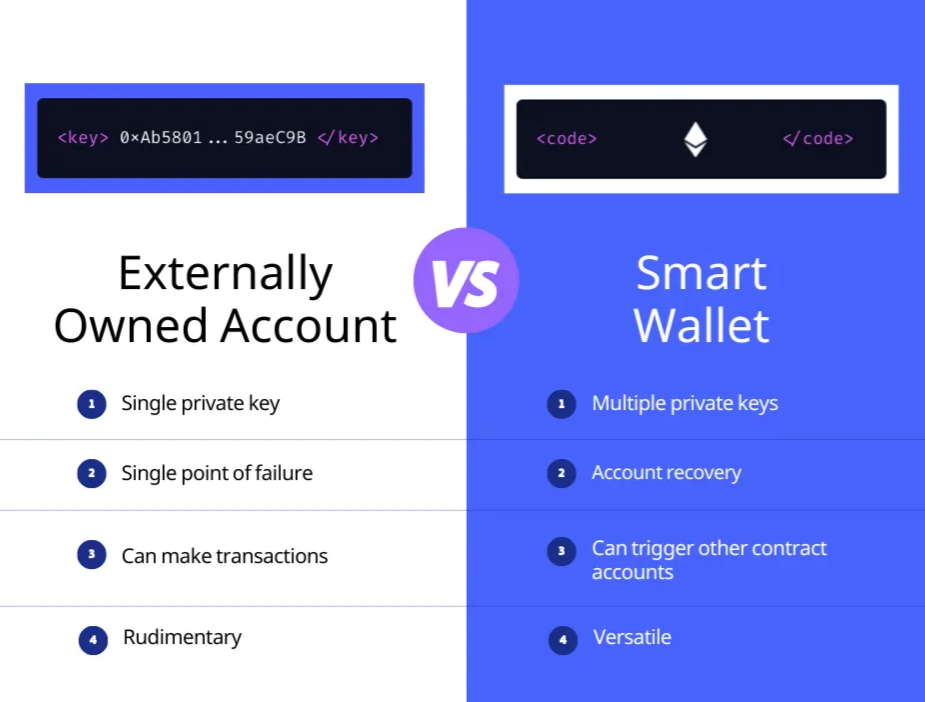
You onboard that person to crypto, give them a self custody wallet and this is where the reasoning falls apart. There's no phone number to ring. There is no guardian. For a regular Externally Owned Account or EOA, the wallet is controlled by a cryptographic private key which you can think of in some sense as being represented by a seed phrase — commonly twelve or twenty-four words created when the wallet is instantiated. If those words are lost, destroyed or just plain never remembered then the funds vanish. Not locked. Unrecoverable with a support ticket. Gone permanently. There are no paths for escalation because there is no structure in place for escalation. The key is the account. The account is the key.
No, that is not a pie-in-the-sky scenario. It is the fundamental reality of how most self-custody crypto wallets function, and it is the challenge that account abstraction was created to address — at the expense of introducing a new class of risks for which any informed user should be able to comprehend.
The Inner Workings of EOAs and Why Seed Phrase Is Critical
Now if we think about what is the most basic form of a crypto account, it would be an Externally Owned Account (EOA). A private key derives into a public key and this is subject to hash to create a wallet address. The private key is the account, and whoever held it holds the ability to wield that account. No multifactor authentication, no recovery method, no protocol has a backup system built in. The software used by the wallet itself manages the key for you and shows a usable interface on top, but the basic structure is always going to be you owning this level of account.
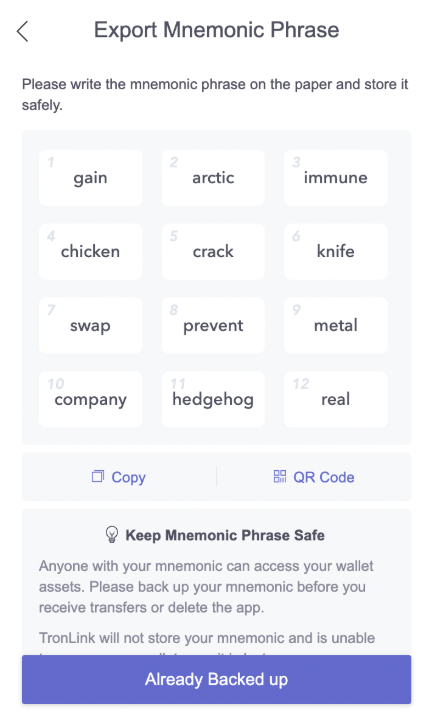
This is made unambiguous during onboarding for the primary wallet of the TRON network, TronLink. Upon generating a new wallet, the application generates a twelve-word seed phrase and immediately requires the user to write it down, verify it, and save it somewhere safe. The alerts are not understated — if this word gets misplaced, TronLink can now not assist you recover your accessibility. There is no customer service number to call, no account recovery form to fill out, and no technical escalation that will restore a wallet once the seed phrase has vanished. This isn't because of a stub-type thing about TronLink as an application — in fact it is the design of TRON's account model, which again, similarly to Ethereum uses externally owned accounts while being fully in control of money thanks solely to having the private key.
It is a mnemonic phrase that serves as the master key for your Private Key, designed to be a little more human friendly than an arbitrary string of cryptographic data. "Slightly more memorable" does not equal "hard to lose," and the history of crypto losses is littered with examples where this divide broke down — phrases penned on sticky notes tossed in trash cans, screenshots stored on cloud storage that got hacked later, hardware wallets burned in house fires (with no backup). Chainalysis calculated that between 17% and 23% of all mined Bitcoin has been permanently lost — much of it due to lost keys rather than theft. The number is not going down.
EOA security is as powerful as it is unyielding. No transaction can be reversed by a third party or be granted to recover. It is that immutability which makes the blockchain a reliable settlement layer. However, this also means that every user of a standard self-custody wallet is one word forgotten, one hardware failure and one successful phishing attack away from complete irreversible loss.
The Inherent Limitations of Account Abstraction Public Key Management
Account abstraction is a family of upgrades that replace the inflexible private-key model with account logic that can be programmed. An account would instead be a smart contract that can implement bespoke rules about who can approve transactions, how recovery works, what conditions need to hold before funds move and even who pays the gas.
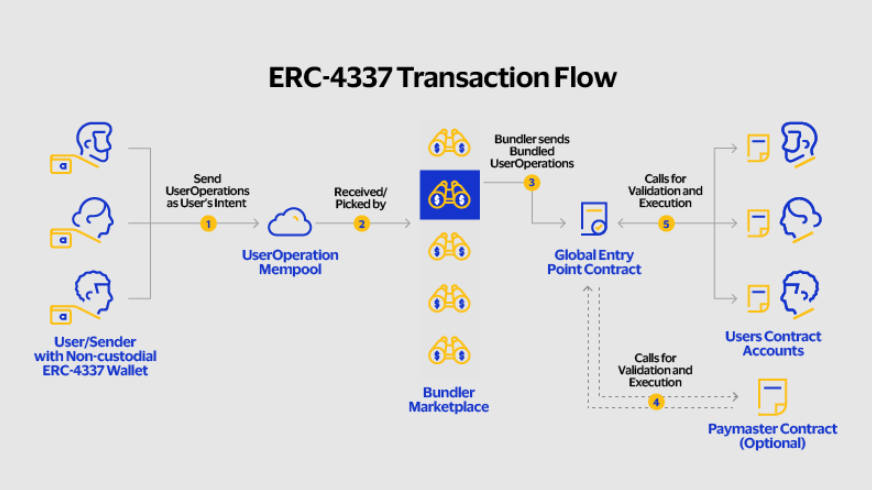
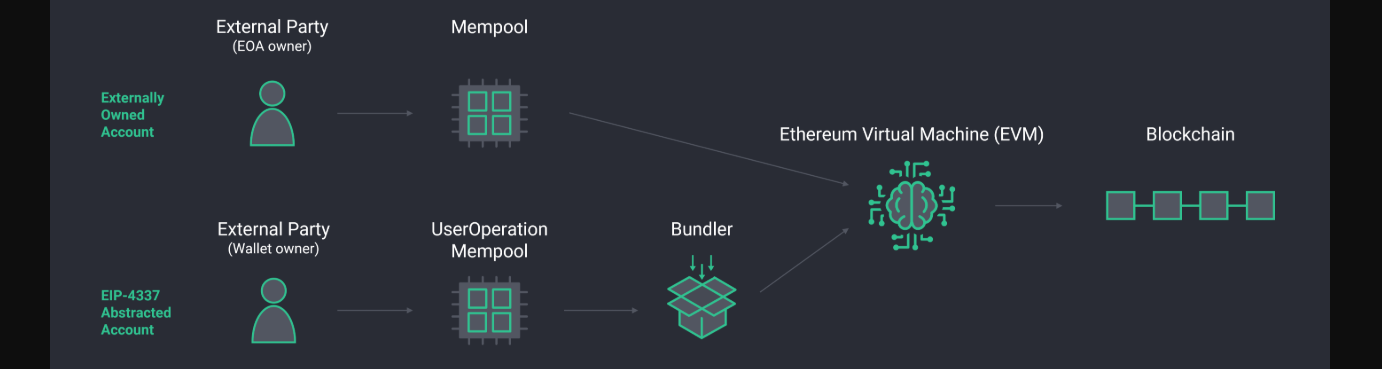
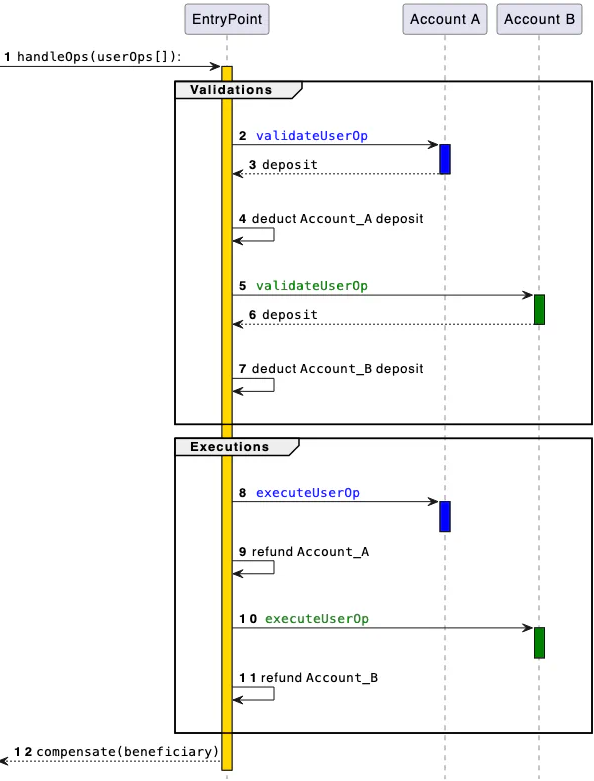
In 2021, ERC-4337 was proposed and in March 2023 launched on mainnet providing a standard that enabled account abstraction using the Ethereum protocol but without requiring any change to the protocol or chain. The new protocol adds a new transaction type not only called a UserOperation, but also adds a new mempool where these operations stay before processing and introduces two types of actors: Bundlers which collect and submit UserOperations on behalf of the user, and Paymasters that can sponsor gas so users do not have to hold the native token. No longer does an account merely represent a key pair — it is a smart contract with programmable validation logic.
What this unlocks is substantial. For example, a smart account may authorize a large withdrawal with two-of-three signatures. It may also appoint recovery guardians — people trusted to provide, or other wallets that can all be used together to sign a key rotation in case the original signing key is lost. It also supports passkeys, biometric authentication (or an email based login for the luddite among you), enforces spending caps and pays gas in USDT, not requiring the user to hold eth. This was the exact framing Coinbase used when launching its Smart Wallet across eight major networks, with no seed phrases or passkey-based authentication: a wallet built in seconds from any app.
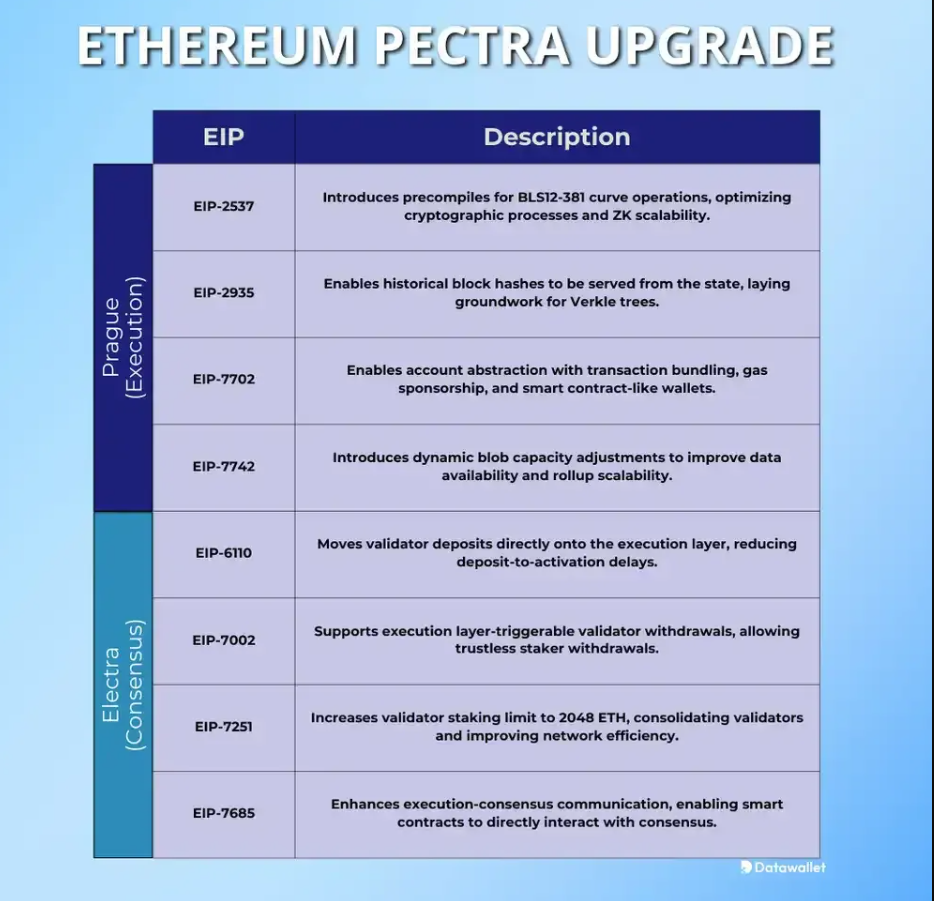
This leads Ethereum's Pectra upgrade in May 2025 to include EIP-7702, taking the approach further. Instead of asking users to upgrade to a new smart contract wallet, it enables an existing EOA temporarily delegate the logic of its account for the lifetime of a single transaction execution: It should mean a MetaMask user could use smart wallet features — batched transactions, gasless, session keys – without giving up their address or moving funds to a new account.
None of this comes for free. That boils down to complexity and with complexity comes the new attack surface.
The biggest non-technical tradeoff is the loss of true anonymity. An EOA being just a long string of the hex character values represented by its private key. Smart account usually need to be tied to something more unique as well — (usually) email for recovery, phone number for authentication, a collection of guardian wallets that are also associated with identities. Coinbase: A "Smart Wallet" that relies on passkeys associated with the biometric authentication system of a person's device, binding an account to hardware owned by them. Or Argent on Starknet, which extends it, enabling recovery via email and phone but enforcing transfer limits per day (and guardian key approval beyond them) — similar to a bank account with some of the same privacy risks.
And the guardians problem is also a thing. In social recovery, people (or third party institutions) whom someone trusts may be designated to sign off on a key rotation in the event that they lose access over some period of time. This recovery mechanism relies on those guardians behaving properly, so if they are compromised (i.e., hacked), coerced to stay offline or just uncooperative when needed, it fails. An advanced attacker who knows about your large crypto balances might target the guardians you have assigned more than your signing key itself.
The Landscape: Who Uses What and Why
When comparing the real-world adoption, we see how differently these models appeal to their respective user bases — and taking a look at some of the projects highlights this distinction.
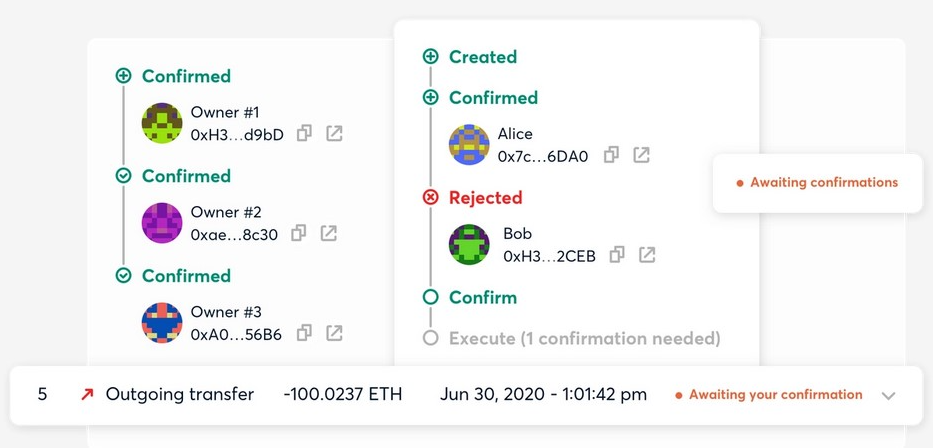
Safe, which used to be called Gnosis Safe is the multi-signature smart wallet of choice for large institutional and team treasury. It needs a set threshold of signed signatures — three-of-five, for instance — before any transaction may occur and can therefore withstand the compromise of a single key. Safe is the aggregator with the biggest on-chain smart wallet TVL in the ecosystem. Safe's tech serves as the underlying account layer for Worldcoin's World App, which handles identity and payment for tens of millions of users worldwide. While both have engaged in Safe-based infrastructure for tokenized asset management drawn by its multi-signature security and vast audit history for coin handling.
Argent which runs natively on Starknet (where all accounts are smart contracts by default), has built in daily transfer limits, guardian based social recovery and email or phone login — arguably the closest thing we have to a bank-like account experience in self-custodial crypto. Argent attracts users who want true self-custody of their assets but would not be comfortable with managing a seed phrase. Unlike Safe's multi-signature threshold, the security guarantee cannot be replicated by Argent: instead of preventing key rotation with a man-in-the-middle attack using a hacker ID for every owner (i.e. Safe uses their own smart contracts to help create thresholds), it simply allows no unauthorized liquidation of private keys through its guardian system, and if someone tries to act outside they face time-locked action with challenge being able to dispute anyone without authority before executing any malicious acts against his or her output.
Coinbase Smart Wallet solves the onboarding problem head-on. There is no seed phrase here, an account takes seconds to create through passkeys. Working on Base, Ethereum, and other EVM chains — user gas-sponsoring capability in place also — a user interacting with any dapp built on Coinbase's infrastructure might never see a gas fee themselves. More than 40 million smart accounts have been created throughout the ERC-4337 ecosystem with over 100 million UserOperations processed.
MetaMask continues to dominate the Ethereum wallet space, but it primarily works as an EOA (Externally-Owned Account) wallet. Its user base is massive and quite old — getting all users onto some new smart account model would require fund migrations, interface changes and user education at a level that could never be done overnight. MetaMask Smart Account, introducing it in 2025 with EIP-7702 is the pragmatic middle ground: EOAs that have corresponding deposits on certain transactions are able to access smart account features without having to move their funds or change their address.
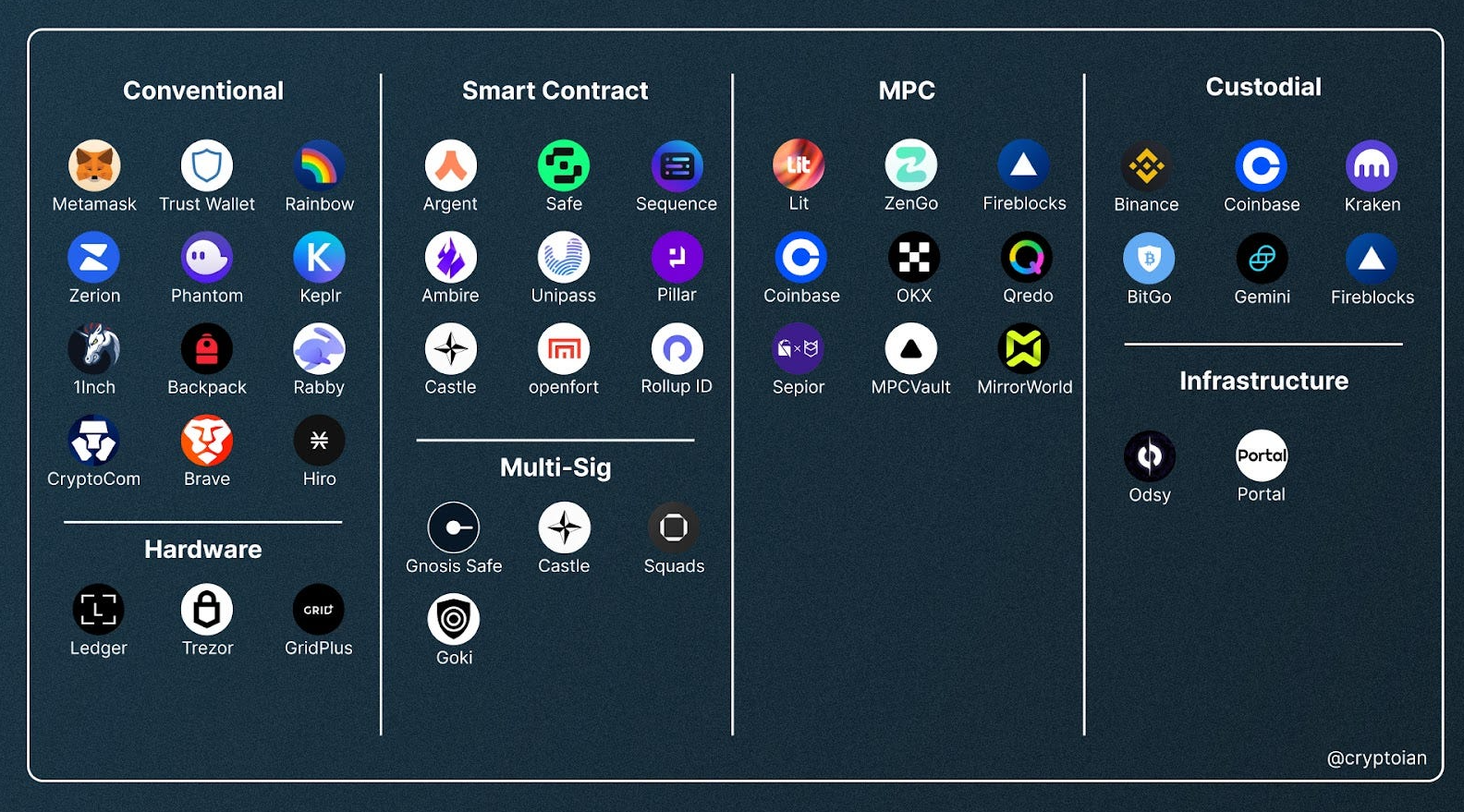
In contrast, the case of TronLink and the broader TRON ecosystem is less rosy. Since TronLink wallets are standard EOAs, they follow the model where no one — not even you — can recover it with your seed phrase and private key combination either, which is why the onboarding of TronLink always note that losing access to your wallet due to not keeping your seed phrase secure is 100% irreversible; there is no backstop.
History: The Origins of Each Model
Historically, the EOA model has been around as long as Bitcoin itself. Back when Satoshi Nakamoto published the Bitcoin whitepaper in 2008, it was always a public / private key pair — whoever held the private key could spend the funds. Ethereum followed suit at launch in 2015, keeping the EOA as the base user account type.
The limitations were immediately clear to developers of Ethereum. Beginning as early as 2015, Vitalik Buterin et al have begun pointing out various problems with the single-key model causing needless fragility and started discussing account abstraction. Even though the accounts behind early smart contracts were externally owned accounts (EOAs), multi-signature wallets like Gnosis Safe, launched in 2017, had already implemented use-cases for this functionality by requiring multiple keys to sign transactions. Because true protocol-level account abstraction will need to seek consensus on changes to core transaction processing, this proved tricky to standardize.
Born out of a long history of unsuccessful protocol-level proposals, ERC-4337 provides a practical application-layer implementation. Instead of modifying Ethereum's transaction processing, it constructed an overlaying infrastructure atop a separately maintained mempool, a jointly-owned EntryPoint contract, the Bundler and Paymaster architecture — allowing smart accounts without contentious hard forks. Formalised in 2021 by Vitalik Buterin, Yoav Weiss, Dror Tirosh, Shahaf Nacson, Alex Forshtat, Kristof Gazso and Tjaden Hess. In March 2023, it was followed by a mainnet deployment.
Vulnerabilities — The Specific Crimes That Exploit Them
Both are exploited in the wild, each with its own attack surface.
With EOAs, the attack is simple: acquire the private key → own the wallet. Phishing is the dominant one — counterfeit wallet pages, bad browser add-ons, capricious support agents requesting to "verify" your seed expression, or pretend airdrop invitations. Malware has a lighter touch: credential-stealing software simply combs through the compromised machine's file system for seed phrases stored locally and drains the wallet before the user even knows what's happened. One documented campaign dropped a credential-stealer through a fraudulent investment link, exporting seed phrases and two-factor authentication backups while draining over $432k from dozens of victims before they were partially recovered with the assistance of law enforcement and exchanges.
The scale is significant. According to CertiK, wallet compromises resulted in the loss of $1.71 billion in stolen funds over 34 separate cases in the first half of 2025 alone. February 2025: The Bybit breach, now the biggest crypto theft ever at $1.4 billion in Ethereum taken through private key compromise by North Korean Lazarus Group. Phishing racked up another $410 million from 132 individual incidents throughout the same time frame. Total crypto theft for the full year of 2025 was higher than $4 billion.
Account abstraction wallets have their attack surface. The paymaster — which pays gas fees for users — is a notably lucrative attack vector. A paymaster depletion attack submits a large volume of valid but low-value UserOperations to run, which will ultimately consume the paymaster's ETH deposit without performing real activities. This means that attackers can then pay less than the gas cost incurred, between the validation and execution phases of a UserOperation all happening after an operation's execution. Signature replay attacks take advantage of smart account implementations that do not properly bind the signed message to a specific chain ID, permitting a valid signature to be reused on another network.
In a paper made public in March 2026, Trail of Bits documented its analysis alongside six recurring vulnerability patterns from multiple ERC-4337 smart account audits covering signature binding and gas inflation attacks with inflated gas parameters draining the ETH from the accounts. April 2026: $12 million loss due to exploits of reentrancy vulnerabilities in paymaster contracts at multiple DeFi protocols. Longer context: The attack took advantage of the fact that, due to a paymaster's initial state read and its state update (a class of vulnerability people with some traditional smart contract security experience might recognize), ERC-4337 execution flow has an appropriate time window.
Neither model eliminates risk. And they both move it around in different places. An EOA bets all on the sole users ability to secure a string of words. A smart account spreads the risk between code quality, guardian security, infrastructure provider and operational security of bundlers and paymasters.
Each Approach Is Viable. Each Requires Understanding
At scale, the EOA model has been hugely validated. It has banked trillions of dollars through Bitcoin and Ethereum together for over a decade. Its security properties are well understood, its attack surface is well mapped, and its single point of failure — loss of the private key — is wholly in control of the user as long as it is done correctly. Most individuals can achieve adequate protection with hardware wallets, redundant offline backups located in different physical locations, and a strict operational discipline around seed phrase exposure.
Account abstractions solves an actual problem, the EOA model cannot be adopted at consumer scale. Most people used to password recovery emails and bank account verification calls won’t reliably manage seed phrases — and the cost of that failure is complete loss. Smart accounts provide recovery mechanisms and flexible authorization structures that will open crypto up to the millions who did not grow up with it. The tradeoff is complexities, dependence on infrastructure mostly around software development familiarities and a whole new class of technical vulnerabilities that are only partially mapped to this day.
Crucially, neither model is inherently better or worse for all purposes nor should either platform have any motivation to walk you through the full extent of its limitations. These projects that have been built on smart accounts are not going to announce upfront the fact that new attack surfaces are still being audited by security practitioners, for both their paymasters and bundlers.
If you are a TRON user looking for the speed of a well-built-out ecosystem but cannot afford to burn TRX on EVERY transaction, Netts is here to solve the problem. We offer Energy rental which makes an innovative and sensible solution for daily operation — the lowest TRON Energy providers aggregated through a single interface, at such low TRON Energy price that it actually matters on each transaction.