Social Networking in Crypto
Crypto-native social layers: pseudonymity, token-gated groups, creator coins, and on-chain reputation — and the moderation headaches that come with them.
Removed from the cryptographic proofs, white papers filled with math jargon and talk of decentralization lies the truth about the cryptocurrency industry: it's just like Game of Thrones when it comes to getting to the top. It's like a messy different realm in which houses ascend and tumble not based on the excellence of their code but on the muscle of their political alliances. The engineer coding away in a darkened room is like a master blacksmith in King’s Landing — indispensable, maybe, but ultimately no more than a pawn in the multigenerational game of politics that lords and ladies play.
The power is not really in the algorithm: it’s in the handshake. It is to be found in the muffled conversations at private parties in Dubai or Singapore, the closed Telegram groups into which a person with the right contacts might gain access, and the chance to secure a meeting with that one venture capitalist when winter on a bear market’s road is nigh.
In such high-risk conditions, social networking is not simply a "soft" skill; it is the very force of survival. As in Westeros, where a lone wolf dies but the pack survives, a crypto dream without deep-pocketed allies will be consigned to oblivion. And you might imagine that the industry is a meritocracy, where the best technology prevails. That is a comforting lie. Recent history, and especially the chaos of 2024 and 2025, should teach us that the “best” projects are often those that have made friends with the “best” people. The ecosystem thrives on court intrigue, where inside trading is the currency of the realm, nepotism locks down the most fortified castles and corruption can be the ticket needed to gain entry. To get crypto, stop checking GitHub and start studying party invites.
Let’s talk about mergers and acquisitions. These are not business arrangements, in the traditional sense; they’re political marriages. It’s rare for a leading exchange to buy a troubled DeFi protocol because they need the technology. They can develop the technology themselves. They are purchasing the network, the community and often the silence of a potential rival. A power play, just to be sure that when the next bull run tears through the gates, their banner will unfurl the highest. The founders who can grasp this game succeed. Spend less time worrying about whether to optimize for gas fees and more time optimizing your social graph. They know that it’s easy to send USDT to a partner, yet getting that partner to lock hundreds of millions in liquidity is glued together with a relationship bond which smart contracts can’t enforce.
Masters of Coin and the VC Court
The venture capitalists are the Iron Bank in this world. They have access to the treasure trove and are able to make a pauper into a prince overnight. But those are just facetious answers that may not make sense to the outsider if one only compares fundamentals. And in late 2024 and through all of 2025, we saw something very strange: money continued to pour into programs that on any data-driven basis were failures. A study conducted by Chainplay & Storible with over 1000 projects funded in this year showed that nearly 50% of these failed, and an overwhelming majority reached less than $1,000/month revenue.
You would think that such dread results might purse the pocketbooks a bit. And yet, companies like Polychain Capital remained power players even after their portfolios had faced failure rates of over 40%. Why? For in the court of crypto VCs, a project that dies is not necessarily a loss of face — so long as it was backed by the right people. It is about the signaling. Once you are “in the Polychain portfolio” or “the Binance Labs ecosystem” (with a 72% failure rate for the specific period of time) your project has legitimacy that no amount of code audit could muster. It opens doors. It has the token listed on tier-one exchanges. It means, when the team takes a decision to pivot or launch a second token, the market listens.
This dynamic forms a closed loop, a high society whose doors are guarded by whom you know. We saw this with the investment rebound in Q2 2025, when more than $10 billion poured back into the market. This capital didn't flow evenly. In a way that only happens in the churning of decisive political moments, it concentrated in those who had weathered the storm together, gone to the same conferences and shared the same advisors. The club mentality is so pervasive that a hard-drinking founder who has failed twice and has a powerful network is often a surer bet for venture capitalists than an unknown genius with no sketchy history. The former you can trust will play the game, the latter is a complete head case.
Whispers in the Red Keep
All along the history of power and money is, behind the curtain, social networking’s dark side: insider trading and corruption. If VCs are the bankers, then the exchange employees and project insiders are the spies and whisperers. That information advantage — knowing what will be listed, pumped or about to crumble — is the most valuable commodity in the industry.
Just consider the scandal faced by the community in December 2024 with a Binance staff resigning. With a stunning level of audacity, this individual took advantage of their privileged access to the exchange's official marketing resources. They advertised a meme token called “Year of Yellow Fruit” from the @BinanceFutures account, hours after it appeared on chain. The market, conditioned to respond like Pavlov’s dogs to formal endorsements, poured into the token. The market cap went from zero to $6 million in the span of hours. The employee and their inner circle left with over $50,000 in profit. It was a textbook “pump and dump,” and it came from the inside. Binance did take action, suspending the employee and making payments to whistleblowers, but it was an example of opening the kimono. It was a reminder that even in the world’s grandest citadels of crypto, the guards themselves frequently have been looting that treasury.

But then there was the story of Nadar Al-Naji, the BitClout founder whose roller-coaster ride ended with accusations of a $257 million fraud in mid-2024. BitClout was a decentralized social network, the ultimate social experiment. But the social network that counted wasn’t the one on its platform: It was the con run by its creator. He sold the dream of sovereignty, while secretly holding onto the funds and reputation to bring investors into his own trap. It betrayed the ethos of crypto itself, showing that a charismatic leader with the right story can blind even sophisticated investors to theft.
We cannot overlook the iconic instance of Ishan Wahi at Coinbase either. The genius of his scam was its simplicity: he knew which stocks were going to be listed and he shared that with his brother and a friend. They bought low, they sold high and made great profit. It wasn’t a complex arbitrage algorithm; it was just a phone call. It was social networking weaponized for a criminal purpose. These are not isolated examples; they are features of a system in which information gets from human to human much more quickly than it does from blockchain node to blockchain node.
Hand of the King: Advisory Councils and Their Influence
The Hand of the King makes the pronouncement with a king's voice, in the courts of Westeros. In crypto, it just so happens that the “Advisor” does this job. If you read the whitepaper of any ambitious project in 2024 or 2025, it will likely have a section not on the engineering team but rather a list of personalities in its given industry. These characters often add little value to the real codebase and tokenomics. Their function is purely social. They were willing to lend their credibility to the project as a shield against healthy skepticism. A project with a former SEC regulator or a popular DeFi founder on its advisory board is all of a sudden one step above the mob.
This has developed into its own intricate industry. Advisors are usually paid handsomely through a hefty chunk of the tokens – sometimes upwards of 5% of total supply, to simply make a few introductions and have their headshot plastered on the front page. It’s a social capital exchange. The advisor is gambling with their reputation; the project’s betting equity. When it works, it generates a self-fulfilling prophecy. “If the project is viable, people see big names and assume this is a good project to invest in, they invest, and thereby it becomes true,” he adds.
But even this level of the game is crawling with mercenaries. “Key Opinion Leader" (KOL) culture that characterised 2017’s bull runs taught us the mercenary nature of these alliances. In some cases, influencers with far reach served as guns for hire, shilling on behalf of projects to their followers they may not have even understood or believed in, for a nontransparent transfer. There was an open secret that the fastest way to hype generated was by sending USDT to the wallet of a major influencer. Many of these transactions, both labelled and unlabelled, went against the strict definitions of authentic community-building versus paid-off propaganda. The “Hand” was not serving the realm; they were serving themselves, many times dumping their advisory tokens directly onto those very retail investors they had courted. This dynamic reinforces the parallel: Loyalty in crypto, as in King’s Landing, is frequently only as robust as the gold — or USDT — that underpins it.
Bloodlines and Alliances
Of the engineers, like the commoners in our analogy — and of VCs, who can be thought of as the lords — we must put down here that royalty among political dynasties is truly fascinating. The fusion of politics and cryptocurrency in 2025 offered us perhaps the most blatant case study on nepotism, the strength of “bloodlines.” The debut of World Liberty Financial was more than just another DeFi project. It was a statement of dynastic power. The project, which is co-owned by the Trump family, had no trouble getting noticed and bootstrapping its own liquidity in the old-fashioned way. The ultimate brand name was attached to it.
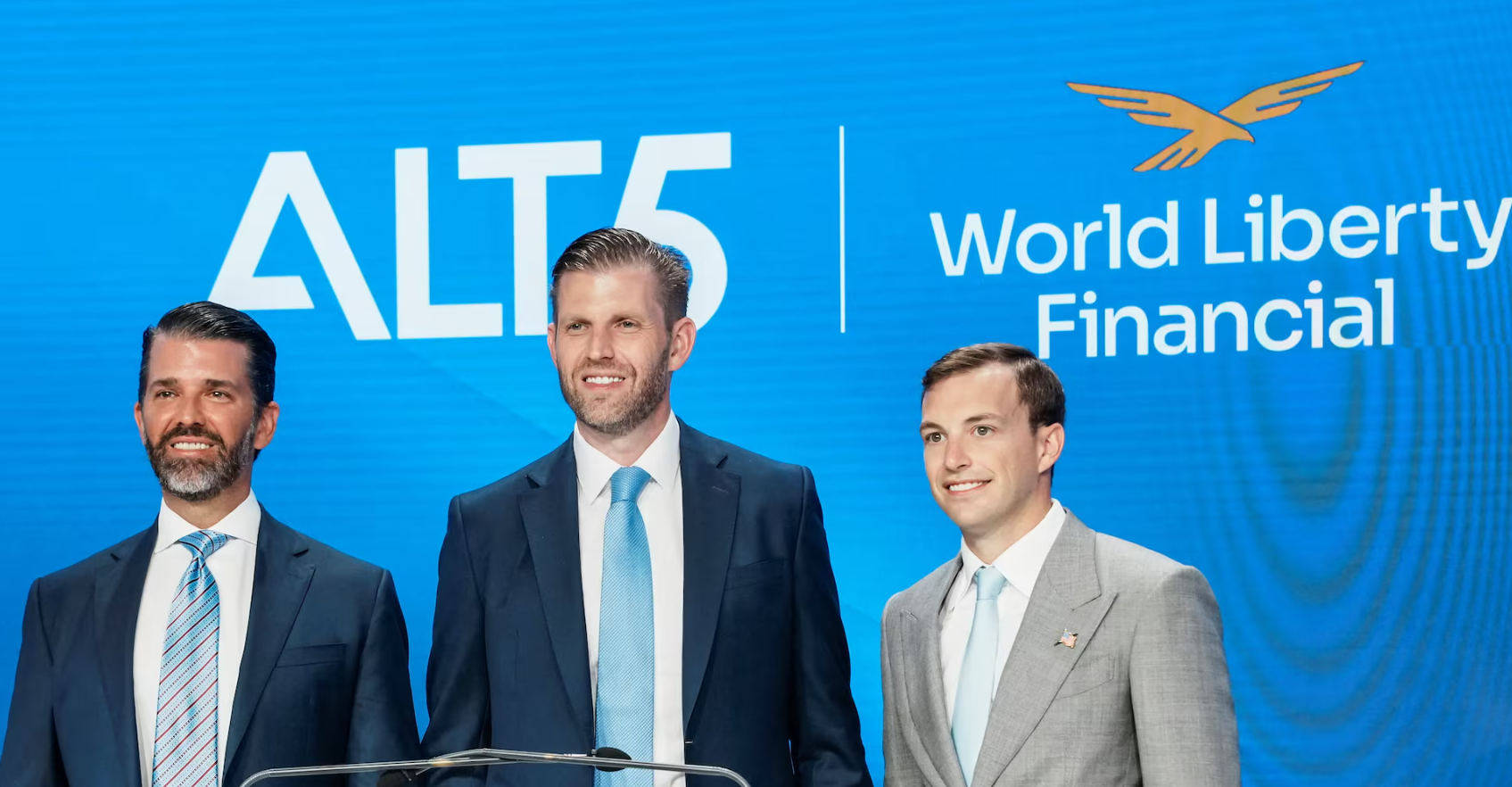
When in May 2025 an Abu Dhabi company was investing $2 billion a piece into the ecosystem via the project’s stable coin, it wasn’t because they were auditing smart contract code for gas efficiency, or discussing USDT fee implications of transfer. It was a political maneuver. It was a marriage of a global political brand and Middle Eastern capital, consummated over the architecture of a blockchain. This deal made their stablecoin the world’s seventh-largest practically overnight. For a normal startup, it might take a decade to earn that kind of trust and build that type of technology — and never achieve even a fraction of that liquidity. The problem was, World Liberty Financial didn’t want time; it wanted access. It had the social capital of a past — and future — administration.
This is what the “game” looks like. You can spend years squeezing down the friction to simply move USDT across borders, tuning every line of code to save yet another fraction of a cent on half a microsecond of your user’s time. Or you can be born into the right family, shake a few hands and deploy billions with a stroke of the pen. The engineers debate between centralized and decentralized; the power plays over who sits at the head of a table.
Surviving the Long Night
But social networking in crypto isn’t just about corruption and nepotism. It is also the only means for honest existence and development. While market goes red and the “Long Night” sets in during a bear cycle, these are the projects that survive – being surrounded by a castle full of friends.
Look at Rain, a fintech company that is concentrating on the Middle East. By 2025 it was poised to become a crypto hotbed, but regulations were daunting. Rain didn’t only build a platform, they built relationships with regulators and banking partners. In August 2025, they closed a huge $58 million Series B. This wasn't luck. They were the product of years of networking, working to persuade conservative financial institutions that they were safe, reliable and “one of them.” Their capacity to mediate the wild west of crypto and the buttoned-up world of traditional finance was entirely a social achievement.
Also, a blockchain verification provider called TransCrypts secured $15 million in October 2025. Their road to success has been not speculation but utility — digital identity. But the pivot was not sufficient alone. They needed a champion. They found it at Pantera Capital. Landing a lead investor like Pantera is not about sending a pitch deck to an address; it’s about working the network, getting the warm intro and showing that you belong in the tribe. They could survive the skepticism that drowns most other startups, because they had the right backing.
What these success stories have in common is that their founders understood that they were not simply creating a product, but building a coalition. They knew that in an emergency, code won’t save you but a phone call to a well-connected investor will. They went to the summits, they sat on the panels, they shook the hands. They played the game.
The ending to this tale is clear. The crypto industry is what human society would look like if it could be extended into eternity at double the speed of light and leveraged with infinite capital. It is tribal, hierarchical and very personal. One must master this social layer as well as the technical layer in order to achieve success. You need to know who has the swords, who has the gold, and who whispers in the king’s ear.
The best code is often locked in a forgotten repository, while the best network rules the world. And when we talk about moving value in such a social oriented world, tools which give clarity become necessary.
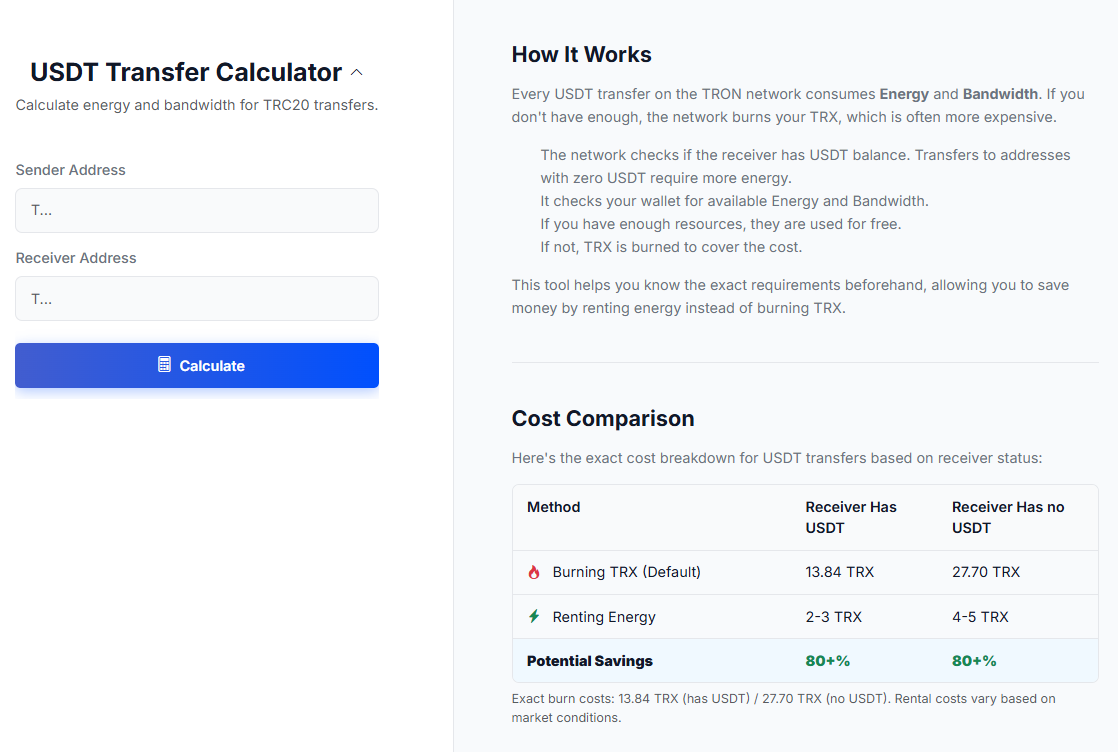
For those who are new to the Tron network, it also requires knowing the cost of transactions; and here's a service for it - USDT Transfer Calculator by Netts. This tool enables you to calculate both the precise amount of Energy and Bandwidth that TRC-20 transfers require, thus deciding if burning by cancelling/account freezing is cheaper than renting energy. You can input sender and receiver addresses, then cost comparison function will show potential savings when renting Energy instead of burning by default for burning - over 80% - so that no resources are wasted when you send USDT to your network of peers.