Rise of Ethereum: In Detail
From Vitalik’s whitepaper to the EVM, ICO wave, DeFi, NFT mania, the Merge, and rollups — how Ethereum became programmable money for builders.
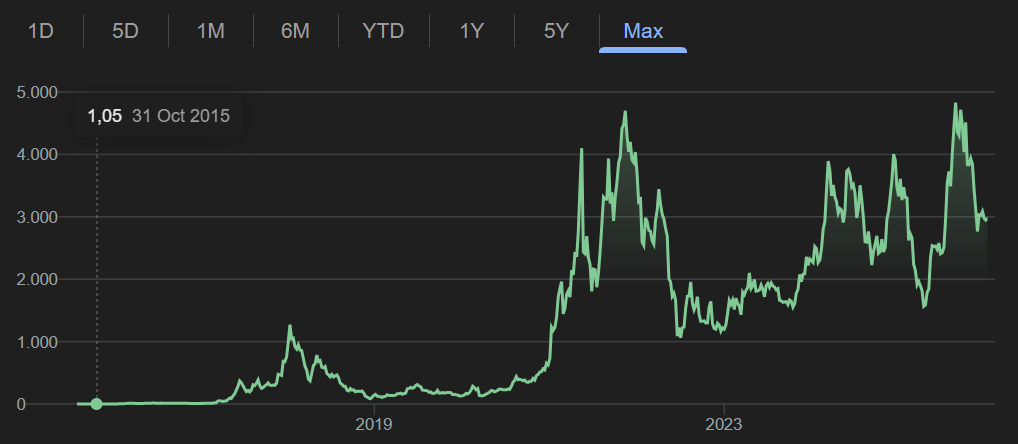
This is not just a tale of the technical notes being recorded in the blockchain ledger or some financial graph recording asset price value; this is an epic, disorganized structure that greets us: ideological upheaval and reimagination of the digital age.
To comprehend the scale of its meteoric ascent, it is necessary to begin with the story of humanity — fortunes made and lost in the merciless fires of its volatility. Nowhere is this more clearly demonstrated than in the early days of the network. Back then, the project was merely an untested idea, a “world computer” that lived solely on thick white papers and within the minds of a disparate group of developers. Ether sold for 31 cents per token in the crowd sale.
Think instead of a software engineer or cryptography hobbyist presented with the concept of programmable money, who was curious enough to put two thousand dollars — pocket change for most working professionals — into this experimental token. They would've gotten around 6450 ether. This investment likely appeared dead in the water, or worse, foolish for years on end as price gyrated wildly, even briefly falling to below a dollar in the early days.
Fast forward to the trough of the market cycles in the mid-2020s, when Ether sold for comfortably thousands of dollars. That first $2,000 risk later turned into a tens-of-millions-dollar portfolio. This isn’t a couple of fairy tales; this is reality for a generation of early adopters, home miners who had GPU rigs running in their garage, and developers taking ETH as compensation when it was worth less than your morning coffee. It was no coincidence that this handover of wealth had taken place; rather it was repayment for being one step ahead in understanding a revolution in the digital world before anyone else woke up to it.
We saw this happen again in the NFT boom of 2021. There were digital artists who had never been able to figure out how to get paid for their work, and they suddenly became the most valuable people in a new economy. An artist who was able to sell a digital piece for a few Ether in early 2020 would become effectively a millionaire simply by holding those proceeds throughout the bull run.
Ethereum’s wealth creation mechanism was not simply owning the asset; it was participating in the economy that it enabled. Whether by “yield farming” in decentralized finance protocols or minting early collections, the network rewarded engagement with life-changing capital. But if you’re only staring at the money, you’re missing a major reason why Ethereum lived when thousands of other projects died.
Basic Split: Calculator vs. Smartphone
In order to understand how and why Ethereum blasted off, we must first draw a distinction between it and its predecessors: Bitcoin. The contrast could not be more stark or fundamental, but it is generally misunderstood by the public. If Bitcoin is digital gold — a sovereign, immutable store of value that can be held and protected but not used for much else — then Ethereum is the digital oil, or at least a global computer.
Bitcoin was a calculator; it was one, strong and great at doing one thing: calculating value. It was supposed to be ‘sound money’ not controlled by government, and it works on a UTXO model which is similar to cash. You have a bill; you pay it, you receive change.
By contrast, Ethereum was a smartphone — a platform anyone could build an app on — that greatly expanded the use cases of the network underpinning it. When Bitcoin was ascendant, the terrain was about currency. When Ethereum lifted off, the terrain switched to utility.
The architecture is the difference. The scripting language for Bitcoin is intentionally constrained to prioritize security and ease-of-use. You can send some value, construct multisig transactions and time lock funds, but little else. It is a “push” system for payments.
And, Ethereum brought “Turing Completeness” to its chain. This was an implication that anything logic-based that could be programmed — loops, if-then conditional statements, complicated algorithms — could now live on the blockchain. This paved the way for decentralized lending protocols, automatic market makers, insurance contracts and digital identity systems.
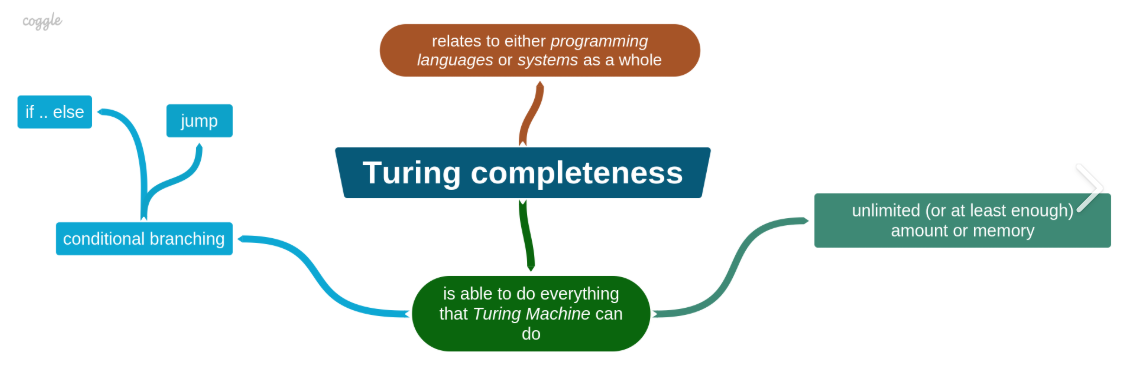
The argument, among Bitcoin maximalists, was complexity makes you vulnerable (technically true). The “attack surface” of Ethereum is functionally infinite in size, much larger than that of Bitcoin. But the Ethereum argument was that complexity is the mother of innovation.
The market ultimately decided that both projects were valuable, but the “app store” approach of Ethereum made it possible to capture an entirely different set of the global economy. It was the “Digital Lego” kit for financial engineering, enabling developers to snap together various protocols and build brand new financial products that weren’t possible before. Whereas Bitcoin asked “What is money?”, Ethereum proposed a new question: “What can money do?”
The Beginnings: a Teen Vision and the Miami House
The vision for Ethereum took shape many years before the network was officially launched in 2015. It came into the world as an idea in the head of a teenager: Nineteen-year-old Vitalik Buterin. In 2013, Buterin was visiting Bitcoin developers and enthusiasts across the globe from Israel to San Francisco. He was a Bitcoin Magazine writer, deeply embedded into the culture, and legend has it his skepticism of centralized power came from Blizzard Entertainment taking away a spell from his beloved Warlock character in World of Warcraft.
This seemingly little incident is what gave him insight into the perils of centralized servers. He concluded that the Bitcoin protocol, as groundbreaking as it was, was too burdensome to navigate for the applications that he had in mind: "Colored Coins", or Mastercoin. He suggested a scripting language that would enable application development to be built on top of Bitcoin, but the core developers pushed back against the idea out of fear it would add security holes or bloat to the network.
Undaunted, Buterin set about creating his own blockchain. This is where it split. It was audacious for a teenager to try to alter Bitcoin’s established architecture, this cheeky quality that fueled cryptocurrency’s second revolution.
The setting in those early days was chaotic and electrifying. The founders, which included people like Gavin Wood, Charles Hoskinson, Anthony Di Iorio and Joseph Lubin all holed up in a rented house in Miami around the time of The North American Bitcoin Conference in early 2014. It was there, among the humidity and the hype, that the work truly found its form.
They were not just creating a coin; they were building a decentralized operating system. The “World Computer” was the slogan. They imagined a world in which intermediaries like banks, lawyers and notary publics might no longer be necessary, because of the transparent code.
There was a lot of tension among the founding team. Charles Hoskinson wanted to have a for profit organization like Google that would fund development. Vitalik Buterin's vision, however, was to use the non-profit foundation model to keep the network as a public good. This dispute resulted in Hoskinson's exit (he would later create Cardano), solidifying Ethereum as a community project.
In the wake of the Miami event, it relocated to Zug, Switzerland — also known as “Crypto Valley.” Here the Ethereum Foundation was born. At the same time, Gavin Wood produced the “Yellow Paper”, a technical manuscript later describing Ethereum’s Virtual Machine (EVM). The code was as important as this document because it gave the mathematical guarantee that one would get all those features. It was the prototype for the engine that would power the new internet.
The Frontier and Wild West
The first few steps were teeming with technical danger. The network debuted in July 2015 with a release called “Frontier.” It was a no-frills system, in which the command line offered no graphical safety nets. It was the Wild West. If you screwed up in your code, you lost money. There were no "undo" buttons.
This phase was incredibly important for it sifted out the members of the community; only those who were genuinely passionate about the technology bothered to be involved. It formed a prolific base of developers who would form the base of the developer ecosystem that is inevitable now. Going to market early with minimal product, rather than waiting for perfect, enabled Ethereum to claim mindshare of developers before other parties could organize.

As the network began to grow up in 2016 with “Homestead,” it found itself confronting its first existential crisis: The DAO hack. The Decentralized Autonomous Organization was a venture fund that lived entirely on code. It took the crypto world by storm and has somehow managed to pocket nearly 14% of the total amount of Ether in existence as contribution from valuable backers.
It was supposed to be Ethereum’s flagship application, a demonstration of how natural it is for humans to coordinate their capital without the hand of a central manager. But a vulnerability in the smart contract code — known as a “recursive call” bug — ultimately enabled a hacker to siphon off millions of dollars worth of Ether. Picture, if you will, an ATM that hands over money when you request it but fails to report your reduced balance before you query it the next time. The hacker effectively just requested the money thousands of times in a fraction of a second.
The community was torn apart. In a technical sense, he did steal funds according to the code’s rules, but his attitude of doing so in plain malice is obvious. A counter-hack by a group of defenders into the remaining funds in that same honeypot allowed to get back what was stolen and save the project. It became a high-stakes cryptographic drama.
The community was made to vote. Should they follow Bitcoin’s “code is law” motto and leave the hacker with the money? Or do they step in to save the investors and the reputation of a project? It was decided to do a “hard fork,” essentially reversing the blockchain to eliminate the hack.
This was a contentious, history-making moment. It cleaved the chain in two: Ethereum (which unwound the hack) and Ethereum Classic (which did not). Although purists lambasted the decision as at odds with blockchain immutability, it showed how Ethereum handles governance: no dilly-dallying; let’s just make a call. It was evidence that the project maintained the health of its ecosystem, and the safety of its users, over inflexible ideology. This pragmatism would save the network and set a precedent that the community can band together to address existential threats.
Cambrian Explosion: ICOs and the Dawn of Utility
The ICO era kicked off with Ethereum, what we now call “Ethereum 1.0,” because there surely will be more iterations to come.
This resilience would pave the way for the explosion of 2017. The introduction of ERC-20 token standards became the impetus. Prior to this standard, it was technically quite difficult to make a token. Almost overnight, anyone could create their own version of crypto on top of Ethereum, with only a handful of lines of code. This contributed to the ICO (Initial Coin Offering) mania.
Thousands of projects launched, and billions of dollars were raised, in the span of months. Projects like EOS, Bancor and Tezos raised tens or hundreds of millions with little more to offer than a whitepaper and a website. Many of those projects were vaporware or scams, but the sheer amount of activity solidified Ethereum as the de facto platform for blockchain innovation. It became the standard. Each fresh endeavor demanded Ether to pay gas fees, ratcheting up demand for the asset.
The network became so clogged during the “CryptoKitties” craze — a game in which users breed digital cats — that transactions could take days to clear. This was a scalability wake-up call, but it also demonstrated the concept of digital scarcity. It was then when the network effects became unstoppable. EOS and NEO both tried to brand themselves as “Ethereum Killers,” leveraging the fact that they had faster transactions or zero fees, yet missing the one thing that really mattered: the developer community.
Developers had no interest in building on ghost chains, they wanted to build with the users and liquidity. The regulatory blowback of the ICO bubble, especially when the US SEC started applying the Howey Test to declare most tokens securities, dampened the market but by then, already a lot of infrastructure had been created.
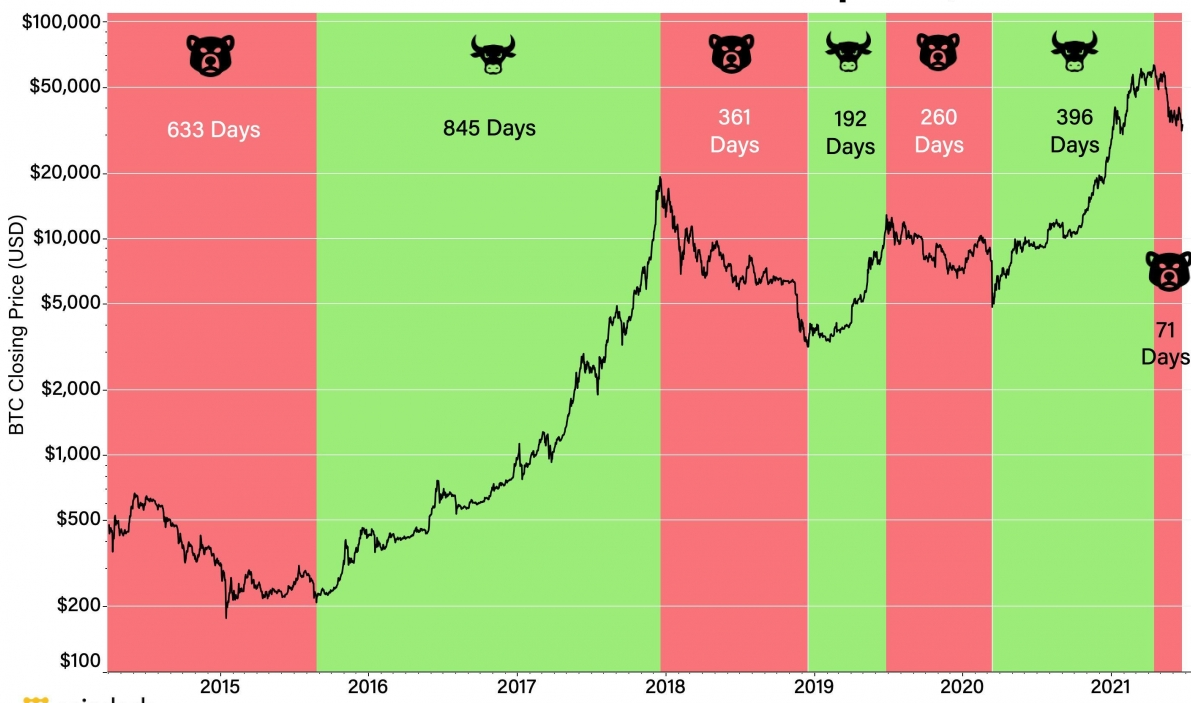
The ensuing years, during the so-called “crypto winter” of 2018 and 2019, quietly turned out to be most productive. With the price held down, builders were humming. They were creating the foundation for a new financial industry known as Decentralized Finance, or DeFi. Protocols such as Uniswap, Compound and Aave started to appear. These were not just whitepapers anymore, they were working applications and use cases allowing users to do anything they would traditionally be able to at a bank such as store, borrow, lend, or trade assets without the need of a financial institution.
Uniswap, for example, introduced the model of Automated Market Makers (AMM), however one whose order book was replaced with liquidity pools. That's permissionless trading of any asset, the challenge solved when building Uniswap, all based on a simple mathematical formula (x*y=k).
This was the original vision fulfilled. In 2020, when “DeFi Summer” arrived, it was the show that Ethereum could handle a parallel financial system. Users were sending USDT between themselves, trading tokens and generating yield all entirely on-chain. This was the era of composability — where different applications could connect to one another like Lego bricks. No other blockchain was home to a Lego library as extensive as Ethereum’s. You could borrow against Aave, swap on Uniswap and provide liquidity on Curve all in one transaction block.
It was the time that stablecoins such as USDT and USDC exploded on the Ethereum network. The ability to send USDT worldwide 24/7 without banking hours quickly became a “killer app” for crypto. It filled the in-between on the spectrum of volatility from crypto to fiat, which meant that you could actually use the network for payments and settlement, not just speculation. The USDT became a favorite for international business settlements in many places where the banking was slow or unsteady.
Cultural Pivot: NFTs and the Metaverse
Next it was NFTs and the 2021 cultural moment. Ethereum was the substrate of digital culture. Art, music and collectibles migrated to the blockchain. This introduced a whole new type of user to the ecosystem: artists, high-profile individuals and mainstream brands. It changed the conversation from merely financial to cultural.
When Beeple’s “Everydays” sold for 69 million dollars at Christie’s, it was the shot heard ’round the world. All of a sudden, old-school auction houses and art collectors were scrambling to figure out what an Ethereum wallet was. The “Bored Ape Yacht Club” turned into a status symbol that could compete with Rolexes and Ferraris.
The very high gas fees at this time, though frustrating for users, were a reflection of the seemingly unquenchable demand for block space. It was a sign that people were willing to pay more money for the most secure and current network. It further fast-tracked progress with Layer 2 solutions, as disgruntled users were searching for alternatives to high fees and started moving to rollups. The “Gas Wars,” when during the land mint on Otherside people were clogging up the system and paying millions of dollars in gas fees just to get a transaction through, made it clear that there was a room for more demand and an urgent need for scaling.
Great Transition: the Merge and EIP-1559
Two key technical updates marked the era of Ethereum today. The first is EIP-1559, which was incorporated into the London Hard Fork. This had an impact on the fee market, so instead of all transaction fees being given to miners some were burned. It introduced a deflationary pressure upon Ether and gave rise to the "Ultra Sound Money" rhetoric through which the amount of ETH in circulation may indeed decrease during periods of increased consumption.
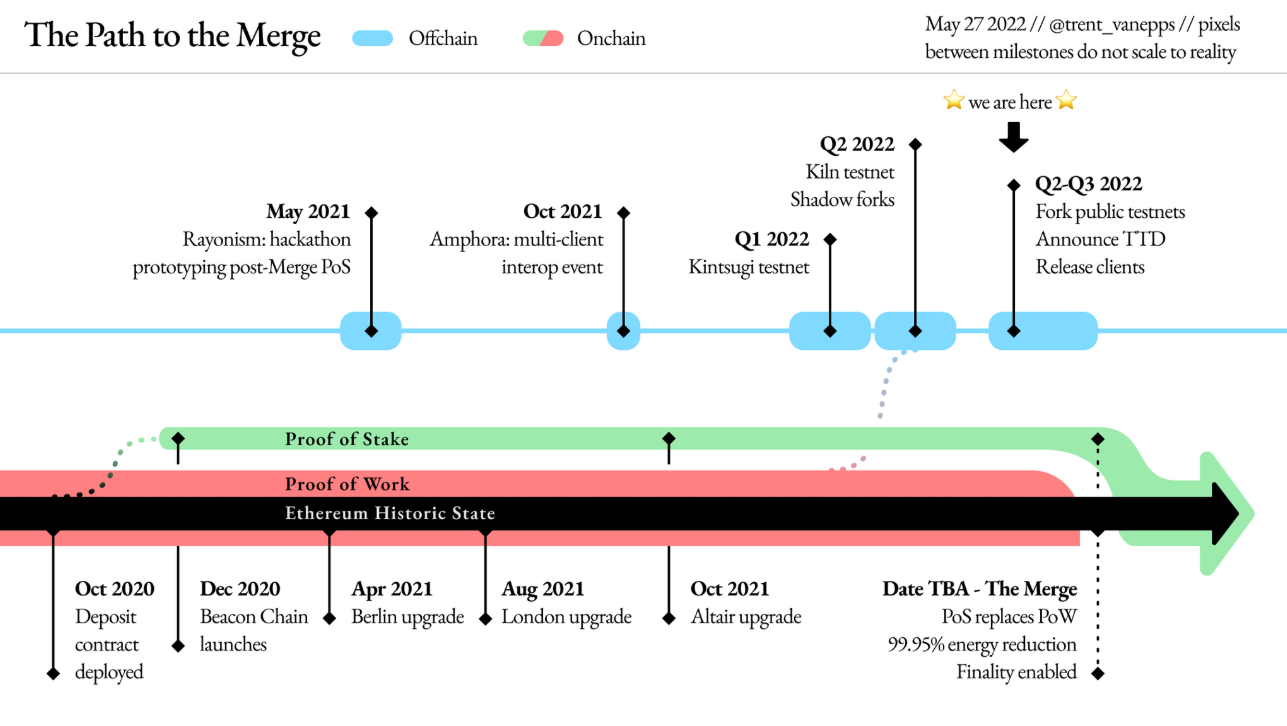
The second — and arguably the most remarkable accomplishment in Ethereum’s history — was the Merge of 2022. But for years the network operated on Proof of Work, the energy intensive mining system that is also used by Bitcoin. It’s like swapping the engine of a 747 while it is in the air. It was a technological coup that cut the network’s energy use by more than ninety-nine percent.
This was an important step for long-term success and acceptance by institutions. It wiped the environmental-auditing stain off of crypto and greased the path for ESG-conscious investors and corporations to step into digital currency. It also revolutionized the economics of Ether, which became a yield-bearing asset for anyone who staked their tokens to keep the network secure. This put into place a kind of “digital bond” that was appealing to institutional capital seeking yield within a secure environment.
Era of Layer 2 and the Superchain
Fast forward to the end of 2025, you have a mature multi-layered Ethereum ecosystem. The restriction of throughput of the main chain was not changed but rather, extra layers were built on top. The deployment of Layer 2 scaling solutions such as Optimism, Arbitrum and Base (disclosure: I am an advisor to Base) has effectively relieved the transaction burden on the main chain, rendering the network faster and cheaper for end-users. These “rollup” chains conduct transactions off-chain and then roll them up into a single proof that is settled on Ethereum.
This then allowed for yet further optimization in early 2024 with the introduction: “blobs” – a way to store data on the blockchain which is ephemeral (it disappears after one year) and at least an order of magnitude cheaper than permanent storage (“Dencun”). This was massively more economical for these Layer 2 networks, decreasing transaction fees to practically nothing. Ethereum is, quite simply now the internet’s settlement layer — the high speed highway over a secure bedrock. This vision of a Superchain where different Layer 2s work together with similar security guarantees while minimally impacting the base chain, is the actualization of years old roadmap.
Why Ether won. Comparing Ethereum with other coins tells why. Other chains prioritized speed or low fees over things like decentralization or security. They were centralized databases in the guise of a blockchain. Ethereum chose to prioritize decentralization and security, knowing that the problem of scaling can be solved afterwards. This approach, the “trilemma,” was a hard, painstaking process, but it engendered trust.
Institutional investors, seeking a stable asset class, had embraced Ether as an established coin that was able to withstand attacks, technical mishaps and market crashes. It had the “lindy effect” — the longer it lasted, the more likely it was to last.
The US approval of Spot Ethereum ETFs was the icing on this journey. It signaled that regulators and old-line finance giants saw Ether not as something to be sued over, but something to trade. This unlocked pension funds and insurance companies’ access to the asset, bringing stability to its price action and seeing it come into the fabric of global finance.
The lessons from this entire tale are deep:
1. Innovation takes guts to disrupt the status quo, even when it threatens to topple the architecture built by the industry leader. 2. Resilience in the face of crises, like DAO hack, creates a stronger base than preventing failure. 3. A network’s value comes from its utility coupled with the community of builders building on it. 4. Holders of the long-term vision must be willing to sacrifice their own convenience in the short term, putting off scaling now so that they can achieve greater scale later.
Value transfer is still the name of the game as this ecosystem grows. Whether you are navigating complex DeFi protocols or just transferring stablecoins between wallets, transfer mechanics drive the industry.
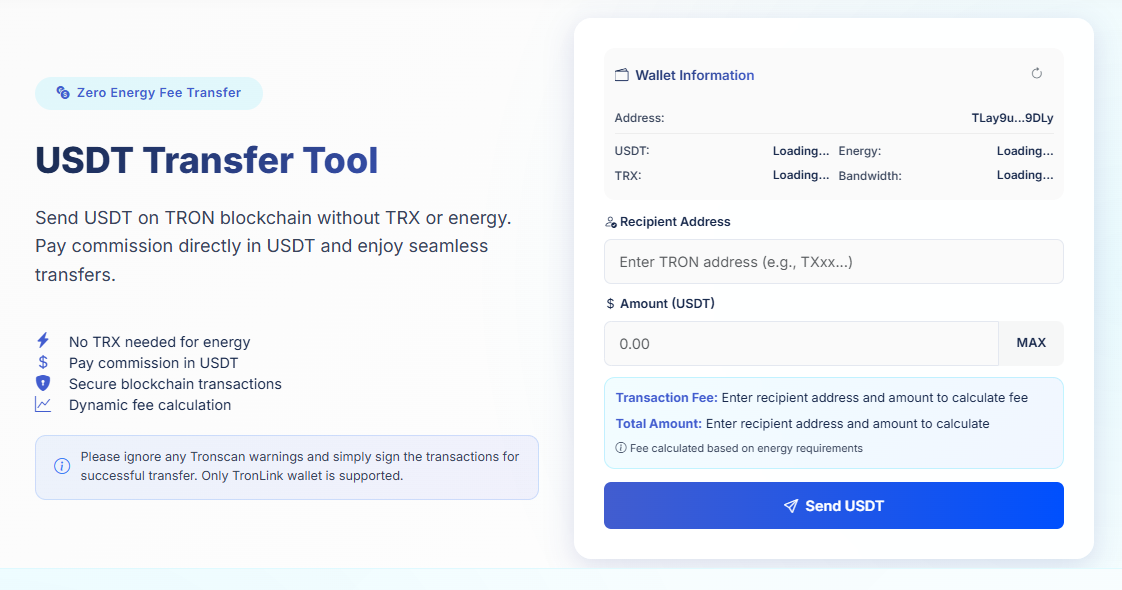
Such a utility is increasingly in demand as users become more and more required to transfer assets among networks directly. For those working on the TRON blockchain, the Netts Transfer Tool offers a simplistic application. This service solved the widely found problem "Energy" on TRON, which required that a user has held some amount of TRX in order to do USDT transfer. Through directly using USDT to pay the commission, users can circumvent the trouble of renting out Energy or staking and thus sending USDT becomes as simple as an ordinary payment.
Ethereum’s ascendency is evidence of what can be accomplished with decentralization and coordination. It began as the brainstorm of a teenager, mutated into the global settlement layer and now moves trillions of dollars in value. It showed that a dispersed group of strangers on the internet could combine their resources to develop an open, permissionless, transparent financial system. The road was paved with volatility, hacks and technical problems, but the destination — a world where value flows as freely as cat videos — is finally coming into view. Not only did the architects of this digital age invent a better mousetrap; they laid down an entirely new economic foundation for the entire global economy. The Ethereum story is still in its early chapters, but the first decade of this crypto networks has changed the world.