Resilience of Crypto: How Invincible is Blockchain Really?
Regulators, banks, and hackers keep testing crypto — decentralization, cryptography, and incentives explain why chains endure.
While the digital world has known many a revolution, few have stirred as much noise as blockchain technology and cryptocurrencies. Ever since Bitcoin was launched in 2009, the crypto environment has been under constant attack on multiple fronts: governments trying to regulate its use, traditional financial institutions who see it as competition to their survival if not destroying them completely while common hackers are also looking for ways and means of exploiting security vulnerabilities; with vested interest groups dominating headline news with media propaganda making it seem like these digital currencies are being used for criminal activities. However, despite constant pressure, blockchain technology has also shown impressive durability, changing and developing to emerge as one of the most secure and decentralized systems that have ever been developed.
Dangerous Precedents: War Against Cryptocurrency
The history of crypto regulation shows a repeated pattern of overreach and aggression in trying to control digital assets. In 2013, the U.S. government shut down spending assets related to the Silk Road marketplace in one of its first major crackdowns on use of cryptocurrency. This move set a dangerous precedent and established certainty that the authorities could come after crypto-enabled businesses, even if they were operating in gray spaces. The next year New York created its infamous “BitLicense” — a regulatory regime so stifling it bounced many crypto businesses out of the state, or out of business altogether. This regulatory overreach cast a chilling effect throughout the industry and many other states subsequently matched with their own oppressive policies.
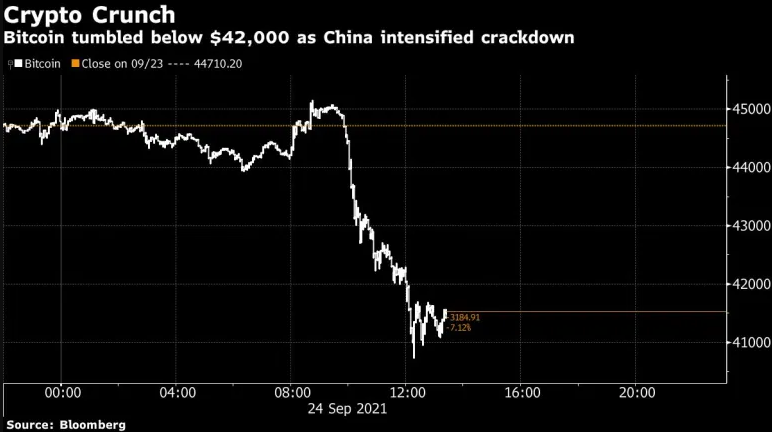
Perhaps the most significant example of governments showing hostility towards digital assets was China’s 2021 blanket ban on cryptocurrency trading and mining. In addition to banning all forms of transactions, the government also resorted to physically shutting down mining farms, significantly disrupting the global Bitcoin network. On the other side of the spectrum, India’s wild swinging between complete bans and regulatory frameworks highlights the unpredictability of the environment within which crypto-oriented businesses operate. Early examples and many more since indicate that governments around the world are prepared to go to great lengths to eliminate cryptocurrency, citing reasons of consumer protection, financial harm, and even national security. A more recent example is the Markets in Crypto-Assets legislation passed in the European Union in 2024. Even though the bill aimed to introduce some regulatory certainty, the law imposed heavy restrictions on the business, requiring licensing, strict capital requirements, and even specific reports. While the intentions of this step were clear, it proved to create high entry barriers for new players, stifling the innovation landscape. One can only observe that whenever the market matures to a degree of widespread adoption, regulatory institutions retaliate with increasingly strict measures to limit such endeavors' potentials.
Inevitable Emergence of Protecting Innovation
No matter how much resistance it faces, innovation is inevitable. The historical record indicates that revolutionary innovations fundamentally change the existing status quo and always elicit fierce opposition. The emergence of the printing press threatened the information monopoly of theocratic and monarchic governments. Cars were once responsible for entire stables and harness dealers, the global horse production industry. Upon early in its rise to prominence, the content delivery of the internet age criticized mainstream media as little more than a toy phenomenon. Similarly, cryptocurrencies now challenge the pre-existing financial order. Purveyors of economic structures that currently style and tacitly benefit from the existing system alarm threaten this subsidence.
Some of cryptocurrency's loudest detractors have come from the brick-and-mortar banking establishments. Banks have had the monopoly of issuing money, as well as offering other financial services so long and see decentralized digital currencies as an existential threat. The fact that value can be transmitted from one individual to another, without an intermediary in between threatens the very core of traditional banking. Big banks have spent a lot of money lobbying for harsher cryptocurrency regulation, influencing policy in their favor using their political power. They have also unleashed smear campaigns emphasizing that cryptocurrency is used in illicit activities, and conveniently forgetting to mention that far more criminal activity goes through the standard financial system.
The press has helped to sculpt the public image of, and sentiment towards, crypto, often disabling its revolutionary nature by pointing at issues. Sensationalist reports of cryptocurrency bubbles bursting, hacking attacks and regulatory clampdowns are dominant in mainstream coverage, casting a distorted image of the underlying risks and rewards of the technology. This bad coverage has led the general public to becoming skeptical and fearful about crypto, and is making it harder for genuine crypto projects to be accepted by the mainstream.

Rivalry between projects in the crypto space has also led to multiple kinds of attacks. Various blockchains jockey for users, developers (and hence market share) with technical attacks and social engineering campaigns, as well as seeking to discredit rivals. The fights that get fought over crypto can be extreme, even turning in on itself with coordinated selling attacks, technical attack vector strategies and attempted regulatory capture ploys throughout the space.
Security of Blockchain Against Every Attack
Despite having been attacked by all sorts of things from all angles, blockchain technology has proven able to defend itself quite successfully. Blockchain networks are decentralized in nature. They exhibit high resistance to single points of failure. Unlike most financial systems today, which are run by giant banks and corporations, these networks can share information more efficiently than ever, because thousands of independent computers globally maintain a single record of what's happened. This dispersion of power ensures that it is practically infeasible for any individual actor to have full control over and be able to shut down the network.
It's all about cryptographic security which is underlying the defense of blockchain. All transfers are secured by state-of-the-art cryptographic algorithms that prevent tampering or building false transactions. Public key cryptography verifies that only the present owner of a private key can spend it, and hash functions make tamper-proof logs of all transactions with input that cannot be altered. These cryptographic methods have been studied for the past several decades by some of the world’s best cryptographers, and they are among the strongest means of securing digital information that exist.
Consensus mechanisms act as a further preventive measure to attacks. Bitcoin utilizes the Proof of Work, which involves miners to perform some computationally hard problems in order to reach a consensus over transactions and extend blocks into the blockchain. This makes it infeasible for an attacker to control the network as they would need more computational power than everyone else combined. Proof of Stake, as implemented by Ethereum and many other contemporary blockchains, achieves similar security without computational work but through the use of economic participation; attackers are even less likely to be able to co-opt networks rather than spread misinformation.
Records on blockchain are immutable which provides a permanent, tamper-proof ledger that no single entity has the capability to manipulate. Once recorded on the blockchain, a transaction is part of an "immutable" chain of cryptographic evidence that goes all the way back to the very first block (the so-called genesis block). This immutability makes it impossible for a historical record to be manipulated thus adding transparency and accountability which is difficult to have with intranets and traditional financial systems.
Fewer Legal and Regulatory Attacks
Decentralization of blockchain makes it "sectarian-proof", when exploring if regulation and legal laws can be used as an attack on the system. Whereas most corporations have headquarters in jurisdictions they run from, authorities can shut down the business. Blockchain networks function globally and have no one location that it all comes to. This jurisdictional ambiguity means it's virtually impossible for any one government to truly regulate or shut down a blockchain network even if it wanted to.
The open-source software code underlying most blockchain protocols also allows any developer, regardless of his or her location, to pick up where another developer leaves off — assuming he or she has access to the internet and a computer. This form of decentralized development means that blockchain networks can progress and become better even if the original creators are targeted by laws. The Bitcoin system, for instance, has been humming along and improving despite the world not knowing who created it (Satoshi Nakamoto remains a mystery), and various legal wranglings over the years.

Smart contracts — self-executing agreements written into code — present another level of legal resistance. Smart contracts are deployed on a blockchain and can be executed automatically, with no human intervention or central authority permission. This automated functionality thus has the effect of preventing governments or other entities from stopping such contracts from being executed, even if they do not agree with terms and/or outcomes of execution.
Regulatory arbitrage opportunities are limitless due to the borderless nature of blockchain networks. If one country gets too oppressive, blockchain businesses can easily take their operations to more crypto-friendly climes. This mobility is forcing governments to build sensible regulatory constructs rather than try and outright ban or heavily handcuff cryptocurrency activities.
Now Better Defended Against Technical and Cyber Warfare
Network security and resilience - Blockchains have so far withstood a range of technical and cyber attacks. Due to the distributed characteristic of the network, the attackers are unable to attack all nodes simultaneously and cryptographic security defends against nearly any kind of hacking. Even if single nodes or wallets are compromised, the network remains safe and functional.
The economic mechanism of blockchain networks inherently discourages malfeasant behavior. Miners in Proof of Work networks are disincentivized to attack the network as they have massive sunk costs in mining rigs and power when attacking PoW systems. Validators in PoS systems can have their staked tokens slashed if they act maliciously, causing direct financial damage. This economic model incentivizes network members for the benefit of the network's security and stability.
The visibility of blockchain networks also acts as a powerful deterrent. All transactions are public and transparent, which makes it feasible to identify suspicious or undesirable activity. This trust and the unchangeable nature of the ledger, makes blockchain systems less attractive targets for cyber crooks as malevolent actors can be identified quickly and their activity traced.
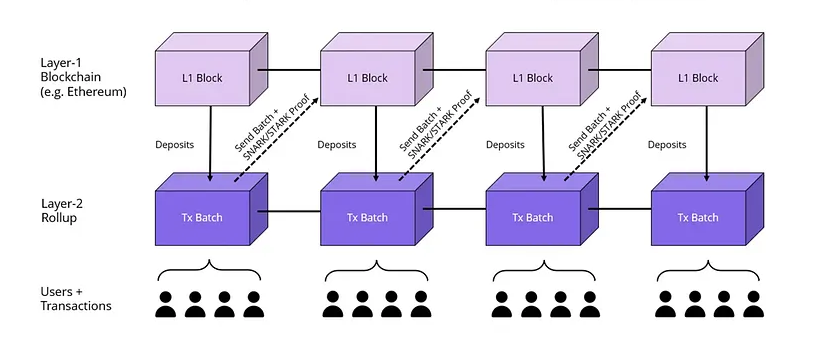
A flux of innovation in blockchain security has translated into the design and implementation of sophisticated defense mechanisms. Layer 2 solutions which include for example Lightning Network in Bitcoin and the scaling options in Ethereum provide further security and improve network performance. Cross-chain bridges and interoperability protocols allow these different blockchains to communicate securely, resulting in a healthier, connected ecosystem.
Media and Social Engineering Resistance
Although blockchain itself is not a tool that can stop bad press or social engineering directly, the transparency and verifiability of blockchain records serve as efficient resources in fighting misinformation and fraud. Unlike the old financial infrastructure, where transaction information is buried under mountains of bureaucracy, blockchain transactions on the other hand are transparent to the public, reducing incidents of claims made without concrete proof and being able to debunk fictitious narratives.
The decentralized nature of blockchain communities also makes being coordinated against much more difficult. Blockchain communities cannot be easily influenced or governed in the way traditional organizations can by applying pressure on a few influential insiders, as agencies of control are distributed to thousands of members around the globe. This fragmentation makes it very hard for any single party to monopolize or guide narratives around a given blockchain project.
The open-source ethos behind blockchain development also fosters transparency, which can be used to combat misinformation. The code is completely transparent and everyone can review it to see how the system works, check its security claims etc. This openness leads to well-informed citizens who can be manipulated less easily with misinformation.
Future of Blockchain Resilience
As the blockchain space evolves, we will continue to see new challenges and attack surfaces. But the underlying tenets of decentralization, cryptographic security and economic incentives that carried blockchain this far will remain robust safeguards against future destruction. The continual evolution of quantum-resistant cryptography, advanced consensus mechanisms and scalable solutions are all set to further bolster blockchain security and its resilience.
The increasing integration by major corporates and governments of blockchain technology also offers further validation and defense. Blockchain is inherently less vulnerable the more parts of society make use of this technology. This mass adoption leads to a virtuous cycle where higher usage drives greater security and robustness, which attracts more users and applications.
As regulatory structures continue to evolve, embracing and understanding blockchain technology, rather than rejecting it would also play positively in its favor. Various things may happen, but we think that as governments worldwide become more sophisticated in regulating such technologies, then technology can exist within existing legal frameworks while preserving its core tenets of security and decentralization.
Netts Workspace: Efficient and Secure
Energy control is an important part of blockchain operations for security and performance. Netts Workspace has become a professional TRON Energy management platform that provides holistic solutions for improved reliability and efficiency. It features an automated Energy delegation flow with smart scheduling to optimally allocate the blockchain resources in a highly secure manner.
Netts Workspace bundles tools for a fast, convenient TRON workflow. Features such as Energy rental automation enable users to automate the process of leasing TRON Energy and thus minimizes manual intervention and maximizes efficiency. With things like real-time visibility and cost-efficiency, users are able to make sure that their blockchain environments remain secure and cost-effective. The platform's professional API access is also thoroughly secured, so it can be used in enterprise-level applications where you need solid security at the highest level.

With Netts Workspace users have access to broad financial management capabilities as they monitor and make decisions to optimize their usage of blockchain resources — through analytics and reporting that offer insight into network performance and opportunities for cost optimization. By utilizing these tools, operators of blockchain networks can ensure that their network is capable of withstanding numerous types of attacks, and they do so while running at the highest possible performance levels.
Safe and Sound... Eventually
The robustness of blockchain is one of the great success stories of computer science and cryptography. Through attacks by regulators and media, existing financial institutions, cyber criminals and an understanding blockade (the same attitude the music industry had to the internet for over a decade), blockchain networks have not only survived but become more secure and decentralized every year. The high-tech defenses that blockchain technology employs through decentralization, cryptographic means, consensus algorithms and economic incentives make it practically immune to all forms of attacks.
Indeed, with the evolution of blockchain tech ongoing and more mainstream usage cases emerging alongside better regulatory contexts, it would seem that this impressive resilience will only grow stronger. The blockchain revolution is not purely about inventing new forms of money or digital assets, but actually creating a more secure and transparent future for the entire digital economy as an entirely decentralized system. In this future, the infallibility of blockchain technology will still be something that we will test but its basic tenets and learning capacity guarantee that it is going to stay one of the most robust and resilient systems that anyone has ever derived from human genius.