Predictions that Never Came True in the World of Crypto
This article is going to focus on some notable crypto predictions that simply failed to materialize — especially those from big names and entities.

Since the earliest days of Bitcoin to the most recent developments in blockchain, there has been no shortage of predictions about the future of digital assets coming from experts, celebrities and institutions alike. These predictions range from the optimistic to the dire, but they all have one thing in common: they never happened.
This article is going to focus on some notable crypto predictions that simply failed to materialize — especially those from big names and entities. We will also see how public opinion has been changing through the years, and why ultimately, the only thing that is certain in crypto is uncertainty.
The Million-Dollar Bitcoin Dream and Other Price Pipe Dreams
One of the most recurrent predictions in the crypto world is the price prediction. Bitcoin and other cryptocurrencies have been promised some big numbers over the years. Here are a few of our favorite stand outs:
1. The notorious call from John McAfee in 2017 that Bitcoin would hit $1 million by the end of 2020. Not only did this never happen, but a few weeks later McAfee confessed that it was a publicity stunt and the price of Bitcoin never approached that value.
2. Tom Lee of Fundstrat Global Advisors repeatedly predicted Bitcoin would hit $25,000 at the end of 2018, but that year, instead, Bitcoin ended below $4K.
3. Bitcoin to $175,400 in 2023 by influencer Defitology 2022. The reality? That year Bitcoin peaked at $44,800.
4. Analysts at Race Capital had called for new highs for Bitcoin in 2023 and 2024 but the market seemed stuck between the 19k–21k range.
These inaccurate forecasts weren't just about Bitcoin. Another classic prediction was that Ethereum would flip Bitcoin in terms of market cap (an event known as "the flippening"). Despite countless proclamations from fans and some analysts that this would occur in 2024 or 2025, Bitcoin's dominance was never broken, with its market cap remaining more than three times that of Ethereum.
The story of price predictions that missed the mark is not a story of numbers. With each bull cycle comes a fresh sense of hope and influencers and analysts desperately trying to outdo each other to the highest target. These voices are amplified on social media where the most radical forecasts are given the most attention in a twisted feedback loop. Disappointment is inevitable when reality doesn't deliver on the hype — yet the cycle begins anew. This culture of speculation is a feature of crypto, not a bug, and it's what makes it so exciting — and probably so dangerous too.
Celebrities have long since been drawn into the crypto space, most of which had offered up famous mouths and faces for doting projects that probably offered the moon. Sadly, most of these endorsements have wrapped-up in disappointment or scandal. Among the most notable:
In a notable example, Floyd Mayweather and DJ Khaled shilled an ICO from Centra Tech that subsequently turned out to be a scam. Mayweather and Khaled faced a class-action lawsuit for not disclosing any financial incentives, costing investors millions.
The former price craze of EthereumMax (EMAX) — propelled in mid-2021 by a staggering promo tweet from Kim Kardashian to her millions of Instagram followers — was quickly followed by an equally dramatic collapse in price. The post later earned Kardashian a $1.26 million fine from the SEC for not revealing that she received a payment of $250,000 for the post.

FTX exchange was excited to have their ambassadors, the most famous athletes in the world Tom Brady and Stephen Curry. They both were sued by investors who alleged that they were misled by the endorsements from the stars when FTX collapsed in 2022.
The NFT drop of Mike Tyson, that was supposed to be a mega event melted more than 90% in value in open market as soon as the hype went away. The cases are reminders that celebrity endorsements do not always translate into success in the world of crypto.
And the examples of celebrity failings don’t stop there. Paris Hilton and Lindsay Lohan are among those stars who've dropped NFT projects that quickly went bust. As a result, many fans and investors were left with digital assets that fell rapidly in value. The take-away: not all celebrities are smart with their cash and hype does not equal substance.
Institutional Missteps and Shifting Sentiments
It's not just individuals who have made strong predictions about the future of crypto. When major financial institutions and their leaders have weighed in, they have often been spectacularly wrong.
JPMorgan Chase CEO Jamie Dimon is known for his 2017 dismissive Bitcoin fraud and collapse prediction. Bitcoin not only survived, the very same JPMorgan went onto enact crypto related services and products themselves, a surprising embrace of the technology they once belittled.
Investor Warren Buffett, among the most respected around the world, consistently refers to Bitcoin as “rat poison squared” and a “mirage.” Yet, since that time as an observer, the crypto market has moved on, a developing and maturing $2 trillion industry, which brings in institutional investors and billions of capital regularly.
When El Salvador made Bitcoin legal tender in 2021, there were a few analysts who speculated about an avalanche of national adoptions, notably in G20 countries. However, the experiment is still unique to El Salvador as no major economy has followed suit, as of 2025.
But the institutional predictions have a back story, also; one of a slow turn of sentiment. Initially, banks and regulators wrote off crypto as a gimmick or a money laundering instrument. As the technology matured and adoption increased, many of these same institutions started looking into blockchain for their own operations, over time. A few even created their own digital tokens or teamed up with crypto companies. This trip from doubt to sober acceptance has had more than its fair share of false turns and lost chances.
The Collapse of Terra-Luna — How Stablecoins Are a Fantasy
A little while ago, stablecoins were considered the answer to crypto’s volatility problem, and then algorithmic stablecoins, such as TerraUSD (UST), promised to herald a whole new age of stability. The Terra-Luna ecosystem imploded in 2022 when UST lost its peg to the US dollar, erasing over $45 billion from the market and causing a storm throughout the industry. The Terra-Luna apocalypse shattered what many analysts described as the "correct prediction" of these having connections to the core of decentralized finance; that being algorithmic stablecoins.
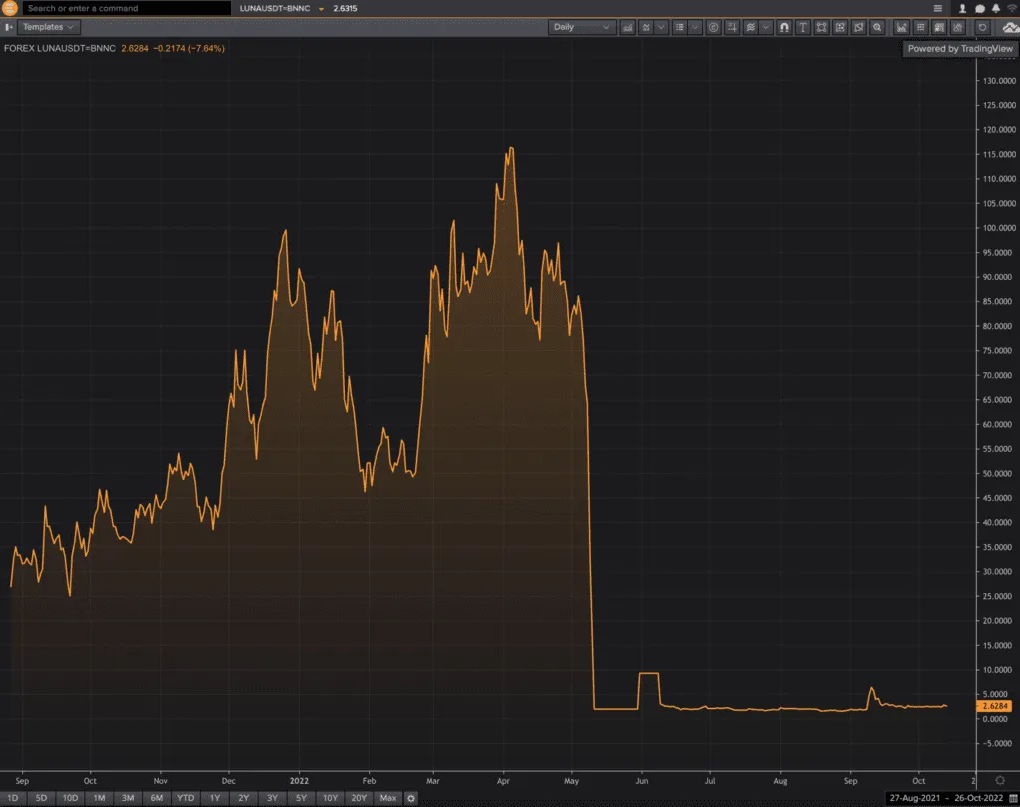
Terra-Luna collapse was not only financial but psychological event for the whole crypto community. Stablecoins had served for years as a place of refuge, a means of hopping off the rollercoaster. UST shattered that illusion and made us rethink what stability really means in digital assets. It also resulted in more attention from regulators and a slew of new proposals for how to give stablecoins their much touted stability.
Crowd Wisdom (and Lack Thereof): General Opinion
Apart from all the celebrity and institution predictions, the general feeling in the crypto community has been one of boom and bust (literally) nihilism and back and forth between irrational exuberance and despair. The consensus is always that in bullish markets prices can only go one way and in bearish markets – doom and gloom. These swings tend to happen with less noise, too, and social media amplifies these swings, which makes it easy for groupthink to take root and for badly wrong predictions to spread like wildfire.
But, the conventional wisdom has been wrong about the market over and over again. The “flippening” didn’t happen. Bitcoin didn’t reach $1 million. National governments were slow to adopt crypto. And some of the most seemingly unstoppable projects — Terra-Luna — fell to zero overnight. The lesson? The only thing you can rely on in crypto is that you cannot rely on anything.
Crowd psychology is rife and quickly becomes positioned within crypto. The majority of the movement in the market scene is driven by FOMO (fear of missing out) and FUD (fear, uncertainty, and doubt). Rumours, and the predictions that tend to accompany them, flow faster than water through a sieve, and with about as much foundation in the actual truth. It's a setting that rewards audacity and punishes reticence, but it also magnifies minor missteps and can create unexpected opportunities.
The predictions have evolved just as the crypto industry has matured. Compared to today, when analysts have access to sophisticated tools and sophisticated data, early forecasts had little more than hope and hype to rely upon. Yet the basic nature of the market is not going away. Even the most cautiously assembled models can be overturned by black swan events, regulatory changes, and technological breakthroughs.
The one field where predictions constantly missed the mark: regulation. For years, experts have been saying that it would be only a matter of time before regulatory clarity on cryptos would be available globally. But even as we approach the dawn of 2025, when many experts had envisioned the tech taking off and existing within a stronger regulatory framework, the situation remains a hodgepodge of wildly varying approaches by country. And this ongoing uncertainty has contributed to the continued shaping of the market in ways that have puzzled those who try to foretell its future.
The final common thread is the prospect of mass adoption. Again and again the forecast is repeated each year, crypto will finally take off and be used by billions of people, be worth trillions of dollars, etc. Adoption may have increased, but the picture is much more nuanced. Usability, security, and regulation lag behind, and mass adoption of financial and monetary systems appears further away, and more winding, than many imagined.
TRON Energy Market: a Case of Real-World Use
Despite the hubris of the many failed predictions, crypto really has delivered on some promise. For example, take the TRON Energy Market. This has allowed users to pay for their blockchain operations more efficiently and affordably than if they were using their native TRON tokens. Users can access pooled resources instead of burning TRX for every transaction, which reduces costs and enables greater flexibility.
For developers and businesses, it has turned out to be one of the most promising and powerful solutions for renting Energy on TRON. This breakthrough feature has allowed TRON to differentiate itself from the competition and showcase the real-world advantages of blockchain technology.
At a time when so called accurate predictions can flop too, it is always refreshing to have solutions without guesstimates.
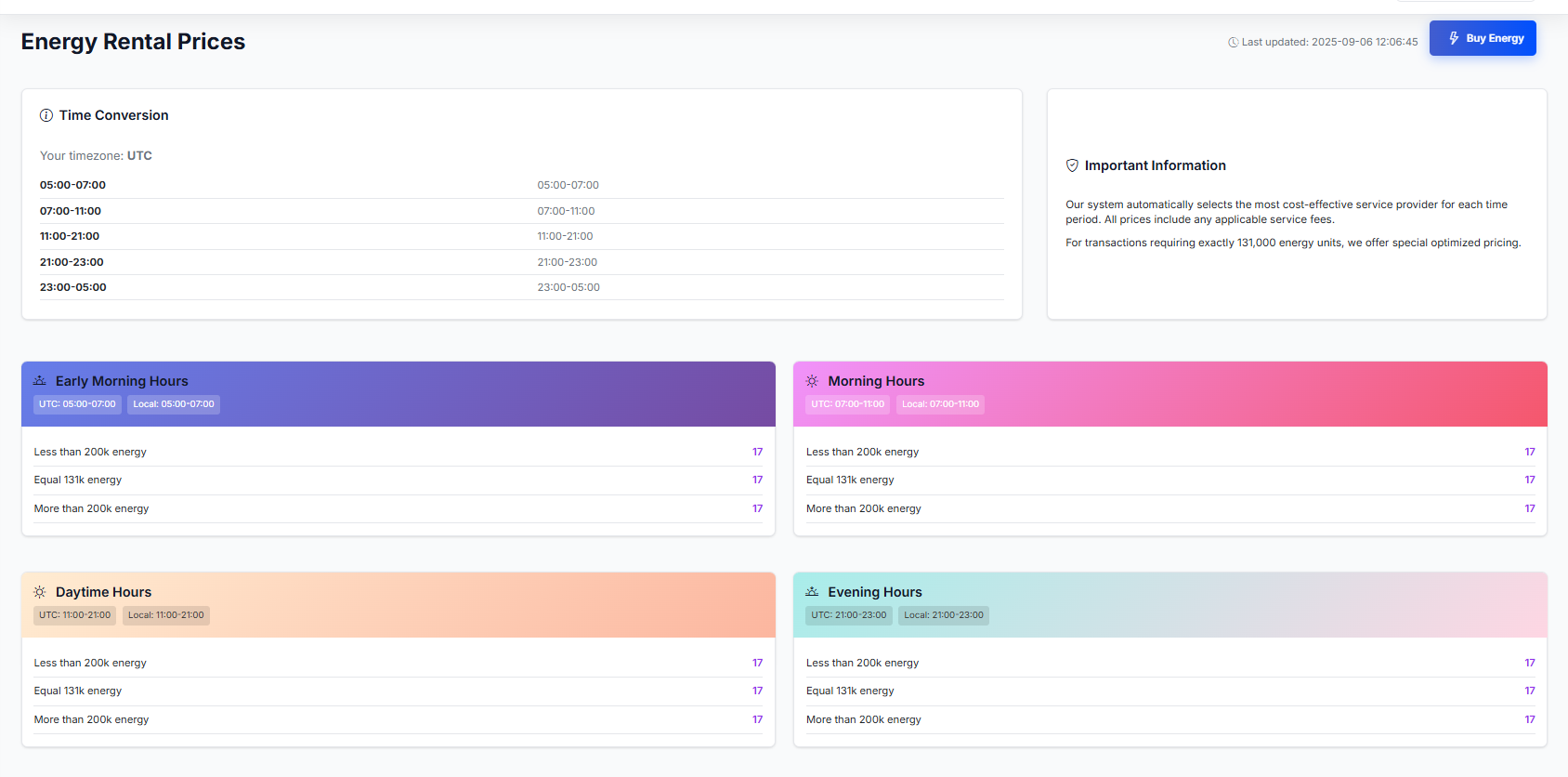
With Netts.io, you can rent Energy on TRON and enter the TRON Energy Market seamlessly. It provides automated energy delegation with smart scheduling, live tracking, and cost-optimization features. Professional API access, enterprise-level security, and full financial management systems for developers and businesses alike — all in one place.
The Workspace Dashboard acts as a command center for anything and everything you need to know about energy, including analytics, reporting, and a referral program. Login with Google/Telegram, multiple addresses support, and define smart triggers to recharge energy automatically! Eliminate the manual processes, eliminate the estimation – just seamless, round-the-clock energy management.