Popular Literature that Predicted Cryptocurrencies
Before the first bitcoin was mined or the words "blockchain" entered our modern vernacular, digital currency was already being imagined in the minds of writers.
Before the first bitcoin was mined or the words "blockchain" entered our modern vernacular, digital currency was already being imagined in the fertile minds of writers. Decades before the rise of crypto, these creators imagined worlds where cash was no longer a feature of existence — transactions were instantaneous and all financial systems functioned outside of government or bank control.
With cryptocurrencies becoming increasingly commonplace today, it feels incredible to look back and see how prophetic some of these works proved to be. The stories reveal the exploration of principles in artificial worlds — demand for privacy, efficiency, autonomy, making the fiction-reality leap seem inevitable.
Visionaries behind Digital Money in Literature
A mainstay of classic science fiction, the emergence of digital and decentralized currency has long been anticipated. In Robert A. Heinlein's (1966) "The Moon Is a Harsh Mistress," citizens of a lunar colony maintain their economy by using a computer-based, ledger-book banking system. This is not a cryptocurrency per se, but is a practical decentralized system, with the colony's supercomputer "Mike" handling transactions and resource allocation — a precursor to the concept of algorithmic or even automated finance.
In the 1975 novel "Shockwave Rider" by John Brunner, the author presents "data money" or anonymous digital money using untrackable money transferred from one computer to another via a global computer network. The protagonist circumvented surveillance and control, foretelling not only the privacy aspects but also the social impact of cryptocurrencies.
One early example of cyberspace and digital identity fiction is the 1981 novella "True Names" by Vernor Vinge. Even if it doesn't have cryptocurrency as such, it is a world where digital transactions — and thus control over information — is central to power; the heart of the crypto ethos.
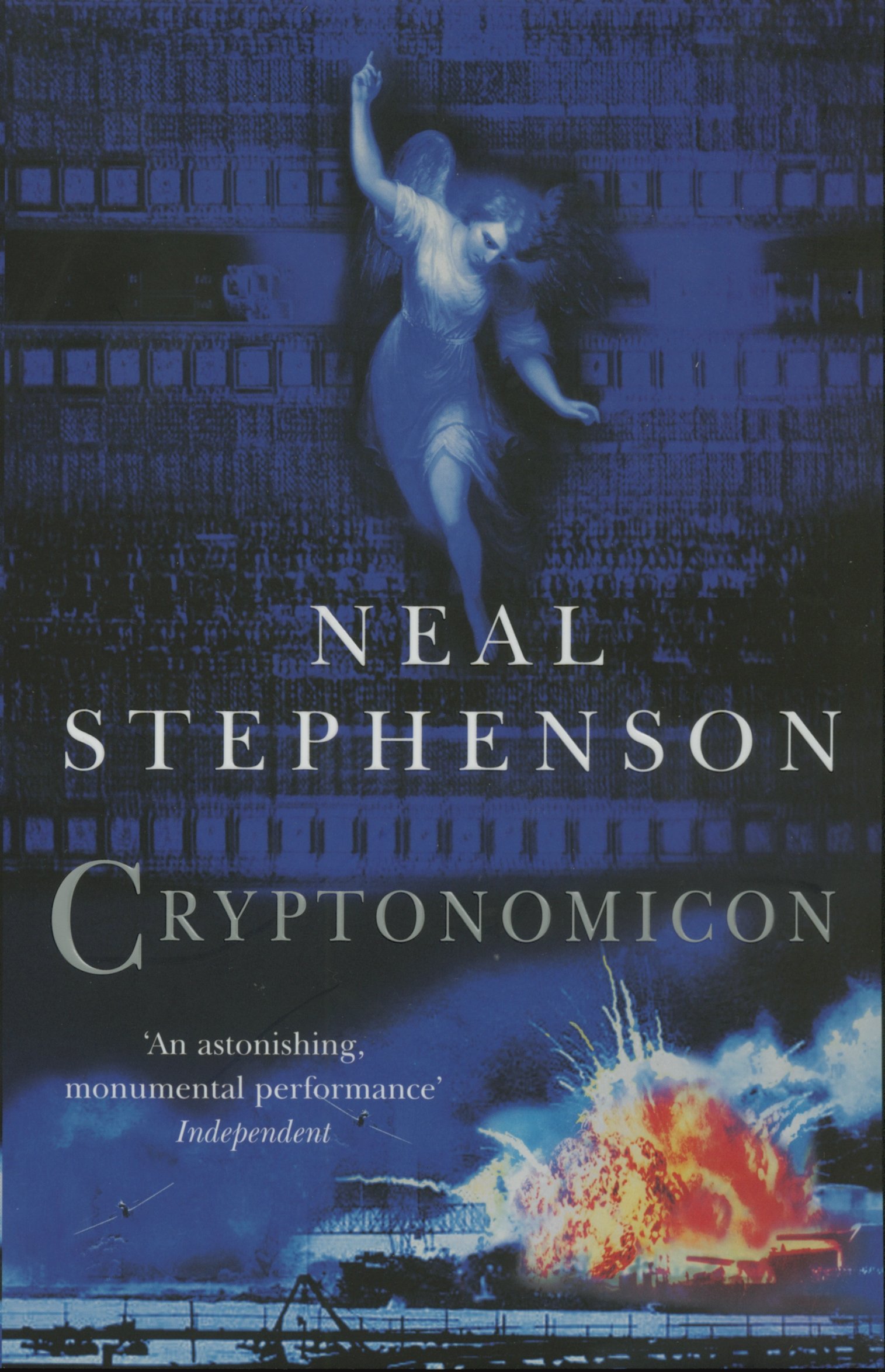
Neal Stephenson is among the more famous authors in this area. In his 1999 novel, "Cryptonomicon," a sprawling narrative intertwines World War II codebreakers and 1990s tech entrepreneurs all centered around the concept of a cryptographically secure digital currency. Stephenson elaborates on how encryption works, outlines the data privacy impact of a decentralized currency system and its mechanics. His description of the technologies that preceded the cryptocurrencies we know today are surprisingly fundamental. This vision — a digital currency based on gold, protected from any government influence — seems to foreshadow, if not inspire, Bitcoin and the entire crypto movement.
But there was more to come from Stephenson’s prescience. In a 1995 short story called "The Great Simoleon Caper," he first conceived of "CryptoCredits" — a form of cryptographic e-money, numbers changing hands via wires. It also mentions how these numbers should never be revealed to anyone, drawing a direct comparison to the encrypted private keys used to secure crypto wallets nowadays. This is a clear precursor to the principles behind Bitcoin, since Stephenson’s work is showing that with the rise of cryptography and networks, it is natural to postulate a money that cannot be controlled by any government.
William Gibson, another literary giant, laid his vision of digital economies out in 1984 with "Neuromancer." Gibson’s universe is one where data and digital information is the most precious commodity, and exchange takes place in a global virtual world. Though the novel was not specifically about cryptocurrency, its illustration of a global, digital marketplace was a precursor to the principles of how virtual currencies could operate in a decentralized fashion.
It is worth mentioning Bruce Sterling who released in 1994 the novel "Heavy Weather". In it, Sterling dreams of a climate-chaos future where electronic, private cash flows outside of government control. The characteristics of this digital currency — global, anonymous, and untraceable — would later be defined features of cryptocurrencies, such as bitcoin and Monero. This view of a decentralized, peer-to-peer financial system is a natural consequence of new monetary forms emerging from technology.
Cinematic Currencies: Cryptocurrencies in Entertainment Media
Literature has never been the only place where speculation about money occurred, and other forms of media helped populate our imagination of the future of money. In 1989, the "Shadowrun" universe launched in the form of a tabletop role-playing game and features a cyberpunk dystopia where "credsticks" function as electronic cash. They enable secure, anonymous transfers, much like current hardware wallets for cryptos. It is almost prophetic of the game developers to foresee the necessity for portable and secure digital assets especially since hardware wallets have become a great tool for crypto users wanting to secure their assets into one safe location.
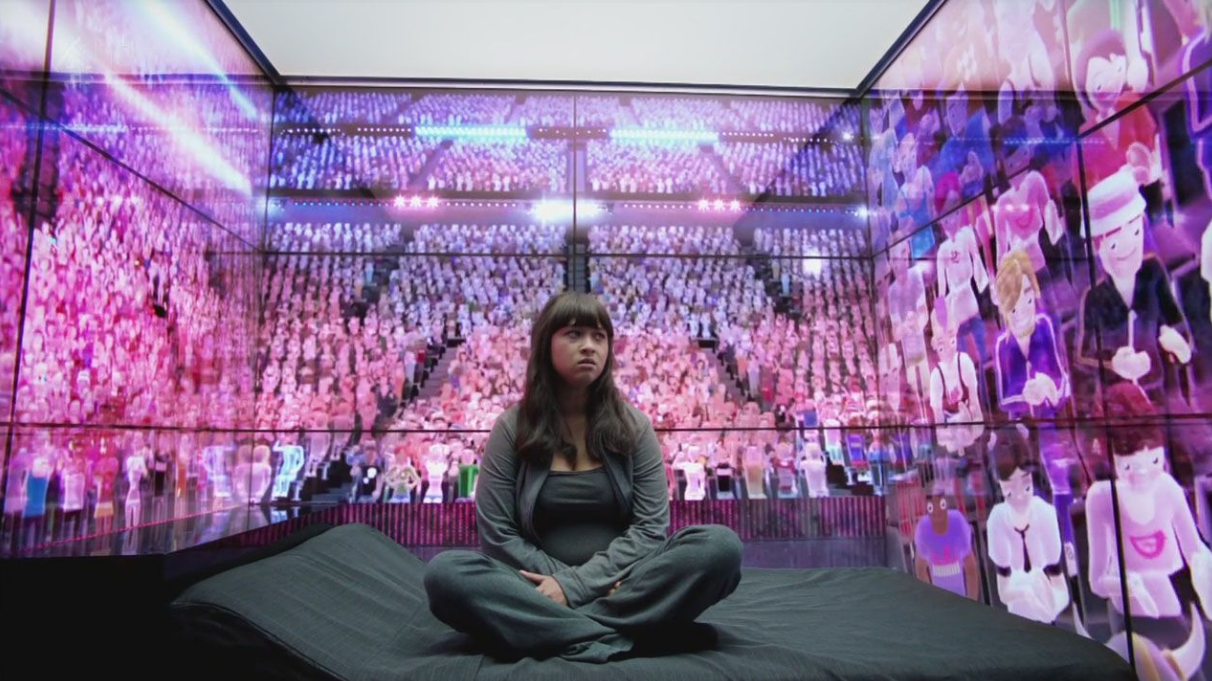
In the "Fifteen Million Merits" episode of "Black Mirror," citizens in a near-future society spend their days doing endless physical work, earning a digital currency to spend within a digital world on digital goods. It narrates the emergence of play-to-earn games, digital assets and the appearance of crypto in everyday life. How digital money can mold society and dictate individual behavior is particularly resonant in an era that employs tokens and points to guide our actions toward desirable outcomes.
Set in a world where physical money has ceased to exist, the 2003 novel "Down and Out in the Magic Kingdom" by Cory Doctorow depicts a system of currency based on reputation, called Whuffie. Whuffie is a non-monetary economic system, based on social approval, granted through community contributions, and used in this society. The book itself is not specifically a prophecy of cryptocurrencies, but goes on an exploration of another value proposition and the distribution of value and trust by means of technology — which echoes many of the community-oriented aspects of blockchain projects.
In the techno-thriller Daemon (2006), Daniel Suarez created a speculative fiction universe in which a complexly designed initiative, more or less entirely run by a computer program, stages a decentralized, AI-controlled revolution that is financed through funds organized in digital currencies. From before Bitcoin existed, "Daemon" imagines a new monetary base that enables extra-nation-state power structures that directly threaten the existing powers. Suarez's story explores ideas of freedom, monitoring and the subversive nature of tech — an ominous glimpse into the ways in which DeFi could reform the world.
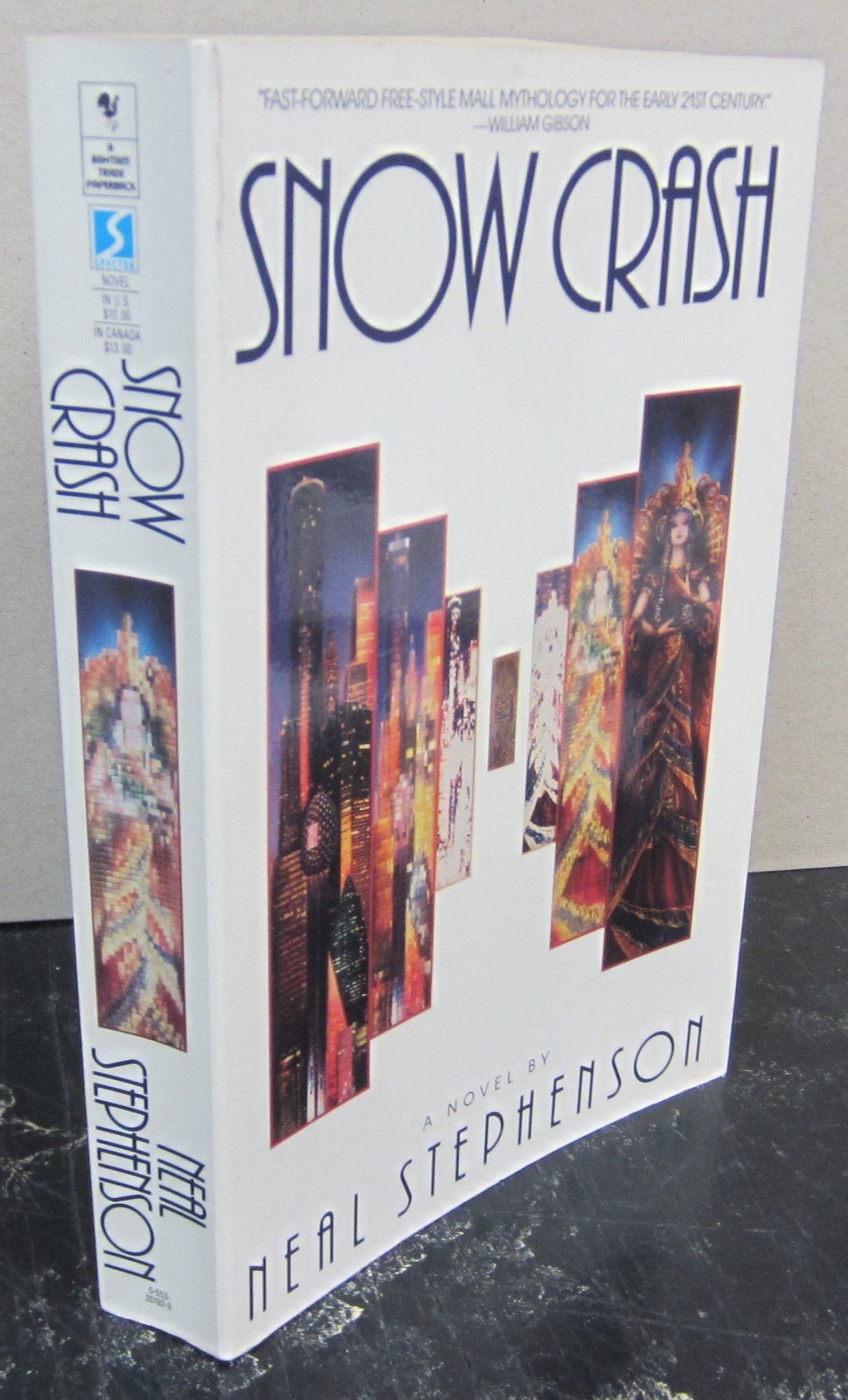
In a similar vein, Neal Stephenson conceived the "Metaverse" in his 1992 novel "Snow Crash", an internet-based virtual reality where users interact via avatars and conduct transactions using electronic currency. This shift corresponds with what we see today. The novel’s vision of a decentralized digital economy with virtual assets parallels the rise of blockchain-based platforms, NFTs, and the ability to trade or rent TRON Energy for decentralized applications. The metaverse was a literary utopia — it is now the guide to the next generation of online interaction and trade.
So Here Is Why Fiction Gets It Right: Principles that Enable Predictive Analysis
So, what is it about the fiction of the time that enables it to be so prescient for life as we know it today? The secret is in the tenets they discuss. When authors and filmmakers speculate on the future, where information is power, privacy is sacred and efficiency is king, they often come to the same solutions as technologists in our world. The desire to replace middlemen, reduce costs and give power back to people naturally brings us to decentralized, digital, money.
Most of the time, these artificial environments share the following principles:
1. Decentralization. Once again, the lack of central authority, mirroring crypto-minimalism, is a theme that appears throughout.
2. Anonymity and privacy. The ability to complete transactions with no trail and remain private is a value of many digital currencies.
3. Cryptographic security. Similar to the blockchain in the real world, assets and transactions are encrypted.
4. High flexibility and efficiency. The modern TRON Energy Market lets users rent or trade Energy on an on-demand, user-friendly P2P market.
These topics are not just hypothetical, but rather natural continuations of technology and human nature. With the rise of digital communication and digital commerce, the need for a new type of money has arisen where the world is borderless and always on. For example, the emergence of programmable Energy leasing is due to the increased demand for flexible, efficient resource management for blockchain ecosystem. These innovations make decentralized applications more affordable for everybody by either allowing users to simply rent Energy on TRON or by automating their Energy needs.
Bringing It Back Down to Earth: From Fiction to Real Life
The vision in these almost-futuristic works are no longer merely the domain of fiction today. Cryptocurrencies have turned into a global phenomenon, with millions of people using digital assets for everything from remittances to investment, gaming and much more. The fictional currency of the authors and filmmakers of the past has now become the currency of the financial system of today.
Such is the case with TRON Energy Market, one of the platforms that are transforming the way we experience markets. They democratized access to blockchain resources by allowing users to only pay for Energy when they use it by renting or trading it on demand, similar to how car rentals democratized transportation. Pay-as-you-go, freedom from locking up capital and efficient cost optimization has made the open, immutable, and decentralized nature of the blockchain accessible to every individual, developer and business. Innovations like programmable Energy leasing, automated trading Energy platforms and recipient-paid fee models have begun to emerge.
Similar to how video chat seemed far-fetched in ancient science fiction movies, yet has become commonplace within our daily lives, cryptocurrencies transcended from the domain of fiction to our daily finances. It is a true tribute for what creative thinking can achieve; a reminder that art in the early stages of new technology – especially pioneering technology – can be essential in understanding things about the world we live in.
TronMoji Generator: Art + Blockchain Permanence
Straddling the line between art and technological innovation, the TronMoji Generator is truly one of a kind, and an incredibly fun service for both digital artists and blockchain enthusiasts alike. This platform lets you name and mint 16 × 16 pixel art — TronMojis — forever on the TRON blockchain. Every TronMoji is part of the transaction memo field, true to immutability and never dependent on any external server, unlike classic NFTs.
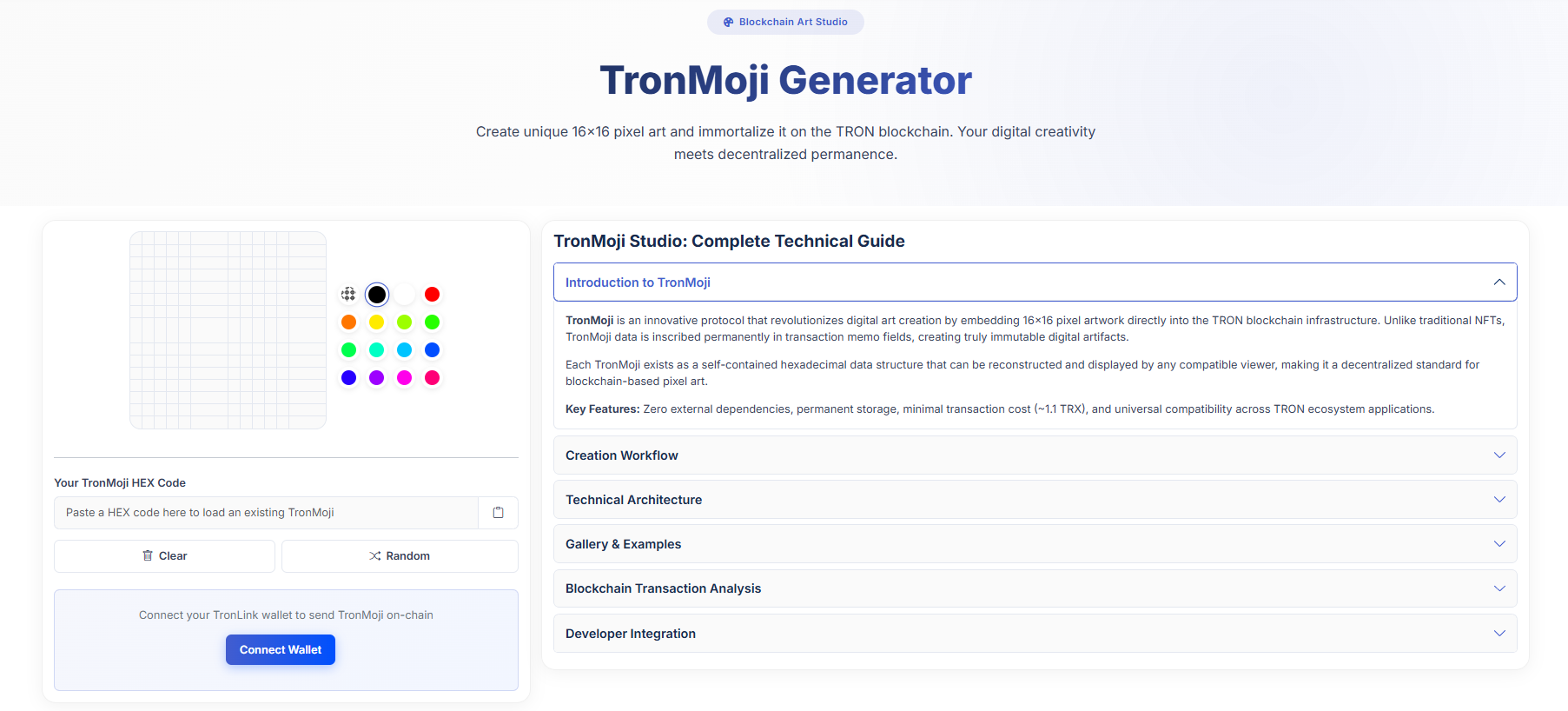
Creation is simple — you pick from 16 colors, draw a design on a 16x16 grid, get a real-time preview of your artwork and export it as a 256-character hexadecimal string. Each TronMoji can be sent to any TRON address for permanent storage at little transaction cost with your connected TronLink wallet. The protocol’s universal compatibility allows your art to show up in any supporting viewer, creating a decentralized standard for blockchain pixel art with TronMoji.
Whether as a stylish new tool for creators or as a hybrid manifestation of decentralized, immutable history, TronMoji Generator illustrates yet another unique power that blockchain technology has: to preserve art. With TronMoji, users can etch their art into the blockchain with zero external dependencies, making use of batch processing and real-time monitoring to permanently add their artistic sense to the TRON infrastructure.