Philosophy of Crypto: Why Bother At All?
Crypto extends old fights over authority, truth, and freedom — from Socrates to open protocols, governance, and how infrastructure encodes ethics.
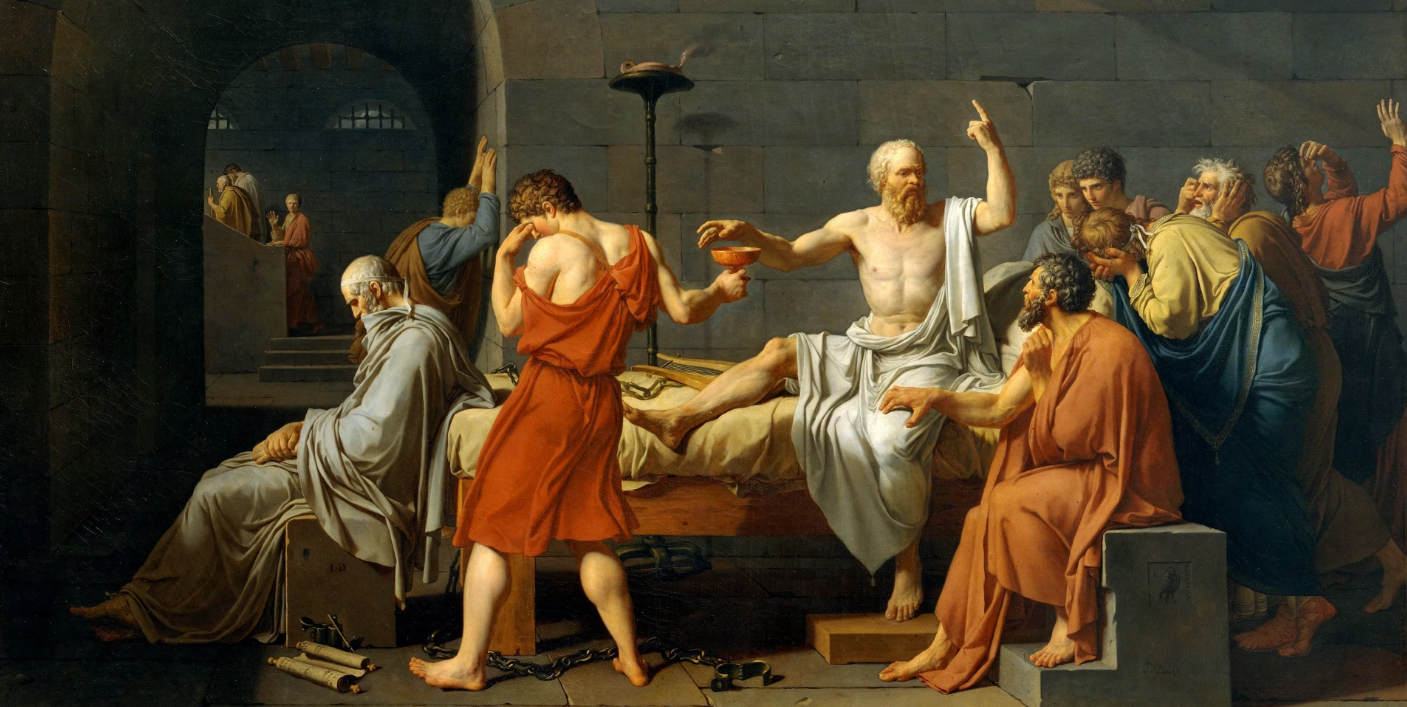
Each era is left with its consensus about how the world should operate, a rigid set of rules murmured by elders, governments and guilds — yes, even by scribes who go down in history as victors. But history hums along to the din of muttering people who suspect that a script is hiding contradictions or injustices that will eventually cause society to crack.
Philosophically speaking, it started on the street or under a portico as a conversation, long before Socrates wanted to know why piety meant obedience without understanding.
Their insubordination was disciplined, not reckless — an insistence that speech, law and morality line up with reality. In discovering the stories of these questioners we find a recurring theme: pioneers are vilified for revealing holes, then in time joined by generations who recognize that those holes matter. The rhythm rehearses every time a new medium or marketplace undermines inherited authority. A similar tension animates digital economies today as crypto enthusiasts point out the cracks in current financial system.
Cryptocurrency began as a technical hack of an old financial problem — how to coordinate strangers without a central authority overseeing that coordination — and swiftly morphed into a cultural and philosophical experiment. To understand the fidelity of crypto builders, let us retrace the customs that once elevated dissent to a virtue.
Ancient Voices Against Comfortable Certainty
Socrates would not allow that traditional Athenian customs were owed allegiance because they came out of the past, and his dialectic made it necessary for citizens to give reasons, rather than simply repeat slogans. His distress was so extreme that he was sentenced to drink hemlock, instructing generations of later thinkers that the truth sometimes extracts an ultimate cost.
Plato inherited that restlessness, and painted his ideal republic as a re-conceived design problem around education, gender and leadership. Aristotle challenged his teacher by making knowledge a function of the observing subject, seeing virtues as grown in through habituated practice rather than rooted in abstract forms and charting constitutions to test theories against lived results.
After Alexander’s empire shattered into fragments, Hellenistic philosophies confronted the ensuing chaos by reconsidering what makes a good life. Citizenship, Zeno suggested, meant being a subject of reason rather than any particular walls of the city, thereby erasing the line between neighbor and stranger. Friendship, clear thought and decent pleasures were superior to imperial ambition, Epicurus taught — thus undermining propaganda that celebrated conquest.
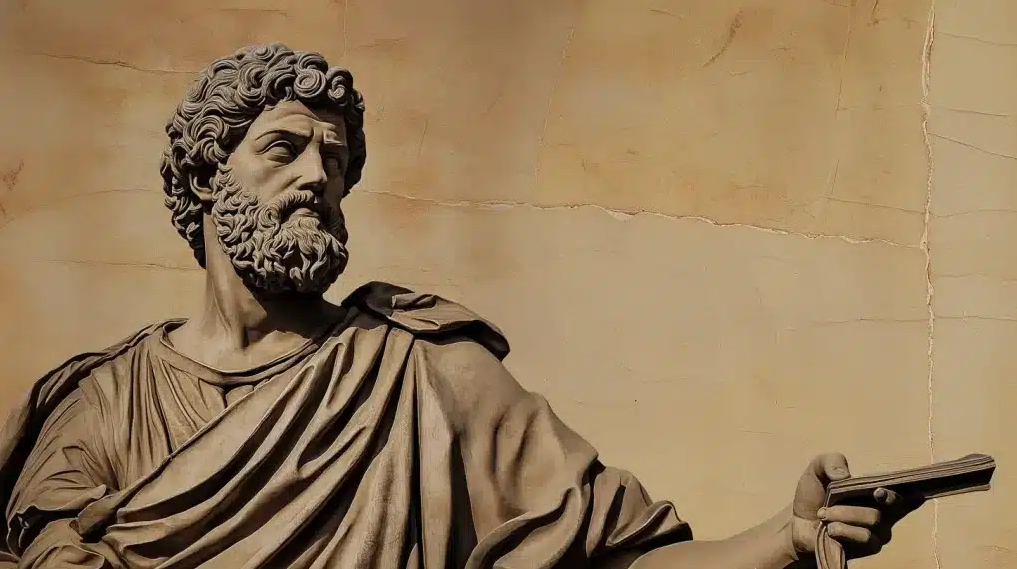
Later, Roman Stoics like Seneca and Marcus Aurelius encouraged emperors to govern themselves before they sought to govern others, a subversive message disguised as advice. Each doctrine rendered subjects more difficult to domesticate in that it provided them an internal constitution which no magistrate could rewrite.
The personal costs of such defiance resonate across centuries:
1. Social ostracism, which cut thinkers off from support networks and mentors, making them dependent on a small circle of loyal supporters.
2. Legal and financial penalties, which dispossessed them of property, teaching positions or free movement.
3. Misrepresentation that grossly exaggerated thoughtful arguments to the point of them being existential threats to religion, nation or morality.
4. Internal doubt and philosophical rigor left them to live with unresolved questions for years.
These strains didn’t disappear after the time of antiquity. Medieval theologians like Ibn Rushd argued in the Islamic Tradition that reason and revelation confirm one another, but he stood nearly exiled for suggesting philosophy could throw light on divine law. Hildegard of Bingen outmaneuvered ecclesiastical authorities to promulgate fiery visions calling for reform, testing limits with the shield of prophetic authority.
Their bravery sustained the belief in the need for institutional experiments to seek truth. Reviving classical skepticism, Renaissance humanists argued that civic life improves thanks to citizens who scrutinize inherited power the way philologists study old manuscripts.
The Modern Mind In Revolt
Hungering for Certainty: René Descartes wanted something certain to base knowledge on — so he started by doubting everything that could even remotely be doubted, such as his own existence and the external world, putting his faith only in clear thinking. His process dethroned the scholastic right of way, implying that any disciplined mind could reconstruct knowledge from the foundations.
Baruch Spinoza multiplied the peril by identifying God with nature, folding sacred and secular authority into one, immanent substance. Their treatises were outlawed, burned, denounced and ridiculed — yet they circulated in the form of an underground samizdat that passed from hand to defiant hand inspiring scientists, revolutionaries and theologians eager for a more reasonable moral order.
Immanuel Kant re-articulated enlightenment as “the courage to use one’s own intelligence without direction,” a manifesto against in loco parentis that resonated with merchants, craftsmen and civil servants. Mary Wollstonecraft applied that logic to gender, showing how domestic affection could mask domination and maintaining that women’s education was necessary for republican virtue.
Decentralized Protocols As Ethical Practice
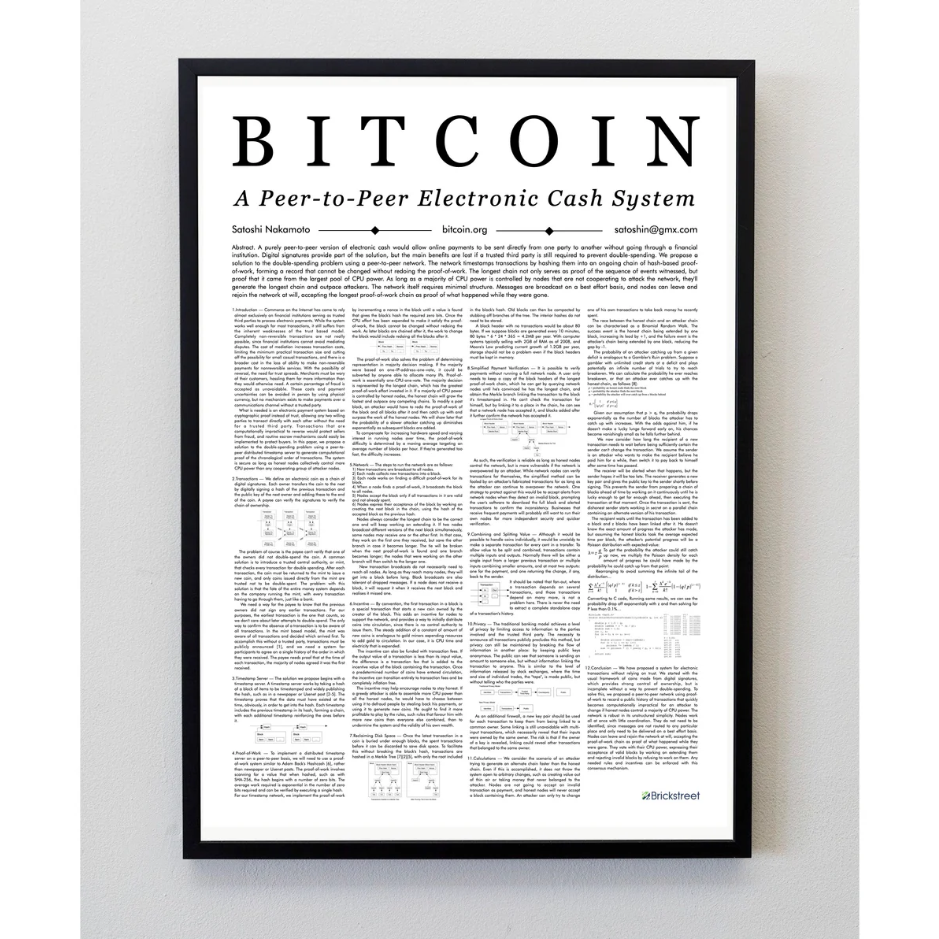
Bitcoin’s 2008 white paper was more than a description of a peer-to-peer cash system. It was a project that literally coded political theory, arguing that consensus could develop out of voluntary participation, economic rewards, and cryptographic proof. Its design flipped the Hobbesian assumption that a single sovereign was necessary for an orderly society.
Rather, it manifested an Aristotelian confidence in the secure habituation of virtue and a Stoic belief in self-government: the network rewards those who play by its rules and ignores entirely those who do not. The blockchain turns into a memory palace of collective decision making, visible to anyone who cares to audit.
Crypto in 2025 is a patchwork of state experiments, enterprise pilots and grassroots co-ops. El Salvador’s current Bitcoin policy, the European Union’s MiCA framework and the United States’ developing stablecoin laws show institutional curiosity and anxiety. Behind the headlines, developers code decentralized autonomous organizations that vote on treasuries, scientists experiment with zero knowledge proofs to secure privacy without losing accountability, and artists release soulbound tokens for open source contributors.
Layer two rollups, modular chains, and cross chain proofs come out of research labs into production, turning what used to be governance debates into code that anybody can scrutinise.
Philosophically, crypto extends the Enlightenment’s faith in reason by situating governance inside of open source repositories through which all proposals must pass and be approved. It relates to Kant’s categorical imperative in that protocol-rules are binding equally on all, irrespective of status.
Existentialism comes back into style when you self-custody your wallet and are forced to embrace the good with the bad; no help desk for a lost seed phrase. Decentralized finance is the epicenter of pragmatism, with protocols forked and refined based on results rather than theoretical elegance, change logs documenting rationale for every iteration.
They also inherit critical theory’s preoccupation with power. Token airdrops, validator rewards and oracle system design can replicate inequality if not well adjusted. This is why governance forums allude to John Rawls’ veil of ignorance when considering upgrades, or Amartya Sen’s capability approach when funding public goods.
Take two types of bounding experiments — one about influence (quadratic funding), shaking it from a few large contributors and spreading it diffusely to some small ones; the other deliberative polls testing how informed conversations shift collective preferences. The philosophical debate moves from lecture halls to Discord channels, shifting in real time with market swings and protocol upgrades.
Matter Over Mind?
Material reality is stubborn, however, so ethical aspirations require infrastructure. These proof of stake networks have reduced emissions, but are still dependent on well-allocated resources. The delegated proof of stake in the TRON ecosystem is an example of how communities create incentives to share bandwidth and processing power. Users who don’t have enough to lock larger TRX balances increasingly select decentralized Energy rent solutions.

TRON Energy rental services allow small businesses and creators to conduct stablecoin transfers without having to give up custody or pay excessive fees. Their dashboards transform resource scheduling into a visible marketplace – Elinor Ostrom’s work on governing common pools comes to mind.
This moral stratum reflects the Aristotelian counsel that one practices virtue in individual actions. A TRON Energy rental market creates a commons where resources flow on the basis of need and contribution, turning the social contract into programmable microeconomies. Developers automate those reminders, so when a wallet needs to be topped up with gas, every relevant person knows about it; community treasuries anticipate the need to pay for network fees as much as city councils do streetlights.
In doing so, philosophy becomes logistics and logistics become pronouncements about fairness. From the participants' perspective, it takes time to understand that decentralization needs to be supported and managed and endlessly negotiated.
Ethereum researchers experiment with optimistic and zero knowledge rollups as labs for quadratic voting, retroactive public goods funding, plural governance — in the spirit of Dewey, a democratic experimentalism. Privacy advocates employ homomorphic encryption and threshold signatures in the attempt to reconcile civic duty with an individual’s rights, a balancing act that recalls Hannah Arendt on the public sphere. Or if you will, across chains, one guiding question is whether technology can indeed encode the virtues communities want to build.
As you can see, what we have now always resembles what happened in the past - and directly derives from it.
From Markets To Meaning
To dismiss crypto as empty speculation is to ignore the lifestyles that feed into it. Validators plan around network upgrades, maintaining uptime like monks tend to a community-flame. Contributors to open source work the same way: dividing their time between paid work and volunteerism because they believe that shared ledgers will be able to anchor new types of trust, and monitoring what they have done in public repositories. Teachers conduct wallet security workshops in community centers and migrant shelters, translating cryptography into street smarts for families navigating remittances and digital entrepreneurship. These procedures shape abstract norms into visible rituals that symbolize unity.
Such routines reshape identity. And managing private keys is the stuff of, well, disciplined backups, contingency planning and dispassionate risk analysis. Governance votes require understanding game theory, history and ethics, as an ill-considered decision can destabilize incentives or exclude marginalized participants.
Collectives like Gitcoin, Optimism Citizens’ House and Nouns DAO formalize philanthropy through transparent budgets and programmable accountability, giving people a sense of ownership over experimental institutions. The ledger is both a mirror and map, reflecting commitments and guiding future action.
Global South societies use stablecoins to protect savings from inflation, which is consistent with the Stoic emphasis on controlling your own being when external conditions are unstable. Ukrainian activists have turned to chain donations, in which people solicit funds for essential goods during a crisis, much like when the military needs money for new equipment. This shows how decentralized finance goes around bottlenecks even as transactions remain auditable.
In Argentina, Nigeria and the Philippines, neighbors are being taught (by informal networks) how to keep seed phrases secure — combining ancestral mutual aid with contemporary tooling. Crypto emerges, then, as a vernacular philosophy whereby local wisdom mingles with universal protocols and in which it is shown that autonomy only really unfolds when shared knowledge yet remains accessible.
Freedom - How Good Is It Actually?
Philosophers have often warned that freedom without virtue descends into chaos, and the crypto communities take to designing rituals in response. Weekly multisig check-ins, public postmortems of failed hacks and on chain attestations of moral codes breed accountability. Reputation systems are rewarding contributions rather than bare capital; in similar fashion to Alasdair MacIntyre’s assertion that practices issue internal goods.
When a decentralized collective shares their treasury strategy, risk models for review it accepts scrutiny that belongs in ancient Athens agora. Governance becomes a continuing seminar in which evidence, persuasion and collective boldness make a difference.
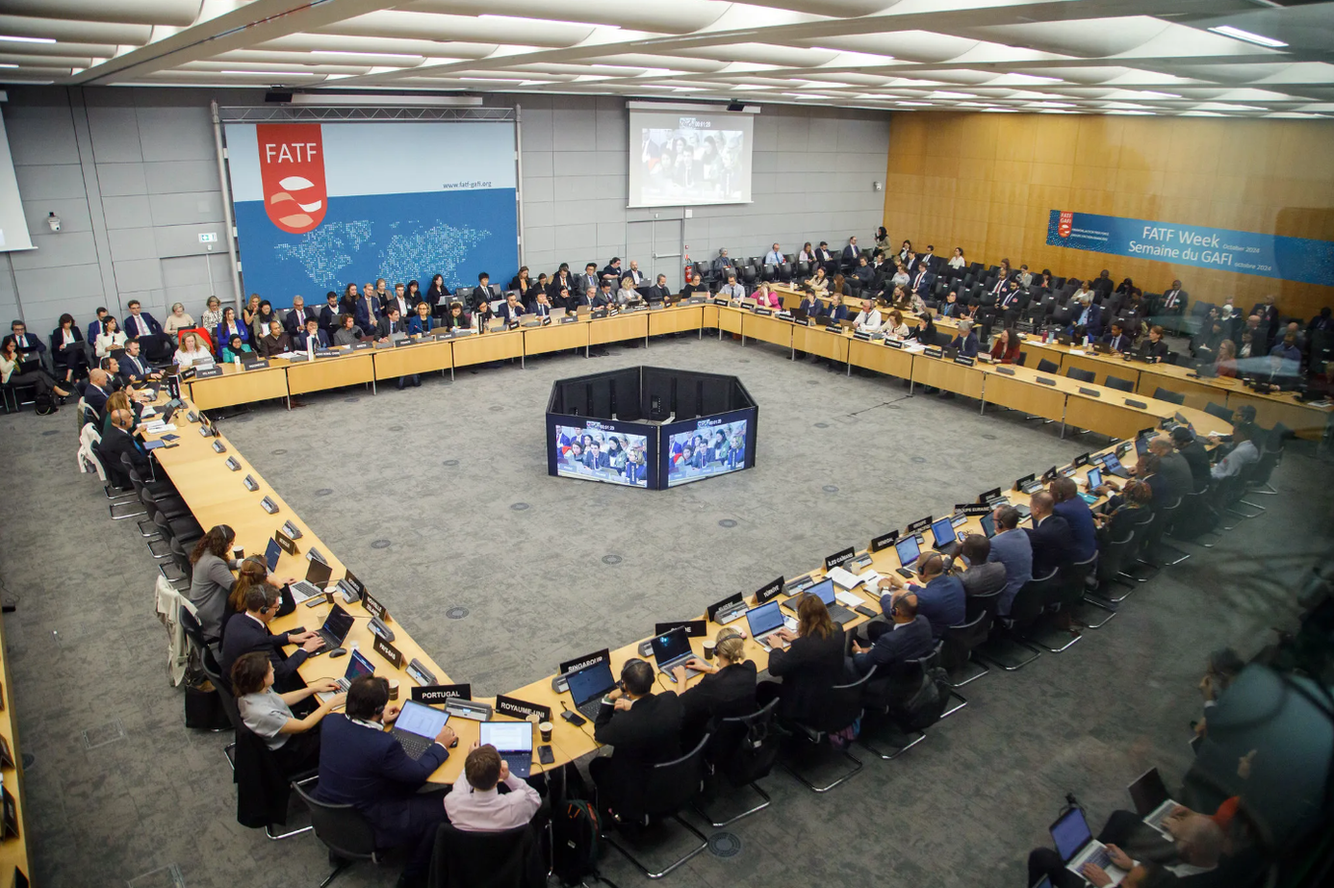
The culture is tested by regulatory pressures in 2025. When U.S. agencies take action against exchanges that haven’t registered when the Financial Action Task Force toughens travel rules for digital assets builders face competing priorities between compliance and independence.
Some of us respond with open-accounting dashboards, decentralized identity standards that preserve privacy and coalitions of legal advocacy to get in front of policymakers. Their stubbornness reminds me of those philosophers who chose persecution over retreat, and promoted sophisticated thought rather than hiding away, showing that belief combined with discussion can survive efforts to silence innovation.
Artists minting generative pieces on Tezos or ordinals on Bitcoin characterize their practice as world building. The constraint imposed by artificial scarcity is that written work has a new social contract, as sculpted into code: provenance in public and resale royalties programmable.
Wallet curators present a living gallery of wallets, through which communities collaboratively interpret meaning. The mesh of art, finance and governance rejuvenates the ideal of civic craftsmanship from the Renaissance, but it is now global, open source and experimental. In this way, the crypto becomes a vehicle for storytelling about identity, memory and responsibility.
Reinventing - How Much Is Too Much?
The stakes spiral up when one brings the disciplines together. Bioethicists spar around decentralized genomic data controlled by patients, urban planners prototype tokenized mobility credits rewarding sustainable commuting and climate scientists trial on chain carbon registries audited by open sensor networks. Each project raises the question of governance in novel ways, turning crypto into a laboratory for what we might call the moral imagination.

Success is not just read off the price charts, but by whether or not communities achieve agency, resilience and reciprocal recognition. The networks are the classrooms where theory and practice perpetually recalibrate.
In the end, what makes crypto so appealing is the opportunity to live by principles that traditional institutions only nod at. It reminds people to put autonomy, transparency, and mutual accountability into action, to make every transaction a vote for the world they want. As the old philosophers aspired to recover their virtue in denial, so too did it fall upon crypto participants to carry out their values through action. The ledger remains a reminder that there is a story in each block: It’s about us, working together or apart, toward the possibility of reinventing trust.
Seen in this light, crypto is a lifestyle: a commitment to learn, experiment, take responsibility and work to rebuild trust over time. But enthusiasts remain not because it is easy but because it offers coherence between belief and practice, between what they demand of institutions and what they demand from themselves.
The communities they preserve are circles of inquiry, markets for ideas, engines of self-discovery that keep philosophical questions alive away from universities and parliaments. We built Netts USDT Transfer tooling so users can move USDT on TRON with clearer fees and fewer wallet gymnastics — the same stubborn belief in practical tools that those philosophers brought to ideas.