How Business Schools Approach Teaching About Crypto
Top business schools are weaving blockchain into cases, electives, and hands-on labs — because crypto literacy is now core to modern management.

Harvard Business School ushered in the era of the case method at the beginning of the 20th century. This change in approach moved away from the rote learning of theoretical concepts, and towards practical and hands-on applications for business. The case method created an environment of critical thinking, team problem solving and leadership by immersing students into complex problems from real companies. It was an audacious departure from the staid lecture-based learning that was standard fare, demonstrating what every teacher and student needs to remember: for education to have relevance and meaning, it must evolve in tandem with the world it explains.
Another revolution came in the middle of 20th century at Carnegie Mellon University’s Graduate School of Industrial Administration, now called the Tepper School of Business. At the faculty there were advocates of combining quantitative methods and behavioral sciences, which prepared the way for the analytical rigor now evident in most business education.
It is more than just a milestone moment in the history of scholarship; it is evidence of a basic truth — that pedagogy must catch up to practice. This belief is more challenged than ever before today, as the very underpinnings of global finance are being systematically re-thought through a new, powerful technological framework.
We passed from a time of the gold standard when currency had an actual anchor in the form of a physical good which was a point of reference, for better or worse, in global trade. We live in a world economy dominated entirely by omniscient fiat currencies whose value is determined by the hand of capricious and frequently obfuscated government decree, central bank policy making and fickle market confidence. That system, the bedrock of contemporary finance, is suddenly in turbulent waters — one whose currents have been building depth and pace. Cryptocurrencies and blockchain technology have struck a new paradigm of decentralization that fundamentally questions the traditional assumptions ascribed to money, ownership, trust, and transfers of value.
But digital assets such as Bitcoin — the grandparent of this asset class, so to speak — and Ethereum with its smart contract capabilities, together with an unruly ecosphere of thousands of other tokens and decentralized apps have created a shadow financial system that runs around the clock outside direct oversight or control by any single entity.
It is a new frontier marked by stunning volatility, astonishingly fast innovation and an intricate, occasionally unregulated collision of technology, economics and human behavior. Yet for the world-class business schools charged with educating the next generation of global leaders, failing to ride this digital tsunami is not just a strategic oversight — it represents an existential threat in terms of relevance. The question now isn’t whether they should cover crypto, but how they can do so in an effective, ethical way.
New Economy Demands a New Curriculum
Around the world, prominent business schools are meeting that challenge head-on, and realizing that a detailed knowledge of the digital asset space isn't just some esoteric niche discipline, but an essential part of any respectable business curriculum today. This is not some fad to recognize with the guest lecture or two; this is a basic realignment of the market, a rewiring of the rails of commerce and finance.
Professional and graduate schools such as the University of Rochester’s Simon Business School have taken the initiative to reinvent all of their master’s programs, entirely infusing topics including artificial intelligence and fintech — in a clear acknowledgment that the demands of a global marketplace are changing.

At the University of Texas, Austin’s McCombs School of Business, students learn everything from cryptography mechanics to the nitty-gritty details of blockchain venture financing and regulatory climate. Likewise, the HKU Business School of the University of Hong Kong (HKU) has considered receiving tuition in digital currencies.
This isn’t merely a nod to convenience; It’s a pedagogical statement, devised to place students directly into the real-world practicalities and operational difficulties of crypto transactions – from network fees and wallet security, to compliance issues pertaining to regulations and tax jurisdictions.
This forward-thinking integration is based on a realistic assessment that the business leaders of the future, regardless of their type of commerce, will encounter blockchain applications or challenges. In corporate finance, this will look like tokenized securities and new forms of fundraising such as ICOs; in supply chain management, it’s immutable and transparent tracking of goods; in investment strategy, it is the addition of a new asset class that is not correlated with your existing assets; and in marketing, decentralized identity (the lack thereof) and new models for customer engagement and ownership. In order to really manage in this context, managers need a deeper understanding of the topic than what the headlines will tell them.
To do so, they will need to comprehend the cryptography that underpins blockchain technology, the intricate economic incentives and game theory implications of decentralized networks, weave their way through regulatory and legal landscapes too complex for even Don Quixote to conquer and grasp just how battlefield-changing decentralization is when it comes to corporate structure & governance or competitive strategy.
The result is that business schools are experimenting with a wide range of pedagogical approaches for imparting this all important knowledge, so their graduates may become not merely bystanders in the new financial world but instead informed and critical participants.
Many Roads Lead Toward a Decentralized Future
As schools struggle with how to integrate this fast-moving, complex and often controversial topic into the classroom, several clearly defined models of education have emerged. There’s no one-size-fits-all answer; the best solutions are the ones that play to an institution’s particular strengths, faculty expertise and the special needs of their student bodies.
These solutions typically belong to a few main categories, which are employed together for a truly holistic and flexible learning experience that equips students for the unknowns ahead.
1. Specialized courses and specializations. Several leading universities such as Massachusetts Institute of Technology (MIT) and the Wharton School at the University of Pennsylvania have developed dedicated, detailed courses - even whole specializations - around blockchain, cryptocurrencies, and digital finance.

Rutgers Business School offers the “blockchain and cryptocurrency” course in the Quantitative Finance program, pitched at students who have a solid grounding in analysis.
These programs are no light lift, but rather tackle the core underpinnings of consensus mechanisms, the mathematics behind tokenomics and incentive design, the legal implications around decentralized autonomous organizations (DAOs) and the real life application of blockchain technology for solving tough business problems across industry verticals. Graduates of these programmes come out as the real experts, with very practical, in-demand skills that fetch a premium in the job market.
2. Interdisciplinary programs. Acknowledging the fact that cryptocurrency exists in a vacuum, an increasing number of universities are rolling out more comprehensive interdisciplinary programs that bridge their business, law and engineering faculties. At Pepperdine University, perhaps no university’s response to the evolution of blockchain has been as ambitious and comprehensive as that of Pepperdine University, a private institution whose “Blockchain at Pepperdine” project is pooling resources from each of its five schools to launch research labs that will eventually be housed in a centralized center for research.

The connection of these fields is essential as the greatest challenges and opportunities in crypto are at the crossroads among them. Students are taught how to evaluate not only the business case for a new protocol, but also the aesthetic and security of its code, and the regulatory moats it must clear. This gives a more holistic view to the ecosystem and prepares for multi-dimensional problem-solving in regulation, technology-development and green finance.
3. Real-world exposure. A strong contingent of institutions think that the best way to learn about this new technology is to use it. They go beyond just being theoretical, bringing practical application. That can include more offerings of executive education programs, such as UC Berkeley’s “Blockchain: Technologies and Applications for Business,” which looks at strategic implementation; to student-run investment funds in cryptocurrencies or on-campus blockchain incubators.
These opportunities provide priceless hands-on learning, and they get real-world interaction with digital wallets, general ledgers, smart contracts … even stomach-dropping volatility, all in a controlled environment for learning. It’s where the rubber hits the road; abstract ideas are suddenly viscerally real, and what follows are lessons in risk management, portfolio construction and digital asset stewardship that will be tough for new investors to forget.
From Theory to Practical Application
A solid theoretical base is important, but the true test of a contemporary business education is the application of practical skills that can be immediately used in real-world scenarios. There’s a world of difference between grasping the abstractions that underlie blockchain, and figuring out how to use it to create an enduring competitive advantage.
This is where the most innovative curricula are turning their attention, beyond “Bitcoin 101,” to the sophisticated actualities of operating businesses on decentralized networks. A good example of this is the growing instances of business applications on the TRON network, a fast and very scalable blockchain which was specifically designed to handle the throughput required by an entertainment ecosystem that has its space shared among many.
One of the most important operational aspects in this network is resource management, with a particular control mechanism and a novel basis named Energy. Each transaction or execution with a smart contract on the TRON blockchain consumes some amount of this Energy, and it is vital to plan this resource wisely for both cost saving and stable operation, especially by those applications installed with a vast user base. This requirement for technicality has developed a high-end market - TRON Energy leasing for business.
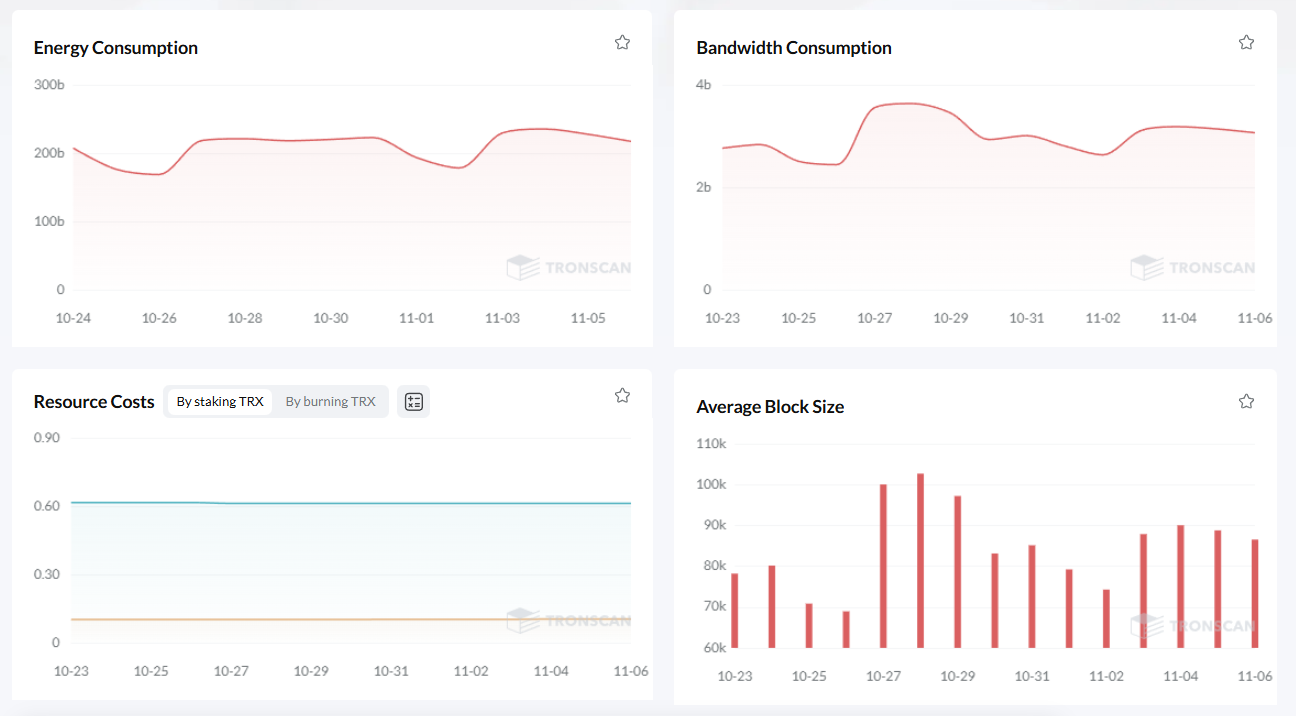
Instead, the company can now rent it on demand from a liquid market rather than buy and hold huge amounts of TRX to generate the Energy — so no longer do they have to commit massive amounts of capital that are susceptible to price fluctuations. This vital part of cost-effective TRON Energy management for companies enables them to minimize operating expenses, and keep their dApps functioning seamlessly, even during peak network traffic.
Knowing how to harness the immense strategic value of leasing Energy for business is becoming a critical skillset for managing in Web3. It’s one of the most dynamic transformations from a purely financial, speculative approach to crypto to something fundamentally operational where resource management on a blockchain is as important as server cost or any other vital utility. It's this sort of granular realisation that will separate the doers who make effective leaders of tomorrow from just the critics.
Conclusion: Adapt or Become Obsolete
The storied history of business education, from the bold foundation of the case method and the quantitative renaissance at Carnegie Mellon to today’s urgent digital revolution, holds one unyielding and immutable lesson: evolution is the very root of survival & relevance. The financial landscape is experiencing a seismic shift of unprecedented epic proportions, and principles such as decentralization, digital ownership, and blockchain technology stand at the heart of this change.
Business schools that still see cryptocurrency as an alternative, fringe or essentially speculative subject are doing a great disservice to their students and will ultimately leave them very poorly equipped for the economic and technological environment into which they will graduate.
Those who combine acceptance of this new frontier with intellectual rigor and academic daring — are empowering their graduates not merely to adapt to the future, but to help shape it. The message is clear: assimilate, innovate or risk becoming a relic of an old economic order.
In this constantly changing and often tumultuous world, solutions which have the ability to bridge the growing chasm between theoretical knowledge and its practical implementation are valuable weapons in the arsenal of any modern business.
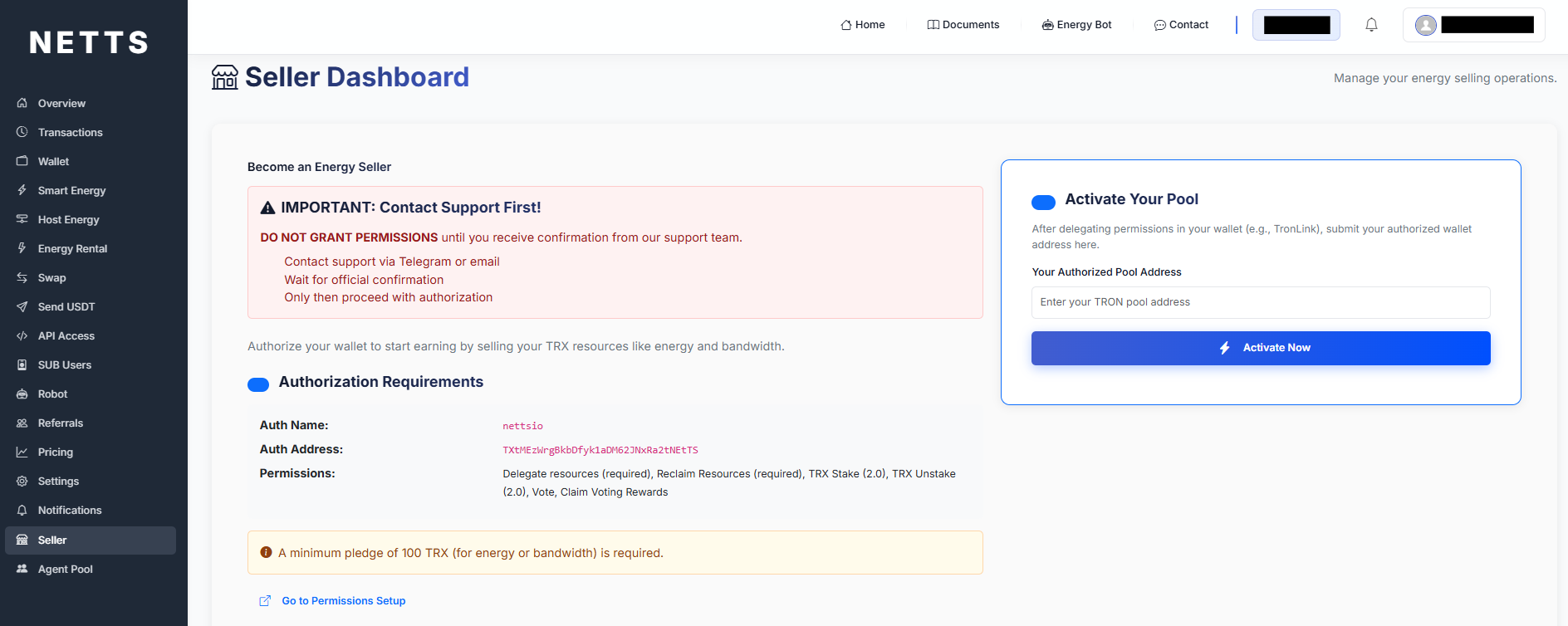
Netts Workspace provides fully-automated Energy delegation with intelligent, timezone-aware scheduling, as well as real-time peak cost monitoring and optimization and a professional-grade API to easily integrate into existing infrastructure, it’s the powerful yet efficient and secure solution necessary for today’s businesses to maneuver through the intricacies of decentralized networks while harnessing their immense opportunities. This abstracts the very difficult subject of blockchain resource management into a simpler, practical business process.