Mining Farms vs AI Datacenters: Battle for Energy, Real Estate and More
Electricity, land, GPUs, workers, subsidies — only so much to go around. The war between crypto miners and AI datacenters is far from settled.
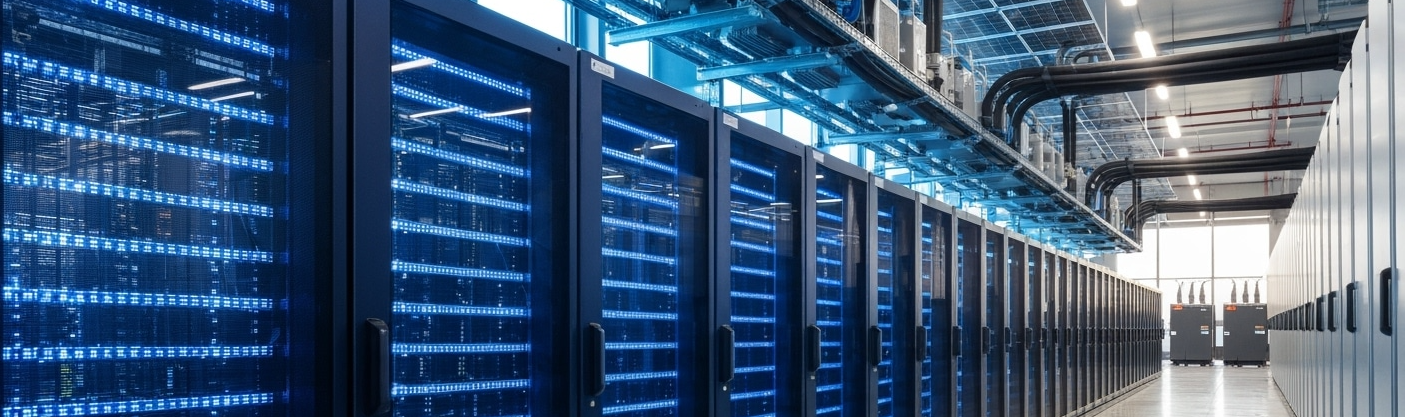
The term itself contains the suggestion of a level playing field, a referee and rules to which both sides agreed before this contest began. This is not what we are seeing between crypto mining operations and AI datacenters. It is a competition for the same limited resources — electricity, land, hardware, political goodwill, skilled labor — among players with fundamentally incompatible incentives and time horizons, different relationships to capital, and mutually exclusive claims on the future in ways that matter.
This is not something to be sorted out through coexistence narratives. For every megawatt of firm power that a hyperscaler locks in over the long-term under an AI contract is one less megawatt that any Bitcoin mining operation can claim. Each industrial zoning variance that a datacenter wins in a rural county is one less for someone else who may have needed it. Not every electrical engineer who joins Google's datacenter expansion team becomes available to wire a new mining facility. Zero-sum dynamics do not need to be recognized by participants. They function regardless of whether the people involved find the framing pleasant.
The gaming community feels this in its bones. Now, back when the 2020-2021 crypto bull market sent demand for consumer GPUs to never before seen heights (NVIDIA RTX 3080 are launched at 699 dollars and hitting retail prices of around 1500 – 2000 dollars within days) the reactions from those who simply wanted to game was immediate and furious. There were tutorials for how to spot mining-optimised firmware flooding forums, warnings about the imminent threat of scalpers chased by real ire at an industry that had made consumer-grade hardware impossible to find. And eventually, the market corrected: miners switched over to ASICs specialized for specific algorithms, demand dropped with the 2022 crypto crash, and finally GPUs re-stabilized at something you might call — at gunpoint — a manufacturer-driven price. The gaming community breathed out.
Then the LLMs arrived. The scorching GPU global demand cycle that followed after ChatGPT made AI assistants a dinner-table topic in every household was of another magnitude. By mid-2023, there was no major cloud provider with remaining stocks of NVIDIA's H100 chips — which cost $30,000 to $40,000 a unit, sold out months in advance:
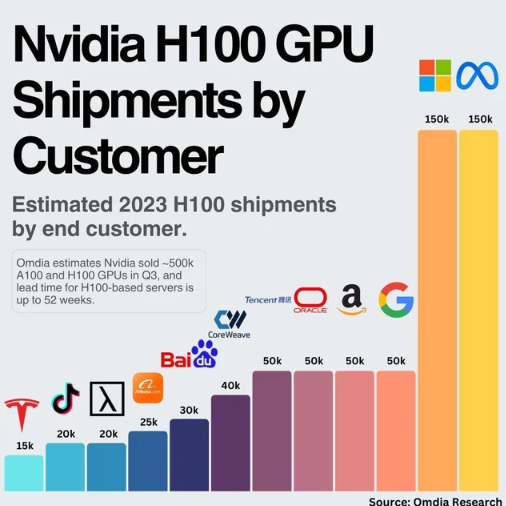
NVIDIA announced Q4 FY2026 revenues of 68 billion dollars in early 2026, with data center revenue of 63 billion, growing 1.73 times year over year. RTX workstation GPU lead times ran 48 to 52 weeks at distributors with no firm delivery schedules. The difference with the last crypto GPU crunch is this time it is not going away. The case of demand for AI compute is not a speculative cycle. That is infrastructure buildout led by the largest companies on earth with multi-year capital commitments.
The same dynamic that the gaming community lived through with crypto is now playing at every layer of the resource stack but on a scale several orders of magnitude higher. And just like crypto in 2021, the unintended participants — average electricity billpayers, municipal authorities, out-of-state landowners — get dragged into a fight over industries they only halfway grasp.
Electricity: Primary Battlefield
The price of power clarifies economic competition quite like nothing else. Capital is fungible; electricity is not — you cannot easily ship it across continents in seconds, at least not at cost, you cannot cheaply store it at scale and you cannot simply build the infrastructure for moving or delivering it to a new site in a matter of years and billions of dollars. When two extremely power-hungry industry categories are expanding at the same time in the same geography, it is not a price negotiation. It is a displacement.
Data centers are responsible for about 1 to 1.3 percent of the world's electricity usage, according to the International Energy Agency, while crypto mining is believed to represent around 0.4 percent. This will be a dramatic increase of both those numbers — data center total consumption is forecast to approximately double, to 945 terawatt-hours by 2030, nearly three percent of global demand. According to Goldman Sachs, data center energy consumption will grow by 175 percent between now and 2030. Deloitte anticipates that the AI power needs in the United States alone could increase from 4 gigawatts in 2024 to 123 gigawatts by 2035. These are not marginal numbers. They encapsulate the transformation in whom the grid is designed for.
Bitcoin miners have always competed for interruptible cheap power — the type of electricity that is extremely low-cost precisely because it only appears when a grid has surplus and can be curtailed to meet higher simultaneous demand. This worked out well for parties: miners obtained cheap electricity, while utilities acquired a variable industrial load on which they could turn off during peak events. And it was set up to work as long as miners were the fiercest competitor for this type of power. But AI datacenters require hard, mission-critical power. They cannot be curtailed. A live inference cluster serving users cannot be taken offline for two hours because the grid is under duress. That means hyperscalers are forking over significantly more, which can upend the economics of every power purchase agreement utilities are negotiating — now.
An investor-pleasing boast from one utility that had been an effective partner with Bitcoin miners in the American heartland in 2025: more than 15 gigawatts of AI datacenter demand ready to be constructed by tomorrow, according to a portfolio manager quoted by Forbes. Those miners successfully renewing interruptible contracts at low rates are now up against bidders with 20-year firm contracts and balance sheets in the hundreds of billions. That competition is not really uncertain.
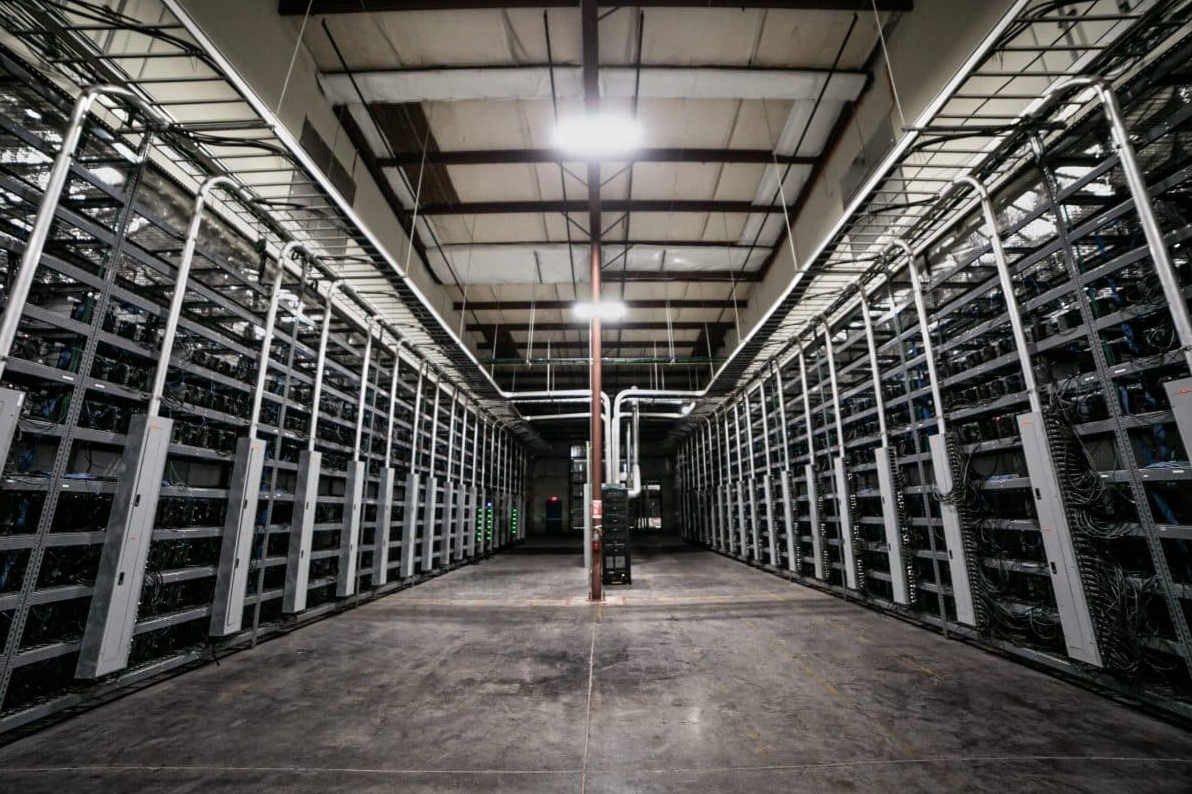
Some among the mining sector have responded rationally and revealingly. By October 2025 Bitcoin miners had signed $65 billion in contracts with big tech and cloud service providers to turn their mining infrastructure into AI compute. Companies including Core Scientific, Iris Energy, Hut 8, TeraWulf and Galaxy Digital began transitioning. Industry executives analyzing the inputs say up to 75 percent of the timeline for AI datacenter deployment can be shaved off by repurposing an existing mining site, since power infrastructure, cooling systems and other facility structures are already in place. By early 2026, some listed miners would have signed contracts worth more than US$70 billion in AI and high-performance computing and estimates suggested these companies could derive as much as 70 percent of their revenue by end of year. In many instances, the infrastructure the miners built is now being leased back to the industry that replaced them.
Real Estate, Labour, and the Political Auction
The second resource is land, and also the one you will see the war over most clearly, at least for common folk. At a high level, an AI datacenter needs many of the same site-level criteria as a mining farm — inexpensive industrial land, access to adequate grid infrastructure and ideally, onsite cooling via water or other means. The only difference is scale and capital intensity. A traditional mining facility might be on the order of 50–200 MW. They are now planning to build a new campus for hyperscale AIs at the gigawatt level. In the last two years, Amazon, Microsoft and Google have together announced hundreds of billions of datacentre construction. That capital is seeking land — expensive urban centers are not where it wants to be looking.
This has resulted in a competition to acquire land within precisely the regions where mines were also concentrated — rural areas with inexpensive power, accommodating zoning, and local administrations hungry for industrial tax revenue. The nature of the competition is lopsided. A 500 million dollar construction project with 200 permanent jobs and ten years of property tax revenue is a better negotiating partner for a county than a Bitcoin mining operation that provides 50 jobs and a tax base that varies with Bitcoin prices. Local politicians are not cryptographers that deal with which ingrained industry to support. They are people with budget problems to solve, and you speak numbers very quickly.
There has been expanding opposition to the two businesses, yet the speed and scale at which this new AI buildout is preparing itself is absolutely another register. Local opposition to AI datacenters delayed or cancelled 156 billion dollars worth of projects globally all over the world in 2025. In the U.S., 64 billion dollars of proposed datacenter construction had been stopped or slow-walked since 2024. It has a strange-bedfellow coalition — conservative residents worried about water usage and noise, progressive activists worried about energy usage and corporate power, local politicians who get constituent complaints every time the utility raises bills. One analysis noted that it combines distrust of AI, populist anger toward oligarchs and basic NIMBY grievances into a bipartisan coalition that standard industry lobbying finds impossible to split.
The labor aspect is less often covered but just as real. Electrical engineers, high-voltage construction specialists, and datacenter operations staff are needed in both sectors. In 2026, The Register reported that the real bottleneck in AI datacenter building in the US was not around GPUs or capital but qualified electricians. Licensed electrical contractors who do the wiring simply don't exist in the numbers needed to meet demand, so projects on the books are sitting unbuilt. The same constraint also applies to mining operations building out new sites. However, when a large AI project arrives in a region and starts to poach every qualified electrician within 200 miles at premium prices, the smaller projects — including mining expansions — cannot compete on pay.
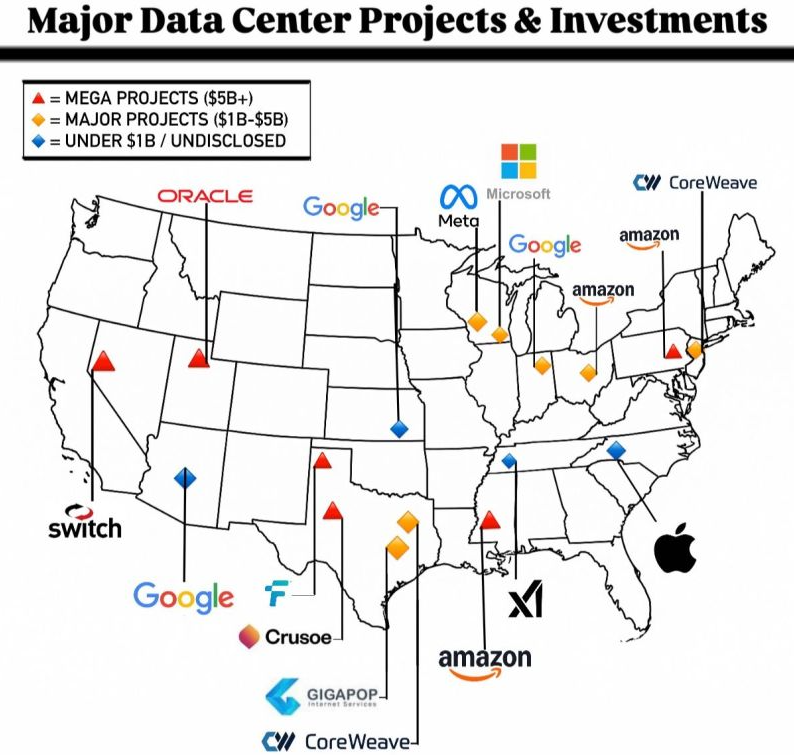
The fourth battleground is political subsidies and lobbying, which is where the gulf is most striking — Now the AI industry has fitted itself into a narrative of national competitiveness that is practically politically untouchable in today's climate: US-China technology rivalry; AI safety; economic leadership; national security. Microsoft, Google, Amazon and Apple all have direct engagements with elected officials in the USA, where they offer hundreds of billions of dollars in US datacentre investment. The crypto mining industry has mounted its own political operation, especially after its pro-crypto positioning during the Trump administration of 2025, but it has to battle for legislative attention against infrastructure investment figures that put anything mining can offer to shame.
The water problem warrants a brief mention all by itself since it has become an actual flash point. Massive datacenters consume large amounts of water because they are typically cooled by evaporative cooling — a 100-megawatt facility may need millions of gallons per day during peak summer conditions. These are not abstract environmental issues in the arid places where mining and AI infrastructure tend to concentrate. It will compete with agriculture, residential supply and municipal planning directly. Most importantly, mining operations have stayed out of the fold on this controversy as ASICs are typically much more thermally efficient than GPU clusters at compute density. The main issue with performing AI inference at scale is heat, and the bill for cooling it is arriving in communities that did not approve of it.
A third dimension, one less often commented on but nonetheless important institutionally: both sectors — in their distinct forms — are extracting value from public infrastructure and privatizing it. An operation purchases electricity at industrially negotiated rates, aggregates it into hashrate and claims the associated block rewards and transaction fees. An AI datacenter pays competitive electricity prices, transforms them into inference compute, and earns its share of subscription and API revenue. Neither bears a congestion charge for the upgrades to the grid that their presence requires. Much of the cost of expanding transmission capacity, upgrading substations and reinforcing distribution is socialized across all ratepayers as residential customers see their bills increase to fund infrastructure, primarily called upon by industrial actors. This is a standard characteristic of industrial electricity markets and not specific to either industry. However, at the combined magnitude these two classes are now approaching simultaneously, the allocation effects come to be politically visible through their previous size.
Who the Bystanders See
Outside of the people directly employed by either industry, this conflict is completely geographically contingent. For years, the war has proved hard to miss in rural Virginia, where they have built so many data centers that entire counties now basically revolve around datacenter operations. Electricity prices have risen. Noise disturbances from new facilities are reported in residential areas. There are local governments that rushed to greenlight early construction projects and then found that many constituents have an ah-ha moment about what they agreed to, leading to proposals for zoning moratoriums.
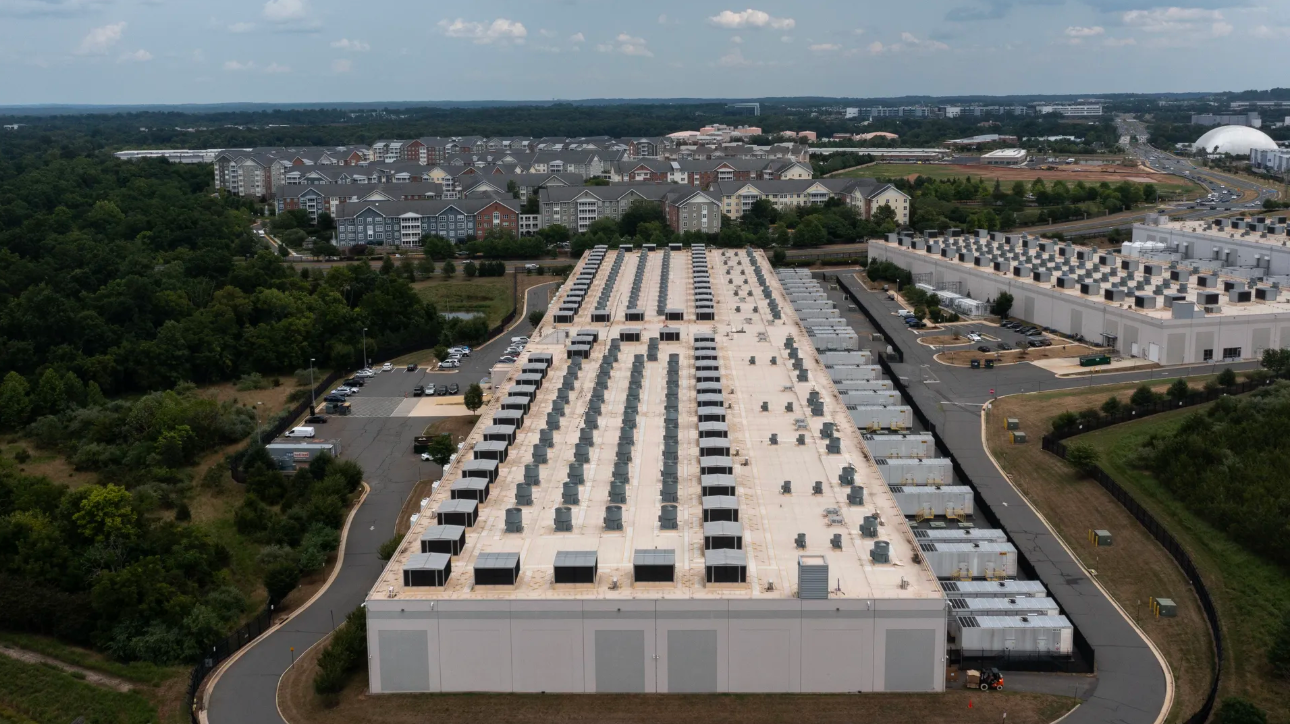
The same story and the other villain in this narrative of the community has appeared in states where crypto mining concentrated during periods of low power-cost prices: Kentucky, Texas, Wyoming, Nebraska. Operations were criticized for guzzling power without creating many jobs, thermally and acoustically impacting neighborhoods, and making economic contributions that had variable association with price cycles beyond the budget planning horizon of local governments. By 2025, however, many of the same municipalities that enacted pro crypto laws in 2021 and 2022 were also enacting energy regulatory measures panning cryptocurrency when there was a direct economic impact on residential electricity rates from such mining activity.
The typical attitude of the public is so divided that neither side particularly likes it. Many of those who use AI tools daily — ChatGPT, Copilot, image generators — have no mental map of the physical machines needed to run them. When those tools are built as phone applications, the electricity and real estate costs evaporate into the ether. The cognitive dissonance is only politicized when resources use bills go up and some person with a microphone explains the relationship, which now is common enough it has reached mass media. Against the blunt backdrop of already tangible industrial electricity demand in several US states, Bill Gates himself came forward to publicly warn that the cost could not be externally imposed upon households by AI datacenters.
Most of the "it's inevitable" crowd are people with an investment position on either side, or people deeply schooled in the long-arc techno-economic claim that both industries represent a necessary infrastructure transition — one toward greater systemic computational capacity that will translate ultimately into higher living standards for all. The unfounded complaints tend to be at the level of those nearest the physical plant — ratepayers, neighbors, local officials and taxpayers who signed agreements that they now feel misled about. Both of these reactions are perfectly rational from the perspective of those people.
Peace Was Never on the Menu — The War Is Not Over
So clear is the direction of the competition that the broad outlines can be described. In the high-end tier, AI datacenters are winning out in the electricity battle — they have the finances, national security narrative, and fortitude to sign longer duration firm contracts favored by utilities. Bitcoin mining adapts by shifting facilities to locations with low-cost power and little political scrutiny that keep the business case alive. The GPU wars here are over — mining has given that ground fully to ASICs purpose-built for proof-of-work, while AI inference runs on hardware so expensive and specialized that retail consumer channels per se are a non-issue in any kind of industrial supply chain.
The flexibility and profitability per unit of risk is not a place where mining is losing. AI cloud margins run 95 to 98 percent, and Bitcoin mining margins are more conservative — but you can spin up or wind down a mining operation on timescales incomparable with those of constructing a datacenter. A mining site can be at break even within power prices that makes an AI datacenter completely nonviable from the perspective of the economics. The comparative political risk profile is different: crypto is exposed to regulation that AI hasn't yet had to face at scale, but AI is accumulating the exactly type of community opposition that precedes legislation, and how this opposition develops makes a more symmetric political landscape five years from now look likely compared with today.
Those in either industry who follow these dynamics closely know that those are the people best situated to handle what comes next. If you operate a small crypto shop and an enormous AI campus is showing its headlights on the energy grid you depend on, your competitive fitness around your electricity rates has altered whether or not you noticed the zoning application. There is a lesson you will learn, if you are a local market AI startup watching a crypto-adjacent infrastructure service hold its ground in the narrow area of your own maximal product's displacement: the entity being outcompeted — indeed "disintermediated" by another technology entirely — does not simply take up and dissolve like cotton candy when faced with an arguably better technical framework. These are not theoretical strategic questions. There are questions of operational survival, and the survival logic is Darwinian in a purely literal sense: the entity that survives is not the one with the best technology or marketing, but the one best positioned relative to the resources it needs.
This peace between these industries is no stable equilibrium. It is a stoppage in competition disguised as coexistence because the two are growing. When growth stalls — when power grids reach their actual capacity limits, when real estate in cheap areas have run out, when the GPU supply chain cannot keep up with increase demand — the competition will be openly zero-sum in ways which are currently masked by relative abundance.
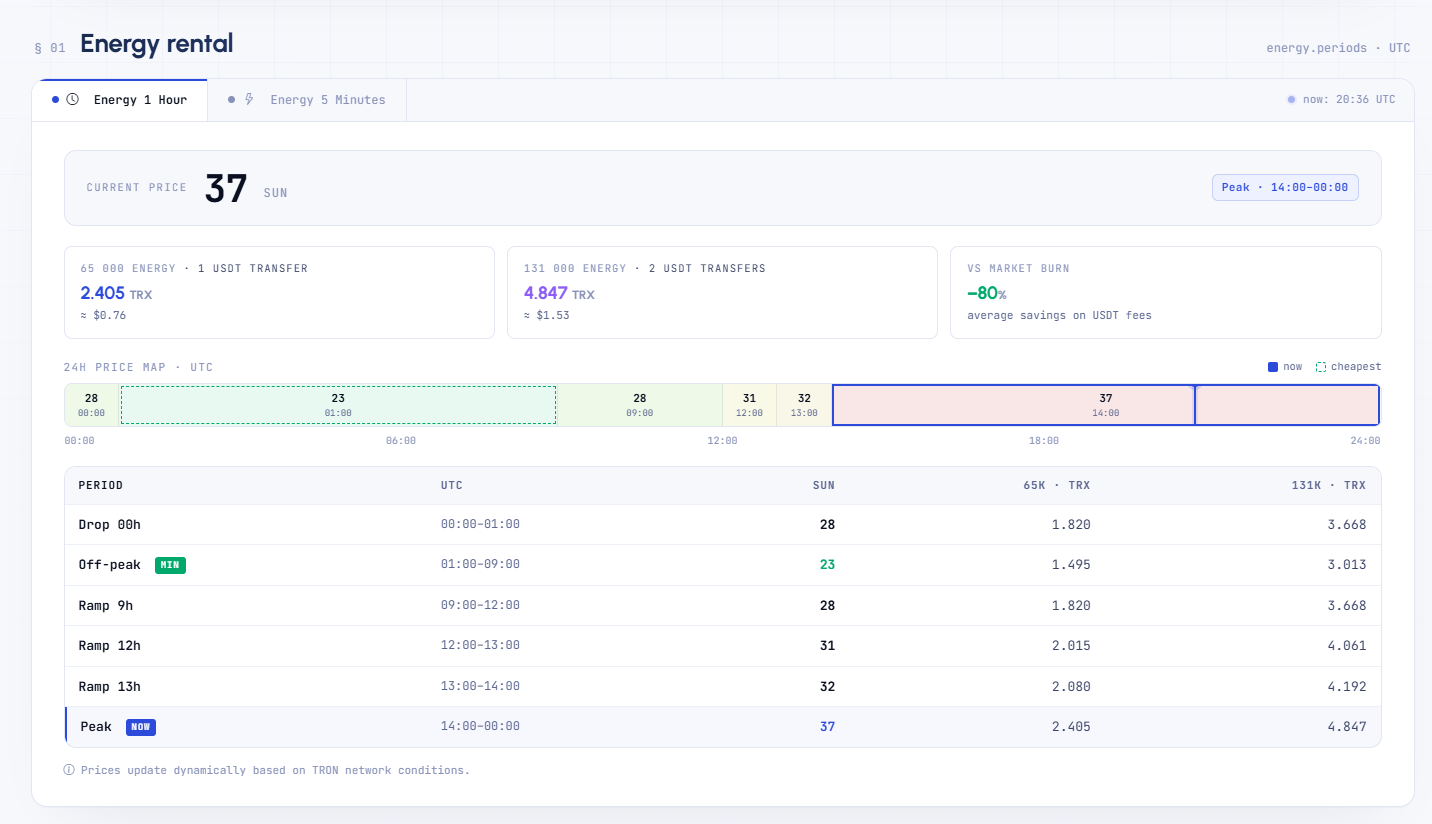
For those working on crypto infrastructure who run the TRON side of stablecoin services — all the payment rails, remittance platforms, and USDT workflows that exist separately from GPU wars but are reliant on effective blockchain operation — smoothing transaction costs is where positioning gets made in incremental gestures. Netts Pricing lists real-time Energy rental rates for all time periods: off-peak hours from 1:00 to 11:00 UTC provide the least expensive TRON Energy (23 sun per unit), followed in ascending cost by TRON Energy peak hours from 14:00 to 00:00 that run at 37 sun, and the schedule is transparently cumulated throughout a full synchronous UTC day. And for USDT transfers, timing transactions during the windows with the best prices — which a published price map lets you know in advance — is the kind of marginal advantage that compounds. No subscription, and all fees are included in the quoted rate.