BlackRock, Franklin Templeton, and the Quiet Tokenization of Money Market Funds
Tokenized money market funds are live — why asset managers moved to blockchains, what efficiency gains exist, and which risks actually matter.

Across the Internet, statements like "BlackRock owns everything" are making their rounds with a mounted determination akin to asserting facts we have personally verified. It is not accurate though. While BlackRock has somewhere around ten trillion dollars under management — a staggering number — they are managing those assets on behalf of clients, and its only a fraction of assets that exists in the world. Pension funds. Insurance companies. Sovereign wealth funds. Those people who buy indices in their retirement accounts: retail investors. The money is not BlackRock's. Though the decisions on what to do with it are, within bounds, and the fees that come from those decisions are extremely real. The only things BlackRock really owns that can't be sold off to pay rent on its many buildings and salaries it pays employees is influence, reputation, and connections. They are worth much more than most items that can be booked to a balance sheet, and this is exactly why the firm works so cautiously with them.
In contrast, Franklin Templeton reins in around 1.5 trillion dollars. Vanguard manages around 9 trillion. Culture and structure wise, these are not the same firms but they were cosmically close in business: the art of taking management fees on capital that belongs to their clients as long as they have enough credibility for clients to trust them with it. Their economic model is based on the fantasy that their name and history tell something factual about how well (or not) they will manage the assets entrusted to them.
What these firms are doing now — in a muted but, increasingly, rapid way — is shifting bits of that business on to blockchains. Not because someone told them to either. Not because of a regulator forcing it to. Because the logic makes sense in ways that are increasingly hard for a rational organization to ignore.
What Tokenisation Really Is
Tokenization, as we mean it here, simply consists of taking a claim on a real world asset — an interest in a money market fund, an interest in a government bond, or a piece of private credit portfolio — and wrapping that claim up in the form of tokens recorded on blockchains. The token is economically equivalent to the underlying claim: you own the right to yield, redemption rights, pro-rata ownership. The blockchain functions as a ledger of who owns what; it replaces or reinforces the legacy ledger infrastructure that custodians and transfer agents have used for decades.
Traditional infrastructure is expensive but works. For a traditional money market fund share, this would mean: a fund administrator runs a register of shareholders, the custodian holds the underlying securities, there is a transfer agent to process subscriptions and redemptions, there is a clearing organization that settles all transactions, and finally an accounting firm will audit the whole stack. Every link in that chain requires a fee, incurs some latency and introduces reconciliation between systems not designed to communicate with one another. In most markets, settlement for mutual fund transactions still works on a T+1 or T+2 basis — this means trades executed today settle tomorrow (T + 1) or the day after (T + 2). During that time, the capital is tied up and unavailable, there is counterparty risk to be managed, and proceeds cannot be put into yield-offering instruments by the fund manager.
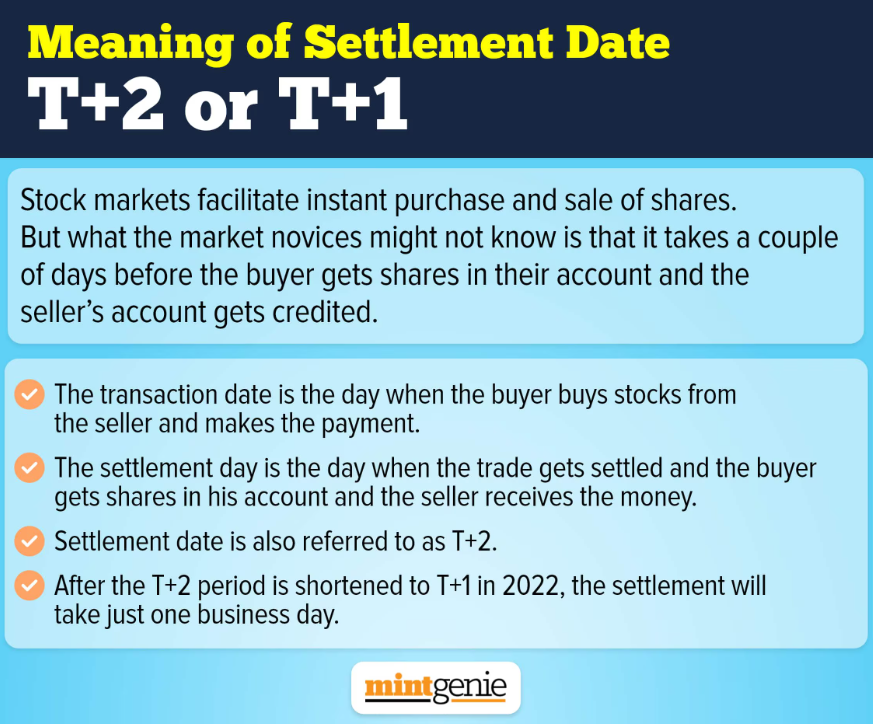
But once you look directly at it, the overlap with blockchain is not subtle. At its core, a blockchain is a shared ledger that can be both read and written to by the multiple parties concurrently with cryptographic assurances regarding consistency. This does away with the requirement of having multiple custodians, each maintaining separate records and reconciling against each other. It allows for settlement times measured in seconds instead of days. This allows for 24/7 operation instead of being gated by banking hours and market calendars. It allows for fractional ownership to very small denominations. And it allows for the programmability of money — wrapping conditionality around transfers, automating distributions and composing financial instruments that cannot be easily built using traditional tools in securities infrastructure.
With a money market fund, the advantages of tokenization can be distilled down to an operational fact: institutional treasury departments utilize money market funds as a tool to park cash overnight while yielding on US Treasuries. Their existence is predicated on the fact that idle cash earns nothing while investing it creates settlement frictions. A tokenized money market fund that settles in seconds and trades 24/7 removes most of that friction, which is the exact reason the product category exists. The tokenized version is unambiguously better at the actual thing that the product is seeking to do, which happens more rarely than you think.
BUIDL, BENJI, and the Race No One Announced
Franklin Templeton was the first mainstream traditional asset manager to put this to action. In 2021 it launched the Franklin OnChain U.S. Government Money Fund (FOBXX), initially on the Stellar blockchain, shares represented by BENJI tokens. In the firm's usual dry way, they say that this tokenisation of a traditional money market fund was to be able to "leverage the efficiencies provided by blockchain technology in mutual fund record keeping." One BENJI token equals one share of a fund that owns US government securities. The blockchain is the official record of ownership. FOBXX quickly became the largest in-category tokenized money market fund in early 2024 — only to be dethroned by BlackRock.
In March of 2024, BlackRock launched BUIDL, the BlackRock USD Institutional Digital Liquidity Fund, on Ethereum.
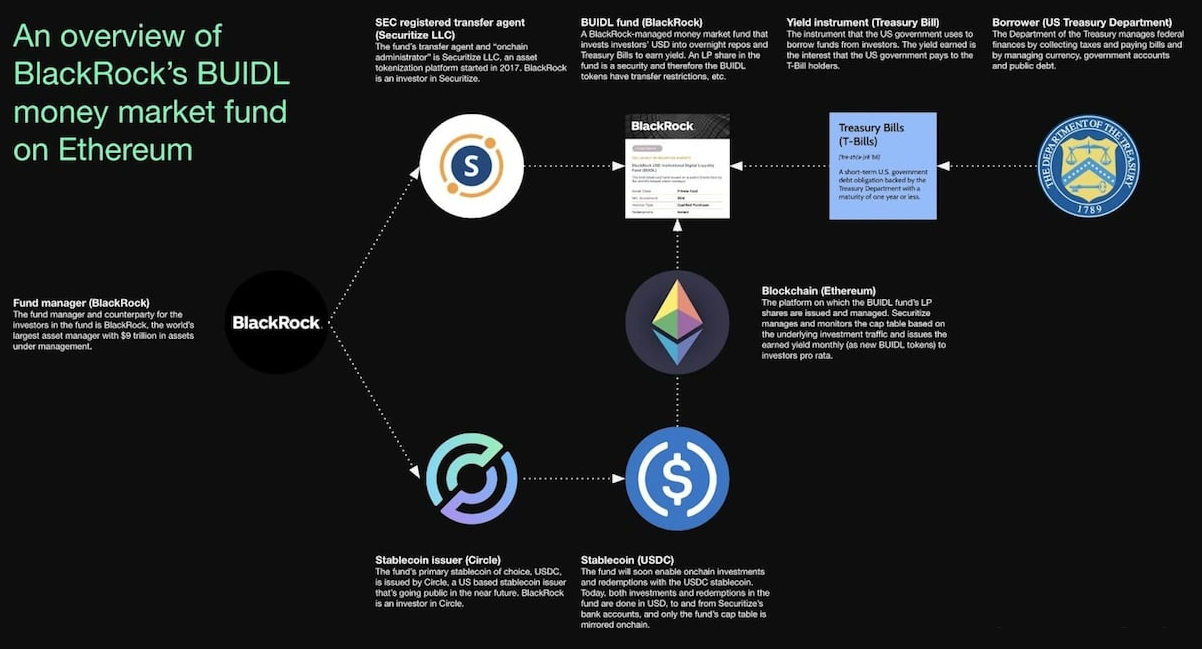
The fund invests in US Treasury bills, cash and repurchase agreements. BUIDL went on to pass FOBXX in market cap: within about six weeks of launch it had a market cap of 375 million dollars by April 2024, pushing Franklin Templeton out of the top position in a category that Franklin Templeton pioneered. When BUIDL went over 1.7B dollars, it had grown into multiple blockchains, e.g Solana, and a majority of the tokenized US Treasury market (at 34%). The second evolution arrived swiftly, as Franklin Templeton announced the expansion of BENJI to the Avalanche network, adding another chain to the fund. Other competitors were coming into the space — Ondo Finance, Hashnote, JPMorgan's Onyx platform, and State Street was also working on similar products.
The broader category numbers tell the story at scale. In early 2024, on-chain value for tokenized US Treasuries was approximately 1.7 billion dollars in total. That number had climbed to 15.2 billion dollars in May 2026, over a total of 76 products that work across numerous blockchain networks. The broader real-world asset tokenization market — inclusive of private credit, commodities, real estate and other instruments beyond treasuries — ended Q1 2026 surpassing $27.5B (+263% Y-o-Y growth). The growth of RWA tokenization tripled between 2025 and 2026 alone, with Franklin Templeton's own research citing a fivefold increase since 2023. These are not projections. They are capital that is already deployed.
The firms pushing this growth are not crypto-sympathetic by nature. They do not declare decentralization or censorship resistance. They are solving an operational problem. But by doing so, they are coming to the very same base-layer infrastructure — shared ledgers, cryptographic ownership records, programmable settlement — that a particular group of engineers and economists had been engineering since 2009. In conference calls and presentations, the language of BlackRock employees explaining the benefits of on-chain settlement to investors bears an eerie resemblance to arguments made in Bitcoin and Ethereum forums a decade ago. Not because they read those forums, necessarily, but it is the same logic as to why fragmented financial ledgers are inefficient (albeit arrived at from a completely different direction).
It's worth noting for posterity here, because the institutional finance world spent years treating crypto as a speculative distraction or an outright threat to be beaten back, while the crypto community spent years treating institutional finance as an incumbent adversary that decentralized infrastructure was built to bypass. What follows is much less exciting than the wave of tokenization suggests: that the infrastructure wins out on its own merit, and those ideological camps fighting over it were actually building toward the same ends.
Theranos Question — and Why Tokenization Answers It Differently
First a comment on the gullibility of investors before moving deeper. Theranos raised over 700 million dollars from investors, claiming that its blood-testing technology could do hundreds of diagnostic tests on one drop of blood. The technology did not work. The demonstrations were staged, the reports forged and the laboratory practices so subpar that they presented an immediate threat to patients, federal regulators would conclude. Elizabeth Holmes was convicted of wire fraud in 2022 and sentenced to eleven years in prison. Investors who funded Theranos were partially swayed by the quality of Holmes's board, her Stanford pedigree and the raw power of her story.

The technology was never independently verified; it simply did not need verification, as the presentation made people feel that it was fine.
The Theranos analogy is invoked whenever some entrenched institution embraces a new technology, and that embrace is taken as evidence that the technology actually works. The name of BlackRock has real signaling value — it is a safe conclusion to draw that "if BlackRock thinks this is real, maybe it is." Institutions have backed technologies that failed, supported things that became fraud and made products that lost investors billions — all while keeping their reputations intact and pocketing fees.
But the reason that this comparison to Theranos is ultimately less ideological than it seems at first is far more mundane. A money market fund with a tokenized pool is not a new piece of technology that makes it available in different ways. It is a regulated, audited investment product existing today — the US government money market fund — where only the underlying record-keeping mechanism varies. It uses Treasuries and repos for its underlying investments. The yield is the very same yield the underlying securities generate. The same regulatory structure applies as to any registered mutual fund. You are not getting a new financial return from the blockchain layer, but you are getting settlement and transferring efficiency of operations. The gamble is not that the core claims about the technology are wrong. The risk is that the efficiency gains are less than anticipated, that smart contract vulnerabilities create new attack surfaces, or that regulatory frameworks for on-chain fund administration come to require expensive adaptation. These are real risks. They are not a Theranos risk.
On the other hand, there is a newer worry that needs pointing out. In May 2026, a Forbes analysis asked the question of whether tokenized money market funds would ultimately help accelerate bank runs in stress situations by facilitating immediate redemption at all hours — like SVB's collapse happening instantly rather than over a 24 hour period.
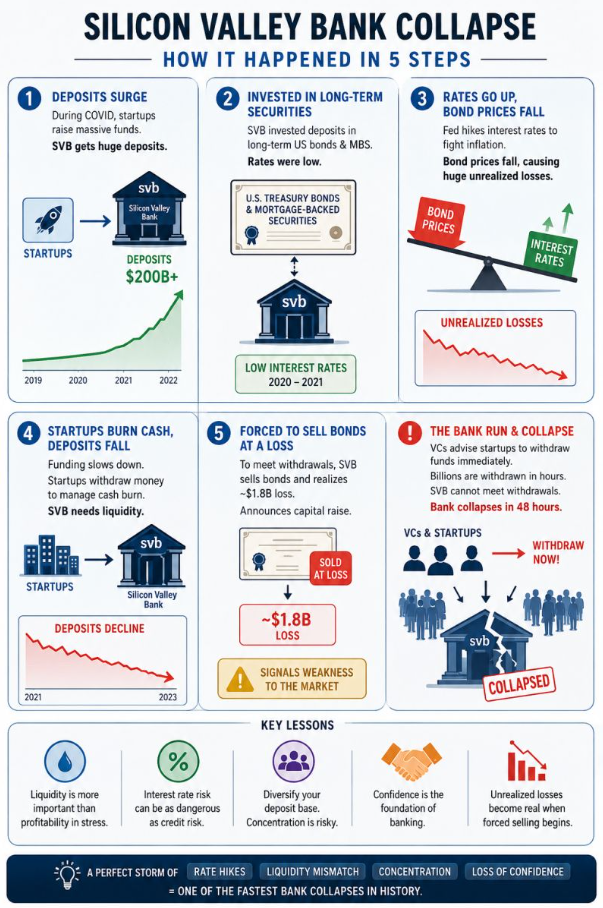
When a tokenized fund can be redeemed in seconds at any time, regardless of banking hours, the speed of potential outflows in a panic rises sharply. It is the real thing: the same attribute that improves efficiency in normal times degrades it in a panic. This tradeoff is not lost on the firms managing these products; it is exactly the sort of second order effect that risk departments model. A future stress event will decide whether the models were right.
Tradeoff Map: Who Needs To Be Paying Attention
Sure, tokenization is not everything that great. That means actual tradeoffs, and the correct choice of tradeoff depends on who is doing it and what they are trying to optimize for.
Those efficiencies are already well-documented and include:
Settlement speed — T+1 or T+2 and near instantaneous, reducing counterparty exposure and unlocks capital to be re-deployed sooner.
24/7 Operability — removing the restriction of business banking hours and market calendars, which is an important factor for global institutional treasury actions where capital moves across time zones 24/7.
Collateral fungibility — unlike physical securities infrastructure, which handles pledging, transferring and redeeming of collateral very awkwardly, tokenized assets can be pledged, transferred, and redeemed as collateral to optimize balance sheet efficiency.
Reducing operational costs — fewer intermediaries mean lower fees at each link in the settlement chain; estimates for reduction in operational costs for various market infrastructures has been from 30% to 80% depending on what is being replaced.
Fractional ownership — tokenized securities can issue extremely small shares, expanding the market for institutional-grade yield products to organizations that do not meet minimum investment standards as dictated by traditional methods.
It is important to distinguish between true tradeoffs and frictions, such as: smart contract risk, which is real and has resulted in large losses across DeFi contexts; regulatory uncertainty in less well defined jurisdictions for on-chain fund administration; custodial arrangements that may not carry the same level of insurance and safety experienced from traditional bank custodians; or how treasury departments will navigate the infrastructure learning curve when they have been used to operate entirely within traditional settlement systems. In the case of a large institution deploying tokenized products, this smart contract risk is lessened with audited and battle-tested contract code combined with traditional fallbacks. For a smaller organization without those resources, the risk profile is different.
Firms that should be watching closely include any institutional cash management operation where settlement friction is a material cost, any organization moving capital across time zones and asset classes frequently enough for T+2 settlement to serve as a substantial opportunity cost, and any fund administrator seeking competitive advantage through operational efficiency. The firms where the tradeoff is clearly not right at this time are those with very short investment time horizons relative to technology adoption cycles, those primarily active in countries where regulatory structures governing tokenized securities are still poorly defined, and those whose clients would have their portfolios exposed to blockchain operations rather than reassured by efficiency gains.
The RWA tokenization wave has established something that five years ago would have been a remarkably uncertain statement: regulated institutional money will come to public blockchains when there are sufficient incentives to transfer real capital. That happened. Which institutions will act fast enough to compound the operational advantages, and which ones will optimize for credibility with skeptical clients, moving slower? Historical evidence tells us that the first movers take an outsized share of structural benefits — but it also tends to indicate that those institutions who don't grab the early advantage often make hay out of the mistakes made by others in the first wave.
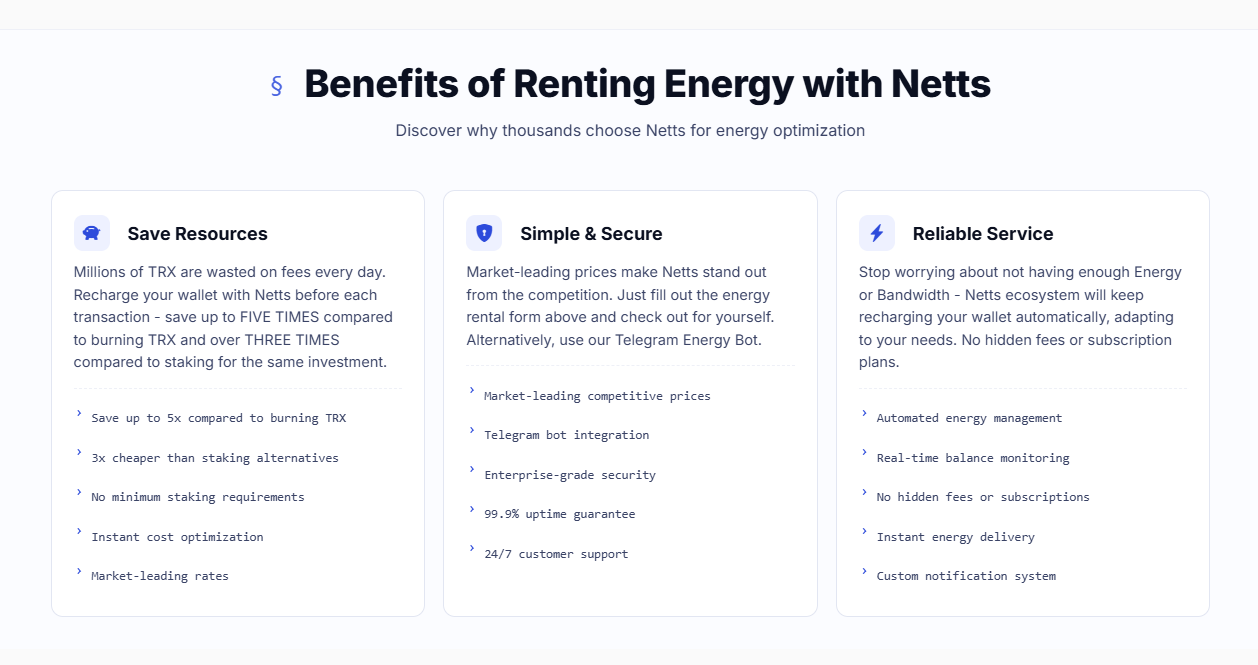
If your business runs on TRON-based stablecoin infrastructure — USDT workflows, remittance pipelines, or payment applications processing transfers at volume — then the efficiency logic of tokenization maps right to the per-transaction cost structure that decides a margin advantage or disadvantage. Netts.io is the TRON Energy service at that layer: an aggregator gathering billions of Energy units from verified providers such as JustLend, Trongas, Catfee, Sohu and APITRX and offering immediate delegation at competitive rates. A TRON Energy refill through Netts costs only 1.625 TRX (about $0.25) for one USDT transaction during off-peak hours, where 13.84 TRX would be burned by default, so any person running volume through TRON-based infrastructure can recharge TRON Energy at five times the cost efficiency. The same principle that drives BlackRock toward tokenized funds pushes any serious TRON operation toward using a TRON Energy service instead of burning TRX: the infrastructure matured ages ago, savings are realized immediately, and ignoring the gain in efficiency becomes a choice all on its own. The tool exists to send USDT with smallest fee. Like all tradeoffs, whether you decide to use it depends on how serious you are about your cost structure.